Button Fern Care Guide: Light, Watering and Soil
Pellaea rotundifolia
Learn how to care for Button Fern (Pellaea rotundifolia), including filtered light, careful watering, airy soil, repotting and pet safety.
Button Fern Care Guide
Start with wateringThe most common care mistake for Button FernWatering guide →Button Fern care essentials
Light
Water
Water when the top 2–3 cm (about 1 in) of mix has dried, then let the pot drain fully. Allow slight surface drying between waterings, but do not leave the whole root ball bone-dry for long.
Soil
Loose, humus-rich, slightly acidic mix that retains some moisture but drains freely; add perlite or coarse sand to a peat- or coir-based potting mix.
Humidity
Temperature
Fertilizer
About Button Fern
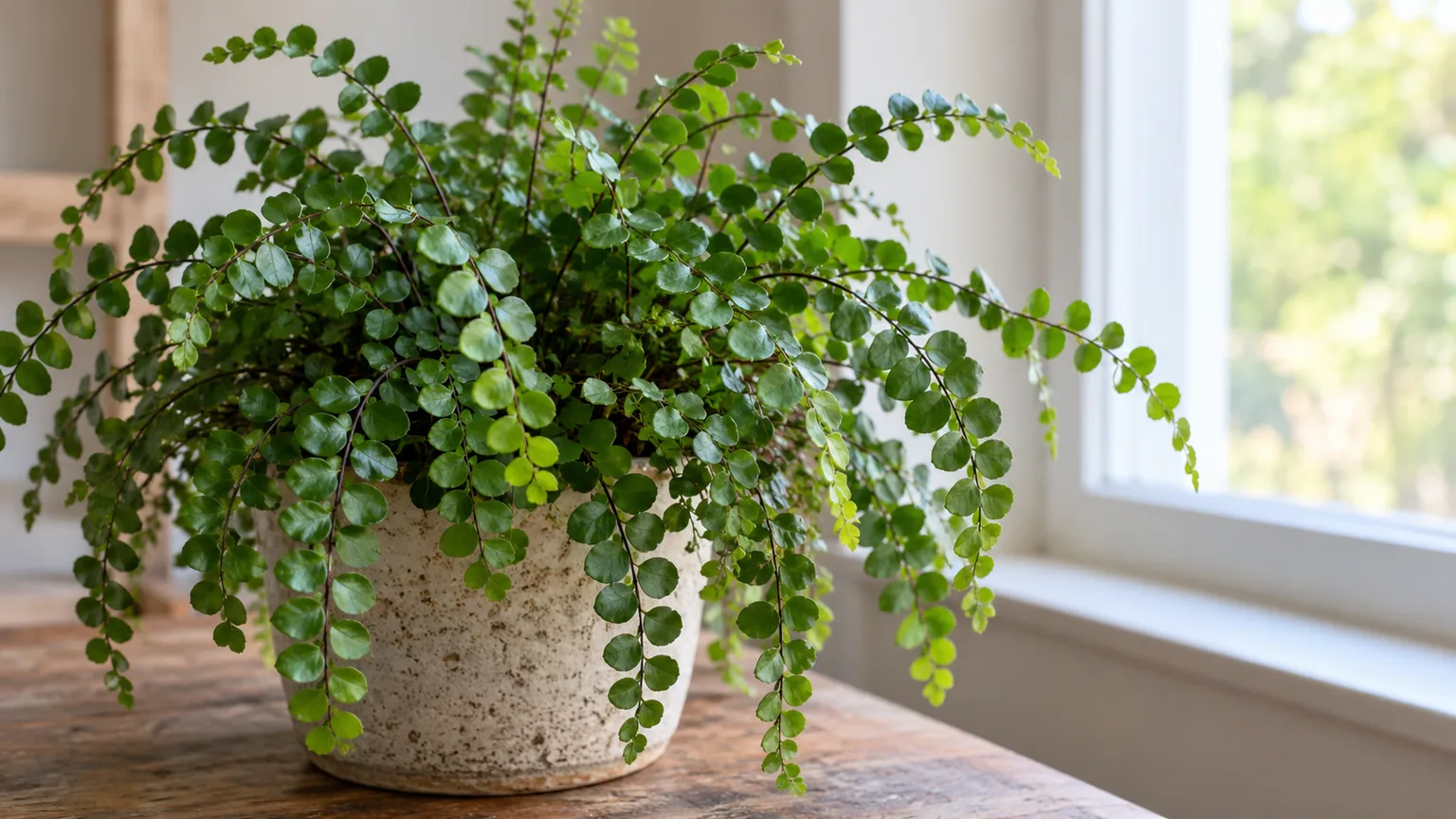
Button Fern is native to New Zealand and Australia; rocky crevices and open woodland, typically reaches About 15–30 cm (6–12 in) tall and wide, with arching fronds indoors, with slow growth. Button Fern has a compact, evergreen, rhizomatous fern growth habit and part of the Pteridaceae family. It is also known as New Zealand cliff brake, round-leaved fern, and tarawera.
| Detail | Information |
|---|---|
| Also known as | New Zealand cliff brake, round-leaved fern, tarawera |
| Native region | New Zealand and Australia; rocky crevices and open woodland |
| Mature size | About 15–30 cm (6–12 in) tall and wide, with arching fronds |
| Growth rate | Slow |
| Growth habit | Compact, Evergreen, Rhizomatous Fern |
| Scientific name | Pellaea rotundifolia |
| Family | Pteridaceae |
How to care for Button Fern?
When should you water Button Fern?
Water when the top 2–3 cm (about 1 in) of mix has dried, then let the pot drain fully. Allow slight surface drying between waterings, but do not leave the whole root ball bone-dry for long.
- Check top 2 inches - Water when the top 2–3 cm (about 1 in) of mix has dried, then let the pot drain fully.
- Drain excess water - Water when the top 2–3 cm (about 1 in) of mix has dried, then let the pot drain fully.
What soil works best for Button Fern?
Loose, humus-rich, slightly acidic mix that retains some moisture but drains freely; add perlite or coarse sand to a peat- or coir-based potting mix.
- Well-draining mix - Loose, humus-rich, slightly acidic mix that retains some moisture but drains freely; add perlite or coarse sand to a peat- or coir-based potting mix.
Grower notes for Button Fern
Identify the right button fern
Button Fern is Pellaea rotundifolia, a compact fern with rounded, deep-green leaflets on dark, arching stalks. Lemon Button Fern is a different plant, Nephrolepis cordifolia 'Duffii'; do not assume the two share identical care just because their common names sound alike.
Give it filtered light
Place an indoor Button Fern in medium to bright indirect light. It can tolerate some shade, but growth may be slower there. Protect it from hot, direct midday sun; outdoors, the species can take brighter exposure when sheltered from that heat.
Let the surface dry a little
Unlike ferns that need constantly wet compost, Pellaea rotundifolia tolerates a brief dry-down and dislikes waterlogged roots. Check the mix rather than following a fixed calendar: water when the surface layer dries, then empty the saucer. Do not let the entire pot dry out for an extended period.
Keep the mix airy
Its natural habitat includes rocky crevices, so use a loose, well-drained medium. An acidic, humus-rich potting mix with coarse sand or perlite helps balance moisture retention with air around the roots. Misting is not required for routine care.
Repot only when it needs room
This fern grows slowly and is not a heavy feeder or frequent repotting project. Wait until roots fill the pot, then refresh the mix in spring and move up one size at most. Rhizome division is a practical way to propagate a mature plant.
Is Button Fern safe for pets?
The ASPCA lists Button Fern (Pellaea rotundifolia), also called Cliff Brake, as non-toxic to cats, dogs and horses. That listing does not establish safety for rabbits, birds, turtles or tortoises; prevent access by pets not specifically covered and ask an exotics veterinarian about ingestion.
ASPCA's exact Pellaea rotundifolia entry lists the plant as non-toxic to cats, dogs and horses. Do not extend that classification to other animal groups without species-specific evidence.
Watering Button Fern
Water when the top 2–3 cm (about 1 in) of mix has dried, then let the pot drain fully. Allow slight surface drying between waterings, but do not leave the whole root ball bone-dry for long.
Soil & potting for Button Fern
Loose, humus-rich, slightly acidic mix that retains some moisture but drains freely; add perlite or coarse sand to a peat- or coir-based potting mix.