25 Easy Terrarium Plants for Open or Closed Glass
Choose 25 easy terrarium plants by vessel type, humidity, light, mature size, and care needs—with a clear list of plants to avoid.
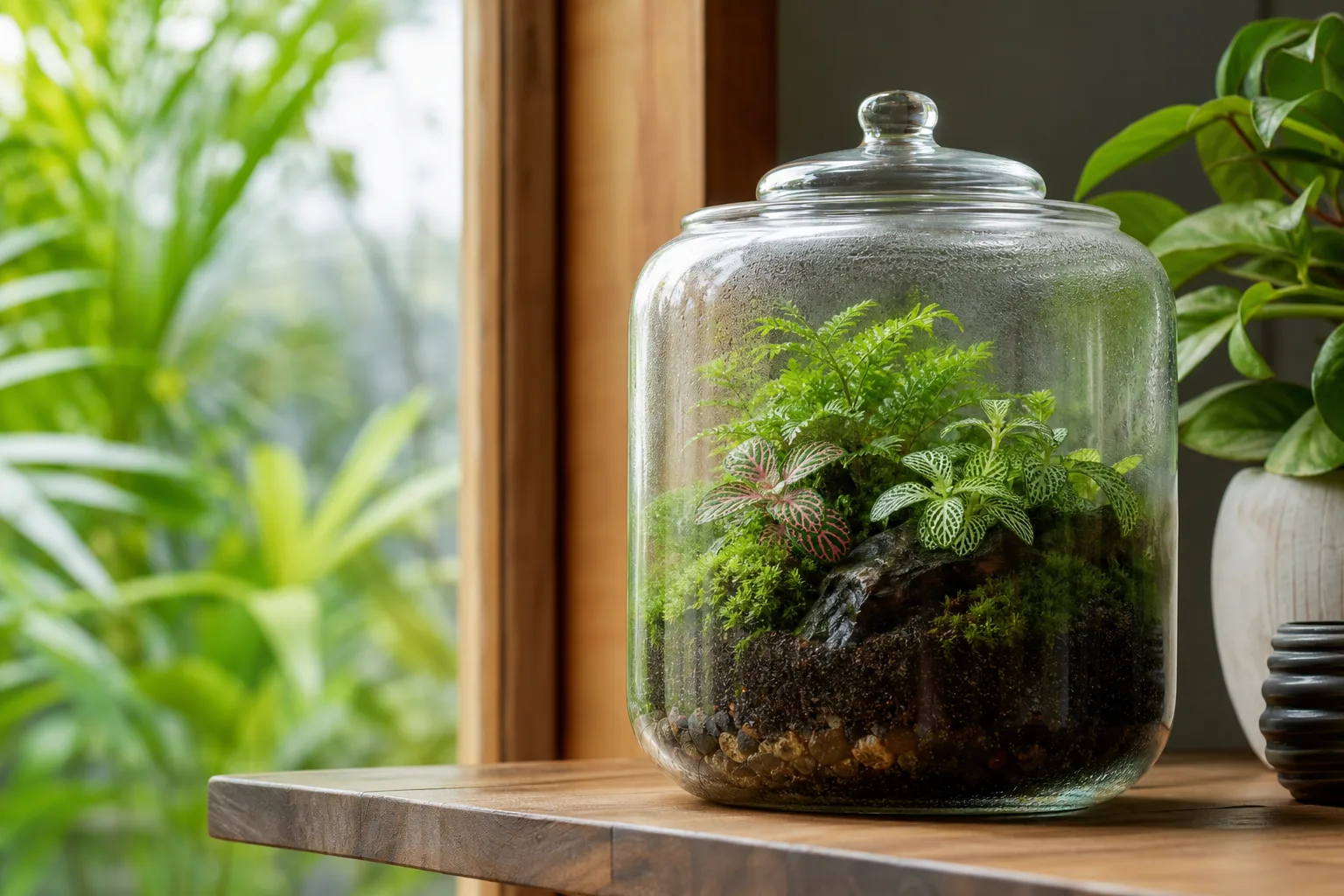
The easiest terrarium plant is the one that wants the climate your container creates. A lidded jar is humid, still, and slow to dry. An open bowl is brighter and better ventilated. Those are different habitats, so a plant that thrives in one can rot in the other.
Choose the vessel before you shop for plants. Then select a slow-growing plant that will fit its mature size, tolerate the available light, and share the same moisture range as its neighbors. A terrarium should be small enough to manage but not so crowded that leaves stay wet all day.
Match the plant to the terrarium first
A terrarium is a miniature growing environment, not a sealed ornament. In a closed vessel, water evaporates from the soil and leaves, condenses on the glass, and returns to the substrate. In an open vessel, moisture leaves the system more quickly and roots receive more airflow.
Open and closed vessels create different climates
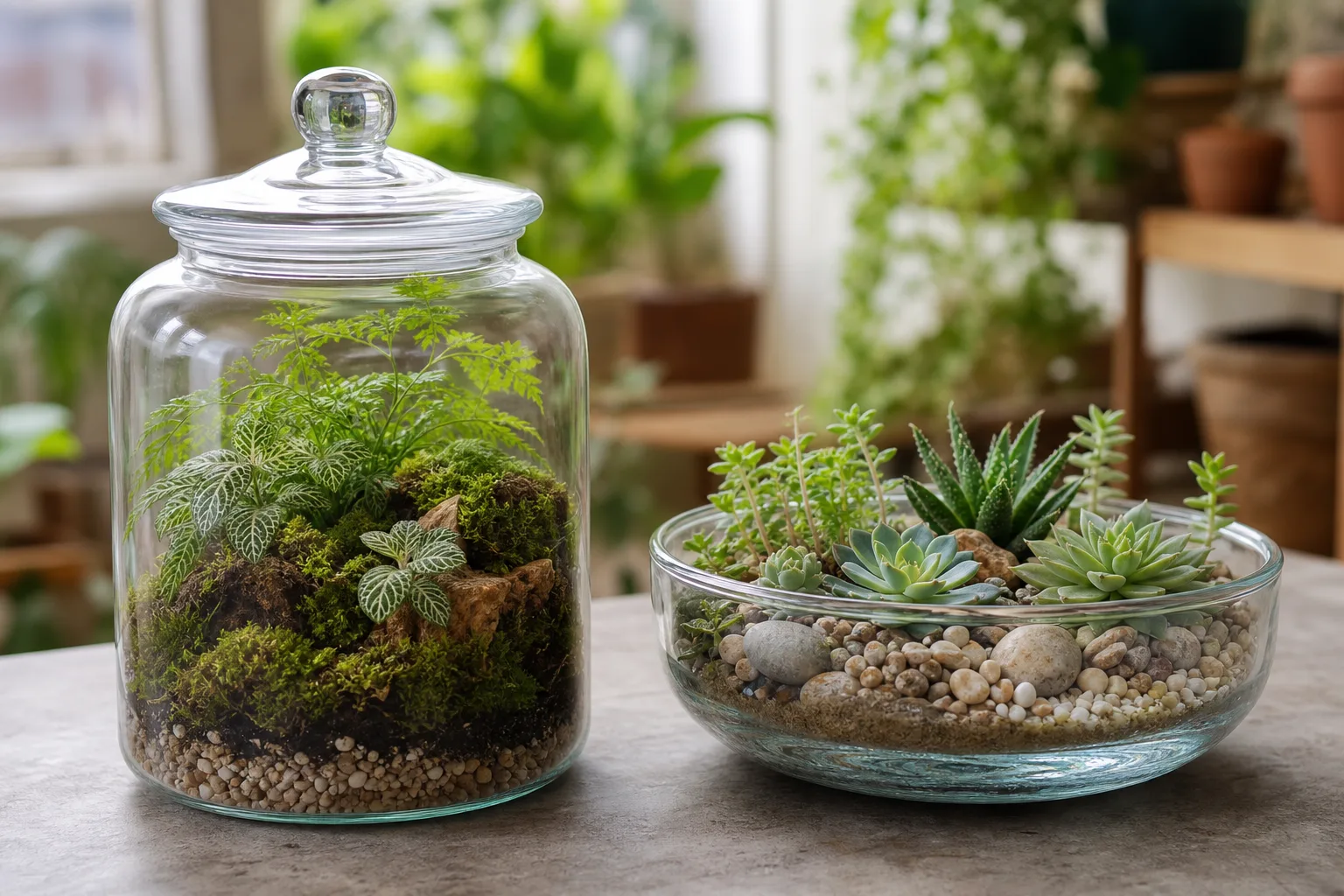
Use closed terrariums for humidity-loving foliage plants, mosses, and small ferns. Use open terrariums for air plants, small peperomias, haworthias, and other plants that prefer drier cycles. A sunny window can overheat either type; bright, indirect light is the safer default.
Best closed-terrarium plants
The strongest closed-jar choices include fittonia, baby tears, aluminum plant, polka dot plant, button fern, small maidenhair fern, pilea, creeping fig, small prayer plant, moss, and spike moss. These plants can handle higher humidity, but they still need clean foliage, airy substrate, and occasional ventilation if condensation stays heavy.
Do not plant a closed jar with a full-size houseplant just because it fits on day one. A slow-growing cutting or young plant can become a maintenance problem within one season. Choose one focal plant with a few low companions rather than filling every inch.
Best open-terrarium plants
Open bowls suit haworthia, echeveria, small sedum, hens-and-chicks, air plants, peperomia, ripple peperomia, miniature jade, and compact cacti. Use a gritty mix and keep water away from rosettes. These plants still need bright light and airflow; an open container does not compensate for a dark shelf or constantly wet soil.
25 easy terrarium plants
Small foliage plants for humid glass
-
Fittonia, or nerve plant (Fittonia albivenis), is a classic closed-terrarium plant. Its small leaves and colored veins show when the plant is thirsty, but do not wait for repeated collapse. Keep it in bright, indirect light and pinch growing tips when it crowds the glass.
-
Baby tears (Soleirolia soleirolii) forms a low carpet in humid conditions. It spreads quickly, so put it at the front of a jar and trim it before it climbs over slower plants.
-
Aluminum plant (Pilea cadierei) adds silver markings and upright texture. It likes humidity and indirect light but can outgrow a tiny vessel. Root a small cutting or prune regularly.
-
Polka dot plant (Hypoestes phyllostachya) brings pink, white, or red leaf spots. It becomes leggy in low light, so pinch it and provide brighter filtered light than a label marked “low light” might suggest.
-
Peperomia (Peperomia spp.) includes compact, thick-leaved forms that work especially well in open vessels or lightly covered terrariums. Keep the mix airy because a small root system can rot in a large, saturated layer.
-
Ripple peperomia has textured leaves that hold visual interest without requiring a large root run. Let the surface dry slightly between small waterings.
-
Miniature pilea brings round leaves and a low mound. It is easier to manage than a plant that vines aggressively, making it useful in a beginner jar.
-
Small prayer plant (Maranta spp.) enjoys humidity and filtered light. Give it a wider container and room for leaves to move; do not bury its crown or keep it pressed against a wet glass wall.
Ferns, mosses, and trailing plants
-
Button fern (Pellaea rotundifolia) prefers an open or lightly covered terrarium with steady but not stagnant moisture. Its small leaflets make it more manageable than a large Boston fern.
-
Maidenhair fern (Adiantum spp.) can look beautiful in a humid case but is less forgiving of drying. Choose it only if you can maintain consistent moisture and avoid hot sun.
-
Frosty fern (Selaginella kraussiana) is a humidity-loving spike moss often sold as a terrarium plant. Keep it away from direct sun and trim spreading growth.
-
Spike moss (Selaginella spp.) likes moist air and shade-filtered light. It is a good groundcover in a closed display when the vessel has enough room for it to spread.
-
Sphagnum moss can be a living ground layer or a decorative accent, but do not pack it into a solid, waterlogged mat. Leave enough air space for roots and remove browning sections.
-
Club moss (Lycopodium or related terrarium forms) needs humidity and space to spread. Confirm the plant’s identity before buying because “moss” is used loosely in the trade.
-
Creeping fig (Ficus pumila) can climb the glass and create a miniature vine effect. It grows faster than many terrarium plants, so prune it early and do not place it with delicate groundcovers.
-
Oak-leaf creeping fig is a smaller-looking form, but it still needs trimming and can attach to surfaces. Use a terrarium with enough vertical room.
-
Artillery fern (Pilea microphylla) offers tiny leaves and a fine texture for a humid open or closed display. Give it room to spread and remove it if it overwhelms slower neighbors.
Air plants and dry-loving plants
-
Air plants (Tillandsia spp.) belong in an open terrarium with ventilation, not a sealed jar. Soak or rinse according to the plant’s needs, then let it dry completely before returning it to the display.
-
Haworthia (Haworthia spp.) is a compact succulent for an open vessel with bright light. Use gritty mix and water only after the roots and mix have dried.
-
Echeveria forms a colorful rosette in a bright open bowl. Keep water out of the center and do not combine it with tropical foliage in a closed container.
-
Hens and chicks (Sempervivum spp.) needs strong light and fast drainage. It is better in an open dish than a jar and may stretch if kept indoors too far from a window.
-
Small sedum trails or forms low mats in open arrangements. It requires more light and a drier cycle than fittonia.
-
Miniature jade plant (Crassula ovata) works in an open terrarium if you use a small specimen and gritty mix. It will eventually become a bonsai-like plant rather than staying miniature forever.
-
Small cactus can work in an open display with bright light, coarse substrate, and very little water. Spines make it a poor choice for a child-accessible terrarium.
-
Venus flytrap (Dionaea muscipula) is an advanced choice. It needs strong light, mineral-free water, and nutrient-poor acidic media. Do not put it in a decorative jar with ordinary potting soil or fertilize it like a houseplant.
Plants that look tempting but usually fail
Large pothos, croton, rubber plant, standard peace lily, full-size fern, and fast-growing coleus quickly outgrow a small terrarium. They can be used in a large display case with active pruning, but they are not low-maintenance miniature plants.
Most succulents and cacti fail in a sealed, humid jar because their leaves and roots are adapted to drying and airflow. Conversely, a maidenhair fern usually fails in a dry, open bowl because it loses moisture faster than its thin leaflets can replace it. Do not solve a plant mismatch by adding more water.
How many plants fit in one terrarium?
Use one focal plant plus two or three smaller companions in a quart-sized jar, or start with fewer than you think you need in a larger vessel. Leave visible soil and room between leaves. Plants grow toward the light, and crowded foliage traps condensation, hides pests, and makes pruning difficult.
Before planting, set the nursery pots inside the empty container and look from every side. If the plants touch the glass already, they are too large. Put taller plants toward the back and keep a path to the surface so you can remove a leaf or plant without dismantling the arrangement.
Light, watering, and ventilation rules
Bright, indirect light is usually safest. Direct afternoon sun through glass can raise the internal temperature quickly. A closed terrarium with persistent heavy condensation needs a short period of ventilation; a closed terrarium with completely dry glass and wilting plants needs a small amount of water, not a flood.
There is no universal terrarium watering schedule. Add water slowly at the soil surface, wait for it to spread, and stop when the mix is evenly damp but not muddy. In an open terrarium, check the surface and pot weight. In a closed terrarium, watch the condensation cycle and plant turgor.
Fix mold, rot, and overcrowding
Remove dead leaves as soon as you see them. If mold appears, wipe the glass, remove affected debris, ventilate the vessel, and pause watering. If a plant has a soft crown or sour-smelling roots, remove it rather than hoping a closed ecosystem will repair rot.
When a terrarium becomes crowded, prune the fastest grower first. If roots are tangled or the soil stays wet for days, remove and replant the healthiest specimens in fresh, airy medium. Charcoal can help with odors in some builds, but it cannot fix overwatering or poor plant selection.
Conclusion: choose the climate before the plant
Fittonia, baby tears, small ferns, pilea, peperomia, and moss are dependable starting points for a humid closed terrarium. Haworthia, echeveria, air plants, sedum, and small cacti belong in an open, bright arrangement. The container’s airflow and drying rate matter more than a list of fashionable names.
Start with fewer plants, watch moisture for two weeks, and prune before the glass becomes crowded. A terrarium stays easy when you design for the plant’s mature behavior rather than the day you assemble it.



