How to Make a Carnivorous Plant Terrarium
A carnivorous plant terrarium can overheat or miss winter cues. Choose compatible plants, keep roots removable, and tailor water and dormancy to each.
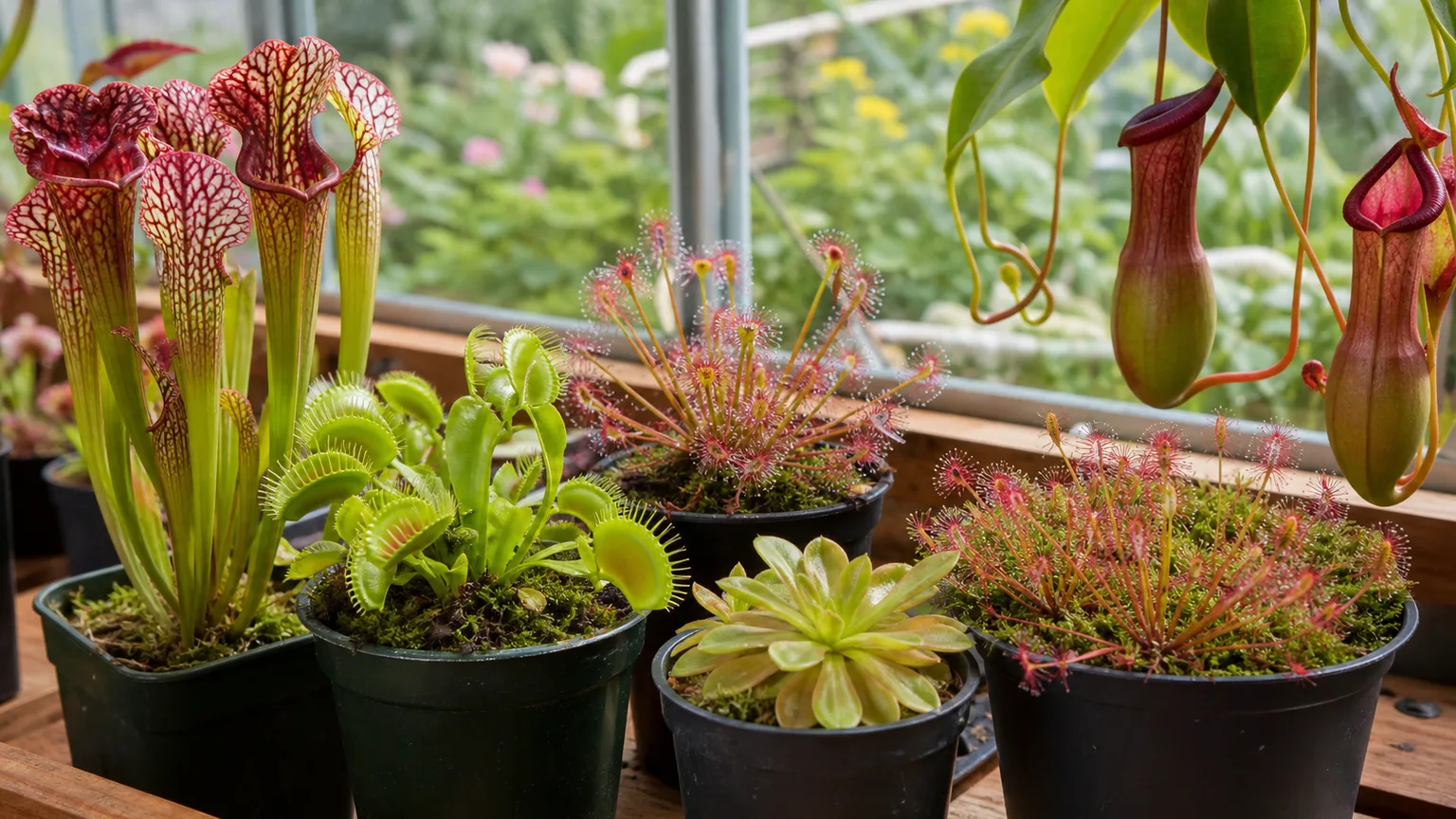
A carnivorous plant terrarium is a clear enclosure or display used to grow one or more insect-catching plants, but it does not have to be sealed or self-sustaining. The safest design begins with the plant’s habitat and seasonal cycle; the glass comes second. Venus flytraps, sundews, pitcher plants, and butterworts do not all want the same light, humidity, water, or winter conditions.
That distinction changes the build. Instead of mixing several species into a single sealed jar because they look compatible, start with one identified plant, keep its root ball in a removable pot, and choose a vessel you can ventilate, water, and move. A beautiful terrarium is useful only if you can still meet the plant’s care requirements after the novelty of the setup wears off.
What a Carnivorous Plant Terrarium Can—and Cannot—Do
A terrarium can slow moisture loss and make a small plant display easier to observe. A partly enclosed vessel may also provide extra humidity for a species that benefits from it. But glass cannot create the correct climate by itself: it does not supply adequate light, remove excess heat, guarantee clean water, or provide the cool rest some plants need.
Carnivorous plants evolved in different environments, including temperate bogs and tropical forests. The Royal Horticultural Society’s growing guide emphasizes that requirements vary widely across these habitats. A humid, shaded jar might suit one plant for part of the year and stress another that needs bright sun, moving air, or seasonal dormancy.
Think of the enclosure as a display tool, not a substitute for knowing the plant. You may be able to grow the plant in its original nursery pot and set that pot inside a clear bowl, aquarium, or glass cylinder. That arrangement still gives you the terrarium look, but it makes it possible to lift the plant out when you need to inspect roots, refresh water, or change its seasonal location.
Choose Plants Before You Choose a Container
Check the plant label for the scientific name, mature size, preferred light, water quality, temperature range, and dormancy needs. A common name such as “pitcher plant” can refer to plants from very different climates. Even plants in the same genus can vary, so a species or cultivar label is more useful than a broad care tag.
The RHS lists Cape sundew, Venus flytrap, and purple pitcher plant among options that can be grown as houseplants, while also separating tropical pitcher plants and other indoor choices. That does not mean they all belong together. If you are still deciding which trap shape or growth habit you like, compare the carnivorous plant varieties first, then match the plant’s needs to a site you can actually provide.
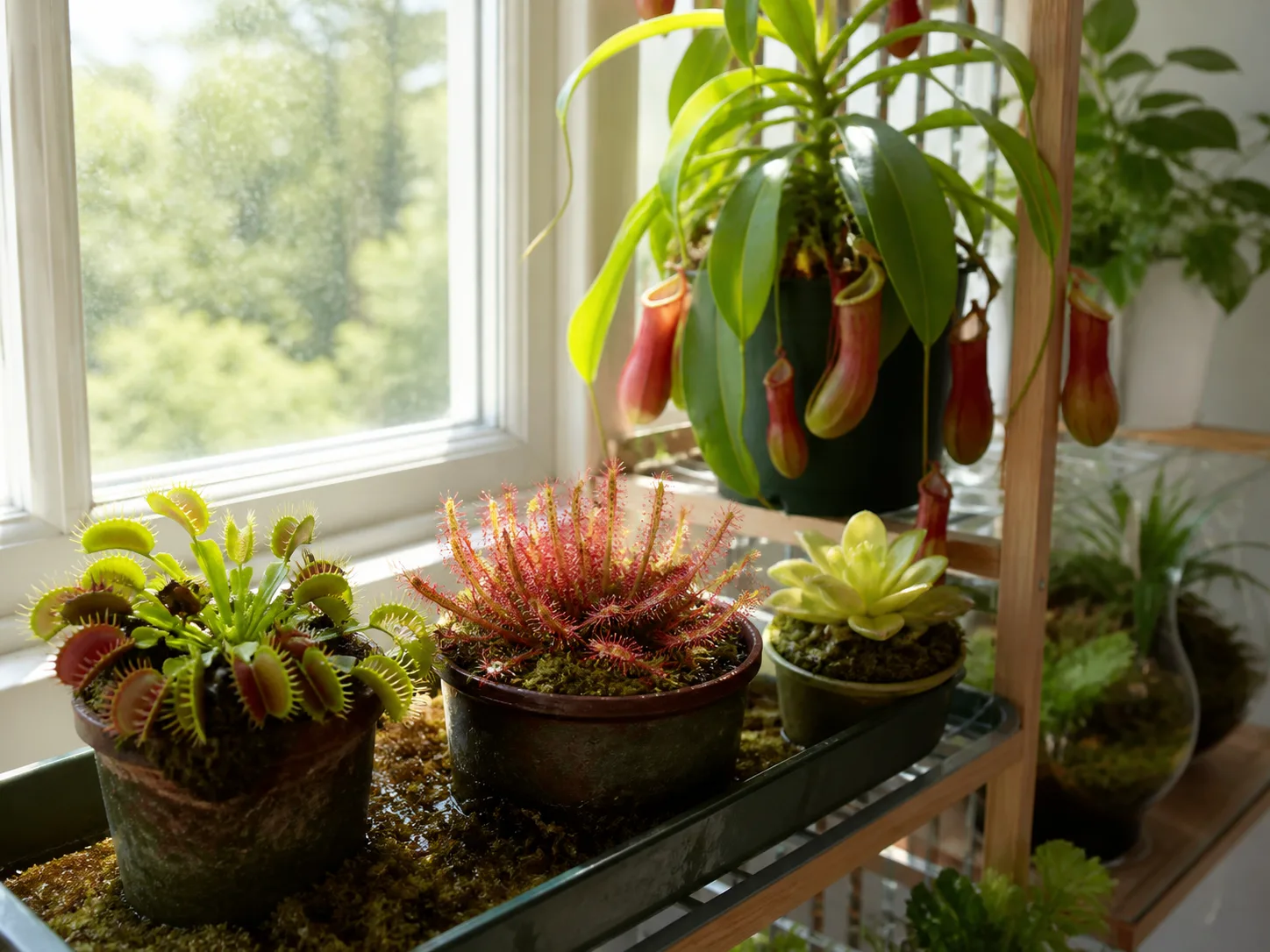
A practical compatibility check is to compare five conditions side by side: winter temperature, direct-light tolerance, humidity, root-zone moisture, and mature size. If one plant needs a cool dormant season and another needs warm tropical nights year-round, they are poor permanent roommates even if both appreciate clean water and nutrient-poor media.
Tropical Pitcher Plants Need Room and Air
Tropical pitcher plants in the genus Nepenthes are often displayed in hanging baskets because their pitchers dangle from leaves and some plants become vining or wide. A tall, narrow jar may trap humidity but leave no room for that natural growth. It can also make it awkward to remove dead leaves or inspect the plant.
A ventilated cabinet, open-top glass vessel, or display around the nursery pot is usually easier to manage than a sealed container. Some Nepenthes appreciate higher humidity, but warm lowland types and cooler-growing highland types can have different temperature needs. Read the grower’s instructions for the actual plant instead of using “tropical” as a complete care plan.
Sundews and Butterworts Need Species-Level Matching
Sundews (Drosera) and butterworts (Pinguicula) are diverse groups, not single care profiles. Some small species can be attractive in a humid display, while others need intense light, a seasonal rest, or a drier phase that a permanently wet terrarium would prevent. Cape sundew, for example, is often offered as a beginner plant, but its care still depends on providing the light and water quality its grower specifies.
A terrarium may make sense if the chosen species stays small and the vessel lets you provide the right light and air exchange. Keep delicate plants away from wet glass where leaves press against condensation, and leave room to lift each pot out. If a plant’s exact seasonal cycle is unclear, grow it separately until you have a full year of observations rather than committing it to a mixed planting.
Venus Flytraps and Sarracenia Need a Seasonal Plan
Venus flytraps (Dionaea muscipula) and many trumpet pitcher plants (Sarracenia) are temperate bog plants. Their active-season needs commonly include strong light and consistently moist, low-nutrient media, while many also undergo a cooler winter rest. They are therefore poor choices for a permanently warm, sealed terrarium that stays under indoor room conditions all year.
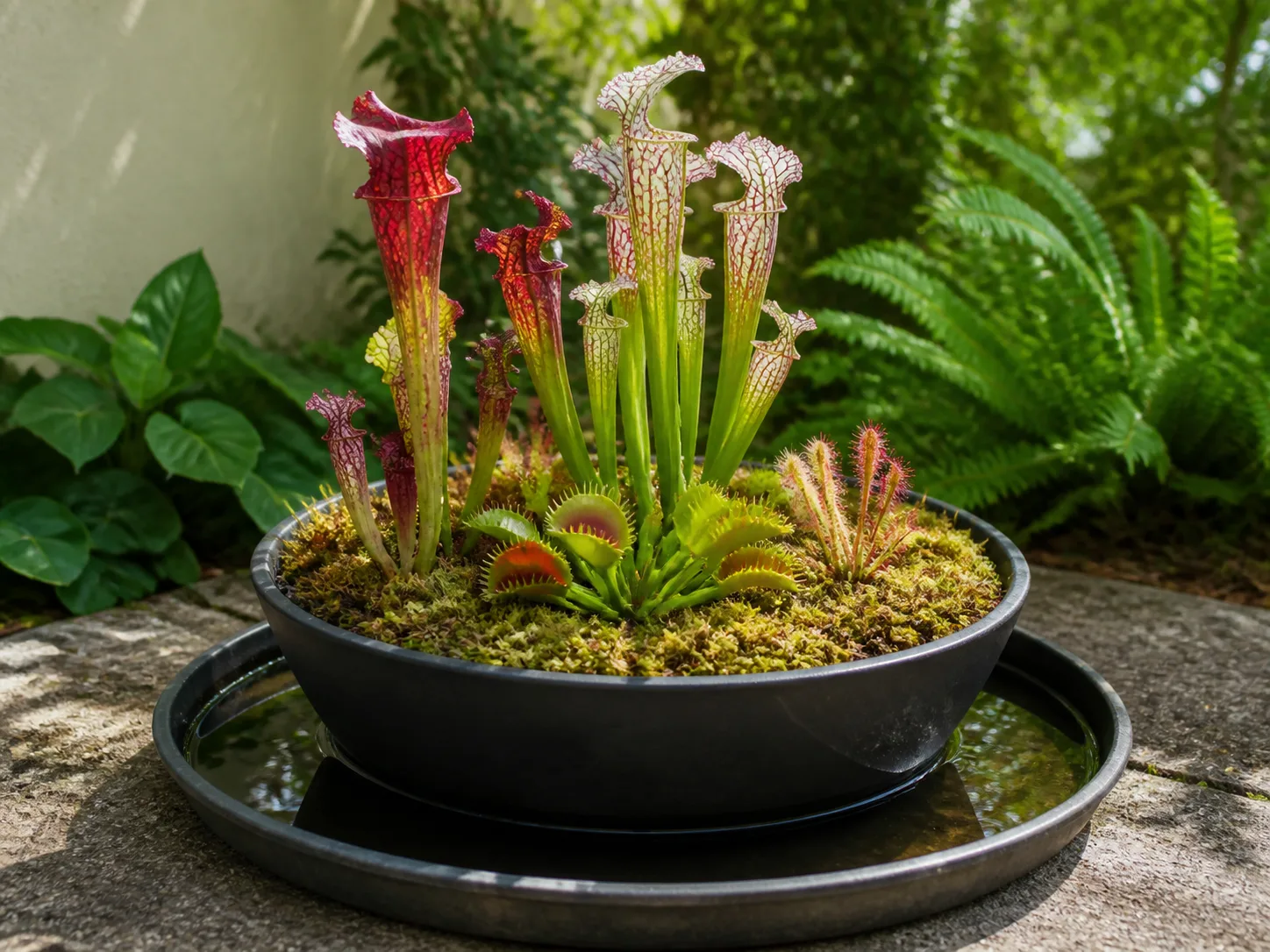
An open terrarium can still serve as a seasonal display if the plant remains in a removable pot and can go outdoors or into an appropriate winter location. Sarracenia can become tall and substantial, so a small jar is not a long-term home even if a juvenile plant fits today. The RHS care article featuring specialist grower Matt Soper also cautions against treating a Venus flytrap as an ordinary houseplant with routine fertilizer and snacks.
Open, Ventilated, or Closed: Which Vessel Fits?
For a first build, an open or easily ventilated vessel is the most forgiving choice. It lets heat escape, gives you access to water and plants, and makes it easier to adapt humidity without sealing in stagnant air. A wide opening is more useful than a dramatic narrow neck because you will need to remove pots and clean the glass.
| Vessel style | What it does well | Main trade-off | Better starting use |
|---|---|---|---|
| Open bowl or cylinder | Easy access and airflow | Humidity stays closer to the room | Plants that tolerate ordinary indoor humidity or a seasonal display |
| Vented aquarium or cabinet | Adjustable humidity with room for care | Needs a light and temperature plan | Species confirmed to benefit from higher humidity |
| Lidded jar or cloche | Holds moisture with little evaporation | Heat and stagnant air can build quickly; difficult to service | Only a small, compatible plant when its care instructions support enclosure |
A closed container is not automatically harmful, but it reduces your margin for error. Bright sunlight through glass can warm the inside well above the room temperature, while a wet, still enclosure can keep leaves and dead plant material damp. If you experiment with a lid, use a thermometer, start with the lid partly open, and check temperatures and condensation at the warmest part of the day.
Gather Materials That Protect the Root Zone
Choose the container only after you know the mature plant’s dimensions and growing season. It should be clear, stable, easy to reach into, and wide enough to lift the plant out without scraping traps or pitchers. Avoid painted or chemically treated interior surfaces where water will collect.
For a removable-pot setup, gather the plant in its current nursery pot, a clean outer vessel, a separate catch tray if the species uses one, water approved for that plant, and its recommended carnivorous-plant medium if repotting is actually needed. A thermometer helps spot heat buildup; a low-mineral water meter can help you check water when the grower gives a dissolved-solids limit. You do not need decorative gravel, fertilizer, charcoal, or a layered drainage base to make the display functional.
If the plant arrived healthy and has room in its pot, leave it there initially. Repotting immediately adds stress and can disturb fine roots; the RHS notes that many new carnivorous plants can remain in their purchased container for at least the first year. Make the first project about a safe display, not a full root-system rebuild.
Keep the Growing Medium Specific to the Plant
Ordinary potting mix, garden soil, compost, and fertilizer-rich blends can carry more nutrients or minerals than many carnivorous plants tolerate. Use the grower’s named mix or a product explicitly made for the exact group you are growing. The RHS growing guide notes that media recipes differ, and its ongoing peat-free trials are focused on particular Sarracenia rather than proving one mix works for every carnivorous genus.
Peat-free options are evolving. In an RHS case study with Hampshire Carnivorous Plants, specialist grower Matt Soper describes testing mixes and using sustainably sourced sphagnum with other inert or fibrous materials. That is useful evidence that peat-free media can work, but it is not a reason to substitute any bag of coir, bark, or moss without checking its ingredients, salts, pH, and intended species.
Do not bury a crown, rhizome, or growing point beneath decorative top dressing. If you repot, rinse reusable components as the supplier directs and keep the root ball at the same depth unless the plant’s instructions say otherwise. Keep the substrate loose enough for the species; adding extra gravel at the bottom does not turn an unsuitable, compacted mix into a well-draining root zone.
Build a Removable-Pot Terrarium Step by Step
- Confirm the plant’s identity and care cycle. Write down its light, temperature, water, growing-medium, humidity, mature-size, and dormancy requirements. If the label only says “pitcher plant” or “sundew,” contact the seller before choosing a permanently sealed vessel.
- Select an enclosure that leaves room to work. Choose a wide-mouth glass vessel or a vented display where you can reach every side of the pot. For a plant that needs direct sun outdoors or winter dormancy, plan to lift it out rather than forcing the enclosure to remain in one place.
- Clean the vessel and keep the nursery pot intact. Rinse the glass with water and let it dry; avoid cleaners that leave residue. Set the pot inside the outer vessel, using a stable, dry spacer only if needed to keep drainage holes above any pooled water.
- Set up the correct water routine. Put a separate tray under the pot only if that species is grown with a water tray. Do not fill the terrarium’s bottom with water to an arbitrary depth; a closed layer of standing water can make the root zone impossible to monitor and may not suit the chosen plant.
- Position the plant for light and airflow. Keep leaves and pitchers from touching the glass, and leave enough space around the crown for new growth. If you are combining plants, group only those with documented overlapping requirements and keep each in its own pot.
- Test the enclosure before closing it. Start open or partly open and monitor plant-level temperature, moisture, and condensation for several days. Close it further only if the exact species benefits, temperatures remain safe, and the plant shows no sign of persistent wetness or decline.
This method is easy to revise. If humidity proves too low, you can adjust ventilation or move the plant to a more suitable location; if heat or mold appears, you can remove the plant immediately. A planted-in substrate terrarium is harder to correct because the roots, water reservoir, and decorative layers are all mixed into one space.
Set Light and Temperature Without Overheating the Glass
Light needs vary sharply across carnivorous plants. Many bog species develop best color and sturdy growth in very bright light, and a Venus flytrap grown indoors may struggle even if a room looks bright to you. Some tropical forest plants prefer bright filtered light rather than prolonged direct sun, especially when a glass enclosure can amplify heat.
A sunny window is not a universal answer. Measure the enclosure temperature at plant height during the hottest hours, not just the room temperature in the morning. If the glass becomes hot, move it out of direct sun, open the lid, or switch to a suitable grow light placed at the distance recommended by its maker and the plant grower.
Plants accustomed to greenhouse light can scorch when moved abruptly to a harsher window or outdoor sun. Acclimate them in stages and watch new leaves rather than judging the transition from one old leaf. A grow light solves a lack of sun only when it provides adequate intensity and duration without overheating the enclosed air; decorative desk lights may not provide enough useful light.
Water by Plant and Substrate, Not by Condensation
Water droplets on the glass tell you that water vapor is condensing; they do not prove that the root zone is correctly moist or that the plant has enough humidity. Lift the pot and check its weight, look at the substrate surface and drainage, and follow the routine for that species. For a bog plant grown in a tray, maintain the recommended water level in the tray; for a plant that should drain freely, empty the outer vessel instead of leaving its roots submerged.
Many commonly grown bog species are sensitive to dissolved minerals, so collected clean rainwater, distilled water, or reverse-osmosis water are common options. The RHS guidance prefers rainwater when possible and warns that minerals can accumulate when tap water is used regularly; its advice also shows why an absolute “tap water always kills” rule is too blunt. Water chemistry differs by location, so check the grower’s limit for the species and measure your supply when the instructions provide a threshold.
Boiling water does not remove dissolved mineral salts. Filtering through a standard pitcher filter does not guarantee that water is suitable either. If rainwater is collected from a roof, keep the first dirty runoff out and store the water in a clean container; if the source may be contaminated, choose distilled or reverse-osmosis water instead.
Do not mist on a fixed daily schedule just to make the glass look dewy. Misting changes humidity briefly and can leave leaves wet without correcting poor light, dry roots, or high heat. Adjust ventilation and watering for the plant’s actual requirements, then remove dead leaves that stay damp against the substrate.
Feeding and Fertilizer Are Not a Terrarium Schedule
Carnivorous plants still make most of the energy they use through photosynthesis. Insects provide nutrients that are scarce in many native soils; they are not a substitute for light, and a lack of visible prey does not mean the plant needs an immediate feeding. Plants kept near an open window or outdoors may capture prey on their own.
A broad interval such as one or two insects per month appears in Gardening Channel’s guide by Matt Gibson, but treat it as an example rather than a universal calendar. Trap type, active growth, and whether the plant is already catching prey all change the decision.
Do not use a universal “feed every two weeks” schedule. Trap type and plant condition matter: a Venus flytrap needs appropriate prey small enough for the trap to close and digest, sundews capture prey on sticky leaves, and pitcher plants receive prey inside their pitchers. If you choose to supplement a plant indoors, use an appropriate insect food and follow its species-specific instructions; do not put meat, cheese, pet food, or a large insect into a trap just to watch it close.
For most species, fertilizer is unnecessary and ordinary root-zone fertilizer can harm the plant. The RHS guide says most carnivorous plants need no additional fertilizer, while some specialist growers may use carefully controlled methods for particular plants. Do not add fertilizer pellets to pitchers or dissolve houseplant fertilizer into the shared terrarium water unless a qualified grower’s guidance for that exact species specifically calls for it.
The RHS interview with Venus flytrap grower Matt Soper cautions against feeding flytraps human food or repeatedly triggering their traps. If you want more detail on when and how prey supplementation is used, see our guide to what Venus flytraps eat; do not carry its species-specific advice over to unrelated genera.
Plan for Winter Before the Plants Slow Down
Some temperate carnivorous plants need a cool dormant season, while many tropical plants should not be chilled to simulate one. A sealed indoor terrarium can keep a Venus flytrap or Sarracenia warm and actively illuminated when its normal seasonal cues are changing. Decide before planting whether you have a suitable cool, protected location for the plant’s rest.
Watch the exact plant and its label rather than following a calendar copied from another climate. Reduced growth, smaller leaves, or browning traps can occur as a temperate plant enters dormancy; the center of the plant should still be assessed for healthy tissue and the cycle expected for that species. Do not put a tropical Nepenthes in a cold shed, and do not keep a dormant temperate plant in a heated sealed display simply because the terrarium is indoors.
Winter watering is one area where grower routines can differ with climate and setup. The RHS guide advises that many plants rest with reduced watering and that excess water should be discarded, while Sarracenia Northwest’s grower Q&A explains why a Venus flytrap outdoors in its own conditions may still need its medium kept moist through winter. Those are not interchangeable instructions: use the species, local climate, pot, and overwintering site to set the routine.
The Carnivorous Plant FAQ by Barry Rice describes dormancy as a normal seasonal phase for Venus flytraps and recommends cool conditions rather than an excessively warm “winter.” Treat exact temperature limits as plant-specific, especially for hybrids and plants sold for different climates. When a plant needs a separate seasonal location, lift out its pot and let the terrarium serve as a display for a different species until spring.
Troubleshoot Mold, Browning, and Stalled Growth
A little condensation after a temperature change can be normal; water streaming down the glass all day, musty substrate, or a carpet of mold suggests the enclosure is staying too wet or still. Open the vessel, remove dead material, and check whether water is pooled around the pot. Increase airflow and correct the root-zone routine before reaching for fungicide, since the visible mold may be a symptom of conditions rather than the main problem.
Browning traps are not one diagnosis. A Venus flytrap may lose older traps as part of seasonal change, while a plant that browns across new growth may be reacting to insufficient light, mineral buildup, heat, damaged roots, or an inappropriate dormancy pattern. Compare the timing and location of the damage: old outer leaves dying as new central growth appears is different from a whole plant collapsing after a hot day in a sealed jar.
If growth stalls, change one condition at a time and record what you changed. First confirm the species, then check light and temperature at the plant, water quality, moisture, and whether a seasonal rest is expected. Avoid repotting, fertilizing, feeding, and changing light all in the same week; doing several things at once can compound stress and leaves you unable to tell which correction helped.
Crowding is another fixable problem. Remove or separate plants that shade one another, press against wet glass, or require different seasonal conditions. A small display with one well-matched plant is more stable—and often easier to appreciate—than a mixed jar whose occupants compete for light and space.
Conclusion
A carnivorous plant terrarium can be a useful display, but no glass container makes different species’ care requirements interchangeable. Choose a labeled plant first, match its light, humidity, root-zone moisture, water quality, and winter cycle, and use an open or adjustable enclosure unless you know a closed one suits that specific plant.
For the lowest-risk first setup, leave the plant in its nursery pot, place it in a clean clear vessel, and monitor heat, moisture, and condensation before changing the enclosure. Skip routine fertilizer and fixed feeding schedules; use water and prey practices that fit the species. If the plant needs stronger light, more air, or a cool dormancy than the display can provide, lift it out—the terrarium should adapt to the plant, not the reverse.



