Maranta Lemon Lime Care Guide: Light, Water & Humidity
Maranta leuconeura
Maranta Lemon Lime prayer plant care: bright indirect light, high humidity, filtered water, evenly moist soil, stem-cuttings propagation. Pet safe.
Maranta Lemon Lime Care Guide: Light, Water & Humidity
Start with wateringThe most common care mistake for Maranta Lemon LimeWatering guide →Maranta Lemon Lime care essentials
Light
medium indirect light, low indirect light
Water
Every 5–7 days - keep soil consistently moist at 2 cm depth. Use filtered or overnight tap water to avoid fluoride brown tips. Do not allow to dry out.
Soil
60 % potting compost + 20 % perlite + 20 % coco coir. Moisture-retaining and well-draining.
Humidity
high humidity; chartreuse tissue scorches in direct sun and crisps in dry winter air
Temperature
above 60°F (16°C); avoid cold drafts
Fertilizer
Feed lightly during active growth. Balanced liquid fertilizer.
About Maranta Lemon Lime
Maranta Lemon Lime has a upright growth habit.
| Detail | Information |
|---|---|
| Growth habit | Upright |
| Scientific name | Maranta leuconeura |
Maranta Lemon Lime Care Guide: Light, Water & Humidity
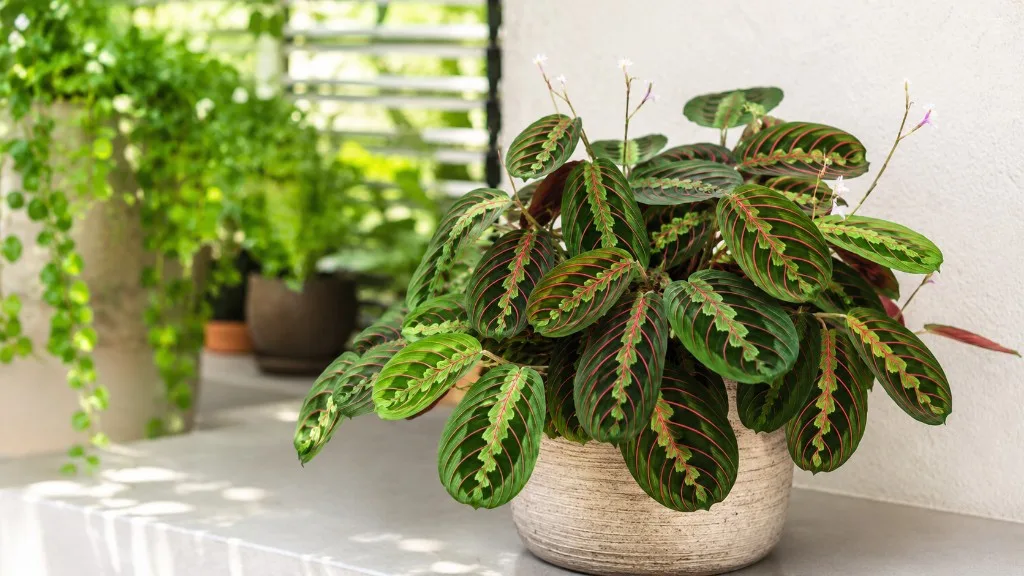
Walk into a room with a healthy Maranta leuconeura ‘Lemon Lime’ at dusk and you will see what makes prayer plants unforgettable: broad leaves lift and fold upward as light fades, exposing contrasting undersides while the lime-green central bands and red-brown vein tracery catch the last ambient glow. That nightly movement — nyctinasty — is more than a party trick on this chartreuse cultivar. It is your earliest signal that light rhythm, humidity, and root moisture are aligned before pale tissue crisps or pattern washes out in deep shade.
Lemon Lime at a glance: Maranta leuconeura ‘Lemon Lime’ — a chartreuse-and-green prayer plant with red vein accents. Foliage: bright lime-green central bands with darker green edges and red-brown vein tracery; color washes out in deep shade. Humidity: 55–65% RH; chartreuse tissue scorches in direct sun and crisps in dry winter air. Water: filtered, rainwater, or overnight-stood tap water — pale green sections show fluoride burn earliest. Difficulty: moderate — same Marantaceae baseline as other prayer plants.
This overview covers what Maranta Lemon Lime is as a cultivar, how to keep its signature color crisp indoors, and where to go next in the care cluster for watering, light, and problem-specific fixes when symptoms outpace general care.
What Maranta Lemon Lime Actually Is
Maranta Lemon Lime is a trade selection of Maranta leuconeura — the classic prayer plant — in the Marantaceae family. The species is an evergreen, rhizomatous perennial native to Brazil, where it spreads low across the humid forest floor beneath taller canopy. The Missouri Botanical Garden describes typical plants reaching 12–15 inches tall and as wide, spreading horizontally rather than climbing — a compact foliage plant suited to shallow pots, wide bowls, and hanging baskets.
Species, Cultivar, and the Chartreuse Pattern
What separates Lemon Lime from the red-veined ‘Erythroneura’ or footprint-marked kerchoveana is the color field: bright lime-green central bands bordered by darker green margins, with red-brown veins tracing outward like a lighter herringbone. NC State Extension lists ‘Lemon’ or Lemon Lime Prayer Plant among common M. leuconeura cultivars in trade. Indoors the plant is grown for these patterned leaves, not flowers — blooms are small and insignificant on typical houseplants, though their appearance usually means light, humidity, and moisture are already favorable.
Shop labels often blur Maranta, Calathea, Stromanthe, and Ctenanthe under “prayer plant.” For care and toxicity lookups, use the scientific name on the tag. Lemon Lime shares the species biology of M. leuconeura; it does not share Calathea’s typically stricter humidity ceiling or upright growth habit.
The Daily Leaf Fold: Nyctinasty on Lime-Green Leaves
Prayer plants fold through nyctinasty — a daily nastic movement driven by reversible turgor pressure in pulvini (swollen joints at the leaf base), not by new growth. By day, Lemon Lime leaves lie roughly parallel to the soil to capture light on the chartreuse surface. After dark, they rise vertically — the posture behind the common name. NC State Extension describes leaves held parallel to the ground by day and moving to a perpendicular prayer position at night.
The rhythm persists under artificial schedules because an endogenous circadian clock keeps time, though the plant still needs believable darkness. A Lemon Lime that stops folding often signals stress before brown tips appear: continuous overnight lighting, chronic underwatering, cold below about 60°F (15°C) per Missouri Botanical Garden, or very dry air. Watch newest leaves — partial overnight movement on clean new growth means the pulvinus system is intact.
Pulvini, Circadian Rhythm, and When Movement Stops
Move the pot where evenings stay genuinely dim for several hours if a hallway lamp or grow light runs late. Stress from low humidity or drought can leave blades partially open and limp at the edges — especially visible on thin chartreuse tissue. Confirm moisture in the top 2 cm of mix, raise humidity toward 60%, and avoid cold window sills before assuming disease. Subtle movement on cloudy winter days is normal; stalled folding on every new leaf is not.
How Lemon Lime Differs from Other Prayer Plant Cultivars
Care fundamentals match other M. leuconeura selections, but cosmetic sensitivity does not. Maranta leuconeura ‘Erythroneura’ — the red-veined herringbone form — telegraphs fluoride and humidity damage on thin dark-green margins. Lemon Lime shows the same problems earliest on pale green zones, because lighter tissue scorches and crisps before darker pigment buffers the stress. Direct midday sun bleaches chartreuse centers faster than it dulls red-veined patterns.
Maranta leuconeura var. kerchoveana (“rabbit tracks”) tolerates average humidity slightly better but still is not a dry-air plant. If you choose among cultivars at purchase, inspect the youngest fully opened leaf — vivid lime banding and clean edges predict how the plant will look in your home better than older lower leaves with cosmetic history.
Light Requirements for Vivid Lime Patterning
In Brazil the species lives in dappled understory — bright enough to hold variegation, never harsh enough to bleach pigments. Indoors, aim for bright, indirect or filtered light most of the day. Missouri Botanical Garden recommends bright indoor light without strong direct sun, noting that too much sun bleaches attractive leaf colors — especially punishing on Lemon Lime’s chartreuse field. NC State lists tolerance for low to medium light with the caveat that color fades and growth slows when light is weak.
Window Placement and Direct-Sun Limits on Chartreuse Tissue
A practical placement is 3–6 feet from an east-facing window, or behind a sheer curtain on south- or west-facing glass. Morning sun for an hour is usually fine; midday direct beams wash out lime bands, scorch pale tissue, and collapse the contrast that makes this cultivar worth keeping. Low light survival is possible — Maranta is more tolerant than many Calathea — but internodes stretch, new leaves emerge smaller and greener, and soil stays wet longer because transpiration drops — a setup that invites root rot misread as overwatering.
Rotate the pot weekly so rhizomes do not crawl toward one window. For deeper window-by-window guidance, see the Maranta Lemon Lime light guide.
Watering for Even Moisture Without Crown Rot
Prayer plants are moisture-loving but not swamp-loving. Lemon Lime hates drying to dust, yet soggy rhizomes rot in cool, dim pots. Keep soil consistently moist in the top 2 cm during active growth, watering when the upper inch begins to feel dry — often every 5–7 days in warm months, less in winter when growth slows. Water thoroughly until a little drains, then empty the saucer within 30 minutes.
University of Illinois Extension warns not to allow water to stand on crowns, because stems rot when water pools where leaves meet the rhizome. Water the soil surface directly, not overhead on cold mornings. In winter, allow the top inch to dry slightly between drinks while avoiding a brick-hard root ball. Daytime curl, crispy pale edges, and weak nyctinasty often mean underwatering or low humidity — not necessarily “needs more sun.”
Fluoride Sensitivity in Pale Green Leaf Sections
NC State flags fluoride sensitivity for M. leuconeura — brown tips on otherwise healthy plants often trace to tap water, not calendar underwatering. On Lemon Lime, pale green sections burn first, making water quality a cultivar-specific diagnostic. Use filtered, distilled, or rainwater; overnight tap water off-gasses some chlorine but not fluoride. Flush the pot monthly with plain water until runoff clears; repot if salt crust rings the pot. Full troubleshooting lives on brown tips.
Humidity Targets and Temperature Limits
Lemon Lime is a tropical humidity plant. NC State is blunt: the species is intolerant of low humidity. Aim for high humidity indoors — at least 60% keeps chartreuse tissue from crisping in heated winter air. RHS advises maintaining high humidity at all times under glass — misting or a gravel tray — alongside bright filtered light.
Raise humidity with a small humidifier (best), a pebble tray with the pot above the water line, or grouped tropical neighbors. Misting alone gives a minutes-long spike and can encourage fungal spotting — do not treat spray bottles as primary infrastructure. Missouri Botanical Garden warns against temperatures below 60°F (15°C) and frost entirely — keep pots away from cold window glass and HVAC drafts when outdoor nights freeze.
Soil Mix and Container Drainage
Use a moisture-retentive, well-draining mix — not garden soil, not pure peat without structure. A proven recipe: 60% potting compost, 20% perlite, 20% coco coir. RHS specifies moist but well-drained compost under glass. Prayer plants prefer lime-free, low-salt conditions, which pairs with filtered-water culture.
Pots need drainage holes and width suited to horizontal spread. Shallow, wide containers fit creeping rhizomes better than deep narrow pots that hold unused wet soil below the root zone. Terracotta dries faster if you overwater; plastic retains moisture if you underwater in bright light. Size up one pot at repotting, not three — oversized pots stay wet in the center while the surface looks fine.
Fertilizing Without Scorching Chartreuse Margins
Lemon Lime is a moderate feeder. Apply balanced liquid fertilizer monthly in spring and summer at half strength when soil is already moist and new growth is visible. NC State notes leaves burn with over-fertilization as well as fluorides — salt damage mimics low-humidity tip burn on pale tissue. Skip feed on stressed plants, immediately after repotting, and through late fall and winter unless you grow under strong supplemental light with active new leaves. Always water first, then fertilize.
Repotting Rhizomatous Lemon Lime Plants
Repot every 1–2 years, or when rhizomes circle the surface, water runs straight through, or spring growth stalls despite good care. Early spring as new shoots appear is the best window. Slide the plant out, tease outer mix gently, and move to a container one size larger with fresh mix. Bury rhizomes 1–2 cm below the surface. After repotting, keep humidity high, light bright but indirect, and watering slightly cautious for two weeks while cut surfaces callus — and avoid overhead watering on the crown.
Propagation by Division and Stem Cuttings
Two home methods work reliably: division at repotting and stem cuttings. For division, separate rhizome sections with at least one growing point and several roots each. Pot at the same depth, water lightly, and dome humidity for the first week in dry homes. NC State lists rhizomatous division as the standard route; Missouri Botanical Garden also lists cuttings.
For stem cuttings, cut below a node, root in water or moist coco coir, and transfer when roots reach 2–3 cm. Keep young plants warm and humid for the first week. Do not propagate from plants with active mites, rot, or unexplained mosaic mottling. Step-by-step timing is on the propagation guide.
ASPCA Pet Safety for Maranta Lemon Lime
For cat and dog households, Lemon Lime is one of the safer patterned foliage choices. The ASPCA prayer plant entry classifies prayer plant as non-toxic to dogs, cats, and horses, with non-toxic principles — no known systemic poison in the classified tissue. That matches Maranta leuconeura specifically, though trade labels are not always genus-precise.
Non-toxic is not chew-proof. Any plant material can cause mild vomiting or stomach upset if eaten in quantity from fiber irritation alone. The risk profile differs from oxalate-heavy toxic houseplants — but you still prefer intact chartreuse leaves to shredded stubs.
After a Pet Nibbles a Leaf
Monitor for vomiting or lethargy beyond a single episode. If symptoms persist, plant identity is uncertain, or the pet ate a large volume, call your veterinarian and ASPCA Animal Poison Control at 888-426-4435 with the scientific name handy. Elevate the pot, offer cat grass, or use a barrier — not because the plant is deadly, but because damaged foliage ruins the display and chronic chewing stresses rhizomes.
Troubleshooting Brown Tips, Yellow Leaves, and Pests
Most Lemon Lime problems follow one chain: soil moisture → humidity → light → water quality → pests. Fix the environment before heavy pruning or repeated repotting.
Brown tips and margins on pale zones usually mean low humidity, fluoride or salt burn, or chronic underwatering — see brown tips. Yellow leaves with wet mix and soft stems suggest overwatering or root rot — inspect rhizomes, trim mushy tissue, repot into fresh mix. Pale, washed-out new leaves in direct sun mean too much light; in dim corners mean too little. Daytime curling pairs with dry air or drought. Spider mites and mealybugs exploit stressed, dry plants — RHS lists both as possible pests under glass.
NC State notes no serious pest or disease problems when conditions are right — meaning healthy humidity and moisture prevent the pests that attack weak plants.
Maranta Lemon Lime vs Calathea
Both are Marantaceae with patterned leaves, but they are not interchangeable. Maranta leuconeura spreads low on rhizomes, shows dramatic nyctinasty, and tolerates low to medium light better than many Calathea species. Calatheas often grow more upright, may fold less dramatically, and decline faster in dry air — brown edges within days of a humidity crash. Calathea toxicity varies by species; never assume one ASPCA entry covers a plant labeled only “peacock plant.”
If Maranta Lemon Lime struggles in your dry winter home, Calathea will not be easier — fix humidifier infrastructure first.
Best Placement in a Real Home
Think bright bathroom, kitchen counter away from the stove, or a living room shelf 5 feet from an east window — stable warmth with occasional humidity spikes. Avoid top-of-fridge heat, single-pane winter sills, and HVAC blasting directly on leaves. Hanging baskets work when humidity is adequate; heat rises and upper air is often drier, so ceiling vents near baskets are a common mistake.
Because Lemon Lime is pet-safe for cats and dogs, it fits rooms where toxic trailing plants cannot — though low creeping pots remain cat toys. Place where you pass at dusk to catch nyctinasty; movement is the plant’s best feature and earliest diagnostic.
Choosing a Healthy Plant and the First Month Home
At purchase, choose firm new leaves, clean undersides without webbing, and mix that smells like soil not vinegar. Avoid collapsed stems, widespread crispy pale tips, or soggy surface algae. Pattern intensity on the youngest leaf predicts future success more than mature lower leaves with old damage.
Quarantine two weeks, inspect undersides with a light, and do not repot day one unless roots are rotting or pests are obvious. The first month is for learning how fast your pot dries at your light — adjust watering from touch, not social media schedules. Change one variable at a time. Prayer plants bounce back from firm rhizomes when core tissue stays healthy — one reason division propagation works so well.
Conclusion
Maranta Lemon Lime rewards growers who treat it like a Brazilian forest-floor plant with chartreuse skin, not a generic pothos or a set-and-forget succulent. Give it bright, indirect light, evenly moist well-drained soil, high humidity (at least 60%), stable temperatures above 60°F, and filtered or low-salt water, and the lime bands stay vivid while nyctinasty keeps time each evening. The ASPCA listing as non-toxic to cats and dogs makes it a rare patterned foliage plant for many pet-aware homes — still best kept from enthusiastic chewers.
When pale tips brown, leaves stop folding, or yellow spreads, walk the same checklist: moisture at the rhizome, humidity at the chartreuse margin, light on the newest growth, salts in the water, then pests. Fix the condition, then trim. Master that order and Lemon Lime becomes one of the most watchable houseplants you can grow.
When to use this page vs other Maranta Lemon Lime guides
- Maranta Lemon Lime hub — Canonical species page linking all care topics and problems.
- Maranta Lemon Lime problems — Symptom-first path when you already know something is wrong.
Related Maranta Lemon Lime guides
How to care for Maranta Lemon Lime?
How much light does Maranta Lemon Lime need?
medium indirect light, low indirect light
- medium indirect light, low indirect light - medium indirect light, low indirect light.
When should you water Maranta Lemon Lime?
Every 5–7 days - keep soil consistently moist at 2 cm depth. Use filtered or overnight tap water to avoid fluoride brown tips. Do not allow to dry out.
- Check top 2 inches - Every 5–7 days - keep soil consistently moist at 2 cm depth.
- Drain excess water - Use filtered or overnight tap water to avoid fluoride brown tips.
What soil works best for Maranta Lemon Lime?
60 % potting compost + 20 % perlite + 20 % coco coir. Moisture-retaining and well-draining.
- Well-draining mix - Moisture-retaining and well-draining.
Grower notes for Maranta Lemon Lime
What matters most with Maranta Lemon Lime
Maranta Lemon Lime is part of the fussy foliage group where leaf movement, crisping, and humidity stress can look dramatic before the plant is truly lost. Judge the newest rolled leaves and root moisture before reacting to every old edge mark. In practice, the care checkpoint is simple: medium indirect light, low indirect light. Pair that with 60 % potting compost + 20 % perlite + 20 % coco coir. Moisture-retaining and well-draining, and avoid changing water, pot size, and placement all at once.
Best placement in a real home
Maranta Lemon Lime belongs where medium indirect light, low indirect light is realistic for most of the day, not only where the pot looks good. Every 5–7 days - keep soil consistently moist at 2 cm depth. Use filtered or overnight tap water to avoid fluoride brown tips. Do not allow to dry out. If the pot stays wet longer than expected, move the plant into better light or reassess the mix before watering again. Humidity target: high humidity; chartreuse tissue scorches in direct sun and crisps in dry winter air. Temperature comfort zone: above 60°F (16°C); avoid cold drafts.
Before you buy this plant
Choose Maranta Lemon Lime with firm new growth, clean leaf undersides, and soil that does not smell sour or feel compacted. Be cautious if you see brown-tips, sticky residue, collapsed crowns, or a pot that is wet in poor light. Cosmetic old-leaf damage is less worrying than weak roots or active pests.
First month after bringing it home
Do not repot Maranta Lemon Lime on day one unless the mix is failing or pests are obvious. Quarantine it, learn how fast the pot dries, and keep care boring while it adjusts. Watch especially for brown-tips, yellow-leaves, and root-rot. If problems appear, correct the condition first rather than stacking fertilizer, repotting, and pruning together.
Safety note for Maranta Lemon Lime
Maranta Lemon Lime is not a plant to keep within reach of pets or children. Treat it as an inaccessible display plant. Use gloves if sap or plant tissue is irritating, and pick a pet-safe alternative for floor pots or low shelves.
How to tell Maranta Lemon Lime is settling in
If you plan to multiply it later, common methods include Stem cuttings and Division. If yellow-leaves shows up early, inspect light, watering, and roots before assuming the plant is permanently weak.
Is it pet safe?
Maranta Lemon Lime is generally considered pet safe.
Watering Maranta Lemon Lime
Every 5–7 days - keep soil consistently moist at 2 cm depth. Use filtered or overnight tap water to avoid fluoride brown tips. Do not allow to dry out.
Soil & potting for Maranta Lemon Lime
60 % potting compost + 20 % perlite + 20 % coco coir. Moisture-retaining and well-draining.
Humidity & temperature for Maranta Lemon Lime
Maranta Lemon Lime prefers high humidity; chartreuse tissue scorches in direct sun and crisps in dry winter air, though normal home humidity is usually fine. Keep temperatures around above 60°F (16°C); avoid cold drafts.
| Detail | Information |
|---|---|
| Humidity | high humidity; chartreuse tissue scorches in direct sun and crisps in dry winter air - normal home humidity is fine. |
| Ideal temperature | above 60°F (16°C); avoid cold drafts |
Fertilizer & pruning for Maranta Lemon Lime
Use feed lightly during active growth. Balanced liquid fertilizer. for Maranta Lemon Lime.
| Detail | Information |
|---|---|
| Fertilizer type | Feed lightly during active growth. Balanced liquid fertilizer. |
Common problems on Maranta Lemon Lime
Yellow Leaves
MediumLikely cause: Common on this plant type; confirm with recent watering, light, and root checks.
Quick fix: Inspect the plant and correct the most likely care stressor before stacking treatments.
Full fix guide →Brown Tips
MediumLikely cause: Common on this plant type; confirm with recent watering, light, and root checks.
Quick fix: Inspect the plant and correct the most likely care stressor before stacking treatments.
Full fix guide →Root Rot
MediumLikely cause: Common on this plant type; confirm with recent watering, light, and root checks.
Quick fix: Inspect the plant and correct the most likely care stressor before stacking treatments.
Full fix guide →Overwatering
MediumLikely cause: Common on this plant type; confirm with recent watering, light, and root checks.
Quick fix: Inspect the plant and correct the most likely care stressor before stacking treatments.
Full fix guide →Underwatering
MediumLikely cause: Common on this plant type; confirm with recent watering, light, and root checks.
Quick fix: Inspect the plant and correct the most likely care stressor before stacking treatments.
Full fix guide →Spider Mites
MediumLikely cause: Common on this plant type; confirm with recent watering, light, and root checks.
Quick fix: Inspect the plant and correct the most likely care stressor before stacking treatments.
Full fix guide →Mealybugs
MediumLikely cause: Common on this plant type; confirm with recent watering, light, and root checks.
Quick fix: Inspect the plant and correct the most likely care stressor before stacking treatments.
Full fix guide →Aphids
MediumLikely cause: Common on this plant type; confirm with recent watering, light, and root checks.
Quick fix: Inspect the plant and correct the most likely care stressor before stacking treatments.
Full fix guide →Leggy Growth
MediumLikely cause: Common on this plant type; confirm with recent watering, light, and root checks.
Quick fix: Inspect the plant and correct the most likely care stressor before stacking treatments.
Full fix guide →Slow Growth
MediumLikely cause: Common on this plant type; confirm with recent watering, light, and root checks.
Quick fix: Inspect the plant and correct the most likely care stressor before stacking treatments.
Full fix guide →Wilting
MediumLikely cause: Common on this plant type; confirm with recent watering, light, and root checks.
Quick fix: Inspect the plant and correct the most likely care stressor before stacking treatments.
Full fix guide →Drooping Leaves
MediumLikely cause: Common on this plant type; confirm with recent watering, light, and root checks.
Quick fix: Inspect the plant and correct the most likely care stressor before stacking treatments.
Full fix guide →Low Humidity
MediumLikely cause: Common on this plant type; confirm with recent watering, light, and root checks.
Quick fix: Inspect the plant and correct the most likely care stressor before stacking treatments.
Full fix guide →Not Enough Light
MediumLikely cause: Common on this plant type; confirm with recent watering, light, and root checks.
Quick fix: Inspect the plant and correct the most likely care stressor before stacking treatments.
Full fix guide →Fungus Gnats
MediumLikely cause: Common on this plant type; confirm with recent watering, light, and root checks.
Quick fix: Inspect the plant and correct the most likely care stressor before stacking treatments.
Full fix guide →Mold on Soil
MediumLikely cause: Common on this plant type; confirm with recent watering, light, and root checks.
Quick fix: Inspect the plant and correct the most likely care stressor before stacking treatments.
Full fix guide →