Yellow Leaves on Lemon Lime Prayer Plant: Fix Guide
Quick answer
Yellow leaves on Maranta Lemon Lime usually mean the shallow root zone stayed wet too long, tap-water salts built up, or dry air and cool drafts stressed the foliage. First step: push a finger 2 cm into the mix and lift the pot. Damp and heavy means hold water and check drainage; dry and light means soak once until water runs out the bottom.
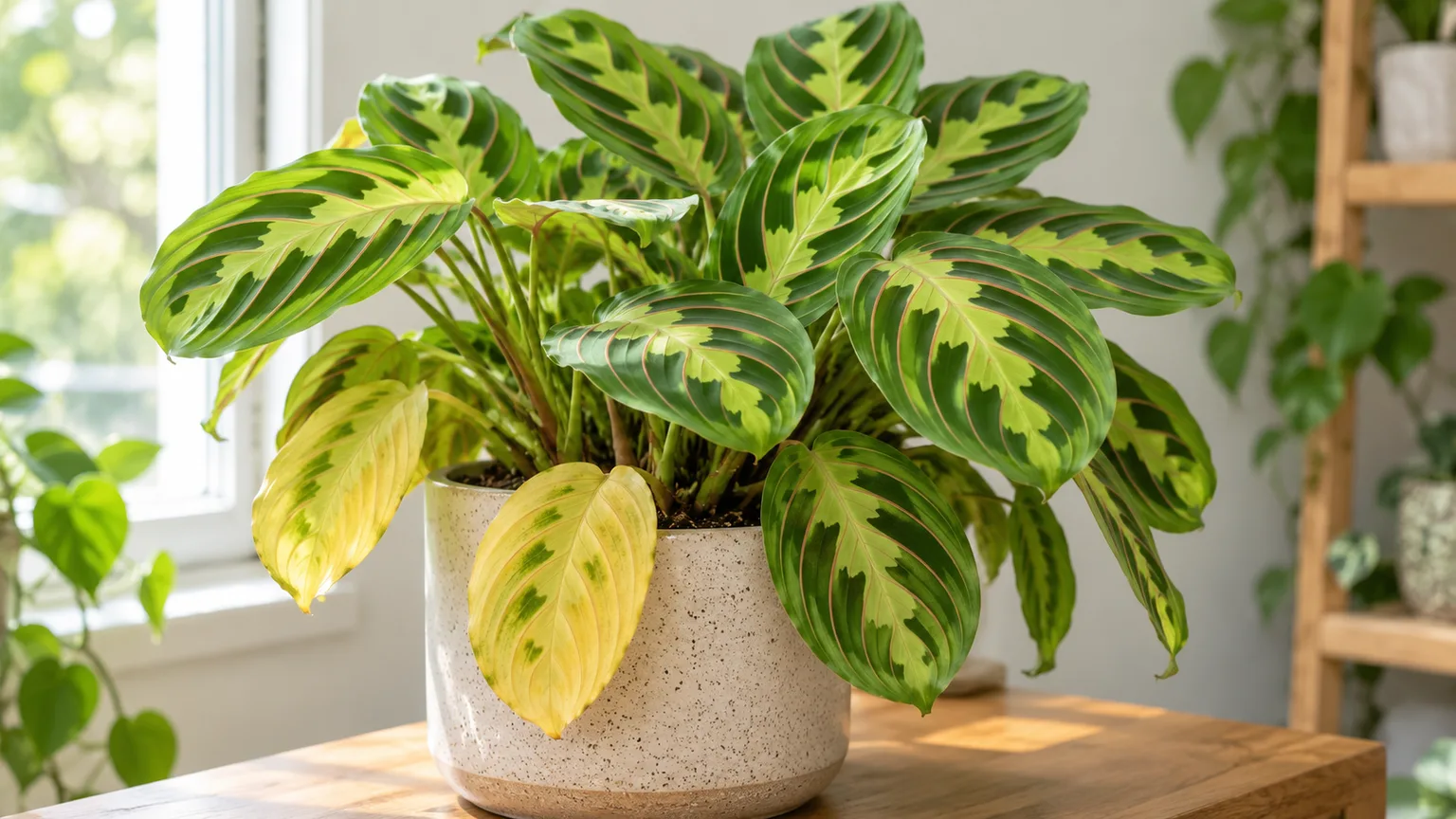
Yellow Leaves on Maranta Lemon Lime: Causes, Checks & Fixes
This guide covers yellow leaves on Maranta Lemon Lime. See also the general Yellow Leaves guide, watering, and light pages for this plant.
Yellow Leaves on Maranta Lemon Lime: Causes, Checks & Fixes
Quick answer
Yellow leaves on Maranta Lemon Lime look alarming because the pale chartreuse bands show every stress early. For how general leaf yellowing works across houseplants, see our yellow leaves guide. On Lemon Lime, the pattern almost always traces to the shallow root zone: soil that stays wet too long, hard tap water, air that is too dry, or a cold draft near a window.
First step: push a finger 2 cm into the mix and lift the pot. Damp, cool, heavy mix means the roots are sitting wet, so hold water and check that drainage holes run free. Dry, crumbly mix in a feather-light pot means the plant ran dry, so soak once until water exits the bottom and empty the saucer. Moist-feeling mix with crisp yellow edges means water quality or humidity is the problem, not volume.
| What you find | What it usually means | Read next |
|---|---|---|
| Yellow lower leaves, damp heavy mix | Roots staying wet too long | Overwatering |
| Yellow + limp leaves, dry light pot | Missed waterings, hydrophobic mix | Underwatering |
| Yellow with brown crisp edges, moist soil | Fluoride, salts, or dry air | Stay on this page; water-quality section below |
| Sudden yellow after a cold night | Draft or temperature shock | Move first, then read Wilting if leaves also droop |
| Washed-out pale yellow, slow growth | Too little light | Not Enough Light |
| Stippled yellow, fine webbing under leaves | Spider mites in dry air | Spider Mites |
For baseline culture, see the Maranta Lemon Lime overview, the watering guide, and the light guide.
When to use this page vs other Maranta Lemon Lime guides
| What you see | Read next |
|---|---|
| Wet mix + several yellow leaves | Overwatering |
| Dry mix + yellow limp leaves | Underwatering |
| Soft stems or sour-smelling mix | Root Rot |
| Brown tips alongside the yellow | Brown Tips |
| Crisp edges in dry winter air | Low Humidity |
What yellow leaves look like on Maranta Lemon Lime
Healthy Lemon Lime holds flat oval leaves with bright lime-green centers, darker green edges, and red-brown vein tracery, folding upward at night. Yellowing breaks that pattern in recognizable ways:
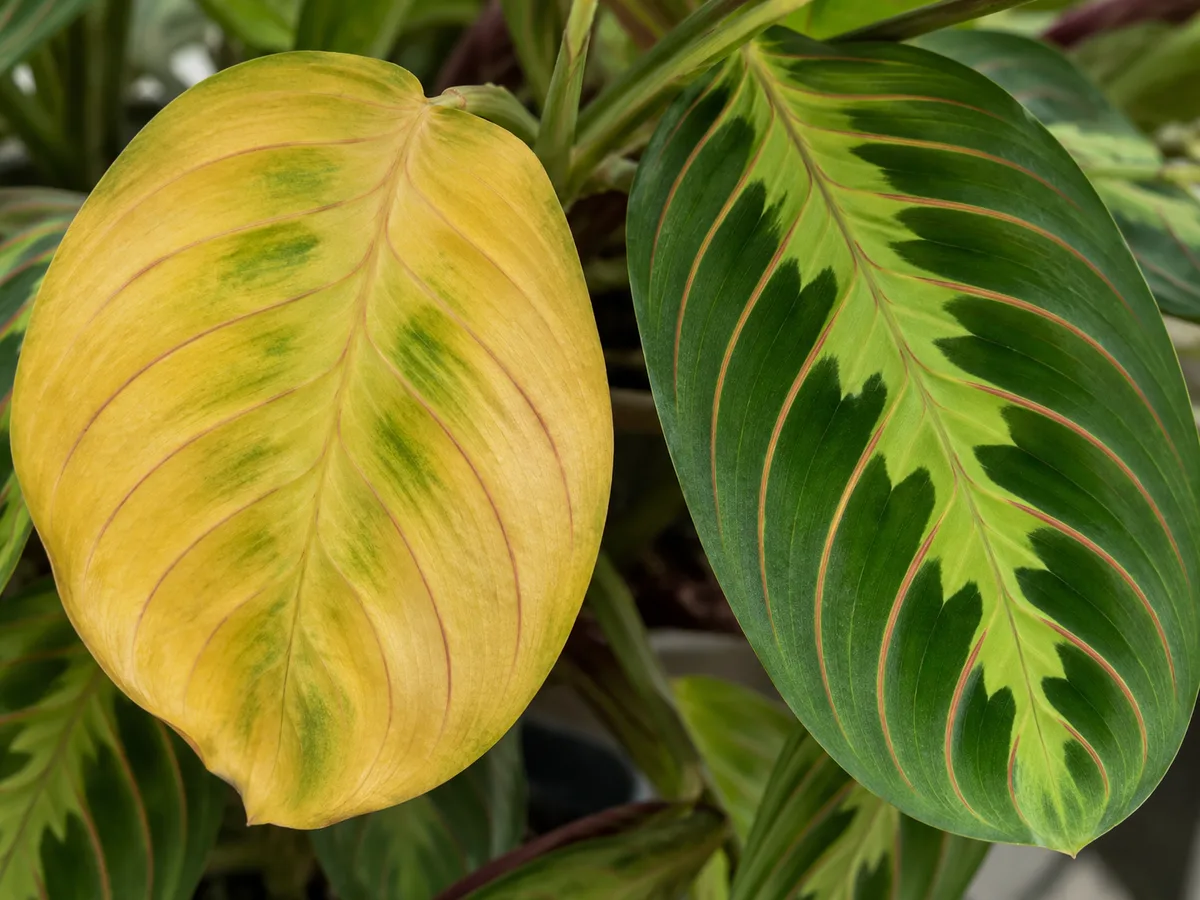
Yellowing on Maranta Lemon Lime - compare soft yellow lower leaves and crisp edges against clean new growth on the same plant.
- Soft yellow lower leaves first - the oldest leaves near the base fade evenly while new rolled leaves still look fine. One or two of these is normal turnover; a flush of them after heavy watering is not.
- Pale washed-out yellow across the plant - the lime bands lose contrast and the whole plant looks bleached, usually paired with slow growth in a dim corner.
- Yellow with brown crisp edges - classic hard-water or dry-air signature on this cultivar. The pale sections scorch first while the mix itself may feel correctly moist.
- Yellow plus weak night folding - leaves that stay flat or droop after dark instead of rising signal root or hydration stress before edges crisp. Because NC State notes Maranta leaves rest parallel to the soil by day and lift at night, a plant that stops folding is already telling you something is wrong below the surface.
- Stippled yellow dots with webbing - fine pale speckling on upper surfaces with silk threads beneath means spider mites, common when winter heating dries the air.
- Sudden yellow and drop after cold exposure - leaves pale within days of a cold draft or a night near a leaky window.
Why Maranta Lemon Lime gets yellow leaves
Lemon Lime is a shallow-rooted forest-floor plant that expects steady light moisture, warm humid air, and clean water. Yellow leaves usually trace back to one of these mismatches:
Soil that stays wet too long
This is the most common cause. Maranta roots are fine and shallow, and NC State Extension instructs growers to keep potting soil evenly moist through the growing season, which many owners read as “never let it dry.” In a dim room or an oversized pot, the lower root zone stays saturated for days, roots lose oxygen, and lower leaves yellow even though the surface looks fine. See overwatering when the pot stays heavy, and root rot if stems soften at the base.
Fluoride and salts in tap water
Prayer plants react to municipal water chemistry sooner than most houseplants. NC State flags that leaf margins burn with fluoride in ordinary tap water, and Lemon Lime shows it early because its pale bands have less chlorophyll to mask damage. White crust on the pot rim, brown edges arriving with the yellow, and healthy-looking new roots despite the symptoms all point here rather than at watering volume.
Dry air and low humidity
Maranta evolved for high humidity forest understories, and dry indoor air pulls moisture from thin leaves faster than stressed roots can replace it. Winter heating season is peak time: yellow leaves with papery edges while the 2 cm check reads moist. Misting wets foliage without fixing root-zone moisture and can invite spotting, so treat humidity as its own variable per the low humidity guide.
Cold drafts and temperatures below 60°F
Lemon Lime stalls when nights drop near or below 60°F, and a draft from a window or exterior door can yellow leaves within days. Growth slows, the pot dries more slowly, and owners who keep summer watering frequency accidentally keep roots wet in cool soil. Confirm placement before changing water volume.
Too little light washing out the lime bands
In deep shade the chartreuse centers fade to a sickly pale yellow-green and growth crawls, which also slows soil dry-down and invites secondary overwatering. The plant wants bright filtered or indirect light - enough to hold color contrast without direct sun scorching the pale tissue. Compare with the light guide and not enough light when stems also stretch.
Natural aging of the oldest leaf
A single lowest leaf yellowing while every new rolled leaf opens clean is normal senescence, not disease. Do not repot, feed, or spray for one aging leaf on an otherwise folding, growing plant.
Spider mites in dry indoor air
Stippled yellowing with fine webbing on leaf undersides means mites, which thrive in the same dry air that stresses Maranta. Isolate and confirm with a white-paper tap test before treating; details live on the spider mites page.
Feeding is rarely the answer to yellow on this plant. Monthly feeding during active growth at half strength is plenty, and fertilizer cannot fix wet roots, hard water, or dim placement. Check the fertilizer guide only after water, light, and humidity check out.
How to confirm the cause
Work through these checks in order. Each one narrows the list without stacking treatments:
- Mix moisture at 2 cm plus pot weight - Push a finger to the second knuckle and lift the pot. Damp and heavy days after watering confirms the wet-root path. Dry and light confirms drought. Moist and normal weight with crisp yellow edges moves suspicion to water quality or humidity.
- Drainage and saucer - Confirm holes run free and no water hides in a cachepot. A plant watered in its decorative sleeve often sits in runoff the top inch never reveals.
- Water source and pot rim - Hard municipal water plus white mineral crust and brown-edged yellow points to fluoride and salts. If you switched water recently, note whether new leaves improved.
- Humidity and season - Heating vents, radiators, and air-conditioner blasts within a few feet explain crisp-edged yellow on moist soil, especially in winter.
- Temperature and drafts - Night lows near windows, exterior doors, or cold glass below about 60°F explain sudden yellowing. Missouri Botanical Garden notes this species wants conditions that stay above 60°F.
- Light level - Washed-out lime bands with leggy stems in a dim corner confirm weak light. Less than bright indirect light for most of the day is suspect.
- Leaf undersides - Tap a suspect leaf over white paper. Moving specks plus fine webbing confirm mites rather than a care problem.
- New growth and night folding - Rolled leaves still emerging clean with nightly lift means the plant is coping and the issue is limited to older foliage. Stalled new growth with no folding means roots or environment need fixing now.
The first fix to try
Probe 2 cm deep, lift the pot, and act on that single reading before changing anything else.
That one check prevents the two most common mistakes: watering yellow leaves that are already drowning, or flushing and repotting a plant that simply ran dry. If the mix is damp, skip the next drink, empty every saucer and cachepot, and confirm the pot drains freely. If it is dry, water thoroughly once until runoff exits, drain fully, and return the plant to the same spot. Do not fertilize, repot, or spray on the same day; one correction lets you read the plant’s response within a week.
Step-by-step recovery
After the first check, add steps matched to what you confirmed, one at a time:
If the mix stayed wet
- Hold water until the top 2 cm dries and the pot lightens noticeably.
- Water future drinks in the sink so you can confirm runoff and empty it completely.
- If stems soften or the mix smells sour, unpot, trim only clearly mushy roots, and repot into fresh moisture-retentive but draining mix per the soil guide.
- Resume check-the-pot watering per the watering guide only when new growth resumes.
If tap water or salts are the cause
- Switch routine watering to filtered, distilled, or rainwater; overnight standing helps chlorine far less than it helps peace of mind.
- Flush the pot once with plain water until runoff runs clear, discarding all drainage to carry accumulated salts out.
- Wipe white crust from the rim and saucer so it does not wick back into the mix.
- Judge by new leaves: clean bands on fresh growth confirm the switch worked, while old edges stay brown.
If dry air is the cause
- Move the plant away from vents and radiators first; no humidifier overcomes a hot draft.
- Run a humidifier or group tropical plants so humidity holds steadily instead of spiking after misting.
- Keep watering by the 2 cm check; do not keep soil soggy to compensate for dry air.
If cold or weak light is the cause
- Relocate to bright indirect light in a room that stays above 60°F with no direct draft on the leaves.
- Reduce watering frequency to match the slower dry-down while growth is paused.
- Wait for clean new growth before feeding; fertilizer on a stalled plant burns more than it helps.
If spider mites are confirmed
- Isolate the plant from other humidity lovers immediately.
- Shower or wipe leaf undersides thoroughly to knock numbers down, then follow the repeat routine on the spider mites page.
- Raise humidity afterward; mites rebound fastest in hot dry air.
University of Illinois Extension warns growers to never let water stand on the crowns where leaves meet the rhizome, because stems rot easily there. Water the soil surface directly, especially during recovery when tissue is already stressed.
Recovery timeline and what to expect
Yellow tissue will not re-green. Illinois Extension lists yellowing among the first stress signals on houseplants, which means the yellowing you see today reflects conditions from one to three weeks ago. Track these instead:
- Days 3-7 - No new leaves yellow after the correction; the pot starts drying on a predictable rhythm again.
- Weeks 2-4 - Fresh rolled leaves open with crisp lime bands; night folding returns to full lift.
- Weeks 4-8 - The plant fills back in from new growth; old yellow leaves can be trimmed once replacements are established.
If yellowing keeps spreading into new growth after three weeks of corrected care, recheck drainage and roots rather than adding fertilizer.
Lookalike symptoms
| What you see | Often confused with | How to tell apart |
|---|---|---|
| Yellow soft lower leaves | Natural aging | Aging: one leaf at a time, clean new growth, normal folding. Wet roots: several leaves together, heavy pot, weak folding. |
| Yellow with brown crisp edges | Underwatering | Dry-air and hard-water cases keep the mix moist at 2 cm; underwatering pairs with a light dry pot and limp blades that perk after a soak - see underwatering. |
| Yellow limp leaves | Low humidity | Low humidity crisps edges on moist soil; wet-root wilt stays soft and limp with heavy mix. |
| Pale yellow all over | Nitrogen shortage | Weak light is far more common on Lemon Lime; check brightness and feeding history in the fertilizer guide before supplementing. |
| Yellow after repotting | Disease | A recent move or repot with firm tissue and clean new tips is transplant sulk; keep care boring and watch one full dry-down cycle. |
Mistakes to avoid
- Watering on schedule because leaves look thirsty - yellow from wet roots worsens with another drink; always probe first.
- Fertilizing yellow leaves to green them up - salts stress damaged roots further; feed only clean new growth in season.
- Misting instead of fixing humidity or water - wet foliage spreads spotting while rhizomes stay thirsty or drowned.
- Repotting on day one - reserve repotting for sour mix, mushy roots, or collapsed drainage per the soil guide.
- Moving between extreme spots - swinging from a dark corner to direct sun scorches chartreuse tissue; adjust placement gradually.
- Stacking every fix at once - repot, prune, feed, and spray the same afternoon hides which change worked and stresses a plant that needed one correction.
How to prevent yellow leaves next time
Prevention on Lemon Lime is routine fit, not luck:
- Water only when the top 2 cm begins to dry, then soak until runoff and empty every saucer; RHS describes the target as moist but well-drained, never waterlogged.
- Use filtered, distilled, or rainwater for routine drinks and flush monthly so salts never crust the rim.
- Hold humidity high with a humidifier or grouped tropicals, out of vent and radiator blasts.
- Keep bright indirect light and nights above 60°F; adjust watering down whenever light or warmth drops.
- Check leaf undersides and new rolled leaves weekly so mites or drift never build for a month unnoticed.
- See the Maranta Lemon Lime overview and problems hub to route future symptoms early.
When to worry
Treat as urgent when:
- Stems feel soft or mushy at the soil line, or the mix smells sour.
- Many leaves yellow within days of heavy watering or cold exposure.
- New rolled leaves emerge yellow, damaged, or stalled.
- Webbing and stippling confirm mites spreading to nearby plants.
A single aging lower leaf with clean new growth and normal nightly folding is routine turnover. Trim it once the next leaf opens and carry on.
Related Maranta Lemon Lime guides
- Maranta Lemon Lime overview
- Maranta Lemon Lime watering
- Maranta Lemon Lime light
- Maranta Lemon Lime soil
- Overwatering on Maranta Lemon Lime
- Underwatering on Maranta Lemon Lime
- Root Rot on Maranta Lemon Lime
- Brown Tips on Maranta Lemon Lime
- Low Humidity on Maranta Lemon Lime
- Maranta Lemon Lime problems
Conclusion
Yellow leaves on Maranta Lemon Lime are the plant reporting on its root zone a week or two late. Probe 2 cm deep, read the pot weight, and fix the matching cause - drainage, water source, humidity, warmth, or light - one correction at a time. Old yellow tissue will not recover, but steady check-the-pot care brings back clean lime-banded growth and full nightly folding.