Lemon Lime Maranta Care: Light, Water, Soil and More
Keep a Lemon Lime Maranta healthy with a simple light, watering and soil routine. Learn when to repot, how to divide it, and why its leaves fold at night.
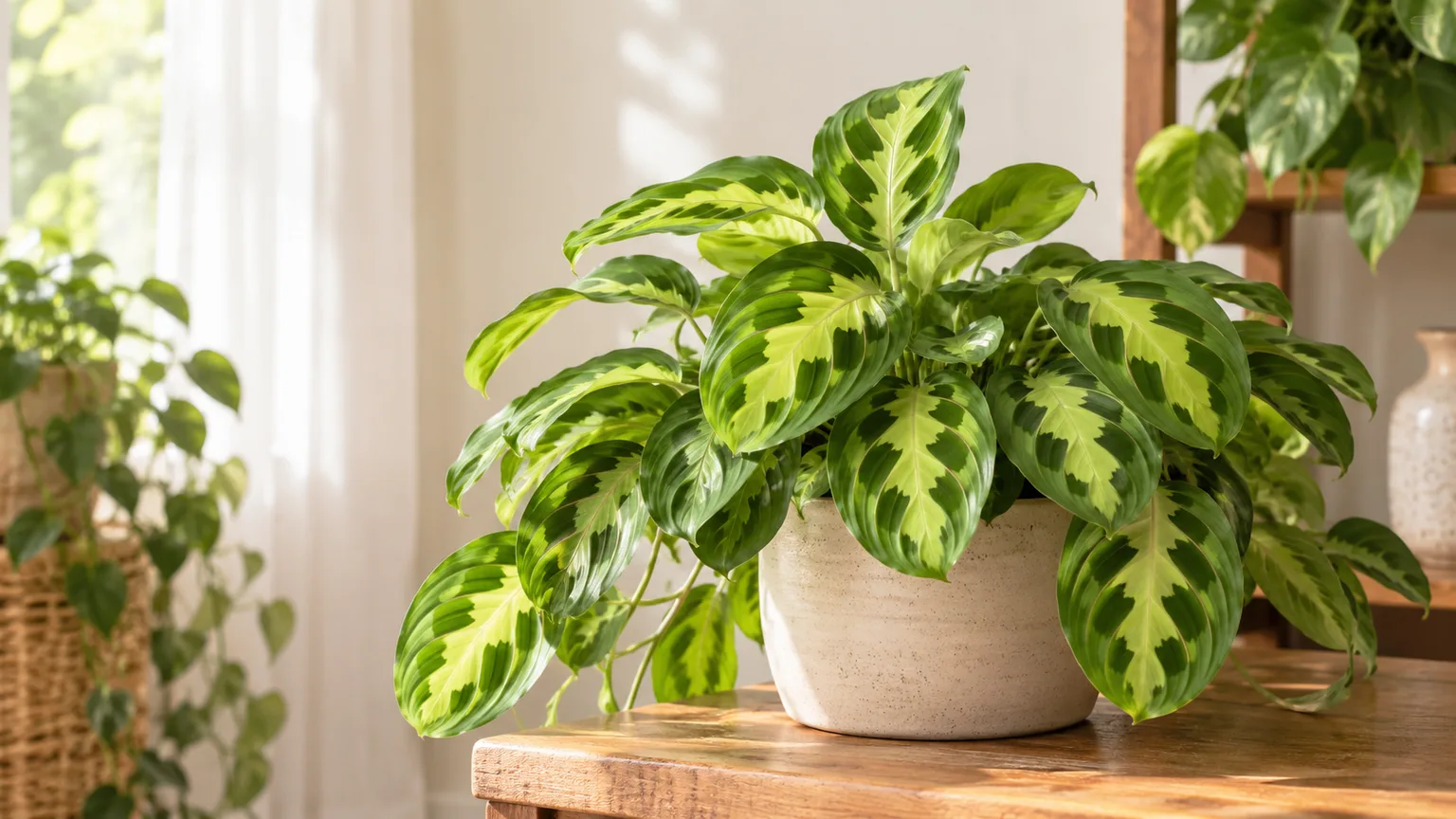
Lemon Lime Maranta is a low, spreading prayer plant grown for leaves patterned in vivid chartreuse and green. It is often described as easy, but its comfort zone is more specific than that label suggests: steady warmth, filtered light, a mix that holds some moisture without staying saturated, and enough humidity to keep new leaves from crisping.
The most reliable routine is simple: put it in bright indirect light, check the soil before watering, let every excess drop drain away, and change care only when the plant or the room gives you a reason. That approach protects the fine roots from standing water while preventing the long dry spells that leave the leaf margins brittle.
For the plant’s topic-specific light, watering, and soil pages, see the Lemon Lime Maranta care hub.
Lemon Lime Maranta care at a glance
| Need | Practical starting point | What to watch |
|---|---|---|
| Light | Bright, indirect or filtered light | Bleached patches suggest harsh sun; faded pattern and long stems suggest too little light |
| Water | Water when the upper layer begins to dry, before the whole root ball turns hard and dry | Pot weight and soil feel matter more than the day of the week |
| Soil | Moisture-retentive but airy indoor potting mix | Water should drain promptly; the pot should not sit in runoff |
| Humidity | Moderate to higher room humidity; measure near the leaves if edges keep crisping | Humidity is only one possible cause of brown tips |
| Temperature | Warm, stable indoor conditions; avoid cold windows and drafts | Growth slows in winter, so the mix takes longer to dry |
| Feeding | Dilute houseplant fertilizer during active growth | Pause when growth stalls or roots are stressed |
For a first setup, choose a pot with drainage and use a loose houseplant mix that does not collapse into a dense block after repeated watering. Place the plant near a bright window but out of hard midday sun, then watch how quickly its pot dries in that particular room.
What makes Lemon Lime Maranta different?
The botanical name is Maranta leuconeura ‘Lemon Lime,’ a cultivar of the prayer plant species. NC State Extension describes the “Lemon” or “Lemon Lime” form as having dark green leaves with yellowish-green central markings; the general species profile describes a low, spreading plant with leaves that shift position at night. The RHS also describes M. leuconeura as an evergreen rhizomatous perennial native to Brazil, while the NCBI taxonomy record places the species in the arrowroot family, Marantaceae.
That identity matters because shops use “prayer plant” loosely for several relatives. Lemon Lime Maranta should show broad oval leaves with a bright lime center and darker green margins, rather than the prominent red fishbone veins of the more familiar red-veined prayer plant. Cultivar colors vary somewhat with age and growing conditions, so compare several leaves rather than judging the plant by a single new leaf.
Marantas grow from short rhizomes and form a low clump that can spill over a pot’s edge. They are not naturally upright cane plants, and a mature pot may contain several crowns. The RHS plant profile and Missouri Botanical Garden profile describe this clumping, rhizomatous habit, which is why division is often more dependable than trying to raise a whole new plant from one leaf.
Give it bright, indirect light
Aim for a bright room where the foliage receives plenty of ambient daylight without sitting in direct, hot sun for hours. An east-facing window often works well; a south- or west-facing window can also suit the plant if a sheer curtain, nearby wall, or a position set back from the glass softens the strongest rays. Window direction alone is not a complete measurement: nearby buildings, season, glass, and distance change the light reaching the leaves.
Direct sun can bleach or scorch the patterned leaf surface, particularly through hot glass. Deep shade creates the opposite problem: growth becomes slower and more stretched, and the lemon-lime markings may look duller. The Missouri Botanical Garden recommends bright indoor light without strong direct sun, and NC State notes that too much sun can bleach leaf color. If the plant is fading, move it gradually toward brighter filtered light instead of shifting it abruptly into a sunny window.
Low light also changes watering needs. A pot in a dim corner may remain wet much longer than the same pot near a bright window, so do not keep its summer watering interval after moving it to a darker winter location. Rotate the pot a quarter turn every week or two if it leans strongly toward the window, but avoid repeatedly moving it from room to room to chase a perfect spot.
Water by checking the mix, not the calendar
Lemon Lime Maranta likes consistent moisture, but “keep it moist” does not mean keeping the roots submerged or watering every few days automatically. During active growth, check the top half-inch to inch of mix with a finger; if it is beginning to dry while the lower root ball still feels lightly damp, water thoroughly. If the surface is wet or the pot still feels heavy, wait and check again later.
When it is time to water, pour slowly over the soil until water runs through the drainage holes, then empty the saucer or cachepot. A small splash on the surface can wet only the top while leaving the center of a crowded root ball dry; a complete soak gives roots access to moisture throughout the mix. If dry peat has become water-repellent, water in two or three passes a few minutes apart rather than flooding the pot once and assuming the center is wet.
There is no dependable universal interval. A small plastic pot in a warm bright room can dry in several days, while a larger ceramic pot in a cool dim room may stay moist much longer. The practical rule used by Epic Gardening and Home to Heather also centers on soil condition rather than a fixed calendar; the Epic Gardening guide advises keeping the soil moist but not soggy, while Home to Heather’s grower notes explain why repeatedly wet household potting mix can suffocate roots.
During winter or any period when light and growth decline, let the surface dry a little farther before watering again, but do not leave the entire root ball bone-dry for long. A drooping plant with dry soil may need water; a drooping plant with wet soil may have roots that cannot take up water because they are oxygen-starved. Treat those two cases differently rather than pouring more water onto a wet pot.
Choose airy soil and a draining pot
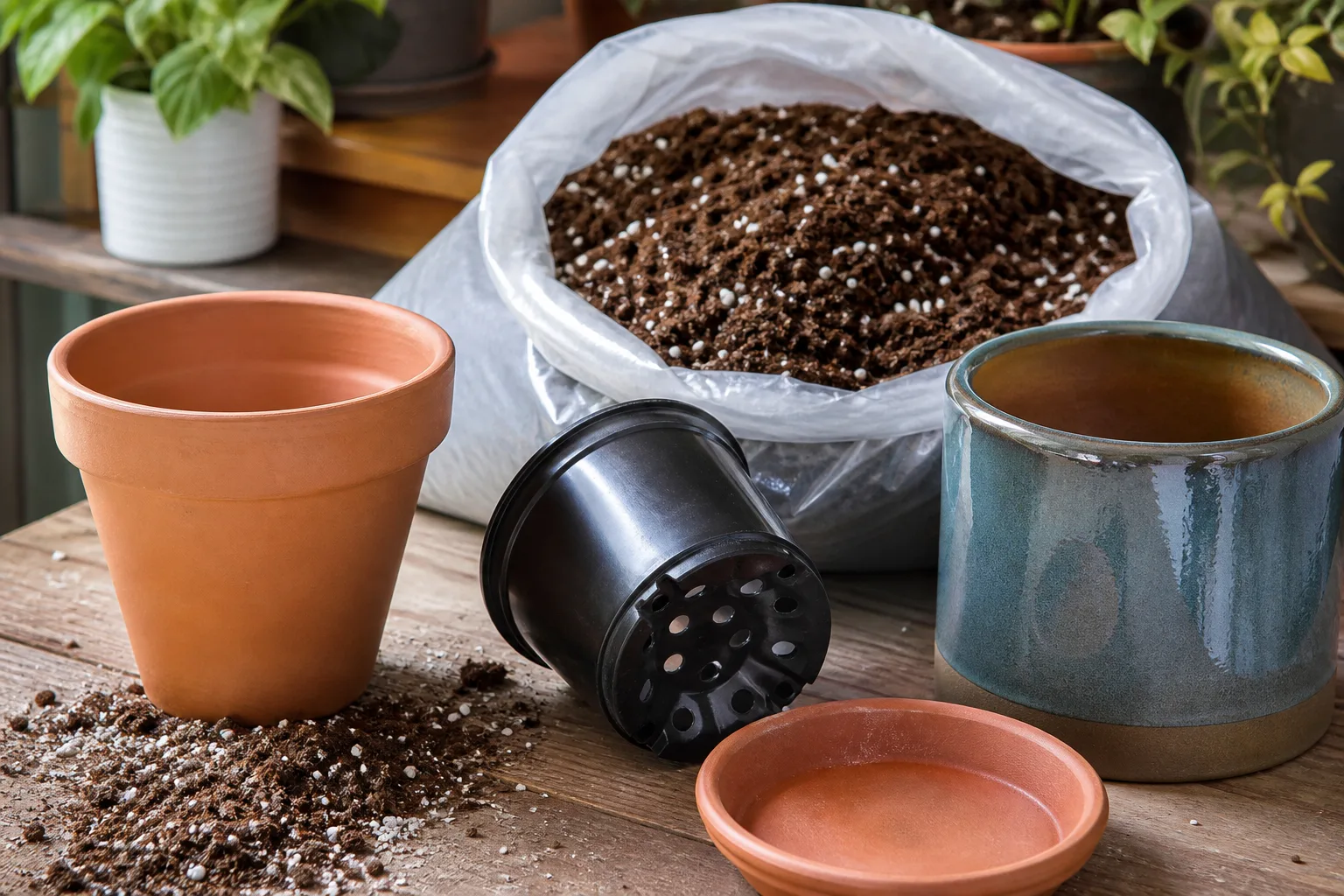
Use an indoor potting mix that retains some moisture but still lets excess water and air move through it. A practical starting blend is two parts quality houseplant mix to one part perlite or pumice; if the base mix is already loose and chunky, it may need little amendment. The aim is not a magic ratio but a root zone that stays evenly damp after watering and then gradually dries, instead of remaining dense and waterlogged.
Avoid garden soil in a houseplant container because it can compact and drain poorly indoors. Skip coffee grounds as a soil-acidifying shortcut: their effect is not a controlled way to manage a small pot’s pH, and extra wet organic material does not solve a drainage problem. The RHS profile lists moist but well-drained growing conditions, and the Missouri Botanical Garden recommends a soil-based potting mix for indoor culture.
Choose a nursery pot or cachepot setup with open drainage holes. Decorative pots without holes can work as outer sleeves, but remove the inner pot to water and let it drain fully before returning it. A drainage layer of stones at the bottom does not replace holes and can leave the actual root zone perched above standing water.
Balance humidity with warmth and airflow
Maranta foliage generally holds up better in warm, moderately humid air than beside a heater, air-conditioning vent, or drafty pane of winter glass. NC State and the Missouri Botanical Garden flag low humidity and cold conditions as poor fits, and the Missouri Botanical Garden gives 60°F (about 16°C) as a lower temperature preference. In a typical home, a stable room that stays comfortably warm is safer than trying to maintain an exact thermostat number.
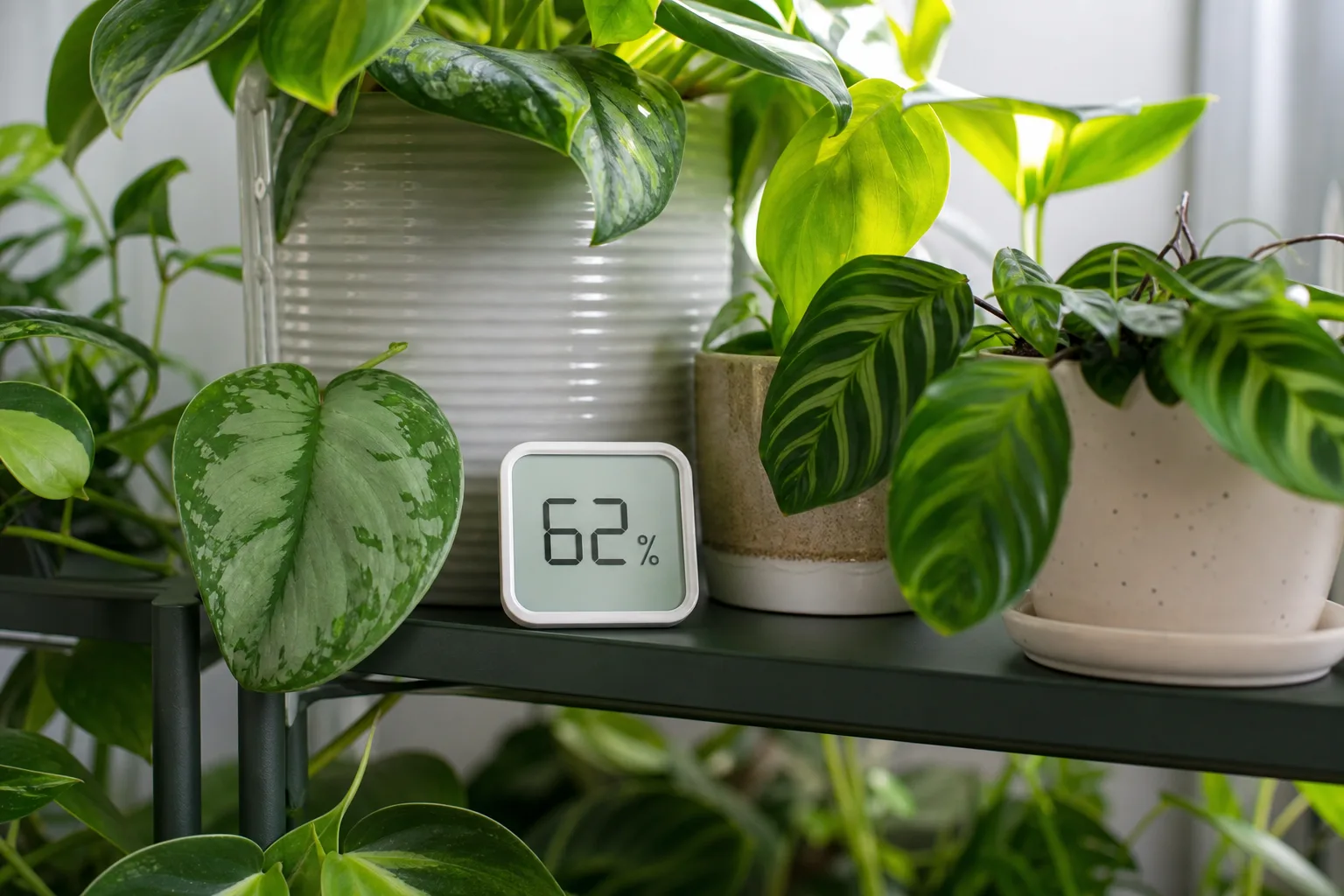
If brown edges keep appearing, measure room humidity near leaf height with a small hygrometer before buying equipment. Epic Gardening gives a practical range of about 40–60 percent for the cultivar, and Home to Heather reports successful growth in a household around 45–55 percent; these are useful real-home reference points, not a guarantee that every plant needs the same number. If your room is very dry, a humidifier near the plant can raise humidity more consistently than misting the leaves.
Pebble trays can make a small local humid zone, but they do not humidify a whole room. If you use one, set the pot on pebbles above the waterline so the drainage holes never sit in water; also keep leaves from staying wet for long periods. Grouping plants may modestly change the immediate microclimate, but good airflow still matters, especially in a crowded shelf or bathroom.
Feed lightly while it is growing
Feed only when the plant is actively producing leaves, typically in the brighter, warmer part of the year. Use a balanced liquid houseplant fertilizer at a conservative dilution, such as one-quarter to one-half of the product’s label strength, and apply it to already-moist soil. A diluted monthly application is a reasonable starting point for steady growth; a plant that is not growing does not need extra fertilizer merely because the calendar says spring.
Too much fertilizer can burn leaf edges and leave salts behind in the potting mix. NC State specifically notes that high fertilizer levels can burn Maranta foliage, and the Missouri Botanical Garden recommends monthly feeding during active growth with a substantial reduction from autumn to late winter. If a pale crust forms on the soil or pot rim, or several leaf tips brown after feeding, pause fertilizer and water the pot through with clean water to flush soluble residue.
Do not fertilize a plant with root rot, a pest infestation, or recent repotting stress. First restore healthy roots and stable conditions; fertilizer cannot compensate for inadequate light or a root zone that stays waterlogged. Restart at a lower concentration once the plant is making new leaves.
Understand its low, moving growth habit
The name “prayer plant” comes from the way Maranta leaves change angle between day and night. NC State describes the leaves as spreading out by day and rising into a prayer-like position at night; this normal movement is a form of nyctinasty, not a sign that the plant is thirsty every evening. A healthy plant may move more visibly on some days than others, depending on its leaf age, light cycle, and room conditions.
Persistent daytime curling is different from a normal nightly fold. If leaves remain rolled or limp through the day, check whether the mix is dry, the room is cold, the plant is in harsh sun, or fine webbing and stippling point to spider mites. Do not respond to every change in leaf position with more water; that can turn a temporary light or humidity issue into chronically wet soil.
The plant naturally spreads sideways, and stems may extend over the pot rim. Prune only dead, badly damaged, or awkward stems with clean snips; avoid shearing the whole plant to force a vertical shape. If a pot looks thin in the middle, a rooted division or cutting can be planted back into the same container once it is established, making the clump fuller without crowding it with fertilizer.
Repot only when the root zone calls for it
Repot when roots crowd the pot, the mix has broken down and stays wet, or the plant dries unusually fast because the root ball has filled the container. Roots emerging from a drainage hole can be a clue, but a single root at the bottom is not an emergency. Stalled growth during the darker season also does not prove the plant is rootbound.
Choose the next pot only modestly wider than the root ball, usually one size up. An oversized container holds a larger volume of wet soil than the roots can use, increasing the time the center stays damp. Repot in spring or early summer if possible, loosen only soil that comes away easily, preserve firm roots, and set the crown at about its former depth.
After repotting, water once to settle the mix and let all runoff drain. Return the plant to warm bright indirect light, hold fertilizer until new growth resumes, and do not keep the soil saturated in an effort to prevent transplant stress. If the old mix smells sour or roots are mushy, remove the rotted parts and use fresh airy medium rather than moving the unhealthy root ball intact into a larger pot.
Propagate a healthy plant
The best time to make a new plant is when the parent is growing and already has more than one healthy crown. Division is usually the simplest way to get an established plant quickly; stem cuttings are useful when the plant is still small or when you want to fill gaps in a trailing clump. NC State Extension and the Missouri Botanical Garden both list division as a suitable propagation route, and the Epic Gardening guide also walks through division and cuttings.
Divide rooted clumps for the fastest result
Slide the plant from its pot when the soil is slightly moist, then gently loosen enough mix to see how the crowns join. Separate natural clumps by hand where possible; if rhizomes are tightly connected, use a clean sharp blade. Each division needs a firm section of rhizome, viable roots, and several leaves or growing points—do not split a small plant into tiny leafless fragments just to increase the number of pots.
Set each division in a pot only slightly larger than its roots, at the same depth it grew before. Water to settle the mix, drain the pot, and keep it warm in bright indirect light while it re-establishes. A little temporary droop can happen after division; continued collapse, sour soil, or soft stems are reasons to inspect moisture and roots rather than add fertilizer.
Root stem cuttings when the plant is still small
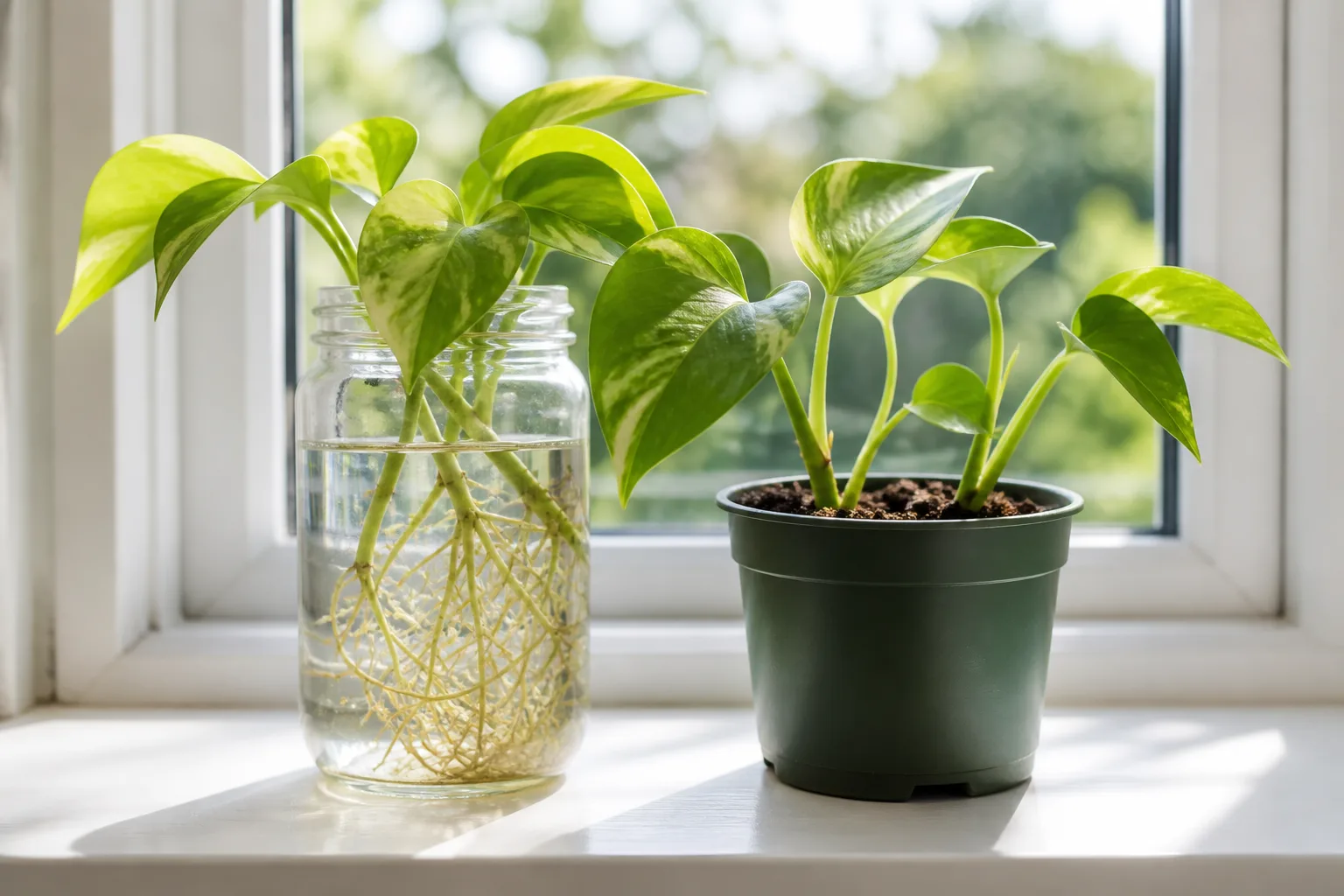
Choose a healthy stem section with a node, the joint where a leaf joins the stem and roots can form. Cut just below that node with clean scissors, keep at least one healthy leaf above the water or mix, and place the node in clean water or a lightly moist, airy propagation medium. A detached leaf without stem tissue will not make a complete plant.
Keep water-propagated nodes submerged but leaves above the waterline; replace the water if it becomes cloudy. For a soil cutting, use a small draining pot and cover loosely to hold some humidity while allowing air exchange. Rooting speed varies with warmth and light, so check for firm roots and new growth rather than promising a fixed number of days; Home to Heather describes using node cuttings to fill bare spots in a mature Lemon Lime Maranta.
Troubleshoot symptoms before changing everything
Leaf symptoms overlap. Yellowing or crisping can reflect water stress, weak roots, light, dry air, fertilizer salts, or normal aging, so begin with the soil and the newest leaves before changing several conditions at once. Look at where the damage appears, whether the pot is wet or dry, and whether the plant has recently moved or been fed.
Yellow leaves: check moisture and roots first
If several leaves yellow while the soil is still wet, stop watering and check whether the pot drains and whether the root ball smells sour. Brown, soft roots or mushy stem bases point to rot; remove only damaged tissue and repot into fresh airy mix if healthy roots remain. A single older bottom leaf turning yellow while the rest of the plant is firm and growing can simply be an aging leaf, not a reason to unpot the plant.
If the mix is dry all the way through and the plant is limp, water thoroughly and let it drain. If the soil is damp but growth is weak and the markings are fading, assess light and temperature before adding fertilizer. The Missouri Botanical Garden’s care notes connect excess sun with bleached foliage and poorly drained soil with root rot, two problems that can both masquerade as general decline.
Brown edges or curling: separate dry air from root stress
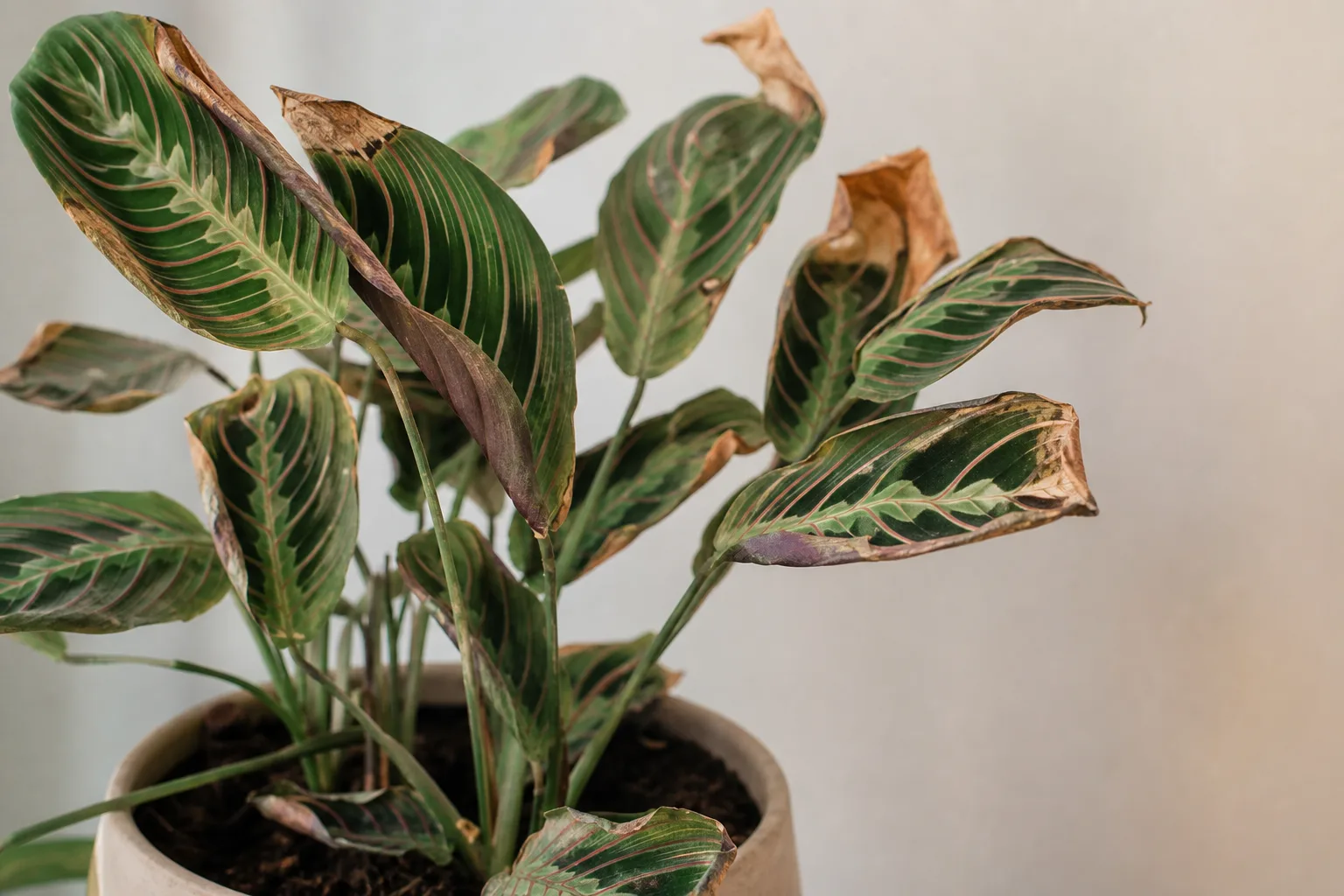
Dry, crispy edges are not a diagnosis by themselves. First check whether the mix has become bone-dry or repels water; next check room humidity and drafts; then consider whether new damage continues after care has stabilized. If the soil stays moist and the room is not very dry, persistent tip burn may involve water quality or fertilizer salts. NC State notes Maranta can show leaf burn with high fluoride or over-fertilization, so switching to rainwater or another low-mineral source and pausing fertilizer can be a reasonable trial when other causes do not fit.
Do not expect damaged brown tissue to turn green again. Trim only the dead edge with clean scissors if its appearance bothers you, leaving a narrow brown border so you do not cut into healthy tissue. Judge the fix by the next leaves that unfurl, not by the old marks, and change one variable at a time so you can tell whether the adjustment helped.
Watch for pests without over-treating
Inspect leaf undersides, petioles, and the soil surface when growth turns distorted or stippled. Spider mites can leave fine pale specks and webbing; mealybugs look like small white cottony patches; fungus gnats are often a clue that potting mix stays wet for too long, though the adult flies alone do not prove root rot. The Missouri Botanical Garden and NC State both mention occasional spider mites and mealybugs on Maranta.
Isolate a plant with visible pests and rinse or wipe the foliage before choosing a treatment. If insects persist, use only a product labeled for the pest and indoor ornamental plants, follow the label exactly, and test a small area first because tender foliage can be sensitive. Avoid routine neem or soap spraying as a substitute for identifying the pest; correct the conditions that favor recurrence and check neighboring plants too.
Adjust the routine through the seasons
Spring and summer usually bring more new leaves, faster soil drying, and a better window for repotting or division. Keep checking the mix rather than translating “summer” into a rigid weekly schedule: a plant in strong filtered light and a small nursery pot may need water sooner than one in a cool room. Feed lightly only while growth is active.
In autumn and winter, shorter days and cooler rooms slow growth, so reduce watering as the pot takes longer to dry and stop routine feeding until fresh growth resumes. Keep the foliage away from cold glass, heating vents, and air-conditioning streams. In tropical climates it may grow outdoors in sheltered shade, but in most homes it is best treated as a houseplant; the Missouri Botanical Garden lists outdoor hardiness only in the warmest USDA zones and notes that it is frost-intolerant.
Keep pet-safety labels in perspective
The ASPCA entry for “Prayer Plant” lists the plant on that page as non-toxic to cats, dogs, and horses, but the same record gives the scientific name Calathea insignis even though “Maranta” appears among its common names. Because common names overlap across Maranta and its relatives, that entry is not a precise identification of the Lemon Lime cultivar. If a pet may chew the plant, verify the botanical label and consult a veterinarian or poison-control service rather than relying on a nursery nickname; the ASPCA record makes its naming limits visible.
Conclusion
Lemon Lime Maranta is easiest to keep when its roots get both moisture and air. Give it bright filtered light, warm stable conditions, an airy mix in a draining pot, and water based on what the soil is doing rather than a calendar reminder.
When the plant struggles, inspect the root zone and recent changes before adding water, fertilizer, or a new treatment. A few steady adjustments—plus division when a healthy clump becomes crowded—will do more for its chartreuse leaves than trying to force a strict schedule or a perfectly tropical room.



