10 Terrarium Care Mistakes to Avoid
Prevent terrarium problems with practical advice on watering, plant choice, light, heat, pruning, cleanup, and the warning signs that need action.
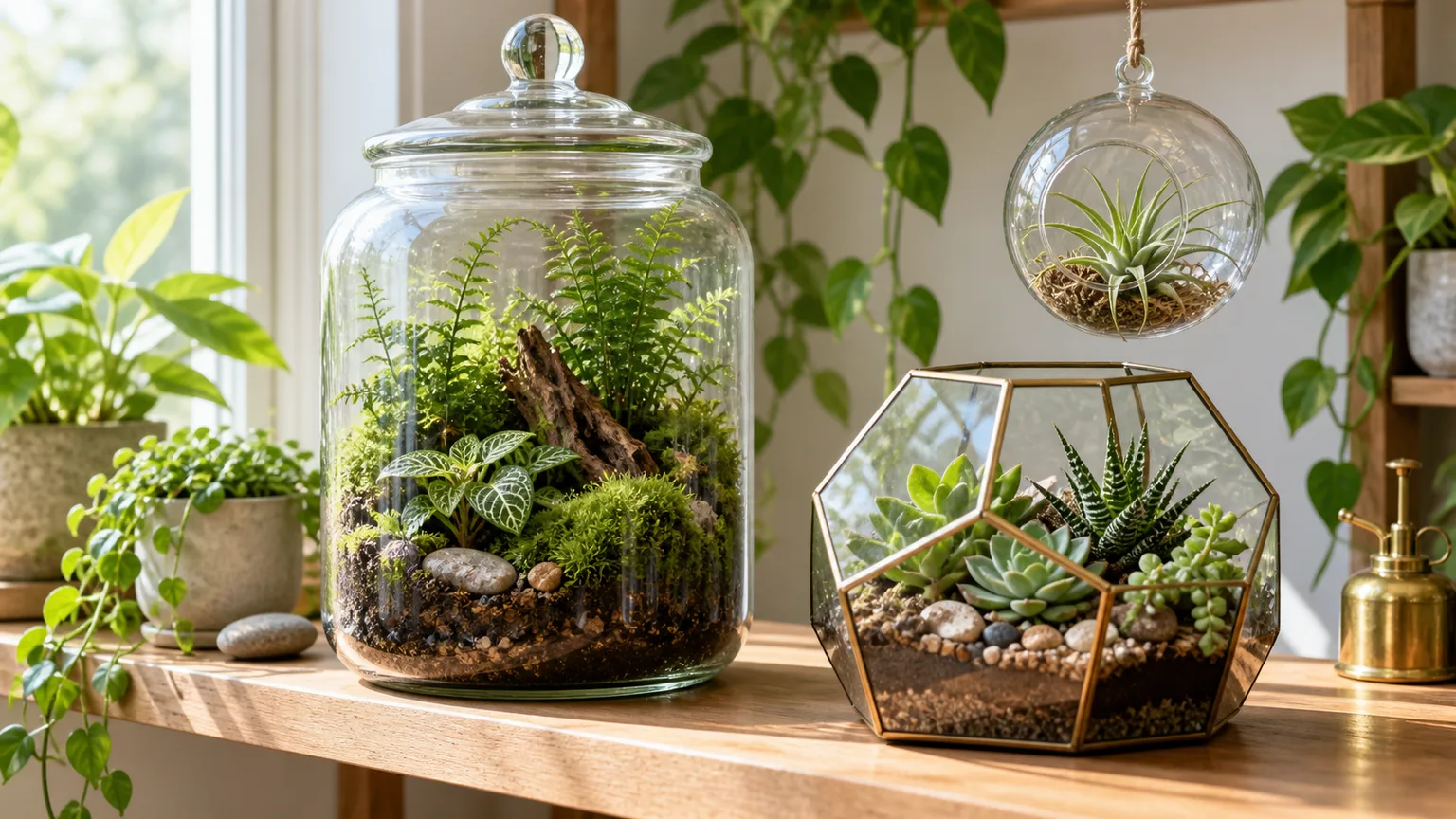
A terrarium can look like it runs itself until the glass stays fogged for days, leaves turn soft, or one plant starts crowding everything else. Those signs do not all mean the same thing. The fastest way to diagnose a struggling terrarium is to identify whether it is open or closed, then read the soil, glass, leaves, and placement together.
The ten mistakes below cover the problems most likely to upset that balance, along with practical first steps for correcting them. The goal is not to keep a terrarium perfectly untouched; it is to make small adjustments early, before excess moisture, heat, or growth becomes difficult to undo.
First, identify the terrarium you have
“Terrarium” describes more than one growing setup. A lidded jar traps humidity and slows evaporation; an open bowl exchanges air freely and dries faster. A vessel with a loose lid or a small opening sits between those extremes, so its care depends on how quickly moisture leaves—not on what the container is called.
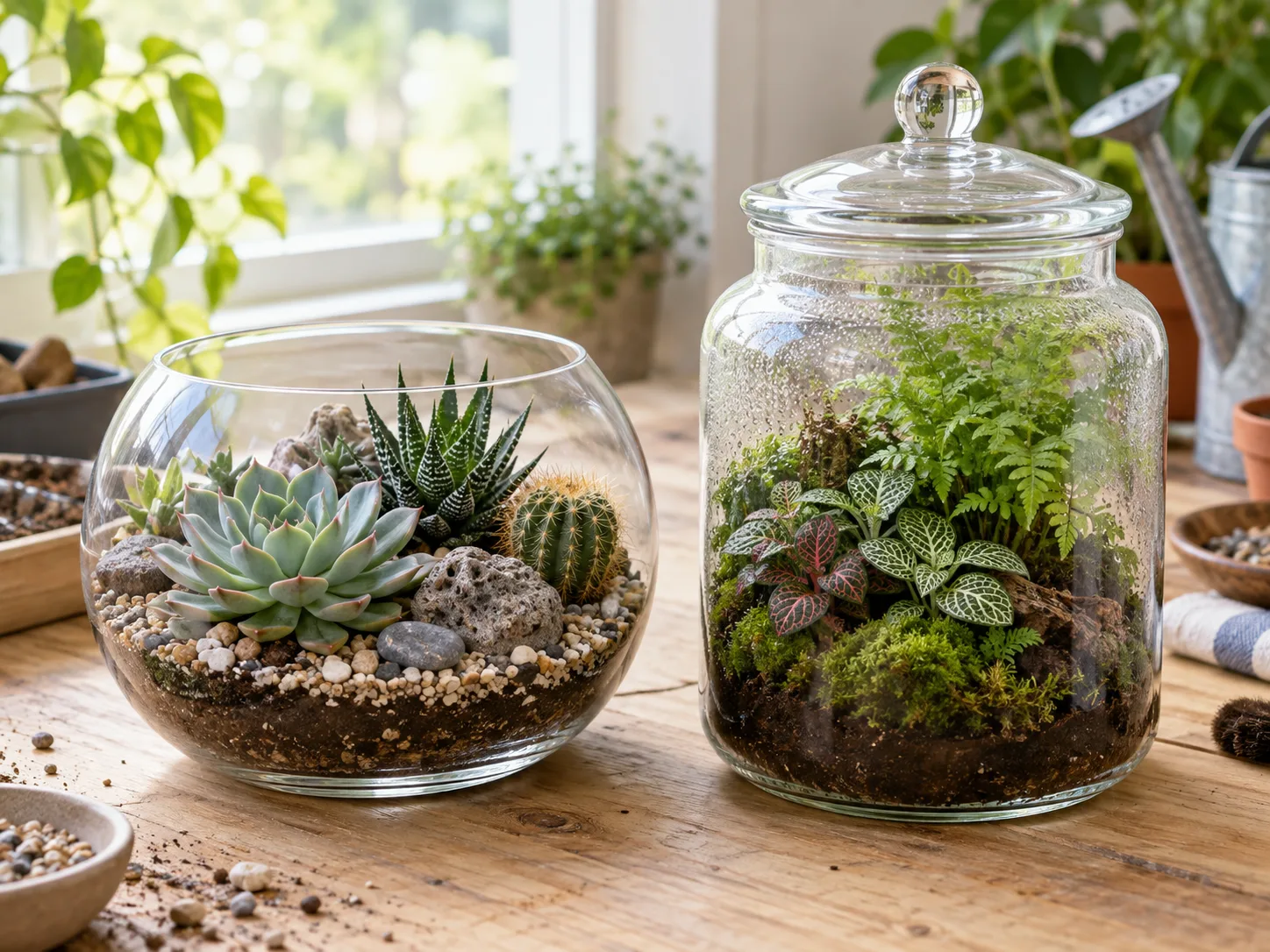
The distinction matters because a healthy sign in one setup may be a warning in another. A little condensation can be normal inside a closed jar, while a succulent in an open dish needs the soil to dry between waterings. Clemson Cooperative Extension also distinguishes closed, open, and uncovered terrarium styles by their moisture retention and the plants they suit. (Clemson Cooperative Extension)
Closed terrariums have a slow water cycle
In a closed terrarium, moisture evaporates from the soil and plant surfaces, collects on cooler glass, and eventually returns to the growing medium. That cycle can make watering infrequent, but it does not make the container immune to overwatering. A jar with saturated soil, a poor-fitting lid, high light, or decaying plant material can still become a persistently wet environment.
Look for a light haze or small droplets that appear and fade during the day. If the glass remains opaque with large droplets from morning to night, the balance may be too wet, too warm, or both. Check whether water is pooled below the soil line and whether leaves are soft or translucent before deciding which correction to make.
Open terrariums dry faster, even without drain holes
An open bowl lets humidity escape, which suits many succulents and other plants that prefer more airflow. It can still have no hole in its base, however, so water has nowhere to drain out of the arrangement. The rock layer often used at the bottom is a collection space for excess water, not a functioning drain; a full reservoir means the next drink should wait.
Match the plant and potting medium to this drier, airier format. The Royal Horticultural Society describes open terrariums as appropriate for succulents and notes that closed bottle gardens favor plants that tolerate higher humidity. (RHS) That difference is more useful than any universal “terrarium watering schedule.”
Mistake 1: Adding water on a schedule instead of reading the jar
A weekly reminder may be sensible for a thirsty houseplant in a draining pot; it is a poor rule for a closed terrarium. Vessel volume, lid fit, plant density, room temperature, season, light, and the starting moisture of the soil all change how long water remains available. Adding water because a week has passed can turn a balanced jar into a saturated one.
Use three clues together: the glass, the visible soil, and the foliage. Brief light condensation with firm leaves and no standing water is usually a reason to wait. A continuously fogged jar, droplets running down the sides, a wet-looking soil surface, or water collecting under the substrate calls for a pause in watering and a short period with the lid off.
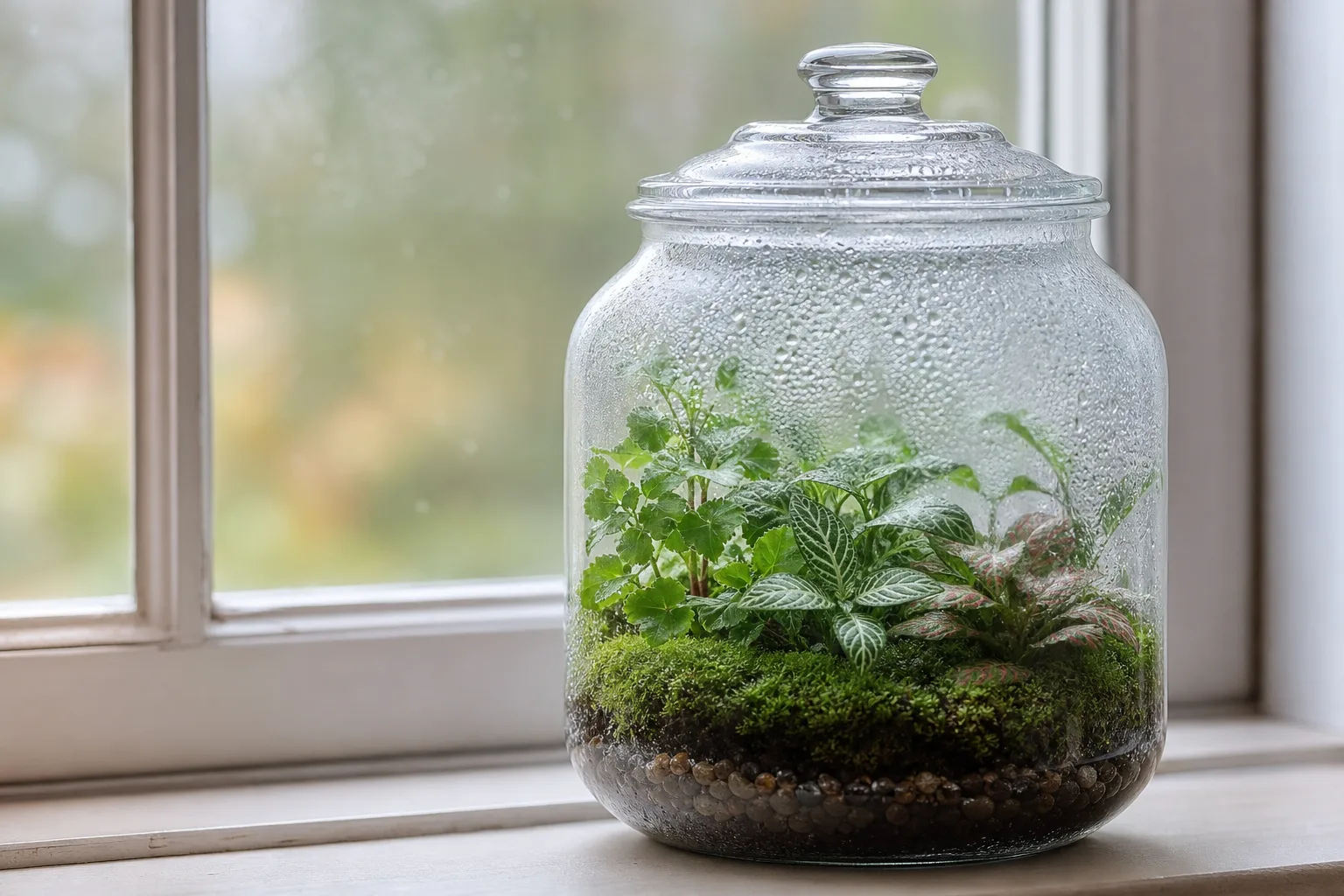
If the terrarium is clearly too wet, remove the lid and let excess moisture escape. Use a clean spoon, pipette, or absorbent corner of a paper towel to remove accessible pooled water without disturbing roots. Keep the container in bright, indirect light away from heat, and check it again later rather than leaving it open indefinitely; the point is to restore balance, not dry every plant out.
If the jar looks dry and the soil has pulled away from the glass, add a small amount of water around the root zone. A spray bottle works for small amounts, but it can be hard to judge total volume, so stop often to inspect the base. UF/IFAS Extension advises watering sparingly because excess water saturates the soil and can kill roots. (UF/IFAS Extension) There is no dependable calendar interval that fits every container.
Mistake 2: Choosing plants before choosing the microclimate
A plant that fits the container today may still be a poor terrarium partner. Before combining specimens, compare their preferences for humidity, drying time, light, and mature size. The best-looking assortment is not necessarily the most durable one: a fern and a cactus may both be small in the nursery, but one wants consistently moist air while the other needs the mix to dry readily.
For a closed display, start with compact tropical foliage such as fittonia, small ferns, peperomia, or moss. For an open arrangement, choose dry-tolerant plants such as haworthia, echeveria, or compact cacti, and use a sharply draining medium. Avoid mixing the two groups just to create contrast. One species will usually pay for that mismatch in stressed roots, stretched growth, or persistent leaf damage.
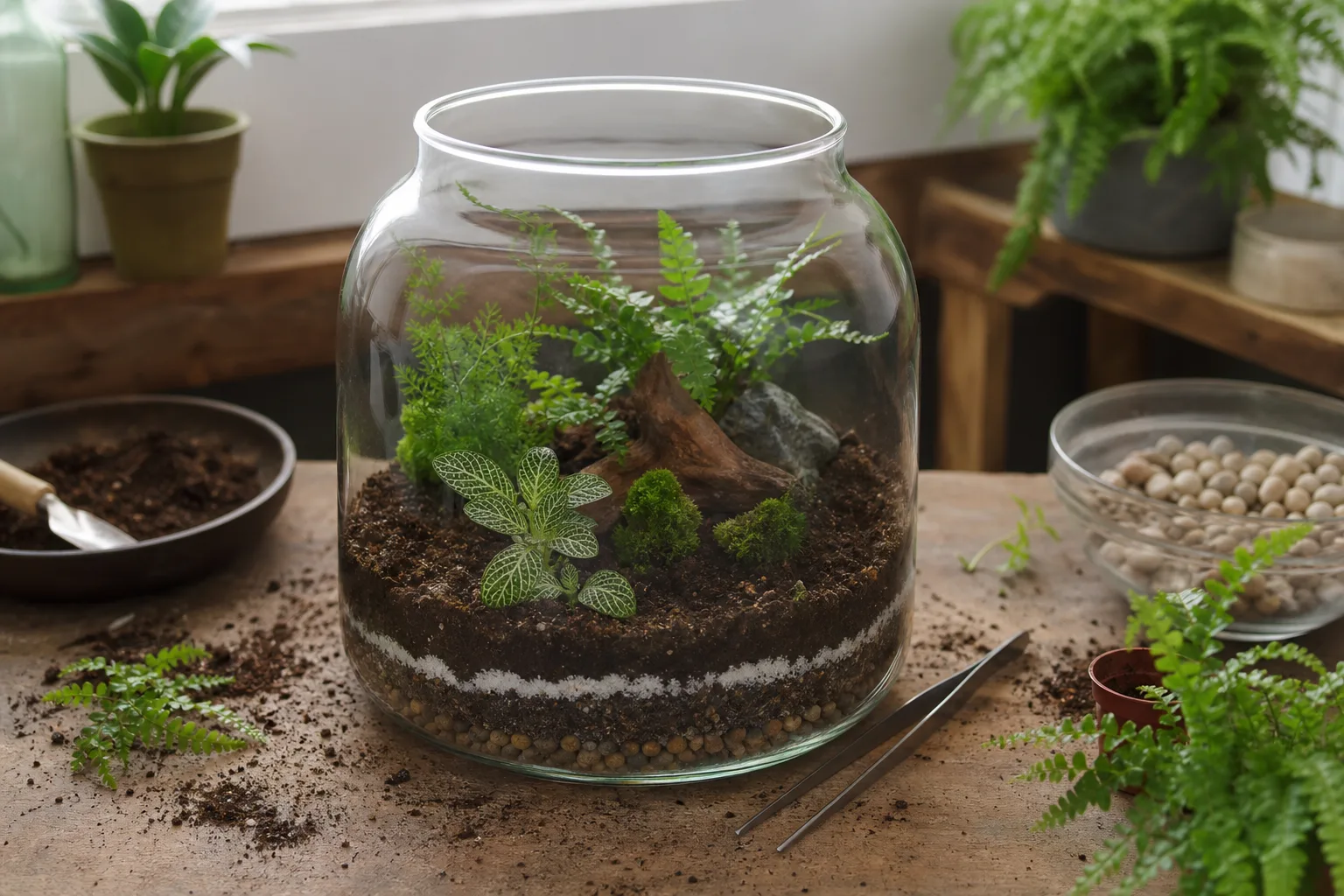
Think about the location before you shop, too. If the only available spot is several feet from a bright window, a plant that needs stronger light will not become a good terrarium choice simply because it is labeled “low maintenance.” Clemson’s guidance is to choose plants with similar requirements and to match them to the actual light and temperature of the intended location. (Clemson Cooperative Extension)
The practical split used by BBC Gardeners’ World Magazine follows the same principle: open displays suit drier plants such as cacti and succulents, while closed jars suit humidity-loving foliage. (BBC Gardeners’ World Magazine)
Inspect new plants before they enter a closed jar. Check leaf undersides, stems, and the soil surface for insects, webbing, scale, soft spots, or a sour smell. A sealed, humid display is a poor place to discover an infestation after the plants have been together for a month. If a plant is already questionable, keep it separate until you can identify the problem.
Mistake 3: Sealing succulents into a humid enclosure
Succulents store water in fleshy leaves or stems, and many prefer a brighter, airier setting where the soil can dry between drinks. A closed terrarium reduces airflow and keeps humidity around the plant, so a mix that seems only slightly moist at the surface may remain wet around its roots. Repeated misting makes the mismatch worse rather than helping the succulent acclimate.
Move succulents and cacti into an open container if you want a miniature desert display. Use a porous, gritty mix and water the root zone sparingly after checking that it has dried. An open dish is still not a standard nursery pot: because it may lack a drain hole, do not soak the entire arrangement and assume excess water will escape.
If a succulent already looks pale, stretched, translucent, or mushy, first distinguish inadequate light from excess moisture. Long, thin growth usually suggests it is reaching for more light; a soft base or collapsing leaves can point to rot. Move it to a brighter location gradually, avoid wetting it while the soil is damp, and remove severely rotted tissue with a clean blade. If the roots and stem are already mushy, replacing the plant may be more realistic than trying to save it in the same sealed setup.
The advice is not that succulents can never sit under glass. An open geometric vessel with generous airflow can work as a decorative planter if the light and watering are right. The problem is trapping them in the humid, slow-drying conditions that suit mosses and many tropical foliage plants.
Mistake 4: Using fertilizer to push growth
Terrarium plants do not need to grow as fast as ordinary houseplants in open pots. Adding fertilizer to produce larger leaves or faster filling can lead to vigorous growth that quickly consumes the limited space. In a small enclosure, the extra foliage may press against glass, block light from lower plants, and make pruning more frequent.
Start with a clean, suitable potting mix and skip routine feeding, especially in a newly planted closed terrarium. Clemson Extension recommends not planning to fertilize for at least a year after planting; its guidance reserves very light feeding for plants that remain weak and yellow after other apparent causes have been ruled out. (Clemson Cooperative Extension) That is a useful default because yellow leaves are not proof of a nutrient deficiency.
Before applying fertilizer, check whether the plant is getting enough light, whether the roots are too wet, and whether a decaying leaf or pest is involved. Those problems can cause weak or yellow growth too. If an open terrarium later shows persistent poor vigor despite appropriate light and moisture, use a diluted, balanced houseplant fertilizer sparingly, following its label and avoiding repeated applications. Do not use garden fertilizer pellets as a shortcut; they release nutrients into a small, enclosed root zone where correction is difficult.
Mistake 5: Placing glass in harsh or long direct sun
A bright windowsill can seem like an ideal place for a glass garden, but direct sun can heat the air and soil inside a closed vessel faster than the room around it. The plants cannot move away from that hot pocket, and the lid limits the escape of warm, humid air. Leaves may scorch, wilt, or soften even though the soil is damp.
Choose a spot with bright, indirect light, such as a few feet back from a bright window or near a window where sunlight is filtered. The exact distance depends on the direction of the window, outdoor shade, season, glass type, and room layout; use the plant response and temperature at the container rather than a fixed rule. UF/IFAS Extension specifically warns against direct sunlight because it can heat a terrarium and burn the plants. (UF/IFAS Extension)
If the jar has been sitting in sun and is suddenly very warm, move it to indirect light immediately. Do not open a hot container and pour cold water into it as a quick fix. Let the vessel cool in a stable place, then assess foliage and soil. Damaged leaves may not recover, so focus on preventing the next flush of growth from receiving the same stress.
Use grow lights without warming the jar
A grow light can help when a room does not have enough usable natural light, but it should supplement a sensible location rather than sit close enough to heat the glass. Choose a plant light suited to indoor foliage and follow the fixture’s distance and timing instructions. Put the light on a timer only after checking that the enclosure does not warm noticeably during the day.
If you use an LED fixture, keep the terrarium’s lid clear of hot lamp housings and allow air to move around the container. Watch for bleaching, scorched patches, or a temperature rise after changing the setup. More light is not always better; the right intensity is enough to support compact growth without creating heat stress.
Mistake 6: Assuming a terrarium can thrive in a dark corner
Glass does not replace light. Even a shade-tolerant tropical plant needs enough usable light to maintain healthy growth, and low light may cause pale foliage, weak stems, slow decline, or leaves that reach toward the nearest window. A terrarium placed as a decorative centerpiece in a dim hallway may stay attractive for a while using stored energy, then steadily lose vigor.
Move it closer to a bright window where the light is indirect, or use a grow light on a consistent daily schedule. Make the move gradually if the terrarium has been in a dark spot for a long time, especially if the new position is much brighter. Check both the light level and temperature: shifting a closed jar directly onto a hot sill trades one stress for another.
If only one plant is stretching while its neighbors remain compact, that may be a species mismatch rather than a problem with the whole display. Remove or relocate the light-hungry plant instead of forcing the entire terrarium into stronger sun. A terrarium is easier to manage when its plants share a realistic lighting range.
Mistake 7: Placing it beside heat vents, radiators, or cold drafts
A stable indoor location is part of terrarium care. Radiators, heating vents, fireplaces, air-conditioner outlets, and drafty doors can expose a small glass container to sharp temperature swings. Heat increases evaporation and can leave a closed terrarium too warm and wet; cold drafts can stress tropical foliage and slow growth.
Choose a shelf where the temperature stays fairly steady through the day and night. Avoid placing the glass directly over a radiator or where a vent blows on it. If a terrarium is near a window, consider whether that spot becomes much colder at night or receives strong afternoon sun in summer. The room may feel comfortable to you while the glass enclosure warms or cools differently.
When leaves start wilting, do not assume the plant needs water until you check the soil. Heat-stressed plants may wilt even when their roots are surrounded by damp mix; adding water in that situation worsens the problem. Correct the placement first, allow the container to stabilize, and inspect for recovery over the next several days.
Mistake 8: Letting plants overtake the container
The plants in a terrarium are small now, not necessarily miniature forever. Fast-growing stems may shade neighbors, reach the lid, press against damp glass, and trap fallen leaves in corners. Dense growth also makes it harder to inspect the soil or remove a sick plant before a problem spreads.
Give each plant breathing room at planting time and leave space above the foliage. A closed display can still become crowded even if you chose suitable species, so inspect it periodically rather than waiting until the lid will not close. If one plant repeatedly needs drastic cutbacks, replace it with a slower-growing, more compact option or move it to a regular pot.
Trim to shape and remove the cuttings
Use clean, narrow scissors or long terrarium snips to shorten stems that crowd the glass or shade another plant. Make small cuts just above a leaf node when that suits the plant, and avoid removing so much foliage at once that the remaining plant is mostly bare. Work slowly in a narrow-neck jar; a tool that fits through the opening may still damage nearby leaves when you turn it.
Remove all clippings from the container. In a closed, humid environment, cut leaves do not dry as they would on a windowsill; they can stay wet, decay, and encourage mold. Prune a little at a time and observe new growth before making another large reduction. The aim is to preserve healthy structure and airflow, not to force a full-size plant into permanent miniature form.
Mistake 9: Leaving dead leaves or a declining plant in place
A single brown leaf does not mean that every plant in the jar is infected, but dead or collapsing material should not be left in a damp enclosure. It can obscure the soil surface, retain moisture against healthy foliage, and become food for mold or fungus gnats. A whole plant that is rotting may also be the source of the sour smell or persistent wetness you noticed first.
Remove fallen leaves as soon as you see them. If one plant is declining, look for the pattern before you pull it: inspect its crown and visible roots, check whether the soil is saturated, and compare its position with the light source. A plant with a soft, dark base or roots that have turned mushy should come out promptly. Use a narrow spoon or tweezers to lift it while disturbing neighboring roots as little as possible.
If a plant simply looks wilted but has firm stems and dry soil, it may need a small drink rather than removal. If its leaves are yellowing from one side or the stems are stretched, placement or light may be the issue. This is why removing every imperfect leaf or plant at the first color change can be as unhelpful as ignoring obvious rot: diagnose the cause, then take the least disruptive correction.
After removal, fill the hole with compatible clean mix and avoid watering the whole terrarium automatically. If the container smells sour or the remaining plants also have soft stems, take the display apart enough to inspect the root zone. A plant that has lost most of its healthy roots may not recover in a jar where the moisture problem remains.
Mistake 10: Waiting until dirty glass hides the garden
A film of dust on the outside cuts down the light reaching the plants; soil, algae, or mineral marks on the inside make it harder to read condensation and spot new growth. Cleaning is not just cosmetic. A clear view helps you notice pooled water, small pests, decaying leaves, and the first signs of overcrowding.
Dust the outside with a soft cloth and wipe accessible inner glass with a clean, damp lint-free cloth or a cotton swab secured to a long tool. Keep cleaning water and soap out of the growing medium. Avoid spraying household glass cleaner into a planted enclosure: residues can contact leaves and soil, and the strong scent is unnecessary when a damp cloth will remove ordinary soil marks.
Do not scrape algae or dried soil with a knife against the glass. Use a soft brush or cloth and work gently around stems. If algae rapidly returns to the same spot, ask why that surface remains wet or shaded instead of simply wiping it more often. Persistent film can point to excess moisture, light imbalance, or foliage pressed continuously against the container.
A simple terrarium check that prevents most failures
Once a week or whenever you notice a change, take a minute to inspect the whole setup rather than reaching for the watering bottle. Look through the glass and ask: Is the soil wet, evenly moist, or dry? Is condensation brief or constant? Are the leaves firm? Is any plant touching the lid? Is the container warm, dusty, or sitting in direct sun?
Use your answers to change one thing at a time. For a closed jar that drips all day, vent it briefly, pause watering, and move it out of direct sun or away from a heat source. For an open bowl with dry mix and firm but shrinking succulents, give a small root-zone drink and wait to see how it responds. For a dim terrarium with stretched growth, improve light before feeding or pruning.
This measured approach is more reliable than adding several fixes at once. If you change water, light, fertilizer, and location on the same day, it becomes hard to know which issue was responsible or whether the plant is recovering. Keep a simple note of the correction and check the same clues again after a few days.
Conclusion
Most terrarium problems come from a mismatch: too much water for the vessel, plants that need different conditions, or a location that is too sunny, dark, hot, or unstable. Identify whether your setup is open or closed, then use condensation, soil moisture, foliage, and growth to decide what it needs. Correct one cause at a time, remove dead material, and keep the glass clear enough to see what is happening.
A terrarium does not need a rigid watering calendar or regular fertilizer to look good. It needs a suitable plant community, appropriate indirect light, measured moisture, and small maintenance steps before overcrowding or rot takes over. When a plant repeatedly struggles in the same conditions, replacing it with a better fit is often the most practical way to preserve the rest of the display.