When to Repot a Houseplant: 6 Signs You Can Verify
Know when to repot your houseplant: check six root, soil, watering, and growth clues, then rule out look-alike symptoms a bigger pot will not fix.
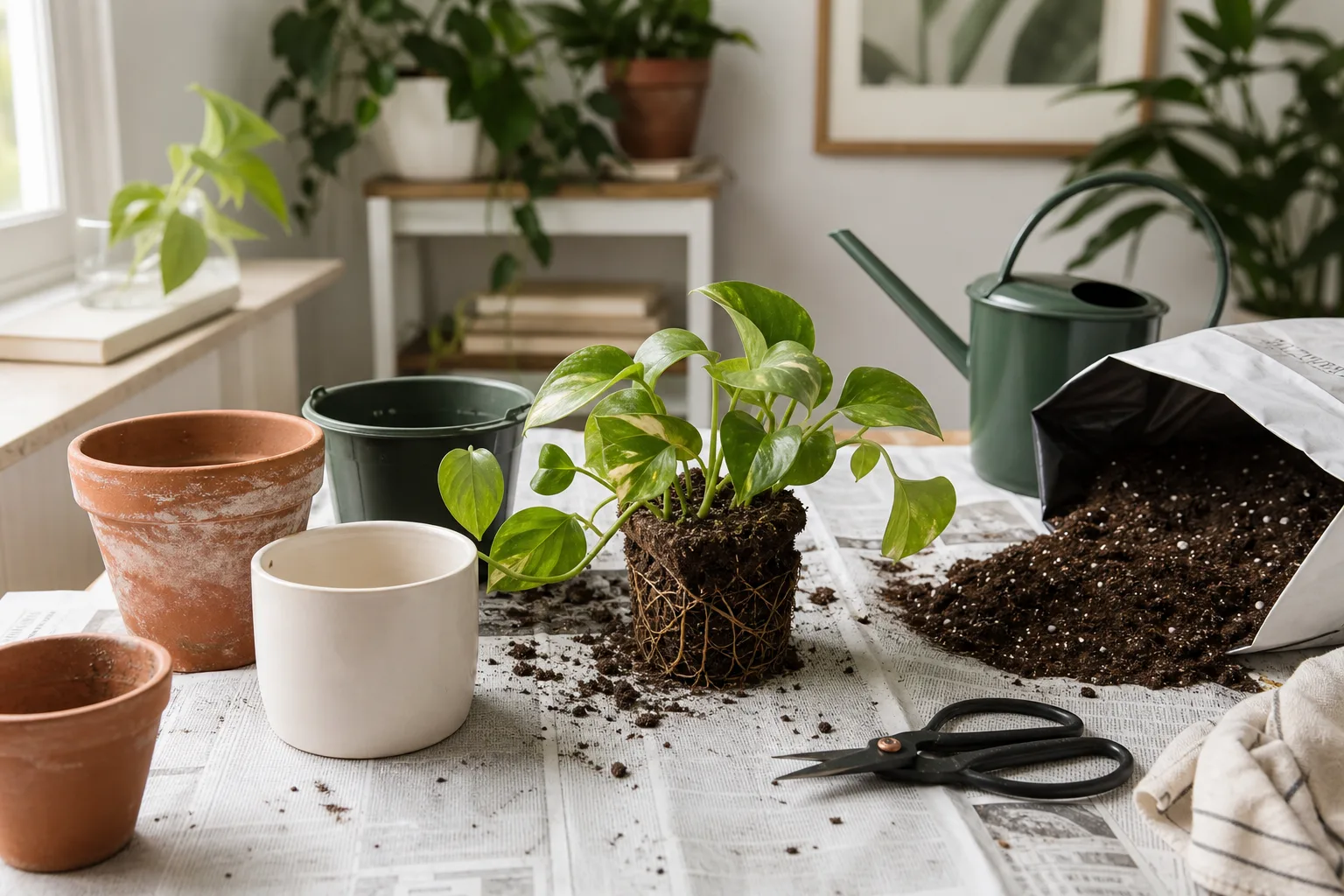
Roots showing at the bottom of a pot can make repotting feel overdue, but a visible root is a clue, not a diagnosis. The strongest sign is a crowded rootball: roots circle the sides or bottom, tightly fill the container, and leave little potting mix visible. Watering changes, stalled growth during the active season, and a pot under pressure can support that finding, but each has other possible causes.
Use the six checks below to decide how seriously to take what you see. If a symptom is vague, confirm it with a root inspection before buying a larger pot; if roots are healthy and there is still mix between them, the problem may be light, watering, old soil, or a seasonal pause.
Use a root-zone evidence ladder before you act
Think of repotting evidence in three levels. Direct root evidence—a tight spiral of roots, a dense mat at the bottom, or a rootball with very little mix left—is the clearest. Repeated changes in water use or physical pressure on the pot are supporting evidence. Leaf drop, yellowing, a tall canopy, or slow growth by itself is weak evidence because many unrelated problems produce the same symptoms.
Penn State Extension suggests checking whether mix dries unusually quickly, roots grow through drainage holes, or growth slows during spring and summer, then removing the plant to inspect the rootball. It describes circling roots or a bottom third so dense that little mix is visible as evidence that the plant is pot-bound. The Royal Horticultural Society likewise says lifting a container plant out is the best way to see whether roots are congested.
This distinction matters because repotting is a root disturbance, not a general cure for a tired-looking plant. A healthy plant with one root tip at a hole may have months of room left; a plant with a dense root mat, a failing watering pattern, and roots pushing against its container has a much stronger case for a move.
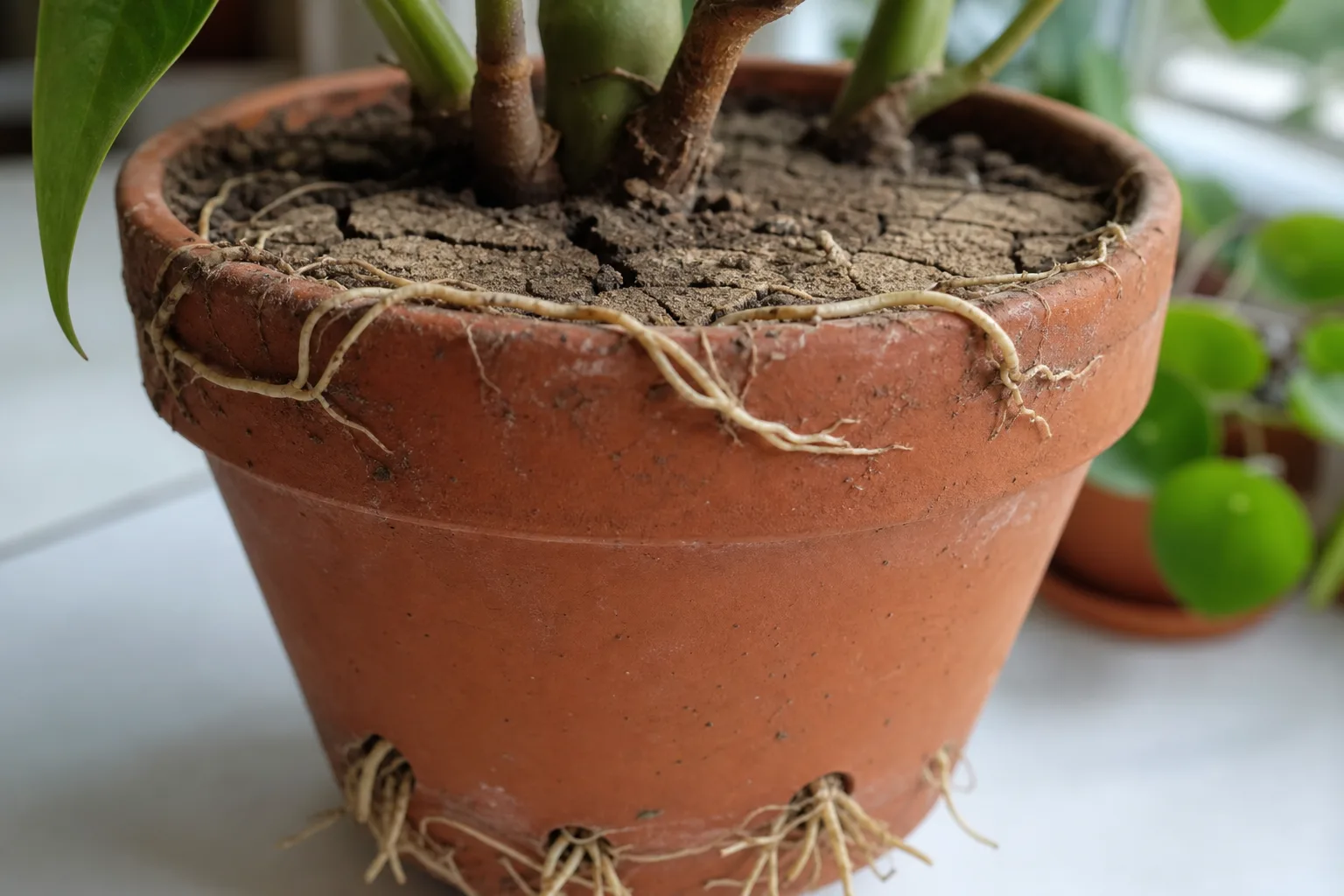
1. Roots keep emerging from the drainage holes
Roots extending from the drainage holes are the easiest clue to spot. If several roots are growing out, forming a mat across the base, or returning after you gently tuck them back, the root system may have used most of the open space and be searching beyond the pot.
But one slender root at one hole does not prove that the whole rootball is packed. Roots grow toward moisture, and a drainage opening is an easy route out; the root may have reached it before the rest of the container is full. Check whether the pot still holds plenty of mix, whether water drains at the usual rate, and whether the plant remains stable and grows normally.
The signal becomes stronger when multiple roots emerge from several holes and the plant also dries much faster or is difficult to slide out. Fine Gardening lists roots protruding from drainage holes among its repotting clues, but also recommends checking the rootball rather than relying on an exterior view alone. (Fine Gardening)
Do not cut exposed roots just to make the pot look tidy. Some roots may be important structural roots, and trimming them does not create new growing space; it only removes tissue. If the plant otherwise looks comfortable, monitor it and check the rootball at a suitable time instead of forcing an immediate repot.
2. A gentle slide-out shows a root-dense ball
When the outside clues conflict, the rootball gives the most useful answer. Support the plant near the soil line, tip a small pot on its side, and ease the container away; do not yank the stems. If the plant resists, stop rather than pulling harder—some pots narrow toward the base, and some roots attach to porous clay.
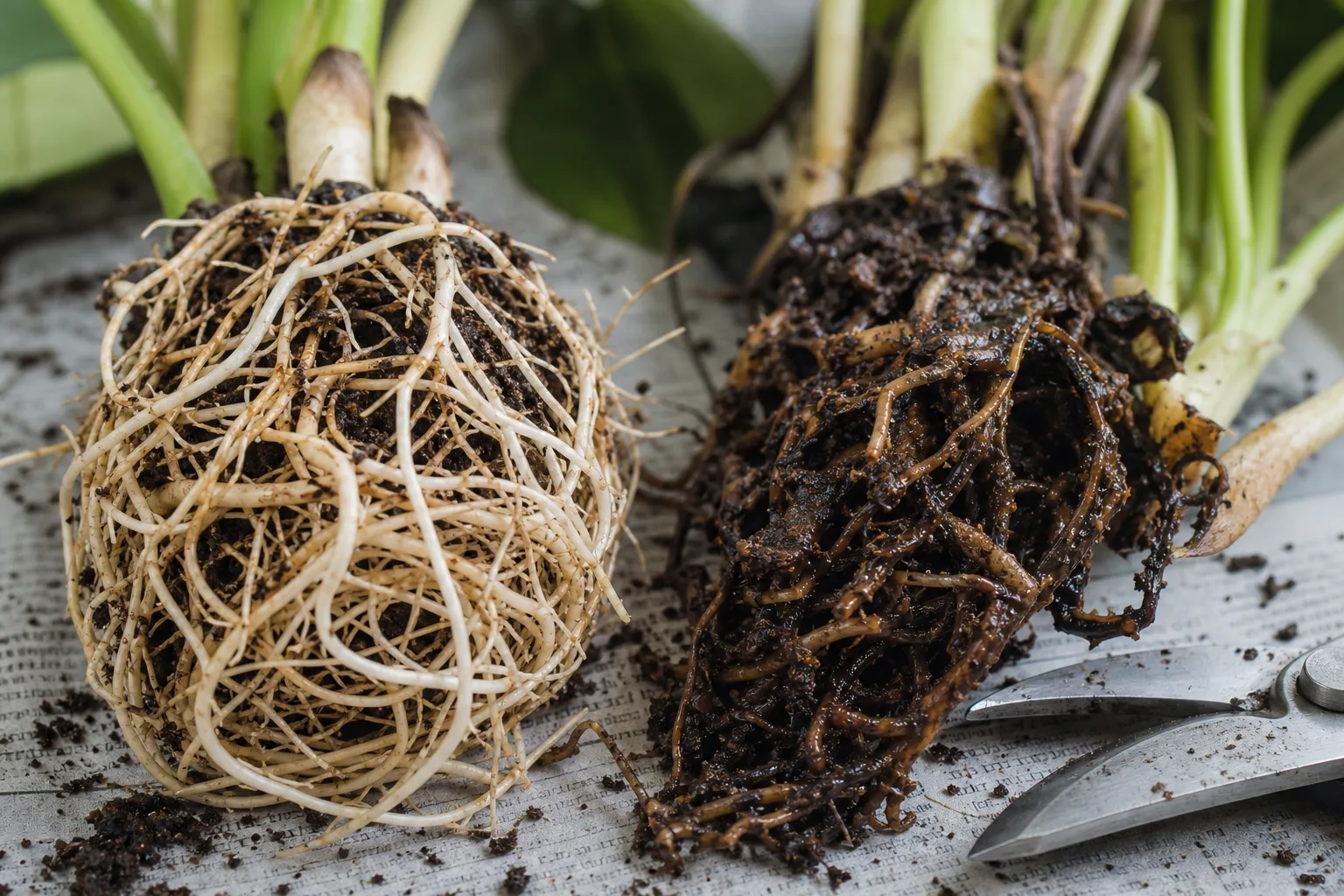
Look at both the bottom and the sides. Rootbound means more than “roots are visible”: roots are densely packed or circling the pot-shaped ball, and the root network has displaced much of the mix. Penn State uses a helpful practical threshold: if the bottom third of the ball is so dense that it is hard to see potting mix, the plant is pot-bound. A few roots along the surface with mix still visible between them are not the same condition.
RHS guidance also separates a congested root mass from ordinary root growth and notes that spiraling roots can interfere with drainage. Keep the rootball intact during this diagnostic check; you do not need to pull it apart or prune roots merely to decide whether the plant needs more space.
Color and texture matter if the rootball looks unhealthy. Firm white, cream, or tan roots can be healthy, depending on the species and age of the root; dark, soft roots with a sour smell point toward rot, which is a different problem from simple crowding. A rootbound plant may be healthy but cramped, while a rotting plant may have too few functional roots to justify a larger pot.
3. The pot dries much faster under the same conditions
If a pot that used to stay evenly moist for several days now dries in a day, the change deserves attention—especially if light, room temperature, airflow, pot material, and watering amount have stayed about the same. A crowded root system can leave less mix to hold water, so the plant needs watering again sooner.
Compare the same pot across a few watering cycles rather than judging one hot afternoon. Water thoroughly, let the pot drain, and check the mix at the depth where the roots are; a dry-looking surface does not tell you whether the center or bottom is dry. If the plant is in a bright window during a heat wave, sits near a vent, or has moved from plastic to unglazed terracotta, faster drying may be expected without rootbinding.
Fine Gardening includes potting mix that dries quickly or has degraded among its practical repotting clues, and Penn State asks growers to notice unusually fast drying even in cooler conditions. Treat that as supporting evidence, not proof. It is most persuasive when roots also circle the ball or emerge in numbers, or when the pot has become difficult to water evenly.
Very frequent watering can also reflect a thirsty species, active new growth, a small original nursery pot, or a loose, coarse mix. The plant does not necessarily need a much larger container: first determine whether the root system has filled the current one and whether the mix still absorbs water evenly.
4. Water stops behaving normally in the pot
Two opposite watering changes can point to a root-zone problem. Water may run out almost immediately because there is little mix left to absorb it, or it may pool on top and take unusually long to drain because the mix has compacted, the drainage hole is blocked, or roots have crowded the pot. Neither pattern on its own tells you which cause is responsible.
Pour slowly over the surface and watch what happens. If water beads, channels down the side, and leaves the center of the rootball dry, the mix may be hydrophobic; a very dry peat-based mix can repel water until it is re-wetted. If a small amount pools on top while the potting mix is already wet, check for compaction or blocked drainage. If it drains freely but the rootball is nearly all roots, crowding is more likely.
The same symptom can therefore suggest different next steps. Fast runoff through dry mix is not an automatic reason to upsize, and prolonged wetness can mean root damage rather than a plant needing more space. RHS notes that congested roots can hinder drainage, while Fine Gardening also flags water that sits on the surface too long; both clues need to be read alongside the rootball and the condition of the mix.
Keep a cachepot in the picture, too. Water trapped around the nursery pot can make the soil seem slow to drain even when its drainage holes are open; empty the outer pot and recheck before you blame the roots.
5. Growth stalls during the plant’s active season
A healthy houseplant that usually produces leaves or new stems but stops for weeks during its normal growth period may be running out of root space. This is more meaningful when the plant has adequate light, warm-enough conditions, and a stable watering routine, and when root crowding or quick drying appears at the same time.
Growth rate is a comparison with that plant’s own pattern, not with another plant on social media. A pothos in bright indirect light may make visible growth through much of the year; a ZZ plant, snake plant, or mature succulent can remain unchanged for long stretches and still be healthy. In a dim room, shorter winter days can slow growth even if the calendar says spring.
Penn State Extension treats slowed foliage and stem growth during spring and summer as a reason to inspect for potbinding, especially alongside its other root clues. Do not respond by adding fertilizer automatically. A larger dose cannot make a crowded rootball disappear, and it may add soluble salts to an already stressed root zone.
Before counting slow growth as a repotting sign, check for low light, cold drafts, recent relocation, pests, watering extremes, and the plant’s normal seasonal rhythm. If those factors explain the pause and the rootball still contains open mix, fix the environment first and observe new growth rather than disturbing healthy roots.
6. Roots are lifting the plant or putting pressure on the pot
Roots can sometimes make the evidence visible without a slide-out test. The rootball may rise above the rim, the crown may sit noticeably higher than before, or a flexible plastic nursery pot may bulge as roots fill it. A clay pot that has split can also signal strong root pressure, although old or damaged ceramic can crack for reasons unrelated to roots.
Look for a pattern, not one awkward silhouette. A plant leaning toward a window may simply need more even light or a support; tall foliage can make a small pot look out of proportion even when the rootball has plenty of room. By contrast, an increasingly high rootball, a visibly deformed pot, and roots packed through the drainage holes together make a much stronger case that the container is physically constraining growth.
Rhizomatous plants such as snake plants and ZZ plants can fill a pot tightly while still growing well. That does not mean every crowded specimen needs immediate upsizing, but a cracked container is a practical reason to move or divide it before it breaks further. Savvy Gardening describes bulging plastic and cracked clay pots as signs to check on snake plants, while also noting that their growth and repotting rhythm differs from faster growers. (Savvy Gardening)
If the container is intact and the plant is merely top-heavy, a stable outer pot or support may solve the immediate wobble. Repot only when the root system or the condition of the growing medium supports that choice.
Clues that are easy to mistake for rootbinding
Some symptoms look dramatic but tell you little about available root space. These clues matter when they occur alongside root evidence; by themselves, they should prompt diagnosis rather than an automatic trip to the potting bench.
Yellow, wilted, or dropping leaves
Leaf yellowing, wilting, browning, or leaf drop can result from underwatering, overwatering, low light, a cold draft, pests, acclimation, or normal aging of older leaves. Root crowding is only one possibility, and these symptoms can also appear when roots are rotting in soil that stays wet.
Notice which leaves are affected, how quickly the change is spreading, and whether the soil is wet or dry. A single lower leaf yellowing over time is weak evidence; widespread decline after the mix stayed saturated calls for a root-health check, not simply a larger pot. If the roots are not crowded, repotting may add stress without correcting the cause.
A single root at the drainage hole
One root tip can reach a drainage opening while the rest of the rootball remains open and well supplied with mix. This is common enough that the better question is not “Can I see a root?” but “Are many roots filling the bottom and sides, and has the plant’s water use changed?”
If the plant is stable, grows normally, and its potting mix still wets and drains as expected, note the root and check again later. If several thick roots form a dense mat, the rootball is hard to remove, and watering has become erratic, the same visible clue carries much more weight.
White crust, hard soil, and a top-heavy plant
White crust on the surface may be fertilizer salts or minerals from water; it does not prove roots have outgrown the pot. A hard surface can come from compacted or degraded media, and can sometimes be refreshed at the top if the roots below are not crowded. Replacing the upper layer or changing the watering approach may be more appropriate than increasing pot size.
A tall or lopsided plant may need better light, rotation, pruning, or a support. If the plant rocks because its rootball no longer anchors it, or the pot is being deformed from within, root pressure is more plausible. Treat appearance as a prompt to check the root zone, not as the final verdict.
How plant type and season change the signal
There is no universal repotting interval that makes these clues equally urgent for every houseplant. Vigorous growers can fill a pot more quickly under bright, warm conditions; slow growers may take much longer. Compare the current roots and water behavior with the species’ normal growth pattern instead of repotting once a year by habit.
Some plants tolerate or even perform well in snug quarters. Epic Gardening’s horticulture guidance discusses species such as snake plants, ZZ plants, hoyas, and holiday cactus that do not need the same degree of root space as vigorous foliage plants. “Tolerates snug” does not mean “leave any root problem alone”: cracked pots, severe water-flow problems, rotting roots, or a medium that has broken down still deserve attention. (Epic Gardening)
Orchids are a useful exception to the usual pot-size logic. Their repotting need may come from bark or other medium breaking down, not from roots demanding a larger container; visible roots alone are not enough to choose a bigger pot. For most foliage houseplants, spring through early summer is a convenient recovery window because active growth is returning, but urgent root rot or a broken pot should not wait for a date on the calendar.
If the season is quiet and the plant is stable, weak signs such as a brief pause in growth or a single visible root can wait. For a fuller seasonal decision, see when to repot indoor plants; for the actual low-shock process, use the houseplant repotting guide.
When repotting will not fix the problem
A larger pot does not correct low light, cold stress, pest damage, or a watering routine that keeps the soil too wet. If the rootball is not crowded, changing the container can leave the real problem untouched while adding weeks of transplant adjustment. Diagnose the cause first, especially when the plant is already declining.
Repotting is also not the entire treatment for root rot. Soft, dark roots and a sour odor indicate damaged roots; the priority is to remove the cause of persistent wetness and assess how much healthy root remains. Putting a small surviving root system into a much larger pot can leave it surrounded by mix that stays wet too long. A same-size or smaller pot may be more appropriate after root loss, depending on the plant and mix.
Nor does repotting automatically renew a plant with nutrient or salt problems. White surface deposits may call for a careful media refresh or a change in water or fertilizer use, while depleted but uncongested soil may need topping up. If the roots still have space, avoid turning every leaf symptom into a root-space intervention.
For plants that are rootbound but otherwise healthy, the decision is not always “larger pot now.” If you want to maintain the plant at its current size, a same-container refresh or root pruning may be possible for suitable species; the RHS guide to repotting covers those alternatives. Choose that route only when you know the plant tolerates root pruning and can recover from it.
Turn the evidence into a next step
You can decide without scoring every symptom as a yes or no. Match the evidence to the least disruptive action that addresses the actual condition.
Strong root evidence with repeated watering trouble
If roots tightly circle the rootball, little mix remains in the bottom third, and the pot now dries or drains very differently under the same conditions, repotting is justified. Several independent clues converging on the root zone are more persuasive than a single leaf symptom or one exposed root.
If a pot is cracked or the rootball is being lifted out, do not wait for another growth season merely to follow a calendar rule. Move the plant carefully and size the new container to the healthy rootball; detailed pot sizing and aftercare belong in a repotting guide, not in this diagnosis.
A potting-mix problem without crowded roots
If the rootball has room but water beads off, runs down a gap, or remains pooled because the medium is compacted, a bigger pot may not help. Address the mix’s ability to absorb and drain water, confirm that the drainage opening is clear, and remove standing water from any decorative outer pot.
If the potting mix has simply settled or the top is crusted while the plant is otherwise healthy, a partial refresh may be less disruptive than a full repot. The aim is to improve the root environment without enlarging the pot for roots that have not outgrown it.
A nonspecific symptom without root evidence
If the only clues are yellow leaves, a few dropped leaves, weak growth in winter, or a plant that looks large above the rim, wait before repotting. Check light, temperature, soil moisture, pests, and the plant’s usual seasonal behavior, then reassess when you can see new growth or inspect the rootball.
The goal is not to keep a houseplant permanently in a tight pot or to move it at the first sign of stress. It is to intervene when roots, mix, and water behavior tell the same story—and to leave healthy roots alone when the evidence points somewhere else.
Conclusion
The clearest sign that a houseplant needs repotting is a rootball that has genuinely filled its container: roots circle the pot, form a dense bottom mat, and leave little mix visible. Roots at a drainage hole, fast-drying soil, changed drainage, slow growth, and pot pressure can all support that finding, but none should be read without context.
Check the same plant across its normal growing conditions, separate root evidence from leaf symptoms, and consider whether the potting mix—not the pot size—is the actual problem. When roots still have room, a bigger container can create more trouble than it solves; when several strong clues agree, you can repot with confidence instead of guessing.