How to Grow and Care for Lavender Indoors
Growing lavender indoors takes more than a sunny sill. Choose a suitable type, improve light and drainage, and adjust care as growth slows.
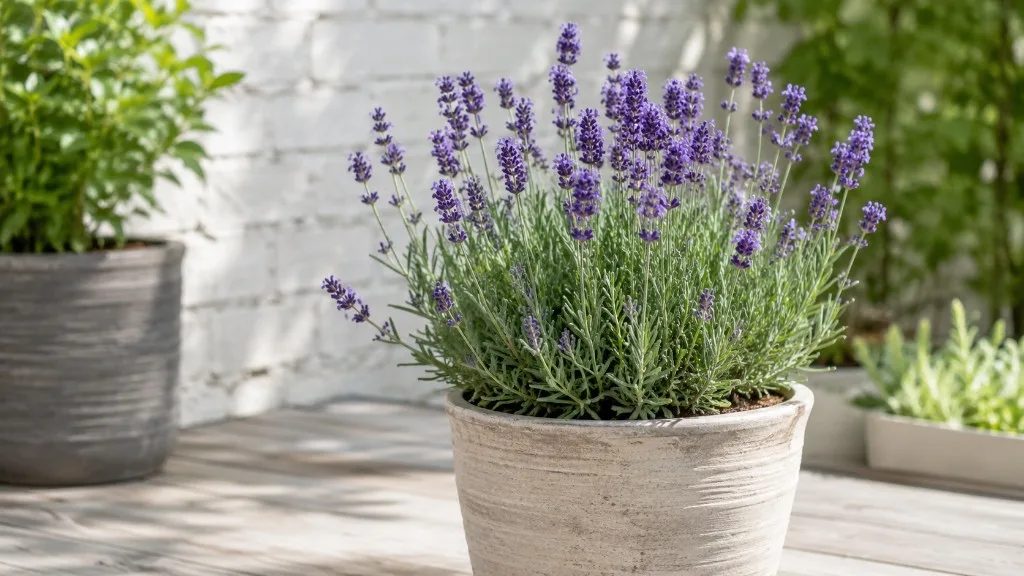
Lavender is a sun-loving Mediterranean shrub, not a tropical houseplant. It can grow in a container inside, but keeping it healthy and getting it to flower are different challenges. A bright window may support a few months of fragrant foliage; steady blooms and compact growth usually require stronger light than many rooms provide. The plant also needs a quick-drying root zone and a seasonal slowdown, not constant warmth and frequent watering.
The most reliable approach is to choose a suitable lavender, measure what your window actually delivers, and add a horticultural grow light if direct sun falls short. Use a pot with drainage holes and gritty soil, let the mix dry between thorough waterings, and adjust care as days shorten. If your home is dim, humid, or warm all winter, treat indoor lavender as a seasonal display or plan to move it outdoors when weather allows.
Can Lavender Grow Indoors Long-Term?
Yes, but the answer depends on the light and seasons you can provide. Lavender grows as a woody perennial in sunny, open places. Indoors, its leaves may remain green even when light is too weak for dense growth or flowers, so “still alive” is not the same as thriving. North Carolina State Extension classifies English lavender as a full-sun plant, meaning at least six hours of direct sunlight a day. That benchmark is a useful reality check before you bring a pot home. NC State Extension’s plant profile also notes that wet soil and poor drainage can cause root problems.
Start With Realistic Expectations
An indoor plant is more likely to stay compact and bloom if it receives strong direct sun for much of the day, a dry, airy root zone, and cooler conditions as growth slows. A window that looks bright to you can still provide far less usable light than an open outdoor site. Glass, window orientation, overhangs, nearby buildings, curtains, and the distance between the plant and pane all affect the light that reaches the leaves. Day length and sun angle change through the year, too.
If your only site is a dim north-facing window, or the plant sits several feet back from the glass, expect sparse stems and few or no flowers unless you add a strong grow light. A leafy lavender can be attractive even without blooms, but it is not realistic to promise that every windowsill will produce the full, fragrant flowering display seen outdoors. If that is the goal and you have a sunny patio, balcony, or garden spot, moving the pot outside for the warm season is usually the easier route.
Lavender also occupies more space than a tiny herb pot suggests. Even compact cultivars develop woody bases and need room for air to move around their branches. A plant crowded between curtains and other houseplants is more difficult to keep dry and inspect. If you can provide only a narrow shelf with little sun and no grow light, a different herb will be a better long-term indoor choice.
Choose a Type With Your Winter Conditions in Mind
Read the botanical name on the plant label. English lavender, Lavandula angustifolia, includes compact cultivars and is generally hardier outdoors than French or Spanish lavender. Hardiness, however, does not turn English lavender into an easy indoor plant: it still needs strong light and drainage. Tender kinds such as Spanish lavender (L. stoechas) are less tolerant of cold and are often kept in pots so they can be moved to a protected, frost-free place. The Royal Horticultural Society’s guides distinguish these groups and their winter needs. RHS lavender growing guidance
Choose a healthy, compact specimen rather than relying on a common name alone. “French lavender” can refer to different plants in retail settings, so check the species label and care information. Ask how large the mature plant gets, then make sure you have space for its canopy and pot. A young plant can look manageable at a garden center yet become woody and wide once established. Lavender is a long-lived outdoor subshrub in suitable conditions, not a naturally miniature windowsill plant.
Build a Bright Enough Light Setup
Light is the hardest indoor requirement to solve. Give lavender the brightest spot available and judge it by the direct sun that reaches the leaves, not by how bright the room feels. NC State Extension defines full sun as six or more hours of direct sun a day. Gardeners’ World likewise recommends an open, full-sun location for lavender. Gardeners’ World’s growing guide emphasizes that shaded or poorly drained conditions work against the plant.
Epic Gardening’s lavender guide also recommends at least six hours of full sun and notes that inadequate light can lead to leggy growth and fewer flowers. Epic Gardening’s growing guide
Evaluate Your Window Through the Seasons
For homes in the Northern Hemisphere, a south-facing window is often the strongest starting point; in the Southern Hemisphere, the sun-facing orientation is generally reversed. This is only a first test, not a guarantee. Stand where the plant would sit and note when direct sun actually falls on the leaves. Check again in a different season because a summer window may be shaded by trees while low winter sun may reach farther inside—or the reverse, depending on the building.
Keep the pot close to the glass without letting foliage press against a cold pane or overheat in intense midday sun. Remove sheer curtains during the plant’s bright hours, and rotate the pot a quarter-turn every week or two if stems lean toward the window. Rotation can even out growth, but it cannot make weak light strong enough to trigger flowering.
Watch the plant as well as the clock. A compact shape, short spaces between leaves, and steady new growth are more encouraging than long, thin stems reaching in one direction. Lavender that becomes leggy, loses lower foliage, or produces few flowers is telling you to reassess light first. Moving it a few inches closer may help if it is not already against the pane; if the spot is still dim for much of the day, a brighter location or supplemental fixture is the meaningful change.
Add a Grow Light When Sun Is Short
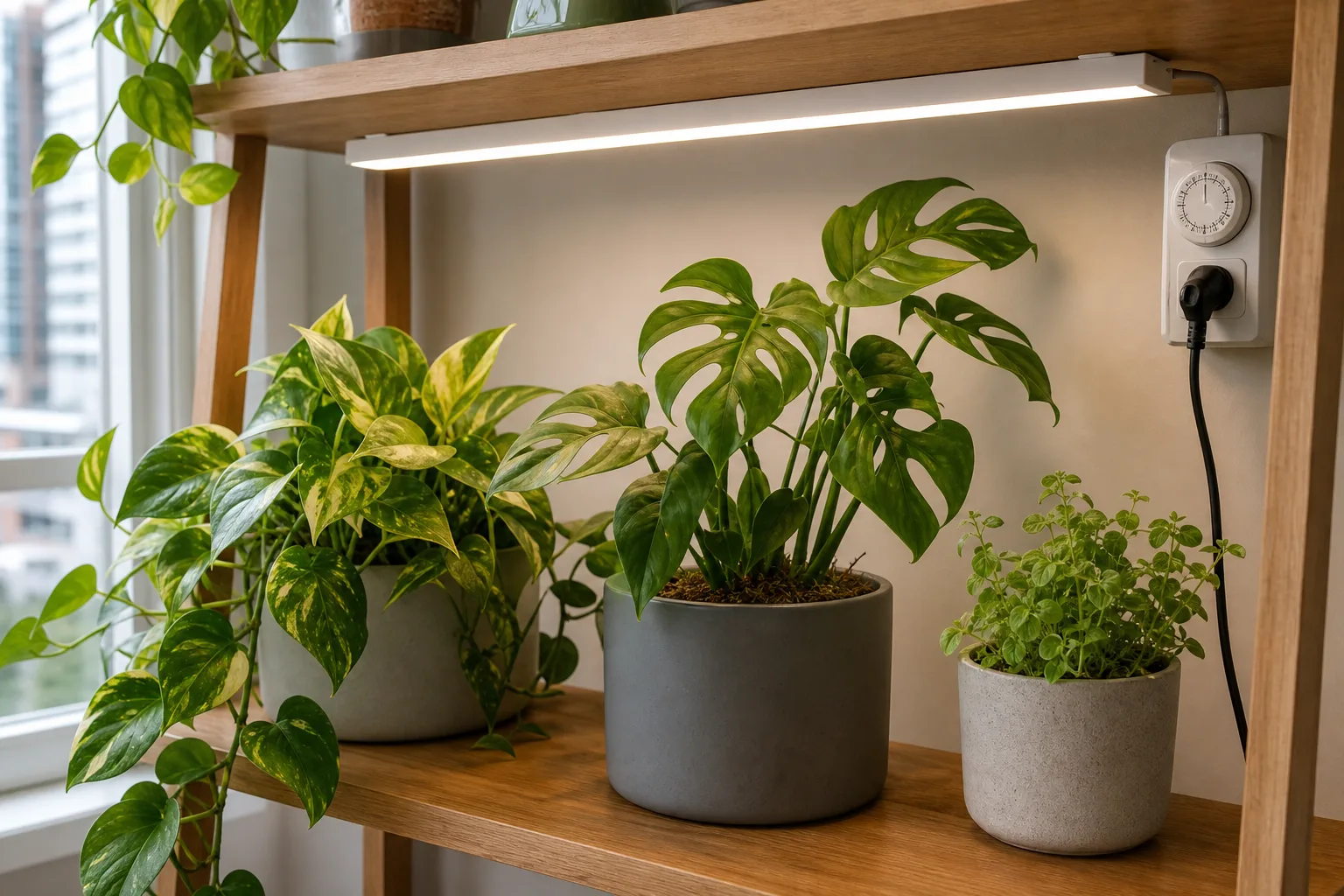
Choose a horticultural LED grow light designed to cover the whole plant, not a decorative bulb that merely makes the shelf look bright. Hang or position the fixture according to its coverage and distance guidance. Light intensity drops quickly with distance, while a fixture placed too close can heat or bleach foliage. A timer makes the daily schedule consistent; give the plant a dependable daytime block and a dark period at night instead of leaving the lamp on continuously.
Use the light over the canopy, and raise it as the plant grows. A single narrow bulb may illuminate only the top leaves, leaving the sides shaded. Check that the full crown receives useful light, and rotate the pot if the fixture is off-center. Product wattage alone does not tell you how much light reaches the leaves, so follow the maker’s coverage instructions and watch the plant’s new growth over several weeks.
Supplemental light can help support compact growth, but it does not erase every seasonal difference. Plants grown under indoor fixtures may grow differently from those in outdoor sun, and flowering can remain modest. Keep a practical goal: a healthy, aromatic potted plant is a good result; a dense flower-covered shrub is not guaranteed indoors. If a lamp strong enough for lavender is not workable in your room, use the plant outdoors during suitable weather and bring it inside only when protection is needed.
Pick a Porous Pot and Fast-Draining Mix
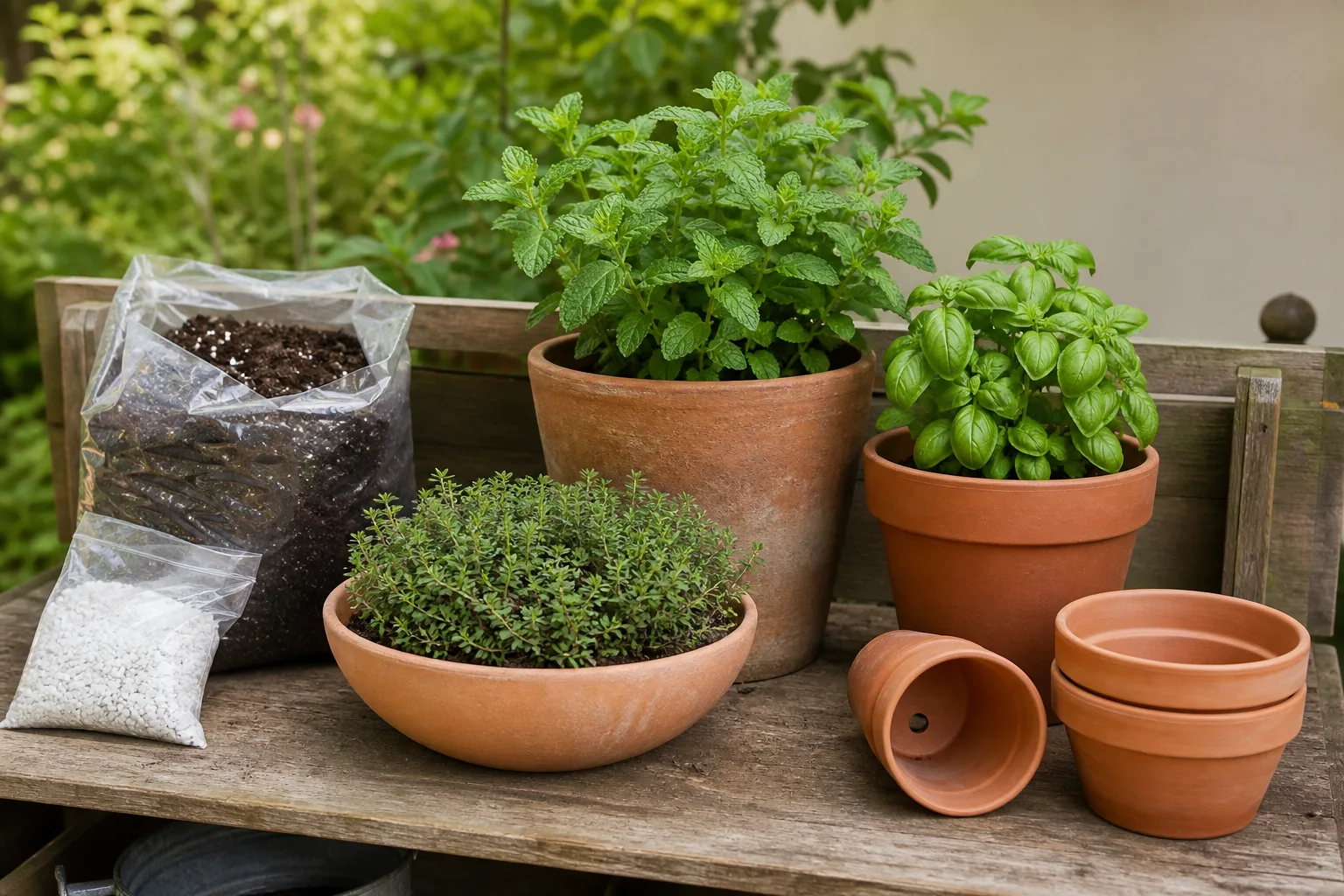
Lavender roots need oxygen as well as moisture. Choose a container with one or more unobstructed drainage holes; a decorative cachepot without holes can trap water around the roots. Unglazed terracotta is useful because it loses moisture through its sides, but it also dries faster than plastic or glazed ceramic. Match the material to how quickly your room and potting mix dry, and always empty the saucer after watering.
Use a free-draining potting mix rather than dense garden soil. The RHS recommends adding horticultural grit to container lavender, and NC State Extension notes that containers amended with grit or perlite can help where native soil drains poorly. For an indoor pot, start with a quality all-purpose potting mix and blend in coarse horticultural grit or pumice so water passes through readily. Avoid a mix that stays heavy and wet for days. The RHS container guidance describes a gritty, well-drained medium and a pot with drainage.
Do not add stones to the bottom and assume they will correct a poorly draining mix. The water still has to pass through the soil and out of the pot. Keep the surface open and avoid topping the mix with decorative moss, which can disguise moisture and slow drying. A thin layer of mineral grit can reduce splashing, but the drainage holes and the structure of the growing medium matter much more.
Repot Without Burying the Crown
Repot when roots circle tightly around the rootball, emerge from the drainage holes, or the mix has broken down and stays wet too long. Move up only one pot size, choosing a stable container with ample drainage. A very large pot holds more unused damp mix around a small root system, which can extend drying time and increase the chance of root rot.
Slide the plant out gently and loosen only roots that are tightly circling; lavender does not benefit from aggressive root teasing. Set the rootball at the same depth it was growing before, with the crown—the point where stems meet roots—above the surface. Backfill around the sides, firm lightly, and water once to settle the mix. Let the pot drain fully before returning it to its saucer. Avoid repotting a stressed plant simply because a calendar says it is time.
Water Thoroughly Only After the Mix Dries
Do not water indoor lavender on a fixed 10- or 14-day schedule. The interval changes with the pot size, soil, temperature, light, season, and whether the plant is actively growing. Instead, press a finger into the mix and lift the pot to learn its weight. When the upper portion of the mix is dry and the pot feels lighter, water slowly over the soil until excess runs through the drainage holes. Empty the saucer rather than letting the roots sit in runoff.
Let the mix dry well between waterings, but do not leave the rootball bone-dry for long stretches during active growth. Lavender tolerates dry conditions better than soggy soil, yet a small pot in bright sun can dry quickly. Recheck more often during a warm, sunny growing period and less often when growth slows in winter. The aim is not to withhold water; it is to give the roots a thorough drink and then let excess moisture leave before the next one.
Water the soil, not the foliage, and avoid frequent small sips that wet only the surface. If water runs down a gap around a shrunken rootball without soaking it, set the pot in a shallow basin briefly so the mix can rehydrate, then allow it to drain completely. Do not leave it standing in water. If the soil smells sour or remains wet for many days, pause watering and investigate the drainage, root health, and light level rather than adding more water because the leaves droop.
Balance Temperature, Airflow, and Humidity
Lavender does best in a room with fresh air and moderate, seasonally appropriate temperatures. It does not need the humid, still conditions many tropical houseplants enjoy. Give branches space, avoid placing the plant in a closed terrarium or humid bathroom, and keep it away from a heating vent that blasts dry hot air or an exterior door that sends repeated cold drafts across the leaves.
Air movement helps the foliage and soil surface dry between waterings. If the room is stagnant, leave space around the pot and ventilate when outdoor conditions are safe. A small fan can move air gently across the room, but do not aim a strong stream directly at the plant. NC State Extension notes that good air circulation helps reduce leaf-spot problems in lavender; this is especially useful in a crowded indoor corner where foliage stays damp.
Keep the plant near a bright window, but monitor temperature at night in winter. Leaves pressed against cold glass can be chilled, while the area directly above a radiator may be far warmer and drier than the rest of the room. If you have a cool, bright, frost-protected room for winter, it can offer a better seasonal transition than a warm, dim living room. Tender lavender must be protected from freezing; a hardy outdoor label does not mean a container’s roots should be left exposed to extreme cold.
Follow Seasonal Growth Instead of a Fixed Calendar
Indoor care should change as growth changes. In spring, new shoots and longer days usually bring more water use; during bright summer weather, an indoor plant may dry faster or benefit from a gradual move outdoors. In autumn and winter, shorter days and cooler conditions often slow growth. Continue checking the plant, but expect the potting mix to remain moist longer and adjust the next watering accordingly.
Lavender is not a plant to force into continuous lush growth with a warm room and frequent feeding all year. Some species and climates keep foliage through mild winters, while others slow markedly or become partially dormant. A visible pause in growth is not automatically a problem. Avoid interpreting winter stillness as a demand for fertilizer, extra water, or hard pruning; first check whether the plant is getting light and whether the roots are staying too wet.
If your lavender spends the warm months outside, acclimate it gradually. Start in a sheltered bright spot with a short period of direct morning sun, then increase sun and outdoor time over several days as the foliage adjusts. Sudden exposure to intense sun, wind, and rapid drying can scorch an indoor-grown plant. Before frost or persistent cold, check the species’ tolerance and bring tender types to a bright, protected place. Once spring temperatures are suitable, reverse the transition in stages rather than moving a plant from a warm room straight into full outdoor sun.
Reduce Water and Feeding During Winter Rest
When growth slows, use the same moisture test but wait longer between waterings because the mix dries more slowly. Give enough water to moisten the rootball, then let it drain; do not keep the soil wet to compensate for lower light. The RHS advises keeping container lavender fairly dry in winter and protecting tender plants in a light, airy, frost-free place. Its guidance on hardy and tender lavender helps explain why winter care should vary by type.
Skip fertilizer while the plant is resting or producing little new growth. Feeding cannot replace sunlight, and excess nutrients can encourage soft leafy growth when the plant lacks the conditions to support it. Keep the plant in the brightest cool space available, water sparingly, and wait for active growth to resume before considering a light feeding. Do not move it into a dark closet or an unheated area where a tender type can freeze.
Prune Lightly and Feed With Restraint
Lavender naturally becomes woody with age. Use clean, sharp snips to remove spent flower stalks and lightly shape the leafy green growth after flowering. Do not cut deep into old bare wood: lavender often fails to regrow from stems that no longer have green shoots. The RHS and Gardeners’ World both stress keeping cuts within green growth when pruning established plants. Gardeners’ World’s lavender care guide gives seasonal guidance for trimming and warns against cutting into old wood.
Indoors, keep pruning conservative. Remove dead or broken stems as you notice them, and trim just above healthy leaf growth to maintain an open shape. If a plant is leggy because it lacks light, heavy pruning will not fix the cause; improve the light first, then trim selectively after new growth appears. A lavender plant should not be sheared into a bare ball, and a late severe cut can leave it with too little foliage to recover.
Lavender generally needs little fertilizer when grown in a suitable mix. The RHS notes its low nutrient needs, and excessive feeding can favor leaves over the compact, fragrant flowering growth people want. If a plant has been in the same potting medium for a long time and is actively growing, use a balanced liquid fertilizer at a conservative label rate once or twice in spring or early summer. Skip it if the mix is fresh, growth is slow, or the plant is wintering. Never increase fertilizer to compensate for pale, stretched growth before checking light and roots.
Diagnose Leggy Growth, Yellow Leaves, and No Flowers
Indoor lavender problems often point back to one of three conditions: too little direct light, soil that stays wet, or inadequate airflow. Change one condition at a time and look for healthier new growth instead of expecting old damaged leaves to recover. Lavender rarely improves when several stresses are “fixed” at once with repotting, fertilizer, pruning, and extra watering.
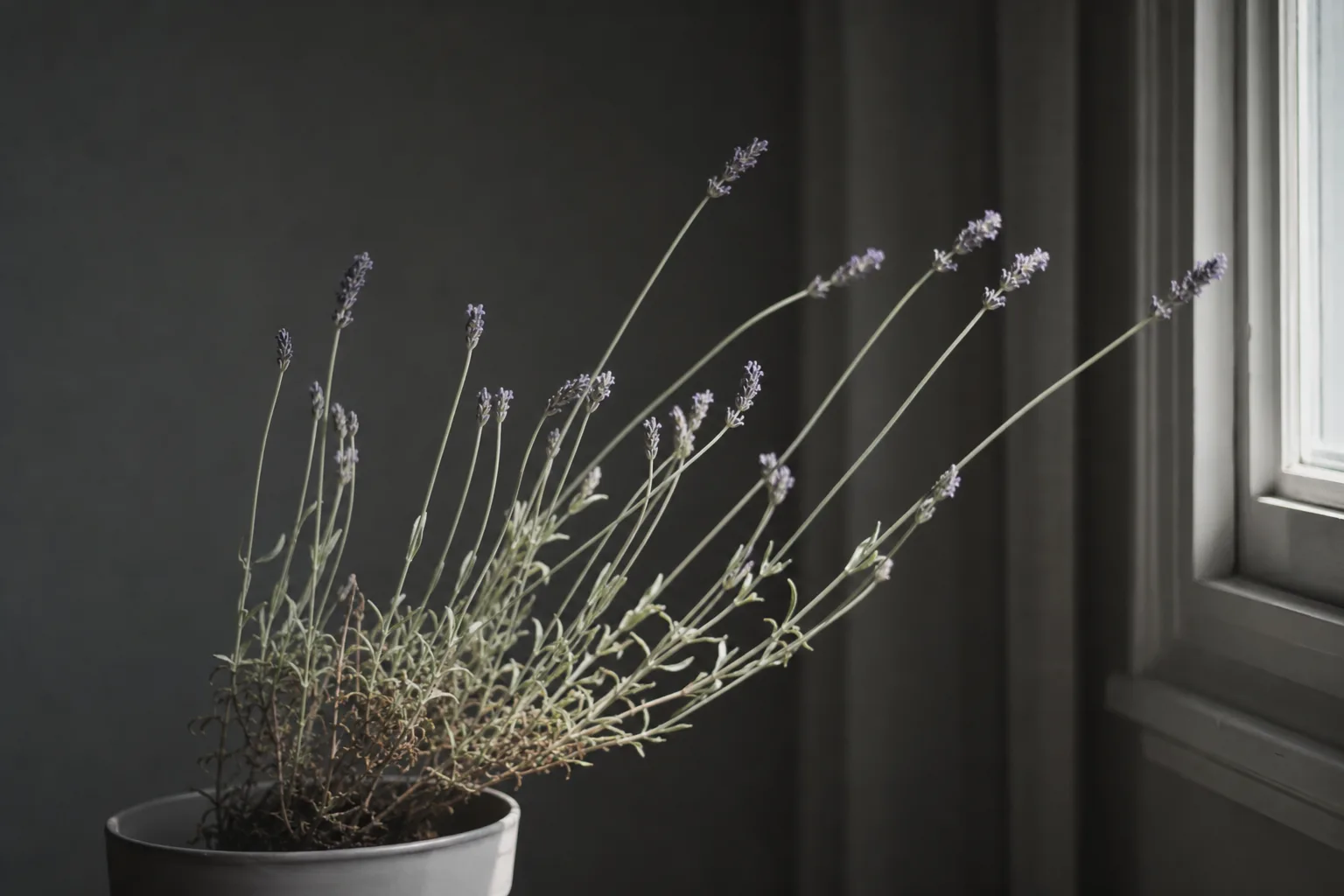
Long weak stems leaning toward a window and few flowers suggest that the plant is not receiving enough usable light. Move it closer to direct sun if the pane is bright and safe, add a grow light that covers the plant, or move it outdoors gradually in suitable weather. Rotate the pot to even out new growth, but do not expect rotation alone to correct a dim location.
Yellowing leaves, blackening at the base, or a pot that remains heavy and damp can indicate root stress from excess moisture. Confirm that drainage holes are open, empty standing water, and check whether the mix is dense or the container too large. If the plant continues to decline, slide it from the pot and inspect the roots. Healthy roots should not be mushy or foul-smelling. Trim only clearly dead roots with clean shears and repot in fresh, airy mix; then let the plant recover in bright light without frequent watering.
Check stems and leaf undersides for aphids, whiteflies, mites, or scale if foliage is speckled, sticky, or distorted. Isolate the pot from other plants while you identify the insect. A rinse outdoors or in a sink can remove some pests; repeat inspections because eggs and hidden insects may remain. Use only a treatment labeled for the pest and the plant, following its directions. Lavender’s aromatic leaves are not immunity from houseplant pests.
Separate Low Light From Root Problems
No flowers can have more than one cause: a plant may be young, recently pruned, in its seasonal rest, or growing in a space without sufficient direct light. Start with the window and the age of the plant. A mature lavender that grows long, floppy stems and rarely flowers in a warm room likely needs more intense light, not a larger dose of fertilizer. A compact, green plant without flowers may simply be between bloom periods or not yet mature enough to flower well.
Drooping alone is not a reliable watering signal. A dry rootball may need a thorough drink, while a waterlogged rootball can produce a similar limp appearance because damaged roots cannot take up water. Check the mix before watering: feel its moisture below the surface, lift the pot, and look for drainage. If it is wet, wait and improve the conditions that keep it wet. If the plant is bone-dry and the pot is light, water slowly, then let it drain.
If spots or gray mold appear, remove dead material, increase spacing, and make sure the foliage dries quickly after watering. Avoid misting; lavender does not need extra humidity, and wet leaves in still air create the wrong conditions. For recurring disease, a plant that is already weak from low light or poor drainage may be easier to replace than to rehabilitate indoors. Resolve the setup before bringing in another specimen.
Conclusion
Growing lavender indoors is most successful when you plan around the plant’s outdoor nature. Give it at least six hours of direct sun or a suitable horticultural grow light, free-draining soil in a pot with holes, and enough open space for air to move. Water thoroughly only after the mix has dried, ease back as growth slows, and prune only into green growth. A regular household window may not provide enough intensity for blooms, and winter care should follow the plant’s season and species rather than a fixed schedule.
If your home cannot meet those needs, use lavender as a seasonal container plant and give it time outdoors in the warm months. Honest expectations and a few careful checks—a sun log, a drainage test, and a feel for pot weight—do more to keep it healthy than a rigid watering calendar or extra fertilizer.