Bird of Paradise: Plant Care & Growing Guide
Learn bird of paradise care indoors and out, including light, watering, soil, repotting, leaf problems, and realistic expectations for flowers.
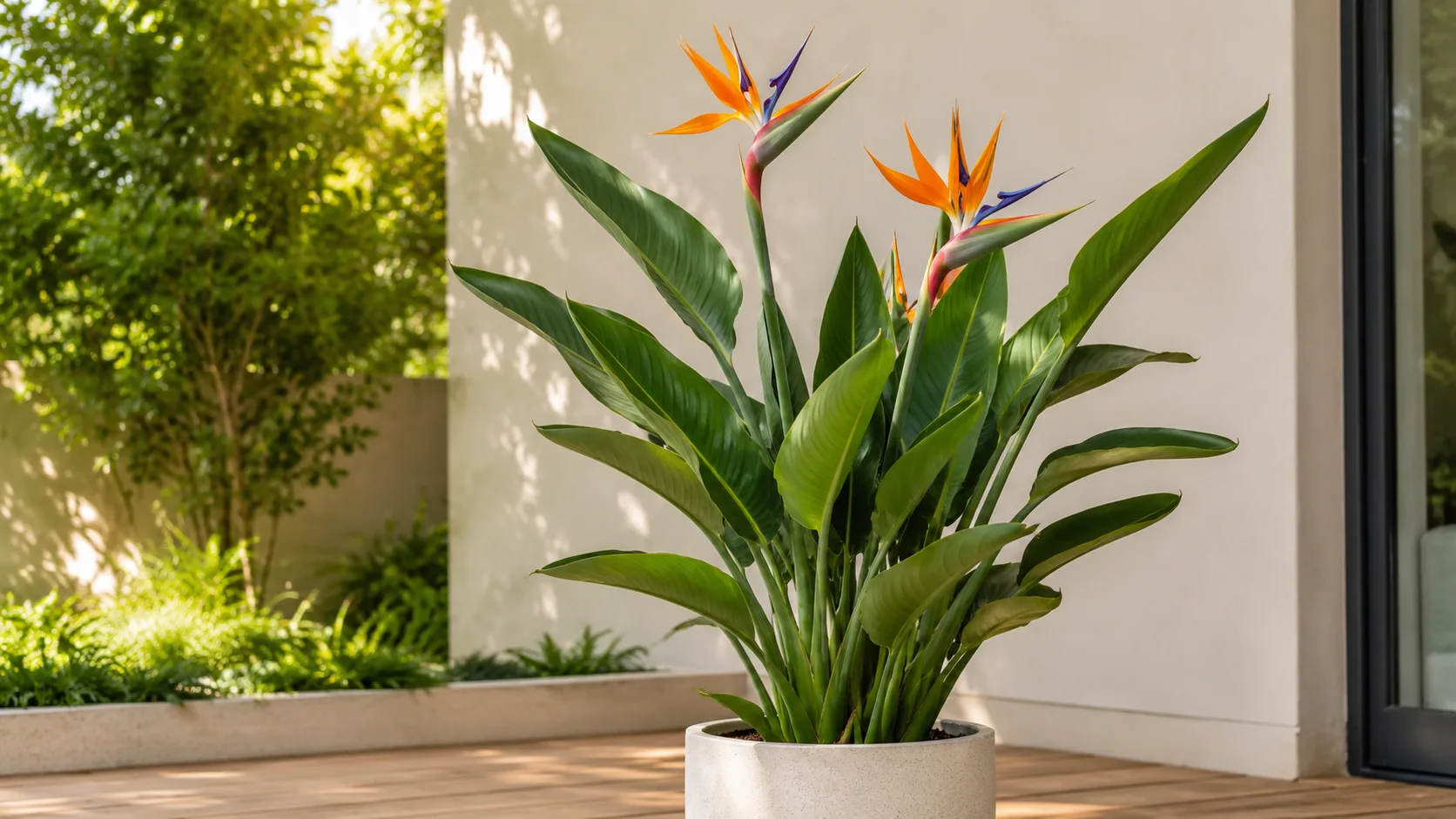
Bird of paradise is a striking foliage plant, but its broad leaves and tall stems need more light and room than many people expect from a houseplant. The care routine is straightforward once you match it to the species and growing conditions: give the plant strong light, let the root zone partly dry between thorough waterings, and avoid a pot that stays soggy or tips easily. Flowers are possible, especially on a mature plant with abundant light, but indoor bird of paradise is often grown for its sculptural leaves.
Two species account for most plants sold for homes: orange-flowered Strelitzia reginae and giant white bird of paradise, S. nicolai. They share basic care, but the latter can outgrow a room and may take many years to flower. Before buying or moving one, identify which plant you have and decide how much space its mature size can occupy.
Identify Your Bird of Paradise Before Choosing a Spot
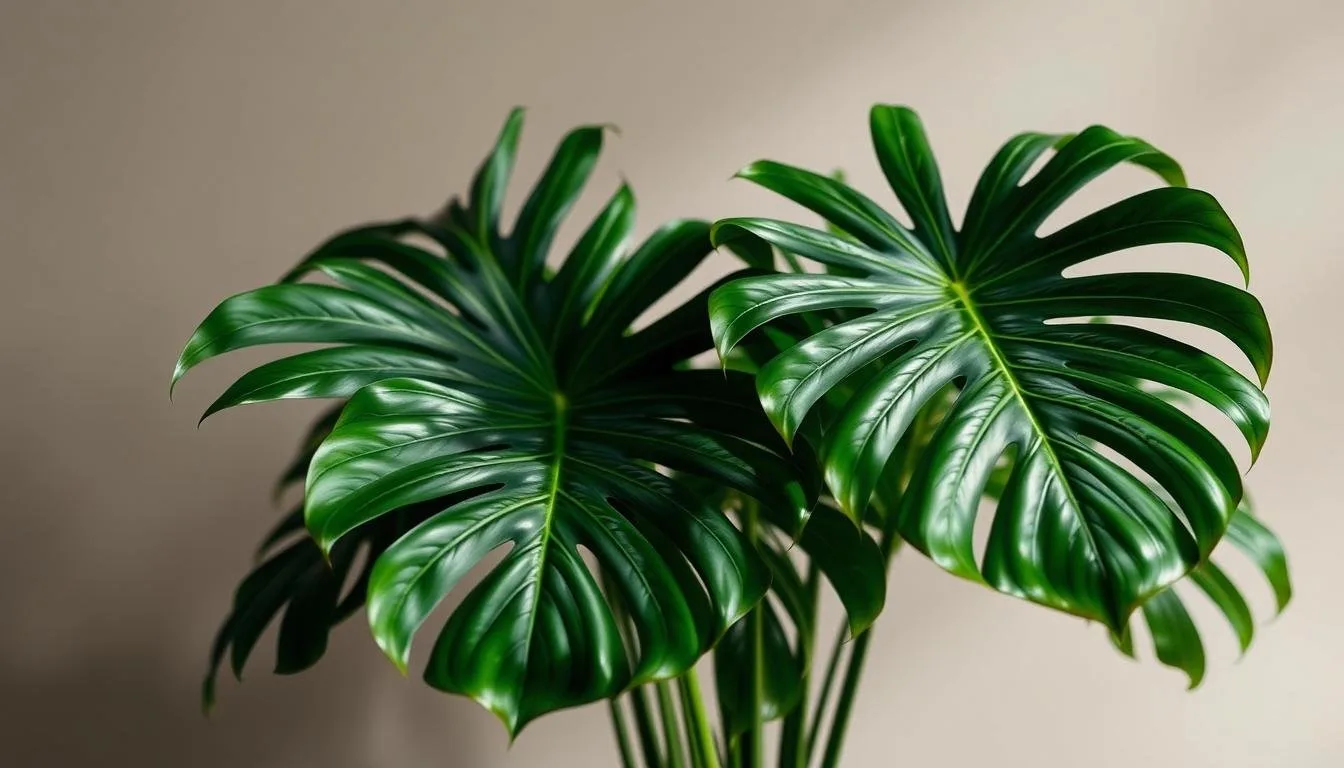
The orange bird of paradise, Strelitzia reginae, grows as a clump of upright, paddle-shaped leaves and can produce orange-and-blue flowers. The white or giant bird of paradise, usually S. nicolai, has even larger leaves and a tree-like, architectural presence. University of Wisconsin–Madison Extension notes that giant forms can reach about 30 feet outdoors in favorable climates and flower only when quite mature; indoors, their foliage is often the main attraction. A smaller plant at the nursery is not a promise that it will stay small.
Other Strelitzia species exist, but these two are the ones most often encountered as houseplants. Labels can be imprecise, so use both the seller’s name and the plant’s growth habit as clues. A compact clump with orange blooms is likely S. reginae. A plant with enormous banana-like leaves and a more vertical trunk-like base is likely the giant form. If the plant is already tall, check that the ceiling, windows, and walking paths can accommodate its leaves before placing it in a permanent corner.
This distinction also sets a fair flowering expectation. A young giant white bird of paradise may produce years of foliage before it is mature enough to flower, even with good care. An orange S. reginae is more likely to flower at a manageable size, but it still needs bright conditions and time. Treat both first as large, light-loving tropical foliage plants; count flowers as a bonus rather than the only measure of success.
Give It the Brightest Practical Light
Light is the most important indoor growing condition. Set the plant close to a bright window where it can receive several hours of direct or strong filtered sun, then observe how it responds. A sunny south- or west-facing window can be suitable, though the exact exposure depends on hemisphere, season, glass, and nearby buildings. A bright room several feet from a window may look well lit to you but deliver much less energy to the leaves than a spot near the glass.
Wisconsin Extension identifies insufficient light as a common reason mature plants do not flower and recommends nearly full sun in summer and as much light as possible in winter for bloom. In an ordinary home, you may not be able to reproduce outdoor sun, but the plant will grow more strongly in the brightest position available. If new leaves emerge smaller, stems lean toward the window, or growth slows while the mix stays wet for a long time, assess light before increasing fertilizer or watering.
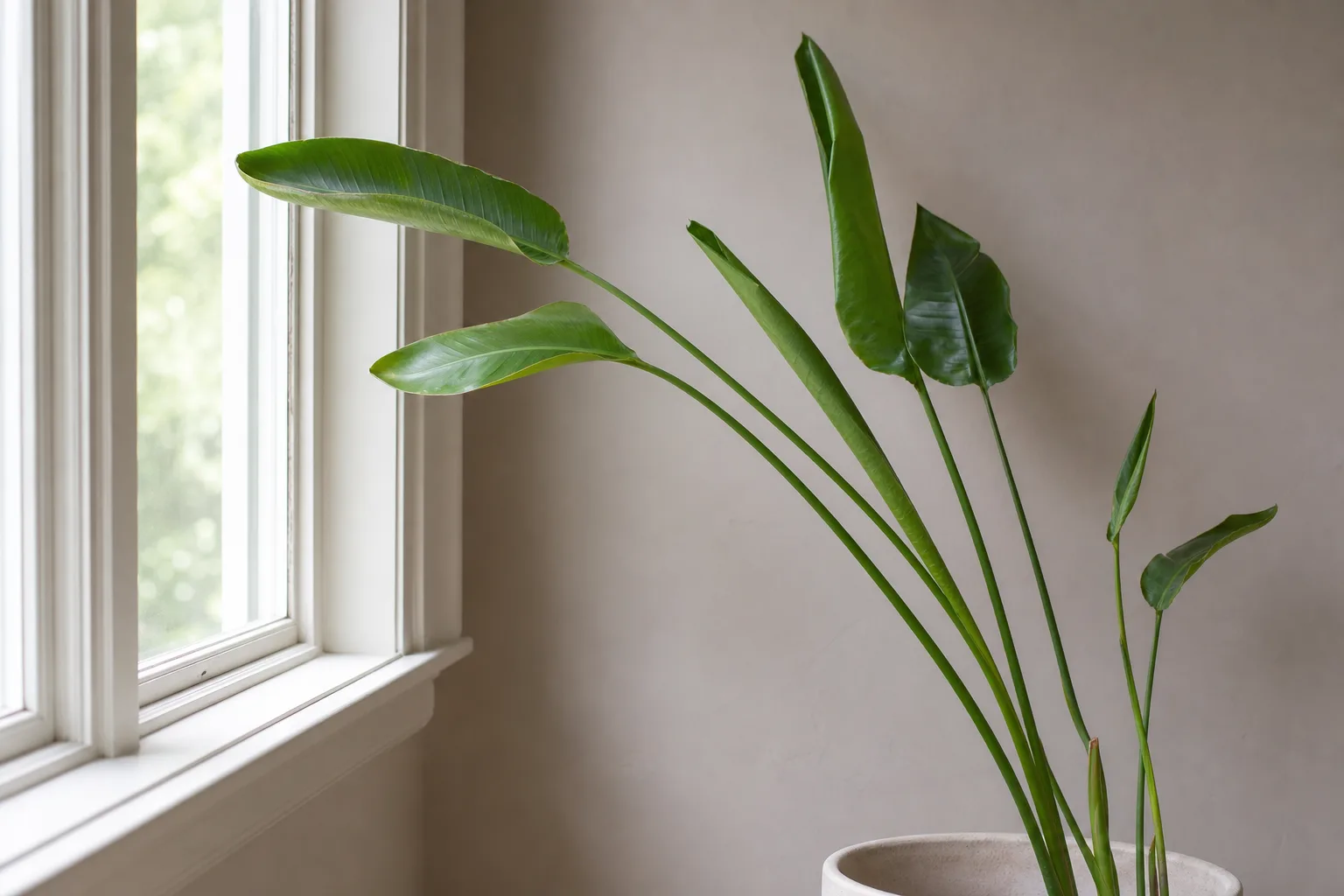
Turn the pot occasionally for even growth. If your window is weak, supplement winter light with a plant grow light aimed at the upper leaves; follow the fixture’s distance and timing instructions. Extra light supports foliage but cannot make an immature plant flower on demand.
Acclimate It Before Increasing Direct Sun
A plant that has spent months in a shaded store, a dim room, or behind sheer curtains can scorch when moved abruptly into intense midday sun. Increase exposure over one to two weeks: begin with a brighter position or gentle morning sun, then move it closer to the window or extend the sun period in small steps. Pale, dry patches on the side facing the glass are a sign to slow down and provide a little less direct exposure while the plant adjusts.
Before a summer move outdoors, acclimate the plant to stronger light to prevent sunburn. Wisconsin Extension recommends starting in bright shade and gradually adding morning sun. Choose shelter from strong wind and heat-reflecting walls.
Water by Checking the Root Zone
Water thoroughly when the upper part of the potting mix has dried, then let excess drain away. Do not use a fixed weekly schedule: a large pot in winter can stay damp for much longer than a smaller plant in summer sun. Check the mix with a finger or wooden skewer several inches below the surface, and lift the pot if its size makes that practical. The top layer may dry first while the center and bottom of a deep root ball remain wet.
When watering, soak the root ball until excess drains through the holes. If dry mix sheds water, apply it in two passes a few minutes apart. Empty the saucer or cachepot afterward so roots do not sit in runoff.
Water less often in winter as low light slows growth; outdoor pots may dry faster in warm, breezy weather. “Moist” does not mean saturated: Wisconsin Extension advises letting indoor pots dry between waterings. The Plant Manual also recommends checking beneath the surface in deep pots.
Tell Dry Soil From Waterlogged Roots
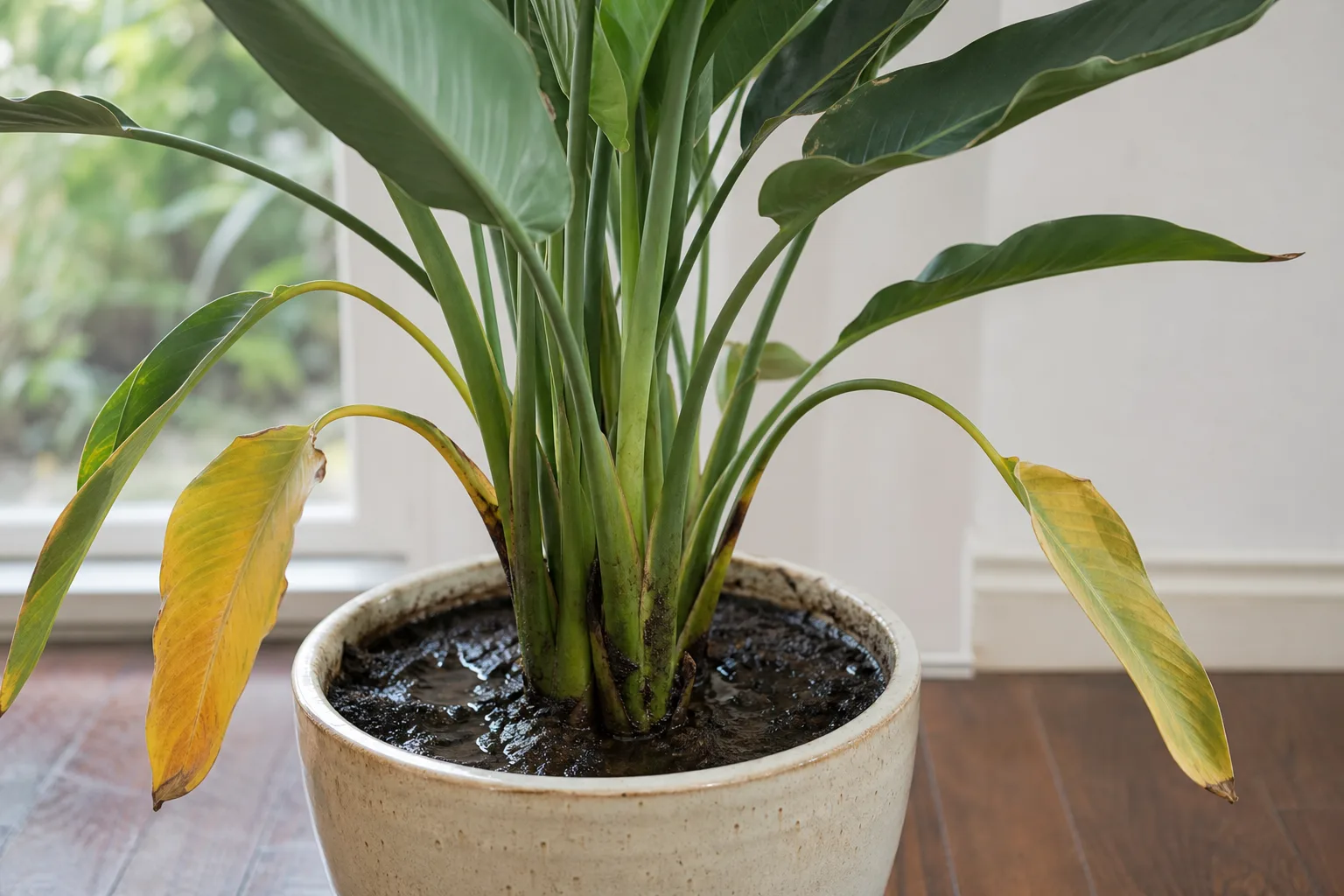
A thirsty plant may have dry mix deep in the pot, a noticeably lighter container, and leaves that curl or droop. Water it thoroughly and watch for improvement over the next day. A plant with wet, heavy mix that continues to yellow or wilt may have stressed roots rather than a shortage of water. In that case, pause watering, confirm that holes are open, and make sure the pot is not standing in water.
If mix stays wet for days, check light, pot size, drainage, and roots. Healthy roots are firm; rotting roots may be soft, dark, and foul-smelling. Trim damaged roots with clean tools and use fresh, airy mix if the remaining roots can support recovery. Do not water limp leaves without checking the soil first.
Use an Airy Mix and a Stable Pot
Choose a pot with open drainage holes and a mix that holds some moisture without compacting into a dense, waterlogged mass. A good-quality indoor potting mix is a reasonable starting point. If it dries very slowly in your home, blend in an aeration component such as perlite or fine bark; if it dries too quickly, use a mix with more moisture-holding material rather than packing the soil down. Avoid garden soil in an indoor container because it can compact and drain poorly.
The plant’s height makes stability important. Select a sturdy container with enough weight to resist tipping as the leaves spread, and place a lighter nursery pot inside a decorative cachepot only if you can remove it to drain after watering. Do not put stones or other material in the bottom as a substitute for drainage holes. They do not solve trapped water; the entire pot needs a free path for excess water to leave.
A modestly snug root ball can be compatible with flowering, and Wisconsin Extension says plants tend to bloom more profusely when pot-bound. That does not mean every bird of paradise should be forced into an undersized container. A severely crowded root system that dries almost immediately, lifts the plant out of the pot, or cracks the container needs attention. The aim is to avoid unnecessary overpotting and waterlogged excess soil while keeping the plant supported.
Keep Temperatures Warm and Humidity Sensible
Bird of paradise grows best in warm, stable conditions. Keep it away from cold drafts, frequently opened exterior doors, and direct blasts from heating or air-conditioning vents. A bright window is helpful, but leaves pressed against cold glass during winter can be damaged. If nights are cool, move the pot a short distance back from the pane while preserving as much light as possible.
Most homes do not need a special humidity system. Dry air can contribute to crispy edges, but inconsistent watering, fertilizer salts, sun scorch, and root stress can look similar. Misting does not fix root problems or raise humidity for long; if the room is unusually dry, a humidifier is more consistent.
When moving the plant outdoors, protect it from cold nights and bring it inside before frost. Wisconsin Extension notes that an established plant can tolerate a brief dip near 28°F, but that is not a safe target for a potted houseplant or a reason to delay bringing it in. Roots in containers are more exposed than roots in the ground, and indoor plants may be less acclimated to cold. Treat frost as the practical cutoff and move the plant earlier if the forecast is uncertain.
Feed During Active Growth Without Overfertilizing
A large bird of paradise can use nutrients while actively producing leaves, but more fertilizer does not make up for low light or poor roots. First check whether the potting mix already contains a slow-release charge. Follow its label before adding another product. During spring and summer growth, you can use a balanced water-soluble fertilizer at the labeled rate, or rely on a suitable slow-release product according to its directions. Wisconsin Extension recommends regular feeding, including more frequent summer and monthly winter feeding in its regional houseplant guidance; conditions and product strengths vary, so use the label and the plant’s growth as your guide rather than copying an interval blindly.
Feed only when the plant is growing, and reduce or pause feeding when winter light and growth decline. Apply liquid fertilizer to damp mix, not a bone-dry root ball, and allow runoff to drain. If the mix develops a white crust or leaf edges brown after repeated feeding, stop fertilizing and flush the soil with clean water if drainage is good. Resume only at a conservative labeled rate after new growth resumes.
For pale, slow growth, check light, moisture, and recent repotting before adding fertilizer. Low light or stressed roots can limit nutrient uptake; feeding before correcting the cause may add salts without helping.
Prune Damaged Leaves and Spent Flower Stalks
Remove a leaf when it is mostly brown, badly damaged, diseased, or collapsing. Use clean, sharp pruners and cut the leaf stalk close to its base without cutting neighboring stems or digging into the crown. Partly green leaves still photosynthesize, so keep them if the damage is limited to a split or small brown margin and the plant needs its foliage. Cosmetic perfection is not a useful reason to remove healthy leaf area.
For flower cleanup, cut a finished stalk near the base once the entire flower has faded. The showy orange and blue bracts emerge from a sturdy, beak-shaped spathe, and an old stalk can take time to decline. If another bloom is opening on that stalk, remove only the finished flower as appropriate rather than cutting the whole stem prematurely. Sanitize tools between plants if you are removing tissue that may be diseased.
Do not shear leaves to control height; healthy foliage will grow back large. If the plant outgrows the room, move it to a clearer spot or divide a suitable clump.
Repot Only When the Plant Needs More Room
Repot when roots are tightly circling, emerging from multiple drainage holes, cracking the container, or when the mix has broken down and no longer drains reliably. A pot that becomes unstable or dries far too fast can also signal that the root ball has outgrown it. Otherwise, a bird of paradise can remain in its container for several years; unnecessary repotting disturbs roots and may delay flowering.
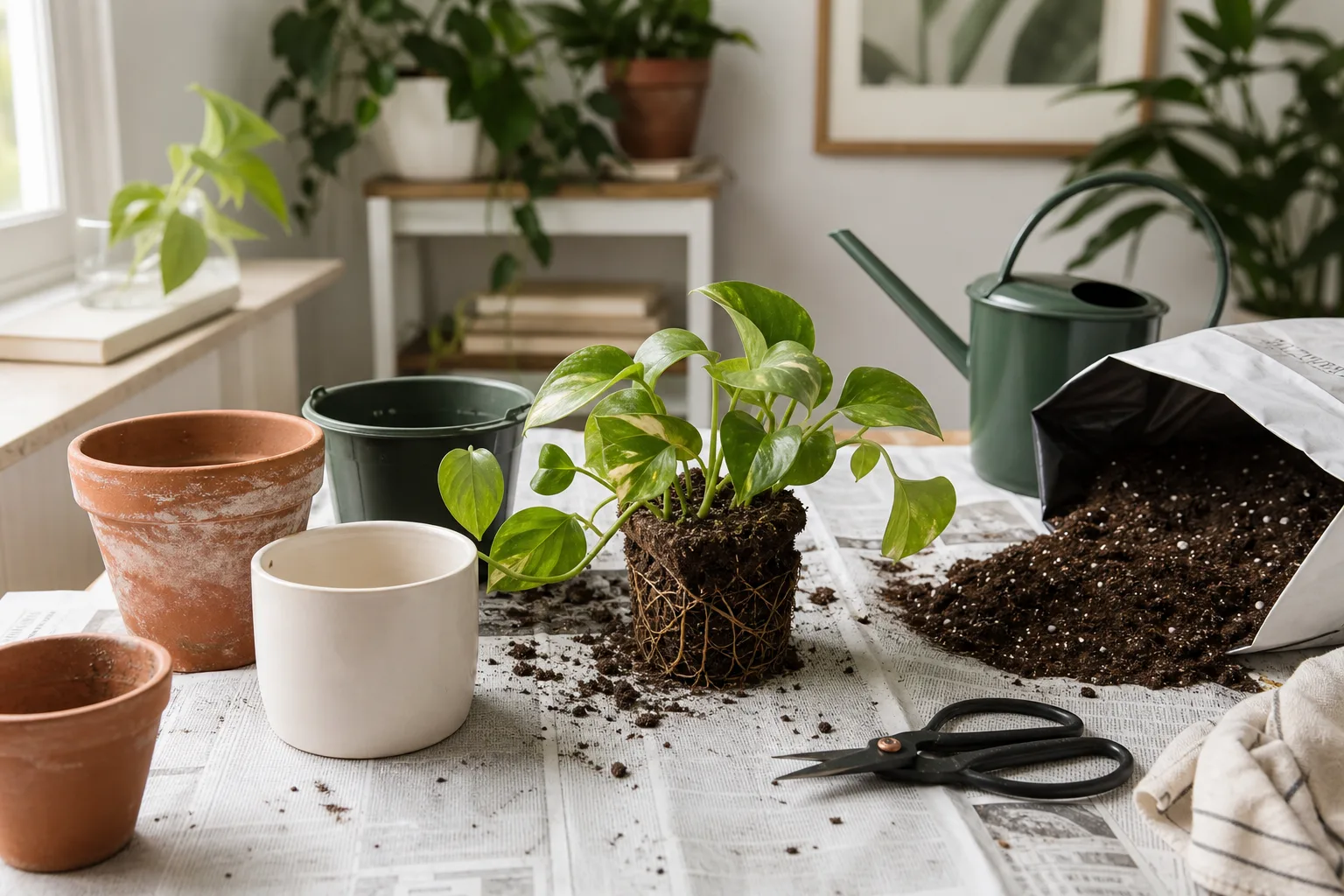
When repotting is warranted, choose a sturdy pot only one size larger, with drainage holes. Spring or early active growth is a practical time because the plant has light and warmth to recover. Slide the root ball out carefully, loosen only roots that are tightly circling the outside, and set the crown at the same depth it was growing before. Wisconsin Extension cautions against planting too deeply. Backfill with fresh mix, water it in, drain thoroughly, and return the plant to bright indirect light while it settles before increasing direct sun again.
For a large plant, ask someone to steady the pot; never pull it by the stems. If repotting is impractical, replace some surface mix without burying the crown or leaf bases.
Can a Bird of Paradise Flower Indoors?
Yes, but indoor flowering is not guaranteed. The plant needs to be mature, well established, and given strong light for a long period. A large, healthy plant may still remain foliage-only indoors because window light is weaker than outdoor sun, particularly in winter. The orange S. reginae is a more realistic flowering candidate in a home than a giant S. nicolai, whose maturity and eventual size are greater demands.
Wisconsin Extension identifies abundant light as central to flowering and notes that plants often bloom more profusely when pot-bound. Together, those facts support patience rather than a quick “bloom trick”: keep the plant bright, avoid overpotting, and let a healthy specimen mature. Do not withhold water or crowd roots to the point of chronic stress. A stable plant with sound leaves is a better goal than forcing flowers at the expense of its health.
Why a Mature Plant May Still Have No Flowers
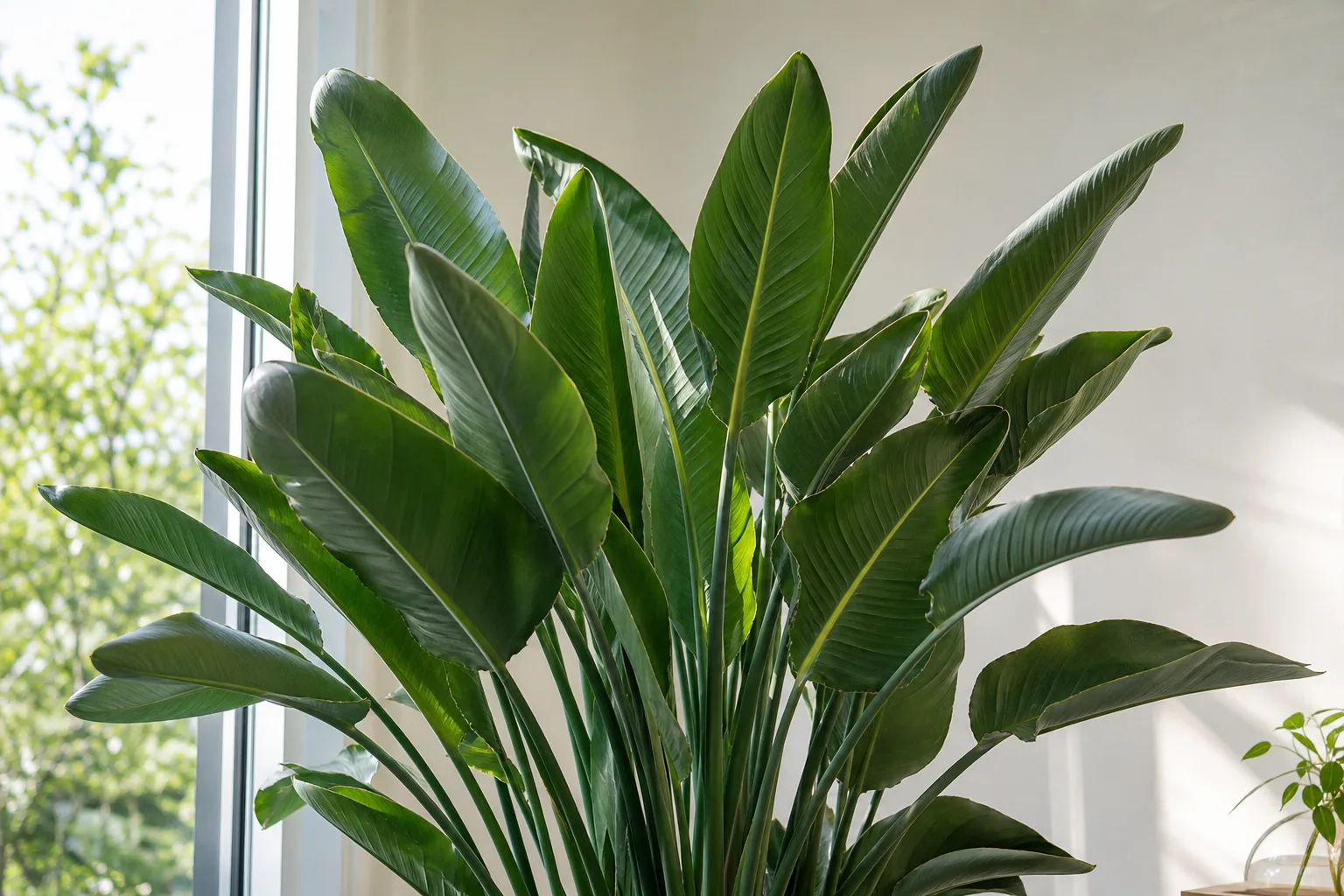
Start with light and plant identity. If the plant is a young giant form, it may simply need years of growth before flowering. If it is mature but sits far from a window or receives weak winter light, move it to the brightest safe location and acclimate it gradually. Review whether it has been repotted into an oversized pot or divided recently; both can redirect energy toward root recovery and vegetative growth.
Then allow time. A change in position cannot make a flower appear immediately, and a plant may need one or more growing seasons to respond. Avoid increasing fertilizer as the first move. Too much nitrogen can encourage leaves without addressing the main limits of light and maturity. If flowering is essential, grow the orange species in the sunniest position you can provide and accept that a home environment may still produce foliage more reliably than blooms.
Move It Outdoors for Summer and In Before Frost
A summer outdoors can provide stronger light and rain, but only move the plant after nights are reliably mild and the site is protected from strong wind. Acclimate it in bright shade first, then add gentle morning sun over several days. Check the pot more often outside: sun, warmth, and airflow can dry it more quickly than indoor conditions. Raise it slightly if drainage holes sit directly on a flat surface that traps water.
Choose a position with enough room for the leaves and some shelter from wind. Large leaves can split or tear when buffeted; a sheltered courtyard or patio often works better than an exposed deck. Rain is not a substitute for checking the mix, since a dense canopy or overhang can keep the pot dry while a storm saturates another one. After heavy rain, make sure the saucer or outer pot is not holding runoff.
Before bringing the plant indoors, inspect leaf undersides, stems, and the soil surface for pests. Rinse dusty foliage, remove dead material, and allow the pot to drain. Bring it in before frost and before nights turn sharply cold. The transition back indoors reduces light, so expect water use to slow; recheck the soil instead of keeping the summer watering rhythm.
Propagate by Division or Seed
Division is the practical way to make another plant from an established bird of paradise. In spring, remove the plant from its pot and look for a natural section with roots and several healthy leaves. Separate that section with a clean knife or pruners, keeping as many roots attached as possible, and pot it at the original depth in a snug container with fresh, well-draining mix. Water once to settle the soil, then keep it warm and bright while it recovers. Do not divide a plant simply to solve a minor crowding concern; division can set back flowering for several years.
Seed propagation is slower and less predictable for a home grower. Wisconsin Extension notes that seeds can take eight weeks or longer to germinate, with seed-grown plants potentially taking four to seven years to bloom. Fresh seed is preferable; the hard coat may need preparation, and warmth and steady moisture help germination. Seedlings need time to build roots and leaves, so they are a long-term project rather than a shortcut to a flowering-size plant.
Keep a division warm and bright but out of harsh sun while it establishes. A lost older leaf is less concerning than a soft crown or persistently wet mix; correct excess moisture before feeding.
Diagnose Pests and Common Leaf Problems
Inspect the top and underside of leaves when you water, especially after bringing a plant indoors. Mealybugs may look like small cottony patches around leaf bases; scale can appear as fixed bumps; spider mites may cause stippling or fine webbing. Wisconsin Extension lists mealybugs, scale, and spider mites among pests that can affect bird of paradise. Wipe dust from the large leaves with a damp, soft cloth, which also makes new pest activity easier to see. Avoid leaf-shine products that can damage the natural surface.
Isolate a plant with a suspected infestation from other houseplants. Confirm the pest before treatment, rinse or wipe affected foliage where practical, and remove heavily damaged leaves. If you need a pesticide or insecticidal soap, choose a product labeled for the pest and indoor ornamental plant, then follow every label direction; test a small area if the label advises it. Recheck weekly because a single cleaning may not remove every life stage. Persistent or widespread problems are a good reason to ask a local extension service for identification.
Understand Splits, Yellowing, and Brown Edges
Splits in the broad leaves are common and often develop as leaves age or move in wind, particularly outdoors. They are not automatically evidence of underwatering or poor care. Keep the plant away from repeated bumps and strong gusts if you want fewer tears, but do not remove every split leaf. If the plant is growing well, intact new leaves matter more than cosmetic damage to older foliage.
Yellowing needs context. One older lower leaf yellowing as a new one emerges can be part of normal turnover. Several leaves yellowing while the pot stays wet suggests a root-zone or drainage problem. If yellowing follows a dry spell and the pot is light, the plant may need a thorough drink. Check moisture several inches down before making a change; symptoms alone do not distinguish these causes.
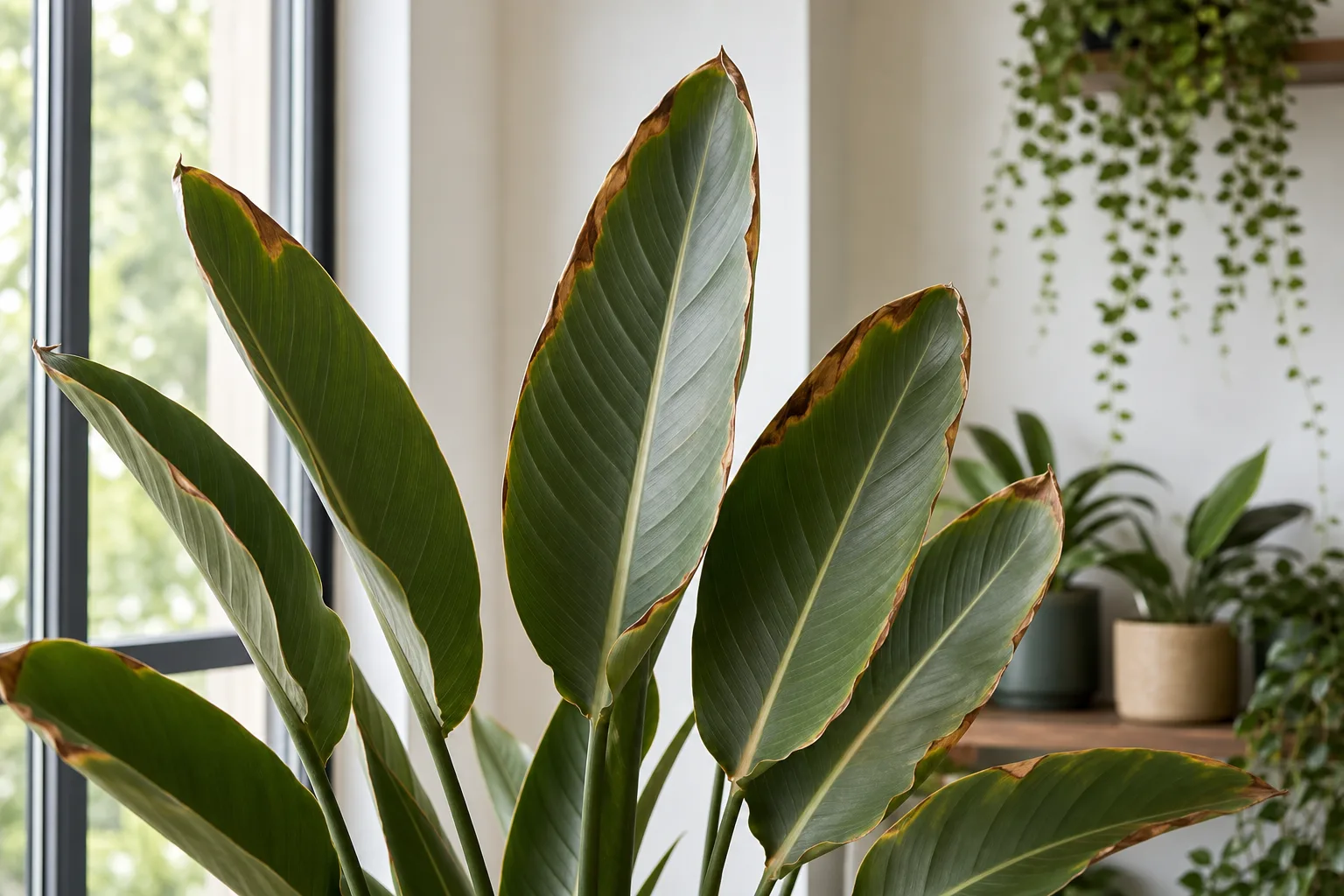
Brown tips or margins can result from uneven moisture, accumulated fertilizer salts, sun scorch after an abrupt move, dry air, or root stress. Consider what changed recently: Was the plant moved into direct sun? Did feeding increase? Has the pot remained wet? Look for a pattern. Scorch often appears on the exposed side; salt injury may follow repeated feeding; root stress often comes with slow drying or widespread yellowing. Correct the likely cause, trim only dead tissue if desired, and judge recovery by the next leaves rather than expecting brown areas to turn green again.
Protect Pets From Chewing the Plant
Keep bird of paradise where cats, dogs, and horses cannot chew its leaves, flowers, fruit, or seeds. The ASPCA lists Strelitzia reginae as toxic to dogs, cats, and horses; its listing identifies gastrointestinal irritants and says signs such as mild nausea, vomiting, and drowsiness are caused mainly by fruit and seeds. That source is specific to S. reginae, so do not assume that every plant sharing the common name “bird of paradise” has the same identity or risk profile.
If an animal eats any part of the plant, note what was eaten and when, then contact a veterinarian or animal poison-control service for case-specific guidance. Do not wait for symptoms or rely on home remedies. Keep fallen plant material out of reach during pruning and repotting, and wash hands after handling sap if your skin is sensitive. The ASPCA also warns not to confuse Strelitzia with Caesalpinia or Poinciana gilliesii, which shares the common name but is more toxic.
Conclusion
Good bird of paradise care starts with the right expectations: identify whether you have orange S. reginae or a giant white form, give it a bright position, and let the root zone partly dry between full waterings. Use a draining mix and a steady container, feed only during active growth, and repot or divide when the plant’s roots and stability call for it. Move it outdoors gradually in warm weather and bring it inside before frost.
Some leaf splits are normal, and a lack of indoor flowers does not mean a plant is failing. Watch the newest leaves, root-zone moisture, and seasonal growth for better clues than a calendar or a single cosmetic blemish. With enough light, patient care, and room to mature, bird of paradise can become a long-lived statement plant—even when its impressive foliage, rather than flowers, is the main reward.