When to Repot Your Indoor Plants: Timing, Signs and Season Guide
Learn exactly when to repot indoor plants with seasonal timing, root-bound signs, species-specific schedules, and a clear decision framework.

Most repotting mistakes happen before anyone touches a bag of potting mix. The error is not technique. It is timing — repotting on a calendar, repotting because a new pot looked good at the store, or waiting until the plant is half-dead before noticing the roots have nowhere to go. This guide is about the decision that comes first: is now the right moment, or should you wait?
Quick Answer: When to Repot in 30 Seconds
Repot when your plant shows two or more of these signs during spring or early summer: roots circling the pot or poking through drainage holes, soil that dries within a day, water channeling straight through, or stalled growth despite good light and seasonal conditions. Skip repotting if the plant is stressed from pests, low light, or winter dormancy — fix the primary problem first. Most houseplants need repotting every 1 to 3 years, but the plant’s condition always overrides the calendar.
Decision shortcut: Roots out the bottom + soil drying fast + it is spring = repot. One yellow leaf + it is December = wait.
Why Timing Matters More Than Technique
Repotting always disturbs roots. Even a gentle slide into a larger pot tears fine root hairs — the structures that actually absorb water and nutrients. A plant needs active growth energy to repair that damage and push roots into fresh mix. Do it during the right window and the plant barely notices. Do it at the wrong time and you get weeks of drooping leaves, stalled growth, and a stressed plant that cannot use the new soil you just gave it.
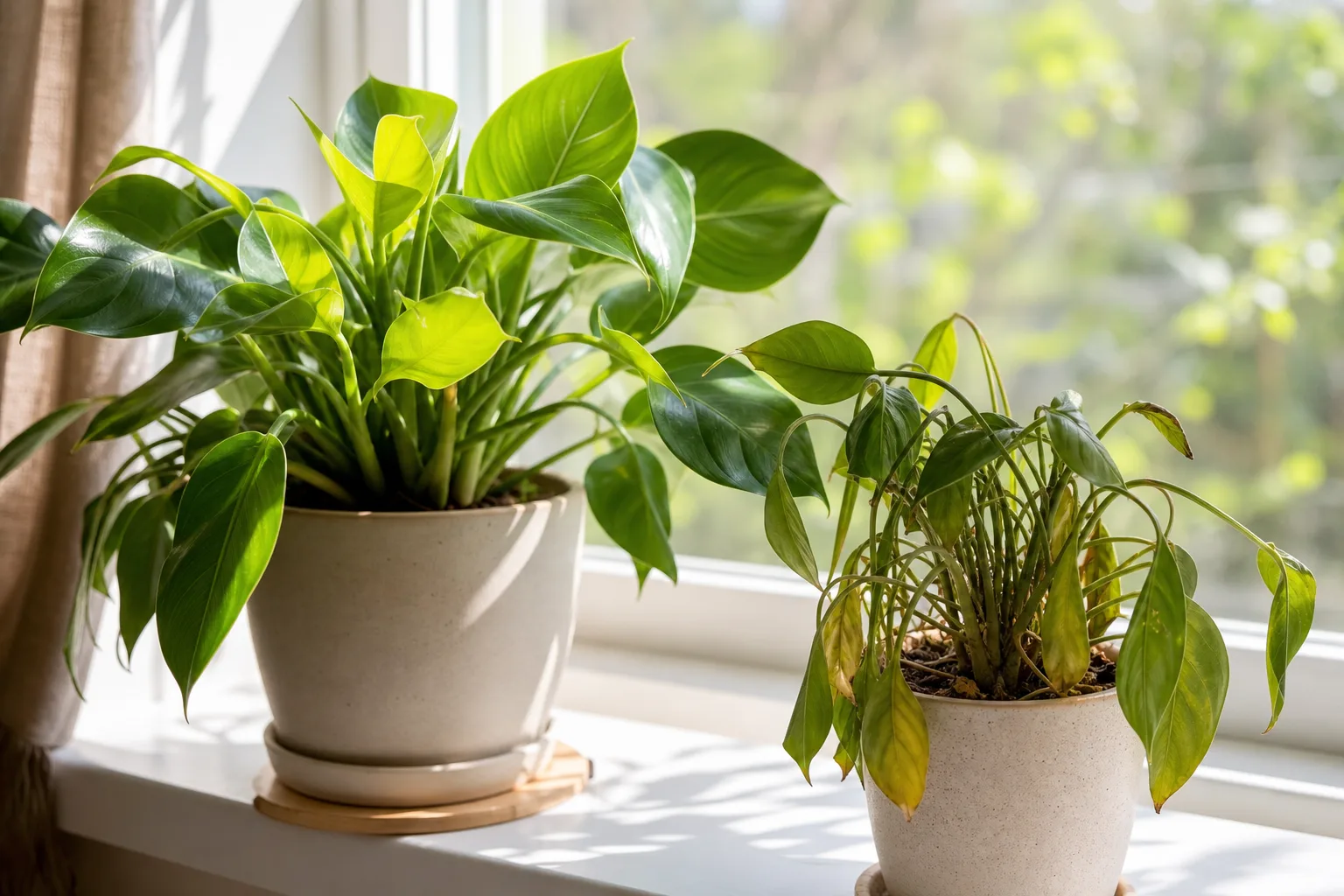
The seasonal clock matters because light drives everything. In spring, increasing day length and intensity trigger a hormonal shift in most tropical houseplants — roots and shoots wake up and start expanding. That is the moment roots can recover fastest. Clemson HGIC recommends repotting only during spring and summer while the plant is actively growing. (Clemson HGIC) Penn State Extension gives the same guidance: the active growing season is when roots will establish most quickly in fresh mix. (Penn State Extension)
Repotting at the wrong time does not usually kill a plant outright. But it can turn a routine task into a months-long recovery. That is why timing deserves its own full conversation before you reach for the potting mix.
The Seasonal Window: Spring Through Early Summer
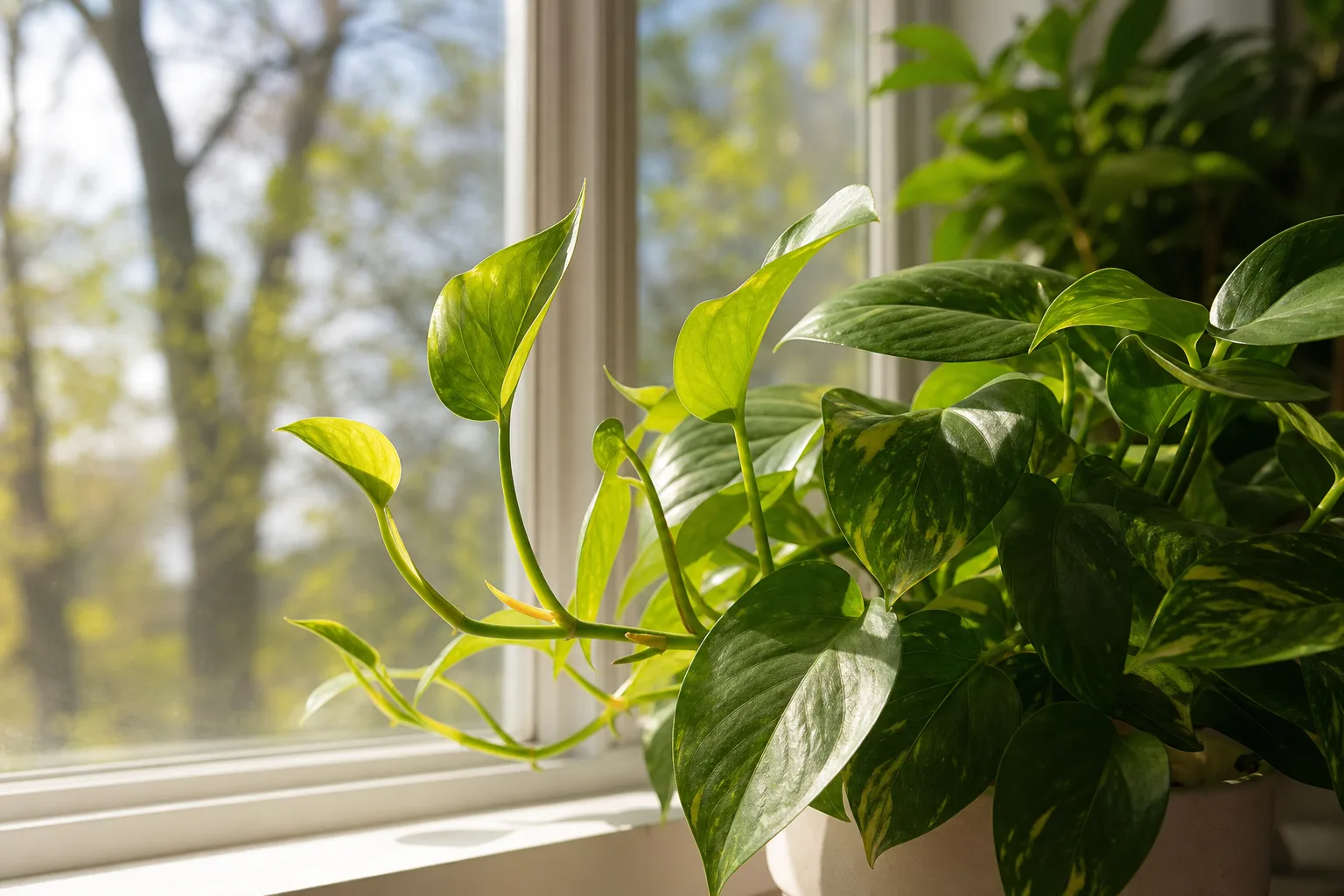
The best repotting window runs from early spring through midsummer — roughly March through August in the northern hemisphere, depending on your indoor light conditions. This is when:
- Natural light is increasing in both duration and intensity
- Indoor temperatures are stable and warm
- Plants are pushing new leaves and roots
- Recovery from root disturbance happens fastest
University of Minnesota Extension treats spring as the ideal season for repotting, specifically when roots circle the pot or soil dries unusually fast. (University of Minnesota Extension) University of Arkansas Extension also points to late winter and early spring as the time when natural light is increasing and plants are awakening. (University of Arkansas Extension)
What “Active Growth” Actually Looks Like
Do not guess based on the month on your phone. Look at the plant:
| Sign of active growth | What to look for |
|---|---|
| New leaves unfurling | Small, often lighter-colored leaves emerging from growing tips |
| Stem elongation | Stems visibly lengthening between nodes |
| Root tips at drainage holes | Fresh white or light tan root tips, not old brown circling roots |
| Faster water consumption | The same pot dries noticeably faster than it did in winter |
| New offsets or pups | Small plantlets emerging at the base, common in snake plants, spider plants, and aloes |
If you see two or more of these, the plant is in active growth and ready for repotting. If the plant looks exactly the same as it did a month ago with no new growth, wait — it may still be in a transitional or slow phase even if the calendar says May.
The Early-Spring Sweet Spot
The ideal moment within the spring window is just as new growth begins but before the plant has committed significant energy to a flush of leaves. Repotting right at the start of the growth surge gives roots a full season to colonize the new mix. Waiting until midsummer still works, but the plant has less time to establish before light levels begin declining in fall.
For growers with very bright indoor spaces or supplemental grow lights, the window can stretch further. Plants under consistent artificial light often grow year-round and can be repotted almost any time they show active growth. The seasonal rule applies most strictly to plants dependent on natural window light.
Signs Your Plant Is Telling You It’s Time
Seasonal timing sets the window. Plant signals tell you whether to walk through it. A plant that checks every seasonal box but has no root-crowding signs does not need repotting. A plant that checks multiple physical signs in midsummer almost certainly does.
The Six Signals That Matter
| Signal | What you see | Why it means repot |
|---|---|---|
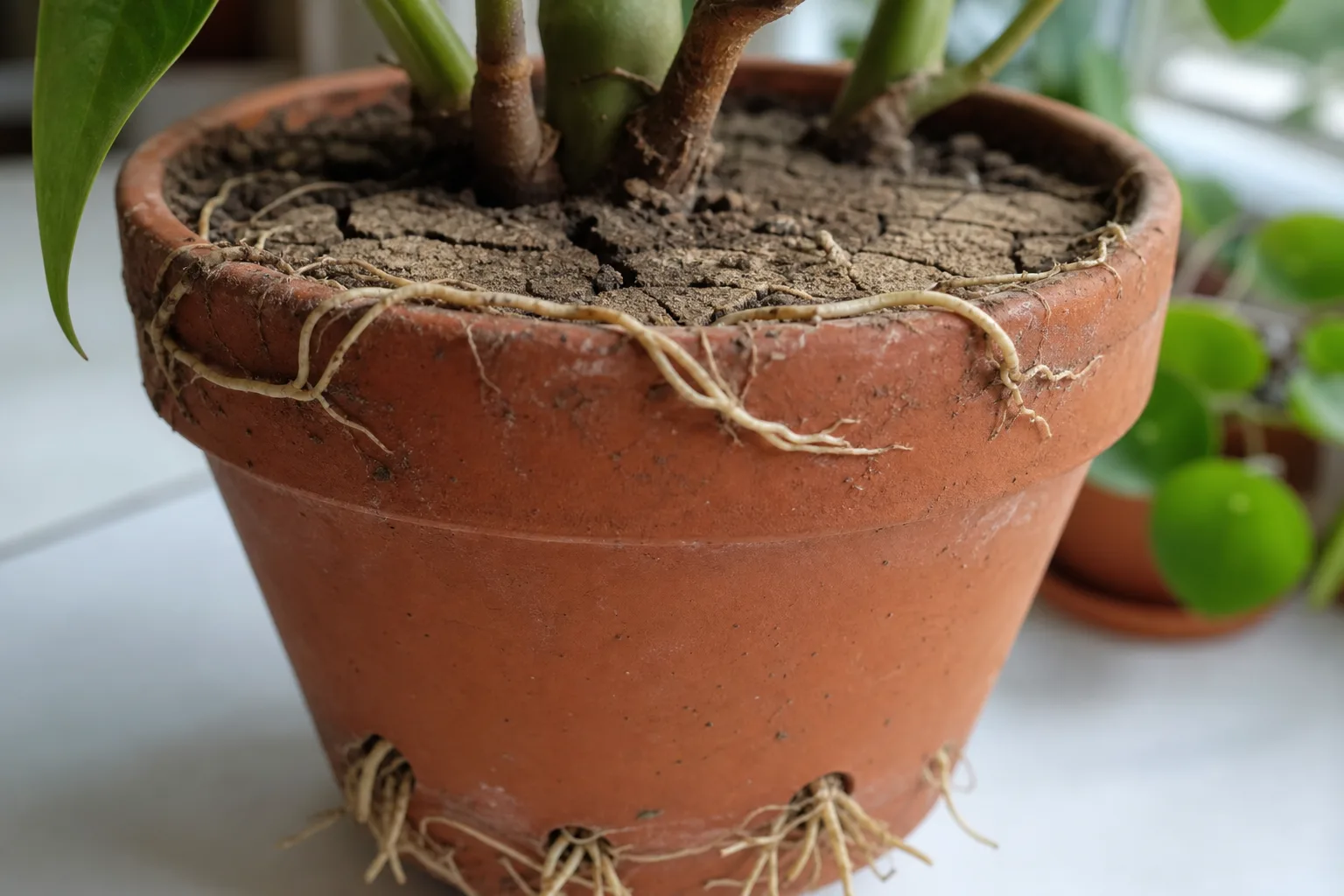
| Roots out drainage holes | Roots visibly exiting the bottom of the pot | The root system has filled available space and is searching outward |
| Water runs straight through | Water poured on top exits the bottom within seconds | Hydrophobic soil or root mass has displaced most of the mix |
| Soil dries within a day | Pot feels light and soil is bone-dry within 24 hours of watering | Too little potting mix remains to hold moisture around the root ball |
| Stalled growth in season | No new leaves despite good light and spring conditions | Roots have no room to expand, capping top growth |
| Roots circling the surface | Roots visible at the soil surface, winding around the pot rim | Severe root binding — the plant is choking itself |
| Salt crust on soil surface | White or tan crusty deposits on top of the mix | Mineral buildup from tap water or fertilizer, indicating depleted, compacted mix |
NC State Extension lists similar triggers: soil drying quickly, lower leaves yellowing, very slow growth in spring and summer, or roots visible at drainage holes or the soil surface. (NC State Extension)
The Slide-Out Test
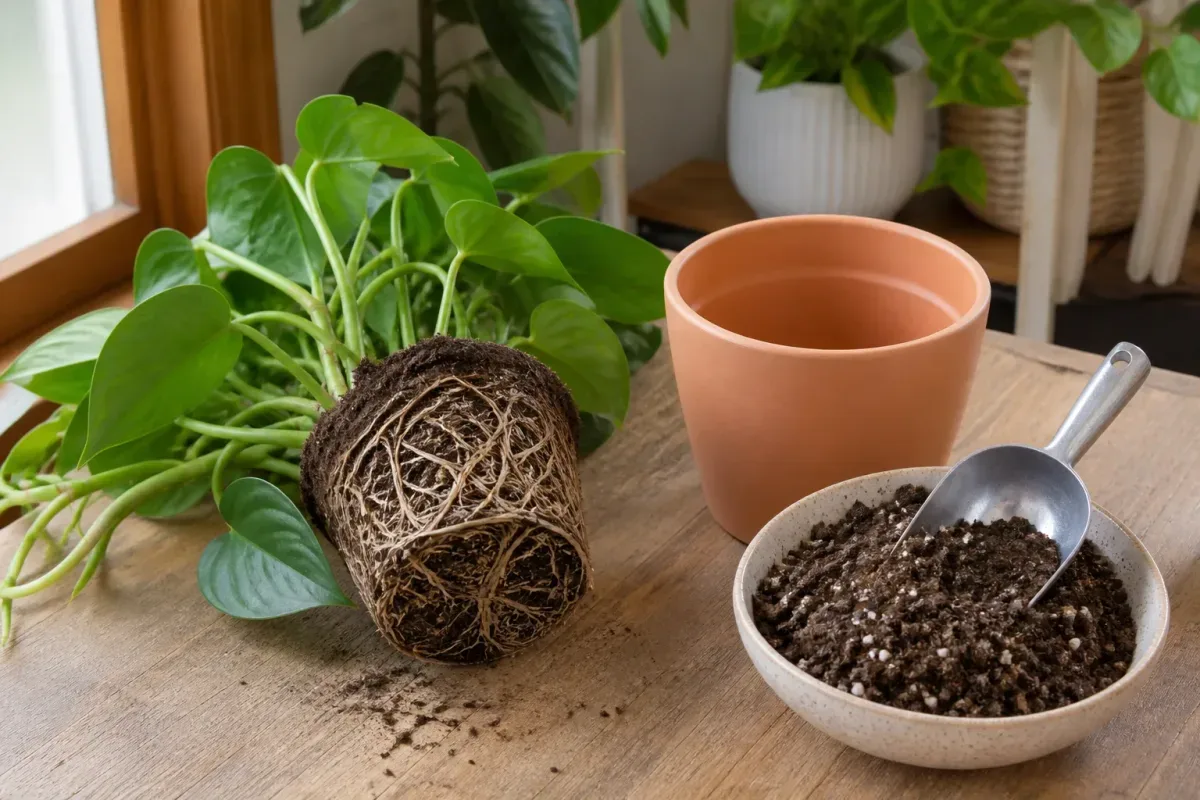
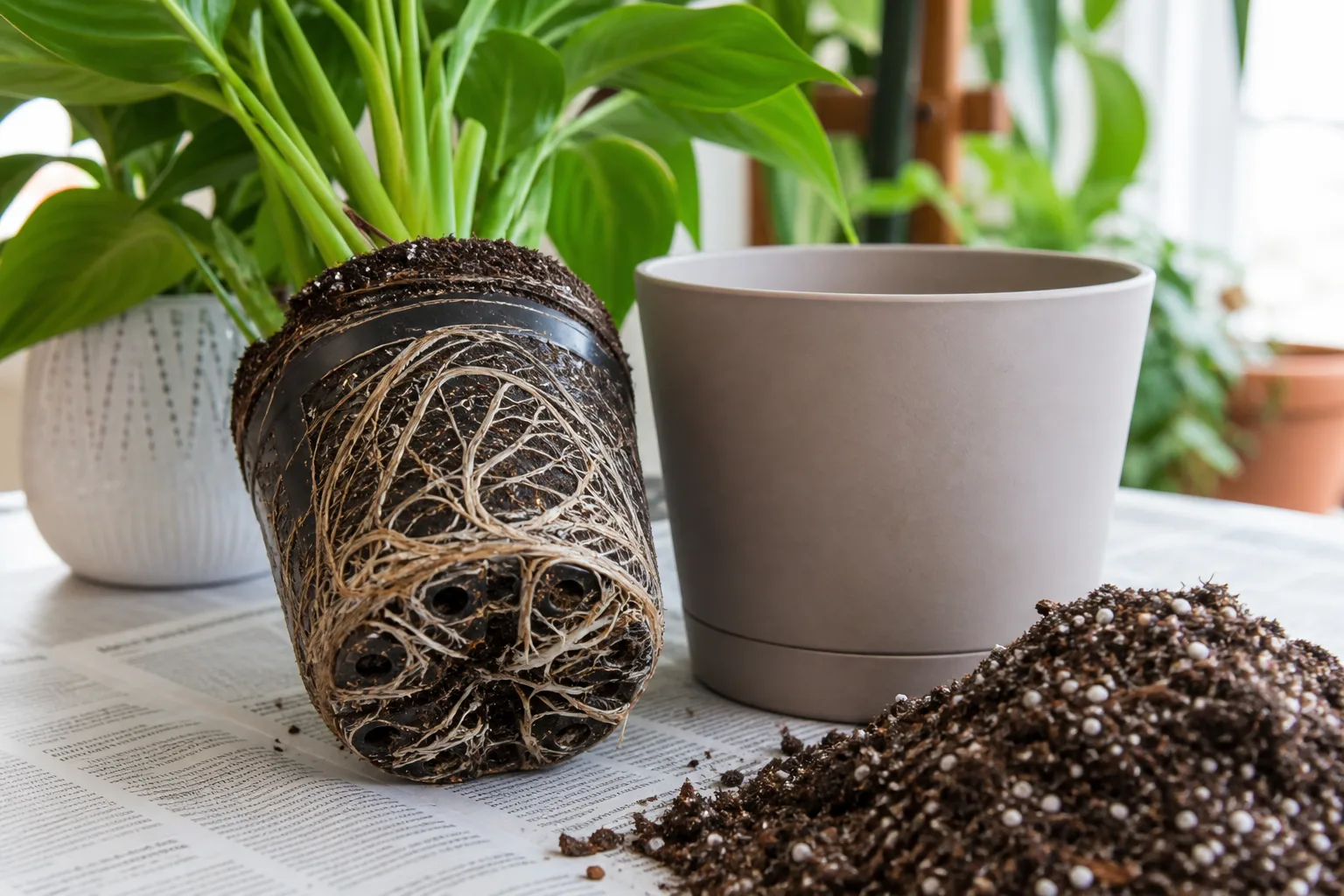
If you are unsure, this takes 30 seconds and settles the question. Water lightly the day before so the root ball holds together. Tip the pot on its side over a newspaper or tarp, support the stem with one hand, and gently slide the plant out.
Look at the bottom third of the root ball. If you see mostly roots with very little visible potting mix, it is time. If soil still fills the spaces between roots and the root tips have room to grow, slide it back in and check again in a few months. This test is more reliable than any calendar estimate because it inspects the actual condition of the root system.
What you want to see: roots visible but with potting mix still filling the gaps between them — the plant has room. What means repot: roots densely woven with almost no mix visible in the bottom third.
One Sign Is Not Enough
A single yellow leaf is not a repotting signal. A plant drying slightly faster in June than it did in February is not automatically root-bound — higher temperatures and longer days increase water use even in adequately sized pots. Look for clusters: roots out the bottom plus water running straight through plus stalled growth during the active season. One sign might mean something else. Two or three together rarely do.
How Often to Repot by Plant Type
The 1-to-3-year guideline is a starting point, not a schedule. Different plants fill pots at different rates.
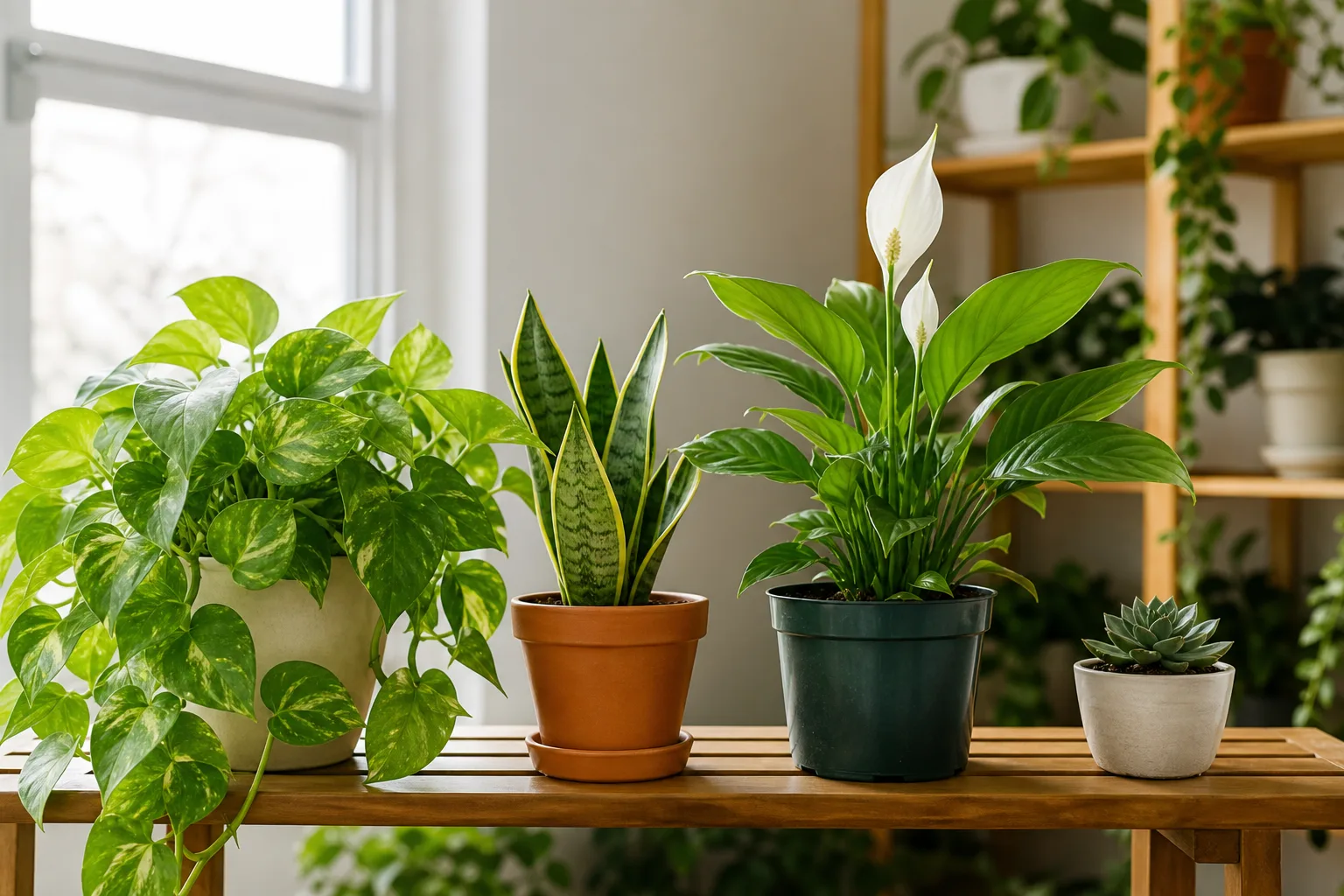
| Plant type | Typical repot interval | Notes |
|---|---|---|
| Fast aroids (monstera, philodendron, pothos) | 1–2 years | Vigorous root systems fill pots quickly in good light |
| Ficus (fiddle leaf fig, rubber plant) | 2–3 years | Moderate root growth; check roots before upsizing |
| Snake plant, ZZ plant | 3–5 years | Prefer being root-bound; repot only when pot deforms or cracks |
| Peace lily, calathea, maranta | 1–2 years | Thirsty plants that deplete mix faster; watch for frequent drying |
| Succulents and cacti | 2–4 years | Slow root growth; repot when top-heavy or root-bound |
| Dracaena | 2–3 years | Slow above-ground but roots fill pots steadily over time |
| Ferns (Boston, maidenhair) | 1–2 years | Fast root growth in humid conditions; may need division |
For species-specific repotting with full soil recipes and container choices, see repotting houseplants for the complete workflow and when and how to repot Monstera for large aroid depth. Use the repotting calculator when you want a data-driven timing estimate based on pot size and growth rate.
When to Skip Repotting
Knowing when not to repot is just as important as knowing when to do it. These situations call for waiting:
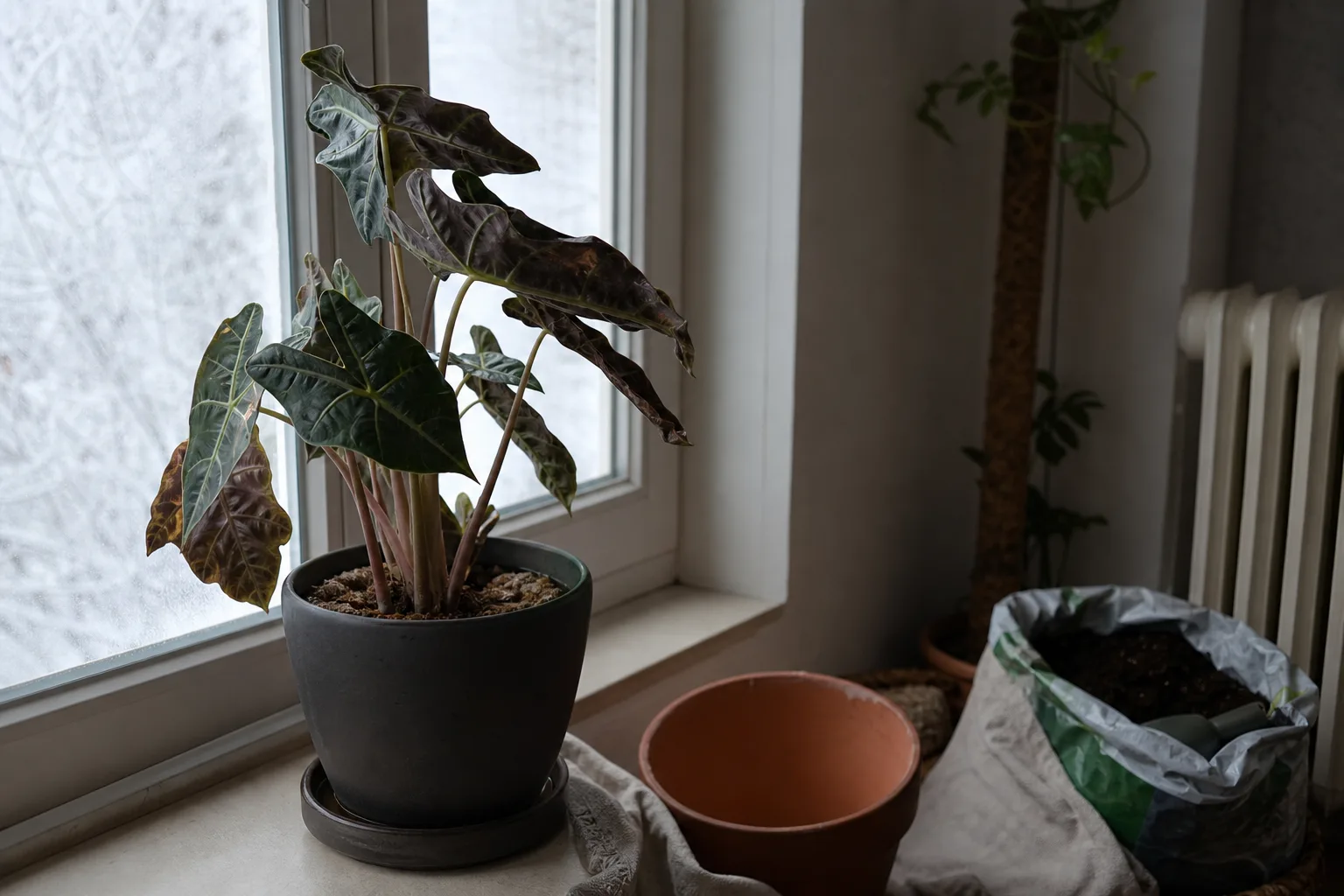
Winter Dormancy
Most tropical houseplants slow down between October and February in the northern hemisphere. Light is weaker, days are shorter, and indoor air is often drier from heating. A plant in this state cannot efficiently repair root damage. Unless roots are actively rotting or the pot has broken, wait for spring. For full seasonal context, see winter houseplant care.
Active Stress
If a plant is battling pests, recovering from leaf drop, or showing widespread yellowing from a watering issue, repotting adds a second stress on top of the first. Fix the primary problem, wait for stable new growth, then repot. A plant fighting thrips does not also need root disturbance.
Flowering or Budding
Plants putting energy into blooms — holiday cacti, orchids, flowering anthuriums — should not be repotted mid-bloom. The plant is allocating resources to flowers, not root repair. Wait until flowering finishes and new vegetative growth appears.
Newly Purchased Plants
A plant just brought home from a nursery is already coping with acclimation stress — different light, humidity, and temperature than the greenhouse it came from. Give it two to four weeks to settle before adding root disturbance. The exception is nursery mix that is clearly failing — dense, sour-smelling, or infested — in which case an emergency repot into fresh mix is better than leaving the plant in declining media.
Pot-Bound but Happy
Some plants genuinely prefer tight quarters. Snake plants and ZZ plants often push out healthy new growth while severely root-bound. If the plant looks good and the only “symptom” is dense roots, you can wait. Penn State Extension notes that even pot-bound plants can stay in the same container if you trim outer roots and top growth to hold size. (Penn State Extension)
A healthy root-bound plant is not an emergency. A root-bound plant that has stopped growing and dries out daily is.
Repot vs. Top-Dress: The Quick Decision Table
Not every tired plant needs a full repot. Sometimes refreshing the top layer is the right call — easier on the plant and on you.
| Situation | Best move |
|---|---|
| Salt crust on surface, plant otherwise healthy | Top-dress: replace top 1–2 inches of mix |
| Roots circling drainage holes, water running through | Full repot |
| Mix looks tired and compacted but root ball has room | Top-dress or partial soil refresh |
| Roots packing the bottom third with little visible mix | Full repot |
| Large floor plant you cannot easily move | Top-dress annually; full repot only when root-bound |
| Sour smell, mushy roots, chronic wetness | Emergency repot with root cleanup |
Top-dressing means scraping off and replacing the top 1–2 inches of potting mix with fresh material. It removes salt buildup, refreshes surface nutrients, and improves water absorption at the top of the pot — all without disturbing the root ball. For large plants in heavy pots, this is often the better annual maintenance habit. Full repotting is reserved for when roots have genuinely outgrown the container.
Winter Repotting: When It Cannot Wait
There are exactly three scenarios where winter repotting is justified:
-
Active root rot: The soil smells sour, roots are brown and mushy, and the plant is declining. Waiting until spring means the rot spreads. Repot immediately into fresh dry mix after trimming all damaged roots. Wisconsin Horticulture Extension emphasizes pasteurized commercial mix and drainage holes over garden soil when recovering from rot. (Wisconsin Horticulture)
-
Pest-infested soil: Fungus gnat infestations that originate in the potting mix, or soil-borne pests that cannot be controlled topically, may require a full soil change regardless of season. Quarantine the plant and repot into fresh, pasteurized mix.
-
Broken pot or catastrophic spill: A shattered terracotta pot on a cold floor does not wait for April. Repot into the same size or slightly larger container and provide careful aftercare.
If you must repot in winter, follow these extra precautions:
- Keep the plant in the warmest room with the brightest indirect light available
- Water sparingly — cool temperatures and low light mean the disturbed roots take up less water
- Hold all fertilizer until spring growth appears
- Expect slower recovery; do not panic if the plant looks static for weeks
Related Guides
- Repotting Houseplants: When to Repot, Pot Size and Soil Tips — the full hands-on workflow after you decide it is time
- Best Potting Mix for Indoor Plants — recipes and amendments by plant type
- When and How to Repot Monstera — species-specific depth for large aroids
- Winter Houseplant Care — seasonal slowdown cues and cold-weather adjustments
- How to Water Indoor Plants the Right Way — moisture checks that change after a pot size shift
- Repotting Calculator — data-driven timing estimate from pot size and growth rate
Conclusion
The right time to repot indoor plants is when the plant shows clear physical signals — roots crowding the pot, water running through, growth stalling — during the spring-to-summer active growth window. The calendar is a clue, not a command. Most houseplants need attention every 1 to 3 years, but a healthy root-bound plant in winter is better left alone than disturbed at the wrong time. When in doubt, do the slide-out test, check for active growth, and be honest about whether the plant needs a bigger pot or just a top-dress and a better watering rhythm. Get the timing right and the rest of repotting — pot size, mix choice, aftercare — has room to succeed.