Potting Soil vs Garden Soil for Houseplants
Stuck at the bag wall? Compare potting mix vs garden soil for houseplants, bust drainage myths, and fix pots already filled with yard dirt.
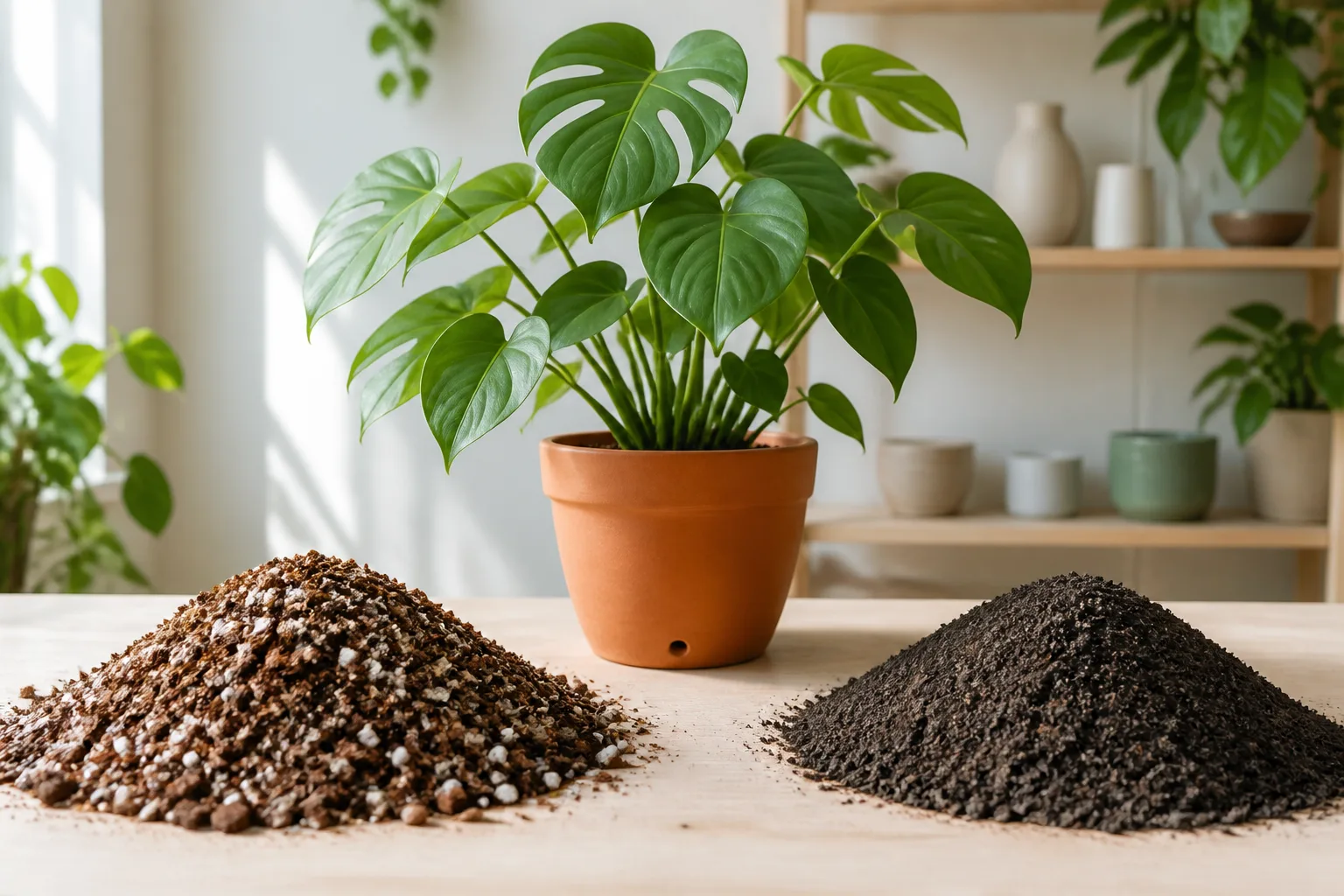
You are standing in the garden center with two cheap bags that both say “soil,” and the garden-soil bag is heavier, darker, and half the price. It looks richer. It feels like the “real” dirt your outdoor tomatoes grow in. For houseplants, that instinct is usually wrong.
Potting soil (usually a soilless potting mix) and garden soil are built for different jobs. Outdoor soil feeds beds, borders, and landscapes with mineral particles that settle into a living ground profile. Houseplants live in closed containers with limited air, limited drainage height, and repeated watering from the top. Put yard dirt in that box and the structure collapses: pores shrink, water sits, roots starve for oxygen, and soil-borne fungi get a free ride indoors.
One-line rule before the details: buy a container potting mix labeled for houseplants or indoor plants, not garden soil, topsoil, or most “garden soil for beds” bags. Use garden soil outdoors. Save pasteurization experiments for rare DIY cases, not as your default indoor strategy.
Written by Sai Ananth; horticulture review by Dr. Priya Menon (botanist and indoor plant specialist). This page is the bag-type decision layer—recipes and brands live elsewhere in the soil cluster; use Related Guides below when you need mix recipes or symptom diagnosis.
Quick Verdict for Indoor Plants
Choose potting mix for nearly every houseplant. Extension guidance is consistent here. Clemson HGIC states that garden soils contain too many bacteria and are generally not recommended for container plants, and that native soil mixes must be sterilized before use. Wisconsin Horticulture is even more direct for disease prevention: use a pasteurized commercial potting mix, not soil from your garden, because garden soils often contain root-rot fungi.
Choose garden soil only for in-ground planting, raised beds, or outdoor landscape work. If you insist on putting mineral soil in a pot, treat it as a specialty project: pasteurize it, amend it heavily for drainage, and accept that it still behaves differently from a modern soilless mix. “Free soil from the yard” is rarely free after you count dead plants, fungus gnats, and emergency repots.
Bag confusion starts on the label. “Potting soil,” “potting mix,” “container mix,” “garden soil,” “raised bed soil,” and “topsoil” are marketing names, not regulated quality grades. UConn notes that state and federal rules do not govern potting soil quality, so ingredient lists and texture matter more than the front-of-bag slogan. When two bags both say “organic,” compare particle size and aerators before you compare price—organic does not mean safer for indoor pots.
Potting Soil vs Garden Soil at a Glance
| Factor | Potting mix / potting soil | Garden soil / topsoil |
|---|---|---|
| Built for | Containers and houseplants | In-ground beds and landscapes |
| Typical base | Peat, coir, bark, composted organics | Mineral sand, silt, clay + organic matter |
| Structure in a pot | Stays lighter; designed to drain and hold air | Compacts after repeated watering |
| Disease / weed load | Usually pasteurized or soilless | Often carries pathogens, insects, weed seeds |
| Weight | Lighter; easier to move | Heavy when wet |
| Default indoor use | Yes | No |
UF/IFAS explains why soilless blends dominate containers: density and disease concerns push growers away from raw soil. Penn State adds that most potting mixes are soilless to avoid soilborne diseases and promote good drainage. That is the practical difference you feel when a pot stays heavy for a week after one watering.
What the Bag Names Really Mean
Names overlap in stores, so decode the product by job and ingredients, not by the word “soil” alone.
Soilless Mixes, Peat-Lite Blends, and Coir Bases
Most commercial “potting soils” for houseplants contain little or no mineral field soil. Clemson describes them as “soilless” or “artificial” mixes that include no native soil. Classic peat-lite blends combine peat moss with perlite or vermiculite. Newer bags often swap or blend in coco coir as a peat alternative. Those media are lightweight, easy to handle, and typically sold as sterile or pasteurized starting points.
UConn separates labels helpfully: products called “potting soils” may mix organic and inorganic ingredients and may or may not be sterilized, while true soilless mixes exclude mineral sand-silt-clay particles and are usually sterilized. RHS frames the same idea as growing media and porosity: roots need air pockets, and aerators such as bark, pumice, or clay pellets create drainage space that dense outdoor soil does not provide in a pot.
If you are comparing peat versus coir as the moisture-holding base, use the sibling decision guide on coco coir vs peat moss after you decide against garden soil. Clemson advises rinsing coir thoroughly before use to limit salinity issues, and coir still needs aeration amendments; it is not a magic fix for yard dirt. Compost alone is also not a potting mix—without chunky aerators it packs hard in a closed pot.
Garden Soil, Topsoil, and Raised-Bed Bags
Garden soil and topsoil are outdoor products. They are meant to improve or fill ground where rainfall, gravity, worms, and deep profiles manage water over time. In a nursery pot, that system disappears. Mineral particles settle, fines clog pores, and the bottom third of the pot becomes a stagnant zone even when the surface looks “fine.”
Raised-bed mixes and bags labeled for beds can still be too dense for indoor tropicals. They are formulated for outdoor volume, rain, and deep root runs—not for a 6-inch plastic pot on a windowsill. Topsoil bags are especially risky indoors because they are sold for landscape fill, not for oxygen management around houseplant roots. If the bag artwork shows lawns, shrubs, vegetable beds, or raised beds, keep it outside.
Why Garden Soil Fails Indoors
Garden soil does not “poison” plants overnight. It fails through physics and biology that containers amplify. Outdoors, excess water can move sideways and downward through a deep soil profile. In a nursery pot, water stops at the plastic wall and the saucer. That closed system turns ordinary yard soil into a dense, low-oxygen plug.
Compaction and Lost Root Oxygen
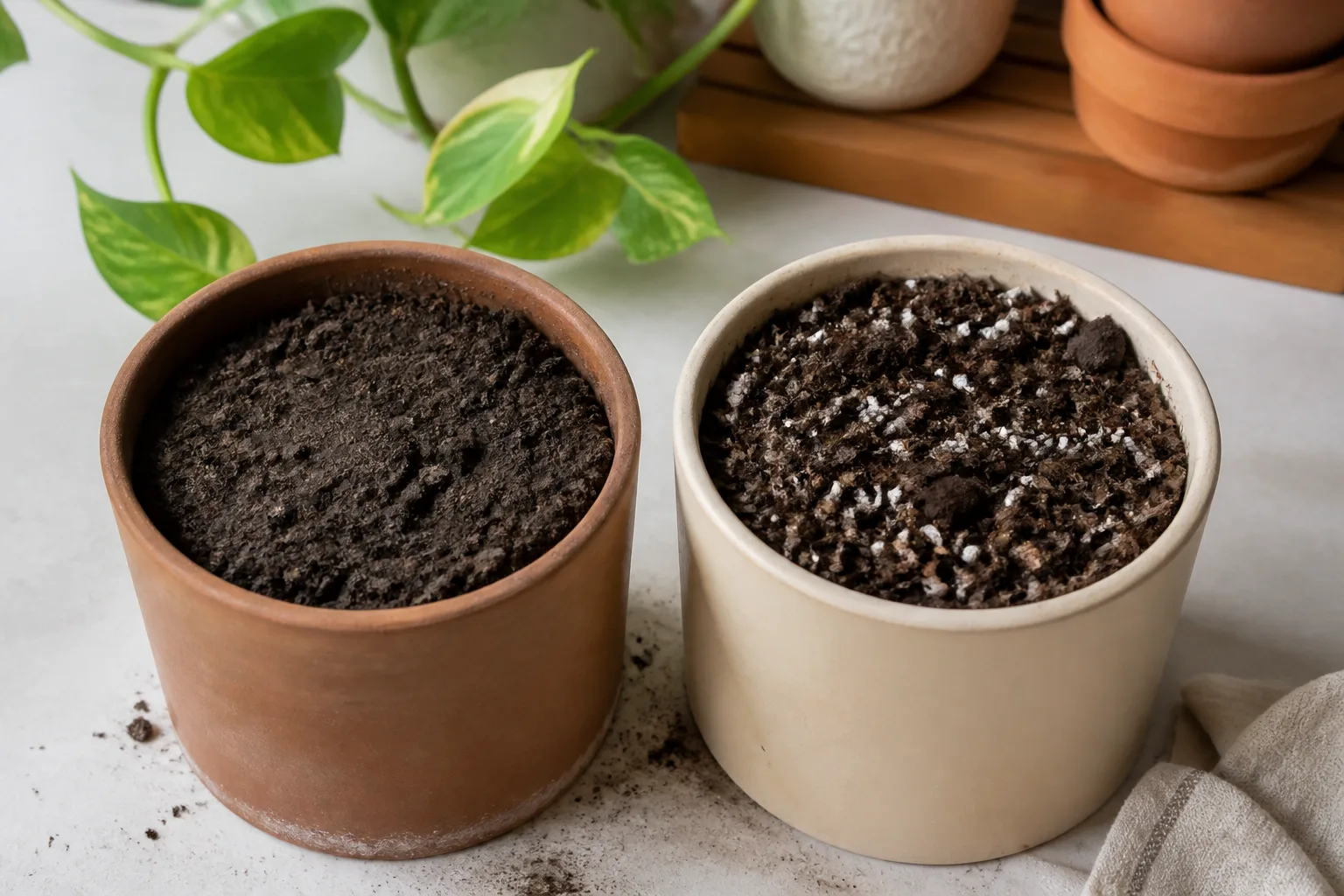
UConn states the core physical problem: mineral-based soils are not recommended for container plants because they compact under repeated watering. Every irrigation event rearranges fines. Air-filled pore space shrinks. Roots need both water and oxygen; Clemson’s watering guidance for indoor plants starts from the same fact that roots need oxygen as well as moisture.
Once the mix is dense, symptoms look like watering mistakes. Leaves yellow. Growth stalls. The plant wilts while the pot still feels heavy. That pattern often tracks poor drainage even when the pot has a hole, because the media itself will not release water and exchange air fast enough. Beginners often respond by watering less, then watering more when the plant droops, without changing the media that caused the cycle.
Rocks or gravel at the bottom do not rescue garden soil. Wisconsin Horticulture warns that gravel layers can inhibit drainage rather than improve it. Fix the media and the hole; do not build a perched-water sandwich under yard dirt. A thin decorative top-dress of pebbles is cosmetic and different from a deep gravel “drainage layer” under the root ball.
Pathogens, Insects, and Weed Seeds
Outdoor soil is alive with more than helpful microbes. Wisconsin lists common root-rot organisms such as Pythium, Phytophthora, Rhizoctonia, and Fusarium, notes that they prefer wet conditions, and explicitly warns that garden soils often contain root rot fungi. Bring that community into a warm living room with frequent watering, and you create a small greenhouse for the wrong organisms.
Clemson also flags insects and weed seeds as reasons container media should be free of insects, diseases, and weed seeds. Indoors, weed seedlings are annoying; fungus gnats and root rot are expensive. Commercial soilless mixes reduce that starting load. They are not forever sterile after you open the bag and water with tap water, but they start cleaner than a scoop from the yard.
Weight, Salts, and Watering Chaos
Garden soil is heavy. A large floor plant in mineral soil becomes hard to move, hard to judge by lift-weight, and more likely to sit in a decorative cachepot with trapped runoff. Dense media also hold moisture unevenly: the top crusts, the middle stays wet, and your “finger test” lies. That is how people bounce between underwatering and overwatering while the real problem is the medium, not the calendar.
Nutrient behavior changes too. Outdoor soil can buffer nutrients in a bed. In a small pot, salts concentrate faster, especially if you fertilize on an outdoor schedule. Soilless mixes often need more intentional feeding after the starter charge fades, but that is easier to manage than guessing what compacted clay is locking up. Fertilizer will not fix yard dirt—more nutrients on a low-oxygen plug make a stressed plant worse.
Common Myths About “Richer” Soil Indoors
| Myth | Reality |
|---|---|
| “Richer / darker / organic garden soil is better for houseplants” | Containers need porosity and a lower pathogen starting load, not bed-style richness. Organic on the label is not a safety proxy indoors. |
| “A gravel layer at the bottom improves drainage” | Gravel can inhibit drainage by creating a perched water table above the rock layer. |
| “If I pasteurize yard dirt, it equals potting mix” | Heat reduces pests and pathogens; it does not redesign mineral particle size. You still must amend heavily, and home ovens are imprecise. |
| “I can stretch my potting mix with free backyard soil” | Untreated garden soil reintroduces compaction risk and soil-borne organisms into an otherwise cleaner blend. Stretch with perlite, pumice, or bark instead. |
The expensive-looking “organic garden soil” bag fails the same physics test as cheap topsoil once it is trapped in plastic. Read intended use and ingredients, not virtue words on the front.
What Pasteurized and Commercial Mixes Fix
Pasteurization is heat treatment that reduces pests, pathogens, and weed seeds in media. It is the reason extension pages keep saying “pasteurized commercial potting mix.” Wisconsin’s root-rot prevention list starts with buying clean plants and replanting into pasteurized mix in a pot with drainage holes.
If you try to reclaim garden soil for containers, Clemson’s method is clear and unromantic: spread soil on a tray and heat until the coolest spot reaches 180°F for 30 minutes. UF/IFAS describes a similar bake for soil used in homemade blends (about 200°F for twenty minutes, stirring). Both sources note the smell and the need to amend afterward with bark, peat, perlite, or sand so the physical structure can work in a pot. Temperatures and times vary slightly by source, which is another signal that home pasteurization is a workaround, not a precise lab protocol.
That process is useful for understanding risk. It is a poor everyday plan for houseplants. Oven pasteurization is messy, uneven in thick trays, and still leaves you with mineral particles that want to compact. Buying a quality indoor mix is cheaper in time and usually cleaner in outcome. Microwave or solar “sterilization” shortcuts are even less consistent for home growers and should not be treated as equivalent to commercial pasteurized media.
Commercial mixes also solve the ingredient balance beginners struggle to invent. A peat- or coir-based bag with perlite or bark already targets container porosity. Specialty bags for cacti, orchids, or African violets adjust water-holding further. RHS notes the market shift toward specialized houseplant mixes and peat-free options, which is another reason not to force outdoor soil into indoor pots. Peat-free does not mean “use garden soil.” It usually means coir, bark, wood fiber, or similar organics still blended for containers.
Colorado State Extension’s amendment guidance is useful when you customize a bag: organic materials such as peat or coir hold moisture and improve structure, while inorganic amendments such as perlite improve pore space and drainage. Start from a container mix, then amend. Do not start from garden soil and hope amendments erase its biology and density. If you are rebuilding a DIY blend, Clemson’s simple foliage ratios—such as two parts peat with one part perlite and one part coarse sand—are a cleaner template than “half yard soil, half whatever is left in the shed.”
One more hygiene rule from Wisconsin matters after any rot event: do not reuse old houseplant mix or drainage water on healthy plants, because both can carry pathogens. Pasteurized media only helps if you do not recontaminate the pot with the previous swamp.
When Mineral Soil Belongs in a Pot
There are narrow exceptions, and they are still not “use backyard dirt.”
UConn notes that heavier mixes containing some sand or mineral soil can suit large or top-heavy houseplants when you need ballast, and that mineral-soil blends may buffer changes when repotting is rare. UF/IFAS still includes soil-containing recipes for some outdoor container uses, but only after sterilization and amendment. Those are formulated mixes, not a shovel of border soil.
For typical indoor foliage plants—pothos, philodendron, monstera, peace lily, snake plant, ZZ plant—soilless or lightly mineral commercial potting mixes remain the better default. If a plant is already unstable in a light mix, add weight with a denser container blend, a heavier pot, or mineral amendments like pumice, not with unpasteurized yard soil. Compare aerators on perlite vs pumice when ballast and float behavior matter.
Outdoor patio containers are a middle ground. Some gardeners use garden-soil blends outside in large planters where volume and weather help. Even then, drainage-focused container mixes usually outperform raw ground soil. Bring those patio pots indoors for winter only after you accept the pest and pathogen risk you may import—more on that below.
How to Choose the Right Bag at the Store
Read the intended-use line first. Look for “potting mix,” “container mix,” or “houseplant mix.” Skip “garden soil,” “topsoil,” and most “garden soil for beds” or raised-bed products for indoor pots.
Check ingredients next. A workable indoor bag usually lists a moisture base (peat and/or coir), an aerator (perlite, pumice, bark, or coarse sand), and sometimes composted bark or starter fertilizer. Clemson’s foliage recipes repeatedly combine peat with perlite, sand, or pine bark, which is the pattern you want to see on a label even when you buy ready-made. Vague bags that only say “composted forest products” without drainage components are a gamble for houseplants that hate wet feet.
Match the plant group with one concrete example each—then stop before this becomes a recipe article:
| Plant group | Bag direction | Why |
|---|---|---|
| Aroids (Monstera, Philodendron, Pothos) | Chunky indoor / aroid-leaning mix | Thick roots need air channels from bark + aerator |
| Succulents and cacti | Gritty cactus/succulent mix | Fast dry-down; mineral fraction already high |
| African violets / ferns | Finer moisture-retentive houseplant mix | Prefer even moisture without outdoor clay density |
UConn notes that specialty products such as African violet soil, cactus soil, and orchid bark exist because one multipurpose texture does not fit every root system. For full recipes and brands after you reject garden soil, use best soil for indoor plants.
Store checklist:
- Intended use says potting / container / houseplant—not garden bed or topsoil.
- Ingredients include an aerator you can name (perlite, pumice, bark, coarse sand).
- Bag is sealed, smells earthy not sour, and is not waterlogged on the shelf.
- Squeeze-test (if the bag allows): springy and irregular, not chocolate-cake batter.
- Pot you will use has drainage holes; media cannot outrun a sealed cachepot.
Watch starter fertilizer claims. Many quality mixes include a short nutrient charge, then expect you to fertilize. That is normal for soilless media. It is not a reason to “enrich” the pot with garden soil later. When you do refresh media, follow a sound repotting sequence so you are not packing wet garden soil back around damaged roots.
First-Hand Notes From Swapping Media
These are single-setup LeafyPixels observations from home pots—not universal thresholds. Your light, pot material, and plant size will shift the numbers.
2026-03 — garden-soil “bargain” pothos (6-inch plastic pot): We transplanted a healthy pothos into a bag labeled garden soil because it was cheaper and darker than the houseplant mix next to it. Within ten days the pot stayed swamp-heavy after a normal watering. The plant wilted while the medium was still wet halfway down. Lift-weight barely changed from day two to day seven. That is the closed-container failure mode in one pot: lost oxygen, not “needs more water.”
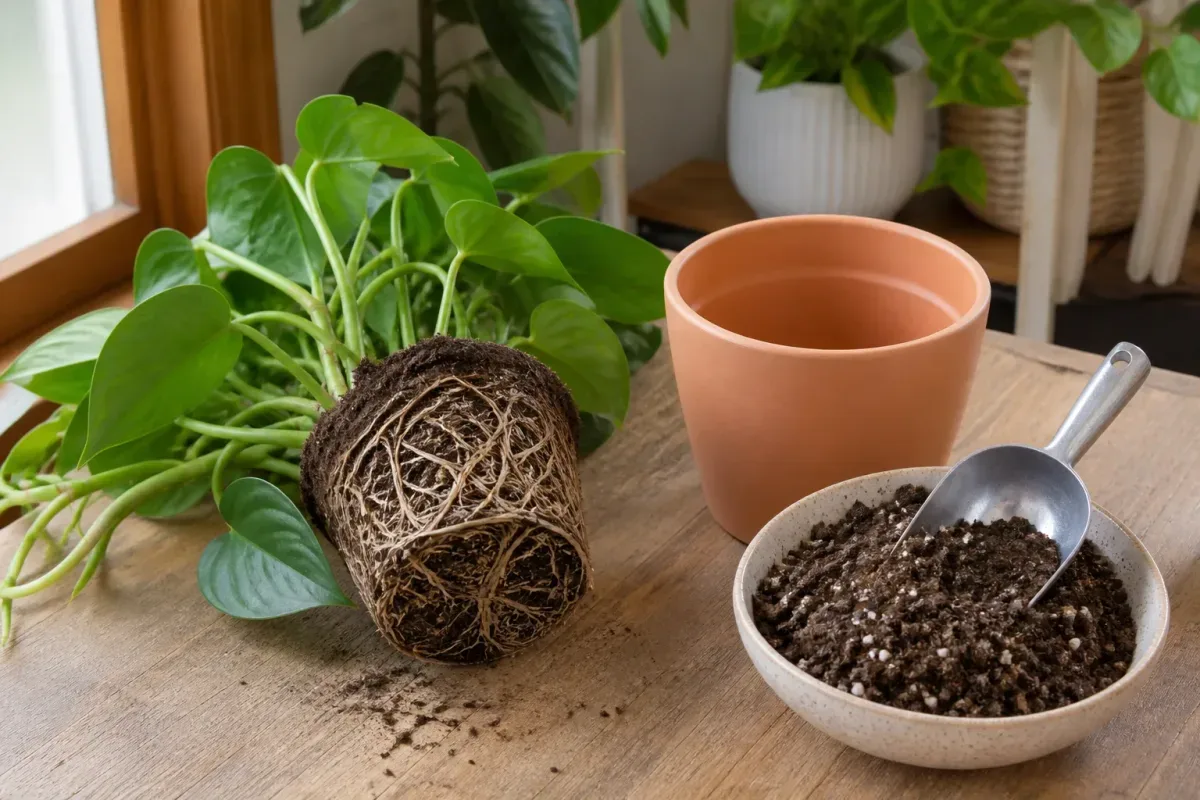
2026-03 — full media swap on the same plant: We knocked off the mineral plug, rinsed mushy outer roots, and replanted into a peat/coir houseplant mix amended with coarse perlite (roughly one part aerator to three parts bagged mix by volume). In bright east light, the pot felt clearly lighter by day four to five after a thorough watering—versus the week-plus swamp lag in garden soil. New growth resumed within about two weeks. Editorial note only: your dry-down window will differ.
2026-04 — store squeeze-test, two sealed bags: Side-by-side at a big-box aisle, a “moisture control potting mix” compressed springy and showed white perlite flecks through the plastic. A “garden soil” bag compressed into a dense cake with almost no visible aerator particles. Same store, same “organic” marketing language on both fronts—different jobs. Trust the ingredients and intended-use line, not the shared adjective.
Half yard soil / half perlite, tried once as a compromise on a spare snake-plant division, still packed into a heavy core after a few waterings. The perlite floated and layered; the mineral fines stayed. Stretch with clean amendments, not backyard dirt.
If You Already Used Garden Soil
Act on symptoms and pot weight, not guilt. If the plant is still firm, growth is normal, and the mix dries on a reasonable cycle, monitor it and plan a cleaner mix at the next seasonal repot. If the pot stays wet, smells sour, or the plant wilts while wet, treat it as a soil-structure and oxygen problem.
Unpot and inspect roots. Healthy roots are firm and light-colored for most common foliage plants. Soft, dark, foul roots point toward rot pressure that garden soil and chronic wetness encourage. Wisconsin’s practical advice for root rot is blunt: reduce moisture, and often the cost-effective move is to discard a badly infected plant rather than cycle fungicides. If you keep the plant, trim dead roots, wash the pot, and replant into fresh pasteurized potting mix.
Do not reuse the old garden soil in other houseplant pots. Do not pour the runoff onto healthy plants. Sanitize tools and clay pots after a rot event; Wisconsin advises against casually reusing plastic pots that housed root-rot cases because they are hard to disinfect thoroughly.
Full Media Replacement vs Spot Fixes
If the main issue is density rather than advanced rot, a full media replacement usually beats “mixing in a little perlite” while leaving a clay core intact. Wrong media is a whole-root-ball problem. Working a handful of bark into the top inch does almost nothing to a mineral plug. Use the wrong soil mix guide when you need symptom-by-symptom recovery steps after the bag choice is corrected.
Winter Imports From Patio Pots
Patio containers filled with garden-soil blends are a middle ground outdoors. Bringing those pots indoors for winter imports outdoor biology into a warm, still room: fungus gnats, weed seeds, and root-rot organisms that were tolerable outside become house pests. If you must overwinter a patio plant inside, prefer a container mix from the start, or plan a full media change and pot wash before the plant crosses the threshold—not a decorative gravel “fix” on top of yard dirt. For pest follow-up after an import, see fungus gnats.
Related Guides
- Best soil for indoor plants — recipes, brands, and DIY ratios after you reject garden soil
- Wrong soil mix in houseplants — diagnose dense, soggy, or mismatched media at the root ball
- Poor drainage in houseplants — holes, saucers, cachepots, and wet-pot physics
- Root rot in houseplants — when garden soil and chronic wetness tip into rot
- Perlite vs pumice — which aerator to stretch a clean mix with
- Coco coir vs peat moss — moisture-base choice once garden soil is off the table
- Repotting houseplants and when to repot — timing and technique for the media swap
Conclusion
Houseplants do not need “rich garden soil.” They need a container medium that stays porous under repeated watering, starts with a lower pathogen load, and matches the plant’s dry-down preference. That product is potting mix, not the bag meant for beds and borders.
At the store: buy potting / container / houseplant mix; confirm an aerator on the ingredient list; skip garden soil, topsoil, and raised-bed bags for indoor pots; ignore “organic” as a safety proxy.
If you already used yard dirt: watch pot weight and wilt-while-wet; unpot and inspect roots; replace the whole plug with pasteurized soilless mix; do not reuse the old soil or runoff; sanitize tools and rethink patio-to-indoor imports.
Use garden soil outdoors. Indoors, buy a pasteurized or soilless potting mix, amend it if your plant group needs more grit or bark, and only pasteurize mineral soil if you fully accept the labor and still redesign the texture afterward. The fastest way to improve struggling indoor plants is often not a new fertilizer schedule—it is getting yard dirt out of the pot and giving roots air again.