Houseplant Poor Drainage: Causes and Fixes
Spot no-hole pots, compacted mix, and standing water. Diagnose poor drainage fast, then fix it in the right order.
Written by Sai Ananth · Reviewed by Dr. Priya Menon, Botanist and Indoor Plant Specialist
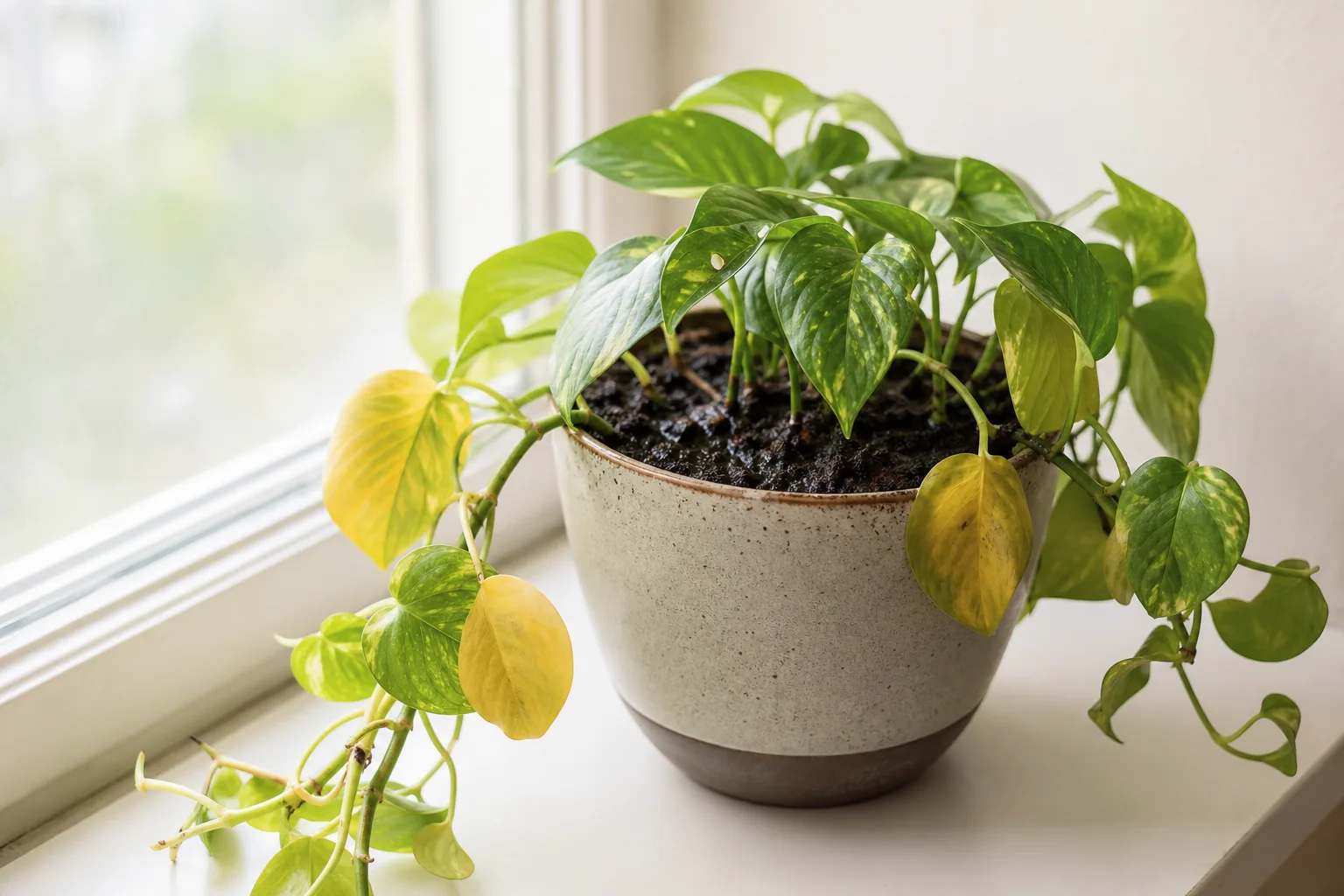
Your plant wilted, so you watered it. Three days later the pot still feels heavy, the soil surface looks dark, and new leaves are yellowing from the bottom up. That is not a watering mystery — it is usually a drainage failure. Poor drainage means water cannot leave the root zone on a useful timeline, so roots lose oxygen, pathogens get a foothold, and every “careful” watering makes the problem worse.
This guide separates poor drainage from simple overwatering, shows you how to confirm the cause in under a minute, and gives a fix order that actually works: stop the water trap first, check roots second, rebuild pot and mix third, then reset watering habits. You will also see how no-hole pots, compacted mix, and saucers stack together — and why gravel at the bottom of the pot does not rescue a bad setup.
What Poor Drainage Actually Means for Roots
Houseplant roots need both moisture and air. Clemson HGIC puts it plainly: roots need water and oxygen, and when surrounded by water they cannot take up oxygen — those roots may rot and the plant can die. (Clemson HGIC) Poor drainage is the structural reason that saturation lasts too long after a normal drink. Overwatering is the habit of adding water too often. You can have either problem alone, or both at once.
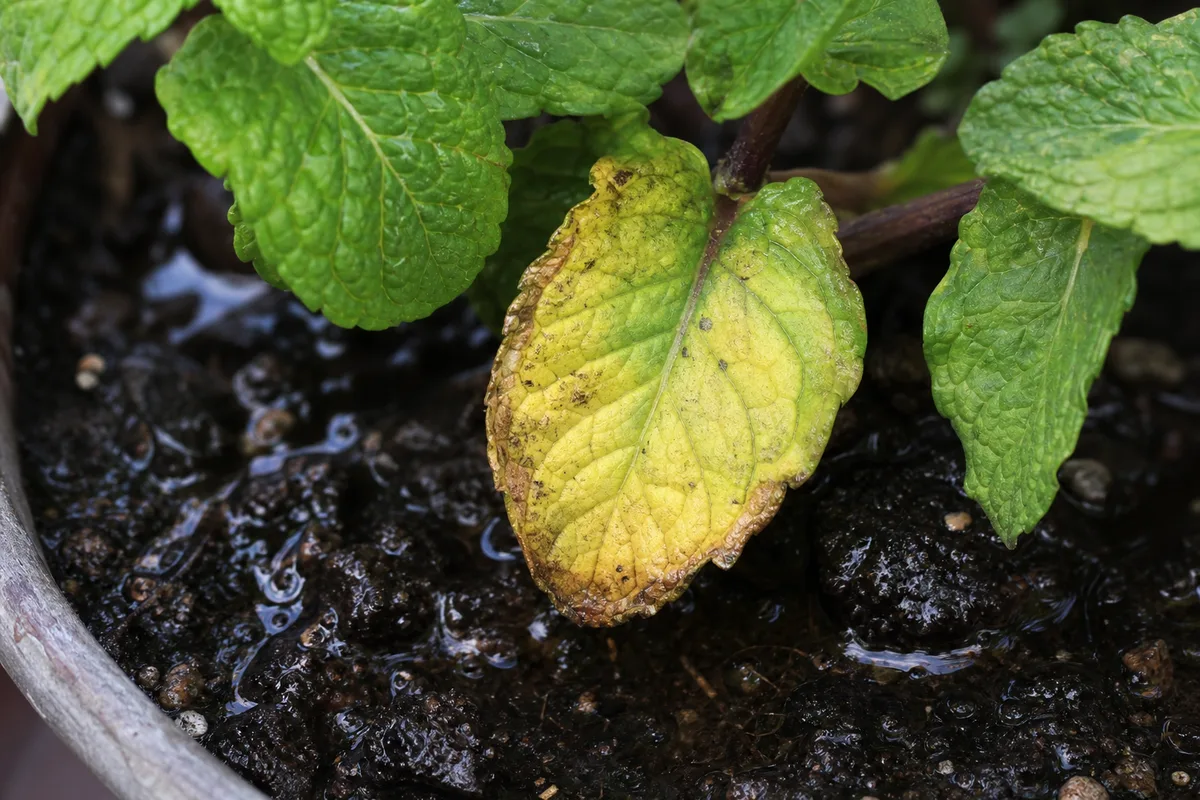
When pore spaces stay filled with water, gas exchange in the root zone collapses. Fine feeder roots die first. Then opportunistic organisms that prefer wet media — especially Pythium, Phytophthora, Rhizoctonia, and Fusarium — colonize damaged tissue. (Wisconsin Horticulture) Above ground, the plant often looks thirsty because it can no longer move water through a failing root system. That mismatch — wilt on wet soil — is the signature of a drainage-and-root problem, not a plant that needs another drink.
Drainage quality is the product of three systems working together: container exit paths (holes, unblocked outlets), media structure (particle size, compaction, peat collapse), and external reservoirs (saucers, cachepots, decorative sleeves). Fix only one and the other two can keep drowning the plant.
How to Diagnose Poor Drainage Fast
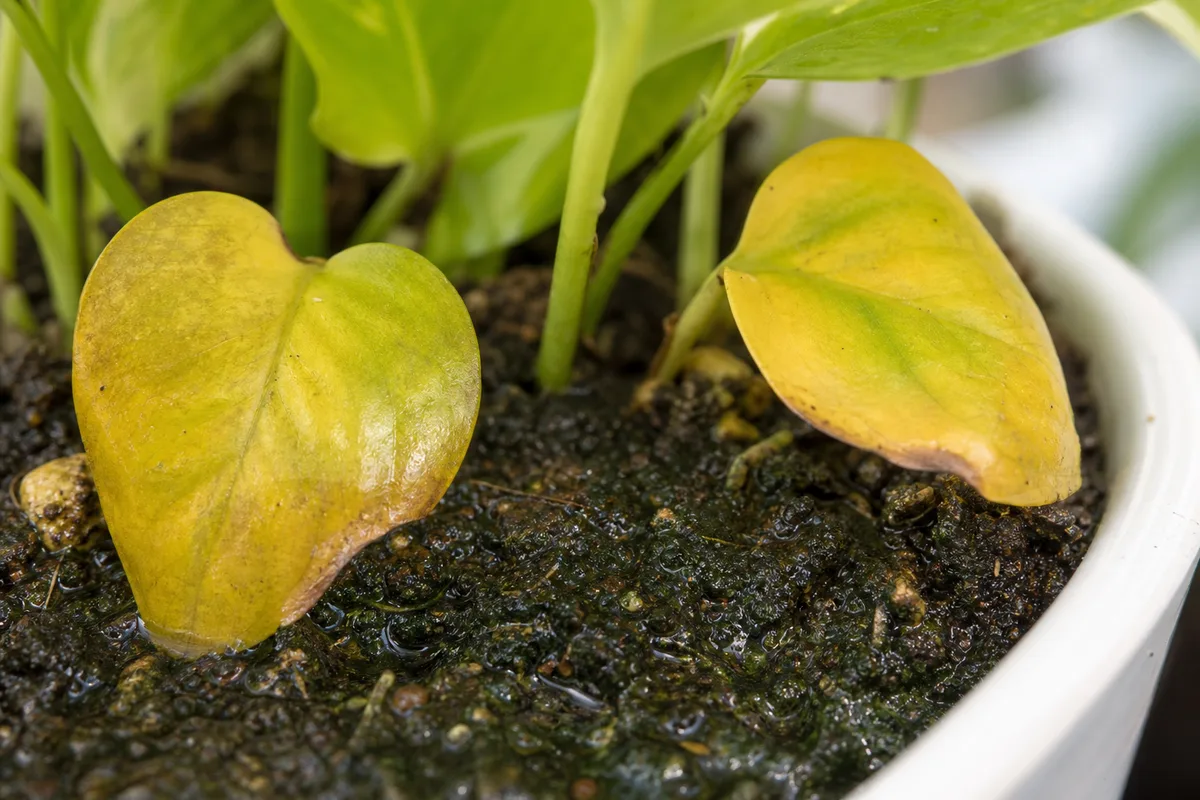
Do not start with fertilizer, misters, or “maybe it needs more light.” Start with water’s path through the pot. Diagnosis is a moisture-context problem: symptoms only make sense when you know how wet the mix still is and whether water can leave.
The 60-Second Pot and Mix Check
- Lift the pot. A chronically poorly drained pot stays surprisingly heavy days after watering.
- Finger or chopstick test. Push 5 cm (2 inches) into the mix. If it comes out dark and damp while the plant looks stressed, treat drainage as primary.
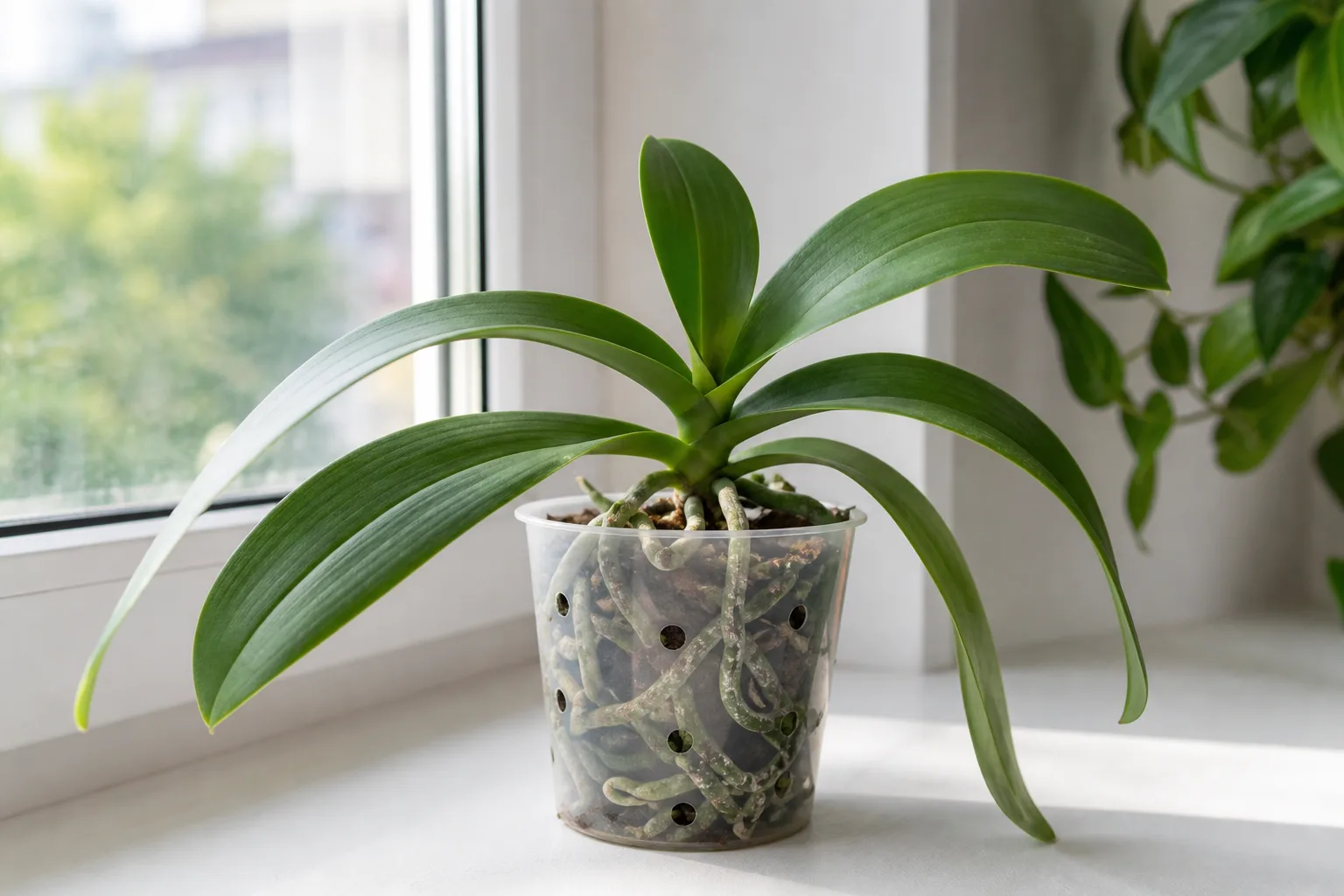
- Look under the pot. Are there open drainage holes, or a solid decorative floor? Are holes clogged with roots or compacted peat?
- Check the saucer or cachepot. Standing water under the grow pot is a drainage failure even when the nursery pot has perfect holes.
- Run a pour test. Water until runoff should appear. If nothing exits after a thorough soak, holes are missing or blocked — or the mix is so compacted that water channels around a hydrophobic core and still leaves the bottom swampy.
Wisconsin houseplant care guidance is clear on the watering ritual that follows a good drain path: water until seepage appears, give the saucer 10–20 minutes, then remove excess water so the plant does not stand in drainage. (Wisconsin Horticulture) If you cannot complete that ritual because water never exits, you do not have a schedule problem — you have a hardware problem.
Use this quick map once the check is done:
| What you find | Likely cause | First action today |
|---|---|---|
| Solid pot floor / no holes | No exit path | Move to a drained liner or drill only if safe; empty any sleeve water |
| Mix stays heavy 4–7+ days in a normally bright room | Compacted or peat-heavy media | Pause watering; plan a mix rebuild |
| Nursery pot OK, outer pot wet | Cachepot / saucer reservoir | Tip out standing water; elevate the grow pot |
| Tiny root ball in a huge pot | Oversized container | Step down one size when you repot |
| Wilt + wet soil + foul smell | Drainage failure progressing to root rot | Stop the trap, then inspect roots before fertilizing |
Drainage vs Overwatering vs Root Rot
These three labels get mixed up. Separate them so you pick the right first fix.
| Problem | Primary driver | First check | First fix |
|---|---|---|---|
| Poor drainage | Water cannot leave (holes, mix, reservoir, pot size) | Pour test + saucer/cachepot | Restore an exit path; empty reservoirs |
| Overwatering habit | Water added too often even in a good pot | Calendar vs touch/weight cues | Lengthen intervals; water thoroughly, then drain |
| Root rot | Pathogens in chronically wet media damaging roots | Unpot; look for soft, dark roots | Reduce moisture; trim mushy roots; rebuild pot/mix |
Missouri Botanical Garden notes that wilted leaves may mean soil that is too dry or too wet — rotting roots cannot take up water — and that pots without drainage or plants standing in water are asking for trouble. (Missouri Botanical Garden) If the plant improves when you tip out cachepot water and improve air around the root ball, drainage was the bottleneck. If roots are already brown and mushy, you need the root-rot rescue path after you stop the trap.
Cause 1: Pots Without Drainage Holes
A container without an exit path turns every watering into a bathtub. Water pools at the bottom, oxygen drops, and roots in the lower third of the pot live in permanent saturation. Missouri Botanical Garden is blunt: having plants standing in water or growing in pots without drainage holes is asking for trouble — repot if plants are growing in a pot without drainage. (Missouri Botanical Garden)
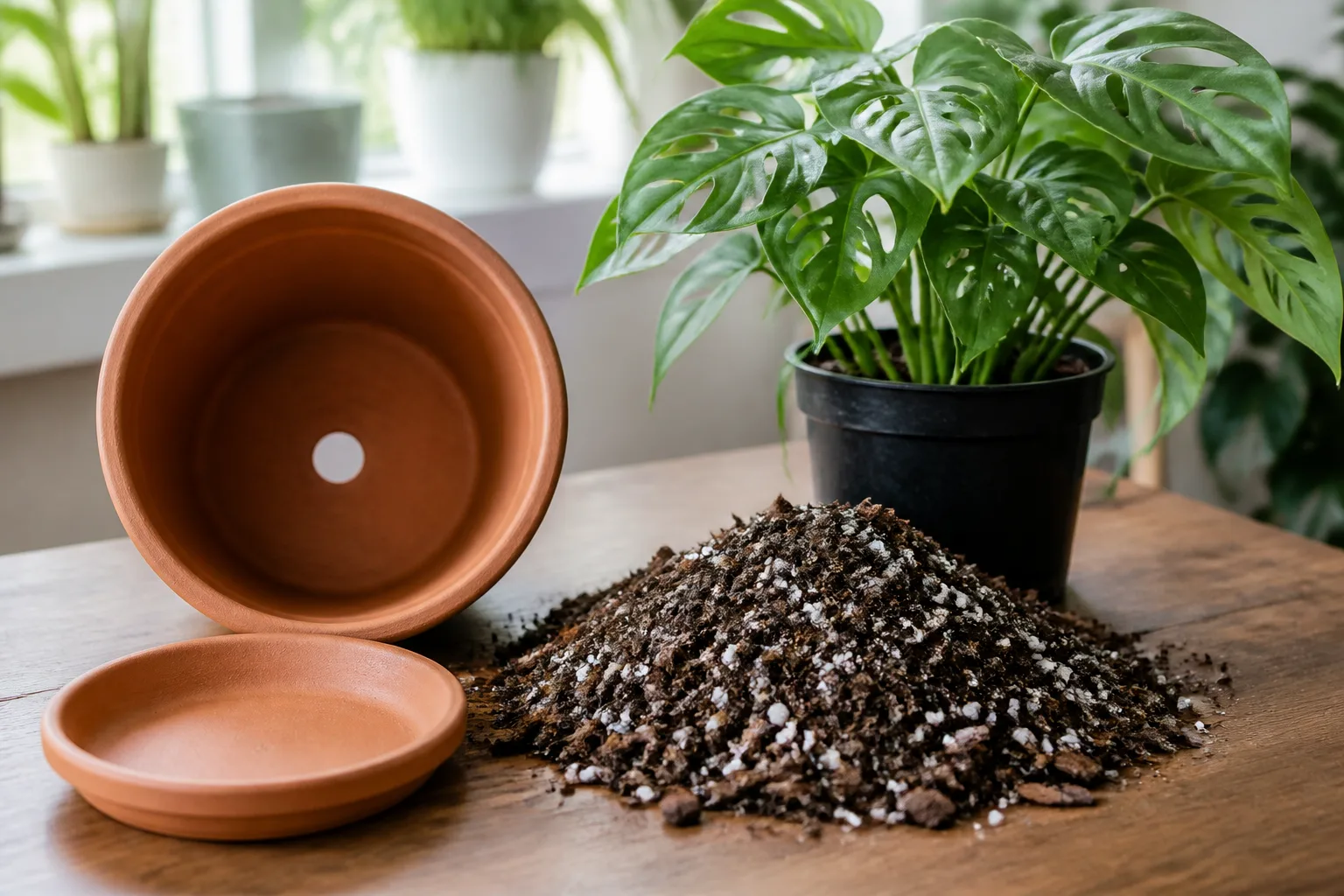
Decorative ceramics, cement planters, and sealed glass pots look finished, but they are display vessels, not grow pots, unless you manage them as cachepots. The safer pattern is a nursery pot with holes inside the decorative shell, with the inner pot elevated so the drainage hole does not seal against the outer floor. For sealed-pot tactics and safer workarounds, see houseplants without drainage holes.
Drilling holes in ceramic can work if the material and tools allow it safely — diamond bits, low speed, water cooling, and acceptance that the pot may crack. If you cannot create reliable exits, move the plant into a pot that already drains. Do not rely on “watering less” as a permanent substitute for an exit path; that strategy fails the first time someone else waters, or the first time peat holds more water than you expected.
Cause 2: Compacted or Wrong Potting Mix
Even a pot with perfect holes fails when the mix collapses into mud. Fine peat-heavy blends hold a lot of water; with time and repeated watering they pack down, shrink pore space, and slow dry-down. Clemson notes that heavy, fine-textured media and mixes with a lot of peat moss hold more moisture than loose, porous mixtures of bark, sand, and perlite. (Clemson HGIC) Penn State emphasizes soilless mixes partly to promote drainage and avoid soilborne disease pressure common in garden soil. (Penn State Extension)
Garden soil indoors is a classic mistake. Wisconsin’s root-rot guidance recommends pasteurized commercial potting mix rather than garden soil, which often carries root-rot fungi and drains poorly in containers. (Wisconsin Horticulture) Old mix that has broken down into fine particles behaves the same way: it looks “soil-like,” stays cold and wet in the core, and never re-aerates between waterings.
Wrong mix is not only “too dense.” A cactus mix under a fern creates drought stress; a moisture-holding mix under a snake plant creates chronic wet feet. Match texture to the plant’s dry-down needs, then confirm the pot still drains. For recipes and plant-type matching, start with the best potting mix for indoor plants guide and the wrong soil mix page when media is the primary failure.
Cause 3: Saucers, Cachepots, and Standing Water
Drainage holes do nothing useful if runoff sits against the root ball. Clemson’s watering rule is simple: water until it runs out the bottom, then empty the saucer — do not let the pot sit in the water that runs out. (Clemson HGIC) Wisconsin repeats the same timeline: allow 10–20 minutes for drainage, then remove excess. (Wisconsin Horticulture) UW PDDC is equally direct: do not allow plants to sit in drainage water, because root-rot fungi grow and reproduce best in wet soils. (UW PDDC)
Cachepots and decorative sleeves hide the problem. You water the nursery pot, runoff collects in the outer vessel, and the plant sits in a private pond for days. Missouri Botanical Garden describes double potting as useful — nursery pot plus saucer inside a decorative pot — if you remember not to let the inner pot sit in water after watering. (Missouri Botanical Garden)
A practical habit: after every thorough watering, tip the cachepot, lift the grow pot, and check for a water line. If you find more than a thin film after twenty minutes, empty it. Pebble trays for humidity are fine only when the pot sits on pebbles above the water line, not in the water.
Cause 4: Oversized Pots and Slow Dry-Down
A small root ball in a large volume of mix cannot drink the water fast enough. The unused media stays wet for days, especially in low light or cool rooms. Missouri Botanical Garden notes that watering too much can lead to root rot and that plants grown in pots without drainage are asking for trouble — and common indoor-plant problem guidance links oversized pots and inadequate drainage to root rot. (Missouri Botanical Garden) When upsizing, go one size at a time rather than jumping several diameters.
Oversizing feels generous. In practice it creates a moisture reservoir the plant never asked for. If your plant is drowning in a pot two or three sizes too large, step down when you repot — after you confirm roots are healthy enough to handle the move. See pot too large when pot volume is the main driver.
The Gravel Myth and Why Rocks at the Bottom Fail
People add a layer of rocks or gravel “for drainage.” Extension plant pathologists say the opposite. UW PDDC and Wisconsin Horticulture both instruct: use a pot with drainage holes, but do not put rocks or gravel at the bottom of the pot — the presence of rocks or gravel can actually inhibit drainage. (UW PDDC; Wisconsin Horticulture)
The reason is physics, not folklore. A coarse layer under fine media creates a perched water table: water hangs in the fine mix above the coarse interface until the mix is nearly saturated, then finally moves. You have shortened the usable soil depth and kept the root zone wetter for longer. Real drainage comes from open holes plus a mix with continuous pore space — not from a rock basement.
If you already have gravel in the bottom, remove it at the next repot. Keep the holes clear. Improve the mix. Empty the saucer. That trio beats any decorative drainage layer.
Fix Order: What to Do First (and Why Order Matters)
Random fixes fail. People repot into fresh mix, then set the pot back into a full cachepot. Or they trim roots, then return the plant to a no-hole ceramic. Order matters because each step removes a different water trap.
Why Order Matters More Than New Soil Alone
-
Stop the water trap. Today, before you buy soil: empty saucers and cachepots, tip decorative pots, unblock visible drainage holes, and — for most plants — give brighter indirect light so dry-down can begin. Skip the light bump for plants that scorch easily; improve airflow and empty reservoirs instead. Do not water again while the mix is still wet. If the pot has no holes and the mix is swampy, plan to unpot the same day — “watering less” will not empty a sealed bathtub.
-
Confirm root health. Slide the plant out and inspect. Healthy roots are firm and usually pale to light tan; rotting roots are soft, dark, and may smell foul. (Wisconsin Horticulture) If damage is limited, trim mushy roots with clean tools, discard the sour mix, and proceed to a fresh setup. If most of the root system is gone, Wisconsin notes disposal is often the most cost-effective option, with cuttings from healthy shoots as a salvage path. (Wisconsin Horticulture) For the full rescue protocol, use the root rot houseplants guide.
-
Fix the pot and mix. Choose a pot with open drainage holes, sized close to the remaining root ball. Skip gravel layers. Use a pasteurized commercial mix suited to the plant, amended for aeration if the old mix was dense — bark, perlite, or similar coarse particles for plants that hate wet feet. Do not reuse old diseased mix or drainage water from the sick plant. (UW PDDC) Clean terracotta with a detergent or bleach solution when reusing; avoid reusing plastic pots that are hard to disinfect after a serious rot case when possible. (UW PDDC)
-
Reset watering habits. Water thoroughly when the plant needs it — until runoff appears — then empty the saucer. Clemson’s rule-of-thumb is to water when necessary using touch, weight, and color cues, not a fixed calendar. (Clemson HGIC) Pair this with how to water indoor plants the right way and the overwatered plant recovery guide if you are rebuilding after chronic wetness.
Hydrogen peroxide poured into swampy soil is not a drainage fix. It may briefly foam and may kill some surface microbes in the moment, but it does not create an exit path, rebuild pore space, or empty a cachepot. Extension guidance for houseplant root rots prioritizes moisture management over chemical “cures.” (Wisconsin Horticulture) Fix the hardware and the habit; do not treat peroxide as oxygen for roots.
Choosing Better Pots and Matching Mix Texture
Terracotta, Plastic, and Double Potting
Pot material changes dry-down speed even when holes are identical. Clemson notes water evaporates rapidly from porous clay pots, so they need more frequent watering than nonporous glazed or plastic pots. (Clemson HGIC) If you chronically keep mix too wet, unglazed terracotta can buy forgiveness. If you underwater or grow moisture lovers in a dry apartment, plastic may help. Neither material excuses missing holes or a full saucer.
Double potting remains the best aesthetics compromise: grow in a drained nursery pot, display in a sleeve, empty runoff. Compare materials and cachepot mistakes in depth in terracotta vs plastic pots.
Aroids and many tropical foliage plants want moisture with air — chunky mixes with bark and perlite often outperform fine peat bricks. Succulents and snake plants need faster dry-down. Ferns and some prayer plants prefer mixes that do not turn bone-dry overnight, but they still need oxygen and an exit path. RHS advice on poorly houseplants includes matching compost to the plant — for example, peat-free cacti and succulent mixes with sand or grit for drainage — and checking that water has not collected in the base of the pot. (RHS)
When you rebuild a mix, aim for continuous pore space from top to bottom. That is the opposite of a dense base topped with “drainage rocks.”
Aftercare, Gnats, and When Recovery Stalls
After a drainage fix, expect a pause in growth while roots rebuild. Keep light steady, skip fertilizer until you see new growth, and water only when the plant’s preferred dry-back returns — without re-flooding. If tiny dark flies lift off the soil when you water, you likely have fungus gnats breeding in persistently moist media. Wisconsin Horticulture links fungus gnats to overwatered houseplants and stresses drying the top inch between waterings as the core cultural fix. (Wisconsin Horticulture) Colorado State Extension likewise notes excessively moist soil favors fungus gnats. (Colorado State Extension) Treat the moisture habitat first, then use sticky traps and larval options as needed — full workflow on fungus gnats houseplants.
Recovery stalls when the plant goes back into a sealed pot, when saucers refill and sit, or when more than about three-quarters of the roots were already dead. In those cases, propagate healthy cuttings and retire the original plant rather than chasing endless fungicides. Wisconsin does not recommend chemical fungicides as a homeowner cure for houseplant root rots; moisture management is the control. (Wisconsin Horticulture)
Typical recovery timing after a successful rebuild: new root tips in 1–3 weeks in warm bright conditions, and visible new leaf growth in 3–6 weeks for many tropical foliage plants. Cool rooms, low light, and heavy root loss stretch that timeline. No new growth after six weeks with healthy firm roots usually means light, temperature, or residual wet habits — not a missing fertilizer dose.
First-Hand Notes From Fixing Waterlogged Setups
These are LeafyPixels editorial observations from waterlogged setups we corrected while reviewing this guide — not controlled lab trials. Timings assume typical indoor temperatures (~20–24°C) and bright indirect light unless noted.
- Cachepot water line (pothos in 15 cm nursery pot inside sealed ceramic): After a thorough watering, 2–3 cm of runoff sat in the sleeve. Left overnight, the nursery pot stayed heavy into day three and the lowest leaves yellowed. Emptied within 15 minutes on the next cycle, the same pot was noticeably lighter by day two and ready to water again by day four to five.
- No-hole ceramic vs drained liner (same peat-heavy mix, same room): The sealed ceramic still felt cold and wet 1 cm down at day five. The identical volume in a nursery pot with open holes and an emptied saucer reached a dry finger-test at ~5 cm by day three to four.
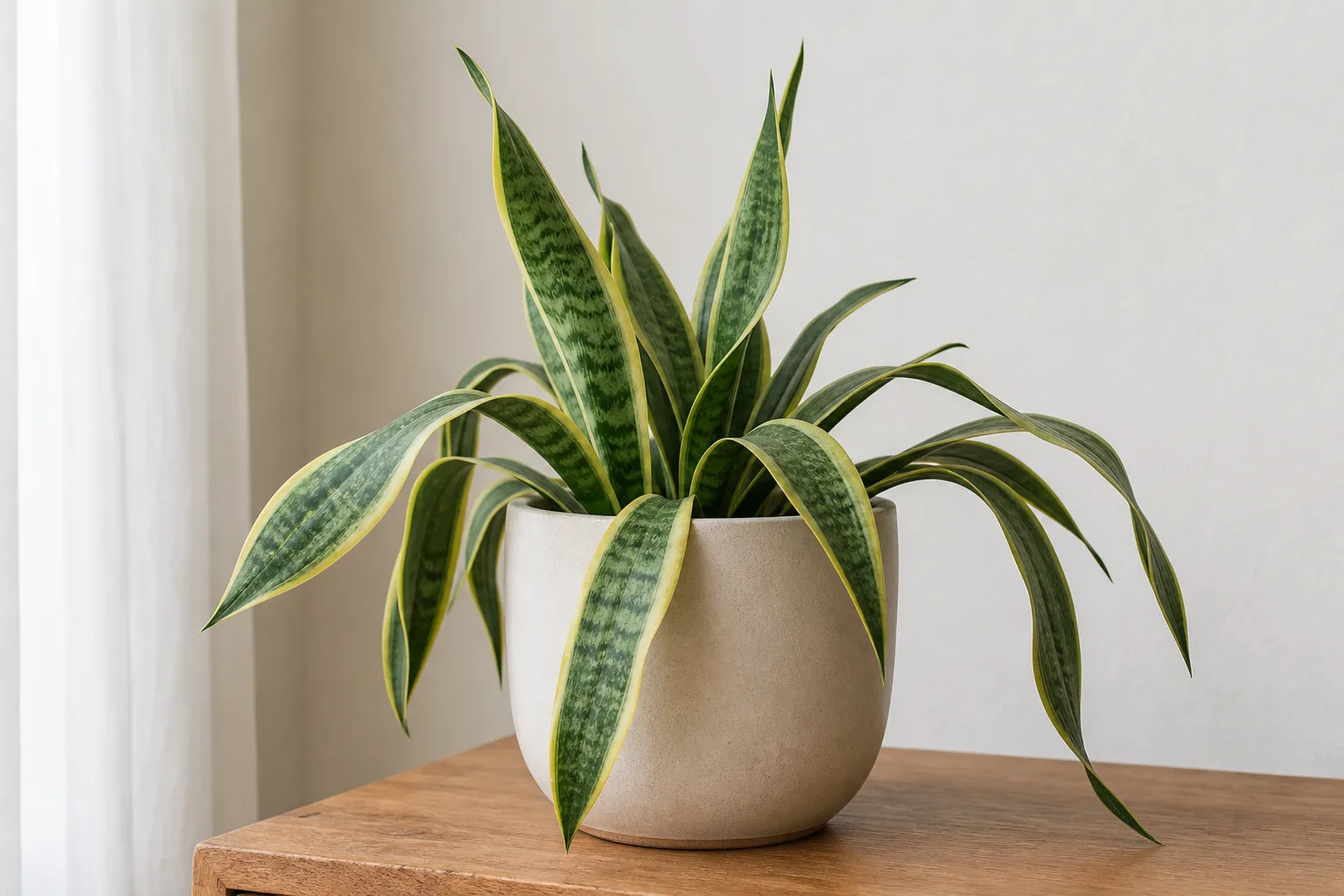
- Peat brick vs bark/perlite blend (snake plant, plastic pot with holes): Fine peat-heavy mix stayed dark and heavy past day seven. After repotting into a coarser bark/perlite blend without a gravel layer, dry-back to the preferred depth landed closer to day five to six under the same light — and the plant stopped alternating wilt-on-wet cycles.
- Gravel layer removal at repot: A philodendron sitting on a rock “drainage” layer had a wet band right above the gravel. Removing the rocks, refreshing airy mix, and keeping holes clear stopped the sour smell within one watering cycle; the plant needed no fungicide once the reservoir was gone.
The pattern that mattered most: every “almost fixed” plant that relapsed had been returned to a full decorative sleeve or left on a wet saucer.
Prevention Checklist for the Next Watering
Before you water again, confirm:
- Drainage holes are open and not sealed against a solid outer floor
- Mix is not still wet at ~5 cm depth (or at the depth your plant prefers)
- Cachepot / saucer is empty
- Pot size still matches the root ball (not several sizes oversized)
After you water:
- Runoff appeared (or you know why it did not — blocked holes vs hydrophobic mix)
- Saucer emptied within 10–20 minutes
- Grow pot is elevated above any humidity-tray water line
Repot on a schedule that refreshes collapsed media — many indoor plants benefit from fresh mix every one to three years as salts build and structure fails. When growth slows in winter, reduce frequency; RHS notes winter problems often come from overwatering and poor light. (RHS) Keep a simple log for problem plants: date watered, pot weight feel, saucer emptied yes/no. That record exposes the real dry-down time better than any generic “once a week” rule. When it is time to upsize or refresh media, follow when to repot so pot volume does not outrun the roots again.
Related Guides
- Houseplants without drainage holes — sealed ceramics, drilling decisions, and safer double-pot setups
- Wrong soil mix — dense, collapsed, or mismatched media that trap water
- Root rot houseplants — inspect, trim, and rescue after chronic wet soil
- Overwatered plant — recovery timeline when wet soil meets wilt
- How to water indoor plants the right way — thorough watering plus empty-saucer habits
- Fungus gnats houseplants — wet-media flies that follow poor drainage
Conclusion
You have fixed drainage when three things stay true for two full watering cycles: the pot drains on a pour test, the saucer or cachepot is empty within 20 minutes, and the mix reaches your plant’s normal dry-back without smelling sour or staying swamp-heavy for a week. If any one of those fails, return to the cause table — holes, mix, reservoir, or pot size — before adding fertilizer, peroxide, or another drink. Poor drainage is a container systems problem; once the exit path, media, and reservoir are honest, “mystery wilt” usually stops needing mystery solutions.