Mulching vs Bagging vs Leaving Leaves: Pro Guide
Mulching, bagging, or leaving leaves? See what lawn pros do on turf vs beds, when to mulch-mow, and how to avoid smothered grass or wasted nutrients.
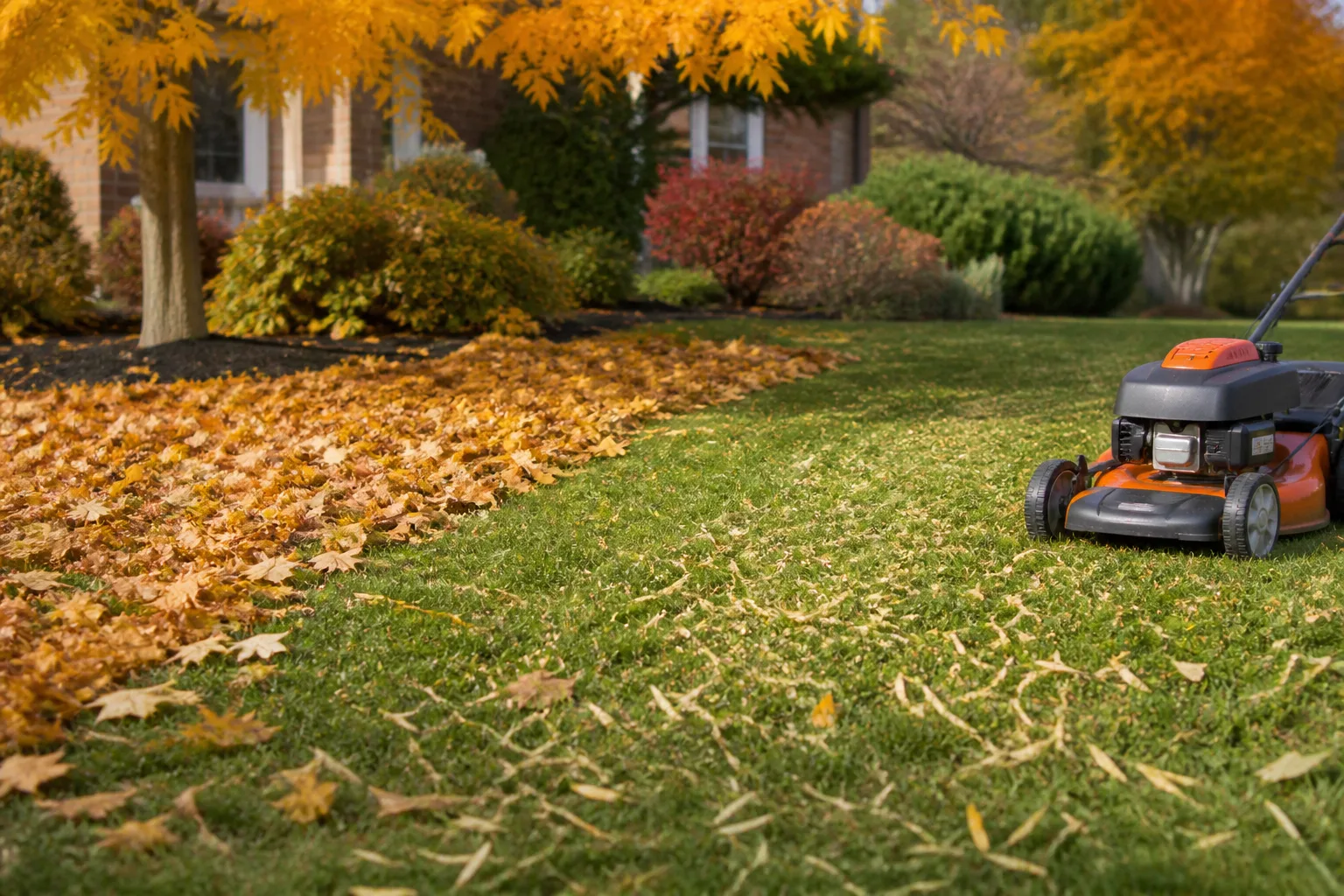
Every October the same debate arrives in neighborhood group chats: rake and bag, mulch-mow, or “leave the leaves” for wildlife. All three camps sound confident. All three are partly right. The mistake is treating your entire property as one surface when lawn pros think in zones—turf, planting beds, wild edges, and hardscape—and assign a different leaf job to each.
The professionals who maintain healthy lawns year after year are not doing one heroic rake-a-thon. They mulch-mow on a schedule, leave whole leaves where roots and insects need them, compost what the turf cannot absorb, and bag only the true surplus. Copy that zoning logic and fall stops feeling like a moral test and starts reading like a maintenance plan.
The Quick Answer: Match the Leaf Strategy to the Surface Beneath Them
On open lawn: mulch-mow dry leaves into dime-sized pieces so they filter between grass blades and return to the soil. In garden beds, under shrubs, and along wooded edges: leave whole leaves in place (or add shredded leaves as mulch) to protect soil and shelter overwintering insects. For volume your lawn cannot process: compost or stockpile leaf mold, then spread finished material next season. Bag or sweep only when layers are too wet, too deep, or headed for the street.
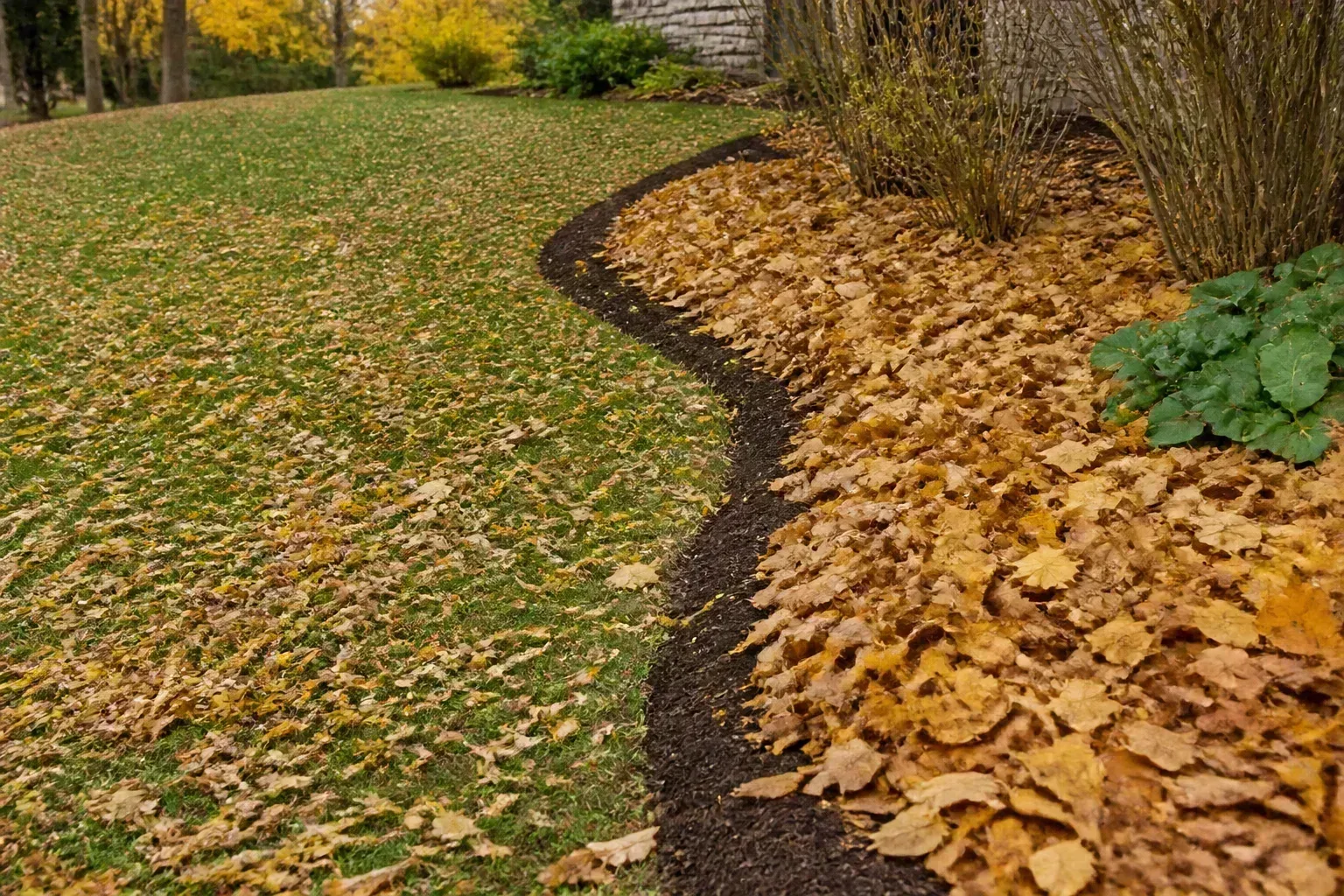
If you remember one measurable rule for turf, use the visibility test: after mowing, you should still clearly see grass through the shredded leaf layer. If the lawn looks carpeted rather than lightly dusted, you have put down more than the grass can break down before winter—and that is when smothering and snow mold risk climb.
Why Fall Leaf Management Matters More Than Most Homeowners Think
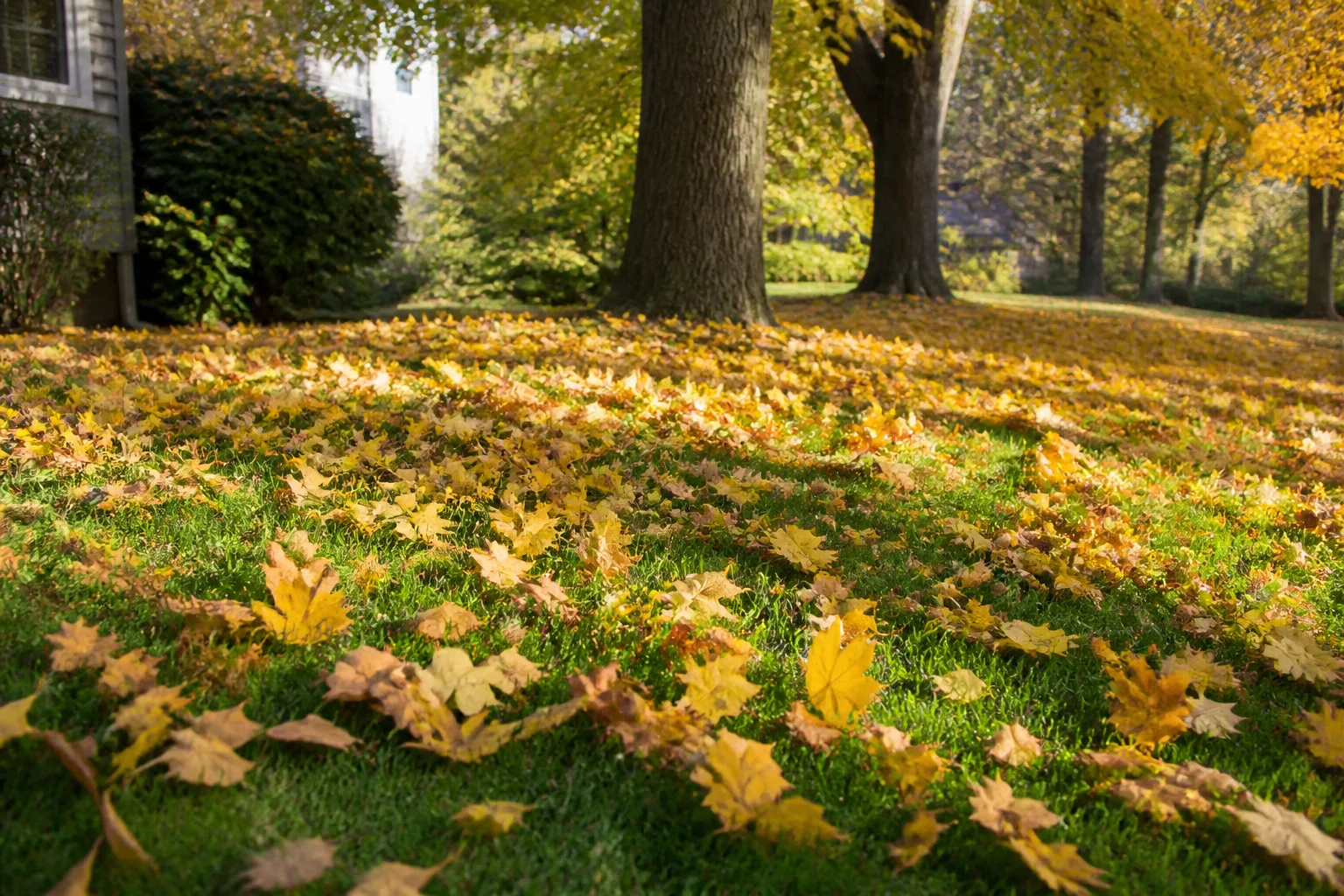
Fallen leaves are not inert clutter. They are the tree’s stored nutrients—nitrogen, phosphorus, potassium, and calcium—pulled from your soil all season and dropped back in one delivery. Bag them for curbside pickup and you export that fertility. Mulch them into turf or compost them on site and you rebuild organic matter that improves water retention and root growth.
The environmental math matters too. The EPA estimates yard trimmings made up more than 12 percent of U.S. municipal solid waste in recent reporting years—leaves are a huge slice of that autumn pile. Keeping leaves on your property reduces landfill volume and the diesel miles tied to hauling them away.
Water quality is the less obvious reason pros care. Kansas State University Extension warns that blowing or raking leaves into streets clogs storm drains and sends nutrient-rich organic matter into ponds and streams, fueling algae blooms. Managing leaves at home is lawn care and watershed hygiene at once.
What Lawn Pros Actually Do (Four Strategies, Not One Right Answer)
Walk a landscaper’s own yard in late fall and you will usually see all four tactics in play. The skill is knowing which surface gets which treatment—not picking a team and applying it everywhere.
Mulch-mow leaves into the lawn
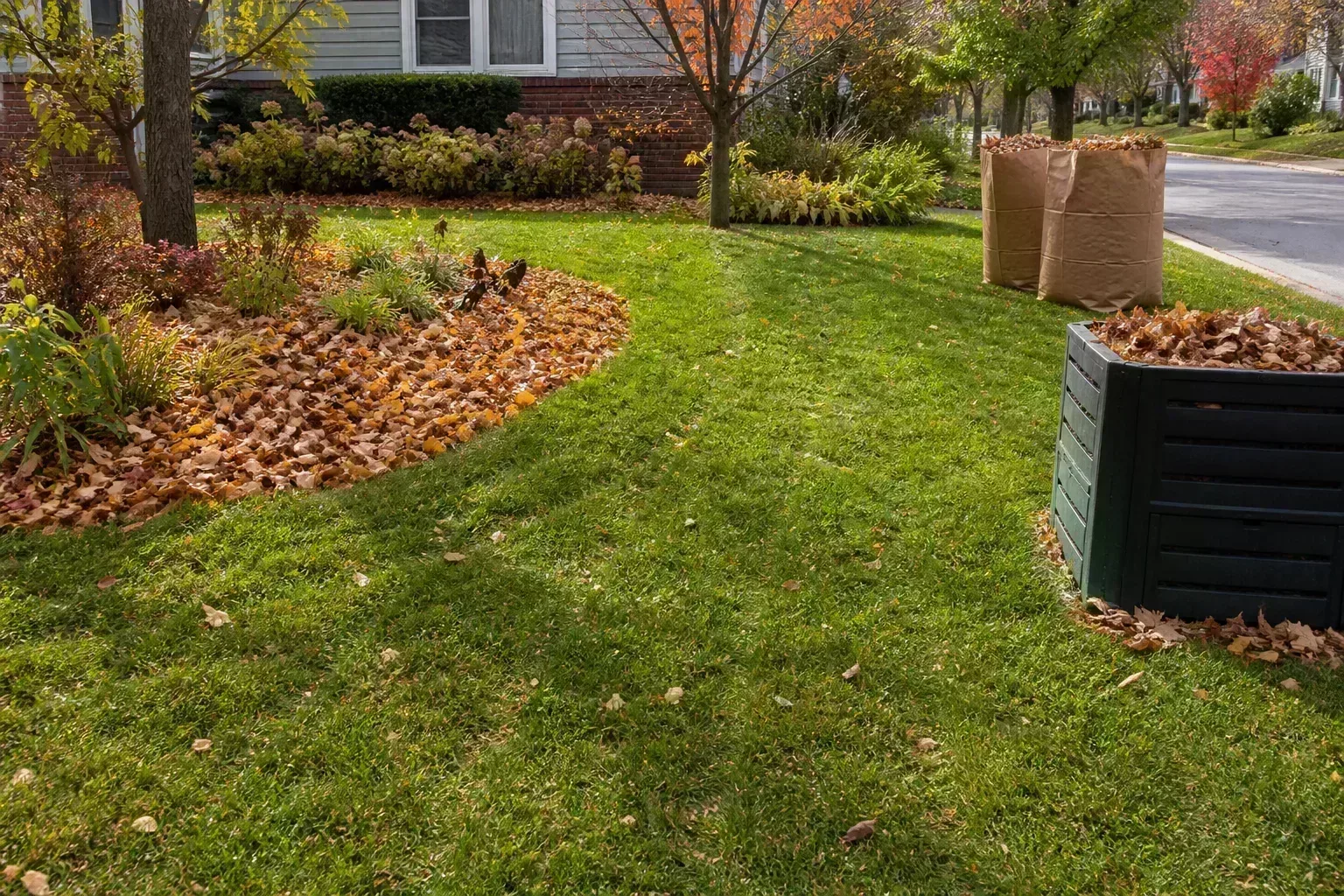
This is the default on maintained turf. A rotary or mulching mower chops dry leaves small enough to fall through the canopy to the soil surface, where microbes and earthworms finish decomposition. Kansas State Extension describes it as a series of frequent mows whenever a thin layer—about an inch—covers the grass, not a single heroic pass through a foot of leaves.
Done properly, research at Michigan State and other land-grant programs shows lawns can incorporate substantial leaf input over a season. One ASHS-published turf study found that mulched maple and oak leaves applied to Kentucky bluegrass for two consecutive fall seasons reduced dandelion populations by roughly 47 percent without herbicide—likely by covering bare soil and changing surface conditions where weed seeds germinate.
Leave whole leaves in beds and borders
“Leave the leaves” is excellent advice aimed at the non-turf parts of your yard. Whole leaves insulate soil from winter rain, feed fungi and invertebrates, and give native bees, fireflies, butterflies, and moth species a place to overwinter. Pros leave perennial stems standing in fall too, because leaf litter tucked against stiff stems is less likely to blow away.
The nuance: this is a bed and border strategy, not permission to ignore a thick mat on Kentucky bluegrass. On lawn, shredded leaves recycle nutrients without blocking light to every blade.
Compost or make leaf mold with the overflow
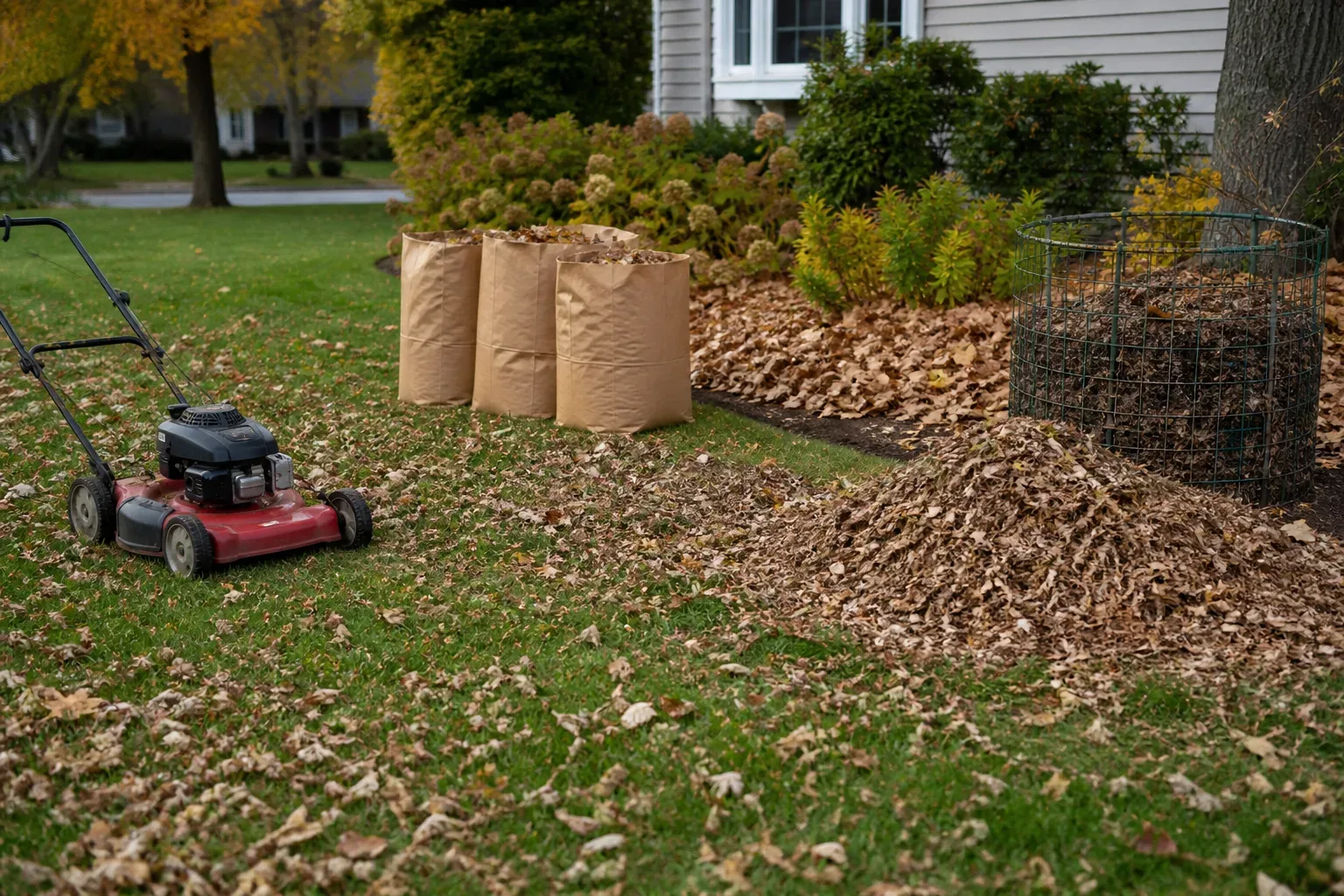
Even aggressive mulch-mowers produce surplus on properties under mature oaks and maples. Pros route that excess into compost bins or dedicated leaf-mold piles rather than the landfill. Shredded leaves break down faster; whole leaves become leaf mold—a dark, crumbly soil conditioner—after a year or more of fungal decomposition.
Compost returns to beds and thin lawn areas next season. Leaf mold is especially valuable where you want moisture retention without heavy nitrogen release.
Bag or sweep up what the yard cannot absorb
Bagging is not failure—it is overflow management. Pros bag wet, matted layers that will not shred, windrows along curbs, leaves under black walnut trees, and anything that would otherwise sit on turf through winter. Many use a mulch-mow then bag two-pass system: first pass without the bagger shreds leaves in place; second pass with the bagger collects compact, chopped material that takes two to four times less bag volume than whole leaves.
A lawn sweeper can replace hand raking for collecting dry shredded or whole leaves on open turf when bagging attachments are awkward.
How to Choose: Mulching vs Bagging vs Leaving vs Composting
Use this decision frame before you pull the mower or rake:
| Situation | Best move | Why |
|---|---|---|
| Dry leaves, grass still visible through the layer | Mulch-mow every few days | Returns nutrients; lowest labor when folded into mowing |
| Garden beds, under shrubs, woodland edge | Leave whole leaves (2–3 in.) | Protects soil life; supports overwintering insects |
| More leaves than turf can shred before snow | Compost or leaf-mold pile | Uses material without smothering grass |
| Wet, matted carpet; diseased foliage; black walnut drop | Rake/bag or compost separately | Clogs mowers; juglone risk near edibles |
| Leaves on driveway, sidewalk, or street | Sweep back to lawn or bag | Prevents drain clogs and nutrient runoff |
| Overseeding or patching bare turf | Mulch first, keep seed zone clear | Seed needs soil contact, not a leaf blanket |
Mulching wins on effort when you already mow and leaf drop stays manageable. Bagging wins on control when volume, moisture, or timing outruns the shredder. Leaving wins for ecology where grass survival is not the goal. Composting wins for storage—turning this year’s problem into next year’s amendment.
The Pros’ Mulch-Mowing Method (Step by Step)
Mulch-mowing is not “mow whenever the lawn needs a cut.” During peak leaf fall, the calendar follows leaf drop, not grass growth.
Set up the mower and timing
Wait until leaves are dry. Dewy or rain-soaked leaves clump under the deck, mat on grass, and resist shredding. Mid-morning after dew dries is the sweet spot.
Install a mulching blade if you have one, close the side-discharge chute, and remove the bagger. Raise cutting height slightly so shredded pieces drop into the canopy instead of sitting on top. Clear sticks, stones, and toys first—leaves shred; hardware does not.
Mow every few days through heavy drop, while you can still see roughly half the lawn through the leaf layer. Waiting until every tree is bare guarantees a layer too thick for one or two passes.
The dime-size test and when to stop
Run the mower in your normal pattern. If pieces are larger than a dime, make a second pass at a right angle. Effective leaf mulch looks like confetti, not confetti-sized strips.
After mowing, perform the visibility test: grass blades should be obvious through the shred layer. UConn Extension guidance on mulch-mowing recommends keeping leaf cover to roughly 20 percent or less of the lawn surface after each pass—if you are above that, keep mowing or remove the surplus.
Kansas State Extension notes that, over many incremental mows, cool-season lawns can incorporate six inches or more of total leaf fall when each layer is shredded before the next arrives. That is a season-long process—not permission to drop six inches at once and mulch once.
When volume still exceeds what turf can take, switch to the two-pass mulch-and-bag method or rake excess to beds and compost.
When Leaving Leaves Is the Smart Move—and When It Smothers Turf
A light scatter of whole leaves on lawn—think flakes, not blankets—will break down on its own. A thick, wet mat blocks sunlight, holds moisture against crowns, and creates the cool, dark conditions that favor gray and pink snow mold under long snow cover. That is the practical reason turf pros shred rather than ignore lawn leaves, even when they champion “leave the leaves” elsewhere on the property.
In perennial beds and around trees, a 2- to 3-inch layer of whole leaves is desirable. Pull leaves away from the crowns of rosette-forming perennials if they pile deeper than that, and keep thick mats off evergreen foliage that needs air movement.
Timing matters for wildlife: many advocates recommend delaying bed cleanup until mid- to late spring so overwintering insects can emerge. When you do clean up, move leaves gently to compost rather than shredding every inch of habitat on the first warm day. Our guide on prepping garden beds in winter pairs well with a light fall leaf blanket you plan to keep in place until soil work begins.
Composting Leaves Without a Smelly, Stalled Pile
Whole leaves are carbon-heavy “browns.” A pile of leaves alone will sit, mat, and smell anaerobic. Pros layer about 6 inches of shredded leaves with 2 inches of nitrogen-rich greens—grass clippings, vegetable scraps, coffee grounds—and repeat. Shredding increases surface area and cuts composting time dramatically.
Turn or fork the pile every few weeks to introduce oxygen. Cover with a tarp in rainy climates to keep moisture steady without waterlogging. Avoid composting leaves from trees with active apple scab, anthracnose, or powdery mildew if you plan to spread finished compost on susceptible plants; bag and municipal compost those instead.
For leaf mold, pile shredded or whole leaves alone in a wire bin, keep moist, and wait 12–18 months. The result is less nutrient-dense than hot compost but excellent as a mulch and soil conditioner.
Leaf Types, Wildlife, and the Exceptions Pros Watch For
Most deciduous leaves—maple, birch, poplar, beech—mulch easily. A few deserve separate handling:
| Leaf type | On lawn | Better use |
|---|---|---|
| Maple | Excellent; breaks down fast | Mulch-mow or compost |
| Oak | Good in moderation; slower decay | Mulch-mow; slight acidity, minimal lawn pH shift per Iowa State Extension |
| Magnolia, holly | Poor; waxy, slow | Shred fine for compost, not turf |
| Black walnut | Avoid near edibles | Bag or compost separately; juglone can harm sensitive plants |
Wildlife value peaks in untouched edges—a strip along a fence, behind shrubs, or under native plantings where leaves stay whole through winter. You do not need to choose between a healthy lawn and insects; you need both a mowed zone and a reserved zone.
Where Leaf Work Fits in Your Fall Lawn Calendar
Leaf management is not an isolated chore. It intersects with the rest of fall turf work:
Aerate and dethatch before the heaviest leaf drop if your lawn needs it—burying thatch under leaves makes both harder to address. Mulch-mow throughout drop rather than waiting for bare trees. Overseed thin areas while soil is still warm; mulch existing leaves first, seed into visible soil, then keep the new patch clear of accumulating shred until new grass has been mowed twice. Apply fall fertilizer on cool-season lawns in step with local timing—nitrogen supports the soil microbes breaking down leaf organic matter, as Kansas State Extension notes.
Finish with a final mowing to a slightly lower—but not scalped—height before persistent snow, and remove leaves from areas where you stack shoveled snow. Piled snow plus buried leaves is a repeat recipe for spring damage; see signs snow damaged your lawn if melt reveals trouble spots.
Common Leaf Mistakes That Undo a Good Fall
Waiting for all the leaves to fall before the first mow is the most common error. By then the layer is too thick to shred safely in one session. Mulching wet mats clogs decks and leaves clumps that smother grass exactly where whole leaves would have. Blowing leaves into the street is fast and illegal in many municipalities—and it exports phosphorus that feeds algae in neighborhood ponds.
Leaving a thick blanket on turf all winter trades a rake job for snow mold and bare patches in spring. Shredding every habitat edge in November eliminates the insects you meant to support by “leaving the leaves.” Composting diseased leaves without heat and turning spreads pathogens back to the garden.
Using black walnut leaves as lawn mulch near vegetable gardens or juglone-sensitive ornamentals is another pro-level exception beginners miss. When in doubt, bag walnut litter separately or compost it in a dedicated pile you will not spread on sensitive beds.
Conclusion
Lawn pros do not worship one leaf religion. They mulch-mow turf on a dry, frequent schedule until pieces are dime-sized and grass stays visible. They leave whole leaves in beds and wild corners where soil life and pollinators need cover. They compost what the lawn cannot absorb, and they bag only the surplus, the wet mats, and the trouble species.
Copy that zoning approach and fall leaf work shrinks: the mower does most of the labor, beds keep their winter blanket, and you bag only the excess your property cannot use on site. Match the method to the surface beneath the leaves—not the loudest advice in your feed—and you will enter winter with healthier soil, less waste, and fewer smothered patches waiting under the snow.