What Is Snow Mold? Protect Your Lawn From Winter Damage
Learn what snow mold is, how gray and pink types differ, when to rake matted grass, and fall steps that reduce damage after long snow cover.
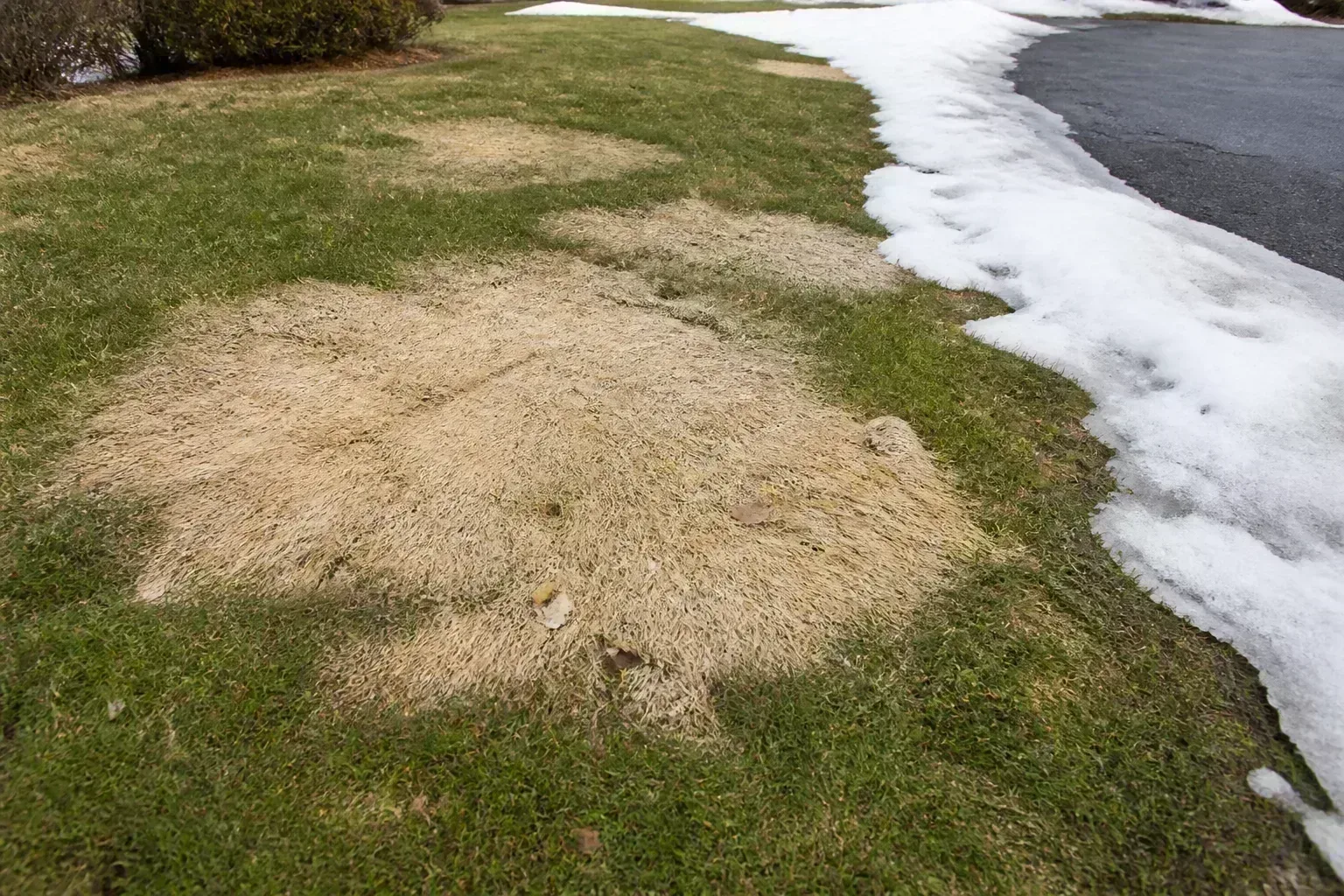
If you live where winter snow sits on the lawn for weeks, the first sunny days of late winter can reveal something unsettling: straw-colored or pink-tinged patches where grass looks matted, slimy, and dead. That is usually snow mold—a group of cool-season turf diseases that develop under snow cover or in prolonged cold, wet weather—not a sign that your entire lawn has failed.
Most homeowners overreact in one of two directions. Some ignore every patch and miss the window to rake, fertilize, or overseed bare areas. Others spray fungicide in April on damage that already happened underground in January. This guide separates what snow mold is, how gray and pink types differ, what to do at snowmelt, and what actually prevents repeat injury next fall.
The Quick Answer: Usually Cosmetic, Occasionally Worth Acting On
Snow mold is a fungal lawn disease on cool-season turfgrass. It thrives where snow or constant moisture keeps blades wet and dark for a long time. Gray snow mold typically damages leaf blades under extended snow cover; pink snow mold can injure crowns and may keep spreading in cool, wet weather even after snow melts.
For most home lawns, snow mold is cosmetic and self-limiting. Mature turf usually greens up again once temperatures warm and growth resumes. Your job in spring is gentle cleanup—rake when the soil has thawed, apply modest nitrogen to speed recovery, and overseed only where grass is truly bare. Your job before next winter is prevention: shorter final mowing, leaf cleanup, careful snow placement, moderate fall fertility, and better drainage where water pools.
Call it worth extra attention when patches are large, pink snow mold hits a new or thin lawn, the same areas fail every year, or you maintain high-value turf such as a newly seeded lawn or sports field. Those cases may justify fall preventive fungicide—not a spring rescue spray.
What Snow Mold Actually Is
Snow mold is not mold on top of snow. It is turfgrass disease activity that occurs while grass is covered by snow—or, for some pathogens, during cool wet stretches in late fall, winter, and early spring. The fungi feed on living leaf tissue (and sometimes crowns) when temperatures hover near freezing and moisture stays on the blades.
The name groups two main diseases homeowners confuse:
- Gray snow mold (typhula blight), caused by Typhula incarnata and Typhula ishikariensis
- Pink snow mold, caused by Microdochium nivale
The same fungus Microdochium nivale also causes Microdochium patch (sometimes called Fusarium patch)—similar pink or tan patches that can appear without snow when weather stays cool and wet. If you see pink rings in a rainy November or a chilly April, you may be dealing with Microdochium patch rather than classic snow mold under snow. The recovery and prevention steps overlap, but pink-type injury can be more persistent.
Penn State Extension notes that gray snow mold is prevalent in years when a thick snow layer lasts for long periods during mid to late winter. Pink snow mold follows the same snow-heavy pattern but does not always require snow to keep causing trouble.
Gray Snow Mold (Typhula Blight)
Gray snow mold produces white or tan crusted patches of dead, matted leaf blades—often described as looking like papier-mâché pressed into the turf. Patches may be a few inches to several feet wide and can merge into large blighted areas. Near melting snowbanks you may see fluffy gray mycelium on the grass.
The telltale sign for gray snow mold is tiny reddish-brown sclerotia—rounded fungal survival structures about pinhead size—embedded in matted leaves and crowns. A hand lens helps; without sclerotia you might confuse the patch with salt damage, pet urine, or delayed green-up.
Gray snow mold seldom kills the whole plant. Penn State Extension states that in most instances the pathogen kills leaf blades but not crowns and roots. Mature lawns recover when new leaves grow in spring.
Pink Snow Mold and Microdochium Patch
Pink snow mold creates smaller patches, often a few inches across, with pale yellow, tan, pink, or copper-colored turf. Grass looks matted. White or pink fluffy mycelium may appear at patch edges during humid cool weather. Leaf blades inside the patch can show pink coloration from fungal growth.
Penn State Extension’s pink snow mold page explains that pink snow mold can affect leaves, stems, and crowns, and that spores from diseased tissue can fuel new infections even after snow disappears if cold, wet, overcast weather continues. That is why pink snow mold is the more aggressive concern for thin or newly established lawns.
Unlike gray snow mold, which essentially shuts down once snow melts and sun dries the turf, pink-type activity can linger into a wet spring. It is also the disease most often seen alongside red thread—another cool, wet turf problem—because both love the same weather.
How to Tell Gray and Pink Snow Mold Apart
You do not need a microscope to make a useful field diagnosis. Stand back first, then kneel and look at texture, color, and patch size.
| Feature | Gray snow mold | Pink snow mold / Microdochium patch |
|---|---|---|
| Typical patch size | Inches to several feet; can merge | Often 2–10 inches; may merge |
| Color | White, tan, bleached straw | Pink, copper ring, pale yellow center |
| Matted crust | Strong papier-mâché mat | Matted but often smaller patches |
| Key ID sign | Reddish-brown sclerotia in mat | Pink mycelium on blades; copper-colored border |
| Snow required | Usually yes, prolonged cover | Enhanced by snow; can occur without it |
| Typical injury | Leaf blades | Leaves, stems, crowns |
| After snow melts | Activity usually stops | Can continue in cool wet weather |
Both types can sit side by side in one yard because different fungi respond to the same snow-packed, moist microclimate. Treat the lawn based on the worst injury you see—extensive matting, slow green-up, or bare soil—rather than the label you guess.
If patches are circular with mushrooms at the edge, you may be looking at a fairy ring or other problem, not snow mold. Scattered caps after rain point toward decomposer fungi like those in our mushrooms in lawn guide. Snow mold patches are mats of blighted grass tissue, not mushroom fruiting bodies.
Where Snow Mold Shows Up and Why It Develops
Snow mold is a microclimate disease. It shows up where grass stayed cold, wet, and dark longest.
Snow Depth, Duration, and Piled Drifts
The worst damage usually tracks where snow accumulated deepest and melted slowest: along driveways and sidewalks where you piled shoveled snow, at the bottom of slopes where drifts form, against north-facing foundation walls, and under trees where snow slides off and compacts. Penn State Extension describes ideal conditions as temperatures slightly above freezing at the snow–turf interface, wet leaf tissue, and darkness under cover.
Deep, long-lasting snow insulates the ground surface from hard freezes while keeping blades saturated—exactly what Typhula and Microdochium need. A winter with intermittent melt cycles may produce less snow mold than a winter where snow arrives early and stays until March.
Gray snow mold seldom occurs except under snow cover when soil is not frozen, according to Penn State. Pink snow mold is more likely under snow when soil is unfrozen but can also exploit wet turf without snow.
Fall Turf Condition, Thatch, and Late Nitrogen
Snow mold is not only about snow. It is also about what the grass looked like going into winter.
Long grass that folds and mats under snow creates a humid blanket for fungi. Thick thatch and matted leaves hold moisture and give pathogens a place to survive summer. Lush turf from heavy fall nitrogen produces soft, succulent growth that is more vulnerable to winter disease. Close-cut golf turf and newly seeded lawns that did not fully mature before winter are also high-risk, as Penn State notes for both gray and pink snow mold.
Milorganite’s spring turf disease overview recommends mowing cool-season grasses to about 2 inches after dormancy in fall because longer blades harbor more spores and mat more easily under snow. It also warns against excess fall nitrogen, favoring slow-release, lower-nitrogen dormant feeding where late-season fertilizer is used.
Poor drainage keeps pockets of turf wet in fall and spring, extending the window for pink-type fungi. Compacted soil along paths and play areas compounds the problem. If your lawn stays soggy, snow mold is one of several issues—weed invasion, thin turf, and other fungi—that will keep returning until water movement improves.
Which Grasses Get Hit Hardest
All cool-season turfgrass species can get snow mold, but species and maintenance level change how ugly it gets.
Penn State Extension ranks Kentucky bluegrass and the fine fescues as less prone to serious gray snow mold injury than annual bluegrass, creeping bentgrass, perennial ryegrass, and tall fescue. For pink snow mold, annual bluegrass, creeping bentgrass, and perennial ryegrass tend to suffer most severe injury.
Practical takeaway for homeowners:
- Kentucky bluegrass–fine fescue mixes often recover well from gray snow mold with rake and spring fertility.
- Perennial ryegrass–heavy lawns and fine bentgrass-dominated areas (some golf-adjacent home lawns) may need tighter fall prevention.
- New seedings that did not establish before winter are vulnerable; prioritize fall fungicide only if you cannot wait another year for maturity.
Warm-season lawns—bermudagrass, zoysiagrass, centipedegrass—in the South are not the primary audience for snow mold guides. Their winter diseases differ. If you are in a transition zone with occasional snow on overseeded ryegrass, treat that ryegrass layer as high risk.
Is Snow Mold Harmful to People, Pets, or the Lawn?
To the lawn: Gray snow mold is usually a foliar blemish on established turf. Pink snow mold can cause deeper tissue injury and slower green-up, especially on immature or over-fertilized grass. Neither typically wipes out a healthy mature lawn overnight, but repeated pink snow mold on weak turf can leave thin areas that weeds exploit—similar to the bare-patch problems covered in lawn brown-spot troubleshooting.
To people: Snow mold fungi can trigger allergies or respiratory irritation in sensitive individuals when large amounts of mycelium and spores dry and become airborne during spring raking. Wear a dust mask if you are prone to mold allergies, rake on a calm day, and bag debris if spore load is high.
To pets: Snow mold is not a classic pet toxin like some lawn chemicals, but dogs that eat moldy grass or roll in matted patches may get mild stomach upset. Keep pets off heavily matted areas while you clean up, and discard moldy clippings rather than composting them hot-side in a small home pile.
To timing expectations: Do not judge recovery in the first warm afternoon. Snow mold patches often look worst right at snowmelt and improve over several weeks as soil warms. Mark slow areas and revisit them in late spring before assuming seed is required.
What to Do When Snow Melts in Spring
Spring treatment is about helping grass breathe, dry, and grow—not reversing winter infection with a bottle labeled for summer fungus.
Rake Matted Patches After the Soil Thaws
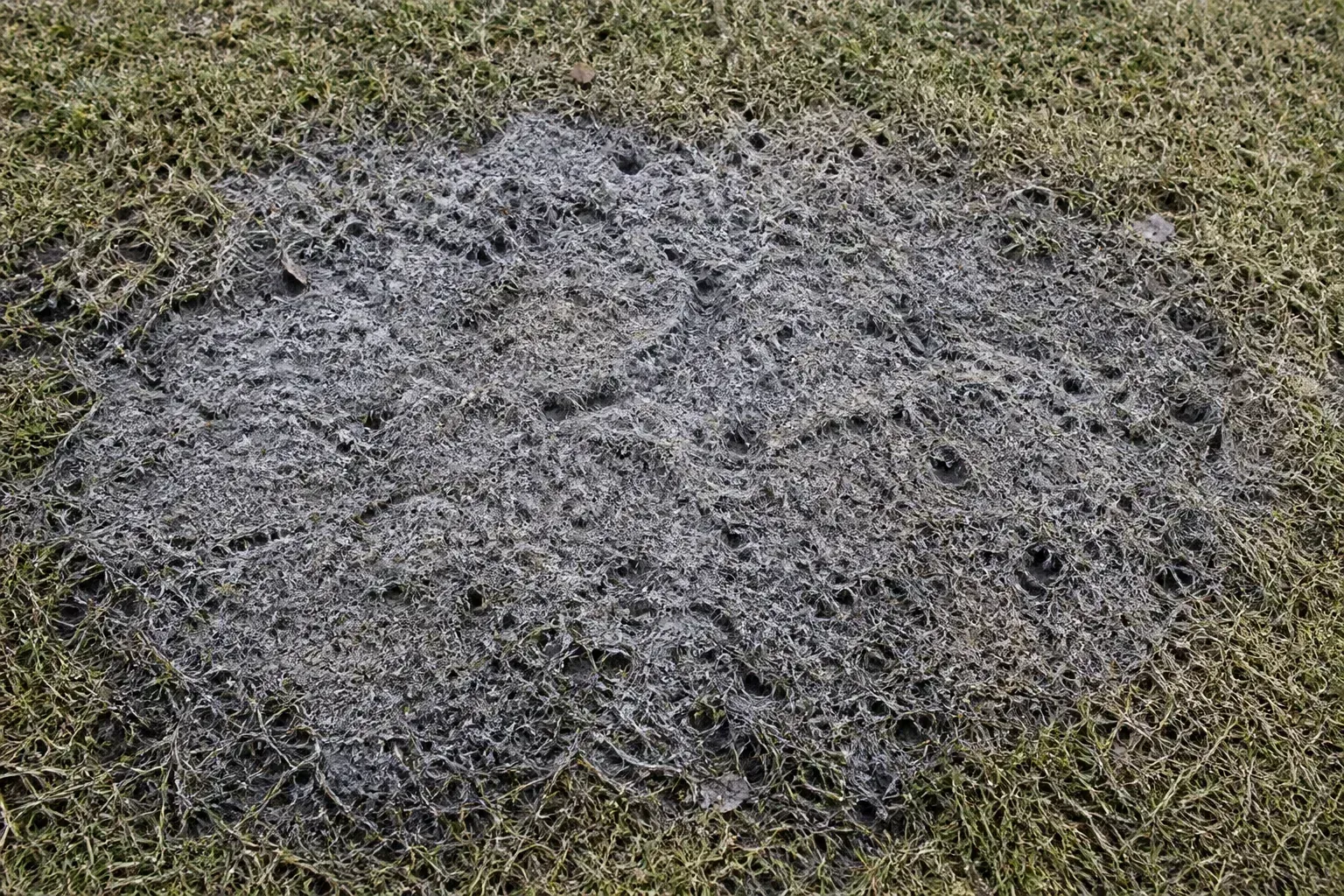
The most important spring step is light raking of crusted, matted patches once the soil has thawed and you can walk without sinking into mud. Raking breaks the mat so air and sun reach crowns and new blades can emerge. Penn State Extension recommends raking diseased areas at snowmelt to break crusted leaves and support recovery.
Do not rake while the ground is frozen or sod is still lifting. Aggressive scraping on frozen turf tears crowns and causes real damage that snow mold itself might have avoided. If you spotted patches in February but soil is still hard, wait. Patience here is active lawn care.
Collect heavy mats and dispose of them if the patch was thick with mycelium. For light gray snow mold on a strong lawn, raking into the lawn may suffice. Milorganite suggests mowing healthy areas first, then affected areas, bagging clippings from infected patches, and rinsing mower decks to limit spore spread. Foot traffic and shoes can move spores too—check soles if you walked through pink patches.
Spread remaining snow piles thinly in sunny areas so they melt faster and do not extend wet cover into spring.
Fertilize Lightly and Overseed True Bare Spots
After raking, a modest spring nitrogen application on affected patches can accelerate green-up. Penn State notes nitrogen on gray snow mold areas enhances recovery. Use the amount your soil test and turf program recommend; this is not the moment for a heavy soluble feast that softens new growth.
Wait to fertilize the rest of the lawn until active growth is consistent if you prefer one synchronized feeding—many homeowners feed patches early and the full yard in late spring.
Overseed only where grass is bare after cleanup—not on every discolored patch. If blades are matted but crowns are alive, seed will not stick well and may compete with recovering plants. Where snow mold (especially pink type) left true bare soil, overseed promptly so weeds do not colonize the gap. Lightly rake seed in, keep moist, and avoid heavy pre-emergent herbicides that block grass seed germination on those spots.
If large areas fail to green by late spring, investigate compaction, grub damage, salt, or dog urine patterns before reseeding the entire yard.
Fall Prevention Checklist for Next Winter
Almost everything that meaningfully reduces snow mold happens before snow sticks. Spring sprays on gray snow mold are largely useless because infection already occurred under snow.
Final Mowing Height and Leaf Cleanup
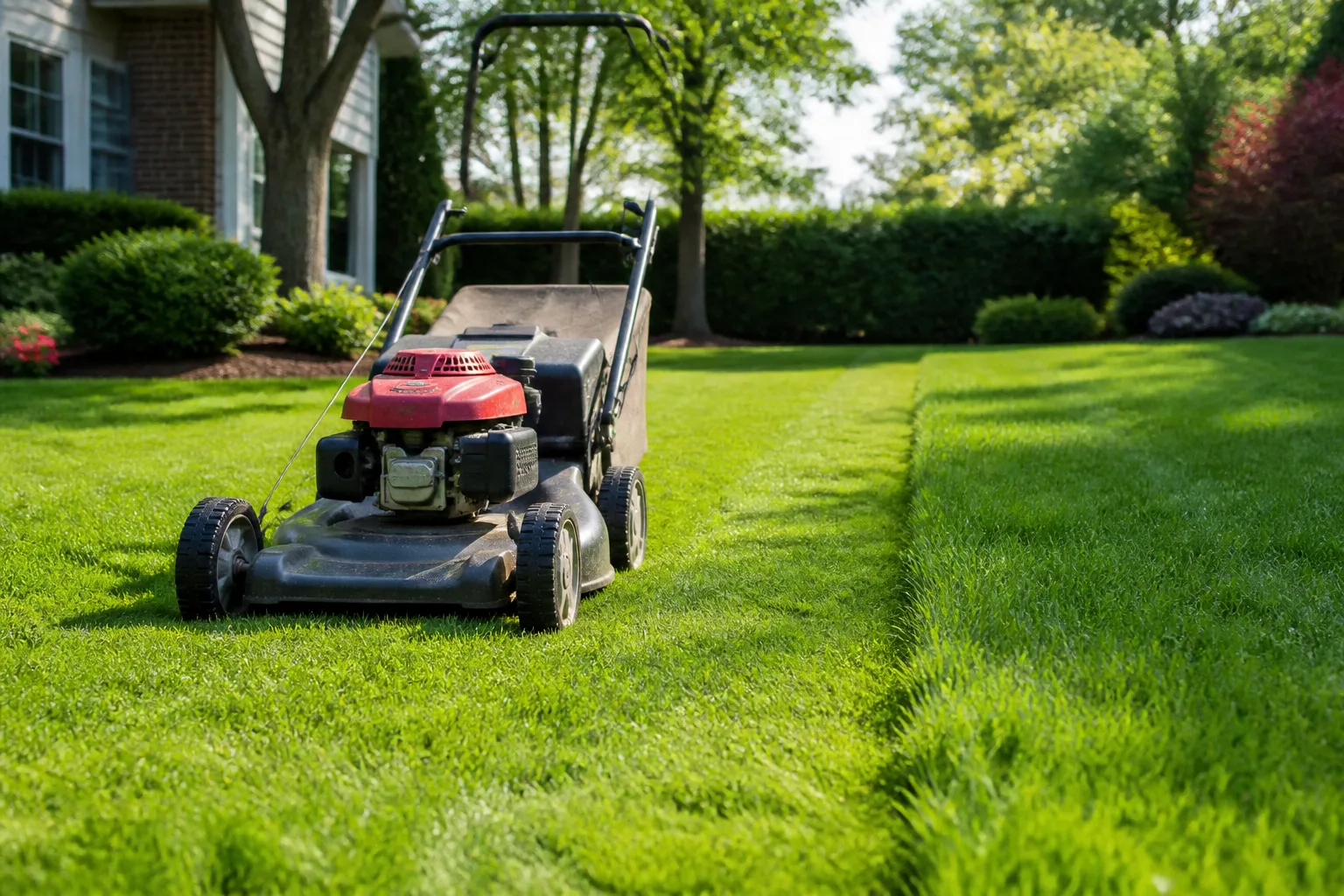
Continue mowing until grass stops growing in fall. For cool-season lawns, a final height around 2 inches reduces matting under snow without scalping so short that winter stress kills crowns. Remove fall leaves as they accumulate so you do not start spring with wet, matted litter under new snow.
Avoid late heavy nitrogen that pushes lush growth into winter. If you apply fall fertilizer, use a slow-release, moderate-nitrogen product aligned with dormant feeding guidance for your region. Soft, nitrogen-rich blades are snow mold bait.
Snow Piles, Drainage, and Thatch Management
When clearing walks and drives, do not create tall, dense snowbanks on turf if you can spread snow elsewhere or melt it in sunny zones off the lawn. The stripe along the driveway is snow mold’s favorite office.
Improve surface drainage: fill low spots that pond, aerate compacted areas in fall, and address thick thatch. Milorganite recommends regular dethatching and aeration, bagging debris from dethatching, and fixing standing water. Thatch management also helps with weeds and summer stress—see overlap with lawn weed control when thin turf follows disease.
Choose less susceptible grass when renovating large areas: Kentucky bluegrass and fine fescues for gray snow mold risk reduction; know that perennial ryegrass-heavy mixes may need more prevention.
When a Preventive Fungicide Makes Sense
For most home lawns, fungicide is optional. Cultural care handles gray snow mold; pink snow mold on established turf often recovers without chemicals.
Consider preventive fungicide in late fall—typically before first lasting snow cover, often late November in northern zones—only if:
- Snow mold hits the same areas every year
- You manage newly seeded cool-season lawn that must survive its first snowy winter
- You maintain high-value turf (some sports fields, showcase lawns) where cosmetic injury is unacceptable
Penn State Extension is explicit: applying fungicide after gray snow mold symptoms appear in spring is of no value. Preventive products must be on the leaf before infection under snow. For pink snow mold, spring fungicide is usually not needed unless cool, wet weather keeps disease active after melt—more common on golf turf than typical home lawns.
Always read the product label for your grass species, timing, and state regulations. Combination preventive programs on high-value turf often use multiple active ingredients; homeowners should not copy golf-course chemistries without professional guidance.
If someone sold you a spring “snow mold spray” after patches appeared, you likely paid for coverage that cannot reach the infection timeline. Redirect that budget toward fall prevention and drainage work.
Conclusion
Snow mold looks alarming at snowmelt, but for most cool-season lawns it is a winter scar, not a death sentence. Gray snow mold usually kills blades under long snow cover while crowns survive; pink snow mold and Microdochium patch demand more respect because they can injure deeper tissue and linger in wet cool weather.
This spring, wait for thaw, rake gently, fertilize lightly on weak patches, and overseed only where grass is truly gone. This fall, mow short enough to avoid matting, skip heavy late nitrogen, keep leaves off the turf, stop piling snow on the lawn, and fix drainage and thatch. Save fungicide for repeat problem yards and new seedings—not for a panic application when you first see tan mats in March.
Mark the worst patches now so you remember where to change snow-shoveling habits and mowing timing before the next winter that stacks snow on your grass for months.