Why Your Lawn Is Still Brown After Watering
Lawn still brown after watering? Learn how to tell dormancy from dead grass, test root-zone moisture, find irrigation gaps, and choose the right fix.
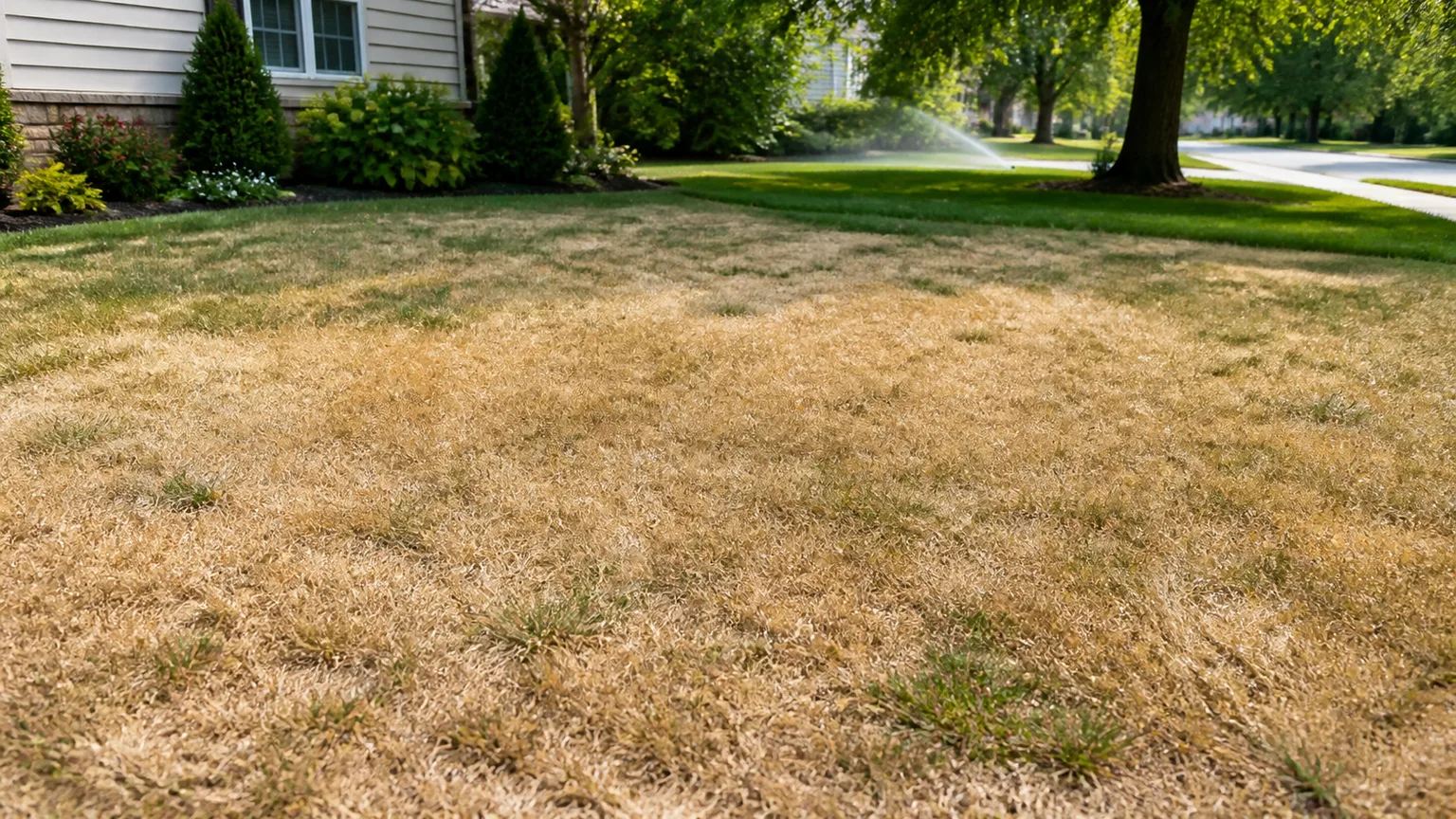
Water is only one part of the green-lawn equation. If your lawn is still brown after watering, the water may not have reached the roots, the grass may be dormant by design, or the brown areas may be suffering from compaction, mowing stress, disease, insects, salt, or another localized problem.
The safest response is not to turn the sprinkler on again immediately. First, read the pattern, test the soil several inches down, and check whether the turf is alive. That short sequence prevents the two most common mistakes: drowning a lawn that is already wet and treating dormant grass as if it were dead.
Start with a 10-minute check before watering again
Look at the brown pattern before treating it
Stand back and note whether the color change is broad and even or sharply localized. A whole lawn that fades during a hot, dry spell points toward seasonal stress or dormancy. A few brown strips beneath a sprinkler, rings that expand outward, or spots beside a driveway point to different problems.
Also compare the brown turf with the greenest part of the yard. Is the brown area in full sun, on a slope, beside pavement, under a tree, on a footpath, or directly beneath a sprinkler? Is the grass brown from the tips down, or are the blades lying flat and gray-green? Those details are more useful than the shade of brown by itself.
Do not diagnose a disease from color alone. Brown grass is a symptom, not a diagnosis, and several unrelated causes can look similar from standing height.
Test moisture at the root zone, not just the surface
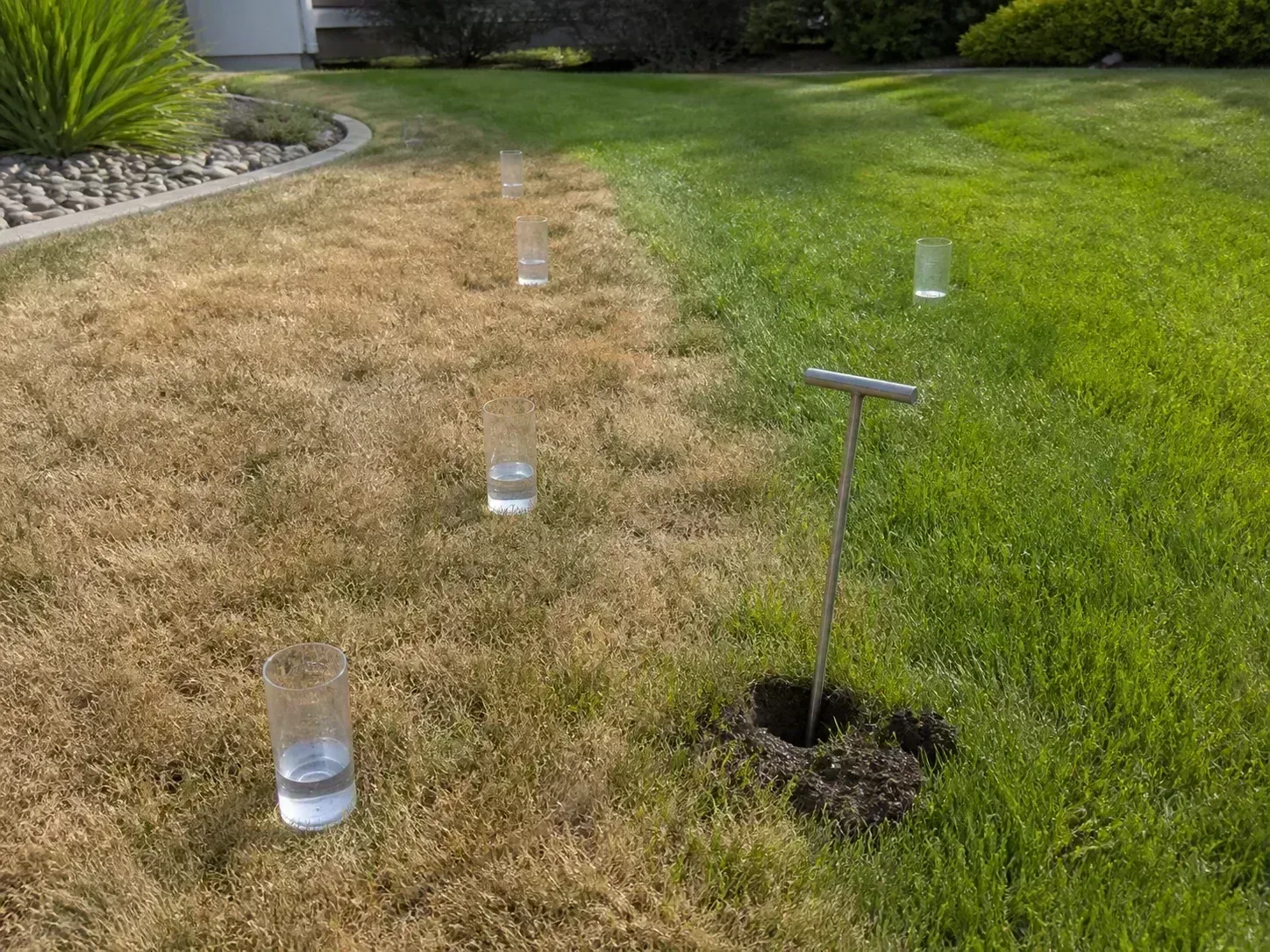
Push a screwdriver, soil probe, or narrow trowel into the turf in both a brown area and a healthy area. Dig or probe to roughly 4 to 6 inches where possible, then feel the soil. A damp surface over dry soil means the watering was too light; wet soil with brown blades means adding water is unlikely to be the first fix.
This is the practical version of the advice from Gardening Know How’s lawn-watering guidance: confirm that the soil needs water before irrigating, because heat can make grass look stressed even while the root zone is still moist. The article also recommends finishing a watering session in stages if runoff starts before the soil is wet to the needed depth.
For a quick distribution test, place several straight-sided cans or rain gauges around the lawn before running the sprinkler. If one can collects twice as much as another, the schedule may be fine for one patch and wrong for the rest. Measure output over a normal cycle rather than guessing by minutes; sprinkler pressure, nozzle type, wind, slope, and soil all change how much water reaches the ground.
Decide whether the grass is dormant or dead
Use turf type, the crown, and a gentle tug test
Dormancy is a survival response. In heat or drought, some grasses stop growing and turn brown while protecting the crown—the small growing point at the soil surface that can produce new blades when conditions improve. Utah State University Extension explains that a dormant lawn can look dead while the crown remains alive, and that more water will not necessarily force heat-stressed turf to green up immediately.
Your grass type changes the odds. Cool-season grasses such as Kentucky bluegrass, perennial ryegrass, and fine or tall fescue usually prefer cooler growing weather and may slow or brown during prolonged summer heat. Warm-season grasses such as bermudagrass, zoysiagrass, St. Augustinegrass, and centipedegrass are built for summer growth but can still brown when drought, poor soil, shade, disease, or root damage overwhelms them. Local climate and the actual cultivar matter, so use the list as a clue rather than a final identification.
Try three gentle checks:
- Look for a pattern. Uniform seasonal browning is more compatible with dormancy than isolated expanding circles or sprinkler-shaped stripes.
- Inspect the crown. Part the blades at the soil line. A firm, pale crown with attached roots is a better sign than loose, black, or decayed tissue.
- Tug a small plug. If the blades and crown resist a light pull, the plant may still be rooted. If the turf lifts easily from the soil, inspect for shallow roots, grubs, severed roots, or a failed patch rather than assuming it needs more water.
Dormant grass may recover when temperature and moisture conditions improve, but recovery is not guaranteed. A lawn weakened by repeated drought, traffic, disease, or poor rooting can have both living dormant turf and genuinely dead patches at the same time. BBC Gardeners’ World Magazine recommends letting an established drought-stressed lawn go brown and adjusting mowing height while it is still actively growing.
The most common causes of brown grass after watering
The cause is often a mismatch between what the lawn received and what its roots needed.
- The water never reached the root zone. A short spray may wet the leaves and top layer while dry soil remains below. Runoff is especially common on slopes, heavy clay, compacted ground, and thick thatch. Colorado State University Extension notes that watering amount depends on soil, grass, weather, and root depth—not a universal number of minutes or days.
- The sprinkler is covering the lawn unevenly. Clogged nozzles, low pressure, wind, blocked heads, and poor overlap create dry arcs or stripes. A plant bed, fence, or tree canopy can also intercept water before it reaches the turf.
- The soil is compacted. Foot traffic, vehicles, construction, and wet mowing squeeze out pore space. Water then runs across the surface or sits near the top instead of moving into the rooting zone. The grass can look thirsty even after a long irrigation cycle.
- Thatch is acting like a sponge or barrier. Thatch is a dense layer of living and dead stems, stolons, and roots above the soil. A thin layer is normal; a thick layer can hold water away from the soil and encourage shallow roots. It is not the same thing as grass clippings, which should generally be left on the lawn when mowing regularly.
- The mower removed too much leaf tissue. Scalping reduces the leaf area that supports the plant and exposes the soil to heat and evaporation. A dull blade shreds the tips, creating a straw-colored cast that can be mistaken for drought. Mowing too frequently is not the issue by itself; removing more than about one-third of the blade at once is the stress event.
- Heat or drought triggered dormancy. Water can keep crowns alive without keeping every blade green. This is particularly common when a cool-season lawn faces weather outside its preferred growth range. Adding fertilizer or daily irrigation will not necessarily override that protective response.
- A disease is active. Fungal diseases favor specific combinations of temperature, humidity, leaf wetness, fertility, and turf type. University of Georgia Extension describes dollar spot as small sunken straw-colored circles and brown or large patch as larger tan or brown rings or patches. Disease is more plausible when patches spread, appear in rings, show lesions on individual blades, or recur in the same conditions.
- Insects are damaging roots or leaves. Grubs can sever roots below the soil; chinch bugs and other sap-feeders injure blades. Overwatering can also produce weak, shallow-rooted turf and conditions that favor some pests. Do not apply an insecticide simply because grass is brown—look for insects, root loss, or a pattern that fits the pest and follow the label.
- The injury is localized and not a watering problem. Dog urine, fertilizer spills, de-icing salts, reflected heat, herbicide drift, tree-root competition, and buried debris can all produce small or edge-related dead areas. Water may help dilute some salt exposure after the source is removed, but it cannot repair tissue that has already died.
Match the brown pattern to the likely cause
| What you see | More likely explanations | First check |
|---|---|---|
| Most of the lawn turns tan during a hot, dry period | Dormancy, whole-yard drought stress, mowing too low | Identify the grass and inspect crowns; test root-zone moisture |
| Brown strips, arcs, or dry spots under a sprinkler system | Uneven coverage, blocked head, low pressure, wind | Run catch cans and compare output across the zone |
| Water beads or runs off while the soil below stays dry | Compaction, heavy clay, slope, thick thatch, hydrophobic dry soil | Probe the soil; watch for runoff and test in several spots |
| Brown circles that expand or merge | Disease, spring dead spot in bermudagrass, sometimes insects | Inspect blades, roots, timing, and whether the center is regrowing |
| Brown areas beside sidewalks, driveways, or roads | Heat reflection, salt, compacted edge soil, overspray or missed spray | Compare soil moisture and inspect for salt or chemical exposure |
| Small isolated yellow-brown spots where pets visit | Urine injury or a separate local stress | Look for repeated pet traffic and a greener ring around the spot |
| Turf lifts easily in pieces | Root damage, grubs, failed sod establishment, severe drought injury | Inspect roots and the soil beneath before watering again |
Patterns guide the next check; they do not replace a diagnosis. If the lawn has multiple patterns, treat it as multiple problems rather than forcing one explanation across the entire yard.
What to do in the next 24 hours
Water only if the soil is genuinely dry
If the root zone is dry, water slowly enough that the soil absorbs it. On compacted or clay soil, use several shorter soak periods with a pause between them. That lets the water move downward instead of washing into the street. If the soil is already damp, skip irrigation and investigate coverage, mowing, disease, or roots.
There is no responsible universal answer to “how many minutes should I water?” Colorado State University Extension’s lawn-care guidance explains that sandy soil may need smaller, more frequent applications, while heavier soil can take a larger application less often; it also recommends watering to the actual root depth and splitting applications when runoff begins. Use a catch can to turn your system’s minutes into a measured depth.
Pause the stress multipliers
Do not fertilize a hot, drought-stressed, or visibly diseased lawn just to make it look greener. Nutrients cannot repair dead crowns, and excess nitrogen can encourage tender growth, worsen some diseases, increase mowing demand, or draw moisture from already dry soil. Lakeville’s lawn-watering guidance warns against fertilizing dry lawns, while UGA Extension advises withholding nitrogen when brown patch or large patch is active.
Raise the mower deck if the lawn is still growing, wait for dry blades, and remove no more than one-third of the height. Sharpen the blade if the cut ends look torn. Keep people and equipment off compacted or waterlogged areas while you gather evidence.
Rebuild an irrigation routine that reaches the roots
Once the immediate test says the lawn is dry, switch from a calendar to a repeatable measurement. Water early in the day when practical, apply enough to wet the active roots, and account for rainfall. Early morning is a useful default because it reduces evaporation while allowing the foliage to dry; local watering restrictions and the specifics of your system still take priority.
For an established lawn, one inch per week is a common starting reference, not a prescription. Lakeville describes deep, infrequent watering as a way to encourage deeper roots, but Colorado State University Extension shows why soil texture and grass type can move the actual amount up or down. A sandy lawn may need smaller applications more often. A clay lawn may need a slower application broken into cycles. A shaded area may need less than an exposed slope, while tree roots may compete with turf for the same water.
Use this setup process:
- Put catch cans in the driest-looking area, the greenest area, and the edges of the sprinkler pattern.
- Run the zone for a known time and measure the depth in each can.
- Clean clogged heads, straighten tilted heads, replace damaged nozzles, and adjust overlap.
- If runoff starts, pause the zone, let the soil absorb the water, and resume later.
- Recheck the soil several inches down the next day. The goal is a moist root zone, not a permanently wet surface.
Avoid watering every day unless you are establishing new seed or sod and following a site-appropriate establishment schedule. Established turf usually benefits more from deeper irrigation with drying time between applications than from repeated surface sprays. Overwatering can produce shallow roots, excess thatch, disease pressure, and pests; Pinellas County’s lawn guidance, produced with University of Florida IFAS Extension, specifically cautions against irrigating a wet lawn.
Repair compaction and thatch at the right time
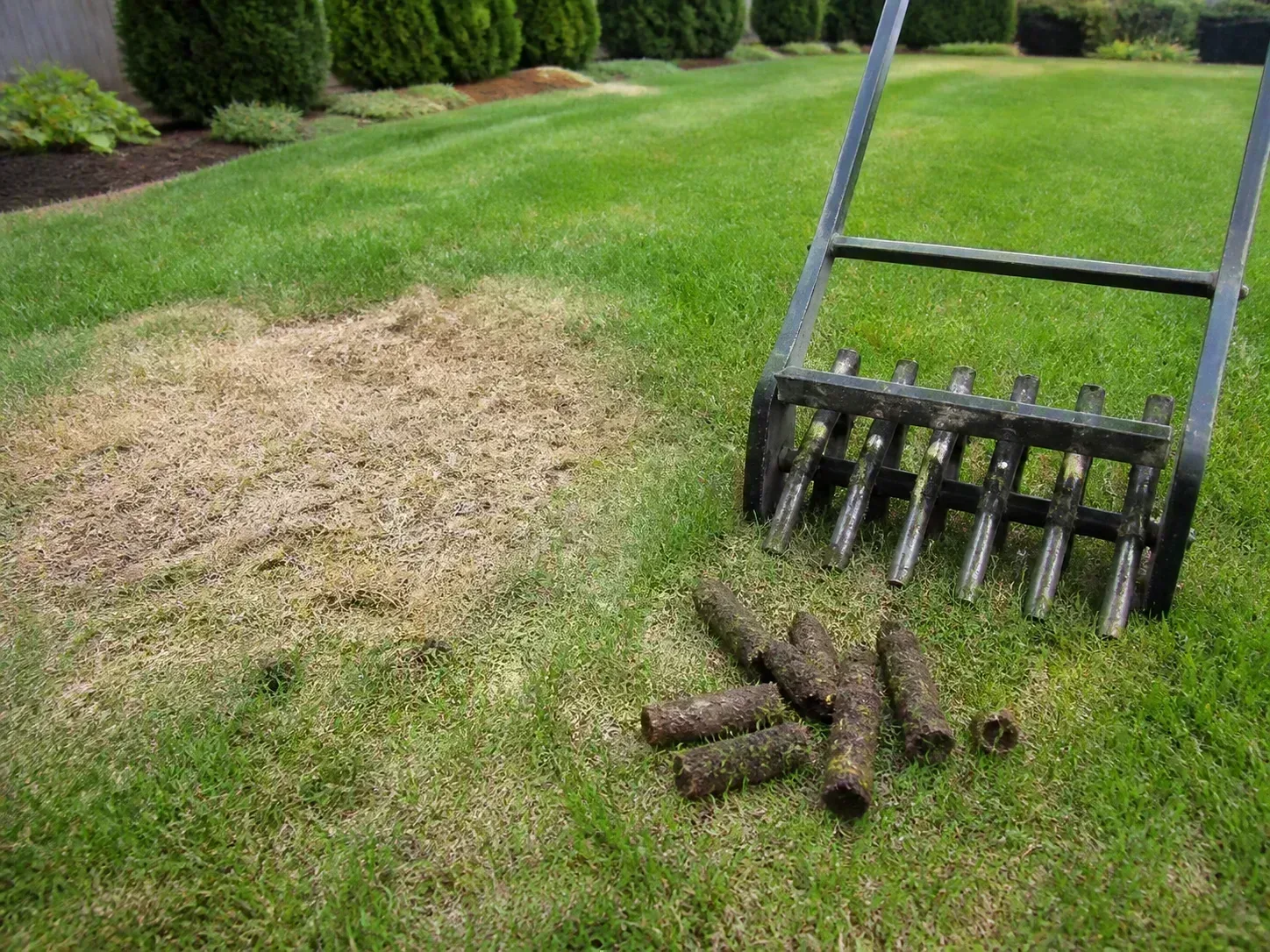
Compaction and thatch are repair jobs, not emergency responses to a brown color. Probe several locations. If a screwdriver stops abruptly in high-traffic soil while it slides farther in nearby turf, compaction is a credible contributor. To check thatch, cut a small wedge of turf and measure the dense brown layer between green crowns and soil; do not confuse loose surface clippings with thatch.
Aerate only when the turf can recover
Core aeration removes plugs of soil and opens pathways for air, water, and roots. Colorado State University Extension identifies core cultivation as especially useful in thatchy or high-traffic areas and describes it as a way to reduce compaction and improve infiltration. It is most useful when the grass is in active growth and the soil is moist enough to form cores—not baked hard, saturated, dormant, or under severe heat stress.
For a cool-season lawn, that often means the cooler active-growth windows in spring or early fall; for warm-season turf, it is typically during active summer growth. Local timing is more important than a fixed calendar. Avoid aggressive power-raking as a reflex: deep dethatching can remove living crowns along with the dead layer. If the thatch is thick, the soil is badly compacted, or the lawn is on a slope, a local extension office or qualified turf professional can help choose core aeration, dethatching, topdressing, or renovation in the right order.
Handle disease, insects, pets, and salt damage carefully
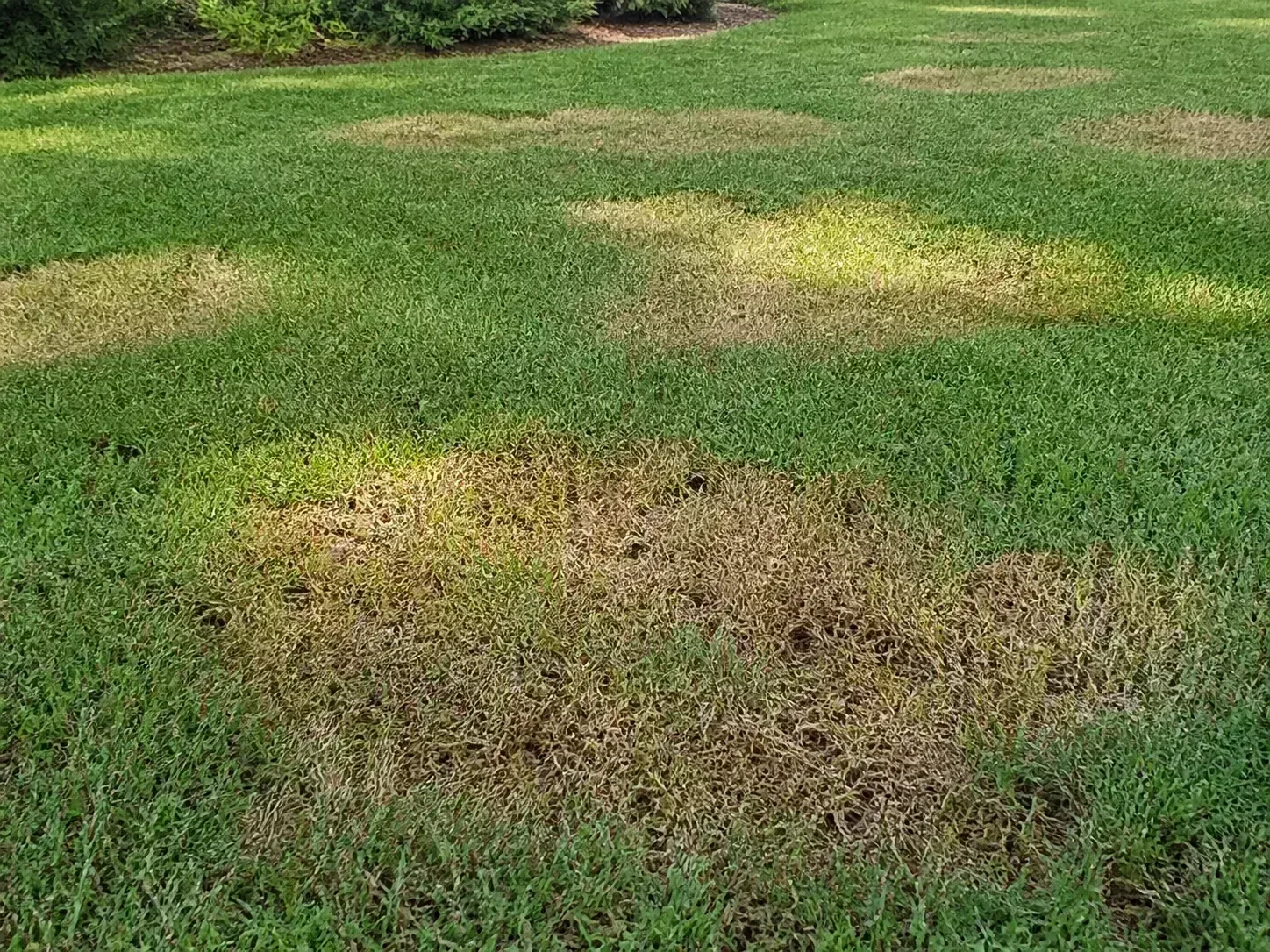
Disease deserves a pattern-and-timing check. Circular or spreading patches after warm, humid nights, prolonged leaf wetness, or excess nitrogen are more suspicious than a uniform dry-season fade. UGA Extension distinguishes cool-season brown patch from warm-season large patch and notes that management may include raising mowing height, reducing leaf wetness, removing excessive thatch, avoiding nitrogen during active disease, and using only labeled fungicide recommendations.
Do not blanket-spray a lawn because one patch looks brown. Fungicides and insecticides work only on particular organisms and timing windows, and unnecessary applications can harm beneficial organisms, waste money, and create runoff. Take clear close-up photos, note the turf type and weather, and submit a sample or description to your county extension service when the pattern keeps spreading.
For insects, inspect the soil and roots rather than relying on a tug test alone. Look for actual grubs, clipped roots, surface insects, or damage that matches the pest’s season. For pet spots, remove or reduce repeated urine exposure and reseed only after the area is no longer being damaged. For salt or fertilizer spills, remove the source and use only the amount of flushing water the soil and local conditions can safely absorb; do not turn a contaminated area into runoff.
Know when to reseed, replace sod, or ask for help
Wait before reseeding a lawn that is uniformly brown during a predictable dormant period. Reseeding into heat, drought, or a still-active disease can waste seed and create a second watering problem. Let the weather moderate, confirm the cause, and choose seed that matches the existing turf, sunlight, soil, and regional growing window.
Reseed or patch when a small area is truly dead but the surrounding lawn is healthy and the cause has been corrected. Replace sod or renovate a larger area when the soil is severely degraded, the grass type is a poor fit, roots are gone across broad sections, or recurring disease and drainage problems make patching temporary. A soil test is more useful than a fertilizer guess when turf fails to respond after moisture and mowing are corrected.
Ask for help when brown circles expand quickly, the lawn repeatedly dies in the same pattern, turf pulls up with widespread root loss, runoff carries soil toward drains, or a pesticide seems necessary. Extension diagnostics can identify local disease and insect patterns, while licensed professionals can evaluate irrigation pressure, drainage, grading, and soil conditions that a homeowner cannot see from the surface.
What not to do to a brown lawn
- Do not water by the clock alone. A 30-minute cycle can be too little for one soil and too much for another.
- Do not water daily just because the color is brown. Check the root zone first.
- Do not fertilize through heat, drought, or active disease to chase color. Correct the stressor before feeding.
- Do not scalp the lawn to remove brown blades. Raise the deck and follow the one-third rule while turf is growing.
- Do not dethatch or aerate dormant, baked, or saturated turf. Schedule disruptive work for active growth.
- Do not assume every ring is fungus or every loose patch is grubs. Inspect before applying a pesticide.
- Do not reseed before fixing sprinkler coverage, compaction, drainage, or repeated pet and salt injury. New seed will inherit the same problem.
Conclusion
If your lawn is still brown after watering, the next step is diagnosis, not more water. Read the pattern, test moisture several inches down, identify the turf and season, and check whether the crowns and roots are alive. Then correct the confirmed cause: measure and rebalance irrigation, raise mowing height, pause fertilizer during stress, and reserve aeration, thatch work, reseeding, or treatment for the right condition and season.
A uniform brown lawn may simply be protecting itself through dormancy. A lawn with dry stripes, wet-but-brown soil, expanding circles, loose turf, or sharply localized damage is asking a different question. Match your response to the evidence, and you will use less water while giving the surviving grass a much better chance to recover.



