Mushrooms in Your Lawn: Causes, Safety, and Removal
Find out why mushrooms grow in lawns, whether they are safe around pets and children, how to remove them, and which lawn fixes reduce repeat flushes.
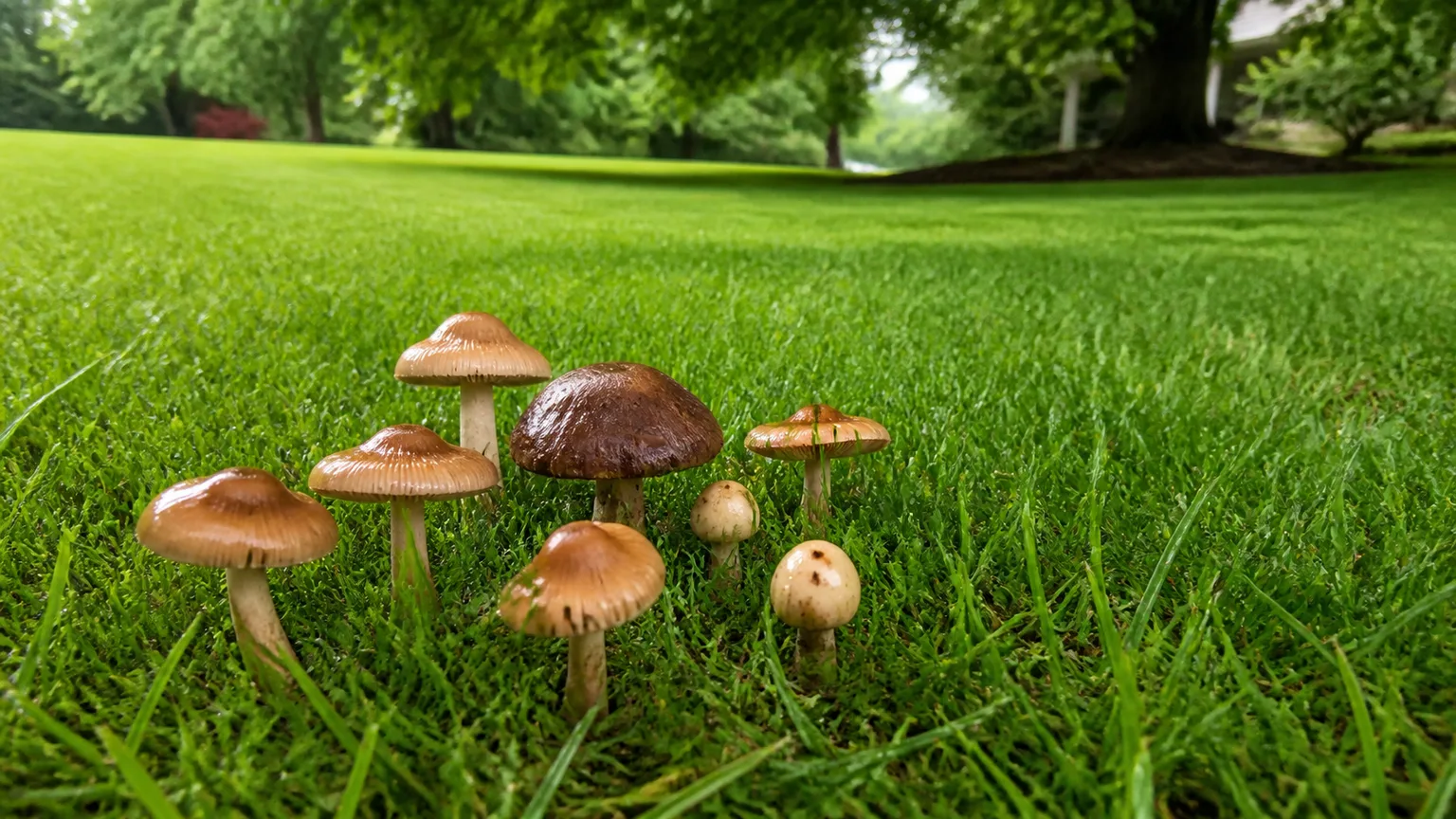
Mushrooms that appear in grass after rain are usually the visible part of a fungus that has been living underground for weeks, months, or years. The flush can look dramatic, but it often means the soil has enough moisture and organic material to support decomposition—not that your turf is being attacked.
The practical answer is conditional: you can usually leave a few scattered mushrooms alone if nobody will eat them and the grass looks fine. Remove them when children or pets use the area, or when the mushrooms are unsightly. Investigate the lawn when they recur in the same wet spot, form a ring, or arrive with brown, thinning, or dead grass.
The Quick Answer: Usually Keep Them, Sometimes Remove Them
Most mushrooms found in lawns are decomposers. They feed on dead material such as thatch, buried wood, old tree roots, and other organic debris, so their presence can indicate active nutrient cycling. UC IPM notes that many lawn fungi are beneficial and usually do not cause a lawn disease, but it also warns that some mushroom species are poisonous and that the visible caps are only the fruiting structures of a larger organism.
Use this quick triage before reaching for a product:
- Leave them for now if the mushrooms are scattered, the turf is healthy, and the lawn is not used by a child or pet who might nibble them.
- Remove them promptly if toddlers, dogs, or cats play there, if the mushrooms are large or numerous, or if you want to prevent visible fruiting bodies from maturing.
- Investigate the site if a ring is expanding, the soil stays wet, water runs off instead of soaking in, or the grass inside the pattern is thinning or dying.
- Ask for an expert identification if someone or a pet may have eaten one, or if you need to know the species rather than simply manage the lawn.
This approach matters because picking a mushroom changes what you see above ground but usually does not remove the underground fungal network. A lawn can look mushroom-free for a few days and then fruit again after the next rain.
Why Mushrooms Appear After Rain
What You See Above Ground Is Only the Fruiting Body
A mushroom is not the whole fungus. It is a temporary fruiting body that produces and releases spores; the main body is a network of thread-like hyphae called mycelium in the soil, thatch, buried roots, or wood. NC State Extension describes the familiar “overnight” effect as fungi responding to changes in temperature, light, and water after the underground organism is already established.
That is why a lawn can seem clear one evening and dotted with caps the next morning. The rain did not create the fungus from nothing. It supplied the moisture that allowed an existing network to produce its reproductive structures.
Moisture, Shade, Organic Matter, and New Sod
The most common triggers are a combination of water plus food. Prolonged rain, overirrigation, poor drainage, low spots, compacted soil, and thick thatch keep the surface damp. Shade slows drying, while a buried stump, dead tree root, old construction lumber, heavy leaf litter, clumped grass clippings, or woody mulch supplies material for decomposer fungi.
New sod can produce a temporary flush too. Establishing turf is often watered frequently, and that moisture can favor common lawn mushrooms; UC IPM says these mushrooms generally do not harm the new lawn and often disappear as irrigation is reduced according to the sod’s establishment needs. Do not reduce watering so sharply that the sod wilts just to stop mushrooms.
Gardening Know How recommends checking three questions before treating the symptom: Is the lawn too wet, is decaying organic matter accumulating, and is the area unusually shady? Those questions are more useful than a calendar because the same mushroom may appear for different reasons in two different yards.
Read the Pattern Before You Act
Scattered Mushrooms Versus Fairy Rings
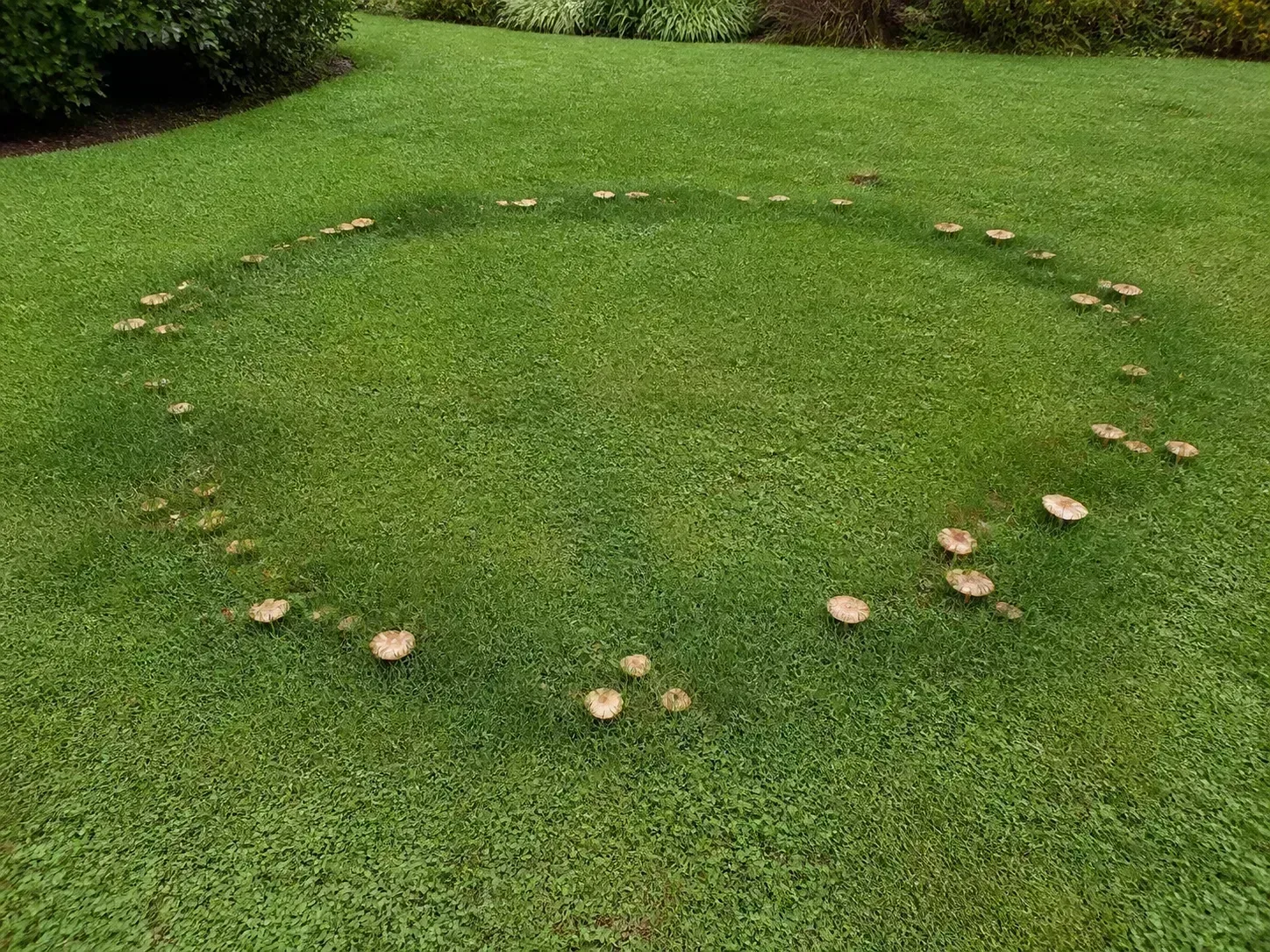
Scattered caps or small irregular clusters usually point to a local food source or a short-lived moisture event. Look near an old stump, a removed tree, a mulched edge, a compost spill, or a patch where clippings collect. If the mushrooms appear in a fairly complete circle or arc, you may be looking at a fairy ring—a growing edge of underground mycelium rather than a random group of caps.
Fairy rings can be visible even when no mushrooms are present. UC IPM reports that the ring may show up as a circular or semicircular band of changed grass and can range from a few feet across to much larger. The ring may enlarge over several years as the fungal colony expands and the older center dies back.
Dark-Green Rings Versus Brown or Bare Rings
A dark-green ring often means the fungus is breaking down organic matter and releasing nutrients that stimulate turf growth along the active edge. That is visually striking, but it does not identify the mushroom or guarantee that the rest of the soil is well-drained.
A brown, thin, or bare ring deserves more attention because dense fungal growth can make soil water-repellent or interfere with water movement. The result is turf that dries out inside the ring even after irrigation. First check whether the grass is actually dead or merely drought-stressed; a screwdriver or trowel can help you compare moisture inside and outside the pattern without disturbing the whole lawn.
Are Lawn Mushrooms a Sign of Healthy Soil?
What Decomposer Fungi Do for a Lawn
In a broad ecological sense, mushrooms can be a good sign. Saprophytic, or decomposer, fungi break down dead plant material and release nutrients back into the soil. Penn State Extension explains that the colorful and unusual fungi seen in lawns and landscapes are saprophytes: they use dead organic matter for food and do not infect living lawn plants.
Fungal threads also contribute to the living soil community. Some fungi form beneficial associations with plant roots, and the broader fungal network helps move through the soil where organic material is available. You do not need to remove every mushroom to have a healthy lawn; tolerating harmless decomposers can be part of a lower-input yard.
Why “Healthy” Does Not Mean Edible or Identified
“Mushrooms can indicate active soil biology” is not the same as “this mushroom is safe to eat.” Many species look alike, a photo may not show the underside or base, and common names vary by region. UC IPM states that there is no simple home test for separating poisonous mushrooms from edible ones, so do not rely on color, smell, a silver spoon, an animal’s behavior, or an identification app as permission to eat a wild mushroom.
The same distinction applies to lawn quality. Mushrooms can occur in rich soil, compacted soil, new sod, a soggy low spot, or above a buried root. Treat them as a clue about conditions, not as a soil test.
Also separate mushrooms from the small, often invisible fungi that cause turf diseases. A mushroom cap usually signals a fungus feeding on dead material, while a spreading patch of leaf spots, lesions, or thinning grass may have a different cause. If the grass is declining beyond the mushroom pattern, take a turf sample or clear photos to your county extension office before choosing a treatment.
Safety Around Children and Pets
Handling and Ingestion Precautions
Unknown lawn mushrooms should be treated as unsafe to ingest. Young children may put a cap in their mouths before you notice it, and dogs may swallow mushrooms quickly while sniffing through wet grass. If children or pets use the lawn, removing visible fruiting bodies before play is a reasonable safety step even when the grass itself is healthy.
Touching a mushroom is generally not the same as eating it. NC State Extension notes that toxic effects require ingestion, although rare skin allergies can occur; wearing gloves, washing hands, and keeping the mushroom away from food are sensible precautions. Do not invite children to handle or collect unidentified mushrooms.
If you suspect a pet has eaten a mushroom, call your veterinarian or the ASPCA Animal Poison Control Center promptly rather than waiting for symptoms. ASPCA warns that signs can include vomiting, diarrhea, drooling, unsteadiness, tremors, or delayed liver toxicity, and recommends immediate veterinary attention when a pet is symptomatic. Take clear photos of the cap, gills, stem, and surrounding lawn, and if you can do so safely, keep a sample away from children and pets for identification.
For a child who may have swallowed a mushroom, contact your local poison center or emergency service and follow its instructions. Do not try to identify the mushroom by tasting it, and do not delay help because the child seems fine.
How to Identify a Lawn Mushroom Without Guessing
You do not need a species name to decide that a mushroom should be removed from a play area. If you do want an identification, document the entire specimen before pulling it: photograph the cap from above, the underside showing gills or pores, the stem, the base where it meets the soil, and the surrounding pattern. Note the date, recent rain, nearby trees or stumps, and whether the mushroom grew alone, in a cluster, or in a ring.
A local university extension office, mycological society, or qualified mycologist is a better final check than a casual visual comparison. NC State Extension recommends contacting a county center or submitting photos and samples through its plant clinic resources when a definitive identification matters. Identification is especially important after a possible ingestion, but it is not required before you safely remove an unknown cap from the lawn.
How to Remove Mushrooms From Grass
Start with the visible fruiting bodies, not a chemical spray. Put on gloves, grasp each mushroom near the soil line, and lift it out carefully; use a small trowel for a stubborn base. Place unknown or pet-accessible mushrooms in a closed bag and put them in the trash where children and animals cannot reach them.
Raking can dislodge small caps, and mowing can knock down a larger flush. Penn State Extension and UC IPM both make the key distinction: removing fruiting bodies does not kill the underground mycelium. Mowing is a visibility and exposure-control step, not a cure, and may scatter pieces or spores if the mushrooms are already mature. If you mow, remove clumped clippings from a play area instead of leaving a concentrated layer over the turf.
Picking does not need to become a daily ritual. The main reasons to remove mushrooms are child and pet safety, appearance, odor from stinkhorns, or a need to stop visible fruiting before the caps mature. If the mushrooms are scattered, nobody will ingest them, and the lawn is otherwise healthy, leaving them to disappear naturally is a defensible choice.
Avoid herbicides: they are designed for plants, not fungi. Also avoid assuming a fungicide will solve a mushroom flush. Penn State Extension and UC IPM both explain that fungicides used for living-plant diseases generally do not control the decomposer fungi producing nuisance mushrooms in lawns.
Fix the Lawn Conditions Behind Repeat Flushes
The best prevention plan follows the likely cause. Do not do every lawn treatment at once; inspect the site and make the smallest correction that matches what you find.
Start with a short observation period instead of guessing from one morning’s flush. After the next irrigation or storm, walk the area the following day: note where water pools, how long the surface stays shiny or spongy, whether the sprinkler reaches the same patch twice, and whether the mushrooms trace a root line or old stump. Push a long screwdriver into the soil in the mushroom patch and an unaffected patch; a sudden change in resistance or moisture can reveal compaction or a shallow wet layer.
Do not confuse “reduce excess moisture” with “let the lawn dry out.” Turf still needs water during heat and drought, and a dry lawn can become thin enough for other problems. The aim is appropriate moisture with time to drain, not a permanently dry surface. Adjust irrigation frequency and coverage, then reassess after the next wet cycle before adding amendments or chemicals.
1. Check irrigation and drainage first. Look for a sprinkler head that overthrows a shady corner, water that pools after rain, a downspout discharging onto the grass, or soil that remains saturated while the rest of the lawn dries. Correct the source, improve the grade or drainage where practical, and water according to the turf’s actual need rather than adding short evening cycles.
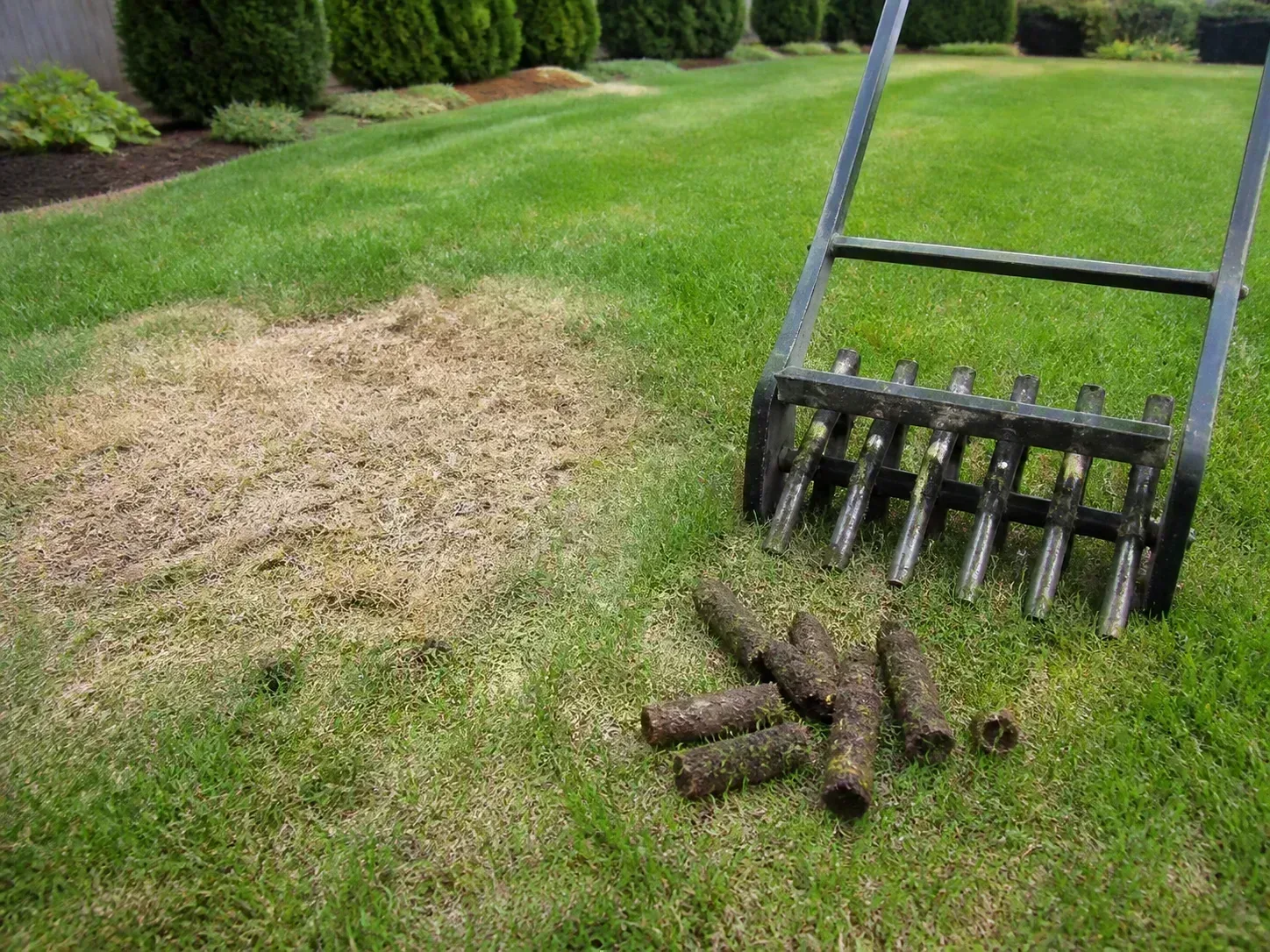
2. Relieve compaction when the grass is actively growing. Compacted soil has fewer air spaces and accepts water poorly. Core aeration can improve infiltration and root growth, but do it when the soil is moist enough to pull cores—not when it is sticky, saturated, or so dry that the machine cannot penetrate. Avoid driving heavy equipment over the lawn after rain, which can create the compaction you are trying to fix.
3. Manage thatch and clippings without stripping the lawn. Rake leaves, remove thick clumps of grass, and measure the thatch layer before dethatching. A light, evenly dispersed layer of clippings can return nutrients; repeated wet mats are different. Dethatch only when the layer is excessive for your turf type and timing, because aggressive dethatching can stress a lawn that is already thin.
4. Look for buried food. Old roots, buried construction scraps, a stump, or wood-heavy mulch can feed mushrooms for years. Remove accessible wood when the excavation will not damage tree roots or utilities. If a tree is declining near a sudden mushroom cluster, ask an arborist to assess the tree rather than digging blindly around its root zone.
5. Treat shade as a clue, not an automatic problem. More sunlight and airflow can help a damp lawn dry, but removing a healthy tree just to stop mushrooms is rarely a proportionate response. Prune selectively if branches block airflow or the turf is failing for several reasons; otherwise, consider whether a shade-tolerant groundcover or a less formal lawn is a better long-term fit.
6. Do not fertilize blindly. A mushroom flush does not prove that grass needs fertilizer, and extra nitrogen can create lush growth that masks a ring without correcting its water movement. Use a soil test or a turf-specific schedule, and avoid applying fertilizer to saturated soil or stressed grass simply because mushrooms appeared.
Gardeningetc reaches the same practical conclusion: surface removal can improve appearance, but aeration and stable soil moisture address the conditions that make fairy rings and other fungal fruiting bodies noticeable. The goal is a resilient lawn that dries and drains appropriately, not sterile soil.
When a Fairy Ring Needs Professional-Level Intervention
Many fairy rings need patience rather than excavation. If the ring is only a band of taller green grass and the turf is growing well, improve watering consistency, monitor the spread, and accept that the pattern may fade or remain as a harmless feature. Surface mushrooms can be picked for appearance, but they are not the part that makes the ring persist.
Escalate when the inside of the ring is brown, bare, hydrophobic, or repeatedly wilting despite adequate irrigation. UC IPM recommends improving water penetration by removing soil cores through the fungal mat, beginning outside the ring and working inward. If the mat is shallow, repeated aeration may be enough; if it is several inches thick or too dense for a core aerator, a soil probe, auger, or shovel may be needed to break up and remove affected soil.
Complete eradication is a major renovation, not a weekend mushroom-picking job. UC IPM describes removing sod and soil to at least one foot deep and extending beyond the ring’s outer edge, then refilling with relatively clean soil and reseeding. That approach can disturb a large area and still may not guarantee success if the fungal network or buried food source extends farther than expected, so consult a local turf professional for a large, recurring, or damaging ring.
If you renovate, keep infested soil out of healthy turf, clean the coring or digging tools before moving to another area, and reseed with a grass type suited to the site. A professional can also help separate a fairy ring from a turf disease, irrigation defect, root problem, or declining tree.
Conclusion
Mushrooms in a lawn are usually a short-lived reproductive display from fungi that are decomposing organic matter below the grass. That makes them ecologically useful, but it does not make an unknown mushroom edible or automatically safe around pets and children.
Leave harmless scattered mushrooms when the lawn is healthy and no one will eat them. Remove visible caps from play areas, correct overwatering and compaction before buying a chemical treatment, and take recurring rings or dead turf seriously. The right response is not to chase every mushroom; it is to read the lawn pattern, protect the people and animals using the space, and fix the condition that keeps bringing the fruiting bodies back.



