7 Low-Allergen Flowering Shrubs for Yards
Choose seven showy shrubs with heavier, insect-carried pollen, then match each to your zone, light, soil, mature size, and fragrance tolerance.
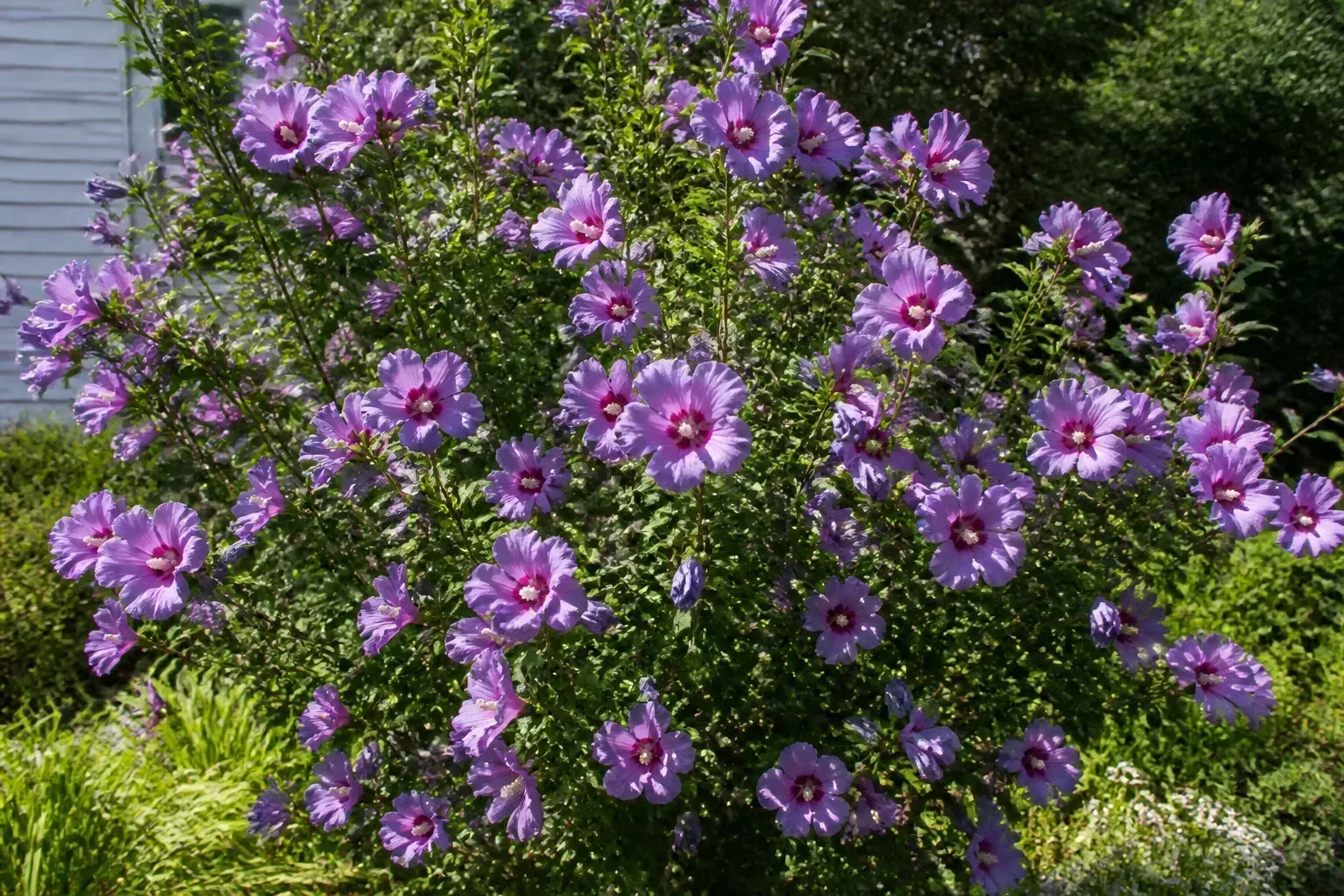
If seasonal pollen makes gardening less enjoyable, start with the plants that put the least fine, airborne pollen directly into your breathing space. Low-allergen flowering shrubs are not guaranteed hypoallergenic plants, but showy shrubs pollinated by insects are generally a better starting point than wind-pollinated grasses, trees, or inconspicuous flowers.
The more useful question is not “Which shrub causes no allergies?” No plant can make that promise for every person. Ask instead: Does this plant release much airborne pollen, and does it fit the site where I want to spend time? The seven shrubs below give you options for cold climates, mild winters, sun, part shade, acidic soil, wildlife value, and fragrant gardens—with the trade-offs clearly stated.
What “low-allergen” really means in a garden
Wind-pollinated vs. insect-pollinated plants
Wind-pollinated plants have to release large quantities of light pollen and depend on air currents to carry it to another flower. University of Maryland Extension explains that hanging catkins and other inconspicuous structures are common clues; oak, birch, hazel, and many grasses are familiar examples. The same article connects seasonal pollen allergies with wind-pollinated plants because their pollen travels beyond the plant that produced it. (Maryland Grows)
Insect-pollinated shrubs advertise with visible flowers, scent, nectar, or color. Their pollen is often heavier or stickier and is moved by bees, butterflies, moths, flies, or hummingbirds instead of being designed to float for miles. That makes these shrubs lower-exposure choices, not risk-free choices. Homes & Gardens similarly recommends looking for showy, insect-pollinated shrubs such as hydrangea, viburnum, camellia, and native azalea while avoiding wind-pollinated sources around living areas. (Homes & Gardens)
Use the flower as a clue, not a diagnosis. Some plants have both showy and less-visible flowers, some cultivars differ, and pollen can still become airborne when flowers are shaken, cut, or handled. Your local trees, lawn, weeds, and neighboring properties may contribute more to your symptoms than a single flowering shrub.
Pollen is not the only possible trigger
Pollen allergy is only one reason a garden can feel uncomfortable. Strong fragrance can cause headache, nausea, or irritation in a sensitive person without being the same thing as an allergic reaction. Damp mulch, wet foliage, and poorly ventilated planting beds can also support mold spores, while sap, thorns, or hairs can cause skin irritation after contact.
That is why garden placement matters. A heavily scented gardenia beside an open bedroom window may be a poor personal choice even though its flower pollen is not designed for wind dispersal. If you have diagnosed asthma or severe seasonal symptoms, use plant selection as one layer of exposure reduction and follow the plan from your clinician rather than treating a garden list as medical advice.
The seven shrubs at a glance
| Shrub | Best fit | Main caution |
|---|---|---|
| Camellia | Mild climates, part shade, acidic soil, evergreen structure | Late pruning removes next season’s buds |
| Oakleaf hydrangea | Cold-to-mild climates, sun or part shade, native-plant beds | Large mature spread and toxic if eaten |
| Smooth azalea | Eastern woodland edges, acidic moist soil, fragrant late-spring flowers | Can become large; root rot and toxicity matter |
| Arrowwood viburnum | Cold climates, sun or part shade, wildlife-friendly hedges | Allow room for its broad mature width |
| American beautyberry | Warm regions, informal borders, berries and birds | Deciduous and often best-looking when planted in groups |
| Rose of Sharon | Hot summers, sunny borders, long summer bloom | Can self-seed or spread in some regions |
| Gardenia | Warm, humid climates or a protected container | Fragrance, cold, and dry soil can be deal-breakers |
These are not interchangeable “easy shrubs.” The acid-loving group—camellia, smooth azalea, and gardenia—needs a different soil strategy from viburnum or Rose of Sharon. Read the site notes before you fall in love with a flower color.
1. Camellia (Camellia japonica)
Camellia is one of the best choices when you want evergreen leaves and flowers outside the usual summer window. Japanese camellia is a woody shrub for USDA Zones 7a–9b, with large flowers ranging from white to pink and red. North Carolina State Extension describes it as a part-shade plant that prefers organic, well-drained, slightly acidic soil around pH 5.5–6.5 and notes that it attracts pollinators. (North Carolina State Extension Plant Toolbox)
Give camellia morning sun or bright filtered light, protection from drying winter wind, and consistent moisture while it establishes. It is slow to settle in, so a spot under open tree cover is often better than a hot foundation bed beside pavement. A mature plant can reach roughly 10 to 13 feet tall and 5 to 10 feet wide, although cultivar size varies widely.
Camellia blooms on old growth. Prune only after flowering, because a late-season haircut can remove the buds that would have opened the following winter or spring. Drought in late summer can also reduce the next season’s display, so do not wait for wilt if the shrub is planted beside thirsty tree roots or a south-facing wall.
2. Oakleaf hydrangea (Hydrangea quercifolia)
Oakleaf hydrangea is a native flowering shrub with three-season interest: upright white flower panicles in summer, oak-shaped leaves, and strong fall color. North Carolina State Extension lists it for Zones 5a–9b, with a typical height of 4 to 8 feet and width of 4 to 10 feet. It tolerates full sun to partial shade when the soil does not dry out, and its flowers are conspicuous enough to bring pollinators into the bed. (North Carolina State Extension Plant Toolbox)
Choose oakleaf hydrangea when you want a shrub that can handle more sun than camellia or azalea and you have room for a broad, informal shape. It is useful near a patio or walkway because the foliage and peeling bark continue to look good after the flowers fade. Give it a wide planting hole, a mulch layer that does not touch the stems, and deep watering during the first growing season.
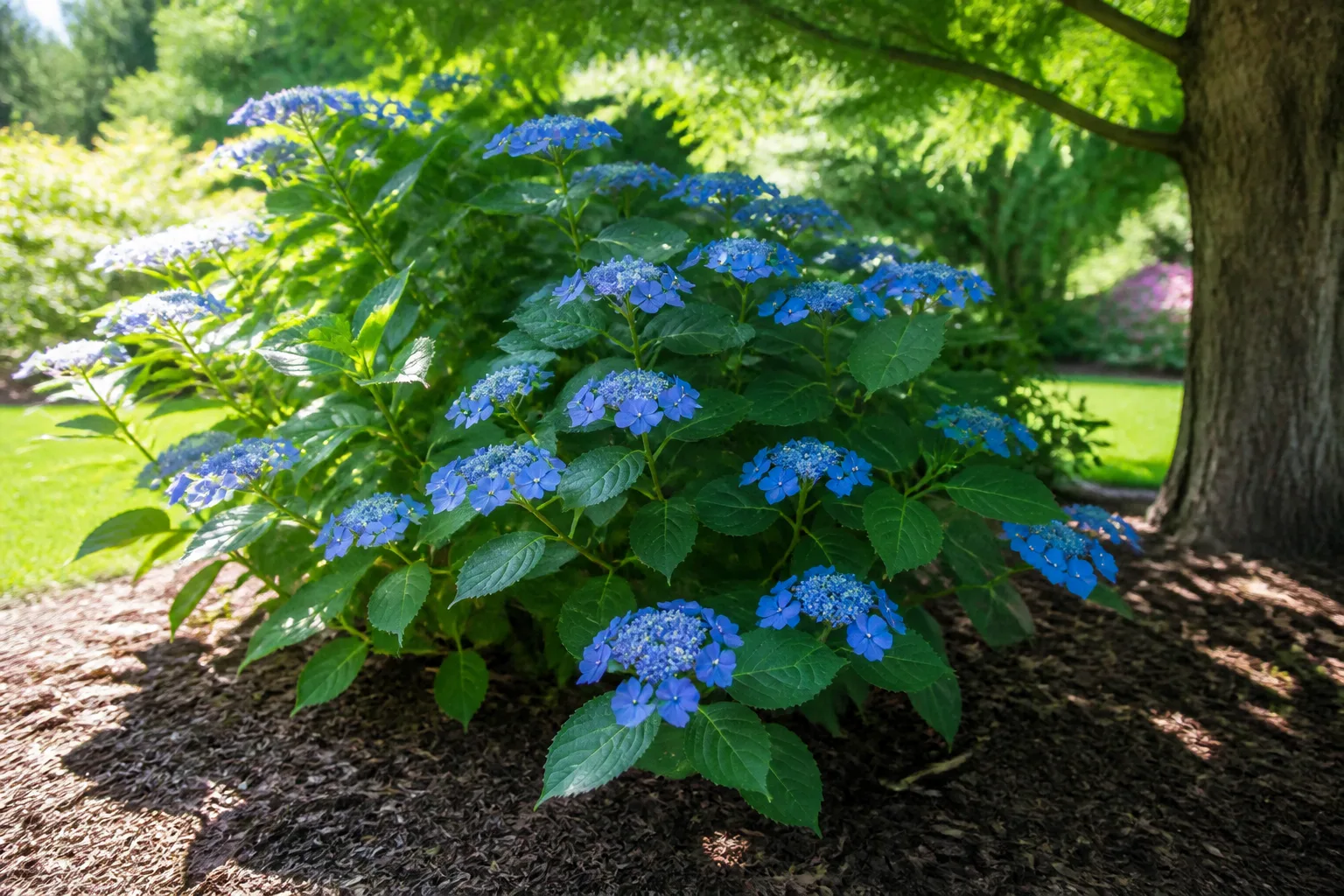
Do not treat “low pollen” as “safe to eat.” North Carolina State Extension flags oakleaf hydrangea as poisonous, so keep children and pets from chewing the leaves, flowers, or stems. The plant’s mature footprint is another practical caution: a nursery specimen can look small for several years before it becomes a substantial shrub.
3. Smooth azalea (Rhododendron arborescens)
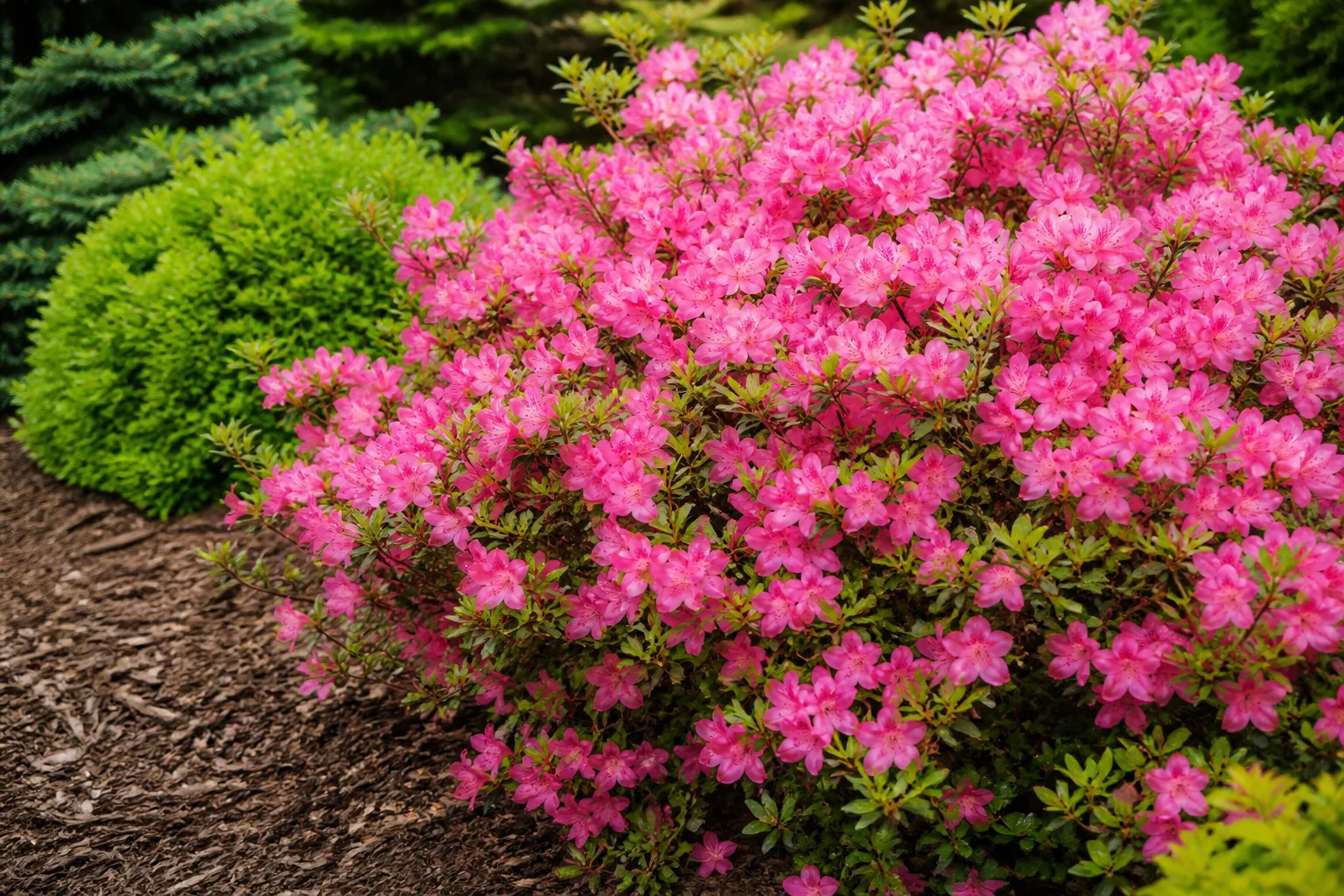
Smooth azalea is a fragrant, deciduous native shrub for a woodland edge or moist acidic border. It is hardy in Zones 4a–7b and can grow about 8 to 20 feet tall and wide, so it is better for a back layer than a narrow foundation bed. Its late-spring to early-summer flowers attract bees, butterflies, and hummingbirds, and the foliage can turn orange, crimson, or purple in fall. (North Carolina State Extension Plant Toolbox)
This is a strong candidate if your soil is naturally acidic and you want a native plant that supports wildlife without relying on wind pollination. It is a poor fit for compact yards unless you find a genuinely smaller cultivar and verify the mature dimensions. Full sun can scorch the foliage in hot locations, while wet, poorly drained soil increases root-rot risk.
Prune azalea immediately after flowering, not in late summer or fall. Rhododendrons and azaleas set next year’s flower buds by mid- to late summer, so late pruning can trade away an entire season of flowers. Treat azalea as poisonous if eaten and do not leave prunings where animals can browse.
4. Arrowwood viburnum (Viburnum dentatum)
Arrowwood viburnum is the most cold-tolerant option in this group, with a listed range of Zones 2a–8b. It is a native deciduous shrub that typically grows 5 to 10 feet tall and 6 to 10 feet wide, with white flower clusters in spring and blue-black fruit that feeds birds later in the year. It accepts full sun to partial shade and a wider range of soil textures than the acid-loving shrubs. (North Carolina State Extension Plant Toolbox)
Choose it for a mixed hedge, wildlife border, or the back of a large bed where a broad shrub will not block a path. The flowers are a useful low-pollen design clue because they are visible and pollinator-facing, but the shrub is not a guarantee for someone who reacts to every plant exposure. If you need fruit, keep in mind that light, moisture, and pollination conditions still control the crop.
Arrowwood viburnum is a better choice than a narrow evergreen hedge when you want seasonal habitat and less shearing. Measure the mature width before planting, remove crossing branches selectively, and avoid turning it into a tight box that traps wet foliage. A little air movement makes both maintenance and symptom tracking easier.
5. American beautyberry (Callicarpa americana)
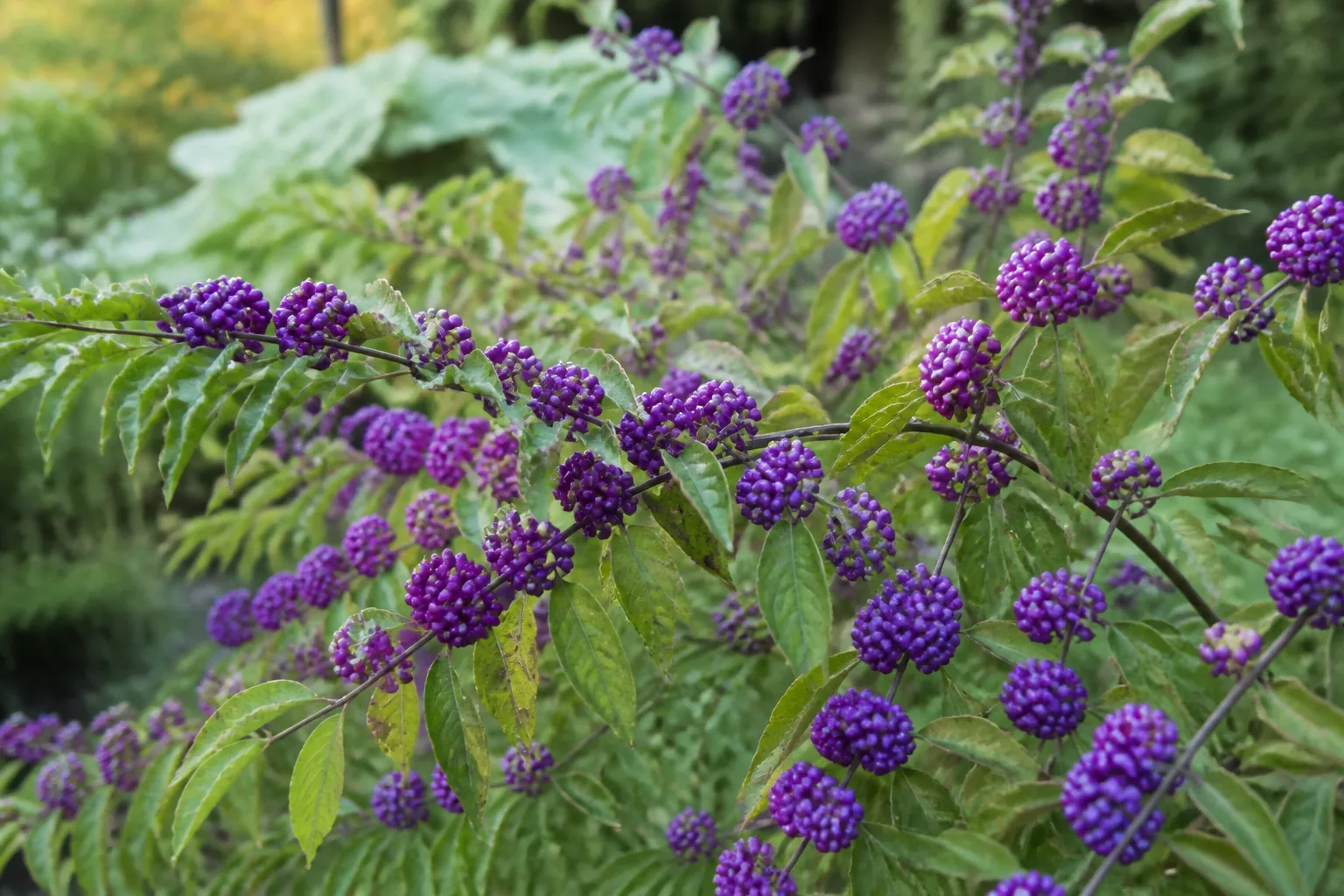
American beautyberry is a native shrub for Zones 6a–10b that earns its place through late-season berries rather than a long flower show. North Carolina State Extension describes a 3- to 8-foot shrub with arching stems, small late-spring or early-summer flowers, and purple berries from roughly August through October. The fruit feeds songbirds and small mammals, and cultivars can offer pink, white, or cream berries. (North Carolina State Extension Plant Toolbox)
Plant beautyberry in full sun to part shade and give it regular moisture while it roots. It tolerates a range of soils when drainage is good, and it is a practical choice for a relaxed native border, rain-garden edge, or informal screen. The shape is naturally loose, so it looks better with room to arc than when forced into a clipped hedge.
Beautyberry flowers are small, but the plant’s overall pollination strategy and wildlife value make it a more sensible lower-pollen choice than a wind-pollinated grass used for the same texture. Prune in late winter if you want a shorter, fuller shrub; because it flowers on new shoots, that timing does not remove the coming season’s flower buds. If birds are the priority, avoid pruning so hard that you remove all the older berry-bearing structure before you have enjoyed it.
6. Rose of Sharon (Hibiscus syriacus)
Rose of Sharon is a large, deciduous shrub for Zones 5a–9b that brings a tropical-looking display to gardens with cold winters. North Carolina State Extension lists a mature size of about 8 to 12 feet tall and 6 to 10 feet wide. It flowers on new growth in summer, attracts butterflies, specialized bees, and hummingbirds, and tolerates heat and a range of soil pH better than camellia, azalea, or gardenia. (North Carolina State Extension Plant Toolbox)
Choose Rose of Sharon when you want a sunny, late-season shrub and can accept its size. Spring pruning encourages new flowering shoots and can increase flower size, which is a useful contrast with the old-wood bloomers in this list. Give it good drainage and do not plant it so close to a window or walk that its eventual height turns the space into a maintenance corridor.
This species is not native to North America, and some forms can self-seed or spread aggressively. Check local invasive-plant guidance before planting, especially if you live near natural areas. A sterile or low-seed cultivar may be a better neighbor, but verify the cultivar’s behavior rather than assuming the label “double flower” solves every problem.
7. Gardenia (Gardenia jasminoides)
Gardenia is the warm-climate choice for gardeners who want an evergreen shrub with intensely fragrant white flowers. North Carolina State Extension lists it for Zones 7b–11b, with a typical mature range of 4 to 8 feet tall and wide. It grows in full sun to partial shade, prefers moisture and organic matter, and is classified as a pollinator plant—but it is also described as high maintenance, so do not choose it solely because a list calls it low allergen. (North Carolina State Extension Plant Toolbox)
Gardenia needs a sheltered, humid site with good drainage and acidic soil. A container can make sense in a marginal climate because you can move a small cultivar away from cold, but containers dry quickly and are not a shortcut around light, soil, or winter-temperature requirements. Scale, whiteflies, and chlorosis are more likely to become recurring issues when the plant is stressed.
The fragrance is the decision point. A person whose symptoms are driven by airborne pollen may find gardenia comfortable, while a person who reacts to strong scent may find it unbearable. Put it downwind of seating, not beside an open bedroom window, and spend time near a flowering plant before committing to several of them.
Match the shrub to your climate and yard
Choose by sun, soil, and mature size
Use this order when choosing: site first, pollen second, flower color third. Begin with the light and drainage the yard already offers. Then test soil pH if you are considering camellia, smooth azalea, or gardenia; repeatedly adding acidifying products to a naturally alkaline bed is a maintenance plan, not a planting solution.
Next, measure the available footprint from the path, fence, window, and neighboring plants. A shrub that grows 8 feet wide needs more than an 8-foot-wide gap because you still need access for pruning and airflow. If you want a small-yard plant, shop by the cultivar’s mature width and not by the current nursery-container size.
Finally, choose the lowest-pollen option that fits. In cold areas, arrowwood viburnum, oakleaf hydrangea, smooth azalea, and Rose of Sharon give you more reliable options than gardenia or camellia. In mild, humid climates, camellia and gardenia add evergreen structure, while beautyberry handles a more informal, wildlife-focused design. The USDA zone on the tag is a starting range, not a promise for a windy, wet, salt-exposed, or heat-reflecting microclimate.
Build a lower-exposure planting area
Put the shrub where you spend time
The most comfortable garden is not necessarily the one with the lowest pollen everywhere. It is the one that reduces the sources closest to your patio, outdoor table, doorway, frequently opened window, and favorite path. Place low-pollen flowering shrubs in those areas, then keep wind-pollinated plants farther from the places where you sit.
Do not create a dense wall that blocks every breeze. Crowded foliage stays damp longer, and damp leaves and mulch can create a different set of irritants. Space shrubs according to their mature width, prune for airflow only when the plant’s bloom timing allows it, and water the root zone instead of repeatedly wetting the canopy.
Reduce pollen from the rest of the yard
Shrubs are only one part of the pollen picture. Keep lawn grasses from flowering by mowing before seedheads form, and avoid letting ornamental grasses mature beside a seating area if grass pollen is a known trigger. Homes & Gardens also recommends replacing high-pollen lawn or grass areas with lower-pollen alternatives where appropriate, but choose any replacement for your climate and maintenance capacity rather than installing a new plant problem.
Look up the trees already on your property. Oak, birch, and some other wind-pollinated trees can contribute far more airborne pollen than a new flowering shrub. If you are adding a tree, ask the nursery whether the species has separate male and female plants and whether a lower-pollen cultivar is available; never assume a “fruitless” or “mess-free” selection is better for pollen.
Garden on lower-pollen days when possible, wear gloves and eye protection for pruning, and change clothes after heavy outdoor exposure if your clinician has recommended that approach. Those habits do not make a plant hypoallergenic, but they can reduce direct contact and keep a single planting decision from carrying the entire burden of symptom management.
Common mistakes with “allergy-friendly” plant lists
The first mistake is treating low allergen as a botanical category. It is an exposure description, and the answer can change with the species, cultivar, bloom stage, local weather, and your own sensitivity. A lower-pollen shrub can still make you miserable if its fragrance, sap, foliage, or nearby mold is your trigger.
The second mistake is using “shrub” loosely. Hollyhock is a herbaceous biennial or perennial, anise hyssop is an herbaceous perennial, and mandevilla is a woody vine that can be trained in a shrub-like shape. Those plants may be useful in an allergy-aware garden, but calling all three shrubs hides their different winter behavior, space needs, and support requirements.
The third mistake is ignoring what happens after bloom. Camellia and azalea need pruning soon after flowering because they set next year’s buds on old wood. Beautyberry flowers on new growth and can be pruned in late winter. Rose of Sharon also blooms on new growth. A shrub that is “not blooming” may simply have been cut at the wrong time.
The last mistake is overlooking safety. Lower airborne pollen does not mean edible, pet-safe, child-safe, thorn-free, or non-irritating. Check the exact species and cultivar, keep toxic plant parts and prunings away from animals, and choose a different plant if the household cannot reliably avoid chewing or handling it.
Conclusion: choose for pollen, then choose for place
The best low-allergen flowering shrub is the one that combines a lower airborne-pollen profile with a site where it can grow without constant stress. Start with camellia for mild, partly shaded acidic beds; oakleaf hydrangea for a broad native shrub with fall color; smooth azalea for an acidic woodland edge; arrowwood viburnum for cold climates and wildlife; beautyberry for warm informal borders; Rose of Sharon for sunny summer flowers; or gardenia when warmth, humidity, and fragrance all suit your household.
Then look beyond the shrub. Mow grasses before they flower, keep wind-pollinated trees away from the spaces where you sit when you can, leave enough room for airflow, and do not make a medical promise from a plant label. A thoughtful site plan can make a yard more comfortable without stripping it of flowers, pollinators, texture, or seasonal interest.



