Liriope Care: How to Grow Lilyturf and Control Spread
Learn liriope care for sun or shade, including watering, pruning, division, bloom tips, varieties, containers, and how to manage rhizome spread.
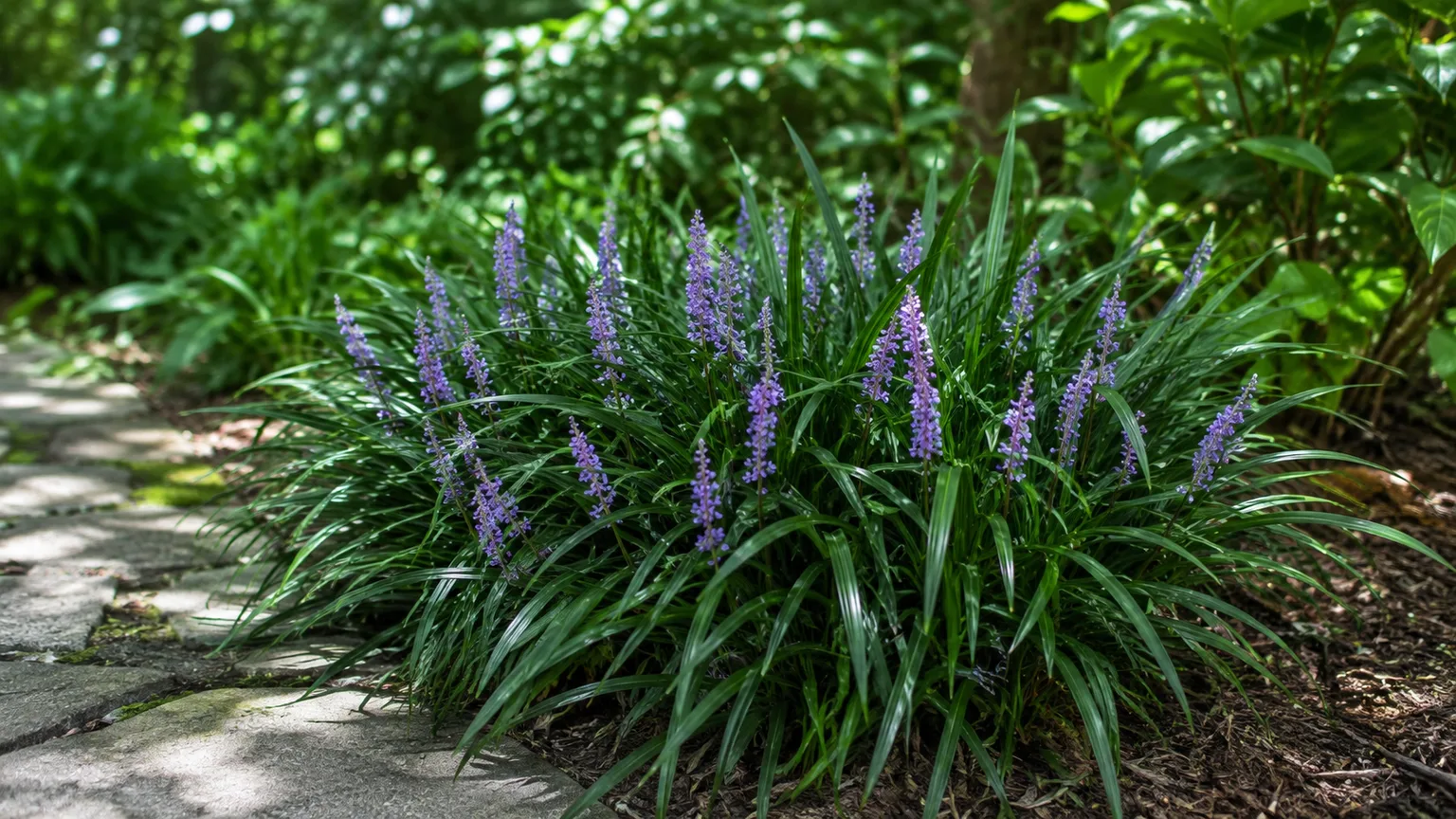
Liriope earns its reputation as a tough border plant honestly: it tolerates shade, handles dry spells after establishment, keeps a neat fountain of strap-like leaves, and sends up lavender or white flower spikes when many garden edges are fading. It is also a plant that rewards correct identification. The clumping form makes a controlled edging; the creeping form can travel through a bed by rhizomes and become difficult to remove.
The best liriope care plan is therefore not a rigid watering calendar. Match the species to the job, give the roots drainage, water consistently while the planting settles, and decide before planting how much spread you are willing to manage. The guidance below covers both common landscape species, plus containers, propagation, pruning, bloom problems, pests, and the yellow-leaf patterns that tell you what to do next.
Is Liriope the Right Plant for Your Site?
Liriope is a grass-like perennial in the asparagus family, Asparagaceae, not a true ornamental grass. A mature clump usually stays low, with narrow leaves arching from the crown and short flower stalks rising above them. It works particularly well along paths, beneath trees, on a bank, or at the front of a mixed border where a uniform green edge is more useful than a tall flowering accent.
Choose it when you need a durable foliage plant for partial shade, a low visual boundary, or erosion help on a slope. Do not choose it simply because a nursery tag says “monkey grass.” That common name is used for more than one plant, and the difference between a clumper and a runner affects your maintenance for years.
The trade-off is simple: liriope fills bare ground because it is persistent. That persistence is an advantage in a contained bed and a liability beside a natural area, a neighbor’s planting, or a lawn you want to keep separate. If the planting would be hard to edge, dig, or monitor, pick a less spreading plant or use a clumping cultivar instead.
How to Identify Liriope Before You Plant
Look for basal leaves that emerge in a fountain from the soil rather than leafy stems. They are linear, usually under an inch wide, and may be dark green or edged with cream or yellow in variegated cultivars. Flower spikes appear above the leaves in summer or late summer, with small flowers arranged along a short upright raceme. Dark blue-black berries can follow the flowers and persist into the cooler months.
NC State Extension describes Liriope muscari as a broadleaf evergreen perennial that forms dense clumps, with leaves and flower spikes that can each reach roughly a foot or more depending on cultivar and conditions. Liriope spicata is usually narrower-leaved and spreads by rhizomes into a mat. Neither should be identified by flowers alone; light, age, and cultivar can change flower color and density. (NC State Extension: Liriope muscari)
The roots are fleshy and rhizomatous. That structure helps a settled plant endure a dry interval, but it also makes constantly wet soil dangerous: a plant can look green above ground while the crown and roots are losing oxygen below it. When buying nursery plants, avoid sour-smelling mix, black mushy roots, or leaves that pull loose from the crown.
Choose Between Liriope muscari and Liriope spicata
Both species can tolerate a surprising range of light and soil, but their growth habits are different enough that they should not be sold as interchangeable.
| Feature | Liriope muscari | Liriope spicata |
|---|---|---|
| Habit | Clumping, with offsets | Creeping, rhizomatous mat |
| Best use | Edging, containers, defined beds | Ground cover and banks where spread is acceptable |
| Foliage | Usually wider and more substantial | Usually narrower and more grass-like |
| Flowers | Often larger and more conspicuous | Usually smaller, paler spikes |
| Control | Divide or lift offsets as needed | Use hardscape, edging, or a container-like boundary |
Liriope muscari for Clumping Borders
Choose L. muscari when you want a line of distinct tufts that gradually knit together without immediately racing across the bed. It is the better default for a front walkway, foundation border, or mixed perennial bed where you need to preserve space for neighboring plants. Cultivars such as ‘Majestic,’ ‘Evergreen Giant,’ ‘Monroe’s White,’ and variegated forms differ in leaf width, height, and flower color, so read the nursery label rather than assuming every lilyturf will look the same.
Most forms prefer partial shade but can grow in more sun if water is adequate and the soil drains. UF/IFAS notes that many lilyturf varieties prefer shade while ‘Evergreen Giant’ performs better in full sun than it does in heavy shade. (UF/IFAS lilyturf pest and plant guide)
Liriope spicata for Fast Ground Cover
Choose L. spicata for a slope, a broad difficult-to-mow space, or a bed where a spreading mat is the point. Its rhizomes help it cover ground quickly, but the same trait lets it cross an informal boundary. NC State Extension specifically describes it as an aggressive or weedy spreader and recommends considering alternatives where it may move into other beds or natural areas. (NC State Extension: Liriope spicata)
Local status matters. The University of Georgia’s Invasive Plant Atlas records L. spicata as an exotic species and lists multiple regional invasive-plant sources, while NC State flags it as invasive in Georgia and Tennessee. That does not mean every planting is prohibited or equally risky, but it does mean you should check your state or county list before buying, especially if your yard borders woods, a stream, or unmanaged land. (University of Georgia Invasive Plant Atlas)
Pick Light and Location by Growth Goal
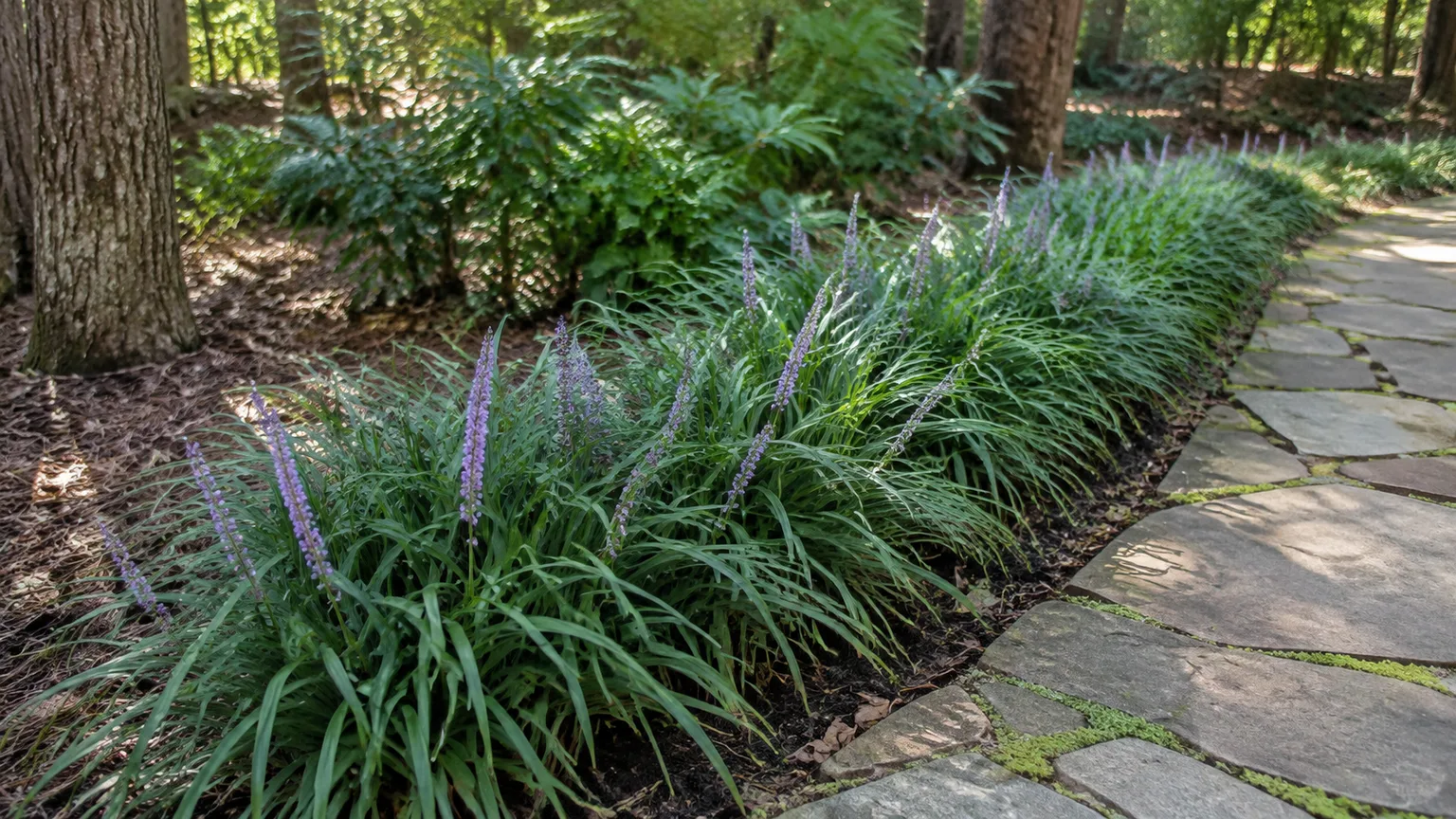
Partial shade is the safest starting point. A site with bright filtered light or morning sun and afternoon shade usually produces dense leaves and dependable growth. Full sun can work, especially in climates with adequate moisture and for tolerant cultivars, but plants exposed to hot reflected light may need more irrigation and can develop bleached or tan foliage.
Deep shade is a survival setting, not an ideal one. Liriope may remain alive under a dense tree canopy, yet growth can be sparse, flower spikes fewer, and clumps slower to close. If the bed is dark for most of the day, choose a cultivar known to tolerate heavy shade, thin a little competing canopy if appropriate, and lower your expectation for bloom.
Before planting, watch the site after rain. A low pocket that stays shiny or muddy is a poor match even if the light is perfect. Conversely, a shallow-rooted tree bed can dry quickly because tree roots intercept rainfall. Liriope may handle that competition after it is established, but divisions and new nursery plants still need a deliberate first-season watering plan.
Prepare Soil That Drains but Does Not Dry Out Immediately
Aim for soil that accepts water readily and then drains excess water away from the crown. Liriope tolerates clay, loam, and sandy soil when drainage is reasonable; it does not require a special “grass soil.” In compacted clay, improve the planting zone with organic matter and create a slight raised mound or bed rather than digging a deep pocket of rich soil that can collect water.
Do not bury the crown to compensate for poor soil. A deep hole filled with loose potting mix can act like a bowl in surrounding clay. If water sits after a normal rain, solve the drainage problem with grading, a raised bed, a different location, or a different plant. UF/IFAS connects root rot with excess moisture, poor drainage, planting too deeply, and poor water management. (UF/IFAS lilyturf disease guidance)
After planting, apply a light layer of shredded leaves or bark mulch. Keep it off the crown and do not build a wet volcano around the leaves. Mulch is most useful while young plants are spaced apart: it reduces weed competition and slows evaporation without asking the roots to sit in saturated organic material.
Plant Liriope for a Full, Healthy Stand
Plant nursery liriope in spring or early fall when the soil is workable and the weather is not at an extreme. In hot regions, early fall often offers warm soil for root growth with less leaf stress; in cold regions, allow enough time before the ground freezes for new roots to anchor. Water the plant in its pot before planting so the root ball does not shed dry mix at the first irrigation.
Set the crown at the same height it occupied in the container. Tease circling roots only enough to encourage outward contact, then backfill with the native soil you removed. Press gently to close large air pockets and water slowly until the root zone is wet. The goal is firm contact, not a compacted planting hole.
Spacing depends on how quickly you want the bed to close and whether the plants are clumping or creeping. About 12 inches on center makes a relatively quick border; 12 to 15 inches gives creeping lilyturf room to knit without forcing every plant into competition immediately. Wider spacing costs less at purchase but leaves more room for weeds during the first seasons. Measure from crown center to crown center, not from leaf edge to leaf edge.
If you are planting beside a lawn or paving, choose the boundary before the roots reach it. A crisp hardscape edge is easier to monitor than an invisible line in mulch. For L. spicata, consider a substantial root barrier or an enclosed bed; NC State Extension describes an edging barrier about 18 inches deep as one way to limit rhizome travel. The barrier is a management aid, not permission to plant a known spreader anywhere without checking local guidance.
Water Liriope Through Establishment and Drought
Water new plants deeply enough to wet the full root ball, then let the surface begin to dry before watering again. Check with a finger or hand trowel a few inches down rather than watering because it is a particular weekday. New plants beside trees, under an overhang, or in full sun may need checking more often than a shaded bed exposed to rain.
The first growing season is the critical period. A newly divided clump has fewer roots than the parent plant and can wilt before it has rebuilt its underground network. Savvy Gardening recommends keeping creeping lilyturf well watered through its first two seasons, then treating it as drought resilient once established. (Savvy Gardening: Creeping Lilyturf)
Established liriope can tolerate a longer dry interval, but drought tolerance is not a request for neglect. Water when leaves lose their normal firmness, when soil is dry well below the surface, or when a prolonged hot, dry spell is underway. Soak the root zone slowly and direct the stream at the soil. Frequent shallow sprinkles encourage surface roots and keep foliage wet, a combination that increases stress and disease risk.
Fertilize Lightly and Let the Roots Do the Work
Liriope usually needs less fertilizer than gardeners expect. Start with a soil test if the planting is pale, slow, or repeatedly underperforms; yellow leaves alone do not prove a nutrient deficiency. A thin compost top-dressing or a labeled slow-release ornamental fertilizer in early spring is generally enough for an established bed.
Avoid high-nitrogen feeding when your real goal is flowers or controlled spread. Extra nitrogen can push soft, leafy growth, encourage a patch to expand faster, and fail to correct wet roots, deep shade, or a damaged crown. Never pile granular fertilizer into the crown or apply it to dry soil. Water according to the product label and keep fertilizer off nearby pavement and waterways.
Prune and Cut Back Liriope at the Right Time
The main cleanup window is late winter or very early spring, before fresh shoots rise through last year’s leaves. In cold climates, foliage may turn bronze or brown and protect the crown during winter; removing it too early exposes new growth to weather and leaves the bed bare. In warmer climates, liriope can remain evergreen, so selective removal of damaged blades may look better than a full shearing.
For a large bed, set a mower high enough to avoid scraping the crown, or use a sharp trimmer and collect the debris. Gardening Know How and Savvy Gardening both describe late-winter or early-spring mowing as a way to refresh old foliage before new growth. (Gardening Know How: Liriope border care)
Do not cut into active new shoots. If the plant has already begun its spring flush, remove only individual brown leaves and old stalks. After flowering, you can leave the blue-black berries for winter interest or remove spent stalks if you want to limit reseeding and keep the edge visually tidy. Pruning does not stop rhizomes from spreading; it only refreshes the top growth.
Propagate Liriope by Division
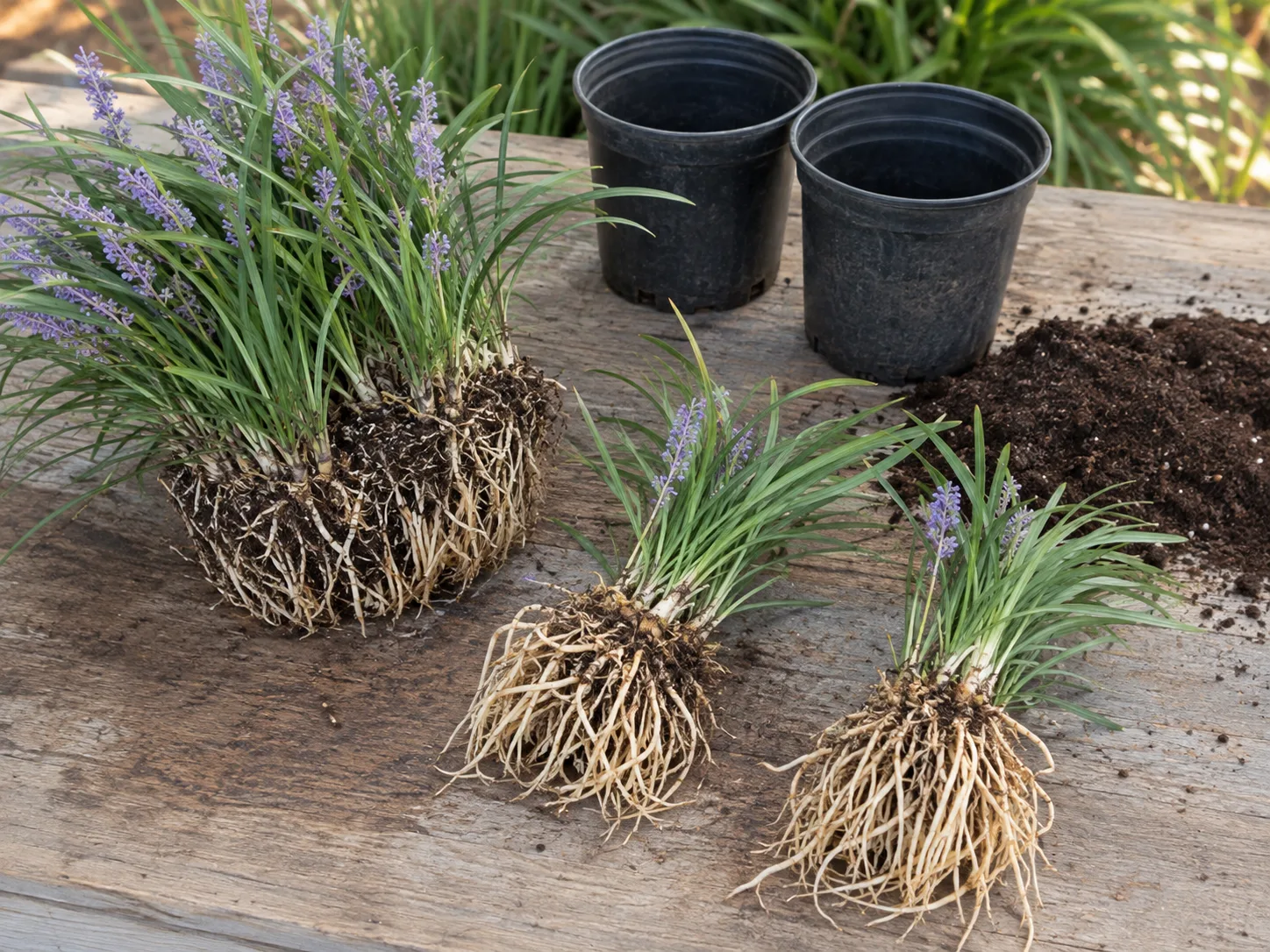
Division is the fastest and most predictable way to make more liriope or reduce a crowded patch. Divide in early spring as growth resumes or in early fall when heat stress is easing. Avoid dividing a plant that is already drought-stressed, flowering heavily, or sitting in waterlogged soil; fix the condition first.
- Water the parent clump a day before digging so the soil holds together without being muddy.
- Dig around the outside of the clump and lift as much of the root mass as practical.
- Separate the clump into sections with a clean knife or spade, keeping several shoots and healthy roots with each division.
- Replant immediately at the original crown depth, with roots spread into fresh, draining soil.
- Water thoroughly, add light mulch, and keep the divisions evenly moist while new roots form.
The crown should sit at the soil surface, not below it. A buried crown stays wet and can rot; an exposed root ball dries quickly. Discard black, mushy, foul-smelling tissue rather than propagating it. UF/IFAS notes that disease can move through infected rootstock, soil, containers, and division wounds, so start with clean material and sanitize tools between suspect plants. (UF/IFAS propagation and disease guidance)
Division is also the most practical spread-control method for a clumping border. Lift offsets that have moved beyond the desired line and pot them, share them where appropriate, or discard them responsibly. Do not dump unwanted rhizomes in a vacant lot or compost pile that does not reach temperatures sufficient to kill living plant material.
Grow Liriope from Seed When You Want More Variation
Seed is possible but slower and less uniform than division. Allow selected flower stalks to form berries, then collect mature dark fruits. Clean away the fleshy pulp before sowing; it can inhibit germination and can mold in a seed tray. Because seedlings may vary from the parent, seed is more useful for experimentation or breeding than for reproducing a named cultivar exactly.
Sow cleaned seed shallowly in a sterile, well-drained mix and keep it evenly moist, never saturated. Provide steady warmth and bright indirect light, then transplant seedlings only after they have a useful root system and the weather is suitable. Label the pot with the date and parent plant. If you need a predictable border with a known height, leaf pattern, or flower color, buy a named plant or divide a healthy one instead.
Grow Liriope in Containers
A container is a good way to enjoy liriope where spreading roots would be a concern. Choose a pot with a drainage hole and enough width for the crown to expand; a pot only slightly larger than the root ball is easier to manage than a huge container that stays wet for days. Use a quality all-purpose potting mix amended for drainage, not dense garden soil packed into a decorative pot.
Container liriope dries faster than an in-ground planting in wind and full sun, yet the same pot can remain wet in a cool, shaded week. Check the mix with your finger and lift the pot when possible to learn how its weight changes. Water until excess runs from the hole, then empty the saucer. Do not leave the root crown standing in runoff.
Repot or divide when roots circle densely, drainage slows, or the plant has filled the container with offsets. Move up only one pot size if the goal is continued growth. If you are using L. spicata in a pot as a containment strategy, inspect drainage holes and the ground below them; rhizomes escaping through a pot can still root into soil.
Troubleshoot Yellow, Brown, or Sparse Foliage
Start with the pattern, then inspect the root zone. One old lower leaf turning yellow while the rest of the plant grows normally is less alarming than new leaves yellowing across an entire patch. A wet crown, collapsed base, or leaf that pulls free easily points toward rot; a dry, tan margin on the sunny side points toward water stress or sun exposure; a sparse clump under dense canopy points toward inadequate light or root competition.
Use this quick triage:
- Yellow leaves plus wet, soft bases: stop routine irrigation, improve drainage, and inspect the crown and roots. Remove severely rotted plants rather than spreading infected tissue.
- Brown tips with green, firm bases: check drought, salt buildup, reflected heat, and old foliage before reaching for fungicide. Water deeply when needed and remove only damaged blades.
- Bleached yellow-tan leaves on the exposed side: reduce reflected or direct heat and check whether the cultivar is suited to that light.
- Thin growth in deep shade: improve light if practical or accept slower growth; heavy fertilizer will not replace photons.
- Small yellow spots with scale insects underneath: isolate potted plants, physically remove pests where practical, and use only a product labeled for the plant and pest.
Root rot often starts below the soil line. UF/IFAS describes leaf and crown rot as yellowing that begins near a rotted base, while lower-leaf decline from root rots can progress upward as the root system decays. When symptoms are widespread, dig one plant and inspect rather than treating the whole bed blindly. (UF/IFAS lilyturf diagnosis)
Manage Pests and Diseases Without Guesswork
Slugs and snails may chew irregular holes in shaded outdoor foliage, especially where mulch stays damp. First remove hiding places such as boards, dense debris, and wet leaf piles; water at soil level and in the morning so the surface dries. If damage is substantial, use a slug-control product according to its label and keep pellets away from children and pets. A few scars do not justify spraying an otherwise healthy bed.
Scale insects are more likely to trouble stressed or protected plantings. Look along leaf undersides and in tight crown crevices for shell-like bumps, yellow stippling, or sticky residue and sooty mold. Do not assume every bump is alive: test a sample carefully, because dead scale covers can remain attached. If treatment is warranted, match the product to the crop and pest, follow the label, and avoid spraying in heat or when beneficial insects are active.
Foliar diseases such as anthracnose are favored by wet leaves and poor air movement. UF/IFAS notes that several hours of leaf wetness can allow anthracnose spores to germinate, and recommends avoiding overhead irrigation and reducing the amount of infected debris. Water the soil, thin dead material, and disinfect tools after cutting diseased plants. Do not move wet clippings through a healthy bed.
Southern blight, crown rot, root rots, and nematode problems require more caution than a cosmetic leaf spot. A plant that wilts with a soft brown stem base, white fungal growth at the soil line, foul roots, or a rapidly declining crown should be removed with surrounding soil where feasible. Fungicides rarely reverse a root system that is already badly decayed, and products differ by disease, crop, and jurisdiction. Cultural correction and sanitation are the safe first steps; chemical treatment belongs to a product label or local extension recommendation.
Help Liriope Bloom More Reliably
Liriope commonly flowers from summer into early fall, with timing shaped by species, cultivar, latitude, temperature, and the previous winter. L. muscari often has showier spikes than L. spicata, but even a healthy clump may flower lightly in its first season after planting or division.
If a mature plant is not blooming, check light first. Deep shade can support foliage while suppressing flower production. Next check moisture: drought during bud formation, or a waterlogged root zone that cannot function normally, can both reduce bloom. Excess nitrogen is another common mismatch; it creates leaves when you want reproductive growth.
Late-winter cleanup can improve the appearance of the next flush, but mowing is not a bloom switch. Set the mower high, avoid the crown, and do the work before new shoots emerge. If the plant is healthy but the flowers are still sparse, evaluate cultivar expectations and site light before adding more fertilizer. A variegated or very shaded plant may be prized for foliage rather than flower quantity.
Overwinter Liriope and Plan the Next Season
In mild climates, liriope may remain green through winter. In colder locations, it can become semi-evergreen or go dormant, with foliage turning bronze and then brown. Hardiness varies by species, cultivar, exposure, snow cover, and drainage, so use local extension guidance and the plant label rather than treating a zone number as a guarantee.
Leave healthy winter foliage in place until the late-winter cleanup window. During an unusual cold snap, a loose layer of leaves can buffer a young planting, but remove thick, wet cover when the weather moderates. Do not mound wet mulch over the crown. In spring, check for winter injury, then cut or comb away old foliage before new growth is tall enough to be damaged.
Use the season change to make one management decision: did the patch fill its intended footprint, or did it cross the line? Lift and divide clumps that need thinning, reinforce a boundary before L. spicata advances, and replace a failing plant only after you know whether drainage, shade, or disease caused the failure. A short inspection each spring is what keeps a “low-maintenance” ground cover from becoming a long-removal project.
Conclusion
Successful liriope care starts before the shovel: choose clumping Liriope muscari for a controlled border or reserve creeping L. spicata for a site where fast rhizomatous coverage can be contained and monitored. Give either one partial shade or suitable sun, soil that drains, consistent moisture while roots establish, and only modest feeding.
Refresh old foliage in late winter, divide healthy plants when you need control or more stock, and diagnose yellow or brown leaves by inspecting the crown and root zone instead of guessing. With that species-first approach, liriope can be a durable edge, useful slope cover, or tidy container plant—without allowing its toughness to outrun your garden plan.