How to Grow and Care for Lenten Rose Hellebores
Learn how to grow Lenten rose in the right shade, soil, and moisture. Get practical advice on planting, pruning, propagation, disease, and pet safety.
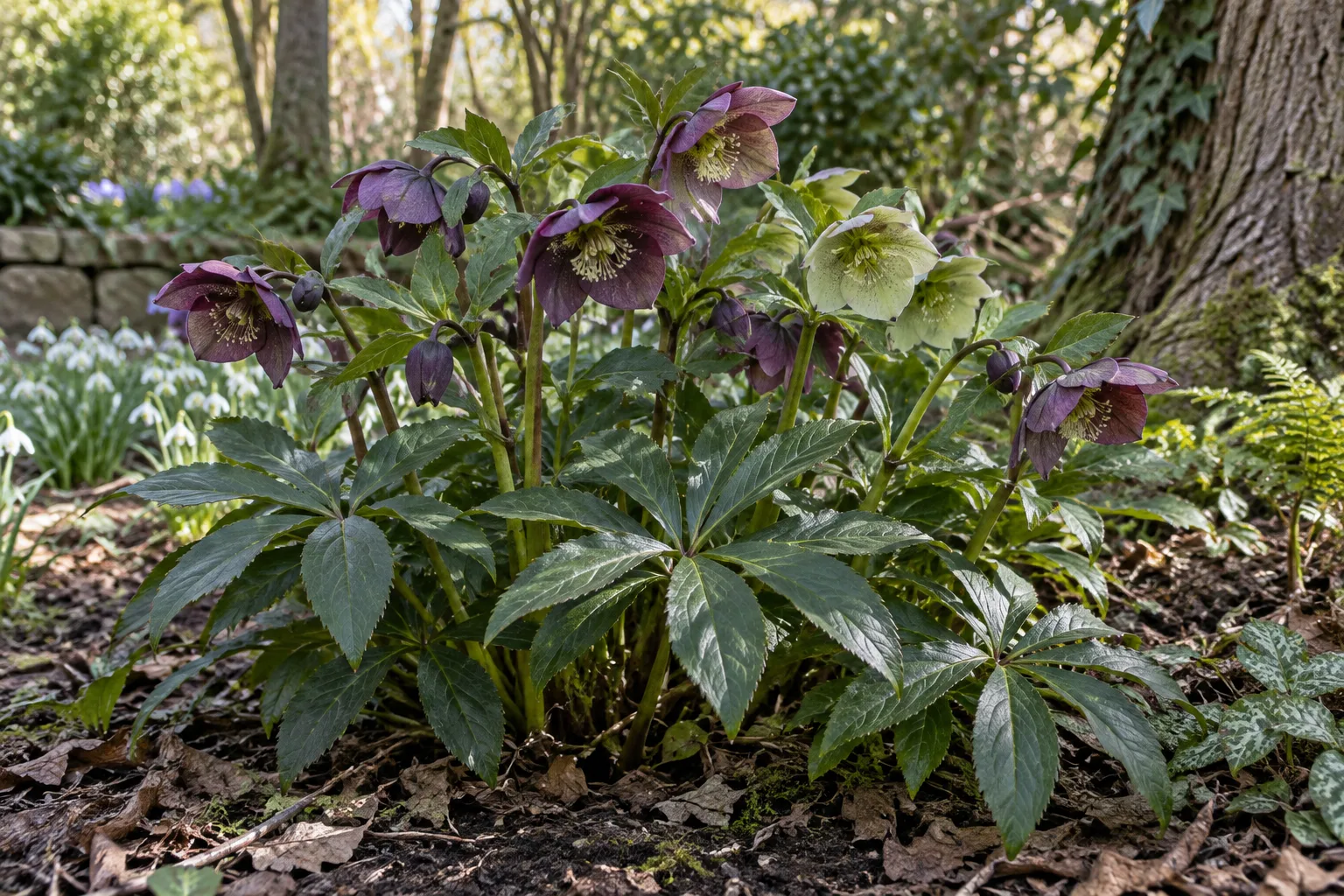
Lenten rose is a shade-loving hellebore, not a true rose. The name most often refers to the garden hybrid Helleborus × hybridus, a clump-forming perennial valued for flowers that open in late winter or early spring, when much of the garden is still bare. Give it shade that suits your summer climate, moist but freely draining soil, and room to settle in; once established, it usually asks for less routine attention than its dramatic blooms suggest.
The details that make hellebores easy to live with are also the ones that get oversimplified: “Lenten rose” is not used consistently on nursery labels, bloom dates shift with climate, and a plant that tolerates drought is not a plant that prefers dry soil. This guide shows how to choose a site, plant and water well, prune without removing next year’s display, propagate only when useful, and distinguish common leaf damage from a more serious disease.
What Lenten rose is—and what the name does not mean
The word “rose” describes the flower’s shape and the season of its display, not its botanical family. Hybrid Lenten rose belongs to the buttercup family, Ranunculaceae, and is usually sold as Helleborus × hybridus. The showy parts are mostly sepals—the structures that protect the flower bud—while the small true flowers and nectaries sit in the center. That is why a hellebore can keep its color after the central flowers have faded.
The name can be confusing because several different hellebores are sold under overlapping common names. NC State Extension lists H. niger and H. orientalis among plants also called Lenten rose, while the Royal Horticultural Society treats H. × hybridus as hybrid Lenten rose and records H. orientalis horticultural hybrids as a synonym or misapplied name. The Missouri Botanical Garden’s Ballard’s Group profile describes a wider breeding history than a single, uniform cross. In practice, use the botanical name on the pot tag when species-level care matters, and do not assume every plant labeled “Lenten rose” is genetically or horticulturally identical. (NC State Extension’s Lenten rose profile, RHS plant profile, and Missouri Botanical Garden’s Ballard’s Group profile explain the naming and hybrid background.)
Do not confuse the hybrid Lenten rose with the Christmas rose, H. niger. Christmas rose usually has white flowers and can bloom in winter in mild regions; hybrid Lenten roses have a much broader palette and often flower later in cold climates. These are useful general patterns, not guarantees: a warm winter, a sheltered wall, elevation, and the cultivar can all shift the first bloom.
Choose the right plant and read the label
Buy the plant for the conditions you can provide, not just the flower color visible in a greenhouse. Hybrid hellebores come in single and double forms and in shades of white, cream, green, yellow, pink, red, purple, and near-black, sometimes with freckles or contrasting centers. If a particular color or flower form is essential, choose a named vegetatively propagated cultivar already in bloom; seedlings from a hybrid can differ from the parent.
Check that the crown is firm, the leaves are not heavily spotted or collapsed, and the plant is not tightly pot-bound. A few old leaves may be marked or tired, especially near the end of a season, but extensive round brown lesions, black streaking through new growth, or a soft crown deserve a pass. Ask the nursery for the plant’s botanical name and typical mature width; a single established clump can become a broad mound, so spacing based on the small nursery pot often leads to crowding.
NC State Extension and the Missouri Botanical Garden list a broad hardiness range around USDA Zones 4–9 for hybrid Lenten roses, but that range is not a promise that every cultivar will thrive in every garden within those zones. Summer heat, humidity, winter wind, soil drainage, and snow cover can matter as much as the zone number. Use the range as a screening tool, then match the plant to a cool, shaded microclimate and regional nursery advice.
Choose a site for your summer climate
For most gardens, the reliable starting point is partial shade: bright morning light or dappled light, followed by protection from the hottest afternoon sun. A location beneath a deciduous tree can work especially well because it gives the plant shade in summer while letting light reach the bed after leaves fall. NC State Extension notes that hybrid Lenten rose can grow from deep shade to dappled or partial shade, but also warns about high temperatures and bright winter sun; the RHS profile lists partial shade as ideal while allowing more sun in suitable conditions. Together, those sources point to a climate-dependent rule rather than a universal “full shade” or “winter sun” instruction.
In a cool-summer or maritime climate, a brighter east-facing site may produce a stronger clump and more flowers, provided the roots do not dry out. In a hot-summer region, prioritize afternoon shade, cooler soil, and protection from reflected heat off paving or a south- and west-facing wall. If foliage scorches every summer or the plant wilts despite damp soil, move it toward deeper shade or a cooler site rather than trying to solve heat stress with more fertilizer.
The tree-canopy option has one trade-off: tree roots can compete for water. Dig a test hole and check how quickly it drains, then observe the bed during a dry spell before deciding whether it can support both the tree and the hellebore. A spot that is shaded but permanently wet is worse than a brighter spot with healthy drainage.
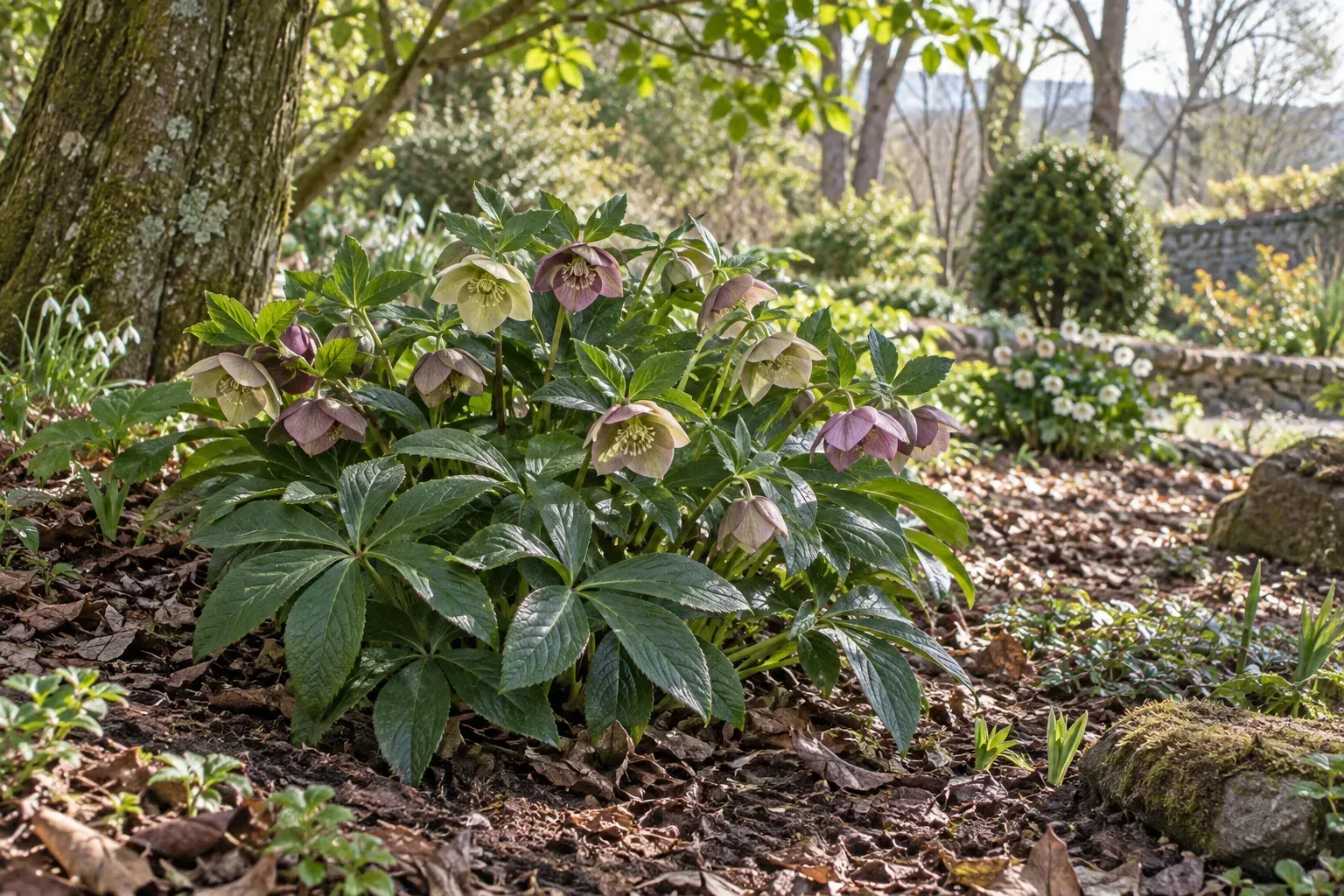
Hellebores can be grown in containers, but a pot is less forgiving than an in-ground bed. Choose a deep, stable container with generous drainage, a free-draining potting mix, and enough volume to buffer temperature and moisture swings. Keep it shaded from hot afternoon sun and protect the rootball from severe freeze-thaw cycles; in very hot climates, the potting mix can overheat even while the leaves appear shaded. White Flower Farm cautions that summer heat in containers can harm hellebores, so treat pot culture as a managed compromise, not the easiest default.
Give the roots fertile, well-drained soil
Hybrid Lenten roses prefer soil that holds some moisture without staying saturated. Aim for a crumbly, humus-rich bed with good drainage; compost can improve structure in both sandy and heavier soils, but it cannot fix a site where water pools for days. If your soil is compacted clay, amend a broad planting area and consider a raised bed rather than digging a small pocket of loose soil surrounded by dense, wet clay.
Neutral to alkaline soil is generally suitable, and several horticultural references describe these hybrids as thriving in neutral or alkaline conditions. That does not mean every acidic garden should receive lime. Test the soil before changing pH, because unnecessary lime can create a different nutrient imbalance. If the bed already grows healthy woodland perennials and drains well, the simplest approach is often to add organic matter and leave the pH alone. (The RHS profile and Missouri Botanical Garden describe moist, fertile, humus-rich soil with neutral-to-alkaline pH.)
Avoid both extremes: fast-drying soil can stress a new plant, while a low, waterlogged pocket can rot the crown and roots. Before planting, water the bed and watch where the water goes. If it remains puddled, choose a better spot or improve drainage across the bed instead of compensating with a strict watering calendar.
Plant without burying the crown
Spring and early fall are both workable planting windows in many temperate regions. Spring gives the plant a long growing season to establish, while fall planting can succeed if roots have several weeks to grow before the ground freezes. In a hot climate, avoid planting into the peak of summer; in a cold region, do not leave a new plant unrooted just before a hard freeze. The best local window is the one that offers moderate temperatures and dependable moisture.
Water the nursery pot before planting, then dig a hole wider than the rootball and no deeper than necessary. Ease out circling roots, set the top of the rootball level with the surrounding soil, and backfill without packing the soil into a hard ring. Keep the crown—the point where stems meet roots—at the soil surface rather than burying it under soil or a thick mulch blanket. Water slowly to settle soil around the roots, then add a thin organic mulch while leaving a small clear space around the crown.
Give neighboring plants room for mature foliage and airflow. Many clumps reach roughly 1 to 2 feet tall and can spread wider, although cultivar size varies. If you are planting several, use the mature width on the label rather than crowding them for an instant carpet; healthy spacing makes it easier to inspect leaves, remove disease, and enjoy the flowers at their natural height.
Water by establishment and weather
During the first growing season, check the root zone regularly and water deeply when the upper soil begins to dry. A new hellebore has not yet built the root system that lets an established plant ride through a short dry spell. Do not use a fixed “one inch every week” rule without looking at rainfall, soil texture, shade, and temperature; the same schedule can be too much in heavy clay and too little in a hot, sandy bed.
Once established, hybrid Lenten rose tolerates some drought, but it performs best with reasonably even moisture during active growth and flowering. Water during a prolonged dry spell, especially if the plant is under a shallow-rooted tree or growing in a container. If leaves droop in afternoon heat but recover overnight, heat may be contributing; if the soil is still wet and the plant remains limp, adding more water can worsen root trouble.
Water the soil rather than repeatedly wetting the foliage when practical. In crowded, damp conditions, leaves that remain wet for long periods are more vulnerable to fungal problems. A soaker hose or watering at the base is useful in a large bed, but good spacing and a well-drained site matter more than buying a particular watering tool.
Mulch and fertilize lightly
A loose layer of compost or leaf mold around the root zone can conserve moisture and gradually improve soil. Keep it thin near the crown and pull it back if it begins to cover the stem bases. In colder, exposed gardens, a light winter mulch can buffer soil temperature, but remove or thin it before new growth emerges so the crown is not smothered.
Routine heavy feeding is rarely necessary in fertile soil. Horticulture magazine recommends top-dressing with compost rather than using fertilizer, while White Flower Farm suggests that a light balanced feed in early spring can help. A practical middle ground is to feed the soil first: add compost annually, then use a modest, label-directed balanced fertilizer only if growth is weak and a soil test or other evidence suggests a nutrient need. Avoid high-nitrogen doses that produce soft foliage without solving poor light, poor drainage, or root disturbance.
Do not add lime, fertilizer, or a homemade “tonic” just because flowering is disappointing. Confirm the light, moisture, drainage, crown depth, and plant age first. More inputs will not compensate for the wrong site, and they can make the underlying problem harder to diagnose. (Horticulture magazine’s hellebore care guidance favors compost over routine fertilizer; White Flower Farm’s growing guide allows a light spring application.)
Follow a seasonal care calendar
Use the plant’s growth, not a date on a calendar, as your cue. In much of the United States, hybrid Lenten roses begin sending up flower stems in late winter or early spring, but mild regions may see earlier blooms and cold areas may wait. A season-based rhythm keeps care useful across those differences:
- Late winter to early spring: look for emerging flower stems, remove only foliage that is dead, damaged, or infected, and clear away debris that could harbor disease. If the old leaves are healthy but hide the flowers, prune them selectively rather than cutting every stem at once.
- Spring after flowering: decide whether to remove spent flowers to limit seedlings; refresh a thin compost mulch; water a new planting through dry weather. If you plan to divide, check local timing and the plant’s health before lifting it.
- Summer: provide water during extended heat or drought, especially for recent transplants and container plants. Remove yellow or collapsed leaves, keep the crown uncovered, and pull unwanted seedlings while they are small.
- Fall: plant new nursery stock early enough to root before freeze-up, refresh a thin mulch if the site needs it, and leave healthy foliage in place. Do not wrap the plant or keep the soil saturated through winter.
In USDA Zone 4–5 gardens with drying winds or repeated freeze-thaw cycles, the priority is a sheltered site and protection for a newly planted rootball, not a heavy mound of mulch over the crown. In Zones 8–9 or other regions with long, hot summers, afternoon shade and summer moisture become more important than adding winter protection. These zone examples are broad; local exposure and cultivar hardiness still matter.
Prune by species and growth, not by date alone
For H. × hybridus, the practical pruning cue is the new flower growth. The RHS notes that hybrid Lenten roses carry flowers on stems separate from the old leaves, so old foliage can be removed in winter or early spring before flowering begins; doing so can also reduce leaf-spot carryover. If the leaves are healthy and attractive, leaving them is fine. Pruning is a choice for display and sanitation, not a requirement for the plant to survive.
Use clean, sharp shears and cut individual old leaves close to the base without nicking emerging flower stems. If new buds are already visible, take your time: follow each old leaf stalk to its base and distinguish it from the firmer new flower stalks. Remove dead, broken, or heavily spotted leaves as needed, and dispose of infected material rather than leaving it under the plant.
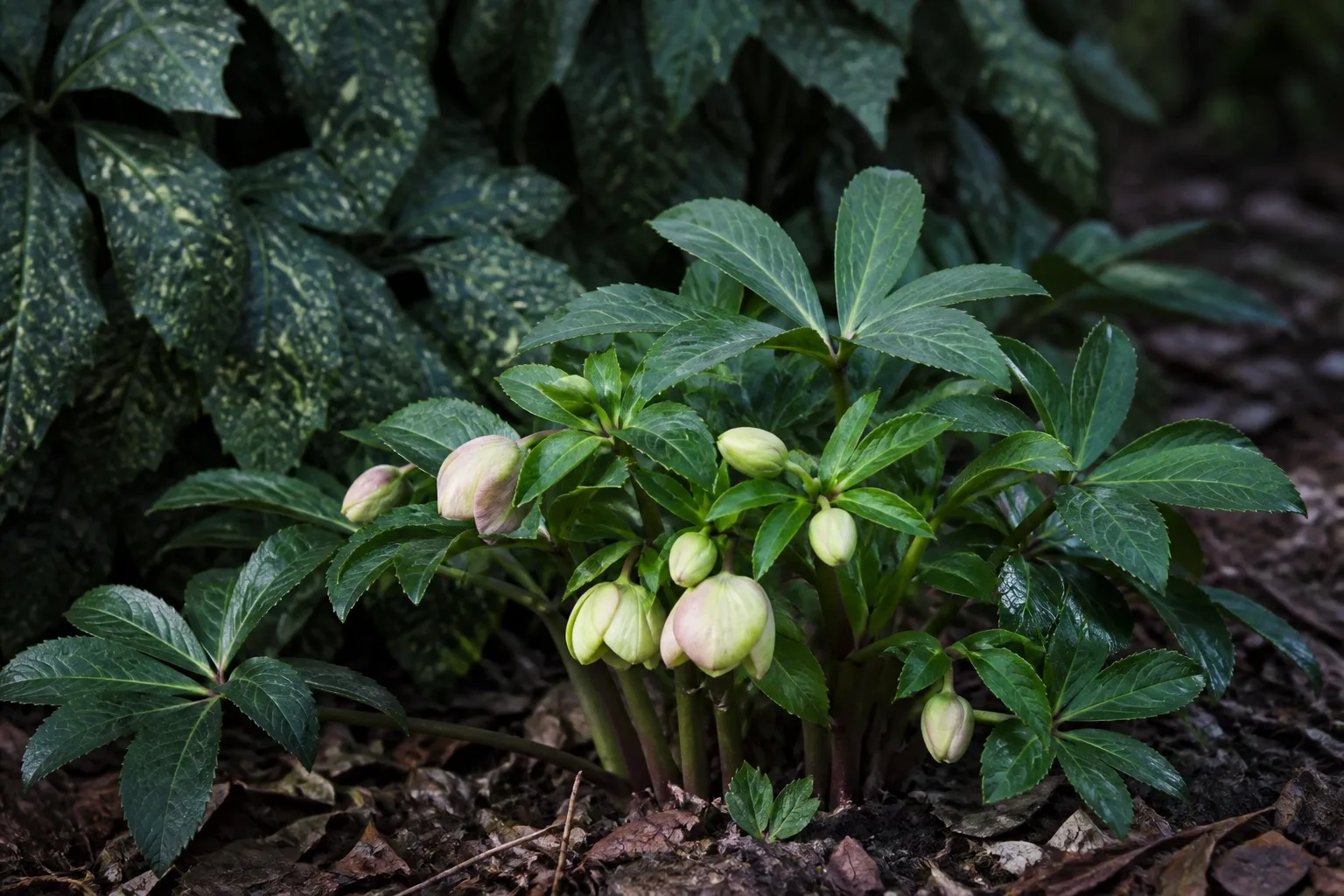
Do not apply the hybrid’s pruning rule to every hellebore. Some species, including H. niger and H. argutifolius, carry leaves and flowers on the same stems; cutting those stems before bloom can remove flowers. Identify the plant first, and if the label is missing, wait until you can see where the flower stems are emerging before making a broad cut. (RHS guidance on hellebore leaf spot distinguishes the pruning approach for hybrid Lenten roses from species with leaves and flowers on shared stems.)
After bloom, choose between seed and a tidy clump
Deadheading will not make a hellebore rebloom that season. Remove spent flower stems if you want to reduce self-sowing, keep a path clear, or tidy the display; leave some if you enjoy volunteer seedlings and want the patch to naturalize. Do not cut away foliage that is still green and supporting the plant.
If you keep seed, watch the developing seed capsules rather than waiting for them to split open on their own. Collect them as they mature, before seed spills widely, and sow promptly. Seedlings are not guaranteed to match the parent’s color or flower form, especially when the parent is a named hybrid. For a uniform cultivar, division or buying another named plant is more predictable.
Self-sown seedlings can take several seasons to reach flowering size, so they are a slow way to fill a bed. Thin them while small if they crowd the original clump, block airflow, or appear somewhere unsuitable. Remember that all parts of a hellebore should be treated as potentially harmful if chewed; wear gloves and do not let children or pets play with seed capsules.
Divide only when it solves a real problem
Division is possible, but an established Lenten rose does not need a routine split every few years. Hellebores can be slow to settle after transplanting, and disturbing a thriving clump just to make more plants can cost you a season of flowers. Consider dividing only when a healthy, mature clump is crowded, you genuinely want additional plants, or the plant must be moved from a poor site.
Timing recommendations vary. The Missouri Botanical Garden lists late summer to early fall for dividing congested Ballard’s Group plants; Horticulture magazine recommends late fall for evergreen hellebores before new leaves emerge; other practical guidance favors dividing after flowering while the plant can still establish. These windows overlap in some climates but not all. Choose a cool, moist period when the plant is not flowering or under heat stress, and use a regional extension or botanical-garden recommendation if your local growing season is short.
Before lifting the plant, prepare the new site and water it. Dig around the clump wide enough to keep as many roots as possible, lift gently, and separate it with a clean, sharp knife only where the crown and root mass can support a viable piece. Each division needs healthy roots and growing points; do not reduce the plant to tiny crown fragments. Replant at the same depth, water thoroughly, keep soil evenly moist while it re-establishes, and accept that flowering may be delayed as roots recover. (Missouri Botanical Garden describes late-summer to early-fall division of congested plants; Horticulture magazine gives a later window for evergreen types.)
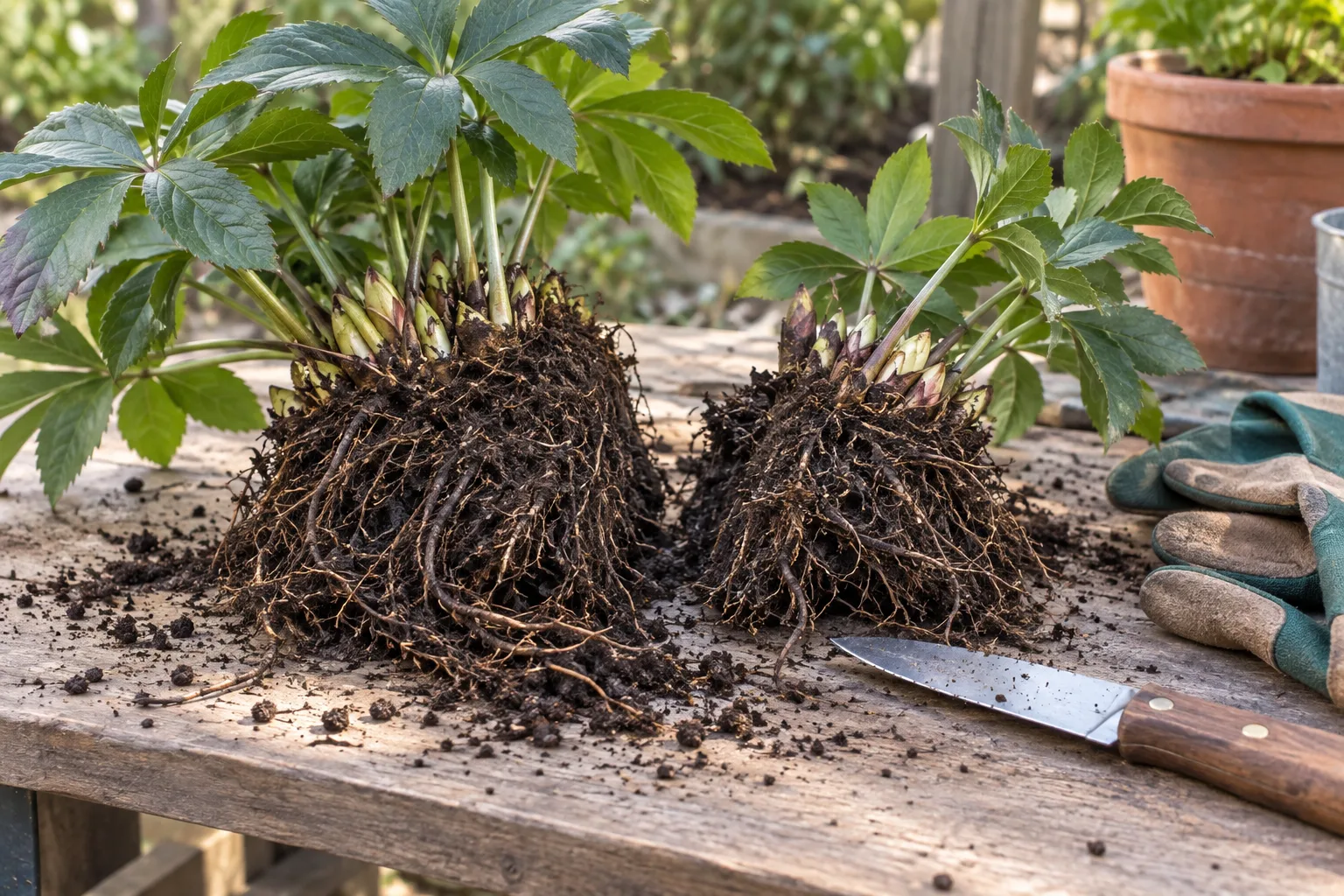
If the plant is diseased, do not propagate from it. Division spreads infected tissue into the new planting and makes the original problem harder to contain. Diagnose symptoms first, then decide whether the plant is safe to move or should be removed.
Grow from seed if you can wait
Seed propagation is best for gardeners who enjoy variation and are willing to wait. Sow fresh seed as soon as it is ripe, usually in a pot or nursery bed with a free-draining medium, and protect the container from drying out or becoming waterlogged. The RHS recommends sowing seed in pots in a cold frame when ripe; waiting to store seed can make germination less predictable, so do not assume a short refrigerator treatment will make old seed behave like fresh seed.
Leave the pot outdoors in a sheltered spot where it experiences natural seasonal temperature changes, and label it with the parent and date. Germination can be slow and uneven; seedlings may appear after a seasonal cycle rather than within a few weeks. Keep young plants shaded from hot sun, water consistently, and transplant only when they are large enough to handle without tearing their small roots.
Expect genetic variation. A seedling from a double, spotted, or deep-colored named plant may not repeat those features, and it may take multiple growing seasons to bloom. If exact color, flower form, or cultivar identity matters, buy or divide a named plant instead. (The RHS propagation profile recommends sowing seed as soon as it is ripe; White Flower Farm notes that hybrid seedlings may not come true from seed.)
Diagnose a plant that will not bloom
First confirm that the plant is old enough and correctly identified. A young seedling can spend years building roots and foliage before its first flowers, while a nursery plant that was forced into bloom may pause after planting. A recently divided or transplanted hellebore may also use a season to recover; that does not automatically mean it needs more fertilizer.
Next check light and temperature. Deep shade can keep the plant alive but may reduce flowering, while intense summer heat, dry roots, or reflected afternoon sun can weaken the clump. In a warm climate, shift the plant to a cooler, shaded site; in a very dark bed, try brighter dappled or morning light if the soil remains cool and moist.
Then inspect drainage and the crown. A buried crown, persistently wet soil, root damage, or a plant squeezed by tree roots can all reduce vigor. Correct the site before feeding: remove excess mulch, improve drainage across a broad area, or water more consistently during establishment. If foliage is lush but flowers are scarce, skip high-nitrogen fertilizer and reassess whether the plant receives enough light and whether last season’s leaves or flower stems were cut too aggressively.
Pests and disease: identify before treating
Hellebores are not maintenance-free, but most problems are easier to manage when you identify the pattern rather than spray at the first mark. Slugs and snails leave irregular holes or rasped edges, often on low leaves; aphids may cluster on tender stems or flowers. Inspect the undersides of leaves and the crown, then use the least disruptive response that fits the problem: hand-remove slugs at night, clear hiding debris, or wash off a small aphid colony.
Fungal disease becomes more likely in crowded plants, wet foliage, and poorly drained soil. Remove diseased material, improve airflow, water at soil level, and correct the site conditions before considering any product. The RHS recommends good cultivation and sanitation as the first line of control for hellebore leaf spot and does not recommend fungicide as routine treatment; there is no need to apply a preventive spray to a healthy plant. (RHS hellebore leaf spot guidance covers symptoms and non-chemical control.)
Hellebore leaf spot and crown rot
Hellebore leaf spot typically produces roundish dead brown patches on leaves and stems; damaged centers may fall out, and stems can collapse. Remove affected leaves promptly, collect infected debris, and clean tools before moving to another plant. The RHS notes that this fungal disease affects many hellebore species and hybrids and that wet conditions help initiate infection.
Crown rot is a different concern, often associated with a crown that stays wet and a plant that collapses or declines despite damp soil. Do not respond by adding more water or piling on compost. Check whether the crown is buried and whether the soil drains; if the crown is soft or the plant is rapidly collapsing, remove severely affected material and ask a local Extension office to help distinguish rot from other causes.
Black death
Hellebore black death is a suspected viral disease, not the same thing as ordinary brown leaf spot. The Royal Horticultural Society describes stunted, distorted new growth and black streaks or net-like markings that often follow leaf veins; round brown patches without distorted growth are more consistent with leaf spot. A single dark mark is not enough to diagnose a virus.
If the characteristic streaking and distortion progress through the new growth, isolate the plant and seek a confident diagnosis. The RHS advises prompt removal and destruction of infected plants and notes that there are no chemical controls for plant virus infections. Do not try to cure a suspected virus with fungicide or pass divisions from that clump to other beds. (RHS guidance on hellebore black death describes the diagnostic pattern and removal advice.)
Handle hellebores safely around people and pets
Treat a Lenten rose as an ornamental plant, not an edible or medicinal herb. NC State Extension identifies hybrid Lenten rose as poisonous if ingested, and the Missouri Botanical Garden notes that hellebore leaves, stems, and roots are poisonous. Keep cuttings and seed capsules away from children and pets, do not use hellebore in tea or food, and wash hands after gardening.
There is some variation in how sources describe skin exposure: the RHS lists H. × hybridus as harmful if eaten and a skin irritant and advises gloves, while the NC State profile does not list contact dermatitis for its plant entry. That difference does not mean skin reactions are impossible or universal. Wear gloves when cutting, digging, or handling sap; avoid touching your eyes or mouth; and wash exposed skin. If you know you are sensitive to plant sap, use long sleeves and eye protection as well.
The ASPCA’s hellebore entry lists H. niger—a different species from the hybrid covered here—and includes “Lenten rose” among that plant’s common names. It identifies the plant as toxic to dogs, cats, and horses and lists drooling, abdominal pain, diarrhea, colic, and depression among possible clinical signs. Because common names overlap and the ASPCA entry is species-specific, use the botanical label when asking for help, but prevent pets from chewing any hellebore. If an animal eats part of a plant, contact a veterinarian or ASPCA Poison Control promptly; in the United States, the ASPCA lists (888) 426-4435. If a person may have swallowed hellebore, call Poison Control at 1-800-222-1222 in the U.S. or use the local poison service where you live. Do not wait for symptoms or induce vomiting unless a poison specialist tells you to. (ASPCA Poison Control’s hellebore listing, NC State Extension, RHS, and Poison Control’s contact guidance support these precautions.)
Conclusion
The most reliable Lenten rose care starts with the right identification and a site that protects the plant from summer heat while keeping its roots moist but not waterlogged. Plant the crown at soil level, water new plants through dry spells, use compost instead of routine heavy feeding, and prune hybrid Lenten rose selectively as new flower stems emerge. If you propagate, choose division for a closer copy of a named plant and seed for a slower, more variable result.
Let the plant’s growth and your climate set the schedule. Read the botanical name before pruning, use clean tools when removing damaged leaves, and treat hellebores as toxic if eaten. Given those simple safeguards and a suitable spot, an established clump can return with early flowers for many years without demanding a complicated routine.