Endless Summer Pop Star Hydrangea Care and Growing Guide
Learn how to grow Endless Summer Pop Star hydrangea with the right light, watering, soil pH, pruning, container setup, and winter protection for your climate.

Endless Summer® Pop Star® is a compact bigleaf hydrangea with flat lacecap flowers rather than the familiar ball-shaped mopheads. It can flower on both older stems and new growth, which gives it the potential to bloom again after its first flush, but that trait does not cancel out the usual limits of a bigleaf hydrangea: harsh afternoon sun, dry roots, winter-damaged buds, and badly timed pruning can all reduce the display.
The most reliable approach is to choose a site with morning light and afternoon protection, keep the root zone evenly moist but not saturated, and leave healthy woody stems alone until you can tell what survived winter. The plant is small enough for a patio pot, but container growing adds two jobs that an in-ground shrub avoids: more frequent moisture checks and protection from deep freezes around the roots.
What Makes Pop Star® Different
Pop Star® is the cultivar Hydrangea macrophylla ‘Bailmacsix’ PP33,703, sold within the Endless Summer® collection. It is a compact, deciduous, mounded shrub with a lacecap flower form: tiny fertile flowers sit in the middle of each flat flower head, ringed by larger showy florets. That structure creates a lighter, more open look than a mophead and exposes pollen-bearing flowers that can be visited by bees and other pollinators. Endless Summer describes the plant as a reblooming cultivar with blue or pink flowers depending on growing conditions.
“Reblooming” is useful shorthand, not a guarantee of continuous color. Pop Star can flower on stems carried over from the previous year and later on current-season growth, but the size and timing of the later flush depend on plant establishment, weather, light, water, and whether buds survive winter. Penn State Extension explains the same old-wood/new-wood distinction for reblooming bigleaf hydrangeas: the first flowers can come from last year’s stems, with later flowers developing on new growth. (Penn State Extension)
Pop Star Hydrangea at a Glance
The cultivar’s compact size makes it easier to place than many bigleaf hydrangeas, but the final dimensions still matter when you choose a border location or pot. The breeder lists a mature height and width of about 18 to 36 inches and hardiness in USDA Zones 4 through 9; use the plant tag that arrives with your own nursery plant if it gives updated regional guidance. (Endless Summer)
| Feature | What to plan for |
|---|---|
| Botanical name | Hydrangea macrophylla ‘Bailmacsix’ PP33,703 |
| Habit | Compact, rounded, deciduous shrub |
| Mature size | About 18–36 inches tall and wide |
| Flower form | Lacecap, with small central flowers and larger outer florets |
| Hardiness | USDA Zones 4–9 according to the breeder |
| Preferred exposure | Morning sun with afternoon shade |
| Soil | Moisture-retentive but well-drained, organically enriched soil |
| Blooming | Potential for flowers on old and new wood |
A hardiness zone describes winter temperature patterns, not the likelihood that every flower bud will make it through winter. An established in-ground plant may survive a colder spell while still losing some above-ground stems or early flower buds, so gardeners in the colder end of its range should focus on protecting the root zone and avoiding unnecessary pruning.
Choose the Right Light and Site
Start with morning sun and protection from intense afternoon rays. Pop Star needs enough light to support flowering, but a hot west-facing wall or reflected patio heat can dry the soil and scorch leaves before the plant benefits from that extra exposure. In cooler northern gardens it may tolerate more sun than it would in a hot-summer climate; dappled light or a few hours of morning sun followed by shade is a safer starting point when you are unsure.
Watch the site for a full day before planting. A spot that looks bright at noon may be shaded by a building or tree in the morning, while a narrow strip beside paving may bake in late afternoon even if the shrub itself sits under light shade. NC State Extension’s bigleaf hydrangea profile recommends dappled light or partial shade and protection from afternoon sun, guidance that suits Pop Star’s species even though the cultivar is more compact. (NC State Extension Plant Toolbox)
Give the shrub room for air movement and its mature spread. Avoid squeezing it between a wall and another shrub simply because the nursery plant is small; crowded foliage stays damp longer after rain and makes it harder to inspect stems. If the only usable site has strong afternoon sun, choose a container you can reposition during heat waves rather than relying on extra watering to overcome chronic heat stress.
Planting in the Ground: Soil, Depth, and Spacing
Plant when the soil is workable and temperatures are moderate, ideally in spring or early fall rather than during the hottest stretch of summer. Water the nursery pot before planting so the root ball does not begin dry, then dig a hole roughly as deep as the root ball and wider than it. Set the shrub so the surface of its root ball sits level with the surrounding grade; burying the crown can keep the base too wet, while setting the root ball high can expose roots to drying.
Backfill with the excavated soil, loosening dense clods and mixing in organic matter only when the soil structure needs improvement. A planting hole full of a radically different mix can hold water differently from the surrounding ground, so do not turn the hole into a compost-filled pocket. Water slowly after planting to settle the soil around roots, then apply a thin layer of organic mulch over the root zone while keeping it away from the stems.
Use the expected 18- to 36-inch spread to decide spacing. For a continuous low border, leave enough room for each shrub to reach its natural width; for a tighter hedge effect, plan for the plants to meet gradually instead of crowding them immediately. If tree roots compete strongly for water or the location drains poorly after rain, another site will usually be easier than trying to correct those problems with frequent watering or repeated soil amendments.
Growing Pop Star Hydrangea in a Container
A container is a good fit when garden soil is poorly drained, you want the plant near a patio, or you need the option to shift it away from hot afternoon sun. Pop Star’s compact habit helps, but a pot still needs room for roots and enough soil volume to resist rapid drying. The cultivar’s care guidance suggests a container around 15 to 18 inches wide as a starting point; Better Homes & Gardens recommends a larger 18- to 24-inch pot for hydrangeas intended to grow in containers over time. In practice, use the smaller end for a seasonal display and choose a wider, deep pot if you want a more stable multi-year home. (Endless Summer; Better Homes & Gardens)
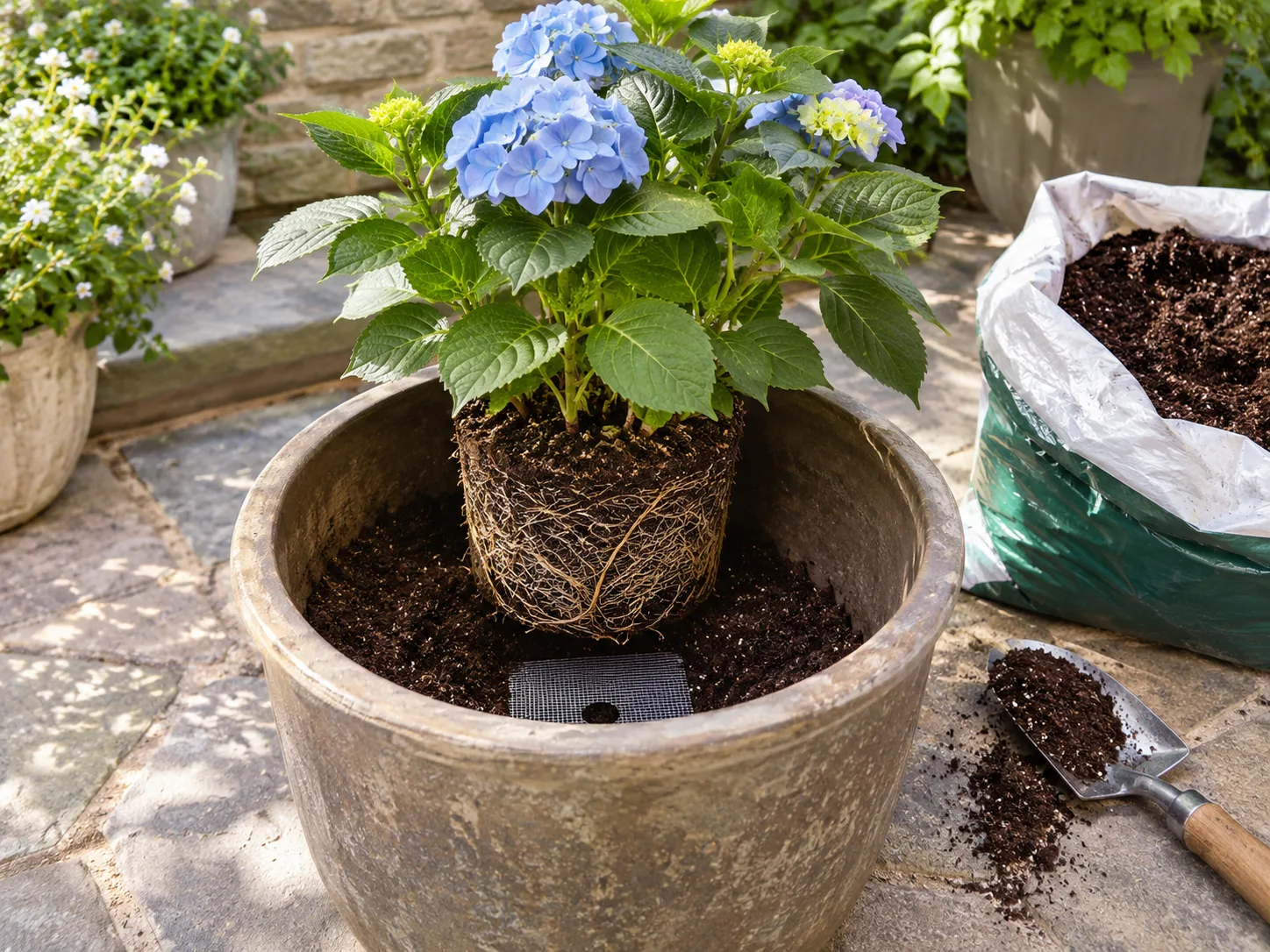
Choose a container with several unobstructed drainage holes. Fill it with a quality outdoor potting mix rather than dense garden soil, set the root ball at its original soil depth, and water until excess drains from the bottom. Do not place a layer of gravel inside the pot to “improve drainage”; a blocked hole or a pot sitting in a full saucer is the problem to fix. Pot feet help water escape and keep the container from standing in runoff.
Put the pot in its final position before filling it if the container will be heavy. A rolling caddy can help, but it must not trap the pot in a saucer of water. The trade-off is straightforward: containers give you control over light and soil, but they demand closer watering and require insulation or shelter in winter because the roots are less buffered from cold than roots in the ground. (Martha Stewart)
Watering for Steady Growth, Not Soggy Roots
Check the soil before you water instead of following a fixed daily schedule. In a garden bed, feel the soil a few inches below the mulch; in a pot, check the top inch and the weight of the container. If the root zone is drying, water deeply at the base until the soil is evenly moist. If it is still cool and damp, wait. Hydrangea leaves can droop temporarily during a hot afternoon even when the soil is moist, so verify the soil before adding more water.
Newly planted shrubs need more frequent attention while roots establish, especially during warm, windy weather. After establishment, adjust watering to rainfall, soil type, and heat rather than the number of days on a calendar. A small pot on a sunny deck may need a daily check in summer; a mulched shrub in loamy ground after rain may not need supplemental water for several days.
For a container, water thoroughly and let it drain freely instead of giving frequent sips that wet only the surface. Empty any saucer after the pot drains and avoid repeatedly wetting the foliage late in the day. If the root ball has pulled away from the sides of the pot and water runs straight through, soak the potting mix slowly in stages so it can rehydrate, then resume regular checks rather than flooding it every day.
Blue or Pink Flowers: What Soil pH Can and Cannot Do
Pop Star can produce blue or pink flowers, but adding an amendment does not instantly repaint blooms already forming. In bigleaf hydrangeas, flower color relates to soil pH because pH influences whether aluminum is available for uptake; it is not simply a direct color dial. Penn State Extension notes that blue coloration requires acidic conditions that allow aluminum uptake, while more alkaline conditions favor pink, and that soil conditions and amendments can affect how reliably a color change occurs. (Penn State Extension)
Test the soil before trying to change its chemistry. If you want blue flowers, follow a soil-test recommendation for your region and use only an amendment labeled for hydrangeas at its stated rate. If you want pink, a lab may recommend raising pH, but repeated additions of lime or phosphorus without testing can create an imbalance and stress roots. Penn State warns that excessive aluminum sulfate may damage roots; more product is not a shortcut to a deeper color.
Expect a gradual result, often over a growing season or longer, and do not assume that every new flower will match the last one. Soil near concrete or house foundations may be influenced by leached lime, while container mix may have a different pH and nutrient history from the garden. If exact color is the priority, container soil offers more control; if plant health is the priority, accept the color your site can support rather than repeatedly chasing a shade.
Fertilizing Without Sacrificing Flowers
Do not fertilize a hydrangea just because it is not blooming this week. Excess nitrogen can push leafy growth without solving shade, drought, root damage, winter bud loss, or premature pruning. Start with a soil test if growth is weak or the soil is known to be deficient, and count any slow-release fertilizer already mixed into a newly purchased or recently repotted plant’s potting mix.
For an established shrub that needs feeding, use a complete, slow-release fertilizer according to the product label and local soil guidance. Endless Summer’s cultivar advice calls for a slow-release bloom fertilizer in early spring as growth begins and another application in July, while container-growing guidance from Better Homes & Gardens cautions against late-summer fertilizer that could stimulate tender growth before cold weather. These schedules are not interchangeable in every region: in a short-season climate, late feeding can be a poor trade. Follow the plant’s current tag, your soil test, and the fertilizer label; skip the second application if the shrub is already growing strongly or cold weather is approaching. (Endless Summer; Better Homes & Gardens)
Avoid lawn fertilizer, high-nitrogen formulas, and unmeasured “bloom boosters.” Phosphorus does not automatically increase flowers, and a high-phosphorus product can be especially counterproductive if you are trying to maintain blue bigleaf hydrangea flowers because phosphorus can reduce aluminum availability. If leaves are lush and dark but flower production is modest, stop feeding and check light, pruning history, and bud survival first.
Deadheading and Pruning Without Losing Buds
Treat deadheading and pruning as different jobs. Deadheading removes a spent flower head; pruning changes the shrub’s structure. If a flower head has faded and you want a tidier plant or a chance at later growth, cut its stem just above a healthy pair of leaves. Make the cut with clean, sharp pruners, and stop deadheading by mid-fall so you do not keep stimulating growth as the plant prepares for dormancy. Endless Summer’s cultivar guidance recommends selective deadheading but warns that routine pruning can remove next year’s early flowers. (Endless Summer)
Avoid cutting Pop Star back hard in autumn, winter, or early spring. Because it can bloom on old wood, healthy stems carry buds that may produce the first flowers of the season; Penn State Extension notes that bigleaf hydrangeas begin setting next year’s flowers after blooming, which is why poorly timed cuts can remove them. If the shrub needs light shaping, do it soon after the main early-summer display, not as a fall cleanup task. (Penn State Extension)
Wait for spring growth before deciding that a brown stem is dead. Scratch a small patch of bark near the tip: green tissue beneath suggests the stem is alive, while dry brown tissue farther down may indicate winter dieback. When new leaves appear, cut only confirmed dead wood back to living growth. A few old flower heads can stay through winter if you like their shape; remove them in spring by cutting above the first healthy buds, not by shearing the whole shrub.
What Rebloom Requires
Pop Star’s reblooming habit gives it a second route to flowers, but the conditions still need to support new growth. A healthy shrub with morning light, adequate water, and intact leaves is more likely to produce later flowers than a plant recovering from transplant shock, a root problem, or repeated wilting. The later flush may be smaller or arrive later than the first, especially where summer is short.
When the plant does not rebloom, diagnose in this order: first, confirm that it is Pop Star or another reblooming cultivar; second, check whether the shrub receives enough light; third, review soil moisture and drainage; fourth, ask whether winter killed stems or a pruning cut removed buds; and only then review fertilizer or soil pH. This order matters because color amendments will not fix a plant with dead stems, and fertilizer will not compensate for a deeply shaded site.
Do not deadhead every flower automatically if you value winter structure or seed-eating wildlife around the garden. Deadheading can improve appearance and remove aging blooms, but it cannot force an extra flush on a stressed plant or extend the season beyond frost. If the first flush is fading and the shrub is otherwise healthy, selective deadheading is a reasonable low-risk option; if leaves are limp or the soil is saturated, correct that stress first.
A Seasonal Care Calendar
Spring: As buds swell, inspect stems before pruning and remove only wood that is clearly dead. Refresh mulch, check drainage, plant or repot during moderate weather, and apply fertilizer only if the label, soil test, or plant tag supports it. Wait until leaves emerge before making large decisions about winter damage.
Early to midsummer: Keep the soil evenly moist, watch for hot afternoon exposure, and deadhead faded flowers selectively. If you intend to change flower color, use test-based amendments early enough for the soil chemistry to shift; amendments applied after buds open will not recolor those flowers. Check containers more often than beds, especially during heat or wind.
Late summer and fall: Reduce fertilizer as the season advances and stop routine deadheading by mid-fall. Water during dry weather until the shrub is entering dormancy and the ground is still able to absorb it. Leave healthy stems intact because they may carry buds for next year’s first flowers.
Winter: Protect the root zone in colder areas and shelter containers from repeated freeze-thaw exposure. Keep pots dormant in a cold, protected place rather than bringing them into a heated room. Recheck moisture during long dry spells, but do not keep cold soil wet.
Winter Protection in the Ground and in Pots
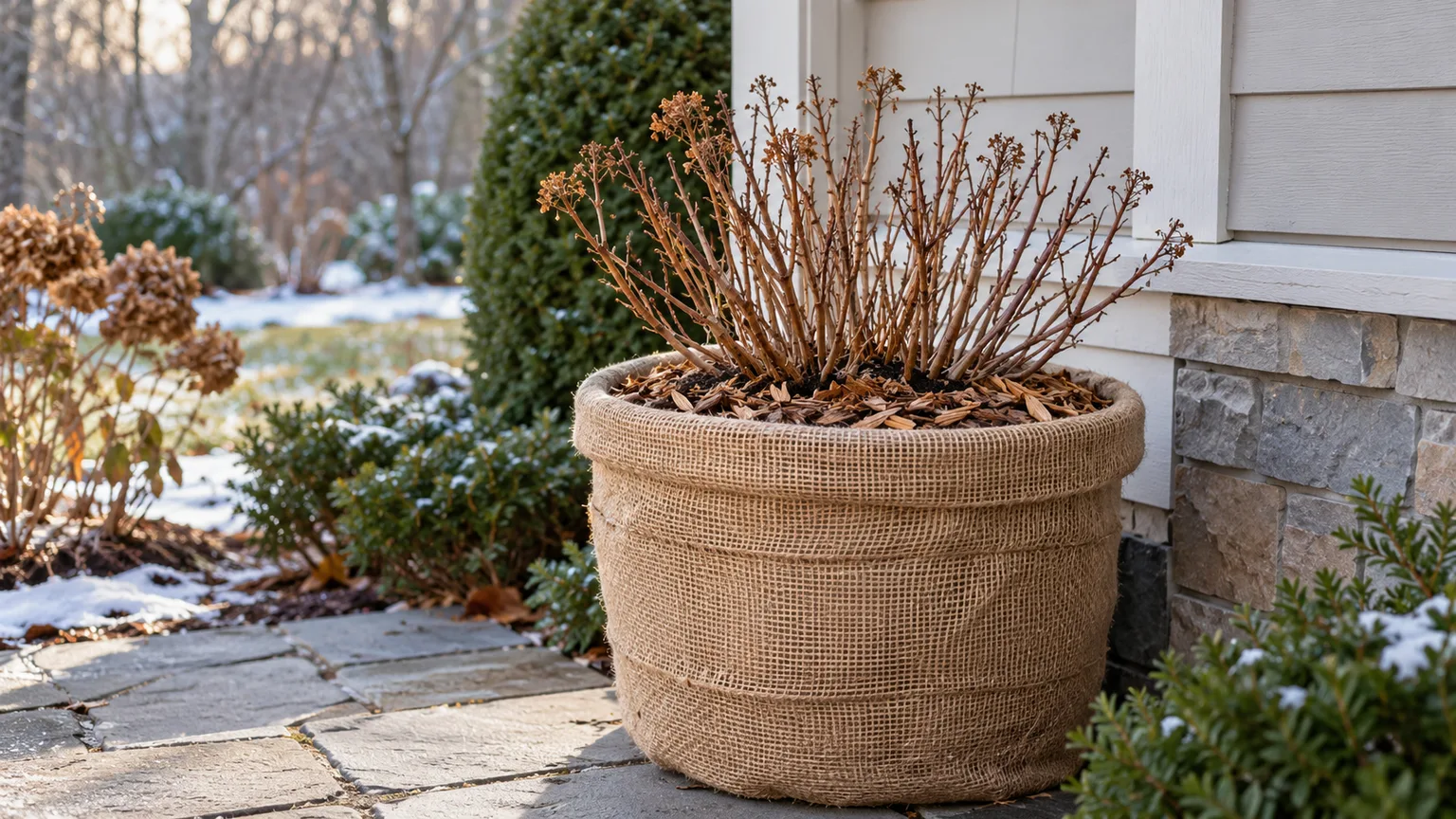
For an in-ground Pop Star, apply a few inches of loose organic mulch over the root zone after the soil cools, without piling it against the stems. The purpose is to reduce sharp temperature swings around the roots, not to keep the plant warm enough to continue growing. A sheltered site and a healthy layer of mulch are especially helpful in the colder edge of the cultivar’s range or where winter alternates between thaw and hard freeze.
Potted hydrangeas face a different risk because roots sit above ground and cool faster than roots in a bed. Better Homes & Gardens recommends choosing a hydrangea one or two hardiness zones hardier than the gardener’s location for reliable container overwintering; because Pop Star is rated Zones 4–9, a pot in a Zone 4 garden may need protection even though the plant itself is listed hardy there. After dormancy, move a portable pot to an unheated garage or shed, or place it against a protected wall and insulate the pot. Keep it cold enough to remain dormant, and check occasionally that the mix has not become bone dry. (Better Homes & Gardens; Martha Stewart)
Do not bring an outdoor hydrangea into a warm living room to “save” it from winter. A warm indoor setting can interrupt dormancy, and the shrub still needs a seasonal cycle to grow and flower outdoors again. If the pot is too heavy to move, wrap the sides, protect it from drying winds, and group it near a sheltered structure; avoid covering the plant so tightly that moisture remains trapped around the stems.
Troubleshooting: Few Flowers, Wilt, or Leaf Damage
Use the pattern of symptoms to pick the first check instead of applying a generic treatment. The same wilted leaves can mean dry soil, saturated roots, or a hot afternoon; the soil condition tells you which direction to go. University of Minnesota Extension’s hydrangea diagnostic pages distinguish common leaf-spot and powdery-mildew symptoms, including purple-brown spots that enlarge and white fungal patches on leaves. (University of Minnesota Extension)
| Symptom | Likely first checks | Practical next step |
|---|---|---|
| No flowers or only a few | Deep shade, winter injury, hard pruning, recent transplant | Wait for full leaf-out before removing stems; improve morning light and avoid further pruning |
| Leaves droop during afternoon but recover | Heat exposure and moisture at root depth | Check soil before watering; add afternoon shade if the site bakes |
| Leaves stay limp and soil is wet | Poor drainage, blocked pot holes, water-filled saucer | Stop watering until the root zone drains; clear holes or move the plant |
| Brown leaf edges or scorched patches | Hot afternoon sun, dry root ball, reflected heat | Protect from intense sun and keep moisture steady without waterlogging |
| White powder or expanding leaf spots | Powdery mildew or leaf-spot disease | Improve airflow, water at soil level, and confirm the problem before choosing a treatment |
A failed second flush does not mean the plant is dying. Bigleaf hydrangeas can remain healthy and attractive as foliage shrubs even in a season when weather or pruning reduces flowers. Give the plant time to rebuild after a stressful summer, and judge recovery by new leaves and firm stems before making a major intervention.
Pests and Diseases: Prevent First, Diagnose Second
Pop Star is not immune to the problems that affect bigleaf hydrangeas. Leaf spot, powdery mildew, and bacterial problems can appear when foliage remains wet, plants are crowded, or roots stay saturated; aphids, slugs, and Japanese beetles may also feed on leaves or flowers. NC State Extension lists leaf spot and powdery mildew among potential problems for Hydrangea macrophylla, while University of Minnesota Extension provides visual symptom guidance for hydrangea leaf diseases. (NC State Extension Plant Toolbox; University of Minnesota Extension)
Start with sanitation and conditions. Remove heavily spotted fallen leaves, avoid watering over the canopy when practical, and give shrubs enough space for foliage to dry after rain. Inspect the underside of leaves before treating insects; a few visitors do not automatically justify spraying, and spraying can affect beneficial insects that visit the lacecap’s fertile flowers. If symptoms spread rapidly or the diagnosis is unclear, use a local extension diagnostic service before choosing a pesticide.
Pet and Child Safety Around Hydrangeas
NC State Extension lists bigleaf hydrangea as a low-severity poisonous plant and notes that consuming large quantities can cause nausea, stomach pain, vomiting, and sweating. Keep children and pets from chewing leaves, flowers, or bark, and place containers where casual nibbling is less likely. This is a precaution, not a reason to panic around an intact shrub; if someone or an animal eats part of the plant, contact a medical professional, veterinarian, or poison-control service for case-specific advice. (NC State Extension Plant Toolbox)
Conclusion
Pop Star is a useful choice when you want a compact lacecap with a chance of repeat flowering and the option to grow it in a bed or pot. Its best starting conditions are morning sun, afternoon protection, evenly moist but well-drained soil, and conservative pruning that preserves healthy older stems.
For more dependable flowers, protect buds through winter, check containers before they dry out, and treat soil color changes as a slow, test-led project rather than a quick fix. If blooms pause, look at light, water, winter injury, and pruning history before reaching for fertilizer or amendments; those checks usually point to the next useful action.