12 Best Ornamental Grasses for Your Landscape
Compare 12 ornamental grasses by sun, shade, soil, size, and spread. Find a good fit for your site, then learn when to water, divide, and cut them back.
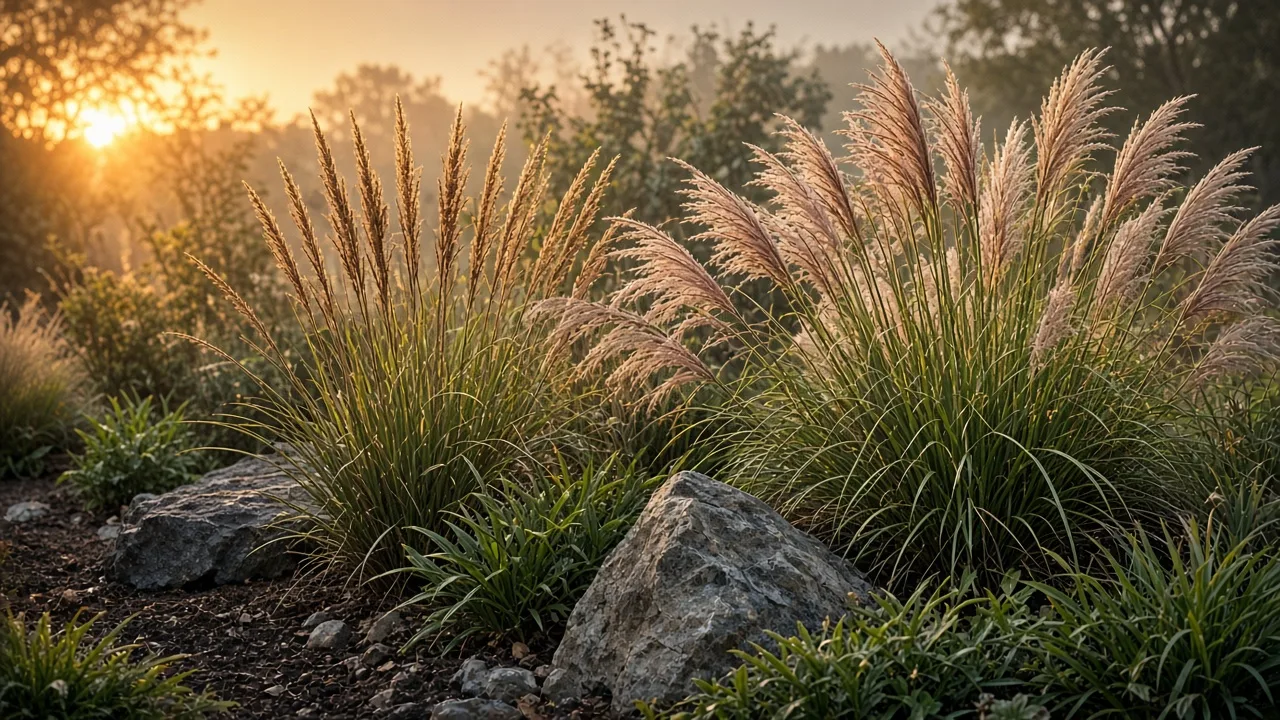
Ornamental grasses can soften a hard path, give a sunny border winter structure, or add movement where flowers have finished. The best choice is not simply the tallest or most colorful one: it is a plant whose mature size, light and moisture needs, growth habit, and local behavior fit the place you have.
The term “ornamental grass” is used broadly in gardens. It can mean true grasses in the Poaceae family as well as grass-like plants such as sedges, rushes, and even some bamboos; those groups do not all grow or spread in the same way. Colorado State University Extension’s guide to ornamental grasses describes that broad landscape use, while the University of Florida IFAS guide to selecting and using ornamental grasses emphasizes matching a plant’s growth form and needs to the site.
Choose an ornamental grass by site, not by photo
Before comparing cultivars, note how many hours of direct sun the planting area receives, whether water drains away or lingers, and how much room a mature plant can occupy. Also check what sits nearby: a small clump at the front of a border behaves differently from a tall screen beside a narrow path, a foundation, or a neighbor’s yard.
Mature height is only part of the space calculation. A grass can look narrow in a nursery pot and widen considerably over several seasons; leave room for its full width, air movement, and any companion plants. If you want a border to stay crisp, prioritize a slow-spreading or clump-forming cultivar and ask for its mature spread rather than assuming all grasses stay in tidy tufts.
Clumping or spreading: know how the plant grows
Clumping grasses gradually widen from a central crown. They can still become large and need dividing, but their growth is usually easier to predict in a mixed bed. Spreading grasses move through underground rhizomes or aboveground stolons, or they produce enough seed to establish plants outside the original clump; that behavior can be useful on a broad slope and frustrating in a small garden.
The University of Florida IFAS Extension distinguishes these growth forms and cautions that runners can be difficult to keep inside a confined area. For a narrow border, start with a named clumping selection and verify its behavior in your region; for a meadow or large naturalistic planting, controlled spread may be acceptable if you are prepared to remove seedlings at the edges.
Warm-season or cool-season: know when it looks its best
Warm-season grasses tend to put on most of their growth during warmer weather, often flowering later in summer or fall. Cool-season grasses make more of their growth in cooler spring weather and can retain a stronger early-season presence; a hot summer, a mild winter, or a particular cultivar can alter what you see, so treat these as useful patterns rather than rigid calendars.
This distinction matters if you want a grass to screen a view by June, hold its leaves through winter, or reach full height before fall. Read the plant label for local hardiness and mature dimensions, then ask a local nursery or extension office how the species performs in your climate. Colorado State University Extension notes that grasses differ in growing season and winter behavior, and recommends planting time according to the grass and climate rather than treating every ornamental grass alike.
Here is a quick comparison of the 12 selections below. Heights are approximate mature ranges; soil, water, cultivar, and climate can change the final size.
| Grass | Best fit | What to check |
|---|---|---|
| Blue fescue | Sunny edging, rock gardens, containers | Needs drainage; renew older clumps |
| Japanese forest grass | Part-shade borders and woodland edges | Keep evenly moist; protect from hot afternoon sun |
| Little bluestem | Sunny, well-drained native-style beds | Upright seed heads add height beyond foliage |
| Pink muhly grass | Sunny fall display | Needs sun and good drainage for its best form |
| Switchgrass | Larger native border or screen | Choose cultivar by mature height and width |
| Prairie dropseed | Fine-textured accent or repeated edging | Slow to establish; give each clump space |
| Feather reed grass | Vertical rhythm in a sunny border | Don’t crowd its upright flower stems |
| Blue oat grass | Dry, sunny bed with blue foliage | Avoid waterlogged soil |
| Tufted hair grass | Cool, moist, lightly shaded bed | Can flop or decline if site is too hot and dry |
| Northern sea oats | Filtered shade and woodland-style planting | Self-seeds readily; remove unwanted seedlings |
| Indian grass | Large sunny prairie-style planting | Too tall for most narrow foundations |
| New Zealand wind grass | Mild-winter, coastal, or sheltered garden | May self-sow; hardiness varies |
12 ornamental grasses for different garden jobs
Blue fescue for a compact, blue-gray edge
Blue fescue (Festuca glauca) is a small, cool-toned bunchgrass for the front of a sunny bed, a rock garden, or a container where you want a neat mound instead of a tall screen. Its narrow blue-gray blades contrast well with broad-leaved perennials, dark mulch, and stone; the flower stems are less important than the foliage.
Give it sharp drainage and avoid treating “drought tolerant” as “never water.” It needs establishment water, and wet, heavy soil can shorten its life; in humid or hot-summer climates, it may look less vivid or decline sooner than it does in a cooler, drier site. Colorado State lists blue fescue for sunny to partly shaded dry sites and notes that older clumps benefit from renewal, so divide or replace a tired center rather than expecting one mound to stay perfect forever.
Japanese forest grass for shade
Japanese forest grass (Hakonechloa macra) is one of the more reliable choices when a shady bed needs flowing texture instead of another shrub. Its arching leaves form a low cascading mound that works along a path, beneath a small tree, or at the front of a woodland border; golden or variegated cultivars brighten shade, while greener forms read as a softer ground-level layer.
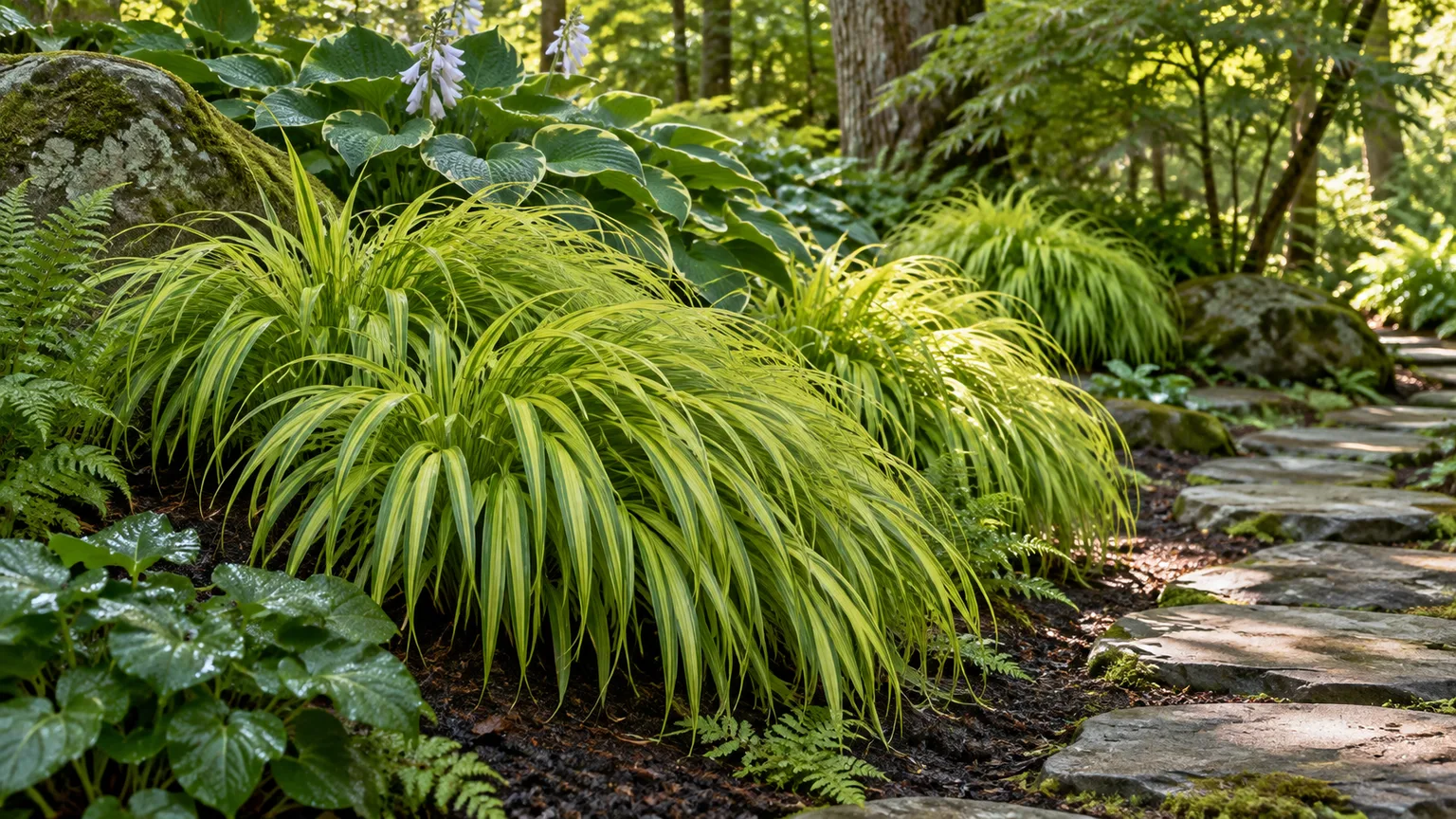
Give it part shade, humus-rich soil, and regular moisture, especially while it establishes. Hot afternoon sun and a bed that dries to dust can scorch or stall it, and it is slower to bulk up than many sun-loving prairie grasses. Use it where you can appreciate the form up close, not as a fast privacy plant. For a container, choose a pot with drainage and check it more often in warm weather; a small pot dries much faster than a woodland bed.
Little bluestem for a sunny, dry border
Little bluestem (Schizachyrium scoparium) is a North American prairie grass that makes a strong upright clump without the bulky footprint of many tall screens. Foliage shifts from blue-green during the growing season toward copper, orange, or red tones in fall, and its seed-bearing stems add a fine vertical texture through winter. Cultivars vary in height and color, so compare them by mature dimensions rather than buying only by the name.
It suits full sun and well-drained soil and can handle leaner, drier conditions once established. Its upright seed heads rise above the foliage, which can make the overall plant appear taller than a nursery label’s leafy mound. Colorado State University Extension describes little bluestem as drought tolerant and gives it a range of fall colors; the native prairie character also makes it a useful alternative to non-native grasses when it fits your local ecology. Avoid overwatering or feeding it heavily to force quick growth: lush stems may lodge, and the plant’s natural form is part of the appeal.
Pink muhly grass for late-season color
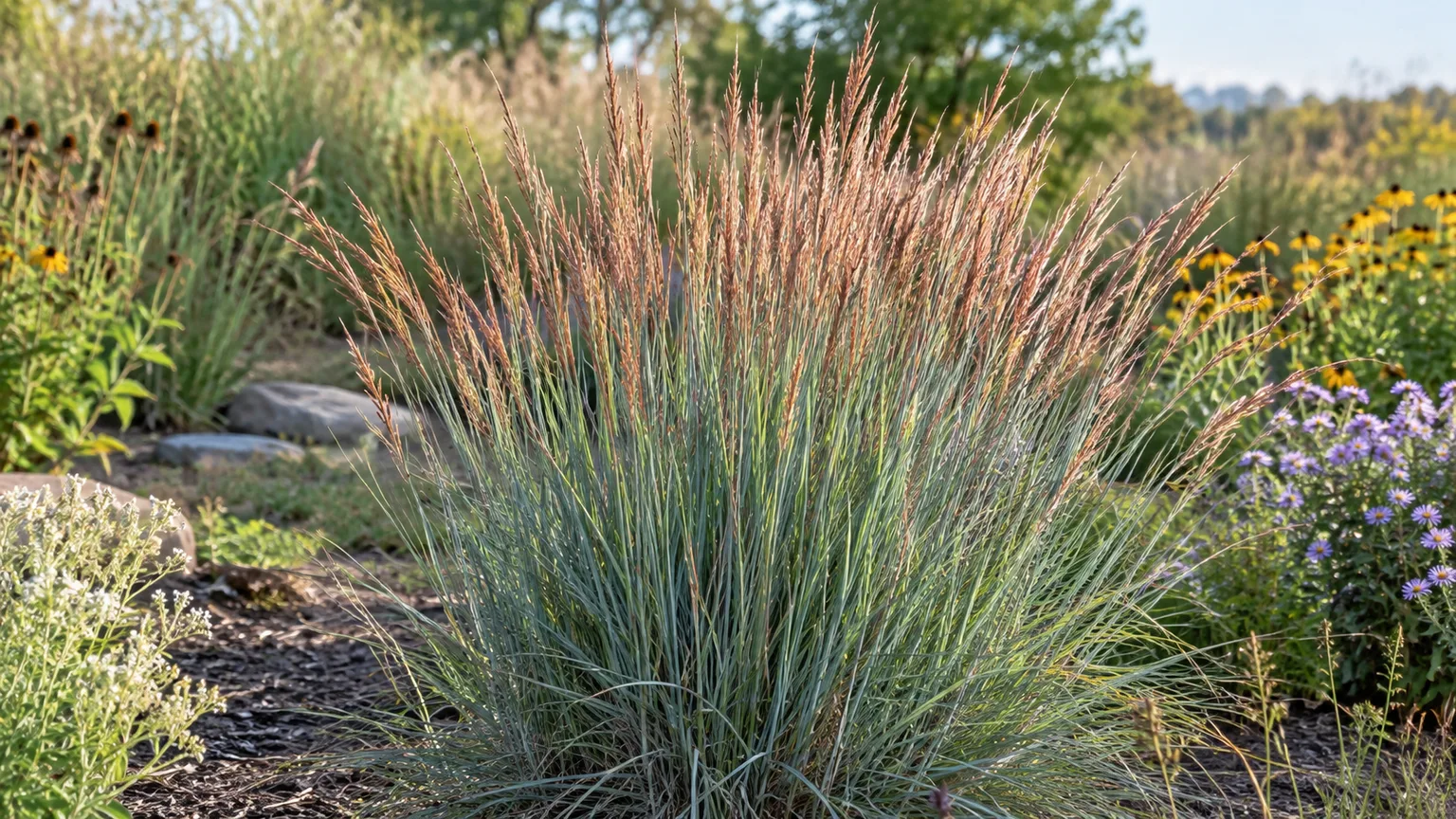
Pink muhly grass (Muhlenbergia capillaris) is grown for its airy pink flower panicles, which create a soft cloud above narrow foliage in late summer or fall. It is most effective when repeated in a drift or used where low sun can pass through the plumes, rather than planted as a single bulky hedge. The color fades to tan, leaving fine structure after peak bloom.
Choose a sunny position with drainage; the plant may survive a wider range of conditions than those that produce the most dramatic flower display. Leave room for the mature clump and avoid planting it where winter wetness lingers. The effect is delicate, so pair it with bolder leaves or sturdy stems to keep the bed from looking visually thin earlier in the season. A native-plant or regional nursery can confirm whether this species is locally appropriate and which cultivar performs reliably in your area.
Switchgrass for height and habitat
Switchgrass (Panicum virgatum) is a tall, warm-season North American grass with cultivars ranging from upright and narrow to broader, vase-shaped forms. It brings height, seed heads, and fall color to a sunny mixed border, meadow, or property edge, and it can create a loose screen without the solid wall of a hedge. Fine Gardening notes that native North American grasses such as switchgrass can support local insect species, but the ecological value of any planting depends on local suitability and what else grows around it.
The variety matters. A large cultivar can overwhelm a small bed, while a more compact selection can add structure among perennials; read the tag for both height and width and leave enough clearance for seasonal movement. Newly planted switchgrass needs consistent water while roots establish, even if the mature plant handles periodic dry spells. In arid regions, a prairie species may still need supplemental irrigation if local rainfall is much lower than the conditions it evolved with.
Prairie dropseed for a fine-textured mound
Prairie dropseed (Sporobolus heterolepis) makes a dense, fountain-shaped mound of fine leaves that can soften a path edge or repeat between flowering perennials. Its airy flower stems rise above the foliage, then turn tawny as seed heads mature; in fall the mound may take on gold or orange tones. It is a good choice when you want a native grass that reads as a low, graceful accent rather than a tall screen.
Give each plant room to reach its eventual width and be patient: prairie dropseed is not a rapid-filling groundcover. It prefers sun and drainage, and establishment can be slower than the first-season growth of more vigorous grasses. Some gardeners notice a pleasing scent from the flowers, but the plant’s strongest reasons to choose it are its fine texture and long seasonal presence. Colorado State University Extension lists it among grasses suited to dry conditions while noting that some moisture helps it perform well.
Feather reed grass for a crisp vertical accent
Feather reed grass (Calamagrostis × acutiflora), especially ‘Karl Foerster’, forms an upright, narrow clump with flower stems that hold their shape as they mature. Use it to punctuate a border, echo posts or fence lines, or create a repeated rhythm behind lower perennials. The early, vertical seed heads keep their structure into winter, which makes this a useful plant where a bed would otherwise flatten after flowering season.
It is a better choice for structure than for a wispy, natural prairie look. Give it sun and enough room for the mature clump; a cramped planting can become a dense mass that is hard to clean up. Colorado State University Extension describes this cultivar’s persistent, upright flower spikes. For cutback and division, use the guidance for the particular species you bought rather than copying a calendar from another grass.
Blue oat grass for a cool-toned, dry site
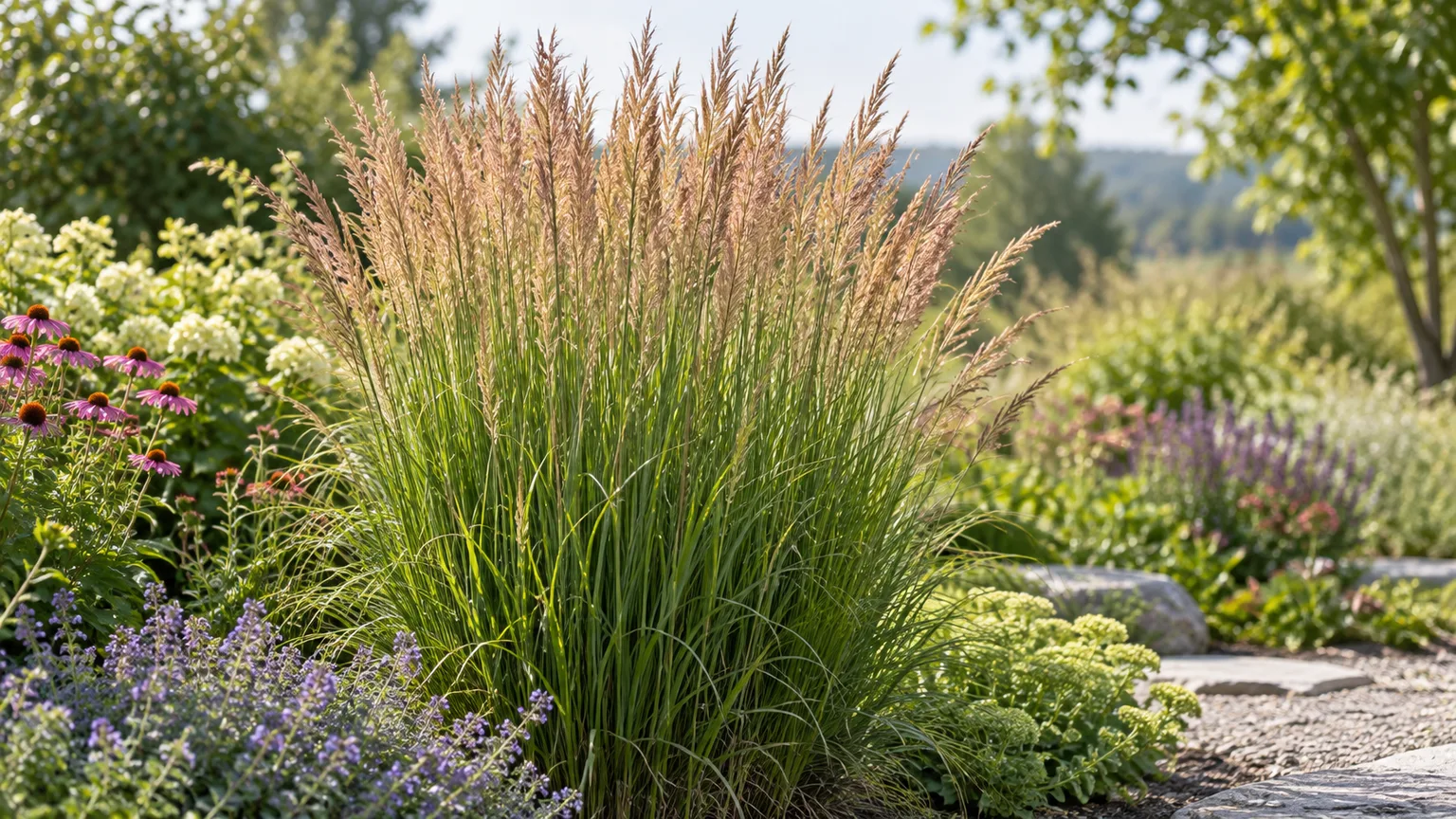
Blue oat grass (Helictotrichon sempervirens) makes an arching, blue-gray mound with upright flower stems. It provides a more substantial blue accent than blue fescue and works well in a sunny border, gravel garden, or other site where the soil drains quickly. The leaf color can be especially effective beside burgundy foliage, silver-leaved plants, or warm-colored stone.
Use it where summers are not persistently hot and humid and where roots will not sit in water. It tolerates dry conditions after establishment, but the first season still calls for regular watering as the root system expands. In winter, leaf persistence varies with climate; don’t assume “evergreen” means foliage will stay untouched through every freeze. If your site has heavy clay, amend the planting area for drainage across the bed or choose a species that naturally tolerates wetter soil instead of creating a small, fast-draining pocket surrounded by saturated clay.
Tufted hair grass for a cooler, moist bed
Tufted hair grass (Deschampsia cespitosa) is a cool-season clump-former with airy flower panicles that catch light above its foliage. It is useful in a lightly shaded border or a bed that stays more consistently moist than a hot, exposed slope. Some cultivars are selected for colorful foliage or reduced flowering, so inspect the plant label if you are choosing it for flowers rather than leaves.
This grass is not a universal “shade grass.” Heavy, dry shade can still produce sparse growth, and a warm, humid summer may be a poor match for its cooler-season preferences. It may need more moisture than the blue-gray grasses in this list, but that does not mean standing water is suitable; match watering to soil drainage and local climate. Colorado State Extension includes tufted hair grass among the more shade-tolerant selections and notes that it benefits from some supplemental moisture.
Northern sea oats for filtered shade
Northern sea oats (Chasmanthium latifolium) stands out for its dangling, flat seed heads, which begin green and turn copper as they mature. It tolerates filtered shade better than many ornamental grasses and brings an animated, woodland feel to the edge of a path or beneath deciduous trees. Plant it where the seed heads can be seen against a darker background and where a little movement in a breeze will add interest.
Its main trade-off is self-seeding. If you want a tightly controlled garden, remove the seed heads before they shed or pull seedlings while they are small; if you want a more naturalized patch, let a few establish where they belong. The original planting can also widen over time, so leave elbow room. A quick annual edge check is easier than letting seedlings mature throughout a border and trying to remove them among established perennials.
Indian grass for a bold prairie planting
Indian grass (Sorghastrum nutans) is a tall native grass with an upright presence, yellow to orange fall color, and warm-toned seed heads. It has more visual weight than prairie dropseed or blue fescue, so use it toward the back of a wide border, in a meadow, or as a repeated accent in a naturalistic planting. Its height gives the garden winter structure, but that same height can block a view if it sits near a window or beside a walkway.
Choose it when the bed has sun and enough space for its full stature. It is not an instant screen: plants need time to establish, and appearance varies by cultivar and region. Colorado State University Extension lists Indian grass as a tall prairie native and notes that it can tolerate drier soils after establishment, though its native climate and rainfall patterns still matter. Pair it with shorter flowering perennials so its stems provide a backdrop rather than crowding every plant in the bed.
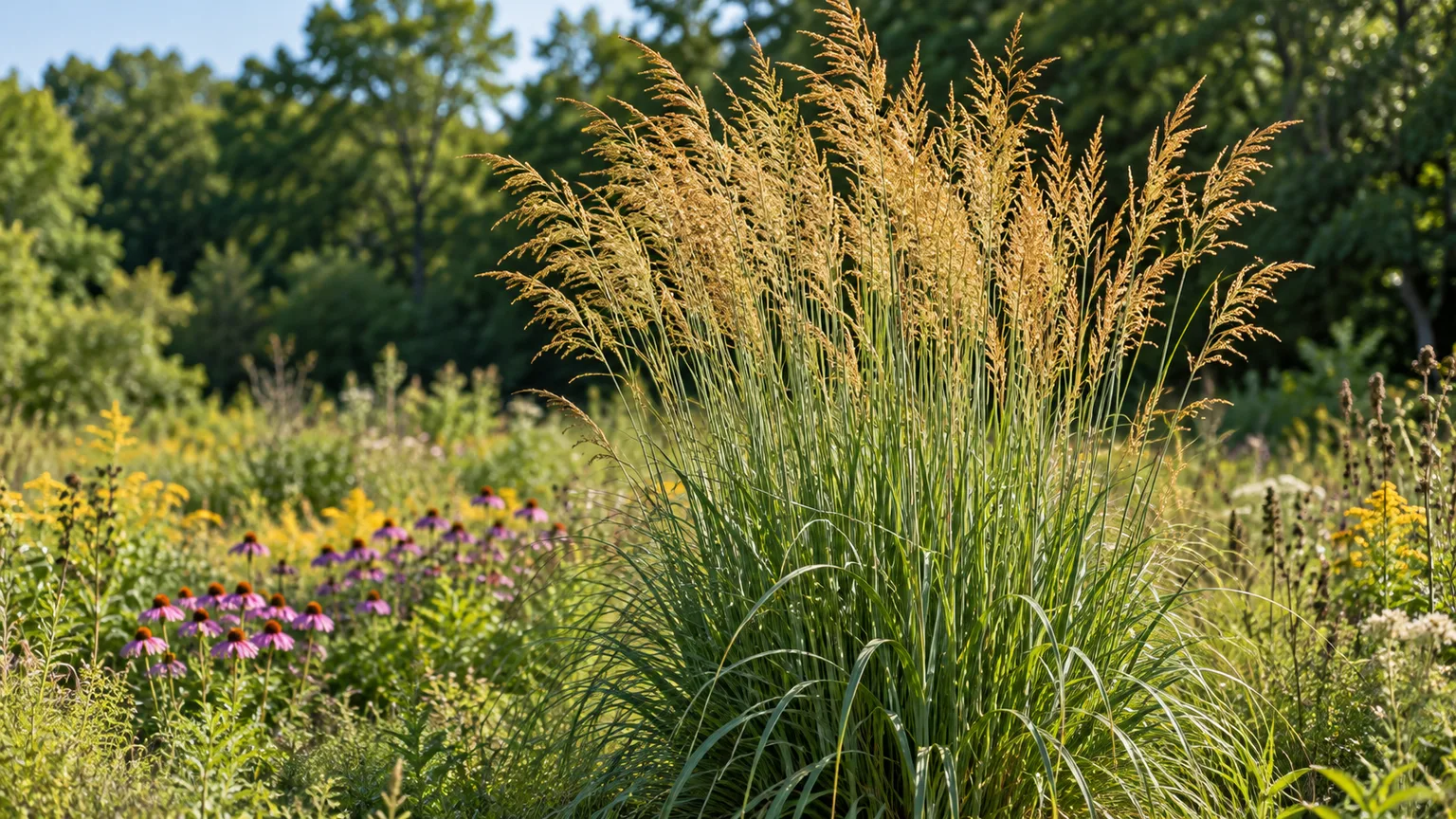
New Zealand wind grass for mild-winter gardens
New Zealand wind grass (Anemanthele lessoniana, also sold under the synonym Stipa arundinacea) forms an arching, semi-evergreen clump with fine leaves that can shift toward copper and bronze in cool weather. It offers movement and warmer winter color in a sheltered coastal or mild-winter garden, and works in a border or larger container where the foliage can cascade over the edge. Gardenia’s plant profile for New Zealand wind grass describes a clumping plant that self-sows without being considered invasive in its listed growing context.
That context matters: this grass is not a safe default for every climate. Hardiness, winter appearance, and seedling behavior vary with local conditions, so ask a regional grower whether it is appropriate before planting. Remove seedlings where you do not want them, and do not place any freely seeding grass beside natural areas if local guidance flags a risk.
Plant and maintain ornamental grasses for lasting form
Planting time depends on species, stock type, and climate. Spring is a sensible general window for many grasses because roots have time to establish before winter; container-grown plants can often be set out over a longer season, but avoid late planting when a young warm-season grass would have little time to root before frost. In warm climates, local extension guidance may favor a different window, so use regional advice when it conflicts with a broad calendar.
Set the crown at the same depth it grew in its pot, water the root ball and surrounding soil thoroughly, and mulch lightly without burying the crown. Space plants according to their mature width, not the gap that looks empty on planting day. A new grass needs regular checks during its first growing season; water deeply when the root zone begins drying instead of relying on small, frequent splashes that wet only the surface. Once established, many ornamental grasses need less irrigation, but “drought tolerant” does not mean a newly planted grass can be left dry.
Most grasses do not need frequent fertilizer. Excess nitrogen can push soft growth that flops, while pruning or dividing should be driven by the plant’s form rather than an arbitrary annual schedule. If a clump develops a dead center, becomes crowded, or stops flowering well, check whether it is a clump former that can be divided; some grasses have dense roots that are difficult to split, so replacing or removing the plant may be more realistic than forcing division.
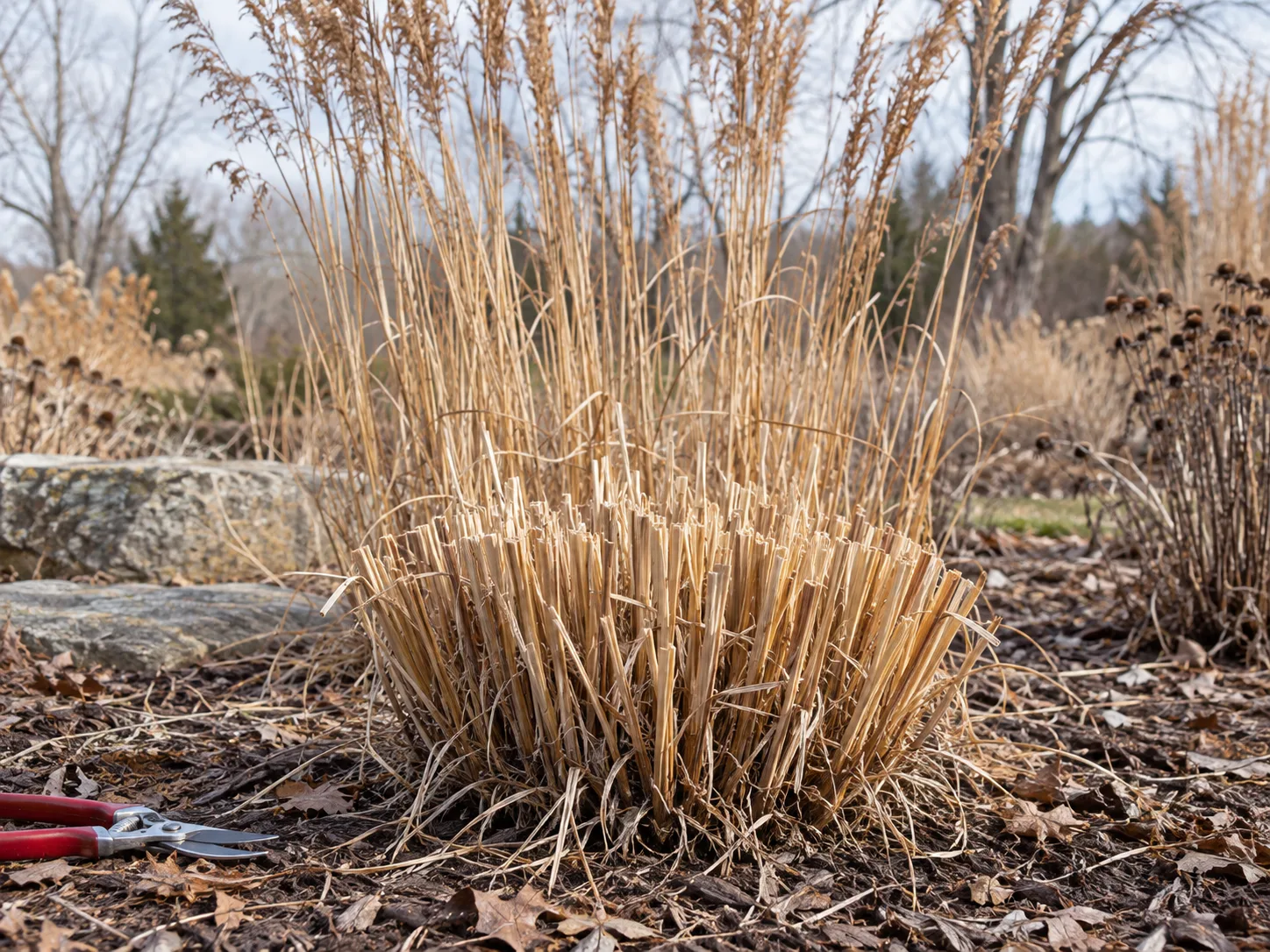
For deciduous grasses, leave seed heads and foliage standing through winter when they add interest and do not create a safety issue. Cut them back in late winter or early spring, before new shoots are long enough to damage, while leaving a short basal tuft rather than cutting into the crown. Wear sturdy gloves and long sleeves: grass leaves can have sharp edges, and a tied bundle is easier to remove cleanly. Evergreen or semi-evergreen grasses often need combing out or selective trimming instead of a hard shearing cut.
Check local spread and fire risks before planting
“Invasive” is not a universal label that applies identically across the country. A plant can be an acceptable garden subject in one region and a serious problem in another because the climate, natural communities, regulations, or escape risk differ. The UF/IFAS guide discusses that regional variation and warns about grasses that can spread into natural areas or alter fire behavior; it recommends checking local assessments and extension advice before purchasing.
This is especially useful when a nursery tag emphasizes beauty but says little about seedling behavior. Popular grasses such as Mexican feather grass, some fountain grasses, and certain Miscanthus may self-sow or be flagged in parts of their range; that does not mean every cultivar has identical behavior everywhere. Check your state or county invasive-plant list, confirm the botanical name and cultivar, and look for locally recommended alternatives. Garden Design flags regional concerns with Mexican feather grass and suggests native alternatives for California gardens.
Dry stems can also become a fire concern close to buildings, fences, or public spaces. Colorado State University Extension notes that dead grass foliage is combustible and may need earlier removal in some settings, even though leaving it upright can benefit winter structure elsewhere. Follow local fire guidance, keep plants away from ignition sources where required, and clear dry material when safety conditions call for it. The right maintenance choice depends on the site: winter habitat and garden structure matter, but they do not outweigh a local fire-risk recommendation.
Conclusion
The most dependable ornamental grass is the one that suits your sun, drainage, mature space, and local ecology. Blue fescue and blue oat grass offer compact cool tones; Japanese forest grass brings movement to shade; prairie natives such as little bluestem, switchgrass, and Indian grass add strong seasonal structure; and feather reed grass gives a tidy vertical accent.
Before buying, confirm the plant’s botanical name, mature width, growth habit, and local spread status. Water it through establishment, give it room, and cut it back according to its growth type and your fire conditions. Those checks make it more likely that your grass will become a lasting part of the landscape rather than a plant you have to contain, move, or replace.



