How to Grow and Care for Okra: A Home Garden Guide
See when to plant okra, how far to space it, how much to water, and what to check when flowers fail to form pods. Get fixes for pests and late harvests.

Okra rewards a gardener who gets two decisions right: wait for real warmth before planting, then check the plants often once flowering begins. The crop tolerates summer heat better than many vegetables, but cold soil can stall germination and a missed harvest can turn tender pods tough within days. Start with a warm, sunny bed, give each plant room to branch, and treat harvest as part of ongoing care rather than the last step.
Okra (Abelmoschus esculentus) belongs to the mallow family, alongside hibiscus. Its flowers are ornamental, but the edible part is the immature seed pod. In much of the United States, gardeners grow it as a warm-season annual; in regions with a long frost-free summer, a few plants can keep producing from early summer until cold weather ends the season.
Oklahoma State University Extension describes okra as productive in hot conditions, while UF/IFAS notes its value in Florida’s long, humid growing season. Those regional examples point to the same practical rule: warm ground matters more than a calendar date. (Oklahoma State University Extension; UF/IFAS Gardening Solutions)
The Conditions That Make Okra Productive
Think of okra as a heat-loving crop with a deep-rooted, upright habit. It needs direct sun for most of the day, soil that drains after rain, and enough moisture during flowering and pod growth to avoid a stop-start harvest. Once established, it can ride through a short dry spell, but drought tolerance is a survival trait, not a reason to withhold water when you want tender pods.
The most useful planning question is not “What date does okra go in?” but “Can the soil stay warm and can I reach the pods?” Planting too early can leave seed in cold, wet soil for an extended period. Planting too close can create a wall of foliage that is hard to inspect, weed, and harvest. Give the crop warmth, drainage, and reachable rows first; a precise fertilizer schedule comes later, if the soil test calls for one.
Choose a Variety That Fits Your Space
Variety affects the footprint, pod color, and how easily you can pick, so read the seed packet for mature height and days to maturity instead of assuming every okra grows to the same size. Oklahoma State lists Annie Oakley II as a dwarf type, while Clemson Spineless and Emerald are standard types. UF/IFAS also names varieties such as Cajun Delight, North and South, Cow’s Horn, and Burgundy for Florida gardens; red-podded types can bring ornamental color as well as edible pods. (Oklahoma State University Extension; UF/IFAS Gardening Solutions)
For a small bed, a dwarf or compact cultivar can reduce shade and make the pods easier to reach, but a standard type can fit if you have room for a wide row and a clear path. “Spineless” usually refers to reduced prickles on the pods, not a completely smooth plant.
Many plants still have fine hairs that can irritate sensitive skin, so gloves and long sleeves are sensible even when the variety is sold as spineless. Bonnie Plants makes the same distinction in its practical okra-growing guidance. (Bonnie Plants)
Give Okra Sun, Warm Soil, and Drainage
Choose the sunniest spot you can give a summer vegetable. A site with at least six hours of direct sun is a workable floor; a full-sun location usually gives stronger growth and more dependable flowering. Because mature plants can shade neighboring crops, put the row where tall stems will not block shorter vegetables, and leave access on the side from which you plan to pick.
Okra grows in many soil textures, provided excess water can drain away. A loam or sandy loam is convenient, but a heavier bed can still work if it does not stay saturated after rain.
In a low or compacted spot, use a raised bed or a broad, raised planting row rather than trying to fix drainage with a layer of gravel. A soil test is more useful than guessing at acidity or adding fertilizer: Oklahoma State gives a preferred pH range of 6.0 to 6.8 and warns that excessive nitrogen can delay flowering and fruit set. (Oklahoma State University Extension)
Do not dig fresh manure or large amounts of fertilizer into the planting hole. Incorporate mature compost through the bed if it needs organic matter, then let a soil test guide any additional nutrients. A seedling with huge, dark-green leaves and no flowers may have excess nitrogen, so adding more “plant food” can worsen the problem instead of solving it.
When to Plant Okra
Plant outdoors after frost danger has passed and the soil is warm, not simply on a date printed in a regional calendar. Oklahoma State recommends a soil temperature of at least 70°F at planting depth for a more uniform stand; UF/IFAS notes okra grows best once soil is above 65°F and that Florida gardeners can use nighttime temperatures as a regional cue. A soil thermometer removes much of the guesswork: check at the depth where seeds will sit, ideally over several mornings, and wait if the bed remains cool and wet. (Oklahoma State University Extension; UF/IFAS Gardening Solutions)
In a short-season area, this can push planting later than you expect. If the warm period remaining before the usual first fall frost is tight, choose an early cultivar or start seedlings indoors rather than gambling on a cold-soil direct sowing.
In a subtropical climate, planting windows are broader, but intense summer rain can make drainage and disease management more important. Local frost dates are a planning aid; soil temperature and a reliable warm forecast decide whether the seedbed is ready.
Direct-Sow or Start Seedlings?
Direct sowing is the simplest option where the season is long enough. Okra seed has a firm coat, so some gardeners soak it for several hours or overnight to help water reach the embryo; it is optional rather than essential.
UF/IFAS suggests a six-hour soak, and GrowVeg also includes soaking as a useful step. Sow untreated seed as directed on its packet, and do not soak commercially treated seed unless the label says it is safe to do so. (UF/IFAS Gardening Solutions; GrowVeg)
Starting indoors can save time in a short summer, but okra dislikes rough transplanting because its taproot is easy to disturb. Sow one seed per deep cell or biodegradable pot about three to four weeks before transplanting, keep it warm and bright, and move it outside only after the bed is warm. Harden seedlings off gradually, then plant them with the root ball intact.
If the roots have curled around the pot or the plant has become leggy, transplant shock may erase the time you hoped to gain; direct sowing is often the better choice when the season allows it.
Planting Okra: Depth, Spacing, and Rows
Prepare a weed-free bed and water it before sowing if the soil is dry. Plant seeds about three-quarters to one inch deep. You can sow them a few inches apart in a row and thin later, which is more reliable than placing a single seed at every final station; if two seedlings emerge together, snip the weaker one at soil level rather than pulling it and disturbing the keeper’s roots.
Space standard plants roughly 18 to 24 inches apart. Oklahoma State’s production guide uses rows about 42 inches wide for dwarf types and 48 to 60 inches for standard types because close rows make harvest difficult; in a small home bed, you can narrow the path if plants remain reachable from both sides.
The practical goal is to let mature leaves touch lightly without creating an inaccessible thicket. Dwarf varieties can be closer if the packet recommends it, but avoid crowding in humid climates, where airflow helps foliage dry. (Oklahoma State University Extension; GrowVeg)
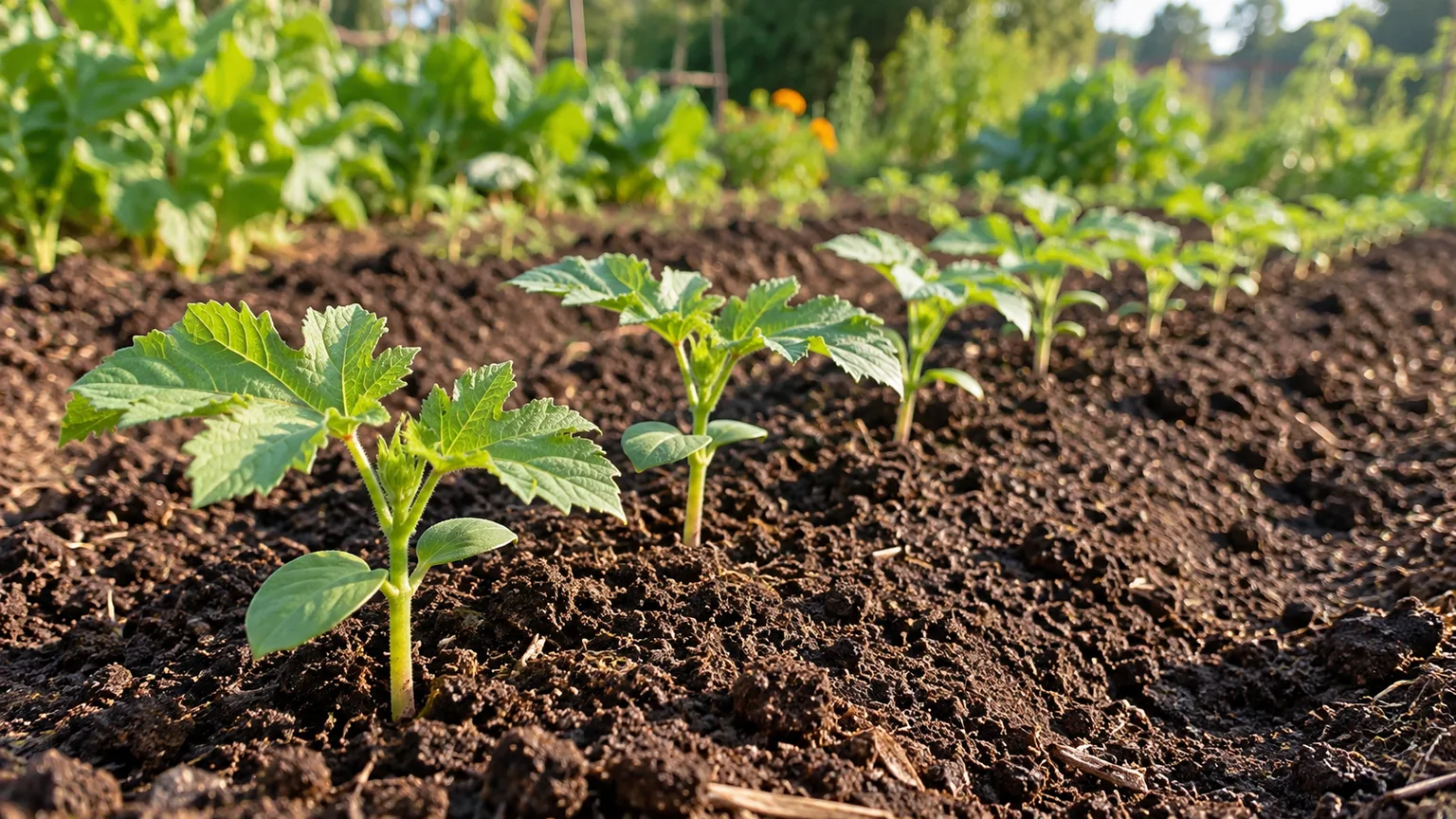
This spacing is not wasted ground. A narrow row can look efficient in spring and become awkward once the stems branch and the leaves overlap. Measure your row by the harvest path you will need in July, when pods may be hidden along the stem and prickly foliage is tall enough to brush your arms.
Watering and Feeding Through the Season
Water deeply, then adjust to weather
Use about one inch of water per week, counting rainfall, as a starting point—not a rule that overrides your soil. Okra in sandy ground, a raised bed, or a container may need water more often during hot, windy stretches; a clay bed after a soaking storm may need none. Check moisture a few inches below the surface and water at the soil line when that zone is drying, rather than giving the leaves a brief daily sprinkle.
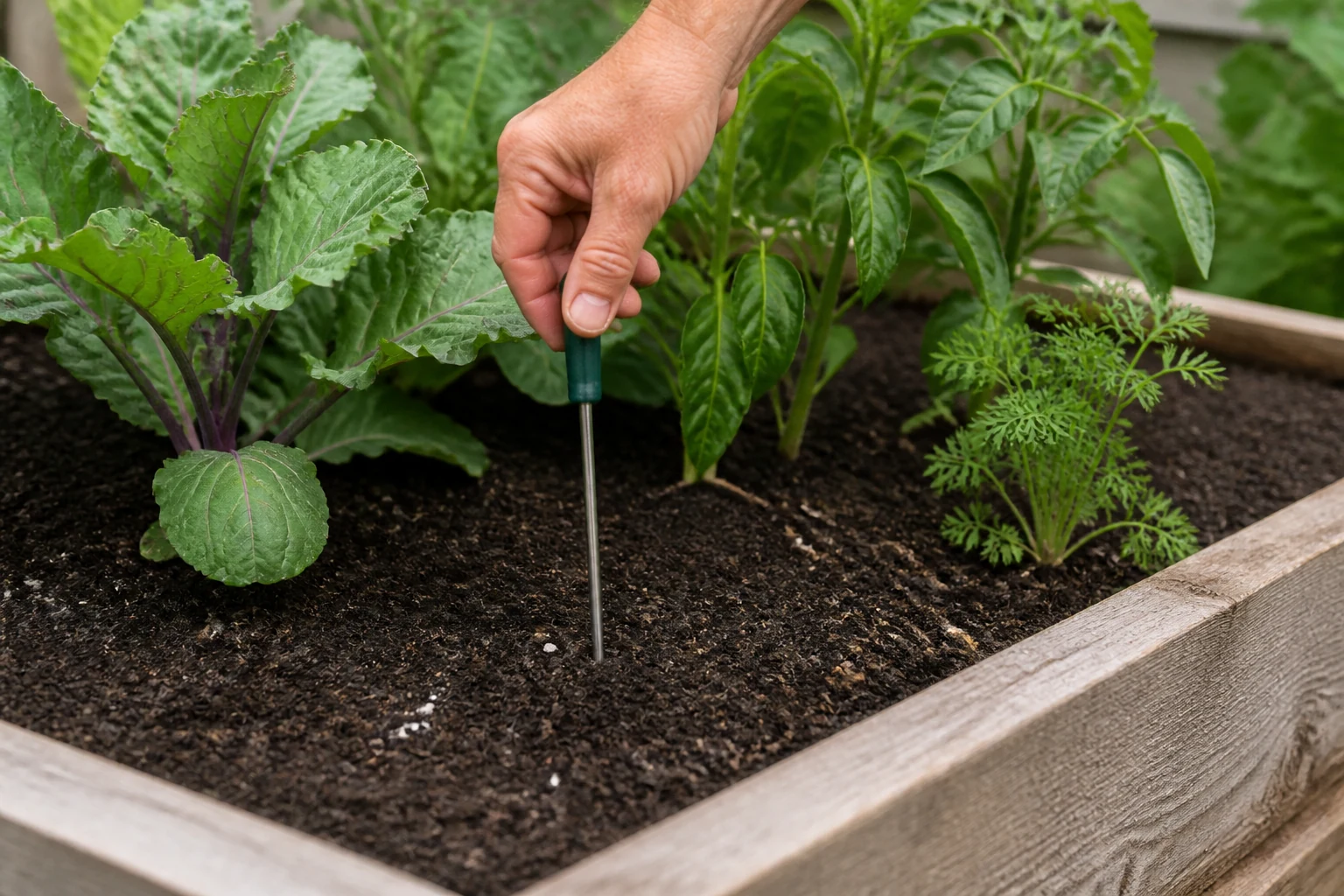
A soaker hose or drip line makes it easier to wet the root zone without repeatedly dampening the canopy. Oklahoma State notes that irrigation improves yield and that drip systems can reduce leaf wetness; the exact schedule depends on rainfall, heat, and soil texture. If flowers or young pods begin to drop during a hot dry spell, check soil moisture before changing fertilizer or blaming pollination. (Oklahoma State University Extension)
Feed for pods, not just leaves
If you start with fertile soil and add compost, you may not need much fertilizer. A soil test is the right basis for phosphorus, potassium, and pH adjustments; if growth is weak, first check for cold soil, waterlogging, weeds, or root damage. Applying a high-nitrogen product without a diagnosis can create lush foliage at the expense of flowers and pods, a trade-off specifically flagged in Oklahoma State’s production guidance.
For a container or a bed that has produced heavily for a long time, follow a fertilizer label for edible crops and use the lower end of its rate when you are unsure. Do not combine several liquid and granular feeds “just in case.” Feed only if the plant’s growth, soil test, or container mix gives you a reason, and keep fertilizer off the leaves and stem unless the product directions say otherwise.
Growing Okra in Containers
You can grow okra on a sunny patio, but the pot needs to be large enough that the root zone does not dry out every afternoon. Start with one compact variety in a deep, wide container with drainage holes, a quality potting mix, and room to reach the plant from more than one side. A very small pot may keep the plant alive while limiting its growth and harvest, so choose the biggest container the patio can support rather than squeezing several plants together.
Dark pots warm quickly, which can help early in the season, but they can also overheat and dry faster on hot concrete. Check moisture daily during heat waves, water until excess drains, and empty any saucer so roots do not sit in water.
If the plant becomes top-heavy, use a stable container in a sheltered position. A pot-grown plant can still develop a tall main stem and prickly leaves; allow enough clearance from walkways and doors.
Weed Control, Mulch, and Crop Rotation
Keep weeds down while okra seedlings are small, when they compete most directly for light and water. Once the canopy fills out, it shades some weeds, but hand removal is still easier before roots become established. Hoe shallowly near the row because deep cultivation can cut okra roots and bring buried weed seed to the surface.
Wait until the soil has warmed before applying a light organic mulch. Straw or chopped leaves can slow evaporation and suppress weeds; avoid mixing woody, high-carbon material into the root zone because decomposition can temporarily tie up nitrogen.
In gardens where okra or related vegetables have repeatedly wilted or grown poorly, rotate to a different crop family and avoid planting okra in the same bed year after year. Root-knot nematodes can reduce vigor below ground, and rotation to non-host crops is among the cultural measures Oklahoma State recommends for managing their buildup. (Oklahoma State University Extension)
Common Okra Pests and Diseases
Okra can attract aphids, mites, caterpillars, stink bugs, and other insects, but seeing an insect does not automatically mean the crop needs treatment. Inspect the undersides of leaves, growing tips, flowers, and pods once or twice a week. Look for a pattern of damage—distorted new growth, stippling, chewing, or bumpy pods—before deciding whether a pest is actually reducing the harvest.
Scout before you treat
For a small aphid colony, a firm stream of water or hand removal may be enough. Pick off caterpillars when you find them, and harvest regularly so overmature pods and pest eggs do not linger. Stink bugs and leaf-footed bugs can mark pods even when they do not visibly weaken the plant; remove them by hand if practical.
Avoid spraying blooming plants casually, because flowers attract pollinators and a broad-spectrum product can harm beneficial insects. If a pesticide is necessary, use only a product labeled for okra and the pest, and follow its label and preharvest interval.
Seedling collapse in cold, wet soil can point to damping-off rather than a fertilizer problem. Older plants that wilt despite moist soil may have root injury, root-knot nematodes, or a wilt disease; check drainage and roots before watering more. Oklahoma State describes root-knot nematodes, Fusarium and Verticillium wilts, blossom blight in hot wet weather, and leaf spots, while emphasizing rotation and practices that reduce extended canopy wetness.
Home gardeners should get a local Extension diagnosis before treating a serious wilt, since several causes look alike and spraying the wrong target will not fix them. (Oklahoma State University Extension)
Why Is My Okra Flowering but Not Fruiting?
Start with timing and conditions before hand-pollinating flowers. Okra flowers are short-lived, and young plants need time to establish before the main harvest. If flowers appear but pods do not enlarge, check whether the bed is receiving direct sun, whether daytime heat is extreme and soil is drying between waterings, and whether the plant has been pushed toward leafy growth by excess nitrogen.
Correct one likely cause at a time and watch the next flush rather than changing everything at once.
If blossoms drop during a heat wave, keep root moisture even without leaving the soil soggy. If the plant is in shade, moving it may be impossible once it is established, so note the sun pattern and choose a better site next season. If foliage is lush but flowering is late, stop feeding, remove weeds that compete for moisture, and give the plant stable water.
If it is small and stalled, dig gently at the edge of the root zone to look for persistently wet soil, compaction, or swollen root knots; do not pull up a healthy plant just to inspect it.
If flowers appear but no pods develop across several healthy plants, confirm the flowers are opening normally and that nights and days are warm enough for active growth. A short run of poor weather can delay fruit set, and not every flower becomes a harvestable pod. Okra is generally not a crop that needs a nearby second plant to set fruit, so adding more plants will not solve a temperature, drainage, or nutrition problem.
Keep harvesting every pod that does develop and use those observations to guide the next planting.
Harvest Tender Pods Before They Turn Woody
Begin checking plants as soon as the first flowers fade. Pods can reach edible size in only a few days in hot weather, so a weekly harvest round is too infrequent once production starts. Oklahoma State reports that pods are often ready four to six days after bloom and gives three to four inches as a fresh-market size; the best size still varies by cultivar, and a tender long-podded variety can remain usable after a shorter one has turned fibrous. (Oklahoma State University Extension)
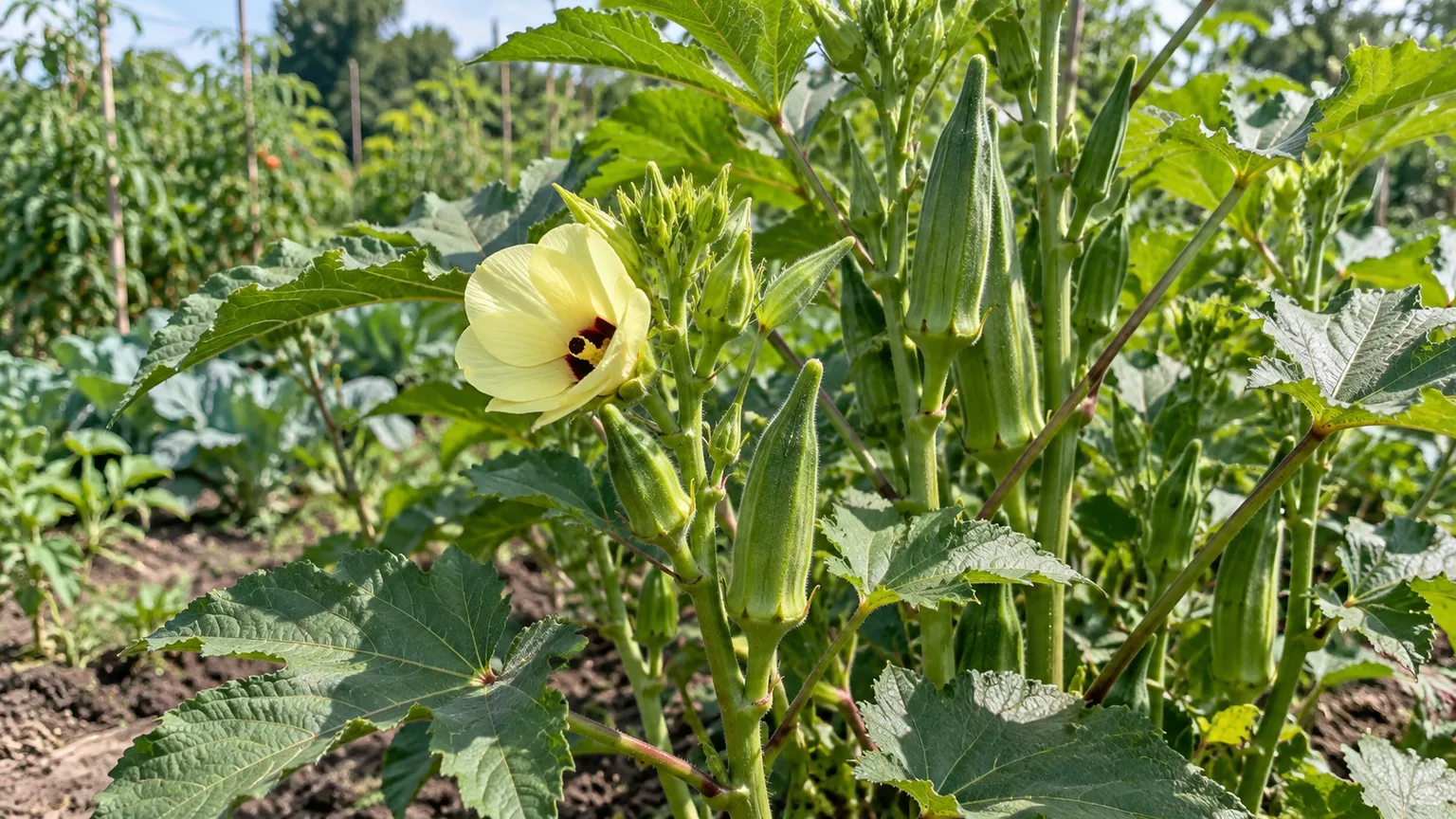
Pick when a pod is firm, slender, and easy to cut, generally around two to four inches for many varieties. If the pod feels tough or its ridges have become prominent, it is likely past its best eating stage. Use clean pruners or a sharp knife to cut the stem instead of tugging; long sleeves and gloves reduce irritation from the fine hairs on stems and leaves.
Bonnie Plants also recommends checking daily in hot weather because pods can grow from small to oversized in a few days. (Bonnie Plants)
Remove oversized pods even if you do not plan to eat them. Leaving mature fruit to develop seeds diverts the plant from continued flowering, while picking edible pods promptly keeps the row producing. Harvest in the morning if that fits your routine and move the pods into shade; avoid squeezing or piling them under heavy vegetables, which can bruise the tender skin.
Can You Prune Okra for a Second Crop?
Pruning is optional, not routine care. In a long, frost-free summer, a tall, healthy plant may respond to a modest late-season cut with new shoots; Bonnie Plants suggests removing about one-third of the top in climates with a long season. That approach is a reasonable experiment where there is ample warm weather left, but it is not a reliable way to rescue a plant already stressed by disease, drought, or an approaching frost. (Bonnie Plants)
If you try it, prune only a few vigorous plants first, use clean shears, keep some healthy foliage, and continue normal watering while new growth develops. Do not cut every plant down to a short stump just because pod production has slowed. In a short-season garden, the plant is usually better left standing and picked while it continues to flower; put the effort into another crop or the next planting window instead.
Store Pods and Save Seed
Fresh okra is best used soon after picking. Keep it dry and handle it gently; for a short hold, place unwashed pods in a breathable bag in the refrigerator’s warmer produce area and use them within several days. Oklahoma State notes that commercial storage near 45 to 50°F and high humidity can preserve quality for about a week, while colder storage can cause chilling injury.
A home refrigerator may be colder than that target, so freezing, pickling, or cooking the pods promptly is often a better plan than expecting them to keep for a long time. (Oklahoma State University Extension)
To save seed, leave a few healthy pods on an open-pollinated plant until they become large, dry, and brown. Cut them before they split, finish drying them in a ventilated place, then shell and store the seeds in a labeled paper envelope inside a cool, dry container. Save seed only from plants that grew and fruited well.
If other okra varieties were flowering nearby, offspring may not match the parent exactly, so buy fresh seed when preserving a specific cultivar matters.
Conclusion
The dependable way to grow okra is to wait until soil is warm, choose a sunny site that drains, and space plants for access as well as growth. Water when the root zone is drying, use fertilizer only when the soil or plant gives you a reason, and inspect the crop regularly once flowers open. Pick pods while they are still tender, wear protection if the plant’s hairs irritate your skin, and treat pruning as a climate-dependent experiment.
With those habits, a small row or a large patio pot can produce a steady summer harvest without turning okra care into a complicated schedule.