Lacecap Hydrangea Care: Planting, Pruning & Blooming
Lacecap hydrangea care: choose the right site, water and soil, prune by species, protect next year’s buds, and solve common bloom problems with less guesswork.

Lacecap hydrangeas bring a lighter look than the familiar rounded mophead: small central flowers sit inside a ring of larger, showier florets, leaving the center visible. They thrive when roots stay evenly moist, foliage is protected from punishing afternoon heat, and pruning preserves the flower buds that have already formed.
The detail that prevents many care mistakes is that “lacecap” describes a flower shape, not one botanical species. Many garden lacecaps are bigleaf hydrangeas, but mountain hydrangeas and several other species can also have lacecap flowers. Identify the plant from its nursery tag if possible; species and cultivar determine its eventual size, cold tolerance, whether it reblooms, and which stems to prune.
First Identify Which Lacecap You Have
A lacecap flower head is usually flatter than a mophead. In many cultivars, tiny fertile flowers occupy the center while larger decorative sepals form an outer ring. The distinction is useful for identification and garden design, but it does not by itself tell you the shrub’s pruning needs. The BBC Gardeners’ World Magazine plant profile describes lacecaps as the flat-headed form of bigleaf hydrangea, while lacecap cultivars also occur in other species. The named-writer Proven Winners lacecap guide likewise treats lacecap as a flower style and stresses checking the individual cultivar for size and care.
Start with the tag, receipt, or cultivar name. Hydrangea macrophylla is the usual bigleaf lacecap, and Hydrangea serrata is often called mountain hydrangea; both have lacecap selections and both may set flower buds on older stems. Other species can have similar flower heads but different bloom habits. If the label is gone, use leaf shape and mature form as clues, but avoid a hard pruning cut until the plant’s behavior is clear.
Size is cultivar-specific, not a fixed property of “lacecap.” North Carolina State Extension gives a typical mature range of roughly 3 to 6 feet for bigleaf hydrangea, but compact selections can stay smaller and vigorous ones can grow broader. Look for the cultivar’s mature width before planting near a path, window, foundation, or property line; a tight space often leads to repeated pruning that removes flowers.
Choose a Site That Balances Light and Water
In most gardens, the useful starting point is gentle morning sun with shade during the hottest part of the afternoon. This gives a flowering shrub enough light to set and open blooms while reducing leaf scorch and midday water stress. In a cooler coastal climate, a lacecap may tolerate more sun; in a hot inland garden, filtered light and dependable soil moisture matter more. This same morning-sun, afternoon-shade approach appears in the Proven Winners lacecap guide, with more shade recommended for hotter climates.
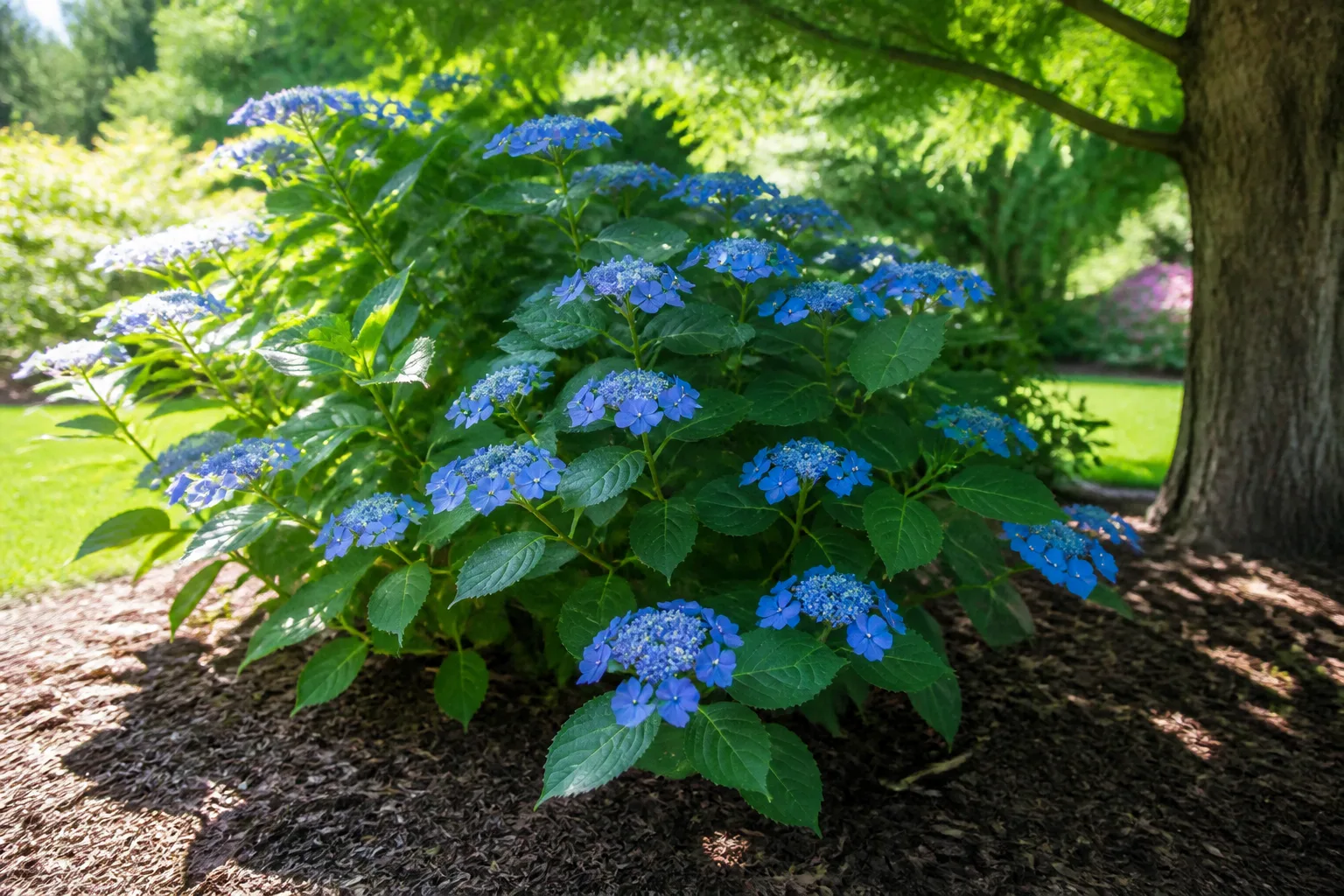
All-day deep shade is not automatically safer. A plant tucked beneath dense trees may receive too little light for strong flowering and may compete with shallow tree roots for moisture. If it has long, weak stems and sparse blooms, check the actual hours of direct or bright filtered light before adding fertilizer. Moving an established shrub is a bigger job, so first see whether selective pruning of an overhanging branch can improve light without exposing the hydrangea to harsh afternoon sun.
Choose a spot with shelter from drying wind and late spring frost where possible. New leaves and flower buds are vulnerable after a warm spell coaxes growth out early; a low frost pocket or an exposed east-facing wall can make an otherwise hardy cultivar unreliable. Do not plant in the dry shadow of a roof overhang unless you can water the root zone yourself, because rainfall may never reach it.
Plant Lacecap Hydrangea for Strong Roots
Spring and fall are usually the easiest seasons to plant a container-grown shrub because moderate temperatures give roots time to settle before summer heat or deep winter. Plant when the ground is workable and not waterlogged; if the soil is dry in warm weather, wait for a cooler period or plan to keep the root ball evenly moist while it establishes. The RHS growing guide also recommends spring or autumn planting and evenly moist soil.
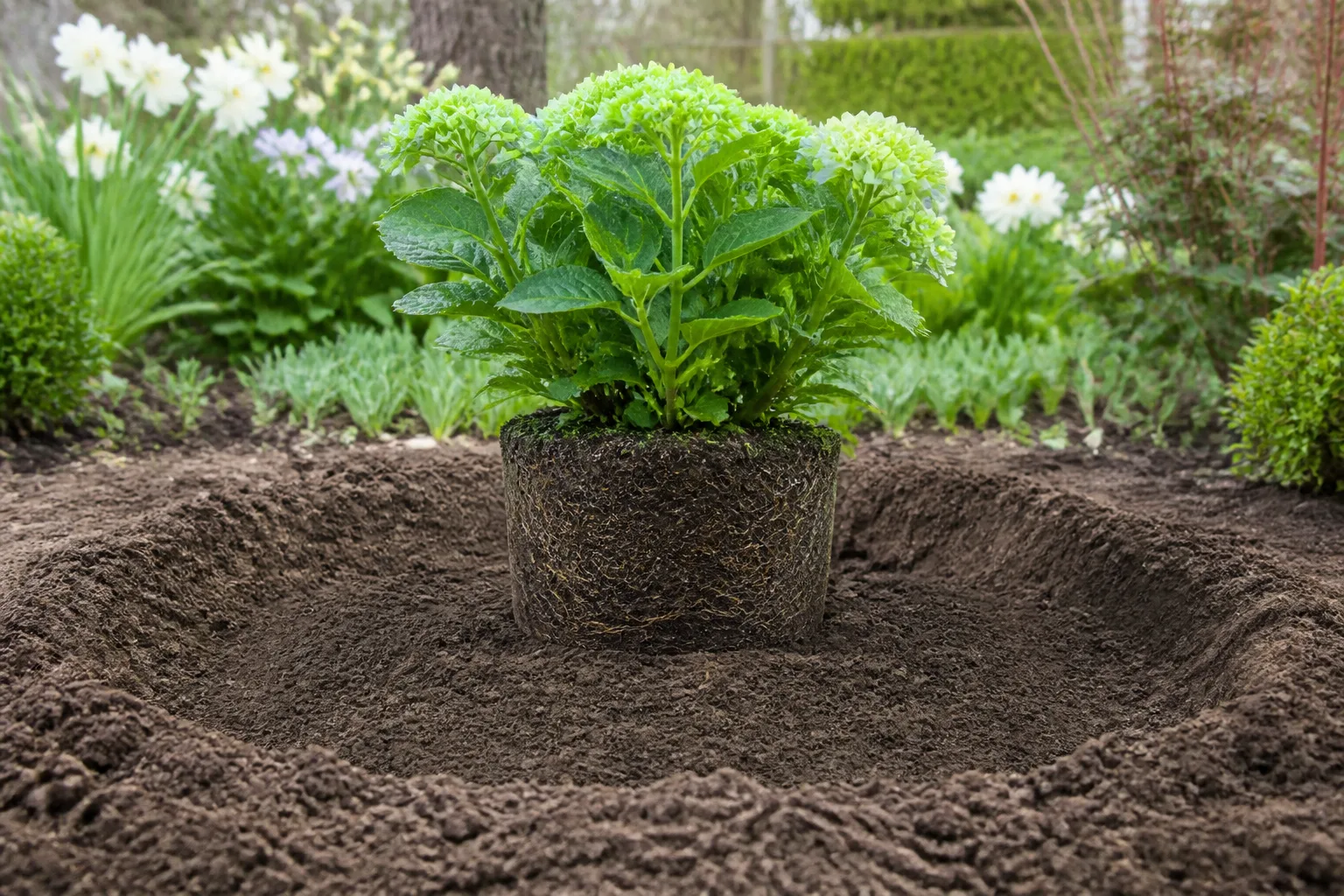
Dig a hole about as deep as the root ball and wider than it, loosening the surrounding soil so new roots can move outward. Set the top of the root ball level with the surrounding soil; burying the stem bases can hold moisture against the crown and encourage decline. Backfill with the soil you removed, firm it gently, and water slowly to settle gaps around the roots.
Give the mature plant enough room for air to move through its branches. Spacing varies considerably by cultivar, so use the tag’s width rather than planting every shrub a standard number of feet apart. A plant touching a wall or crowded by neighboring shrubs is harder to water at the base and more likely to retain damp foliage after rain.
Spread a 2- to 3-inch layer of organic mulch over the root zone to slow evaporation and moderate soil temperature. Keep it several inches away from the stems instead of making a mound against the crown. Replenish thin mulch as it breaks down, but do not pile fresh material year after year until the root flare is buried.
Water Deeply, Then Let Drainage Do Its Job
New plantings need the closest attention during their first growing season. Check the soil a few inches below the surface; if it feels dry, water slowly at the base until moisture reaches the root ball and the soil around it. If it is still cool and damp, wait. That quick check is more reliable than watering every day or following a calendar that ignores rain, soil texture, and weather.
Established hydrangeas can handle short dry spells better than freshly planted ones, but prolonged heat and drought often show up as drooping leaves or smaller blooms. Water the root zone deeply in the morning when the soil is dry, then let excess water drain. A light sprinkle that wets only the surface encourages shallow roots and leaves the deeper root zone thirsty.
Temporary leaf droop during a very hot afternoon does not always mean the shrub needs water. Check again after the sun drops and feel the soil before reaching for the hose. If leaves recover in the evening and soil is moist, heat stress is the more likely explanation; if the plant stays limp and the root zone is dry, water. Persistent wilting in wet soil suggests poor drainage or damaged roots, so adding more water would make the problem worse.
Build Soil for Stable Growth
Aim for fertile soil that holds moisture but drains freely. Hydrangeas can grow in clay or sandy ground, but the watering rhythm changes: sandy soil dries faster, while dense clay can remain saturated after rain. Add compost or another well-rotted organic soil improver across the planting area when the structure needs help rather than filling only the planting hole with a different mix.
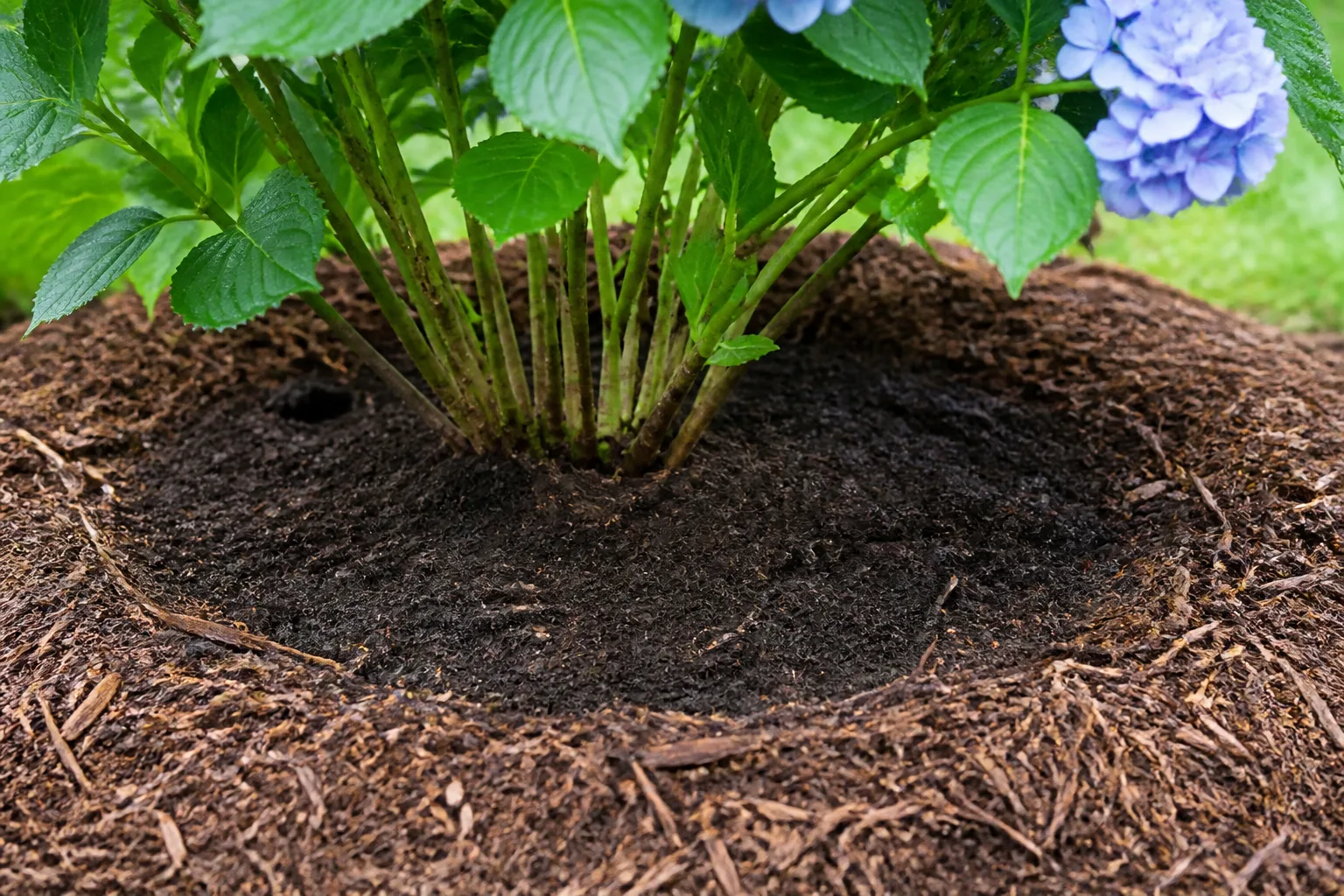
If water stands around the shrub after ordinary rain, solve drainage before trying to feed it. A raised bed or a different location is often safer than repeatedly amending a single hole that behaves like a basin. Conversely, if water runs through dry sandy soil quickly, a broad mulch layer and deeper, less frequent irrigation help hold moisture where roots can use it.
A lacecap that grows well without dramatic symptoms does not need a special soil recipe. The RHS hydrangea guide recommends moist but well-drained soil and notes that mulch helps conserve moisture. Check drainage first, then consider a soil test if growth remains weak or if you are trying to change bloom color.
Shift Flower Color Only When the Cultivar Allows It
Blue and pink flower color can shift in some bigleaf and mountain hydrangeas because soil acidity affects how available aluminum is to the plant. In broad terms, more acidic soil can support blue tones, while less acidic or alkaline soil tends toward pink. The response is not a switch that works for every lacecap: white, green, red, and some specially bred cultivars may not change color, and flowers can fade or mature into different shades as they age.
Before adding anything, confirm that the cultivar is color-responsive and test the soil pH. The RHS notes that a blue result in its hydrangea guidance is associated with strongly acidic soil, around pH 4.5 to 5, and that available aluminum is part of the process. Those figures describe conditions, not a universal amendment recipe; soil composition, water chemistry, and cultivar can change the result.
If a color change is worth pursuing, adjust the soil gradually and use only a product labeled for hydrangeas at its stated rate. Do not dump aluminum sulfate or lime into an untested root zone. Excess amendment can stress roots, and an alkaline, chalky soil may resist blueing; in that situation, a container with an appropriate acidic growing medium is more controllable than repeatedly treating garden soil. The RHS guidance recommends checking pH and explains that some red, white, and green cultivars remain stable regardless of soil reaction.
Feed for Steady Growth, Not Oversized Leaves
If the shrub is growing normally in reasonably fertile soil, yearly heavy feeding is unnecessary. A thin top-dressing of compost in spring may be enough to support gradual growth and improve soil structure. If the plant is weak or growing in a container, use a balanced fertilizer formulated for shrubs or follow a soil-test recommendation, applying only the label rate.
More fertilizer does not guarantee more flowers. Excess nitrogen can push leafy, tender growth at the expense of sturdy stems and bloom production, while late-season feeding can encourage shoots that do not harden well before cold weather. If a plant has lush leaves but few flowers, first review pruning, light, frost exposure, and cultivar before reaching for a fertilizer bag.
Prune According to Species and Blooming Wood
Pruning errors are one of the easiest ways to lose a season of flowers, so identify the hydrangea before cutting. Many Hydrangea macrophylla lacecaps bloom on old wood: next summer’s flower buds were formed on stems during the previous growing season. Reblooming cultivars can also produce flowers on new growth, while some lacecaps belong to other species with different pruning needs. The NC State Extension plant profile describes bigleaf hydrangea blooming on previous-year growth and cautions that cultivar can affect its behavior.
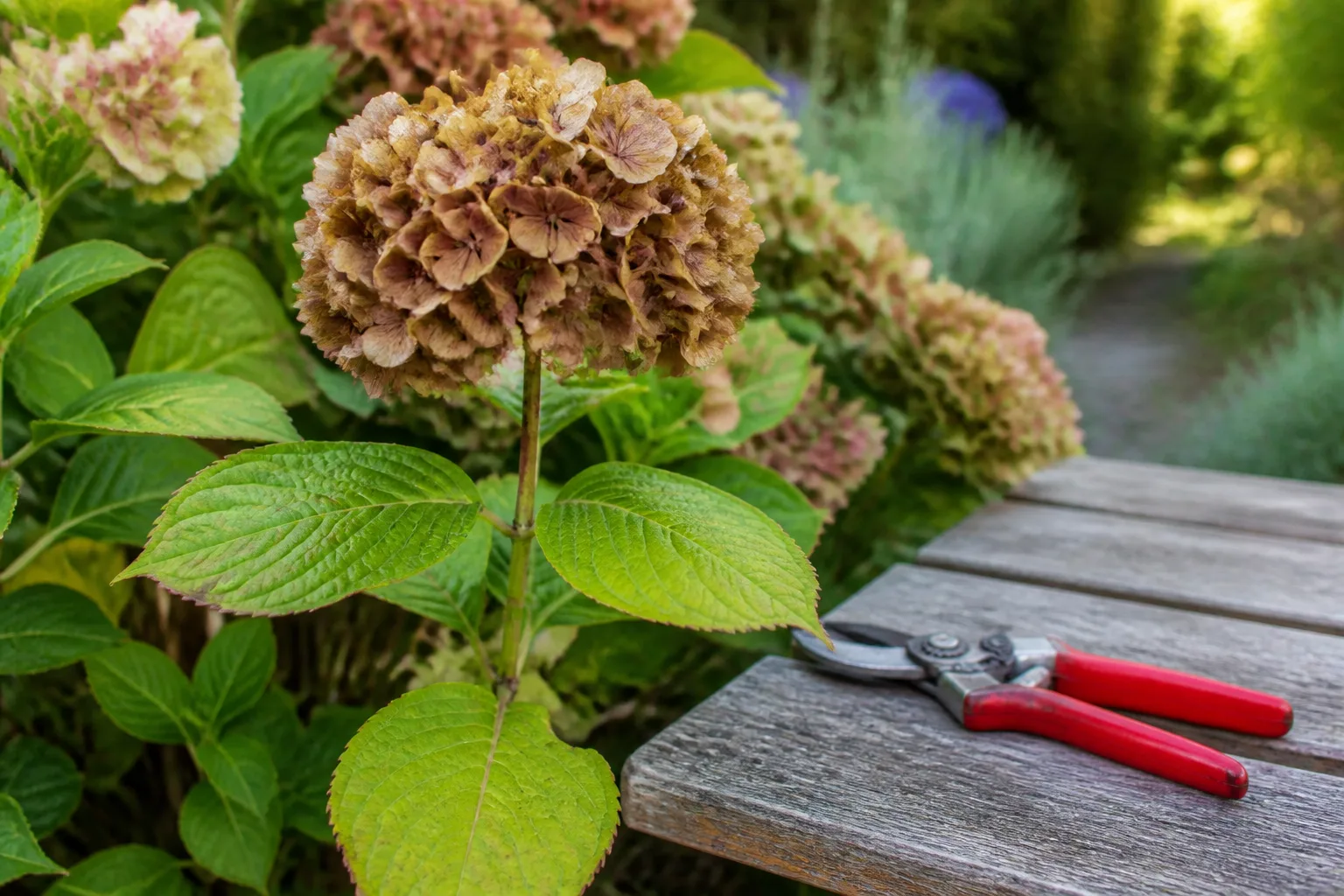
For a confirmed old-wood lacecap, keep pruning light and do it as soon as practical after the main flush of flowers if shaping is needed. Remove the faded flower head just above a healthy pair of leaves or buds, and avoid shortening every stem. If the shrub is healthy and the shape is acceptable, no shaping cut is required. The RHS pruning guide advises that lacecap flower heads can be removed after flowering and that established plants can be renewed gradually by taking out only one or two of the oldest stems at the base.
Dead, broken, or diseased stems are different from live shaping cuts. Remove dead wood in spring once you can see where healthy growth begins, cutting back to a live bud or healthy branch. If the plant is overgrown, thin a small portion of the oldest stems at the base over several seasons instead of shearing the whole shrub into a smaller ball. Heavy renovation may be appropriate when a shrub is badly damaged, but expect to sacrifice blooms while it regrows.
Timing advice may vary by region because spring growth and frost arrive at different times. A conservative rule for a bigleaf lacecap is to avoid a major fall or winter cut, leave dried flower heads in place where winter is harsh, and wait until you can see which stems survived. The RHS pruning recommendations describe leaving mophead flowers over winter for bud protection and trimming lacecap heads after flowering; Gardening Know How’s fall-care guidance similarly cautions against fall cuts that remove buds on old-wood types. Local winter severity and the exact cultivar should guide how much you remove.
A Low-Risk Routine for an Unlabelled Shrub
If the plant tag is gone, do not make a hard cut based only on the flat flower shape. Take photos during flowering and compare the leaves, stem habit, and bloom pattern with a local nursery or extension service. Meanwhile, remove only clearly dead or broken wood and leave most live stems intact.
Watch when it flowers for a full season. A shrub with buds only at the ends of last year’s stems is likely to lose the main flush if those tips are cut off. If new growth also produces flowers later in the same season, it may be a rebloomer. This observation is more useful than guessing based on marketing names, which can be confusing across series and plant labels.
Deadhead or Leave the Flowers?
Deadheading is optional. If a spent bloom looks untidy, cut only the flower stem back to a healthy leaf pair; the goal is to remove the old cluster, not shorten the branch. For a lacecap that blooms on old wood, avoid cutting below the next healthy set of buds, which may already hold next year’s flowers.
Leaving the flower heads through winter can provide a little protection for dormant buds and keep texture in the garden. The RHS specifically recommends retaining mophead blooms in colder areas through winter and notes that lacecap heads can be removed after flowering; for a cold or exposed site, leaving them until spring is a reasonable low-risk choice. You can also cut a few stems for a vase without harming the shrub, but do not turn flower arranging into a full-shrub pruning session.
Grow Lacecap Hydrangea in a Container
A container works best for a compact cultivar and a gardener who can check moisture frequently. Choose a pot with several drainage holes and enough volume for the root ball plus future root growth. A pot only slightly larger than the nursery container is manageable for a young shrub, but a mature hydrangea needs a substantial, stable container that will not dry out or tip in wind.
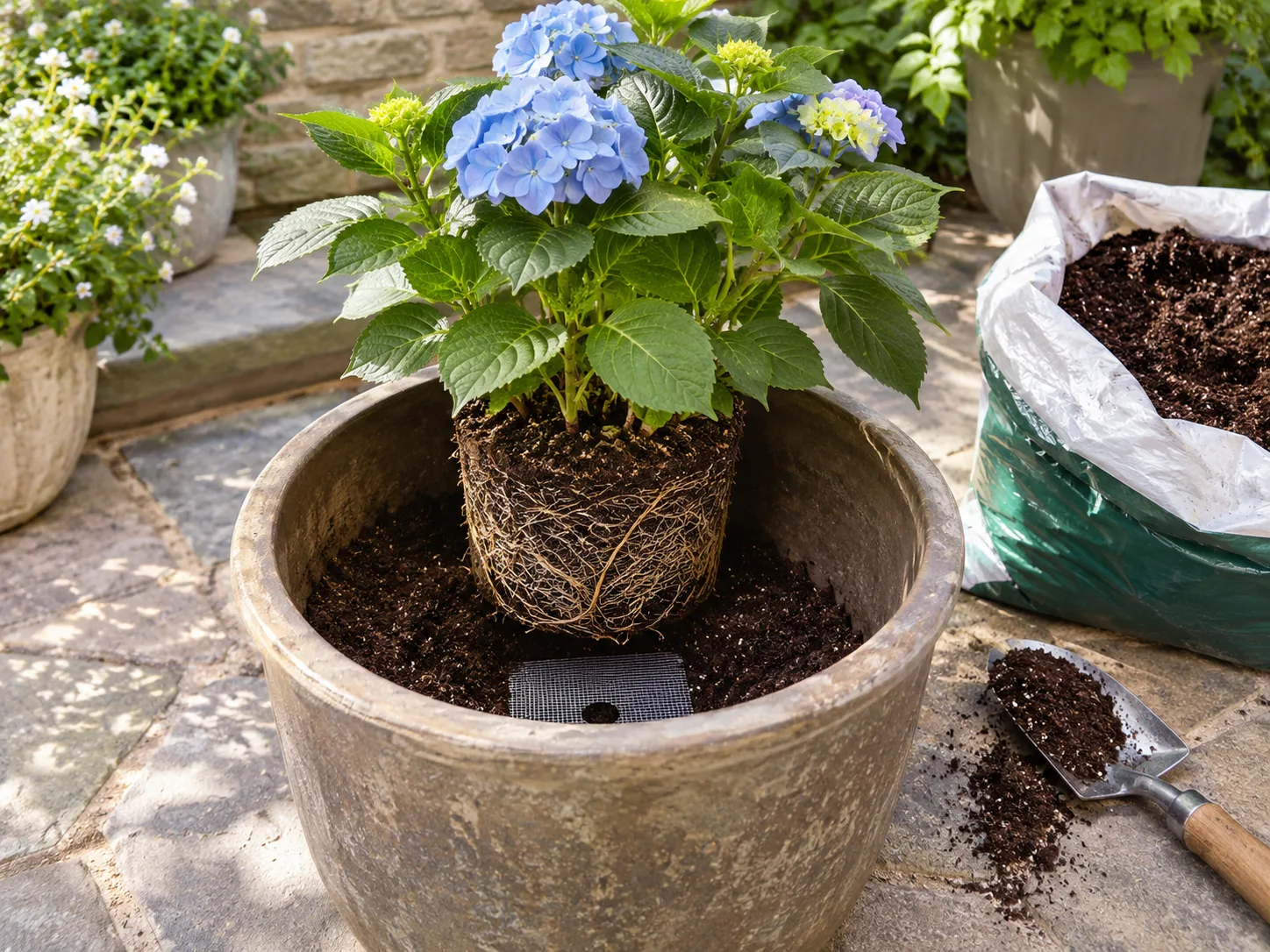
Use a quality, free-draining container mix rather than garden soil, which can compact in a pot. Set the root ball at the same depth it grew in its previous container and water until the mix is evenly damp and excess drains from the base. Empty any decorative saucer after watering; a pot sitting in standing water can lose healthy roots even though hydrangeas like consistent moisture.
Pots dry faster than garden beds, especially in hot sun and wind, so check them more often in summer. The surface may look dry while the root ball is still moist, or a root-bound plant may dry out within a day; feel the mix below the surface and water thoroughly when it is becoming dry. If the plant wilts repeatedly despite regular watering, it may need a larger pot or a more sheltered position.
Roots in containers are more exposed to winter cold than roots in the ground. Use a cultivar rated for your climate, move the pot to a sheltered unheated location during severe cold if practical, or insulate the container. Do not bring a dormant shrub into a warm living room and keep it actively growing; it needs its seasonal rest.
Encourage Reliable Flowers
Most lacecap hydrangeas bloom from late spring or summer into early fall, depending on species, cultivar, climate, and spring weather. The flowers often remain attractive as they age, but color can fade, green, or shift with the season. A plant that fails to bloom one year does not always need a different fertilizer; first find out whether it formed buds and whether those buds survived winter and pruning.
Look at the whole season rather than the flower head alone. Flowering depends on viable buds, enough light, steady moisture during growth, and a plant that is established enough to spend energy on blooms. Spring frost can damage buds after a mild spell, and an overgrown shrub may have fewer flowering tips if it is repeatedly clipped. Correct one likely cause at a time so you can tell what worked.
If a Healthy Shrub Produces Few or No Flowers
Start with the pruning history. If all stems were cut back in fall, winter, or early spring, an old-wood bigleaf lacecap may have lost most of its flower buds. Stop pruning for a season and watch for flowers on any surviving tips. Do not automatically repeat the cut the following year unless the cultivar’s label confirms that it flowers on new wood or reblooms.
Next, inspect the site at different times of day. A shrub under dense shade can make leaves and long stems but few flowers; a shrub under afternoon sun in a hot climate may wilt, scorch, and conserve resources instead. Improve the balance gradually with selective shade-tree pruning only where appropriate, or move the plant during a cool, mild season if the exposure is fundamentally wrong.
Then consider cold injury and water stress. A warm winter followed by a late freeze can damage newly swollen buds, while a dry first summer may keep a newly planted shrub focused on roots rather than blooms. Leave damaged stems until live growth is clear, keep the root zone evenly moist through dry spells, and protect a container-grown plant from severe cold. It may take a full growing cycle for a stressed shrub to flower again.
Finally, check for excessive fertilizer or heavy shade from nearby shrubs. Strong leafy growth with few blooms is a clue to review nitrogen and light; adding more fertilizer is unlikely to fix it. If the hydrangea otherwise looks healthy and is still settling in, give it time before transplanting or hard pruning.
Diagnose Leaf and Stem Problems in the Right Order
Hydrangeas can develop aphids, leaf spots, powdery mildew, and other issues, but the first useful action is observation rather than spraying. North Carolina State Extension lists leaf spot, bacterial wilt, and powdery mildew among possible bigleaf hydrangea problems. Look at both sides of the leaves, new growth, and stems, and note whether the problem affects one branch or the whole plant. Also check soil moisture and recent weather; drought, heat, saturated soil, and excess fertilizer can mimic disease symptoms.
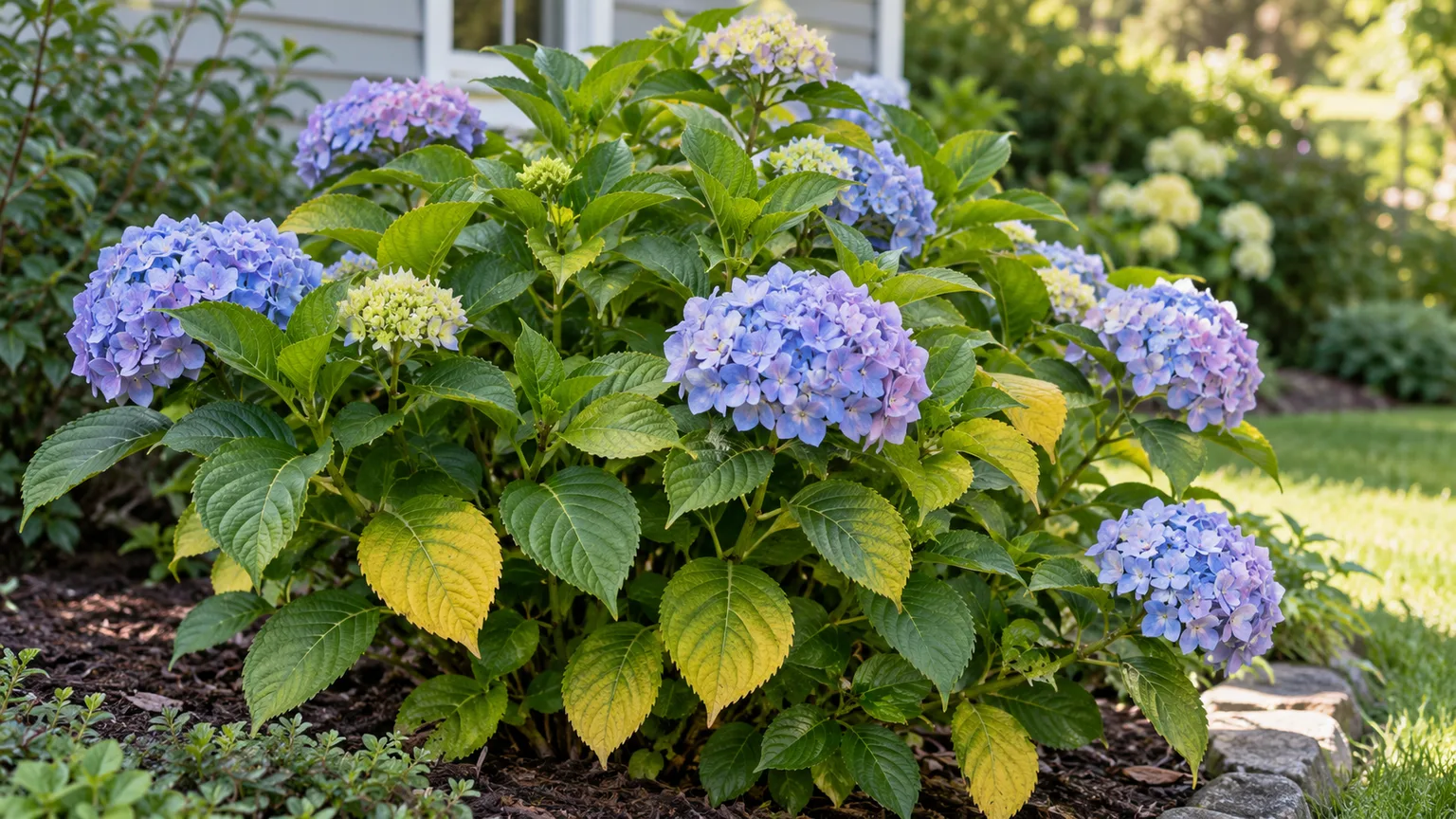
Aphids often gather on tender tips and leave sticky residue; a small population can be washed away with water. If you see spotting or a powdery coating, remove heavily affected fallen leaves, improve air movement, and water at soil level when possible. Avoid overhead evening watering and do not apply pesticide just because one leaf is marked; use any plant-protection product only if the pest or disease is identified and the label lists the intended plant and use.
Yellow, Brown, and Spotted Leaves Need Different Checks
Yellowing is a symptom, not a diagnosis. When leaves yellow broadly or the whole shrub looks pale, check whether the root zone is bone dry or stays wet for days; either can impair growth. If the newest leaves are yellow between greener veins, soil pH or nutrient availability may be involved, but confirm with a soil test before adding iron or changing pH. An established plant with a few yellow lower leaves may simply be shedding older foliage.
Brown margins or crispy patches often follow drought, hot afternoon sun, wind, or salt accumulation. Check moisture and exposure before assuming disease, and avoid a fertilizer or aluminum-sulfate “rescue dose.” Small dark or purplish leaf spots that spread after wet weather are more consistent with leaf-spot problems; collect and discard fallen diseased foliage and avoid wetting leaves late in the day. On the same shrub, more than one cause can occur, so compare affected and unaffected branches before treating.
If stems blacken, collapse, or die back from the tips, check for frost damage, wounds, and persistently wet soil. Cut back only to healthy tissue with clean pruners after the live/dead boundary is clear. Contact with foliage may irritate sensitive skin, and hydrangea ingestion can upset the stomach; the RHS hydrangea guide advises wearing gloves if foliage aggravates skin. The ASPCA lists hydrangea as toxic to dogs, cats, and horses; if a pet eats any part of the plant, contact a veterinarian or animal poison service for advice.
Propagate Only When It Is Legal and Worthwhile
Softwood cuttings can produce a clone of a lacecap, while seed-grown plants may not keep the parent’s flower form or color. Before propagating a named cultivar, check its tag and current patent status, especially if you plan to sell or distribute plants. In the United States, an active plant patent can give its holder the right to exclude others from asexual reproduction and sale; the USPTO’s plant-patent guidance explains the scope, so do not assume every named plant can be multiplied without limits.
For a small home trial, select a healthy, nonflowering shoot in late spring or early summer. With clean, sharp pruners, take a short tip cutting with several nodes, remove the lower leaves, and place the lower stem in a sterile, moist propagation mix. Keep the cutting warm in bright indirect light, not direct afternoon sun; a loose clear cover can reduce water loss, but air it regularly so foliage does not remain wet and rot.
New leaf growth alone does not prove that roots have formed. Wait until the cutting resists a gentle tug or roots are visible at the pot edge, then acclimate it gradually to outdoor conditions before planting. The RHS growing guide lists softwood and other cuttings as ways to propagate hydrangeas; layering a low branch into soil is a slower option that avoids keeping a loose cutting hydrated.
Use the Shrub as a Garden Feature
Lacecaps are useful where a large rounded mophead would feel too heavy or block a view. Their flatter flowers read well along a woodland edge, beneath light tree shade, in a mixed shrub border, or beside a path where visitors can see the detailed center of each bloom. Pair them with plants that accept similar moisture and light rather than treating hydrangeas as dry-shade shrubs simply because they tolerate shade.
Before placing one near a walkway or window, account for the cultivar’s mature width and the direction its stems will lean after rain. Use a compact cultivar in a container or small bed and a larger one as a background shrub. If you want blue flowers, plan for the cultivar and soil conditions before planting; color changes are easier to manage in a pot than in a lime-rich garden bed.
Conclusion
The most reliable lacecap hydrangea care routine starts with identification. “Lacecap” tells you what the flower looks like, while the species and cultivar tell you how large the shrub will grow, what winter it can tolerate, whether it flowers on old or new wood, and how much pruning it can take.
Give it light suited to your climate, keep its soil evenly moist but well drained, mulch without burying the stems, and avoid fertilizer or color amendments unless a specific need is clear. When you are unsure about pruning, preserve live stems and observe a full bloom cycle; a restrained cut is easy to make later, while removed flower buds cannot be restored for that season.