Get Rid of Weeds in Your Lawn With Any of These 8 Easy Methods
Get rid of lawn weeds with eight practical methods, from hand-pulling and mowing to selective herbicides, prevention, and lawn renovation.
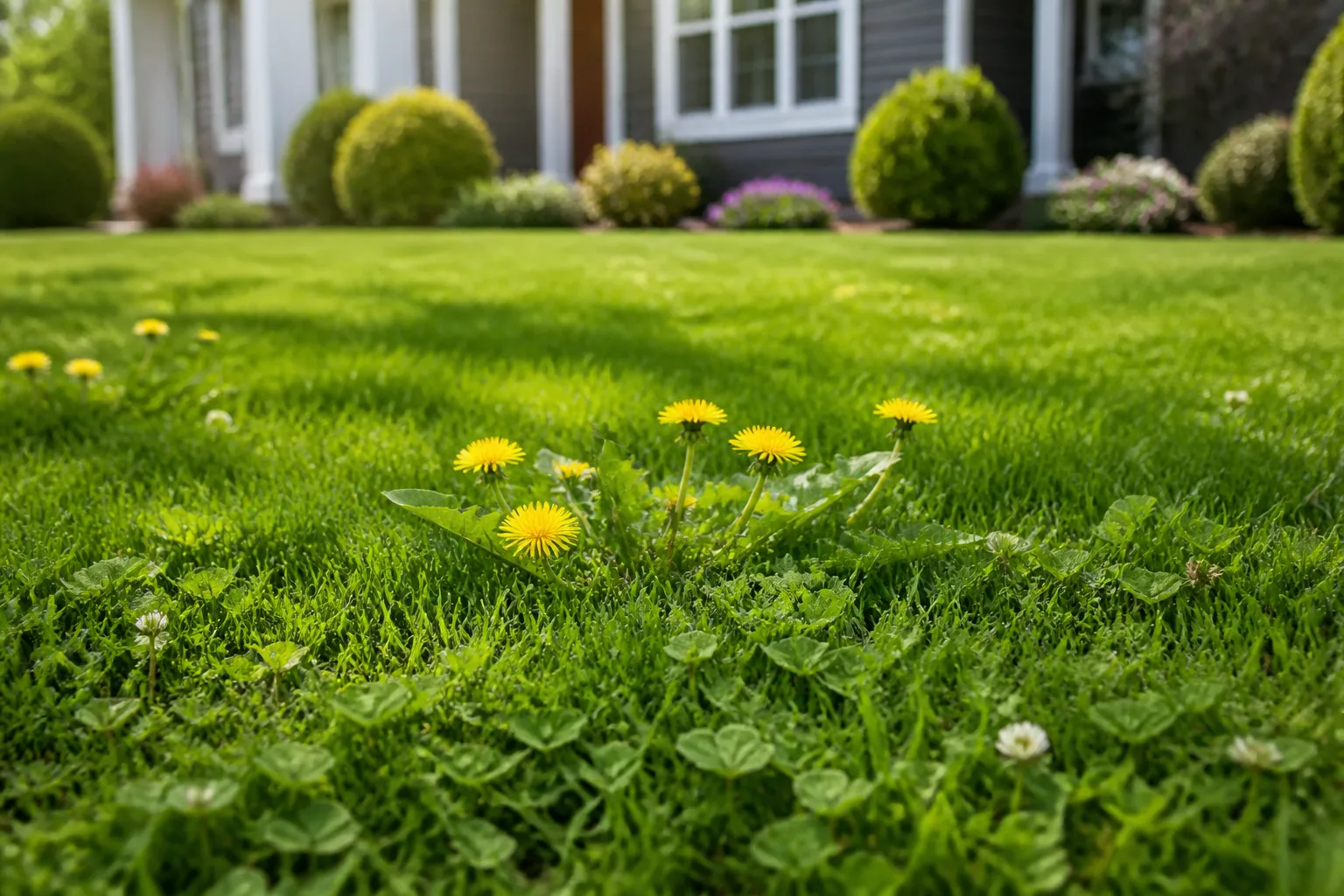
A few dandelions can be pulled before breakfast. A lawn filled with clover, crabgrass, plantain, or sedge needs a more deliberate plan. The fastest way to waste time is to treat every green plant the same: the method that removes a taproot may do nothing to a creeping grass-like weed, and a non-selective spray can leave a brown patch where the turf used to be.
Start by identifying the weed and looking at the lawn around it. Then choose the least aggressive method that fits the size of the problem. These eight options cover small isolated weeds, recurring infestations, thin turf, and areas that are better renovated than repeatedly sprayed.
Start With the Weed, the Grass, and the Site
Before pulling, spraying, or spreading anything, spend a few minutes looking closely. Note whether the unwanted plant has a broad leaf, a blade-like leaf, or a triangular-looking stem; whether it grows upright or creeps; and whether it is concentrated in shade, a wet corner, a compacted path, or a thin sunny patch. A phone photo and a local extension identification service can prevent an expensive wrong treatment.
The Royal Horticultural Society’s lawn weed guidance makes an important point: a weed is simply a plant growing where it is not wanted. That definition matters because control is a design choice, not proof that every clover or flowering plant is harming the lawn. You may want a uniform turf surface, or you may prefer a lower-input lawn with a little plant diversity.
Broadleaf, grass-like, and sedge weeds
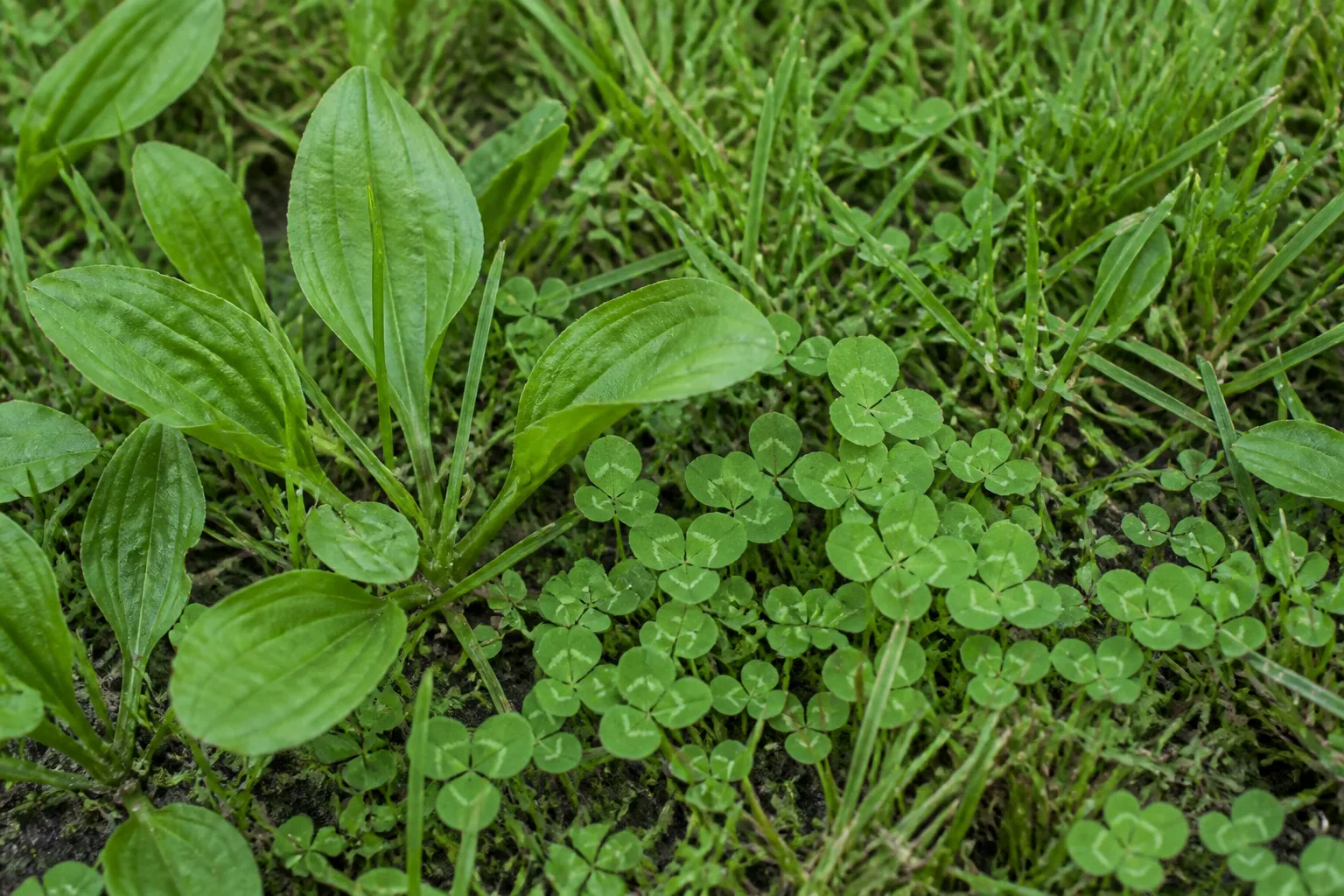
Broadleaf weeds are usually the easiest group to recognize. Dandelion has a rosette and a long taproot; plantain has broad ribbed leaves; clover and black medic have small leaves arranged in threes; chickweed hugs the soil. These plants often respond to careful digging, mowing that avoids scalping, or a selective broadleaf product labeled for both the weed and the turf.
Grass-like weeds are more difficult because a product that injures crabgrass or quackgrass may also injure a desirable lawn grass. Crabgrass tends to spread from a low center and fill thin, warm areas, while perennial grass-like weeds can return from pieces left below the soil. Nutsedge and related weeds are sedges, not grasses, even though their upright leaves look similar from a distance. They need identification and a product label that specifically includes the sedge and your turf type.
The distinction is more useful than memorizing a single “best weed killer.” A dandelion tool, a mower-height adjustment, a pre-emergent, and a selective post-emergent each solve a different part of the problem.
When a “weed” may be worth keeping
Decide what you want the lawn to do before trying to make it perfectly uniform. Low-growing clover can stay greener during dry weather than some turf, flowers can provide forage for pollinators, and a diverse lawn may need less feeding and watering. If the plant is not poisonous, invasive in your area, or interfering with how you use the yard, removing every last one may create more work than value.
You can also choose a middle course: keep a few flowering plants, mow paths through a looser lawn, or remove only plants that spread aggressively or make the surface uneven. If children or pets use the area, focus on plants that create trip hazards, burrs, irritation, or other known problems rather than treating all variation as failure.
Pick the Least Risky Method That Fits
Use this order as a practical starting point:
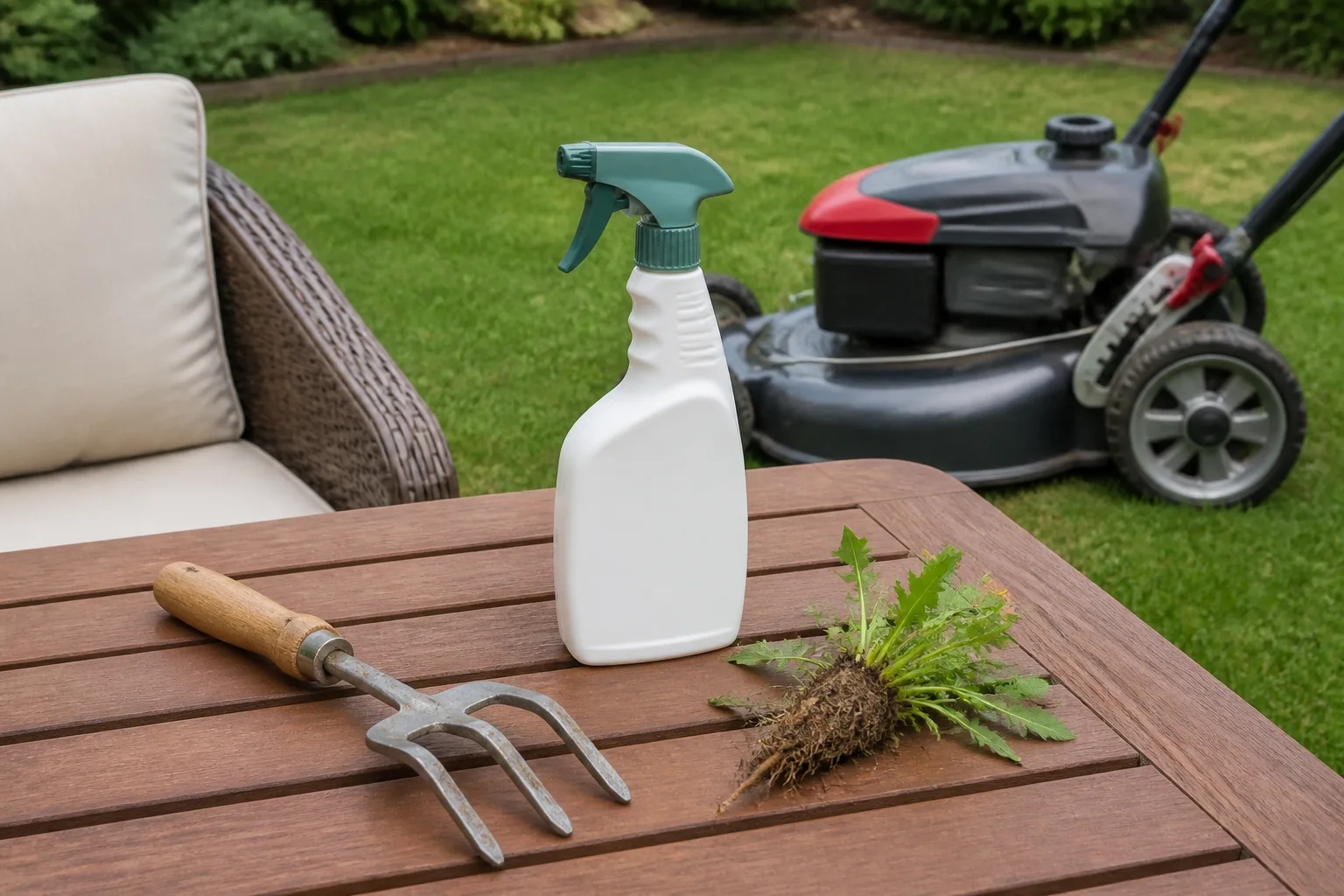
- Pull or dig individual young weeds when you can reach the root.
- Improve mowing, watering, drainage, and turf density when weeds are scattered through weak grass.
- Use a selective post-emergent only when the weed is identified and the label protects your grass.
- Use a pre-emergent for a known, recurring weed problem before germination, not as a cure for weeds already growing.
- Reserve non-selective treatment for an isolated spot where desirable plants can be protected.
- Renovate a large, bare, or heavily infested area when repeated spot control would take longer and cause more damage.
Quick decision guide
Choose hand-pulling for a few annual weeds or small broadleaf seedlings in moist soil. Choose digging for dandelions, plantains, and other rooted perennials where leaving the crown or taproot would invite regrowth. Choose cultural changes when weeds occupy thin, stressed turf, and choose a labeled selective product when the same identifiable weed is spread across otherwise healthy grass.
Choose pre-emergent only if you know which annual weed you are targeting and do not need grass seed to emerge in that area. Choose a non-selective spot treatment for a crack, gravel edge, or isolated patch—not for a lawn bed you intend to keep green. If more than a small portion of the lawn is weeds or bare soil, compare the cost of renovation with another season of patch-by-patch treatment.
1. Hand-Pull Small Weeds After Rain
Hand-pulling is the simplest method and the safest one for nearby grass, flowers, trees, pets, and children. It works best on small annual weeds and young broadleaf weeds before they flower and set seed. BBC Gardeners’ World recommends weeding when the soil is moist but the foliage is dry, a combination that loosens roots without turning the lawn into mud.
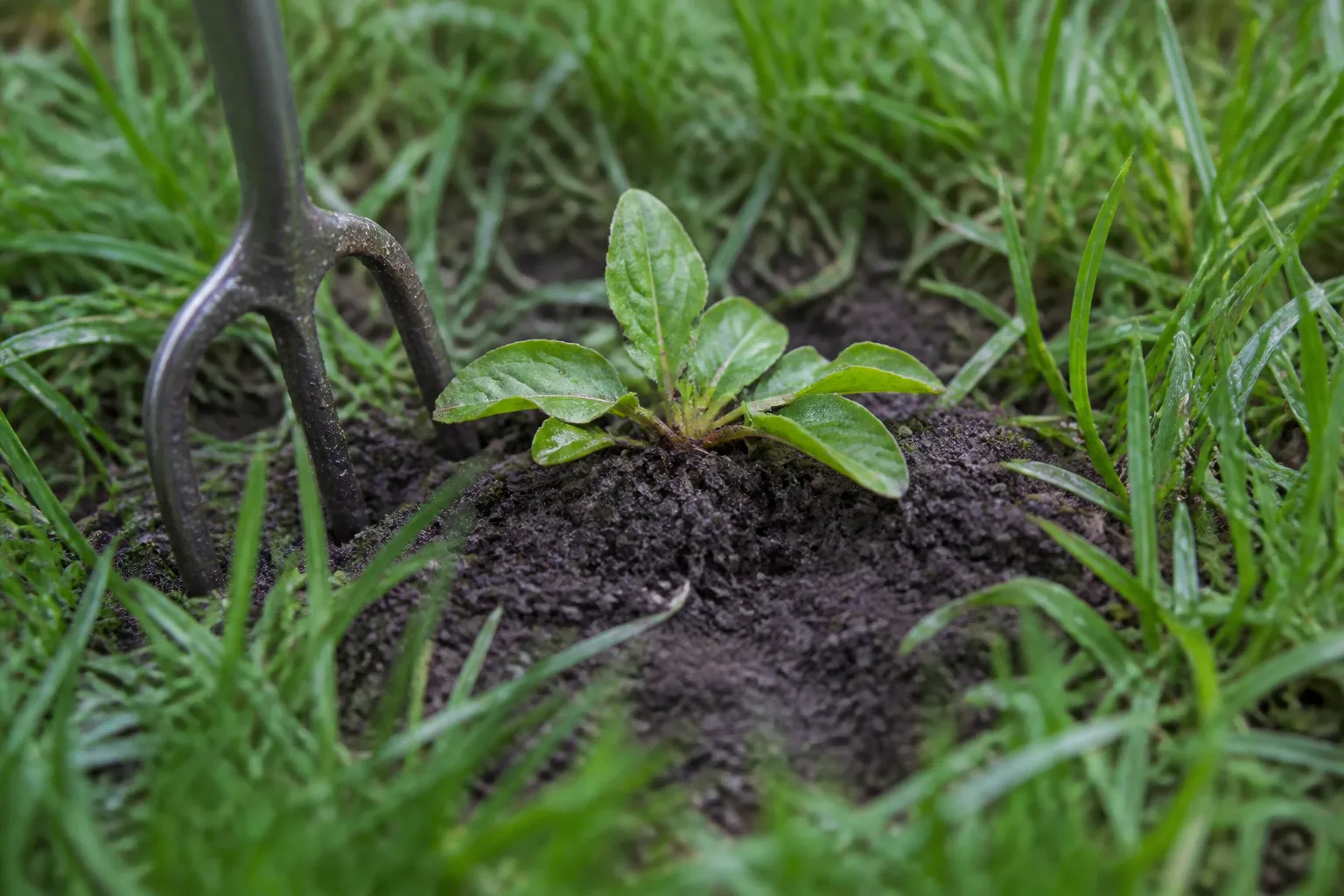
Do not wait for a soaking storm if the ground is slippery. Instead, water the target area lightly the day before, or work after ordinary rain once the surface is firm enough to walk on. Push a narrow weeding fork beside the crown, loosen the soil, and pull from as low on the stem as possible. For a shallow-rooted weed, a steady lift usually brings out the whole root system.
Close the hole with your fingers and press the surrounding grass back into place. If the weed is flowering, bag the pulled plant rather than leaving it on the soil where mature seed can finish dispersing. Check the spot again in a week or two; a perennial that was snapped at the crown may return even when the first result looked complete.
Hand-pulling is a poor fit for a lawn with hundreds of creeping stems. It can also spread a plant when pieces of stem or root are left behind. Use it as a precision tool, not as a promise that one afternoon of work will clear a mature infestation.
2. Dig Out Taproots and Crowns
Digging gives rooted weeds a better chance of staying gone than yanking leaves. It is especially useful for dandelions and plantains with a strong crown, or for a single perennial that has survived repeated mowing. Slide a dandelion weeder, narrow fork, or long-bladed hand tool beside the root, loosen the soil, and lift while keeping the root as intact as possible.
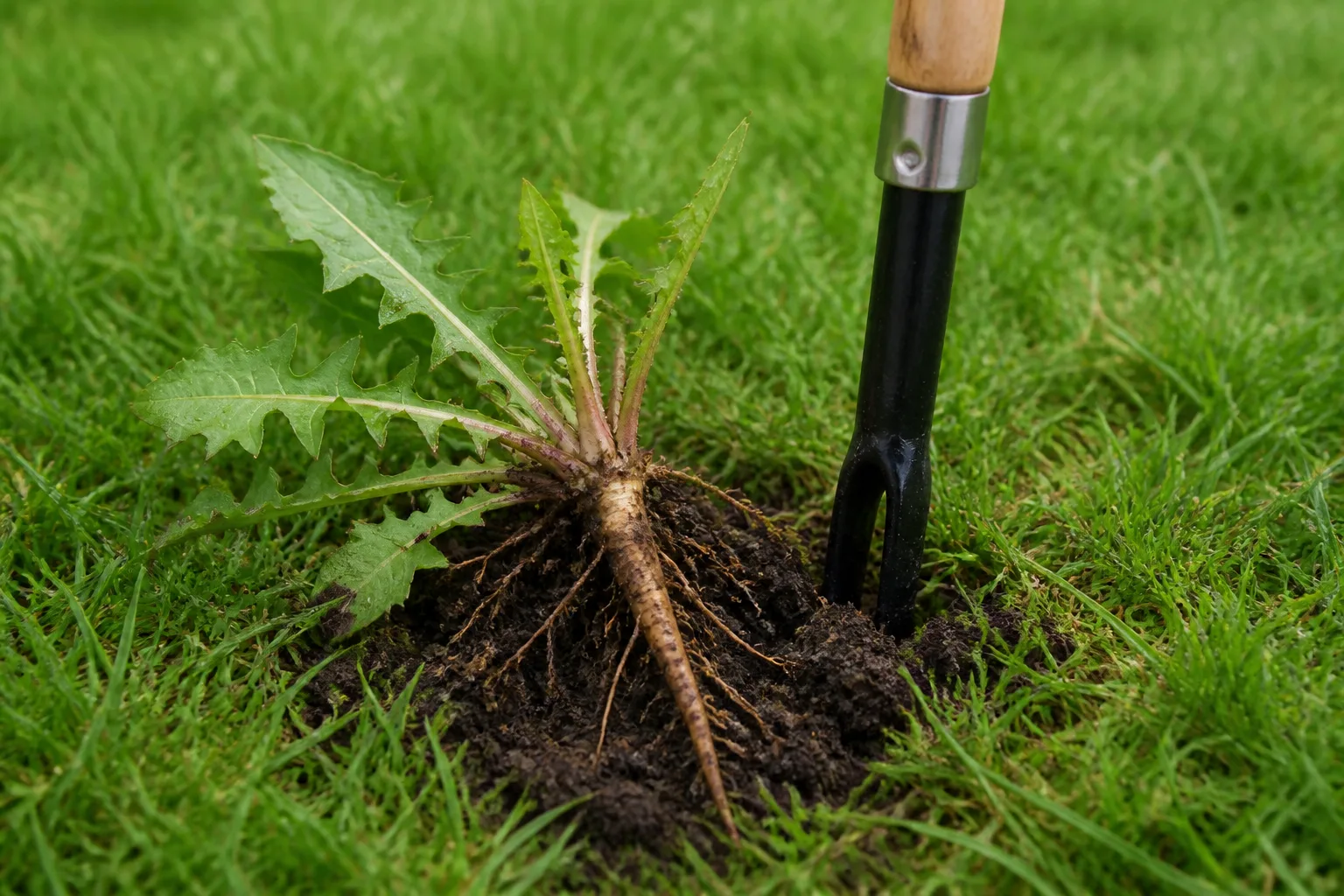
The crown is the short, thick area where leaves and roots meet. If it remains in the soil, the weed may produce new leaves. A long taproot can break under tension, so work down gradually instead of pulling harder. For a spreading weed with runners or rhizomes, follow the underground growth and remove as much of the connected material as the lawn allows.
Replace the disturbed soil and press it level. If digging leaves a bare spot larger than a few inches, scatter matching seed at the right season or patch with a small piece of compatible sod. Bare soil is an invitation to the next wave of weeds, so the repair is part of the removal method.
Digging is less useful for a dense mat of clover or a grass-like weed woven through the turf. In those cases, trying to excavate every strand may destroy more grass than the weed did. Move to a site correction, a properly labeled selective treatment, or localized renovation.
3. Mow High and Often Enough to Thicken Turf
Mowing is not just cosmetic. A dense, leafy turf canopy shades soil, competes for water and nutrients, and makes it harder for new weed seedlings to establish. Penn State Extension describes proper mowing as one of the most important and easiest tools for reducing weed pressure, and its guidance explains why mowing height changes both the kind and amount of weeds in a lawn: taller, denser turf blocks more light from reaching the soil.
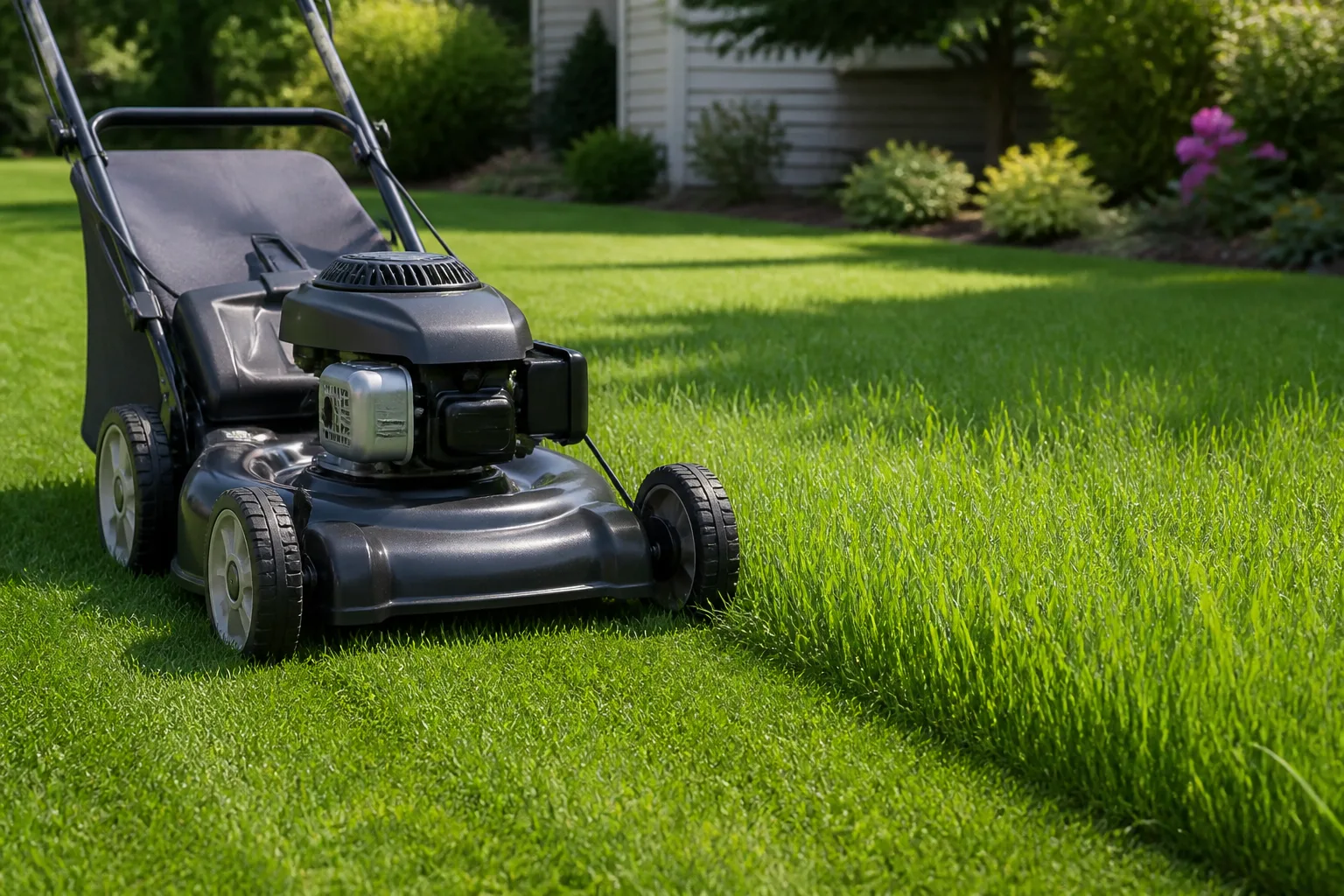
Set the deck high enough for your grass species and season, especially when heat or drought is slowing growth. Do not copy a neighbor’s setting blindly; cool-season and warm-season grasses have different growth patterns, and shade changes what a lawn can support. The reliable rule is to avoid scalping and remove no more than one-third of the leaf blade at a time. If the lawn has become very tall, lower the height in stages rather than taking it down to soil level in one pass.
Keep the mower blade sharp. A torn, ragged cut adds stress to already thin turf, while a clean cut helps the grass recover. Leaving fine clippings in place can return nutrients to the lawn when they are not clumped or wet, but collect clippings if the plants are carrying mature seedheads or if the label for a recently applied product requires a waiting period before using them as mulch.
Mowing will not kill a dandelion’s root or remove a crabgrass plant that has already seeded. Its job is to prevent the lawn from being scalped into an open invitation for weeds and to stop some weeds from reaching seed-producing height. Combine the higher setting with one of the targeted methods above.
4. Correct Thin, Compacted, or Wet Lawn Conditions
Recurring weeds are often a site signal. Thin turf leaves exposed soil; compaction restricts roots and water movement; shade weakens grass; and constantly wet soil favors plants adapted to those conditions. The weeds are not necessarily causing every problem you see. They may be taking advantage of conditions in which the turf cannot compete.
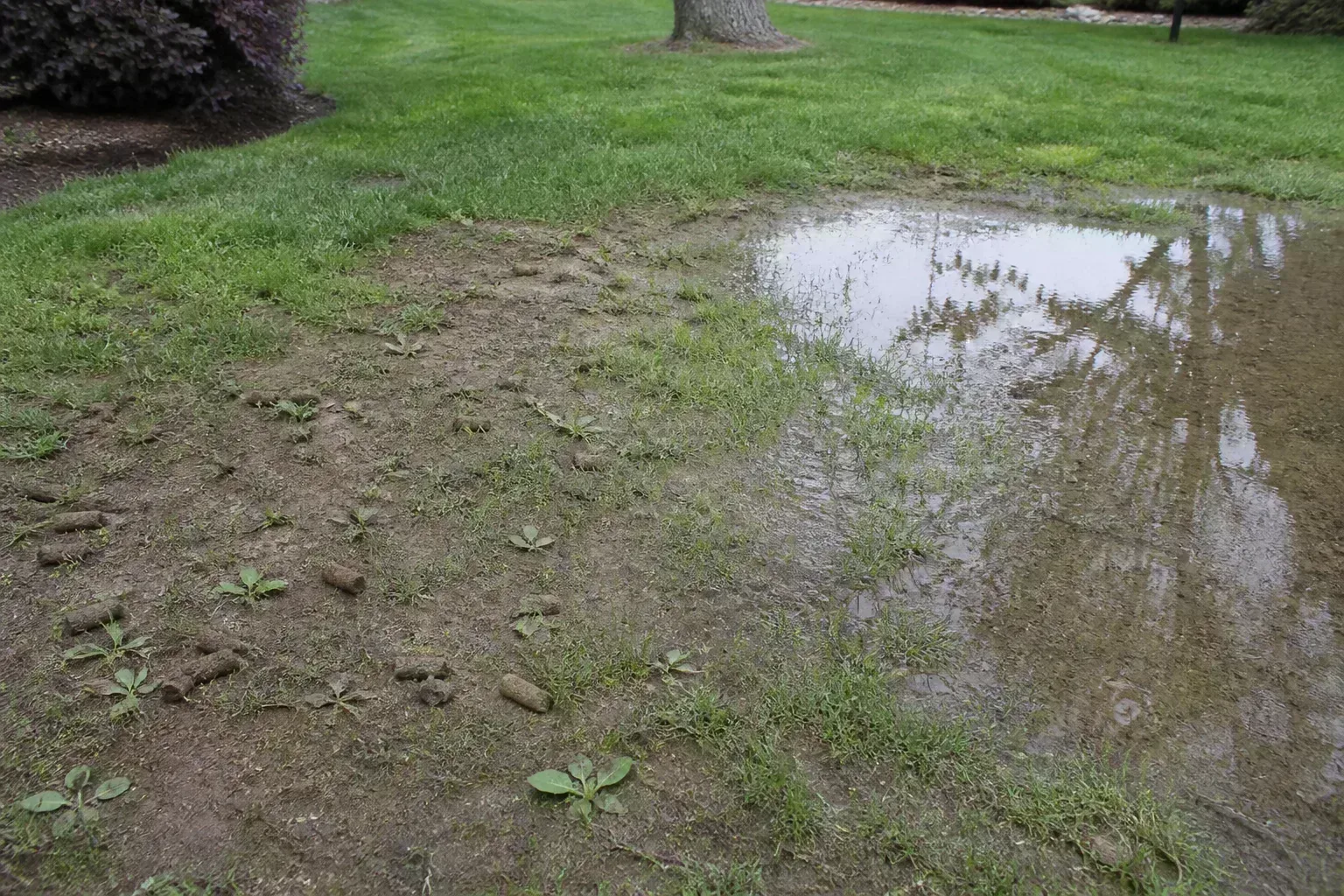
Walk the lawn after irrigation or a heavy rain. Does water sit in the same place? Are there tire tracks, hard soil, or bare areas under a tree? Is one sprinkler overlapping a corner while another misses the rest? Correct the cause before applying a second round of treatment. Otherwise, you may remove this season’s plants only to recreate the same open space for the next seedlings.
Water deeply enough, not constantly
Frequent shallow watering can keep the surface damp while encouraging a weak, shallow-rooted lawn. Irrigate according to the grass, soil, weather, and local restrictions, and allow the surface to dry between waterings when the turf can tolerate it. The goal is even moisture that supports deep rooting, not a permanently wet top layer.
Avoid watering immediately before a treatment unless the product label calls for it. Avoid washing a product off with irrigation or rain before the label’s required dry period has passed. If a low spot stays wet despite reasonable watering, improve drainage or choose turf and landscape plants that fit that location rather than trying to force a dry-site lawn into it.
Check thatch and soil compaction before treating
Thatch is the layer of living and dead stems, roots, and other organic material between green leaves and the soil surface. A thin layer can be useful, but excessive thatch can dry quickly, hold too much water, and interfere with strong rooting. Penn State’s thatch management guidance notes that compaction and poor soil structure can also reduce the activity of organisms that break thatch down.
Cut a small triangle through the turf and measure the spongy layer instead of guessing from the color of the lawn. If the soil is hard, water runs off, or roots are staying near the surface, core aeration may help when the grass is actively growing and the soil is suitable. Do not aggressively dethatch a lawn under heat or drought stress; removing material can thin the stand further and give weeds more room.
Repair compacted traffic lanes, reseed thin areas at the proper season, and keep fertilizer moderate. A healthy lawn is not weed-proof, but it makes every later removal method more effective and less frequent.
5. Use a Selective Post-Emergent Herbicide
Selective post-emergent products are designed to control listed weeds that are already visible while allowing listed turf species to tolerate the application when the label is followed. They are most useful when the same identified weed is scattered across a healthy lawn and pulling each plant would be impractical. They are not interchangeable with a general weed killer: selectivity depends on the product, dose, grass, weed, weather, and application pattern.
Match the active ingredient to the weed and turf
Read the front and back label before buying or mixing anything. Confirm the exact weed or weed group, the exact grass species or turf category, the application rate, temperature limits, rain-free period, and re-entry instructions. If any of those do not match your yard, do not assume that a product marketed for lawns is safe for your lawn.
Broadleaf products will not necessarily control crabgrass, quackgrass, or nutsedge. A sedge-specific product can still injure a turf species that is excluded from its label. If you cannot identify the plant, take a sample or photograph to a county extension office, nursery professional, or local diagnostic service before treating a large area.
Do not mix products, soap, vinegar, bleach, fertilizer, or household cleaners to make a stronger treatment. A homemade mixture can damage grass and nearby plants, change how a product moves, or create an exposure hazard. Use only a product and rate that are labeled for the situation.
Apply at the right stage and protect the grass
Treat during active weed growth when the plant can absorb and move the product, not when it is wilted from drought, freshly mowed, frost-damaged, or dormant. Follow the label’s mowing interval before and after application. Choose calm weather with no forecast rain during the required window, and protect vegetable beds, ornamental plants, water, and hard surfaces from drift and runoff.
Keep people and pets out for the label’s stated period. Wear the listed protective equipment, measure carefully, wash tools and hands, and store the container as directed. Never pour leftover product down a drain or into a storm drain. If clippings from a treated lawn have restrictions for composting or mulching, follow them; contaminated clippings can carry herbicide to garden beds.
Expect gradual results. A foliage treatment may take days or weeks to show full control, and perennial weeds can regrow from roots. Reapply only if the label permits it and the weed is still an appropriate target. If the first application failed, diagnose the reason instead of automatically increasing the rate: wrong identification, poor timing, rain, drought stress, resistant growth, or an unsuitable product may all be responsible.
6. Use Pre-Emergent Only for the Weeds It Can Prevent
Pre-emergent herbicides prevent certain weed seeds from establishing as they germinate. They do not remove green weeds that are already rooted, and they are not a universal shield against every species. They make the most sense when the same annual weed returns in the same part of the lawn and you can time the application to the product label and local growing conditions.
Crabgrass is a common example of a target for a seasonal prevention program, but the correct timing varies with climate, soil temperature, weather, and the label. Calendar dates from another region can be misleading. Watch local extension advisories and the product directions, and apply only when the target weed’s germination window is approaching.
The major tradeoff is seed. Many pre-emergent products can also prevent desirable grass seed from emerging. Do not use one before overseeding or repairing bare patches unless the label specifically allows that combination and gives a compatible interval. If your lawn needs new grass more urgently than it needs annual weed prevention, seed first at the proper time and manage the weeds mechanically while the new turf establishes.
Pre-emergent cannot compensate for bare soil, an overly short mowing height, or repeated irrigation problems. Pair prevention with dense turf and clean equipment. If you keep seeing a weed that the product does not list, stop spending on that treatment and choose a method designed for its biology.
7. Reserve Non-Selective Sprays for Isolated Spots
Non-selective products kill or injure most green plants they contact, so they have no place as a casual broadcast treatment over desirable lawn grass. They can be appropriate for a truly isolated weed in a crack, gravel strip, fence edge, or patch that you have already decided to renovate. Even there, shield nearby plants and follow the product label exactly.
Household shortcuts are not a safer version of selective lawn control. Vinegar is acetic acid, and Purdue’s summary of USDA research explains that it burns the foliage of susceptible plants, works better on young weeds than mature ones, and can temporarily knock back perennials while their roots survive. Stronger vinegar products can also burn skin and injure eyes. NC State Extension’s review similarly notes that household-strength vinegar is less impressive than labeled, higher-concentration products and that timing and weed size matter.
That makes vinegar a poor choice for a lawn: it is non-selective, so it can burn grass, and it does not solve the underground part of many perennial weeds. Boiling water has the same basic limitation. It can scald any plant it reaches and may not kill a deep or spreading root, while a splash can injure the person carrying it. Baking soda and bleach are also not lawn-safe weed strategies; they can harm turf, soil life, and nearby plants without providing dependable root control.
If you use a labeled non-selective product on an isolated spot, apply it only to the target foliage under suitable weather conditions. Do not spray when wind can carry droplets, when rain will move the product downhill, or when desirable plants are close enough to be contaminated. A shield, paintbrush, or carefully directed application may reduce contact, but it does not replace the label or eliminate the risk.
8. Renovate Badly Infested or Bare Areas
When weeds occupy a large percentage of the lawn, the turf is already thin, or the soil is exposed, renovation can be more efficient than repeated spot treatment. Remove the worst patch with a sharp spade, lift the weedy turf, clear roots and crowns, correct grading or compaction, and replace the area with compatible seed or sod at the right time for your grass. For a small patch, this is a focused reset. For a whole yard, make a plan before stripping anything.
Work in sections so that bare soil does not sit exposed for weeks. Dispose of flowering weeds and persistent roots according to local guidance rather than putting questionable material in a home compost pile. Rake the surface level, choose seed suited to sunlight and traffic, keep it evenly moist while it establishes, and protect it from foot traffic until roots are anchored.
If the problem area is really a bed, path edge, or unused strip rather than active lawn, convert it intentionally. Sheet mulching with overlapping cardboard or newspaper under a deep organic mulch is a bed-renovation technique, not a shortcut for killing weeds inside living turf. This distinction is reflected in Fine Gardening’s sheet-mulching guidance, which focuses on covering prepared soil with a mulch layer to suppress weeds and build soil.
What not to use on an active lawn
Do not cover a living lawn with opaque plastic, cardboard, thick mulch, or a blanket spray just because the weeds are frustrating. These methods also block or injure grass, alter soil moisture, and leave you with a larger repair project. Do not rototill a patch of perennial weeds without a follow-up plan; chopped roots and runners can be distributed through the soil.
Do not seed immediately after a pre-emergent unless the label says the product and interval are compatible. Do not apply a non-selective spray over green turf, and do not substitute a broadleaf product for a grass or sedge treatment. Finally, do not reseed a site that still has the same drainage, shade, compaction, or mowing problem that created the infestation.
Conclusion
The best lawn weed method is the one that matches the weed and leaves the grass with an advantage. Pull or dig a few young plants, mow high enough to keep turf dense, correct wet or compacted conditions, and use selective or pre-emergent products only when their labels fit the weed, grass, and timing. Keep non-selective sprays away from active lawn except for isolated spots you can protect, and renovate areas that are too damaged for piecemeal control.
Expect follow-up. Watch the same locations after rain, before weeds flower, and whenever the lawn becomes thin. Removing today’s plants matters, but making the turf thicker and the site less favorable to weeds is what turns a temporary cleanup into lasting control.



