How to Grow Better Hydrangeas Next Season
Learn how to grow better hydrangeas next season by diagnosing poor blooms, pruning by type, improving watering, and protecting buds through winter.
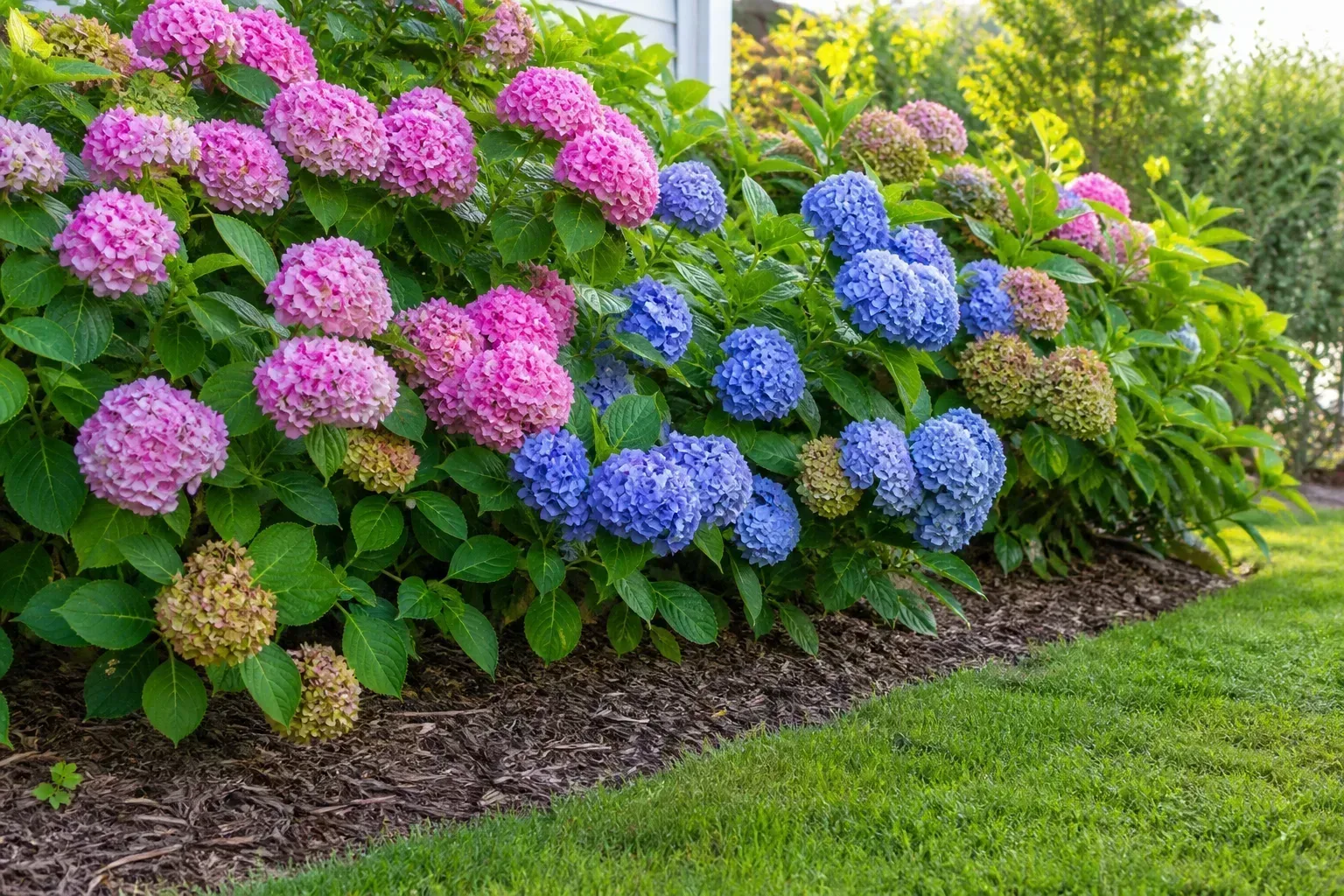
A disappointing hydrangea season is easier to fix when you separate flowering problems from plant-health problems. A leafy shrub with few blooms may have lost flower buds to pruning or cold; a wilted shrub may need a better moisture plan; a plant that barely grew may have a root, light, or site issue. Applying more fertilizer before you know which problem you have can make the next season worse.
Start with three questions: What kind of hydrangea is it? What changed before it struggled—weather, watering, pruning, or location? And does the plant look unhealthy, or did it simply flower poorly? Answer those first, then make one or two targeted changes rather than rebuilding the whole care routine.
Diagnose what went wrong before changing care
Look at the whole plant and the timing of the symptoms. Note whether the shrub made healthy leaves, whether flower buds appeared, when the leaves wilted or spotted, and whether the problem followed heat, drought, heavy rain, pruning, or a late frost. A few photos from spring through fall can make the pattern easier to recognize next year.
The difference matters because hydrangeas can lose flowers while the rest of the plant remains vigorous. Conversely, yellowing, persistent wilt, or sparse new growth can point to root stress or an unsuitable site that needs attention before bloom expectations.
Leaves without flowers point to a different problem than weak growth
If the shrub produced abundant green leaves but few flowers, inspect last year’s stems and your pruning history first. Bigleaf, mountain, and oakleaf hydrangeas commonly flower on buds formed on older stems; pruning those stems at the wrong time or winter injury to their buds can leave a healthy-looking plant with little to show. Deep shade and excess nitrogen can also favor foliage over flowers.
If flowers formed but were small or short-lived, look at heat and water stress, crowding, or a young plant still building roots. A new transplant or a shrub recovering from drought may need a season to establish before it produces its usual display. Do not try to force that recovery with repeated fertilizer applications.
Wilt, scorch, and spots need different responses
Leaves that droop during a hot afternoon but recover in the evening may be reacting to heat and high water loss, especially in a sunny, windy site. Check the soil before watering: if the root zone is dry, water slowly and deeply; if it is already wet, adding more water may worsen root stress. Brown, crispy leaf edges can follow drought, heat, or wind exposure, while leaf spots or a spreading powdery coating suggest a disease issue rather than simple thirst.
A hydrangea that wilts while the soil stays wet deserves closer inspection of drainage and roots. Do not respond to every wilt with a hose. When symptoms spread, stems die back, or roots smell sour or look black and soft, take a clear photo and consult a local extension service or a qualified nursery; the right response depends on the cause.
Identify the hydrangea before you prune
Flower shape is a useful first clue, but the plant label or cultivar name is better. Bigleaf hydrangeas have rounded mophead or flatter lacecap clusters and broad, toothed leaves; oakleaf types have distinctive lobed leaves; panicle types have cone-shaped flower heads; smooth hydrangeas often carry rounded clusters on flexible stems. A reblooming label is useful, but it does not make an old-wood plant immune to lost early flowers.
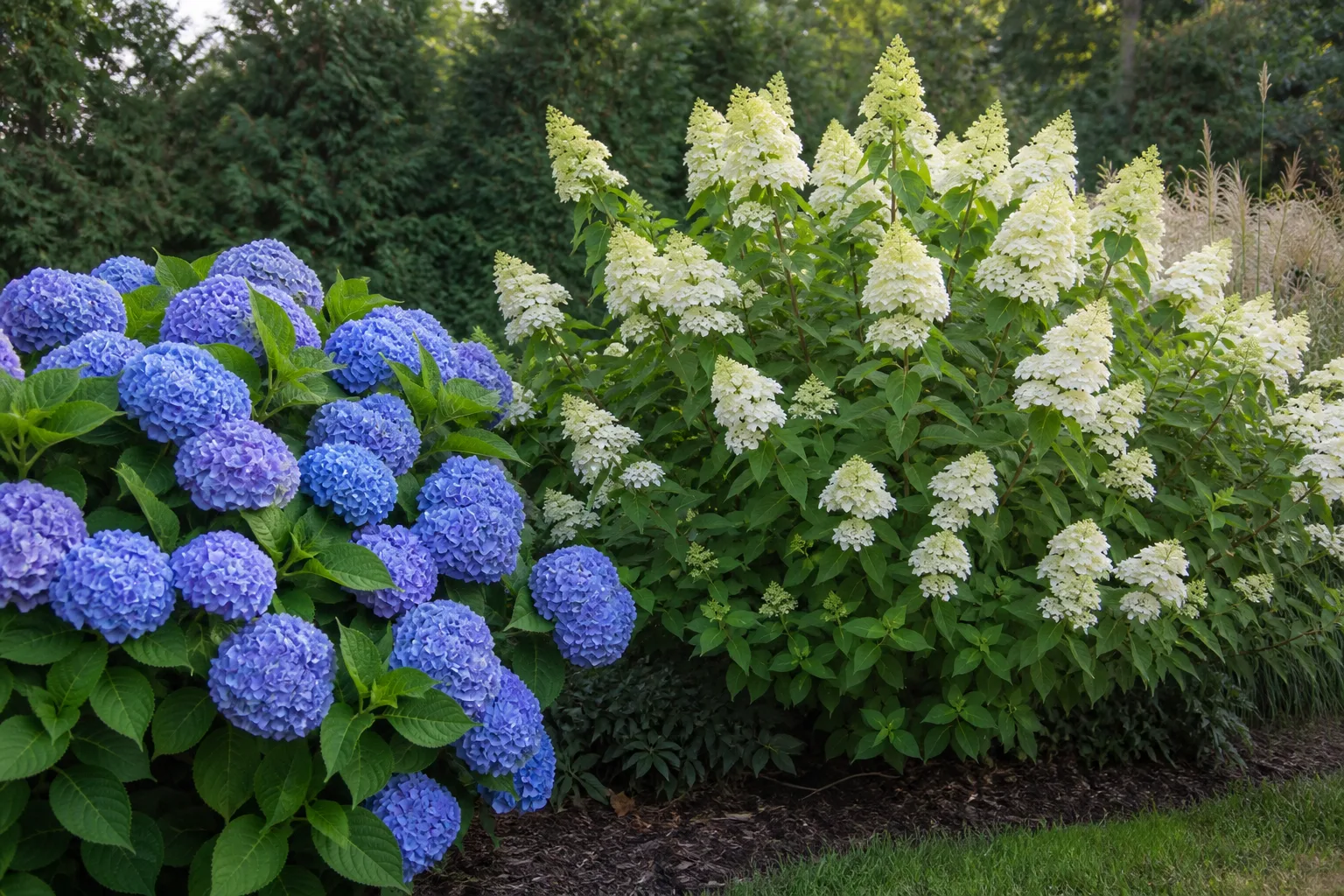
| Common group | Typical flower clue | Where flowers form | Safe default if unsure |
|---|---|---|---|
| Bigleaf (Hydrangea macrophylla), including mopheads and lacecaps | Round or flattened clusters | Usually old wood; some cultivars also rebloom on new shoots | Keep healthy stems; prune lightly after flowering |
| Mountain (H. serrata) | Smaller lacecap-like clusters | Generally old wood | Avoid fall and early-spring shaping |
| Oakleaf (H. quercifolia) | Cone-shaped clusters and lobed leaves | Old wood | Remove only dead or damaged wood until identified |
| Panicle (H. paniculata) | Long, cone-shaped clusters | New wood | Prune in late winter or early spring if needed |
| Smooth (H. arborescens) | Rounded clusters, often white | New wood | Prune before spring growth if shaping is needed |
NC State Extension’s profiles describe bigleaf hydrangea as flowering on previous-season growth, while panicle hydrangea flowers on current-season growth. The RHS pruning guide likewise separates the types and their timing; use those type-specific rules rather than a single calendar date for every hydrangea (NC State Extension: bigleaf hydrangea, NC State Extension: panicle hydrangea, RHS hydrangea pruning guide).
Old-wood bloomers need their stems protected
Bigleaf, mountain, and oakleaf hydrangeas typically set next season’s flower buds on stems produced in the current year. Those buds remain on the plant through winter, so a fall haircut or hard early-spring prune can remove the coming display even if the shrub rebounds with vigorous leaves. NC State notes that bigleaf hydrangea flowers on the previous year’s growth, while many cultivars described as reblooming can also flower later on new growth.
For an unidentified mophead or lacecap, protect healthy stems until you know more. If the plant label is gone, keep a photo of the flower and leaf shape and compare it with a local extension plant profile; a nursery that sells the cultivar may also be able to identify it. If identification remains uncertain, leave the structure alone and remove only a broken branch or clearly dead wood.
New-wood bloomers tolerate spring pruning
Panicle and smooth hydrangeas form their flower buds on new shoots that grow in spring. That makes them more forgiving after winter and allows structural pruning in late winter or early spring, before active growth begins. NC State describes panicle hydrangea as a current-season bloomer that can be pruned in late winter or spring.
“Can be pruned” does not mean that every shrub needs a hard cut. A severe cut may produce large flower heads on weaker stems, while a lighter reduction can preserve a sturdier framework. If a shrub already holds its shape and flowers well, remove dead or crossing stems and stop there.
Prune for plant health, not for a promised flower boost
Pruning can improve shape and remove failing wood, but it cannot replace buds already cut off or killed by frost. Fine Gardening’s hydrangea guidance emphasizes that the right timing depends on whether a shrub blooms on old or new growth; it also notes that many hydrangeas can live and flower well without routine heavy pruning. Make a cut because it solves a specific problem, not because pruning is assumed to make every shrub bloom more.
For an old-wood type, do structural pruning just after flowering, while there is still time for the plant to grow and set buds for the following year. Remove dead stems at the base, thin one or two of the oldest crowded canes if needed, and shorten only the branches that are out of bounds. Avoid removing a large share of the canopy at once unless a qualified local source recommends renovation for your plant and climate.
For panicle and smooth types, late winter or early spring is generally the practical time to shape before new growth starts. Cut back only as much as the shrub’s structure requires, and keep the framework proportionate to the cultivar’s mature size. The Royal Horticultural Society notes that hard pruning can reduce height and change flower size; Fine Gardening also describes the trade-off between larger heads and sturdier stems. Choose the result you want instead of chasing the largest possible blooms (Fine Gardening: pruning hydrangeas, Gardenia: pruning hydrangeas by type).
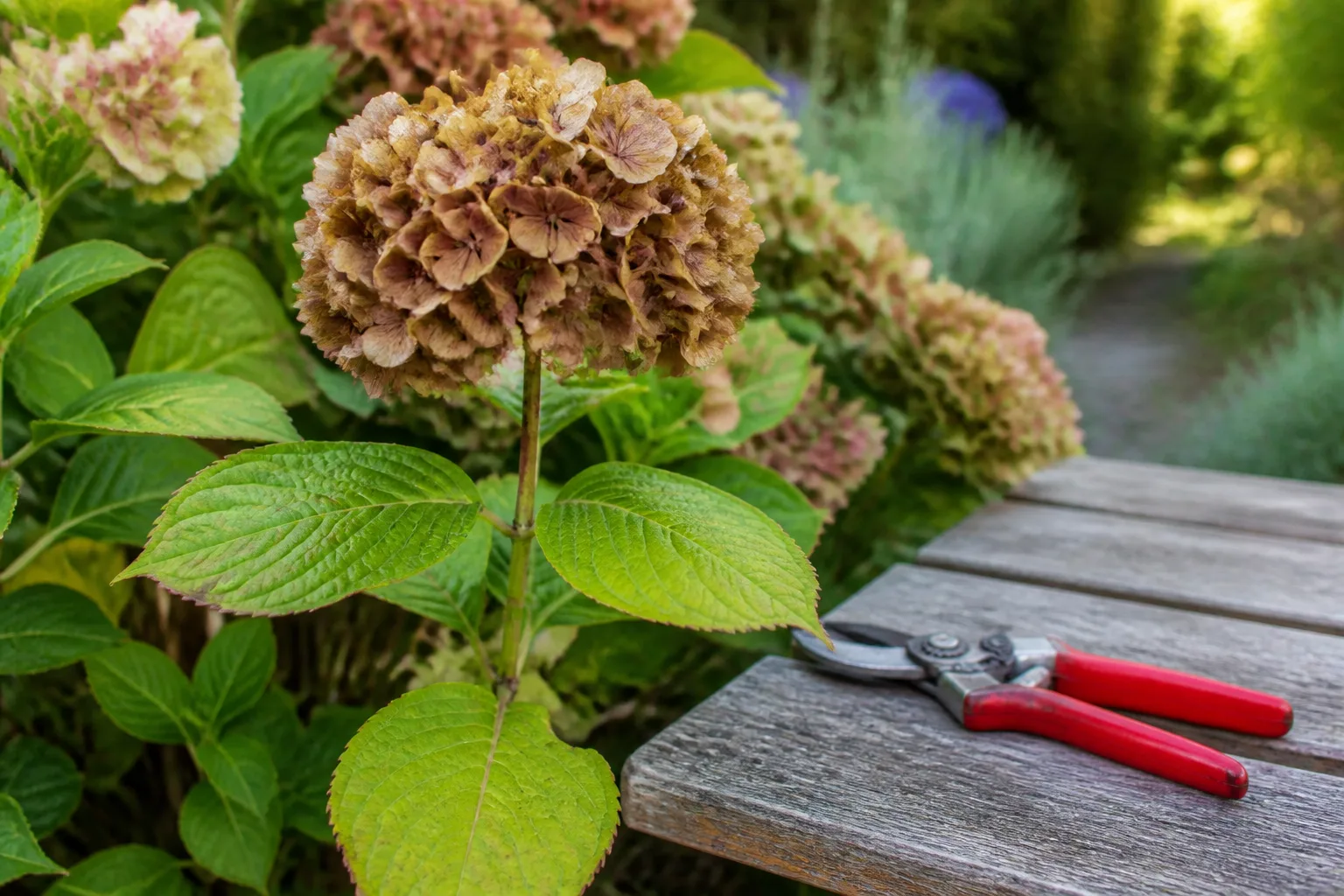
Deadheading is optional. If you like the dried flower heads for winter interest, leave them in place, especially on bigleaf hydrangeas where the heads can help shield buds below from harsh weather. If you prefer a tidier look, cut the flower head back to the first healthy pair of buds only when that timing is safe for the type; when uncertain, wait until spring and make the smallest necessary cut. The RHS advises leaving mophead heads over winter in colder or exposed gardens and removing them in early spring.
Protect buds through winter and spring cold snaps
Cold damage is not limited to the lowest winter temperature. Bigleaf flower buds can be exposed to drying winter winds, a sudden warm spell followed by a freeze, or a late spring frost after growth has started. The shrub may leaf out from lower buds yet flower poorly because the more vulnerable flower buds near stem tips were damaged.
Choose protection to match the exposure. A sheltered location, a mulch layer over the root zone, and a temporary breathable screen against wind can help reduce stress; avoid wrapping the plant tightly in plastic or piling mulch against the stems. In early spring, watch local forecasts when tender growth is emerging, and cover a vulnerable plant overnight with breathable fabric if a hard frost is expected, removing the cover after temperatures rise.
Do not cut every stem back immediately after winter. Wait until buds swell and growth resumes, then test questionable stems by gently scraping a small spot of bark: green tissue beneath is living; dry brown tissue may be dead. If only the tips are injured, prune back to the first healthy pair of buds after the damage is clear. A reblooming bigleaf cultivar may flower later on new growth, but that later flush is not guaranteed to match the normal display.
Restore steady moisture without keeping roots soggy
Hydrangeas use substantial water when they carry broad foliage and large flower clusters, but their roots still need oxygen. The goal is evenly moist, well-drained soil, not constant saturation. Both prolonged dryness and repeatedly wet soil can weaken roots, reduce flowering, and make leaves look stressed.
First check the actual root zone rather than relying on a fixed weekly schedule. Rainfall, soil texture, slope, container size, wind, and heat all change how quickly soil dries. A plant in sandy ground may need more frequent irrigation than one in moisture-retentive loam, while heavy clay or a low spot may need better drainage rather than more water.
Water the root zone according to soil and weather
Push a finger or narrow trowel a few inches into the soil near the drip line, where feeder roots spread, not against the main stems. If that zone is dry, water slowly over the root area so moisture can soak in rather than run off; repeat the check during hot or windy stretches. If the soil is damp, wait and check again rather than watering by the calendar.
Newly planted hydrangeas need closer monitoring while roots establish, and container-grown plants dry faster than shrubs in the ground. Water containers until excess drains from the bottom, then empty any saucer that remains full. A soaker hose or drip line can deliver water to the soil with less evaporation than frequent overhead sprinkling, but the line still needs to cover the root zone rather than only the trunk.
Morning watering is convenient because it gives leaves time to dry, but the key recovery step is getting water to the roots without turning the bed into a bog. If a plant wilts every afternoon despite moist soil, investigate heat exposure, root condition, or drainage instead of automatically increasing irrigation.
Mulch broadly and keep the crown clear
Spread a few inches of organic mulch over the root area to reduce rapid moisture swings and moderate soil temperature. Keep mulch away from the stems and crown so bark remains visible and air can circulate. A wide, shallow ring is more useful than a tall pile pressed against the plant.
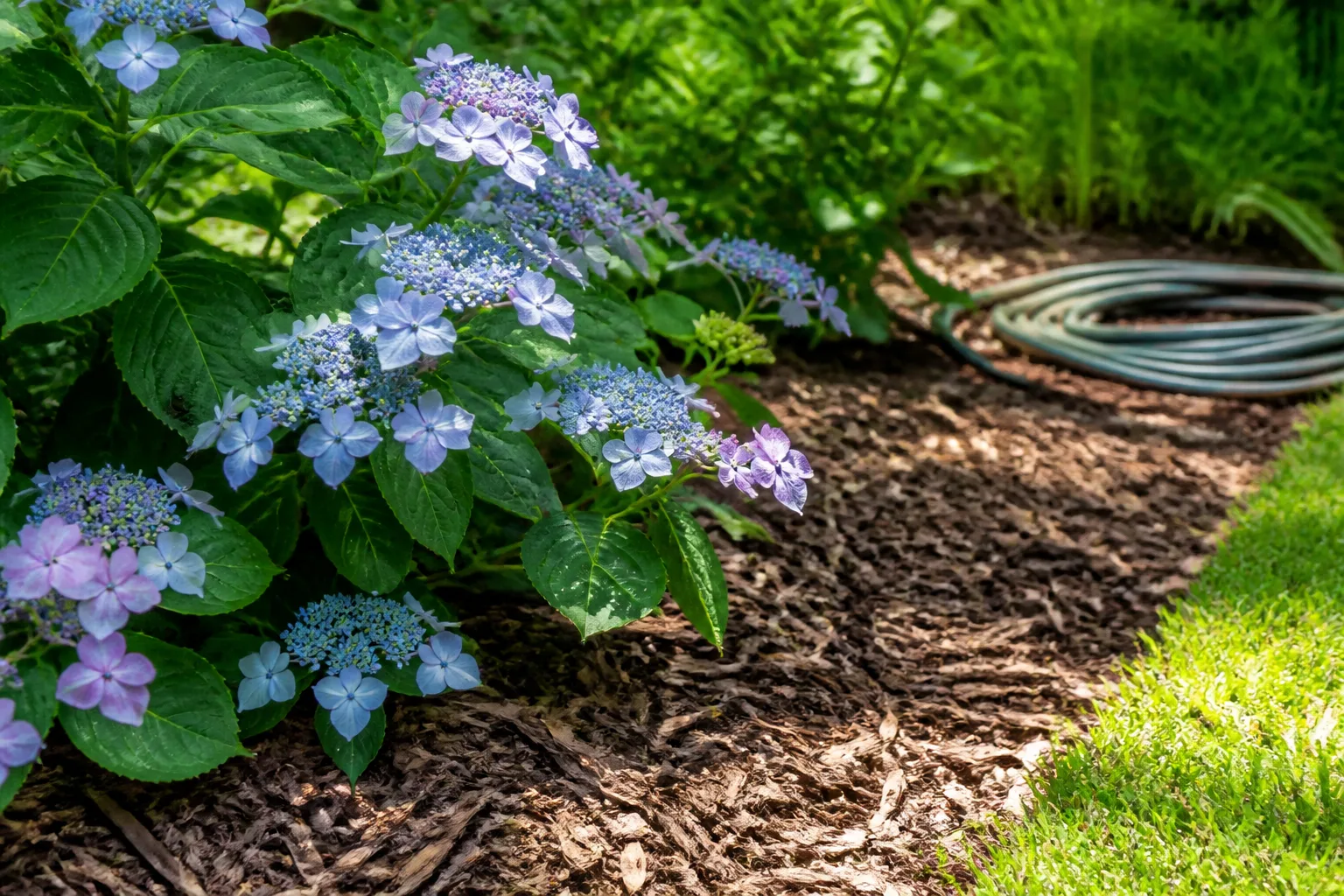
Mulch does not fix compacted, waterlogged soil, and it cannot compensate for roots crowded by a tree that drinks heavily from the same bed. If water pools after rain or the soil stays saturated for days, address drainage and the planting site before adding more organic material. Avoid digging deeply around an established hydrangea; its feeder roots spread near the surface and can be damaged by aggressive cultivation.
Reassess light, exposure, and the planting site
Light needs vary with hydrangea type and local climate. Many bigleaf hydrangeas do well with bright shade or morning sun and protection from intense afternoon heat, while panicle types tolerate more sun. NC State’s profiles make this difference clear: bigleaf hydrangea benefits from protection from afternoon sun, whereas panicle hydrangea is more tolerant of full sun. Fine Gardening similarly cautions against treating all hydrangeas as though they share one exposure preference.
Look for a pattern before relocating the plant. Scorch on the side exposed to afternoon sun, repeated midday wilt, and dry soil shortly after watering can support a heat-stress diagnosis; a leafy shrub in deep shade with few buds may need more light. Move a plant only if the site is consistently mismatched and you can provide a better one. Transplanting adds root disturbance, so it is usually not the first response to one poor bloom season.
If you do need to move an established shrub, choose a cool dormant period when the soil is workable and the plant is not in active heat stress. Prepare the new site first, dig a generous root ball, replant at the same depth, and water thoroughly. Expect the plant to spend energy rebuilding roots; moving it does not guarantee flowers the following summer.
Feed only when soil or growth signals a need
Fertilizer is not a general bloom switch. Too much nitrogen can drive soft leafy growth at the expense of flowers, and feeding late in the growing season can encourage tender growth that does not harden before cold weather. The scraped advice to apply a balanced product on a fixed monthly schedule should not be treated as universal; soil fertility, product formulation, plant age, and local timing all matter.
Look at growth before buying fertilizer. A hydrangea with healthy leaves and normal shoot growth rarely needs extra feeding just because it made few flowers. If growth is weak across the plant and the site, moisture, and root health look appropriate, test the soil or consult local extension guidance before applying nutrients. Correct a demonstrated deficiency using the soil-test recommendation and the product label.
Do not use fertilizer to compensate for lost buds, poor drainage, deep shade, or a pruning mistake. Those causes require their own fixes. For a new shrub, prioritize steady water, a suitable site, and undisturbed roots while it establishes; heavy feeding can create more growth than the young root system can support.
Treat soil pH as a color question, not a vigor fix
Soil pH advice is often overstated. For some blue and pink bigleaf hydrangea cultivars, soil acidity influences aluminum availability and can shift flower color; that does not mean acidifying soil will make every hydrangea healthier or increase flowering. White-flowered varieties generally do not change color in the same way, and panicle or smooth hydrangeas are not managed for blue-versus-pink color shifts.
If color is the goal, first confirm that the cultivar is capable of changing color, then use a soil test to understand the starting conditions. Amendments work gradually and results depend on soil chemistry; adding aluminum sulfate or lime without testing can damage roots or push pH farther than intended. Do not alter pH when your actual problem is wilting, poor drainage, cold-damaged buds, or no flowers.
Follow a recovery calendar from fall through bloom
Think of recovery as protecting next year’s flower sites while maintaining root health. A weekly checklist is less useful than a few seasonal actions timed to the plant’s growth stage and your local weather. If the shrub is stressed, avoid stacking major interventions such as pruning, transplanting, and fertilizing in the same season.
After flowering and in autumn
Once flowers fade, label the cultivar if you can and record when it bloomed. For old-wood types, do any needed shaping soon after flowering rather than waiting until late fall; for new-wood types, save structural pruning for late winter or early spring. Leave healthy stems and flower heads in place if winter protection or wildlife habitat is a concern.
During dry autumn weather, check soil moisture and water before the ground freezes if the root zone is dry. Refresh mulch over the root area, clear diseased fallen leaves if leaf-spot problems were severe, and stop routine fertilizer applications as the growing season winds down. Do not cut the whole shrub down just to make the garden look tidy.
During winter dormancy
Keep the plant’s root zone insulated with a moderate mulch layer, especially where the soil freezes and thaws or the site is exposed to wind. Check that mulch has not drifted against stems and that containers are protected from repeated freeze-thaw cycles. An outdoor hydrangea in a pot is more exposed to cold at the roots than one planted in the ground; its protection should match the cultivar’s hardiness and your local winter.
Leave old-wood stems standing unless they are broken or clearly hazardous. Dried flower heads can also remain until spring, when swelling buds show which stems are alive. Winter is a poor time to make large corrective cuts on a plant whose type and live wood are uncertain.
From spring growth to summer bloom
As buds swell, remove only winter-killed tips and wait for the boundary between living and dead wood to become visible. Resume watering when the root zone begins drying, and inspect for frost forecasts during tender growth. Apply fertilizer only if the soil test or clear growth symptoms justify it, following local recommendations rather than a generic monthly schedule.
When buds form, compare the result with your notes from the previous season. If the plant grows well but flowers poorly again, reconsider bud timing, cultivar hardiness, shade, and pruning records before changing several care factors. An old-wood shrub that lost its buds may need a full growth cycle to rebuild flowering wood; patience is part of the repair.
Conclusion
The most reliable way to grow better hydrangeas next season is to identify the type, protect the right stems, and correct the cause of stress in the root zone or planting site. Old-wood hydrangeas need their flower-bearing stems left intact through winter, while panicle and smooth types can be shaped before spring growth. Water when the soil is drying, keep it draining freely, and use mulch to smooth moisture swings rather than as a substitute for good drainage.
Skip automatic fertilizer and pH treatments. They cannot restore buds lost to pruning or frost, and they may create new problems when used without a soil test. Make a small number of well-timed changes, keep a brief seasonal record, and judge success by the plant’s growth and next bloom cycle—not by how much work you put into it.