Why Japanese Iris Needs Wet Summers, Not Wet Winters
Grow Japanese iris in moisture-retentive soil, water it through summer, and keep winter roots from sitting wet. Learn planting depth, division, and care.
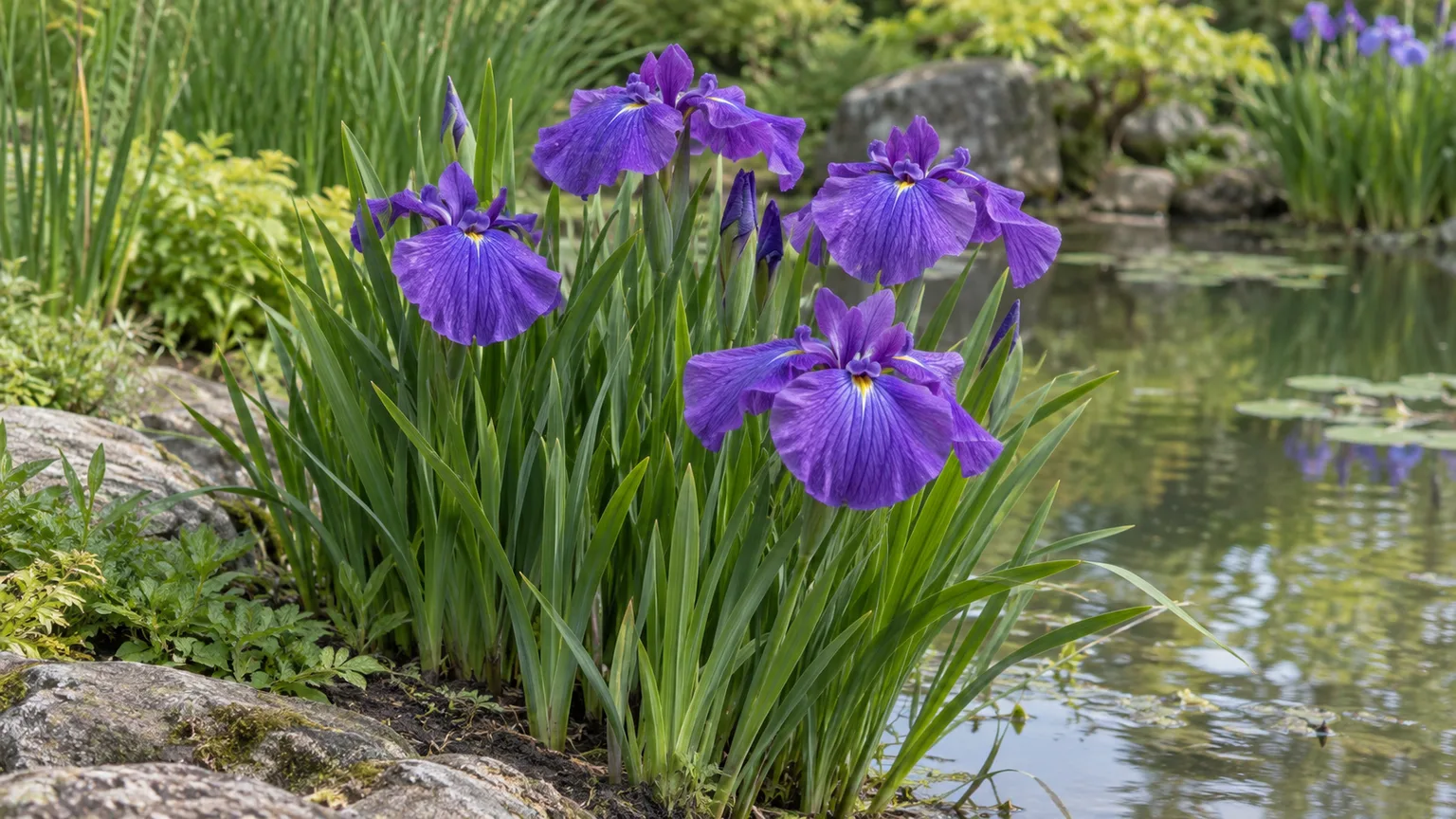
Japanese iris (Iris ensata) is a beardless perennial for gardeners who can give a plant consistently moist soil in the growing season. Its broad, flattened flowers rise above upright, sword-shaped leaves in midsummer, often when earlier irises have finished. It is hardy across USDA zones 4–9, but success depends less on a strict watering schedule than on getting the seasonal pattern right: abundant moisture while it grows, then a winter rest without saturated roots. (North Carolina State Extension)
That rhythm makes Japanese iris useful beside a pond, stream, rain garden, or damp border, but it is not an aquatic plant to plunge permanently underwater. It can tolerate periods of standing water in warm months; in winter, long-lasting water around the rhizomes raises the risk of rot. A garden bed that stays moist in summer and drains later can work as well as a pond edge, and a pot makes the change easier to manage.
What Makes Japanese Iris Different From Other Irises?
“Japanese iris” can mean more than one species in nursery listings, so look for the botanical name Iris ensata before buying. The similar common name Japanese iris is also used for Iris japonica, a different plant with different growth habits; a label that includes the species name saves you from following the wrong care guide. The Japanese water iris is a clump-forming rhizomatous perennial native to eastern Asia, grown for summer flowers and foliage rather than evergreen structure. (Pond Informer)
The flower is the easiest clue: Japanese iris has a flatter profile than the familiar bearded iris, with large spreading or drooping outer petals and shorter upright inner petals. Individual flowers can span about 3–6 inches, while flower stalks may reach 4 feet; cultivated forms include single and double blooms in purple, blue, pink, and white. The tall leaves make a strong vertical clump before and after flowering, so allow room for the foliage instead of treating the plant as a short-lived pond accent. (North Carolina State Extension)
If you want a low-water iris for a dry sunny border, choose another species. Japanese iris is at its best where water is easy to supply in summer, but it rewards that extra attention with flowers that arrive later than bearded and Siberian irises. If the garden must stay permanently flooded through winter, use a different marginal plant or grow this iris in a movable container.
Choose a Site That Stays Moist in Summer
Choose the location around the soil’s seasonal behavior, not just the distance to a pond. A place that remains damp through spring and summer, then loses standing water in fall and winter, is usually a better fit than a low hollow that stays swampy all year. The plant tolerates occasional flooding and wet soil; what it does not tolerate well is the combination of cold dormancy and saturated rhizomes. (North Carolina State Extension)
Before planting, observe the bed after heavy rain and again several days later. If water stands in the spot for a short period and drains as the season shifts, the site may suit Japanese iris; if it remains waterlogged into winter, choose a raised area or container instead. A moisture-retentive bed can be made with organic matter incorporated through the planting area, but avoid turning a compacted planting hole into a small “bathtub” that collects water around the roots.
Sunlight: Full Sun With a Heat-Smart Exception
Full sun encourages strong growth and flowering, and North Carolina State Extension defines the plant’s preferred exposure as six or more hours of direct sun. In climates with intense afternoon heat, light shade later in the day can reduce stress, but deep shade is likely to leave the clump with plenty of leaves and few flower stalks. Aim for the brightest site that does not bake dry before you can irrigate it. (North Carolina State Extension)
Use the plant’s performance as feedback. A clump in open sun that repeatedly wilts or dries at the root zone needs more reliable moisture, not simply more shade; one in dense shade that grows leaves but rarely flowers needs more light. If the only wet site is shaded, try a brighter container location before moving a mature clump, then compare its leaf and bloom response over a full growing season.
Soil: Acidic, Rich, and Moist but Manageable
Japanese iris prefers deep, humus-rich, acidic soil. North Carolina State Extension lists an acid soil reaction below pH 6.0 and high organic matter, while the RHS describes moist-to-wet, deep, humus-rich acid soil as the preferred growing medium. Those details matter more than the label “clay” or “loam”: the soil must hold enough water in summer without trapping winter water around the rhizomes. (North Carolina State Extension; RHS)
Test soil pH before applying sulfur or another acidifier. A soil test helps you avoid lowering pH too far or treating a symptom that is actually caused by poor drainage, shallow watering, or shade. Blend mature compost into a broad area to improve organic matter and moisture retention; do not add vinegar to a pond or use an improvised acid dose, because it does not solve soil structure and can change water chemistry abruptly.
A heavy soil is not automatically unsuitable if it is fertile, moist, and not permanently waterlogged in winter. If your garden soil becomes dense and airless, improve the whole bed or choose a container rather than adding a small pocket of loose mix that dries differently from the surrounding ground. A thin organic mulch can slow summer drying, but keep it from piling against the plant’s crown.
Plant Japanese Iris Rhizomes Correctly
Plant nursery-grown plants or bare rhizomes in spring or fall, when the weather is mild and the soil is workable. For bare rhizomes, set the growing tip upright and plant about 1–2 inches deep; Japanese iris is planted differently from some bearded irises whose rhizomes are left partly exposed. Planting too deeply can delay growth and bloom, while leaving a fresh division on top of the soil can dry its roots before it establishes. (North Carolina State Extension)
Prepare the bed first so you can plant promptly and water thoroughly. Loosen a wide area, work in mature compost if the soil is low in organic matter, and check that the selected spot meets the drainage pattern you want. If several clumps are going in, space them according to the mature width on the cultivar label rather than crowding them together for an instant display; the clumps will expand as the rhizomes grow.
Set each rhizome with its tip pointing up, cover it with the recommended shallow layer of soil, then water the planting zone until the soil is evenly moist. Keep it moist while new leaves and roots develop, especially if rain is scarce, but do not create a permanently flooded planting hole. For a potted plant, keep the top of the root mass at its nursery depth and water it in before moving the container to its growing position.
Water Through Growth, Then Reduce Winter Wetness
Water deeply enough to moisten the root zone, then check the soil before watering again. During active spring growth and summer flowering, Japanese iris should not dry out completely; a mulch layer and a soaker hose or drip line can help keep moisture consistent in a garden bed. During hot, windy weather, inspect more often because the soil surface can look wet while the root zone underneath is drying. (RHS; Gardening Know How)
Do not interpret “water iris” as “keep it submerged all year.” The species can tolerate periods of standing water during the growing season, but it needs a drier winter rest; North Carolina State Extension recommends removing water-garden plants in fall or shifting pot-grown rhizomes to a drier site for fall and winter. The safe rule is: moist soil is the baseline, shallow seasonal water is an option, and cold saturated soil is the condition to avoid. (North Carolina State Extension)
If the bed is drying too quickly, water more deeply or move the plant to a more moisture-retentive site rather than giving it a daily splash. If the crown stays soggy after rainfall late in the season, pause irrigation and improve drainage before winter. Yellow leaves alone do not prove that the plant needs less water; check the season, soil moisture at root depth, and the firmness of the rhizome before changing the routine.
Grow Japanese Iris Beside Water or in a Pot
You can grow Japanese iris in a garden bed, at the edge of a water feature, or in a container. The best method is the one that lets you provide steady summer moisture and change the winter conditions without damaging the clump. A pond is convenient for watering, but it is not required if the soil can be kept moist. (Gardening Know How)
At a Pond or Stream
Plant at the wet margin, where roots reach consistently damp soil and foliage rises above the water. Do not set the crown deep under water or assume the plant needs a submerged basket; its natural habitat is more like a marsh meadow or stream bank, and deep submersion can deprive the roots of air. If the shoreline floods seasonally, track how long the planting area stays under water and make sure it dries back before cold weather. (Pond Informer)
A planting basket gives you a way to control the location and lift the plant later, but fill it with a heavy, stable aquatic-plant medium and secure it so the leaves do not topple in wind. Keep pond fertilizer or soil amendments out of the water unless the product is specifically labeled for aquatic use. In fall, move the basket or container to a place where the rhizomes are not sitting in cold pond water; a nearby bed that stays cool but is not waterlogged can provide a practical winter holding spot. (North Carolina State Extension; Pond Informer)
In Containers
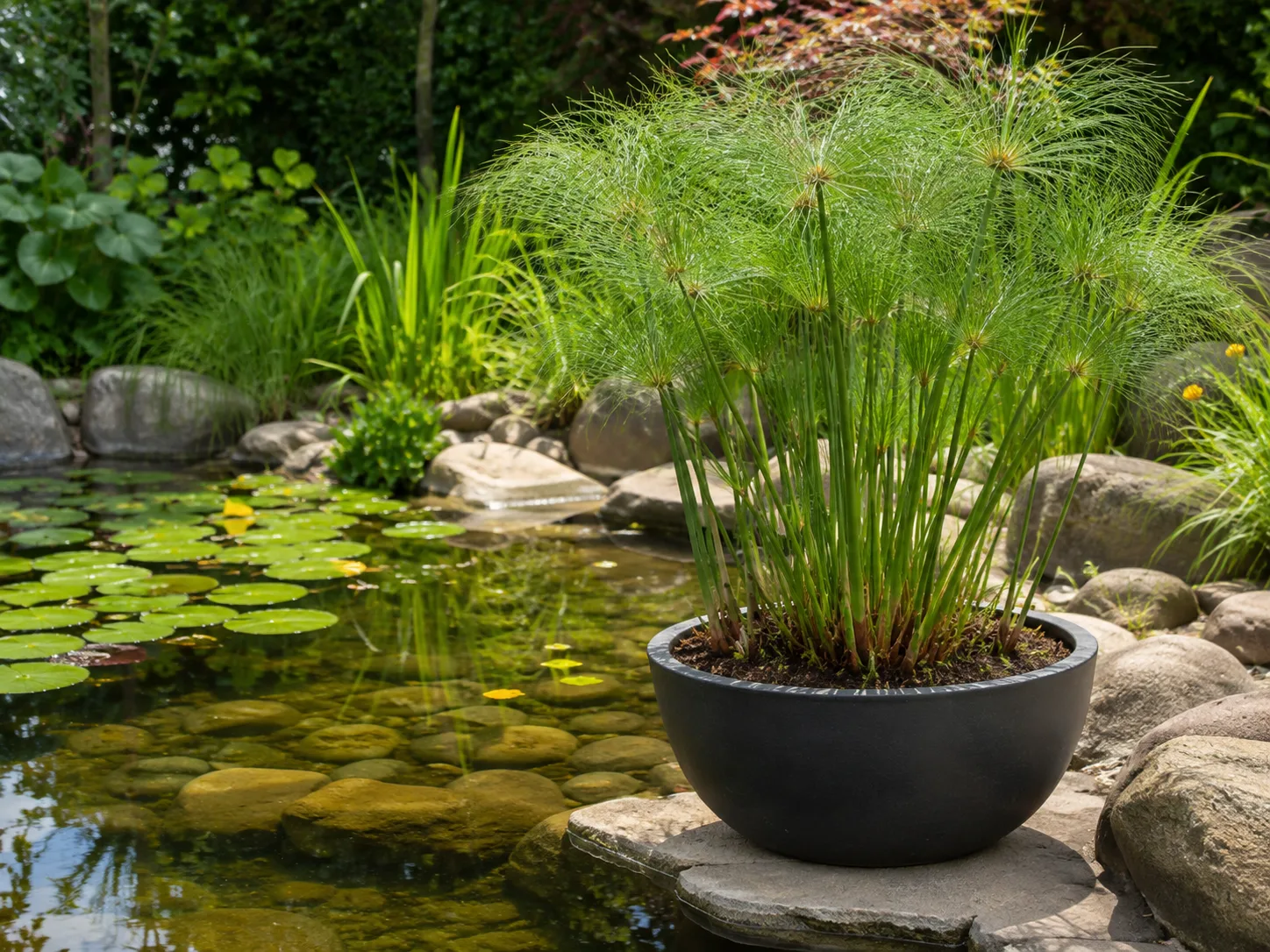
Container culture is the most predictable choice when the garden is wet year-round, the soil is alkaline, or you want to move the plant out of a pond in fall. Choose a wide, sturdy pot with drainage holes and enough depth for roots to spread; a shallow, unstable pot can tip under tall leaves and flower stalks. Use a moisture-retentive planting mix that does not collapse into a dense, airless mass, and set the rhizome at the same shallow depth used in a bed. (Pond Informer)
During active growth, water so the mix stays evenly moist. You can set the pot in a shallow pond or a watertight outer container for a limited part of the growing season, but keep the crown and foliage above the water line and do not leave the pot in cold water through winter. In fall, tip out any standing water from an outer cachepot and place the container where it will remain dormant but not freeze solid or stay waterlogged.
Repot when rhizomes have filled the available space, roots circle densely, or the mix has become compacted and difficult to wet evenly. The timing often coincides with division after flowering, so refresh the mix while you separate the clump. A container does not eliminate seasonal care: it simply makes moisture and winter placement easier to adjust.
Fertilize Lightly and at the Right Time
Start with a soil test and the condition of the plant rather than a calendar. If the bed is rich and the leaves grow steadily, extra fertilizer may not be needed; too much nitrogen can produce lush leaves without solving poor flowering caused by shade, deep planting, drought, or crowding. Gardening Know How recommends feeding only after the root system is established, while North Carolina State Extension identifies the plant’s preference for high-organic-matter soil. (Gardening Know How; North Carolina State Extension)
If a soil test or weak growth indicates a nutrient shortage, apply a modest amount of a complete fertilizer intended for flowering perennials in spring, following the product label. Keep granules away from the crown, water them into the soil, and avoid runoff into a pond. Do not feed a newly divided or newly planted rhizome heavily; give it time to establish roots first.
What to Expect From Japanese Iris Flowers
Japanese iris usually flowers in midsummer, after many bearded and Siberian irises have finished. Exact timing shifts with climate, cultivar, and spring temperatures, so expect a seasonal window rather than a guaranteed calendar date. Flower stalks can carry one or several blooms, and the large flat flowers may be single or double in shades of violet, blue, pink, or white. (North Carolina State Extension; RHS)
When choosing a cultivar, compare mature height, flower color and form, and the amount of sun your garden can provide. Some nursery names refer to a color selection, while others identify a named cultivar or a series, so verify that the label includes Iris ensata and check the seller’s description for mature dimensions. The RHS profile for ‘Azure,’ for example, describes double violet-blue flowers, while the species page describes violet-purple flowers with a small pale marking on each broad fall. (RHS ‘Azure’ profile)
A newly planted clump may need time to settle before it produces a full flush of flowers. The first season is a chance to establish roots and leaves, not a reliable measure of its final display. If the plant looks healthy but bloom is sparse after establishment, check light, planting depth, water consistency, and crowding before buying more fertilizer.
Divide Clumps Before Crowding Stops the Show
Japanese iris spreads by rhizomes and forms larger clumps over time. Divide about every three years, or sooner if the center becomes congested, flowering declines, or the plant is pushing into neighboring space; both North Carolina State Extension and Gardening Know How connect regular division with renewed growth and flowering. The RHS recommends division from midsummer to early autumn, while the extension profile specifies dividing after flowering has finished. (North Carolina State Extension; RHS; Gardening Know How)
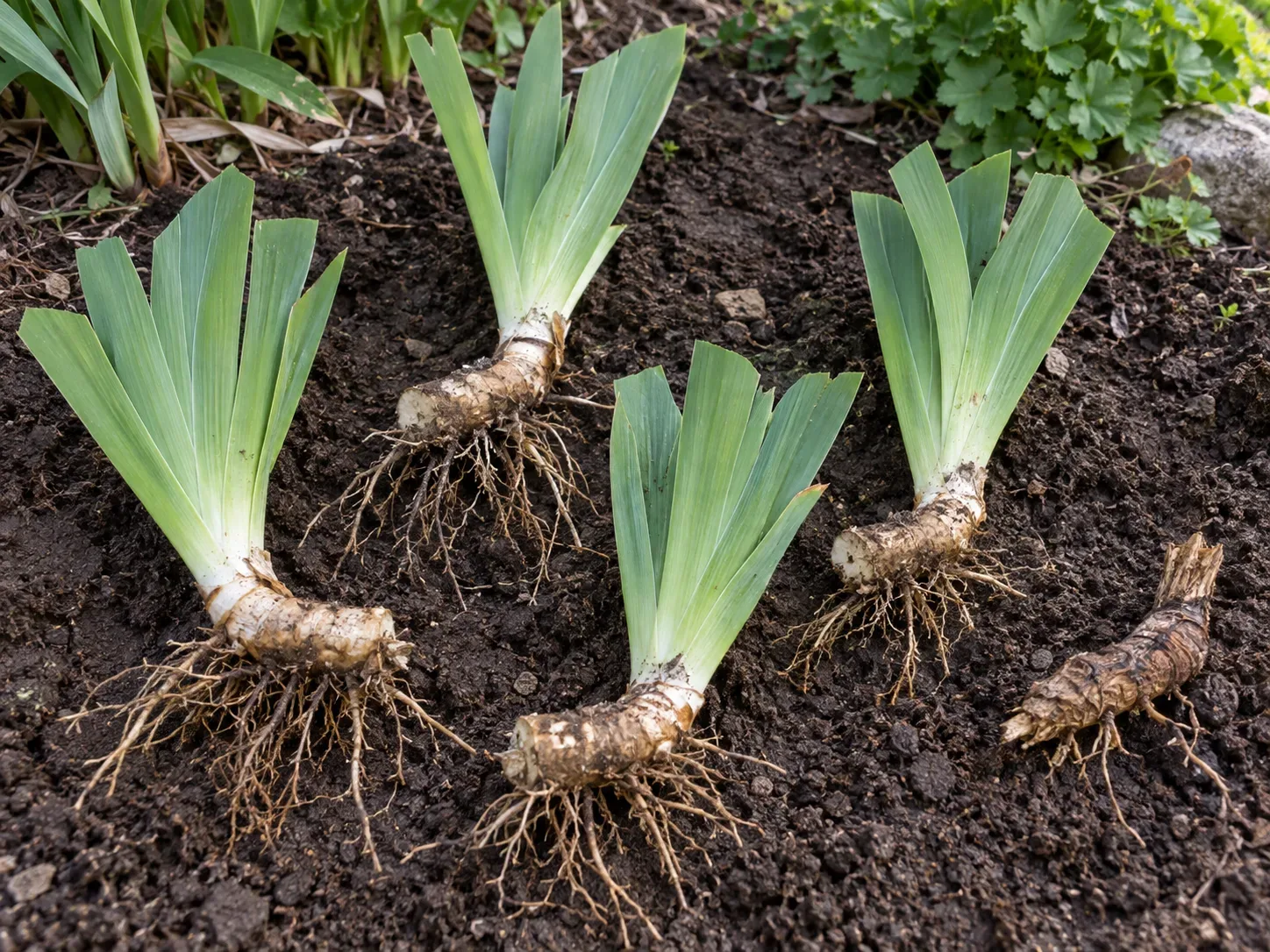
Water the clump the day before if the soil is dry, then lift it with a garden fork far enough from the crown to avoid slicing through the rhizomes. Shake or rinse away soil so you can see the growing points, then separate healthy outer sections from old, crowded material. Keep divisions that have a firm rhizome and at least one healthy fan of leaves; discard mushy or badly damaged tissue rather than replanting it.
Replant divisions promptly at the same shallow depth, with the growing tips upright and spaced for their mature size. Water them in and keep the soil evenly moist while roots recover. If the weather is hot, work early in the day and keep the divisions shaded and damp until you can plant them; exposed rhizomes can dry quickly. For named cultivars, check the plant’s label or seller terms before sharing divisions, since propagation restrictions can apply to protected varieties.
Prune for Tidy Foliage and Better Next-Year Growth
After the flowers fade, cut the flower stalk back to its base if you do not want seed capsules. This keeps the clump tidy and directs attention to the foliage, but it is not a substitute for division when a mature plant has become crowded. If you want to collect seed, leave a capsule to mature instead; seed-grown plants may not match the color or form of a named hybrid parent. (RHS)
Leave healthy leaves in place through the growing season. They continue to support the rhizome after bloom, and cutting them off early can weaken the plant before its dormant period. In autumn, remove foliage that is dying or diseased; clean and dry your pruners before moving to another iris clump, especially if you have seen leaf spots or rot.
Diagnose Common Japanese Iris Problems
When a Japanese iris looks unhealthy, start with the plant’s season and the soil below it. The same yellow leaf can come from normal autumn dieback, drought in summer, or a failing rhizome in soggy winter soil, so inspect the roots and the bed before reaching for fertilizer or a pesticide. Use the order below to narrow the cause.
- Few or no flowers: Check whether the site gets at least six hours of sun, whether the rhizome is deeper than 1–2 inches, and whether the soil dried during spring growth or summer bud development. If those conditions are sound, look for crowding and divide a mature clump after flowering.
- Leaves grow but flowering is weak: Dense shade and overcrowding are more likely than a missing bloom booster. Improve the light if possible, then divide clumps that have a packed center; do not increase nitrogen until you have ruled out these conditions.
- Mushy rhizome or a foul, soft base: This points to rot, especially if the plant sat in saturated soil during cold weather. Lift the clump, discard affected tissue, and move healthy sections to a site that stays moist in summer but drains in winter.
- Leaves yellowing during summer: Check soil moisture at root depth. If it is dry, water deeply and more consistently; if it is wet and the crown is soft, stop watering and improve drainage instead.
- Leaves fading or damaged after relocation: A recently moved clump may take time to re-establish, and physical disturbance can expose rhizomes. Confirm the growing tip remains covered at the correct depth, water it in, and watch the next flush of growth before changing several conditions at once.
If the plant fails to push new growth after a full growing season, lift one section and inspect it. Firm, pale tissue with sound roots can be replanted; soft or hollow sections should be removed, and the site’s winter drainage should be corrected before the rest of the clump goes back in.
Watch for Pests and Disease
Slugs and snails may chew leaves and flowers, especially in damp, sheltered beds. Check for fresh ragged edges and slime trails after dark or early in the morning, then reduce hiding places and use physical controls that are appropriate for your garden. The RHS also lists thrips as a possible pest and notes susceptibility to aphid-borne viruses, bacterial soft rot, and gray mold. (RHS)
Avoid diagnosing every discolored leaf as an insect problem. A cluster of curled or distorted new growth can justify a closer look for aphids or thrips, while a soft crown or collapsing base is more consistent with rot and calls for better drainage. Remove badly affected plant material and dispose of it rather than composting it if disease is suspected; keep tools clean between clumps.
Use a pesticide only when you have identified the pest and the product label permits use on the plant and, if relevant, near water. Do not spray over a pond or use ordinary garden products in aquatic settings unless the label explicitly allows that application. If damage is minor, hand removal, improving airflow, and correcting wet-season drainage are safer first steps.
Handle Japanese Iris Safely Around Pets and Children
Iris plants are toxic if eaten, and the rhizomes contain the highest concentration of the compounds of concern for pets. The ASPCA lists iris as toxic to dogs, cats, and horses and reports signs such as salivation, vomiting, lethargy, and diarrhea; North Carolina State Extension also flags possible low-severity toxicity to people and skin irritation from contact with sap, seeds, or rootstock. (ASPCA Animal Poison Control; North Carolina State Extension)
Keep rhizomes, cut foliage, and plant waste away from children and animals, and wear gloves when dividing or handling damaged roots. Wash your hands and tools afterward, and avoid leaving divisions where a pet can chew them. If a person or animal eats any part of the plant, contact a medical professional, veterinarian, or animal poison-control service promptly rather than waiting for symptoms.
Conclusion
The simplest way to grow Japanese iris is to match its water needs to the calendar: give Iris ensata rich, acidic soil and reliable moisture during active growth, then protect its rhizomes from cold, stagnant water in winter. Full sun supports bloom, and a shallow planting, regular division, and a container you can move all make care more predictable. (North Carolina State Extension; RHS)
Before planting, check the botanical label, test soil pH, and observe how quickly the site drains after rain. If the area stays wet through winter, plant in a movable pot; if the soil dries in summer, plan irrigation before the flower stalks appear. Those two checks—summer moisture and winter drainage—will do more for healthy growth and repeat blooms than a complicated fertilizer schedule.