How to Get Rid of Water Bugs in Your Home
Learn how to get rid of water bugs in your home by identifying the species, mapping entry points, using baits safely, and stopping repeat infestations.
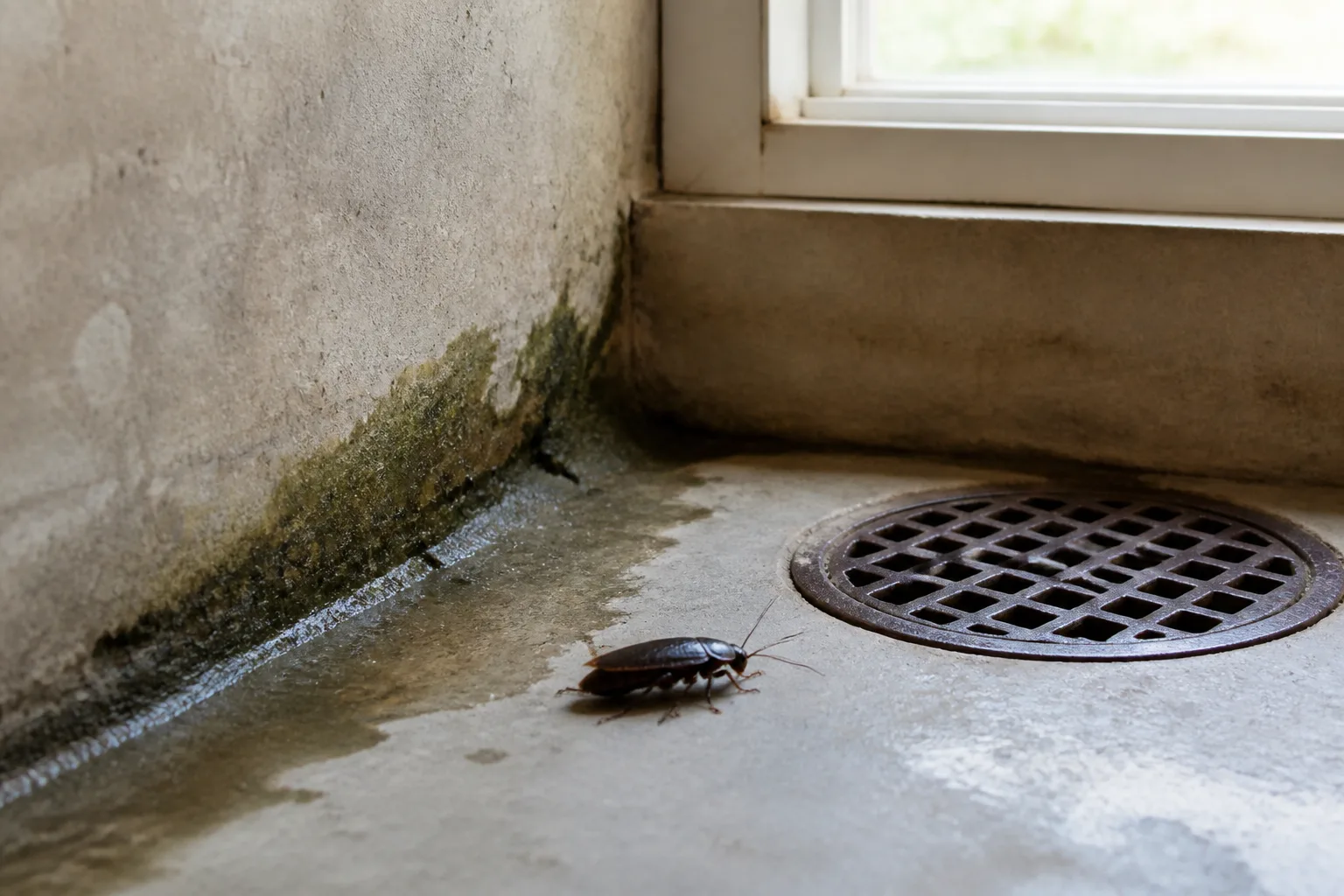
If a large, dark insect appears near a basement drain, bathroom, garage door, or kitchen sink, start with identification—not a can of spray. “Water bug” is a loose household name, and indoors it most often means an Oriental cockroach or another cockroach that is using a damp route into the building.
The reliable fix is a sequence: contain the immediate sighting, find where the insects are traveling, remove food and moisture, close the entry route, then use a precisely placed bait if monitoring shows an established problem. That approach takes longer than a dramatic spray, but it is much more likely to stop the next generation and the next invasion.
The Fastest Safe First Move
For one visible insect, close interior doors so it cannot move into another room, then vacuum it with a hose attachment or trap it under a container and slide stiff paper underneath. If you vacuum, seal and promptly discard the bag or contents; do not leave the vacuum sitting open in a utility room. Avoid crushing an unknown insect against a food-preparation surface.
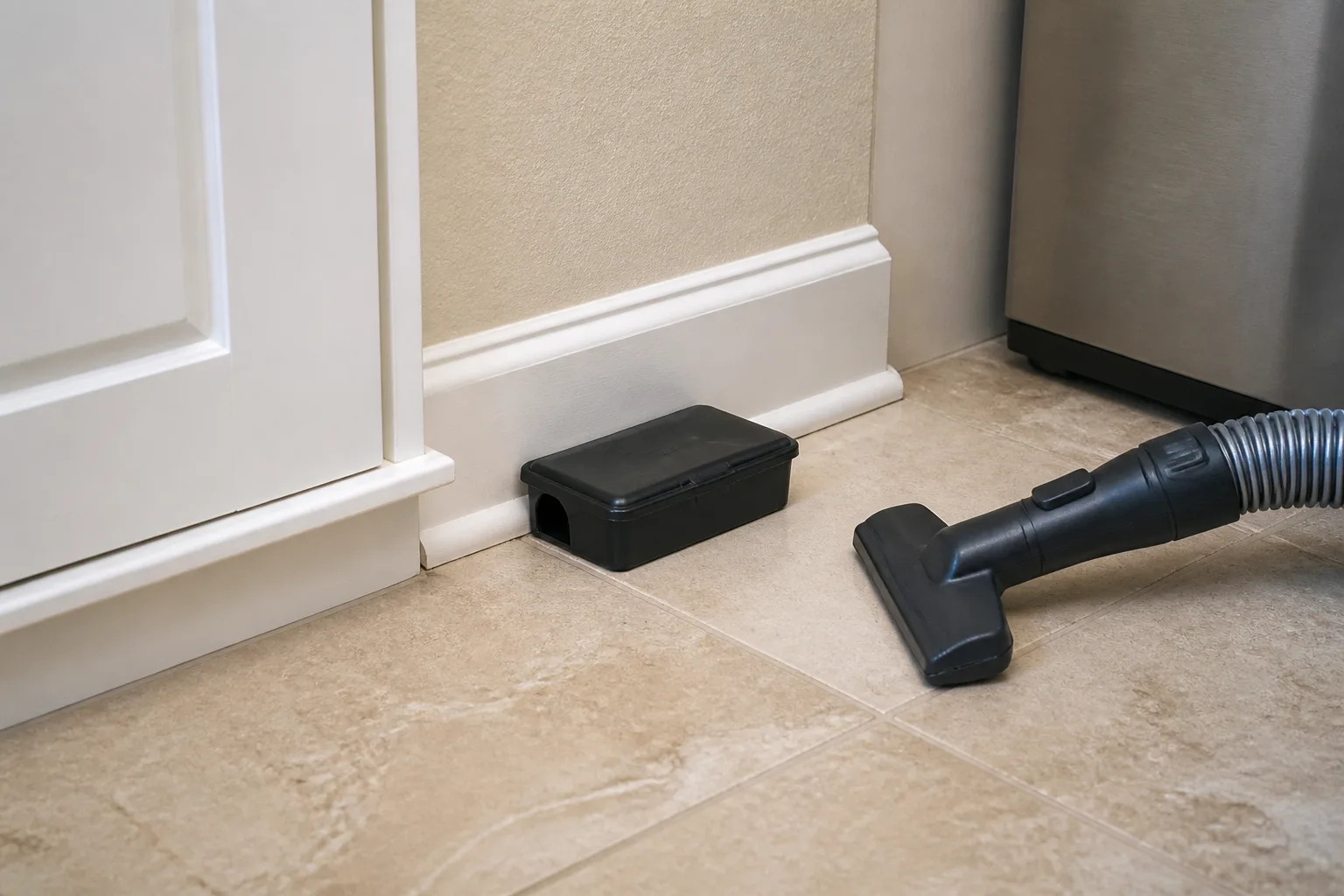
Next, place a few enclosed sticky traps where the sighting occurred and along the nearest wall edge. A trap does more than catch a bug: it can tell you whether the insect is coming from a drain, an exterior door, an appliance gap, or a hidden colony. The National Pesticide Information Center recommends identifying the cockroach before choosing a treatment because control options differ by species. NPIC’s cockroach guidance also recommends monitoring and an integrated pest management approach before reaching for a pesticide.
Do not pour bleach, boiling water, gasoline, or a homemade chemical mixture into a drain. A drain may be an entry clue, but it is not proof that the insects are breeding inside the pipe, and an improvised treatment can damage plumbing or create irritating fumes without reaching the harboring space.
What People Mean by “Water Bug”
The nickname usually describes a cockroach that favors damp areas, not a single insect species. Indoor “water bugs” are often Oriental cockroaches, which are dark brown to almost black, roughly an inch to an inch and a quarter long, slow-moving, and associated with cool, damp places such as basements, garages, drains, crawlspaces, and water-meter boxes. They do not fly and have difficulty climbing smooth vertical surfaces, which is why one may end up stranded in a porcelain sink or tub.
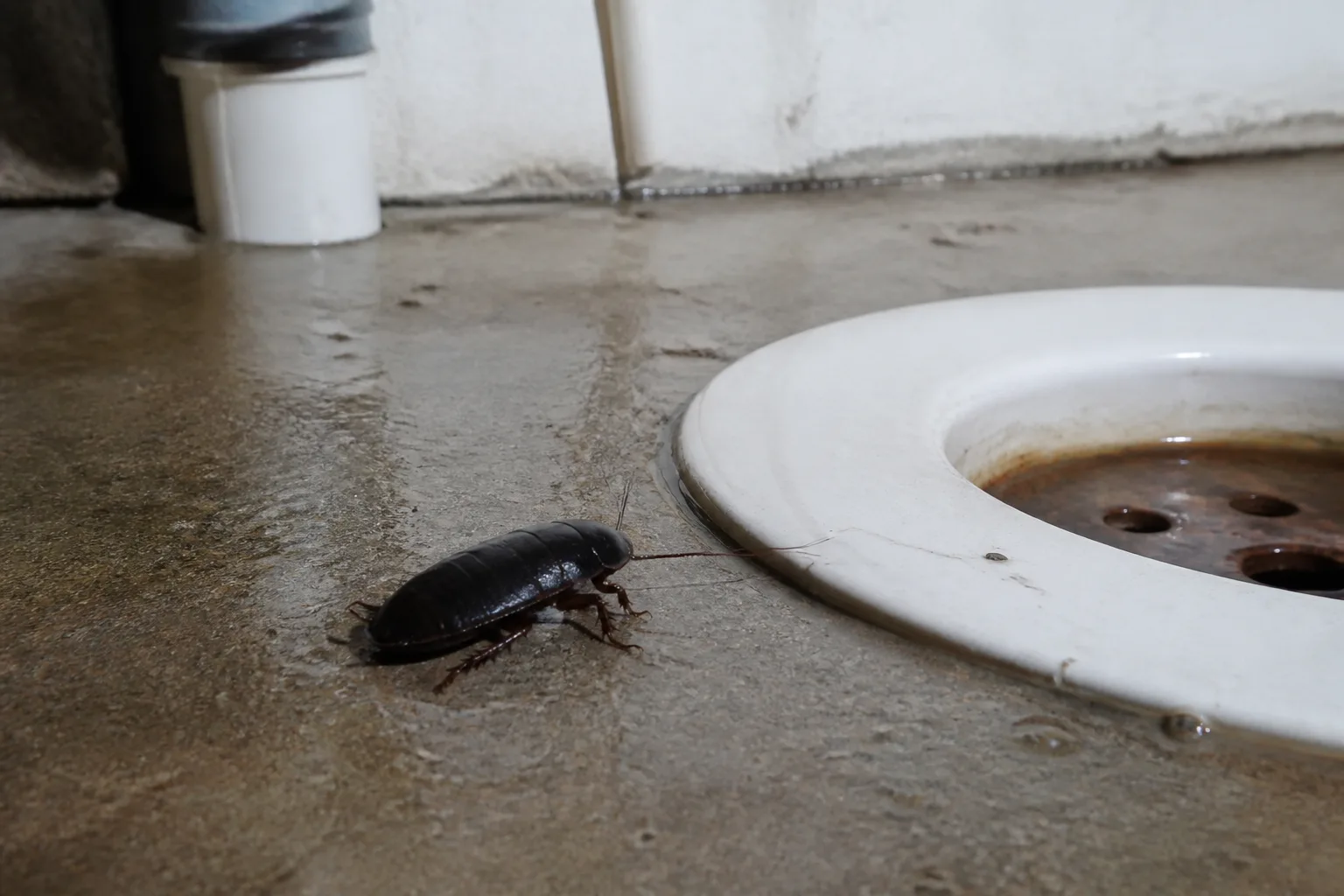
Other cockroaches can also be mislabeled. American cockroaches are generally larger and reddish brown, and they may move from sewers, storm drains, or other warm, humid infrastructure into a ground-floor room. German cockroaches are smaller and lighter, often tan with two dark stripes behind the head; repeated sightings of these in a kitchen suggest an indoor-breeding problem rather than a stray visitor from the yard. UC IPM’s cockroach identification notes describe these habitat and appearance differences in detail.
How to Recognize an Oriental Cockroach
Look for a broad, flattened body, long antennae, a shiny dark-brown color, and a slower, less skittish movement than many people expect from a cockroach. Adult males have wings that are shorter than the abdomen, while females have only small wing pads; neither sex is a flying cockroach. A dark, purse-shaped egg case in debris near a damp hiding place is another useful clue, but do not handle it barehanded.
Location matters as much as color. A dark roach found once beside a wet basement wall may be an outdoor species that wandered in. The same appearance repeated around a leaking pipe, floor drain, or ground-floor wall points to a route and harborage that need to be corrected. Keep a photo or a sealed trap for your local extension office or licensed pest professional if the identification is uncertain.
True Water Bug vs. Cockroach
True water bugs are aquatic insects that live in or around ponds, slow-moving water, pools, and wet vegetation. They may be large, brown, and attracted to lights, which can explain an occasional visitor near a porch or pool. They are not the usual cause of a recurring indoor pest problem, and a large aquatic insect should be moved with a container rather than grabbed.
An indoor cockroach has long antennae and the familiar flattened, spiny-legged body. An aquatic water bug has a different body plan and front legs adapted for grasping prey. If the insect came from a damp basement and you are finding more than one, treat the situation as a cockroach investigation while preserving a specimen for confirmation; do not assume the nickname tells you what product to use.
Signs It Is More Than a Single Intruder
One outdoor roach after heavy rain is not the same problem as a colony. Repeated sightings, especially during daylight, make a larger population more likely because cockroaches normally hide in cracks and emerge mostly at night. Seeing nymphs is an especially strong warning: young insects indicate that egg cases have hatched nearby or that a connected space is supporting reproduction.
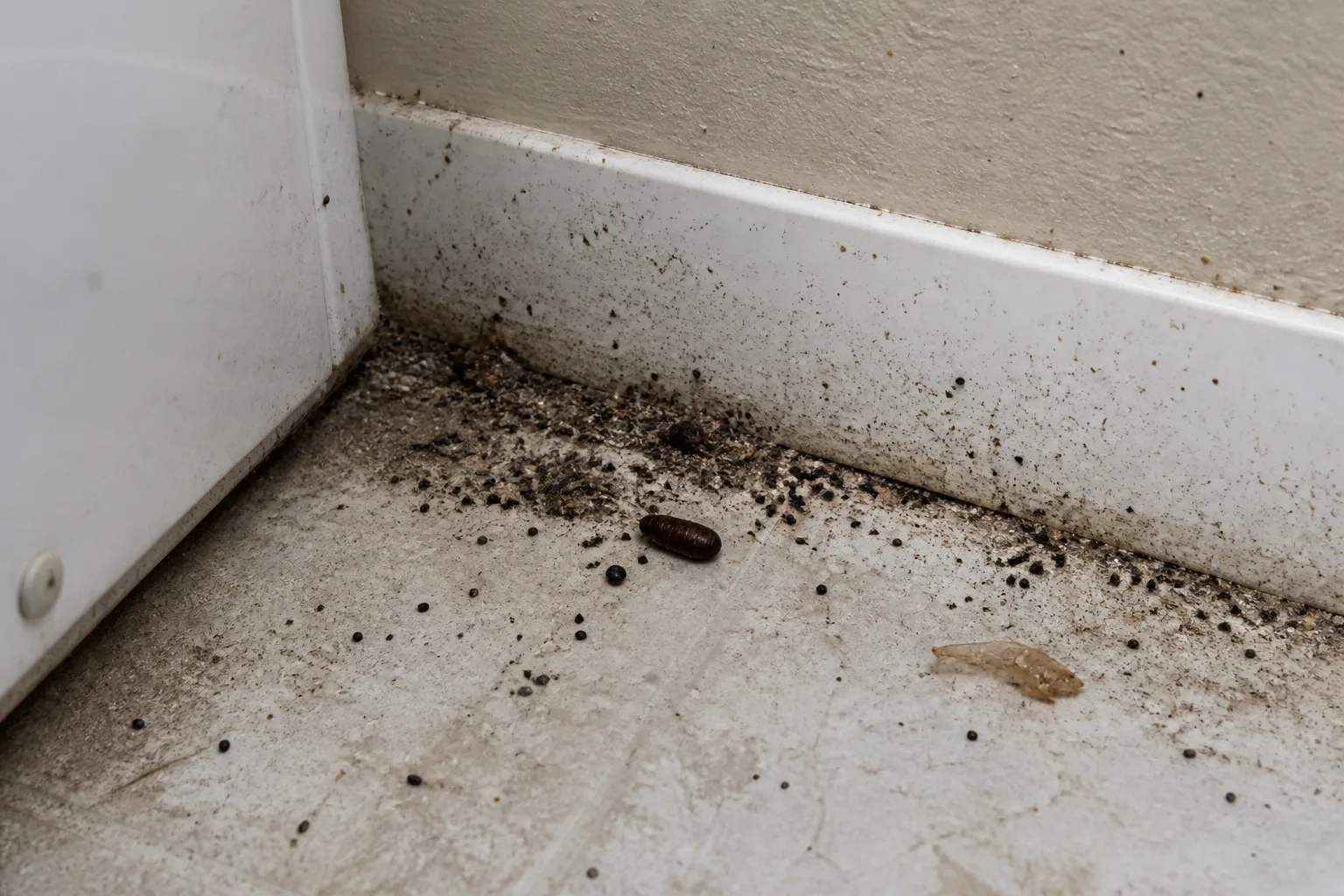
Look for pepper-like dark specks or smears along wall edges, cast skins, egg cases, a stale odor, or live insects in more than one connected room. None of these clues is a perfect species test, but together they tell you where to inspect. If traps catch insects near both an exterior door and an under-sink pipe, you may have two routes rather than one nest.
Health is another reason to act methodically. Cockroach droppings and shed skins can become airborne allergens, and indoor infestations can worsen allergy or asthma symptoms in sensitive people. Keep children and pets away from contaminated areas during cleanup, and use a HEPA-filtered vacuum when possible if anyone in the household is sensitive to dust or asthma triggers. Purdue Extension’s multi-family housing guide explains why repeated exposure and shared-building conditions deserve attention.
Inspect and Map the Hot Spots
Inspect after dark or just before dawn, when cockroaches are more likely to be moving. Use a flashlight and work from the last sighting outward: under the sink, behind and beneath the refrigerator and stove, along baseboards, around water heaters, inside the basement or crawlspace, near floor drains, and wherever plumbing or cables pass through a wall.
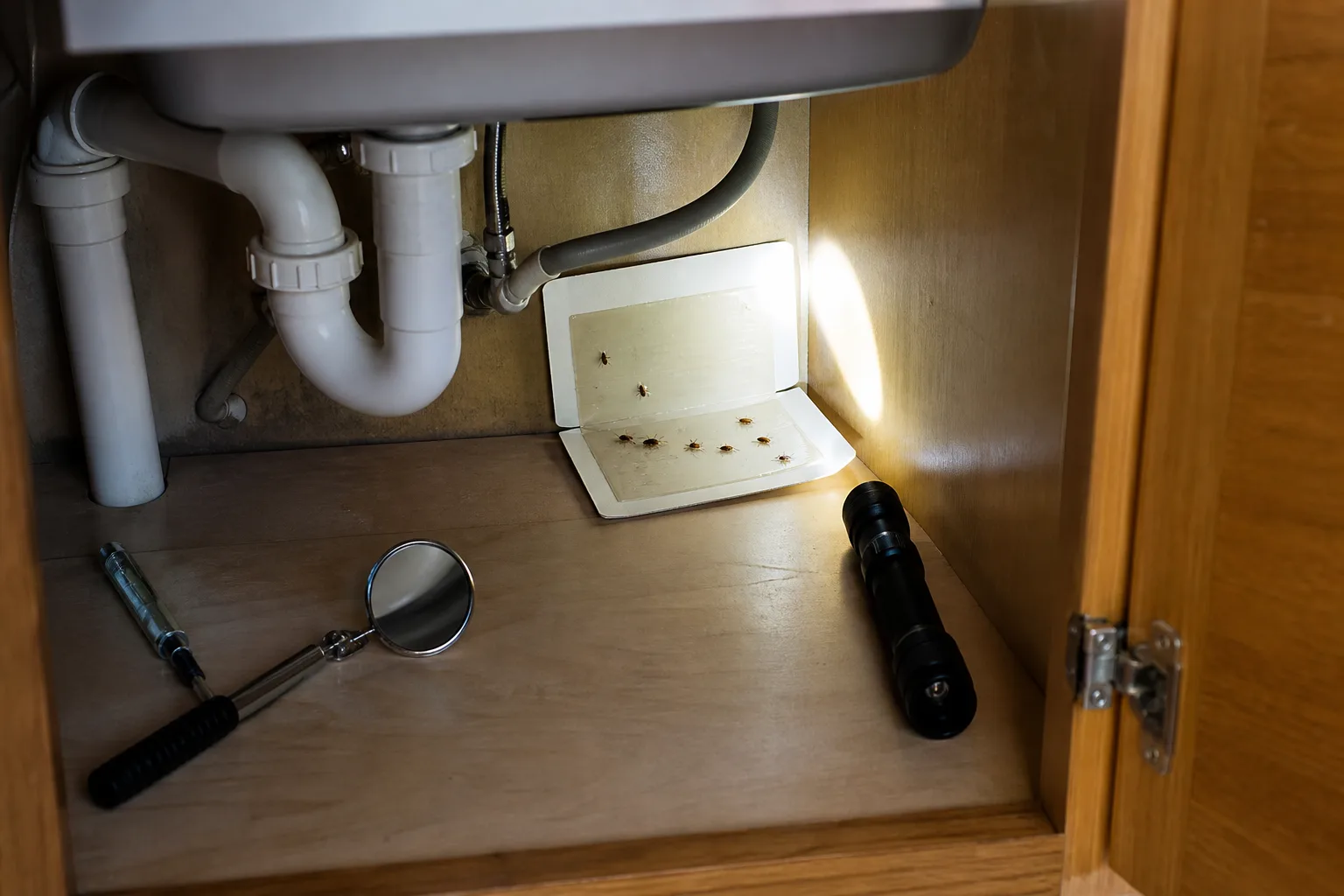
Write down the location and condition of every clue. A wet cabinet floor points to a leak; a line of traps catching insects only at the garage threshold points to exclusion; droppings behind an appliance point to a nearby harborage. This small map prevents the common mistake of treating the room where you saw the roach while leaving the damp void or exterior route untouched.
Place open-ended glue boards flush against walls and in corners rather than in the center of a room. Good starting points include behind appliances, under the sink, beside a water heater, inside a cabinet toe-kick, near a basement door, and just inside an exterior door. Number the traps and check them daily for several days; the trap with the highest catch is usually the best place to concentrate exclusion and bait.
Remove Food, Water, and Hiding Places
Sanitation does not mean a dirty person caused the problem. Cockroaches can live on tiny crumbs, grease films, spilled drinks, pet food, and moisture trapped in a crack. Cleaning is useful because it removes competing food sources and makes a properly placed bait more likely to be found.
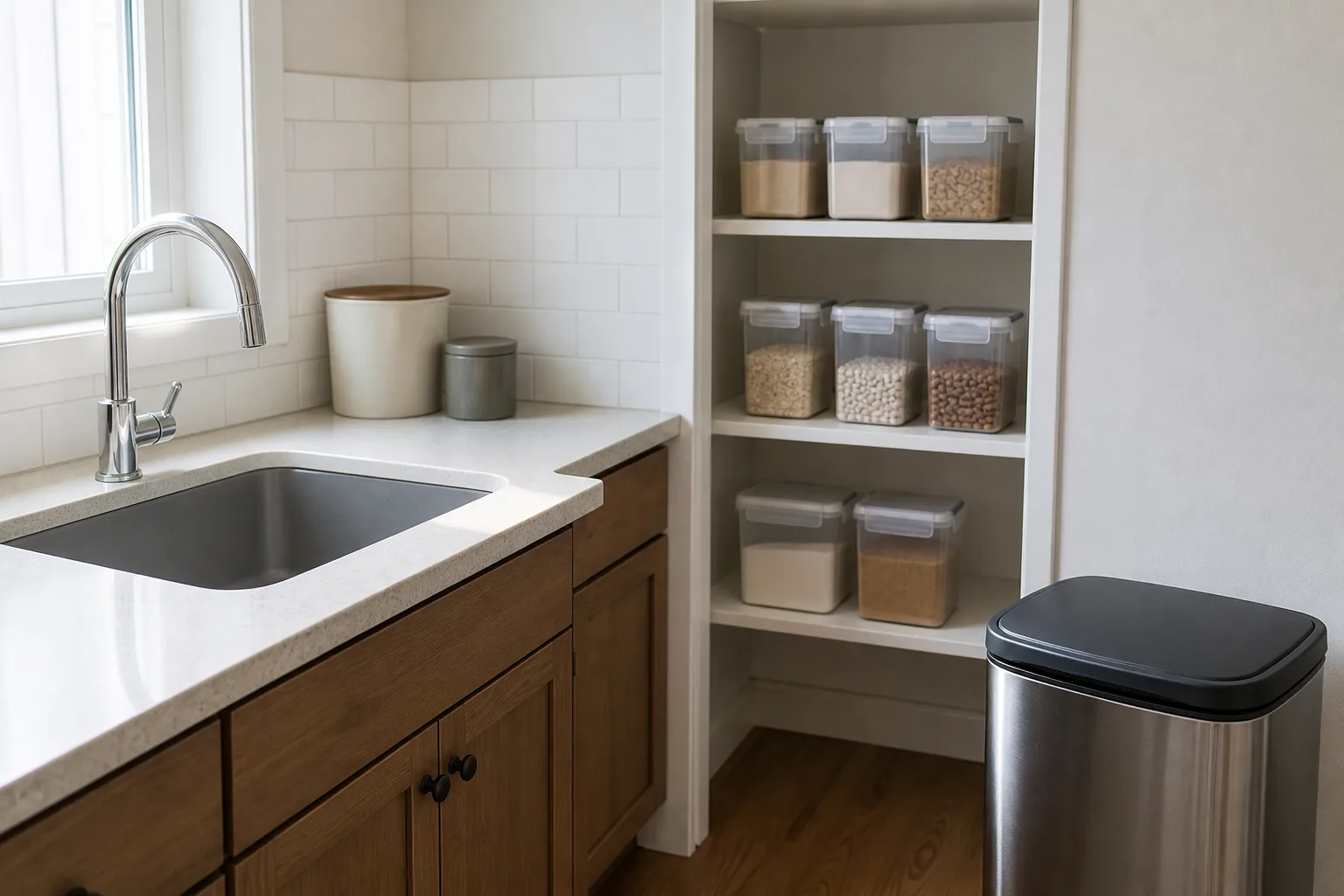
At night, wipe counters and the floor around appliances, wash dishes, dry the sink, and remove food scraps. Store pantry foods, pet food, and birdseed in tight containers; keep garbage in a lidded bin and empty it regularly. Vacuum along baseboards, under appliances, and inside cabinet corners, then remove the vacuum debris promptly. Clear cardboard, paper bags, stacked newspapers, rags, and unused boxes from damp rooms because they offer both shelter and absorbent material.
Fix plumbing leaks, condensation, and drainage problems rather than simply drying the same puddle each day. Increase ventilation where moisture condenses, but do not use a fan to blow contaminated debris around the home. Penn State Extension’s IPM plan groups food, water, shelter, and entry reduction together because removing only one resource rarely ends a persistent problem.
Seal the Route They Are Using
Once traps show where activity is concentrated, seal the path instead of caulking every random crack in the house. Check the gap beneath exterior and garage doors, window and vent screens, joints around baseboards, cabinet backs, pipe penetrations, cable conduits, and openings between a wall and floor. Silicone caulk works for many small, stable gaps; a door sweep or weather stripping is the better fix for a moving threshold.
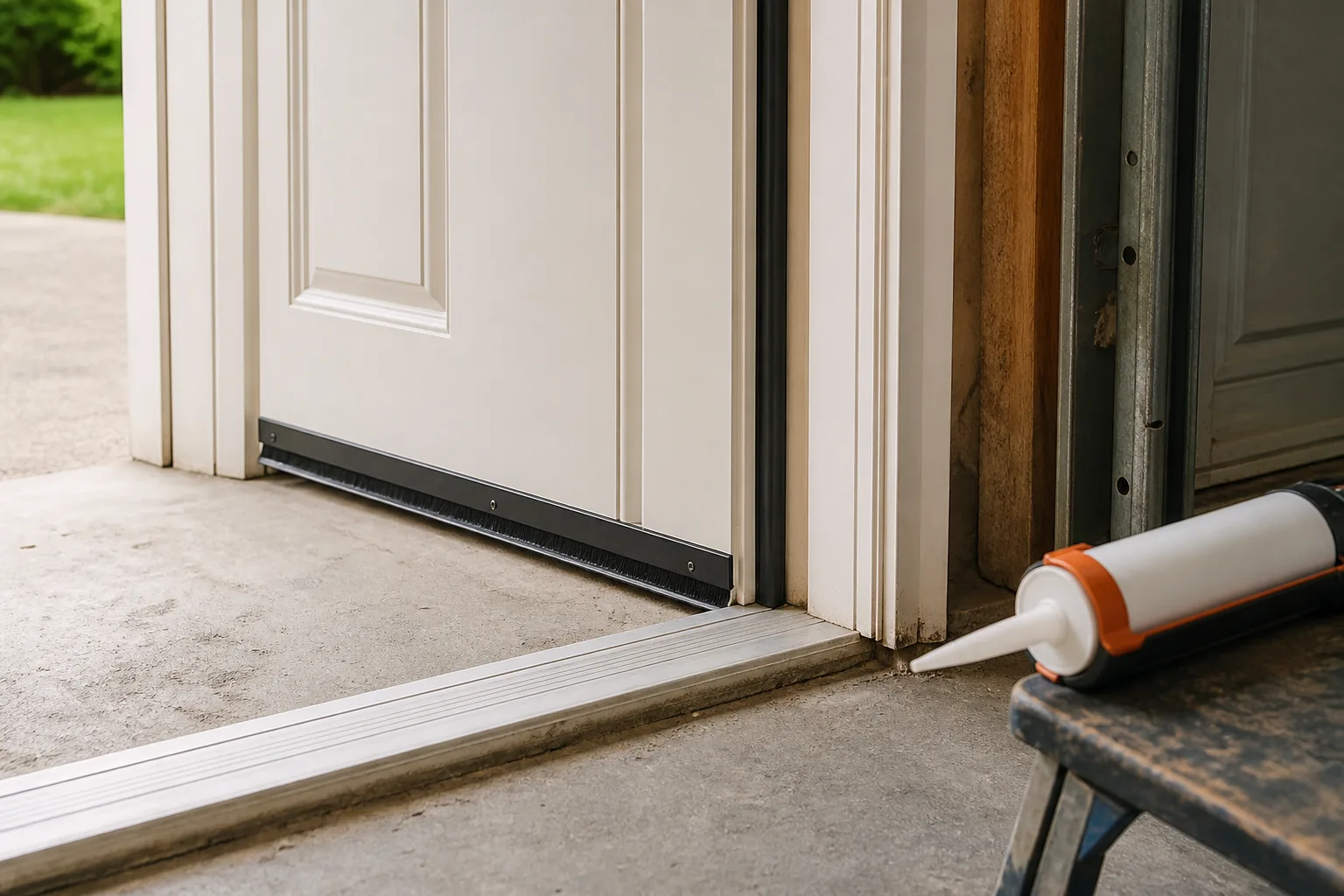
Outdoor species can enter through a structural opening, a damaged drain connection, or a poorly screened vent. Do not block a drain, sewer cleanout, appliance exhaust, or required ventilation opening just to stop an insect. Have a plumber correct a faulty drain trap or damaged pipe, and use a properly fitted screen where a screen is appropriate.
Sealing is also important between rooms and units. Cockroaches can travel through wall voids and around plumbing, so an interior treatment may fail if a shared chase remains open. Record the hole and report it to building management when you rent; do not fill an inaccessible shared wall with loose pesticide dust on your own.
Use Sticky Traps to Measure Progress
Sticky traps are monitoring tools first, not a complete solution for an established infestation. They reveal species, direction of travel, and relative activity while avoiding the uncertainty of spraying a whole room. Replace them when dusty or full, keep the same numbered locations during the first monitoring period, and compare catches before and after you change one part of the plan.
If a trap catches nothing, do not conclude that the home is clear. The trap may be too far from a wall, too exposed, too dry compared with the preferred route, or placed after activity has shifted. Move one trap at a time based on the inspection map, and continue checking hidden damp spaces. UC IPM recommends daily checks until the highest-activity locations become clear and then continued monitoring to evaluate whether control is working. Its cockroach management guide provides that monitoring sequence.
Choose Baits Before Sprays
For an established cockroach problem, a bait placed near a harboring or foraging route is usually more useful than a broad spray. Baits are slow acting by design: the insect must find and eat them, and the effect then has time to move through the population. Do not expect a bait to attract roaches from every room or to make a population disappear overnight.
Remove crumbs and competing food first, then place the product only where its label allows and where children, pets, and food-contact surfaces cannot reach it. Put bait near wall edges, under appliances, in a cabinet void, or beside a documented travel route—not in the open middle of a floor. Never spray insecticide over or around a bait, because a repellent spray can keep cockroaches from reaching it.
Bait Stations vs. Gel Bait
Tamper-resistant bait stations keep the bait inside a small housing and are usually the easier choice where children or pets could contact a loose dab. They may work more slowly because the feeding opening and number of placements are limited, but the contained format reduces the amount of insecticide exposed in the room. Position stations near activity, not randomly along every baseboard.
Gel bait can be effective in a crack or void that cockroaches already use. Apply the small dabs and locations specified on the label, keep the gel away from food and reachable surfaces, and replace hardened or contaminated deposits according to the product directions. If activity continues after the label’s stated interval, reassess placement and species rather than repeatedly adding more gel. Resistance and bait aversion are possible, and changing to a different labeled active ingredient or formulation may be a professional decision.
Most bait programs need a week or longer before the number of visible cockroaches drops. Leave the traps in place so you can see whether the trend is improving, and follow the product’s reapplication and disposal instructions. NPIC’s control tips warn that some pesticides repel rather than kill and that label directions are the starting point for safer use.
When Boric Acid or Desiccant Dust Fits
Boric acid and desiccant dusts can help in dry, enclosed, undisturbed voids, but “natural” does not mean harmless or universally appropriate. Use only a product labeled for cockroach control, follow its label, and keep dust out of living spaces, food areas, children’s play areas, pet routes, and garden soil. Never make a thick visible line; a light, dry application in a permitted void is more useful than a pile that gets wet and cakes.
Loose dust is a poor choice for an exposed floor, a damp basement, or a room where it can be inhaled or tracked. Boric acid products should not be scattered outdoors around plants, and diatomaceous earth should not be treated as a risk-free kitchen powder. For difficult wall voids, kick plates, or utility chases, ask a licensed professional to apply the correct product safely. UC IPM’s pesticide guidance explains why dusts must remain dry and why outdoor use around plants is a different decision from indoor void treatment.
Skip Foggers and Routine Sprays
Foggers and “bug bombs” rarely reach the narrow cracks where cockroaches hide and breed. They can also create flammability and exposure hazards, repel survivors into another room or apartment, and leave you with a contaminated space but no information about the route. Routine aerosol spraying may knock down the insect you can see while doing little to the harboring population.
That does not mean every professional spray is wrong. A licensed technician may use a targeted, labeled treatment for a documented harborage as part of an IPM plan. The homeowner mistake is using a spray as a substitute for inspection, sanitation, exclusion, and monitoring. UC IPM specifically advises avoiding foggers, bombs, and aerosol sprays for these reasons.
Avoid bleach, essential-oil mixtures, hairspray, and other internet remedies as control programs. They may irritate lungs, damage finishes, contaminate surfaces, repel insects, or fail to reach eggs and harborages. The RHS advises caution with untested homemade brews because they can harm plants and other organisms without reliable evidence of effectiveness. RHS guidance on non-chemical pest management is a useful reminder that reducing chemical inputs still requires a tested, targeted method—not a stronger kitchen mixture.
Treat the Yard, Basement, and Garage
When traps point outside, make the foundation less attractive and close the first indoor threshold. Repair leaks and standing water, improve airflow in damp spaces, keep firewood and stored lumber off the foundation, and remove dense leaf piles or discarded containers near doors. Trim shrubs and ivy away from vents and walls so they do not create a cool, hidden corridor directly against the building.
Do not strip every garden bed or broadcast insecticide across the landscape. Leaf litter and groundcover support beneficial organisms, and the goal is to remove harborage at the building edge while preserving healthy garden habitat farther away. In some settings, UC IPM suggests a 6- to 12-inch gravel strip around the building perimeter to reduce moisture near the foundation; it is an optional drainage and access measure, not a guarantee and not a replacement for fixing leaks.
Basements and garages deserve a route-based check. Inspect the door sweep, floor-wall joint, utility penetrations, sump or floor-drain area, water heater, cardboard storage, and any pet-feeding station. If a damp crawlspace or sewer connection is the source, indoor bait alone may keep catching invaders without preventing them from arriving.
Apartment and Shared-Building Fixes
In a multi-unit building, a recurring “water bug” problem may cross walls, plumbing chases, garbage rooms, basements, or neighboring units. Tell management where and when the insects appear, request repair of leaks and openings, and ask whether other units or common areas are being inspected. Treating one kitchen while a shared wall void remains active often produces a short-lived improvement.
Residents can help by keeping food sealed, reducing clutter, allowing access for inspection, and leaving monitoring traps in agreed locations. Management should address water leaks, seal utility penetrations, maintain door sweeps, and coordinate a licensed pest-control plan. Purdue Extension’s practical guide emphasizes cooperation among residents, management, and contractors because no single apartment can fully control a source located in a connected building space.
Do not put loose pesticide dust into a shared outlet, wall, or plumbing chase, and do not use a fogger in an apartment. Those actions can expose neighbors and spread the problem. Ask the technician what species was found, where the source is, which nonchemical steps are required, what product is being used, and what follow-up will measure success.
When to Call a Licensed Professional
Call a licensed pest professional when you find nymphs or egg cases, catch roaches in several rooms, see activity during the day, hear that neighboring units have the same issue, or continue catching insects after you have corrected moisture and entry points. A wall void, sewer connection, crawlspace, inaccessible appliance motor, or repeated basement invasion can require tools and access that a homeowner does not have.
Call sooner if someone in the home has asthma, severe allergies, limited mobility, or a heightened risk of pesticide exposure. A professional should begin with inspection and species identification, explain the treatment sequence, use products according to their labels, protect food and living areas, and schedule follow-up. In the United States, licensing and pesticide rules vary by state, so verify that the company is authorized to work where you live.
The best sign of a sound plan is not a claim that one application kills everything. It is a measurable reduction in trap catches, correction of the moisture or access problem, and a monitoring period long enough to detect reinvasion. If catches do not decline, the plan needs to be reevaluated for missed harborages, an incorrect species assumption, bait aversion, resistance, or a source outside the treated room.
Conclusion
To get rid of water bugs in your home, first decide whether the visitor is a cockroach and then use traps to find its route. Dry leaks, remove food and clutter, seal thresholds and utility gaps, and place a labeled bait near confirmed activity when an infestation is established. Keep sprays and foggers out of the default plan, and never use loose dust or homemade chemicals where people, pets, food, plants, or shared walls can be exposed.
One isolated outdoor visitor may end with exclusion and monitoring. Repeated catches, nymphs, egg cases, damp structural voids, and apartment-wide activity call for a coordinated IPM program and often a licensed professional. The goal is not merely to kill the insect you saw; it is to make the building a poor place to enter, hide, feed, and reproduce.