5 Signs Snow Damaged Your Lawn (and What to Do When It Thaws)
Spot five signs snow damaged your lawn—from pink and gray snow mold to salt burns and frost heave—and learn what to do when snow thaws.
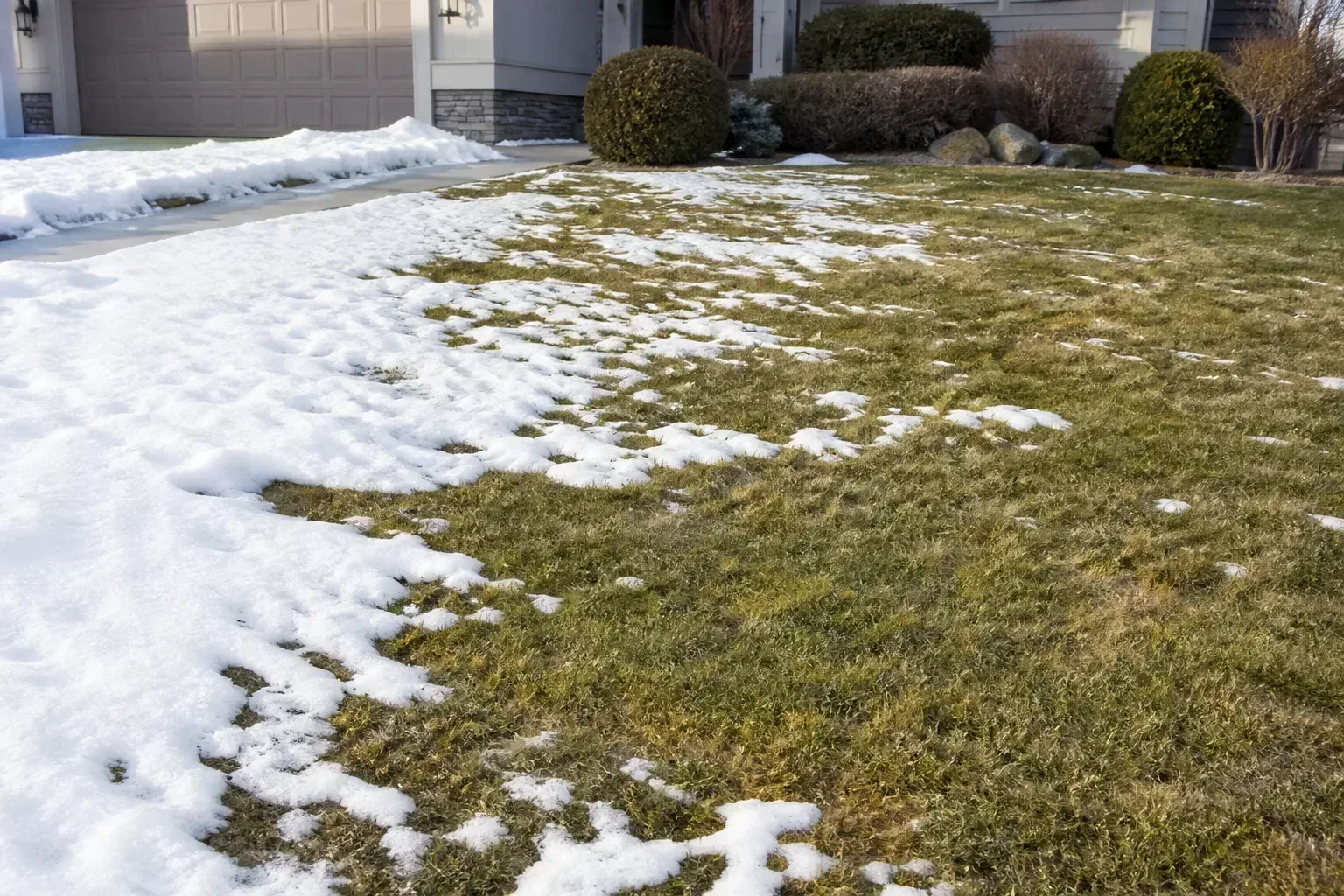
The first warm afternoon after a long winter feels like a relief—until you walk the yard and find matted tan patches, pink-tinged rings, brown stripes along the driveway, or turf so lumpy you trip on it. That is not random bad luck. It is usually winter lawn damage from how snow sat on your grass, what melted onto it, and what happened during freeze-thaw cycles while everything looked fine from the window.
Most homeowners ask the same question first: can snow kill your grass? The honest answer is that snow itself rarely kills a mature cool-season lawn. A moderate snow layer insulates dormant turf from bitter wind and extreme cold swings. The damage shows up when snow stays too long in the wrong places, when de-icing salt drains into soil, when drifts smother blades, or when fungi thrive in the dark, wet zone between snow and turf. This guide walks through five signs snow damaged your lawn, what each one means, and exactly what to do when snow thaws—without tearing up healthy grass in a panic.
The Quick Answer: Snow Usually Helps, But the Wrong Snow Hurts
Think of snow as a blanket, not a weapon. On cool-season lawns—Kentucky bluegrass, fescues, perennial ryegrass, and mixes common in northern yards—dormant grass under steady snow cover often fares better than exposed turf blasted by dry winter wind. Problems start when the blanket becomes a wet, heavy, salty, or airless layer that lasts for weeks.
At snowmelt, scan for five damage signatures: circular pink or gray snow mold patches, salt-burned strips along pavement, frost-heaved lumps where crowns were pushed up, and suffocated mats where snow was piled or walked on repeatedly. Most established lawns recover with gentle spring cleanup, modest fertilizer, and overseeding only where crowns actually died. Pink snow mold and heavy salt strikes are the exceptions that need faster, more deliberate repair.
Does Snow Actually Kill Grass Over Winter?
Snow does not “freeze grass to death” the way people imagine. Cool-season turf enters dormancy as soil temperatures drop; blades brown or pause growth while crowns and roots stay alive below. Penn State Extension notes that gray snow mold typically kills leaf blades but not crowns and roots on mature turf. The grass looks dead in March because the visible tissue failed—not because the plant vanished.
What actually causes winterkill and spring bare spots is a stack of stresses:
- Prolonged wet cover under deep, lingering snow—ideal for snow mold fungi and oxygen-starved mats.
- Physical pressure from drifts, plowed piles, and foot traffic on snow-covered turf, which breaks blades and compacts soil.
- Salt and de-icer runoff that desiccates roots and poisons soil along edges.
- Freeze-thaw cycles that heave crowns out of soil or cause crown hydration injury when turf takes up water during warm spells then freezes hard.
Warm-season lawns in the South face a different winter profile—less snow mold, more occasional cold injury on zoysia or bermudagrass—but this article focuses on cool-season yards where snow cover is normal. If you maintain warm-season turf, winter damage more often looks like delayed green-up after an unusual cold snap, not pink rings at snowmelt.
None of the cool-season species are fully immune. Perennial ryegrass and annual bluegrass tend to show snow mold and salt damage aggressively; Kentucky bluegrass and fine fescues often tolerate winter better but still fail where snow piles sit for months.
Five Signs Snow Damaged Your Lawn
Use this as a field checklist the week snow recedes. Match what you see to the repair path in the thaw section—not every patch needs overseeding, and treating everything like snow mold wastes time and money.
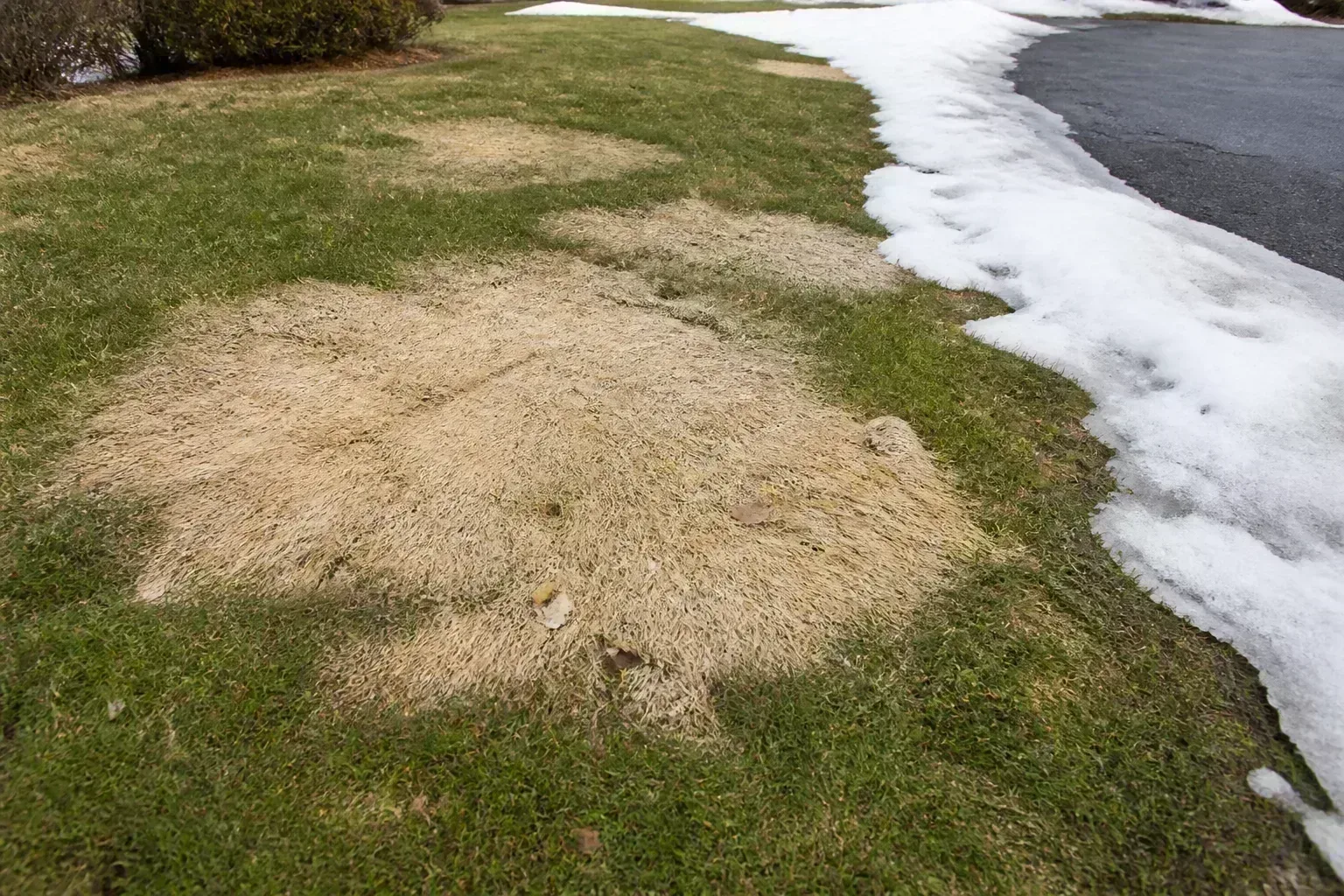
Sign 1: Pink Snow Mold Patches
Pink snow mold, caused by Microdochium nivale, shows up as small circular patches—often a few inches across, sometimes merging—that look matted, slimy, or water-soaked. Grass inside the patch may be tan or straw-colored with a pink or copper-colored ring at the edge during humid cool weather. White or pink fluffy fungal growth can appear on blades near melting snowbanks.
Penn State Extension’s pink snow mold page explains that this pathogen can injure leaves, stems, and crowns—deeper than gray snow mold—and that spores from diseased tissue can fuel new infections even after snow disappears if weather stays cold, wet, and overcast. That is why pink snow mold is the sign that most often pushes you toward overseeding rather than simply waiting for green-up.
Pink snow mold concentrates where snow sat deepest: along driveways, under drifts, and on slopes where snow accumulates. The same fungus also causes Microdochium patch without snow during cool wet stretches—so pink-tinged damage in a rainy November or chilly April may be related even if you never had a classic snowpack.
Thaw action: Rake gently after soil thaws to break the mat, apply modest spring nitrogen to speed recovery, and overseed thin or bare areas where grass does not rebound by mid-spring. For identification detail and fungicide timing limits, see our guide on what snow mold is and how gray and pink types differ.
Sign 2: Gray Snow Mold and Matted Tan Crust
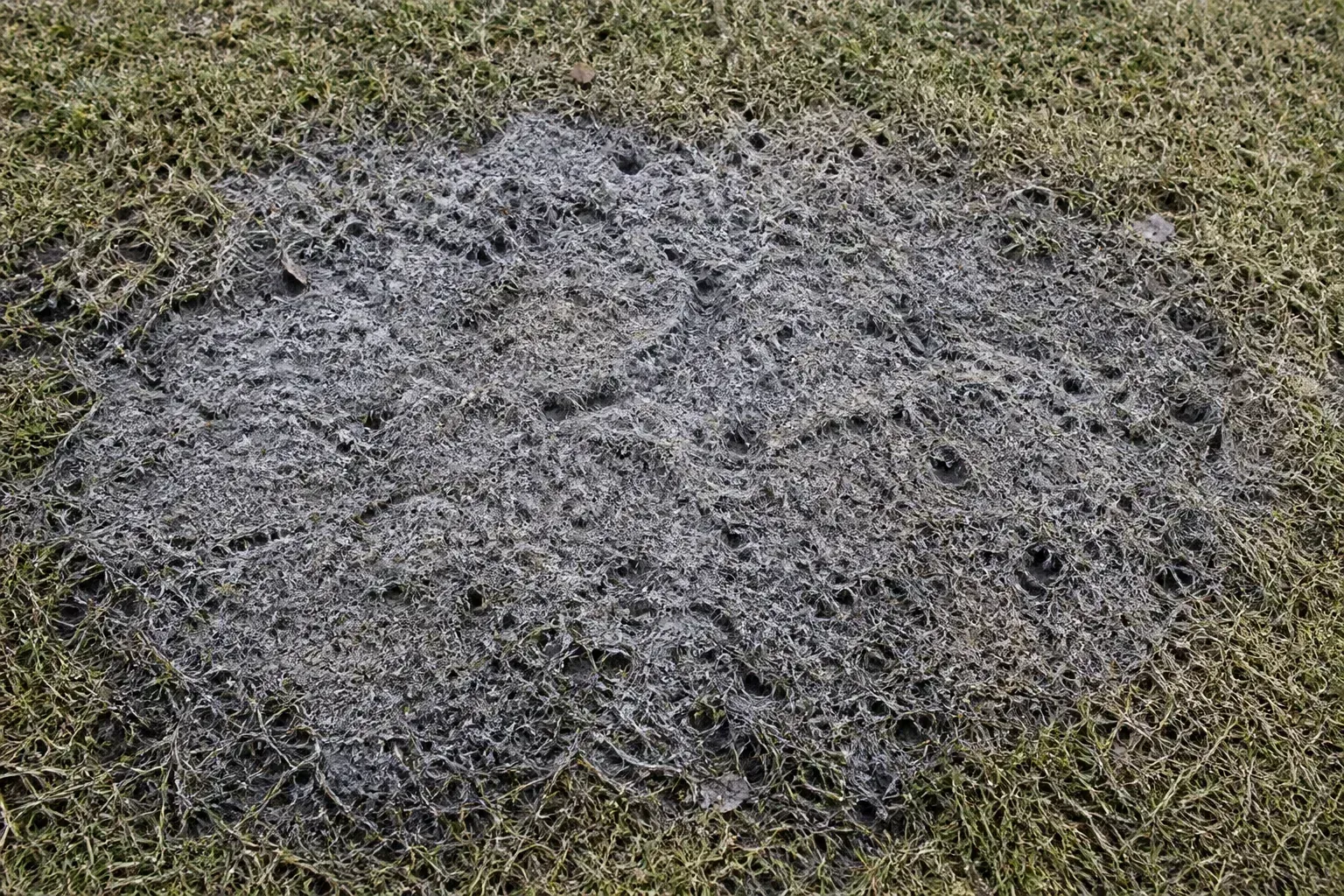
Gray snow mold (Typhula blight), mainly Typhula incarnata, produces larger tan or white crusted patches of dead, matted leaf blades—often described as papier-mâché pressed into the turf. Patches may start small and expand to several feet, especially where snow lingered for weeks. Gray fuzzy mycelium is common near receding snow edges.
The diagnostic clue for gray snow mold is tiny reddish-brown sclerotia—pinhead-sized fungal survival structures—embedded in the matted leaves. A hand lens helps; without sclerotia you might confuse the patch with salt damage or delayed green-up.
Penn State Extension states gray snow mold is prevalent when a thick snow layer lasts for long periods during mid to late winter and that, in most cases, the fungus kills blades while crowns and roots survive. Mature lawns usually green up again once temperatures warm and new leaves grow.
Thaw action: Light raking after thaw to fluff the mat, optional light nitrogen, and overseed only where bare soil shows—not on every gray patch by default. Spring fungicide on gray snow mold is usually pointless; infection happened under snow months earlier.
Sign 3: Salt Burns Along Hardscaping
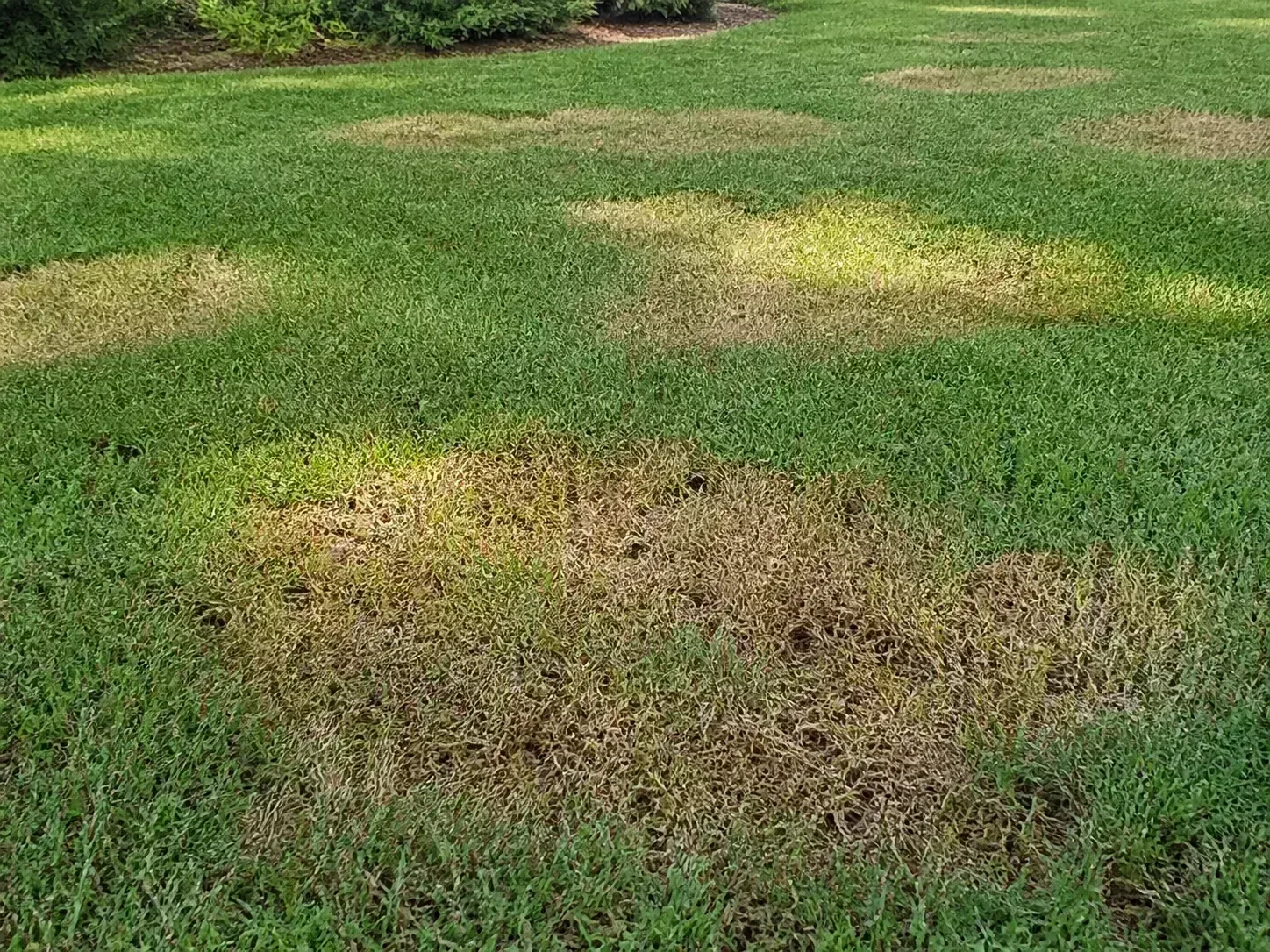
Salt damage looks nothing like mold. It appears as brown, wilted, or crusty grass in bands along sidewalks, driveways, street edges, and anywhere meltwater carrying sodium chloride or other de-icers flows onto turf. Grass may look burned starting at the pavement and fading inward. In severe cases the soil itself becomes saline enough that new seed struggles even after the dead grass is removed.
Rock salt and high-sodium products pull moisture from roots—classic desiccation. The damage is often worst on the downslope side of pavement where salty brine concentrates, not uniformly along the whole yard. You may also see damage where plow trucks throw salty slush from the road.
Thaw action: Once soil thaws, leach salt by applying gypsum (calcium sulfate) according to label rates on affected strips, then flush deeply with water—often twice over a few weeks. Remove dead turf, loosen compacted soil lightly if it is not frozen, overseed, and keep new seedlings moist. Switch to lower-sodium de-icers or sand for traction next winter on beds bordering lawn. Prevent beats repair: redirect downspouts so salty runoff does not sheet across grass, and avoid piling salted snow from the street onto turf.
Sign 4: Frost Heaving and Lumpy Turf
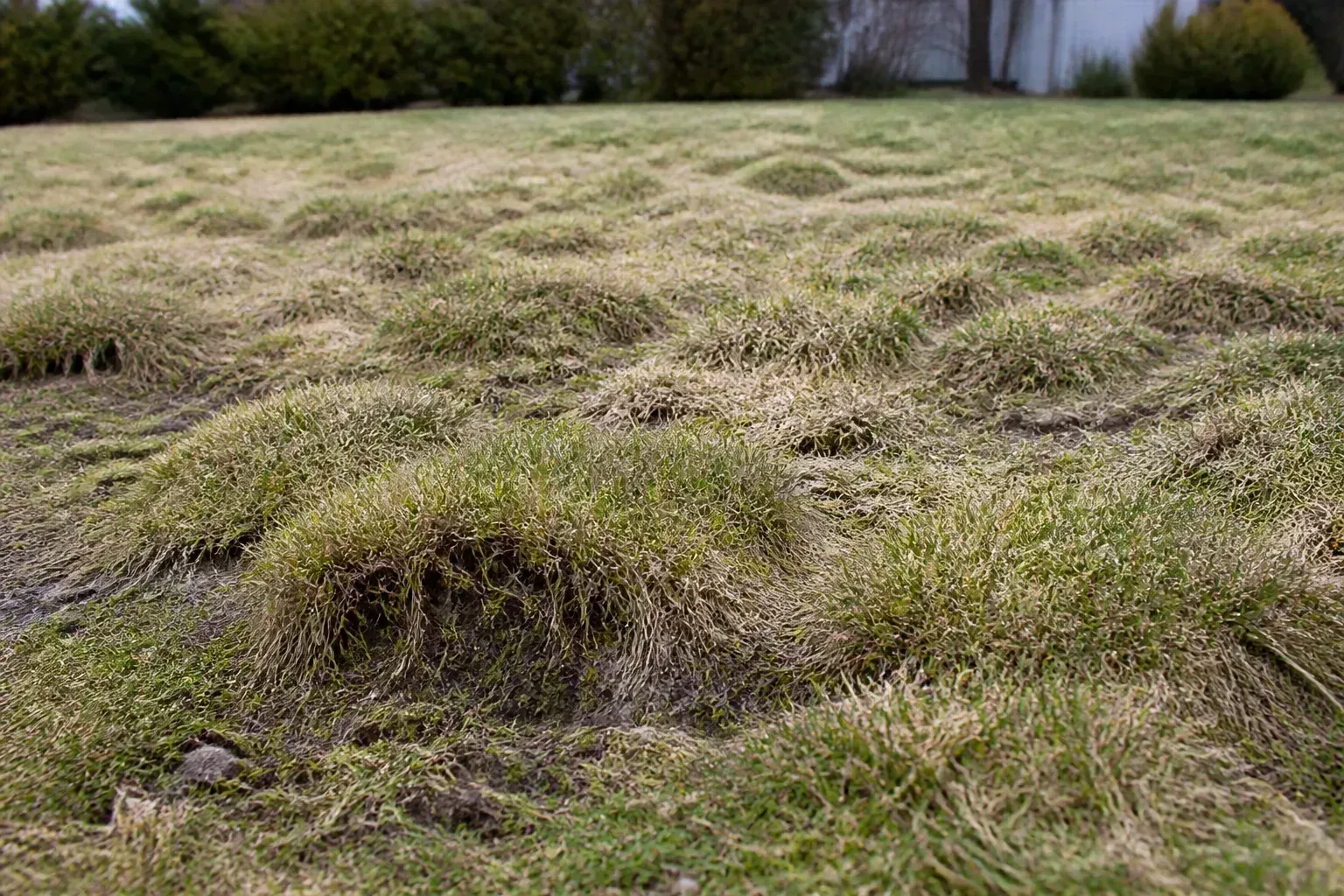
Frost heaving shows up as bumpy, uneven lawn—low humps and soft dips where grass crowns and roots were pushed toward or above the soil surface during freeze-thaw cycles. You might see small plants sitting higher than neighbors, roots exposed, or footprints that feel oddly springy on formerly flat areas.
Heavy snow followed by warm spells and hard refreezes drives this. Wet soil expands when ice forms in the profile; crowns lifted above the soil line dry out, freeze, or get scalped by the first mower pass. Frost heave is easy to confuse with mole tunnels or dog wear paths, but heave patches lack continuous runway lines and often align with poorly drained low spots where water sat before freezing.
Thaw action: Wait until soil is workable. Gently press heaved plants back into contact with soil where possible, fill voids with a thin layer of topsoil mixed with compost, and overseed exposed crowns. Improve drainage in chronic low spots—core aeration when dry, minor grading, or French drain work if water pools every winter. Avoid aggressive rolling on wet spring soil; that compacts more than it flattens.
Sign 5: Suffocation from Drifts, Piles, and Foot Traffic
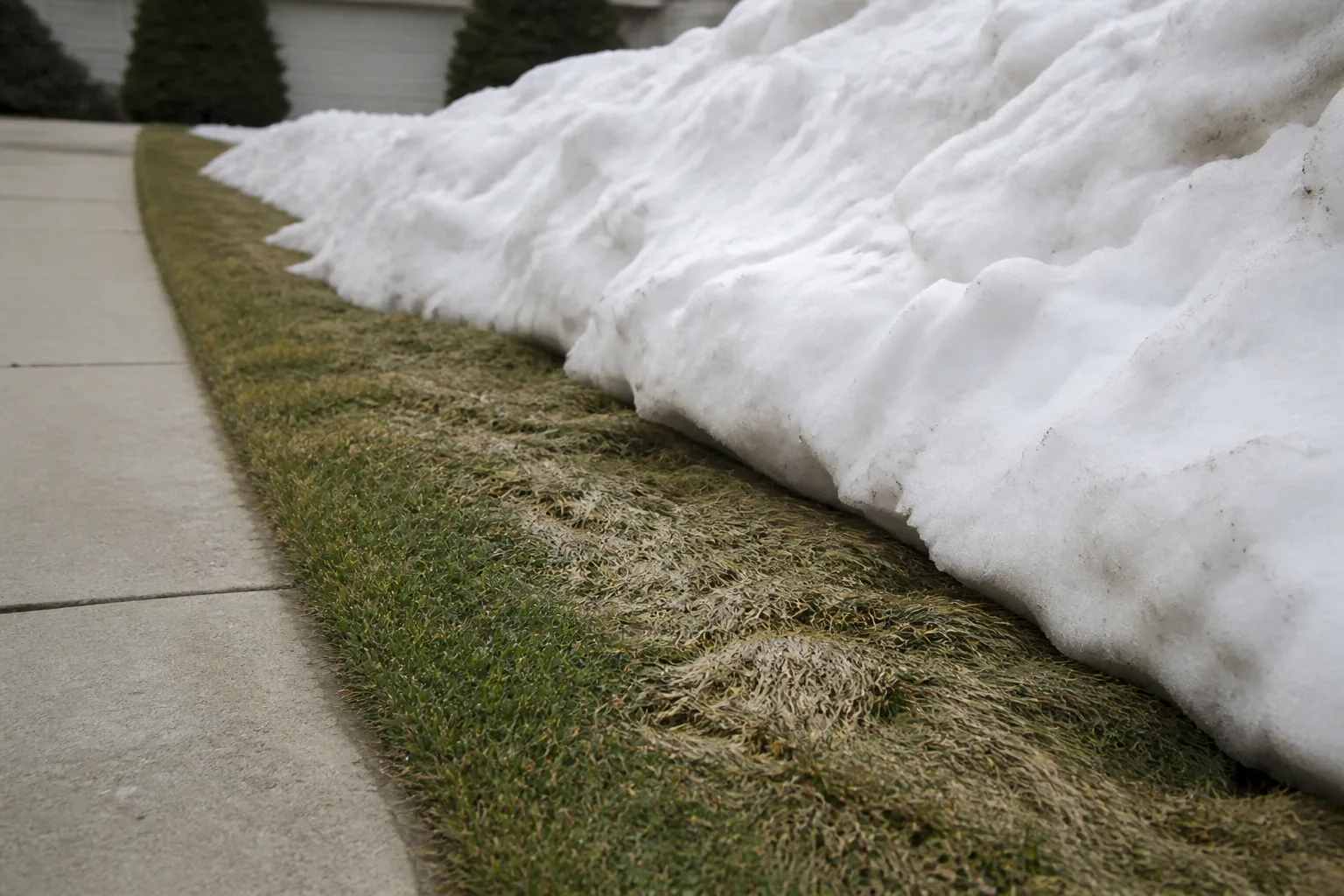
Suffocation damage looks like collapsed, matted, slimy, or blackened grass under where snow was shoveled, plowed, or drifted for weeks—not a neat circle like snow mold, but a blotchy mat along the garage apron, the fence line, or the kid’s shortcut path across the yard. Blades were crushed under weight, starved of oxygen, and held wet in darkness.
Penn State Extension notes gray snow mold is commonly found in areas of greatest snow accumulation—driveways, sidewalks, drift lines—because deep, long-lasting cover favors both fungal growth and physical matting. Foot traffic on snow-covered lawns compounds compaction; the grass cannot photosynthesize and the soil beneath firms like concrete.
Thaw action: Rake out dead mat after thaw, aerate compacted strips if soil moisture allows, overseed bare areas, and change snow management next winter: spread shoveled snow across the lawn instead of stacking one mountain beside the walk, or pile snow on garden beds that tolerate melt rather than on the same turf strip every year.
What Happens Under Snow That You Cannot See Until Spring
While your lawn looks dormant, a narrow zone between snow and turf can sit near 32°F (0°C) with saturated leaf blades and no sunlight for weeks. That is the snow mold factory. Fungi germinate from sclerotia or dormant mycelium in thatch; mycelium spreads plant to plant before you ever see a patch.
At the same time, salt applied to pavement dissolves into brine that moves with meltwater. Each freeze-thaw cycle wicks it farther into root zones along edges. Compaction from traffic reduces pore space so spring roots hit hard, airless soil even if the surface looks fine.
Understanding this hidden timeline explains why spring fungicide rarely fixes winter damage. Chemicals applied at melt cannot undo infections that finished under snow. Your leverage points are fall prevention, snow placement, de-icer choice, and spring cultural recovery—not a rescue spray in April.
Protect Your Lawn Before and During Heavy Snow
If snow is still falling or deep cover remains, you can still reduce injury. These steps also become your fall checklist once this spring’s repair is done.
Distribute Shoveled Snow Strategically
Never default to one towering pile along the lawn edge beside the sidewalk. Spread shoveled snow in a thin layer across a wider area, or direct it onto garden beds and porous landscape zones that can absorb melt. Lower-density cover allows more oxygen through the snowpack and reduces the suffocating mat that forms under dense piles.
When plowing, flag lawn edges and ask operators to avoid scraping soil crowns. A shaved turf edge dies from mechanical injury even without snow mold.
Choose Safer De-Icers Near Turf
Read labels. High sodium chloride rock salt is cheap but brutal on grass and concrete. Calcium chloride and magnesium chloride often melt faster at lower temperatures with less sodium, though they can still harm plants and metals if overapplied. Sand, cat litter, and wood ash provide traction without melting aggressively into lawn edges—useful on steps and secondary paths where runoff hits turf.
Apply de-icer sparingly to loosen ice, then shovel—do not broadcast heavily across the whole driveway every storm. A light stripe down the center often suffices.
Block Drifts and Limit Winter Traffic
Install snow fence or temporary barriers on the windward side of drift-prone strips to keep deep drifts off vulnerable turf. Redirect roof runoff away from lawn edges so ice dams and salty drip do not saturate the same band all winter.
Stay off snow-covered lawn when you can—especially when the underlying grass is not fully frozen and footprints pack snow into ice. One winter of dog paths and shortcut trails often shows up as dead lines in April.
What to Do When Snow Thaws: A Spring Recovery Sequence
Follow this order. Skipping ahead to overseeding while soil is frozen, or raking before thaw, causes more damage than the winter did.
Wait for Real Soil Thaw Before You Touch the Lawn
Do not rake, aerate, or dethatch while the ground is frozen. Frozen crowns tear out instead of releasing matted blades. Wait until you can press a screwdriver into soil several inches without forcing, and until footprints no longer leave deep muddy sinks across the whole yard. That usually means consistent daytime thaw, not one warm afternoon.
Patience feels wrong when patches look awful, but frozen-turf repair is how healthy grass gets removed and compaction worsens.
Rake, Fertilize, Overseed, and Fix Salt Strikes
Once soil is workable, run this sequence:
- Walk and map damage types using the five signs—do not treat salt burns like snow mold.
- Light rake snow mold and suffocation mats to break crust and improve air flow. Bag only the heaviest moldy debris if spore load is high; otherwise let dethatching be gentle.
- Mow healthy areas first if you mow before raking infected patches, reducing spore spread on clippings from diseased zones.
- Apply modest spring nitrogen on weak cool-season turf—enough to support recovery, not a heavy feast that fuels disease in cool wet weather. Follow soil test recommendations if you have them.
- Overseed bare patches where crowns died—pink snow mold strikes, salt bands, suffocated piles. Use a blend matched to your existing lawn, keep seed moist until establishment, and consider starter fertilizer only where seed went down.
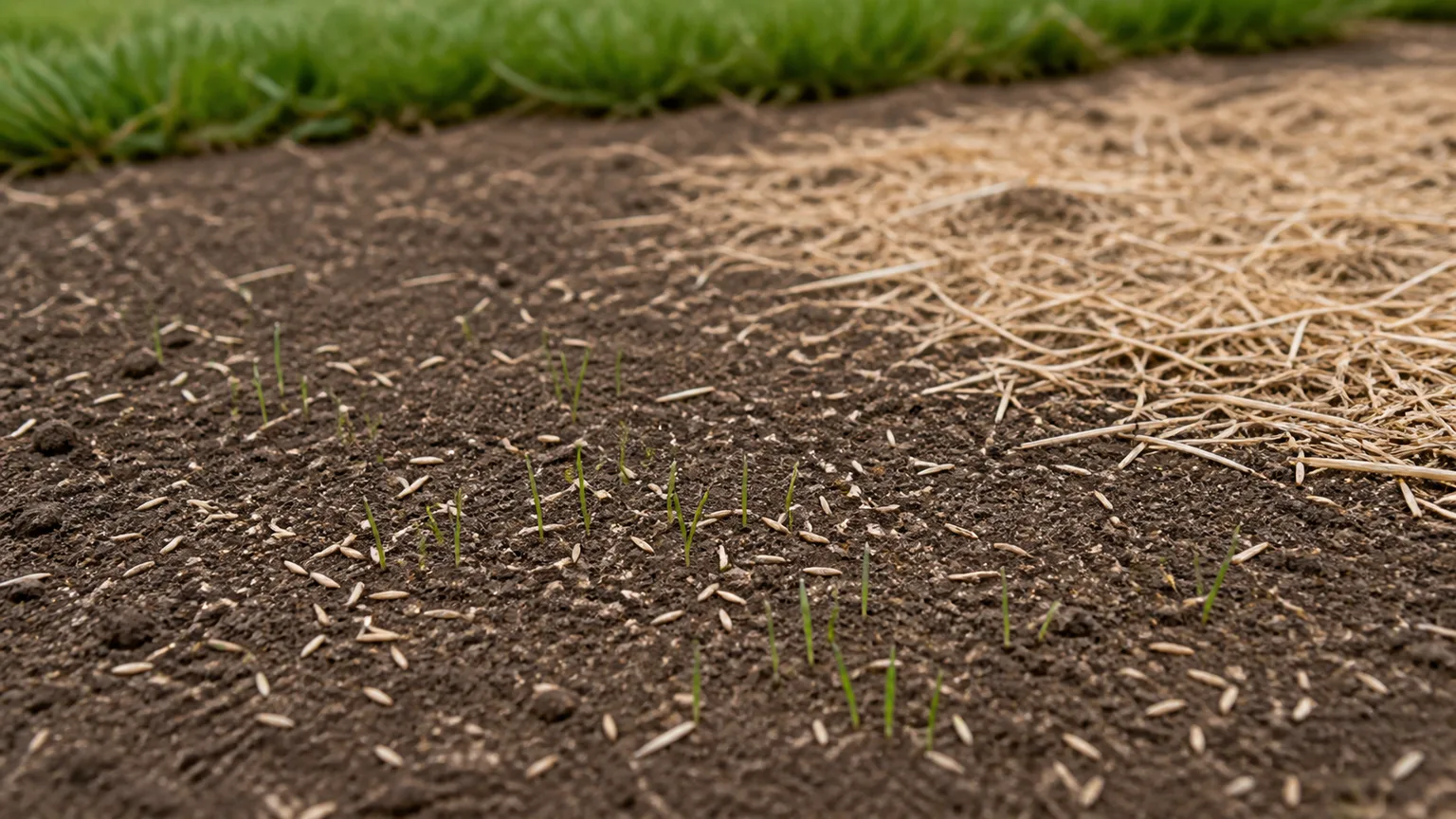 6. Leach salt on burned edges with gypsum plus deep watering, as described above, before expecting seed to germinate in salty soil.
7. Aerate compacted traffic lanes when soil is dry enough that cores pull cleanly—not mud aeration that smears holes.
6. Leach salt on burned edges with gypsum plus deep watering, as described above, before expecting seed to germinate in salty soil.
7. Aerate compacted traffic lanes when soil is dry enough that cores pull cleanly—not mud aeration that smears holes.
Give recovery three to six weeks of growing weather before judging failure. Cool springs delay green-up even on healthy turf.
When Winter Damage Needs Professional Help
Most home lawns never need a pro. Call for help when:
- The same large patches fail every year despite cultural fixes—high-value turf or repeat pink snow mold on bentgrass-heavy lawns may warrant preventive fall fungicide timed before permanent snow cover, not spring rescue sprays.
- Salt injury spans wide zones along road frontage and soil tests show extreme sodium—soil remediation may exceed DIY leaching.
- Grading and drainage cause annual ice pools and heave—landscape correction beats yearly overseeding.
- You cannot identify the damage and risk treating fungal, salt, and compaction issues with one generic product.
Licensed turf professionals can sample soil, time fungicide when it actually works, and coordinate aeration and overseeding at scale. Avoid companies that sell spring fungicide packages for gray snow mold on a home lawn—that is usually waste.
Fall Changes That Prevent Repeat Damage Next Year
Spring repair fixes this year’s scars; fall habits decide next winter’s outcome:
- Mow cool-season grass into late fall, finishing around 2 inches for the last cut—not leaving long lush blades that mat under snow. Continue mowing while grass still grows; do not quit after the first frost.
- Remove leaves before snow—matted leaves hold moisture and mimic snow mold conditions.
- Moderate fall nitrogen; heavy late fall feeding produces succulent growth that snow mold loves on ryegrass and bentgrass.
- Aerate and manage thatch where thatch is thick; fungi overwinter in organic layers.
- Plan snow storage before the first storm: where piles will go, how to spread shoveled snow, which de-icers you will use near turf.
- Overseed thin turf in early fall so new grass matures before winter—immature seedlings are snow mold magnets.
Conclusion
Snow rarely kills a healthy cool-season lawn by cold alone. Snow damaged lawn patches at thaw usually trace to pink or gray snow mold under long cover, salt along pavement, frost heave in freeze-thaw cycles, or suffocation under piles and traffic. Identify which sign you are seeing, wait for real soil thaw, then rake mats, leach salt where needed, fertilize lightly, and overseed only where crowns failed.
The yard that bounces back fastest is rarely the one sprayed in April—it is the one where snow was spread instead of stacked, de-icers were chosen with turf in mind, and fall mowing and leaf cleanup shortened the wet dark weeks fungi and mats need. Match this spring’s repair to the damage type, then adjust snow and salt habits before the next flakes fall.



