How to Get Rid of Moles in Your Yard
Stop mole damage with a practical plan: confirm the culprit, test tunnels, trap active runs, use barriers for beds, and avoid risky bait mistakes.
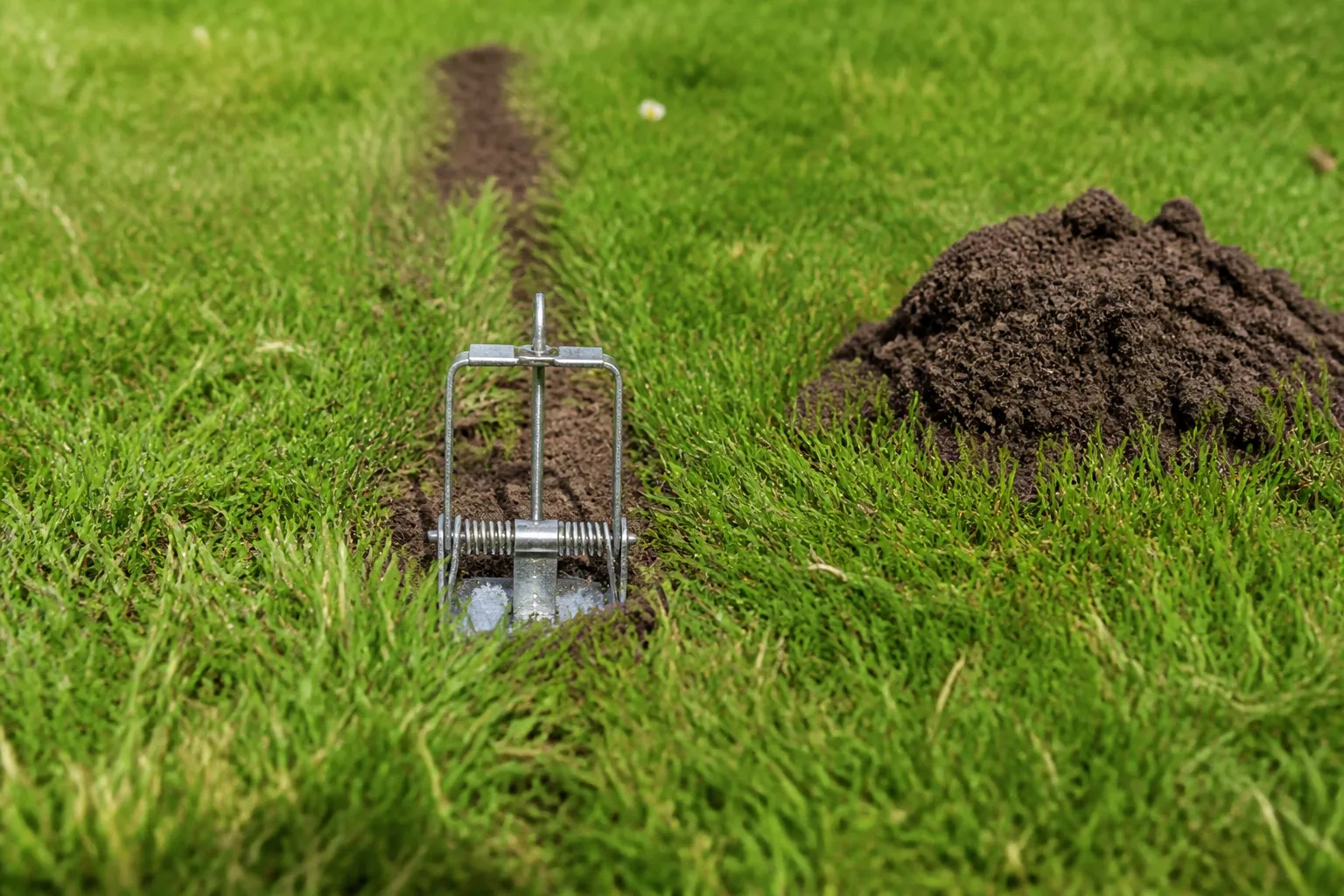
The most reliable way to get rid of moles in your yard is to confirm that the animal is a mole, identify a tunnel it is still using, and place a purpose-made mole trap on that active runway. Repellents, grub treatments, sonic stakes, coffee grounds, and other home remedies may sound easier, but most are inconsistent or fail to address the actual animal.
Before you do anything, decide whether the damage is serious enough to justify control. Moles are not rodents, and they mainly eat earthworms, grubs, beetles, and other soil invertebrates rather than chewing through plants. Their tunnels can still lift turf, disturb roots, create trip hazards, and give voles or mice protected routes through a garden, so there are legitimate reasons to intervene—but the right response is targeted control, not a blanket attempt to sterilize the soil.
Decide Whether the Mole Damage Needs Control
A few fresh ridges in an ornamental lawn may be a short-lived nuisance. If the grass is still rooted, the raised soil can be pressed down and the area monitored while the mole moves elsewhere. Moles also aerate and mix soil as they forage, and they consume some insects that can damage turf, so a single animal in a low-use part of the yard is not automatically an emergency.
Control makes more sense when the tunnel network is spreading across a play area, the lawn is becoming unsafe to mow or walk on, roots are being repeatedly lifted, new mounds appear every day, or a garden bed is being undermined. A serious problem is usually a habitat problem as well: loose, moist soil rich in prey is comfortable for a mole, and nearby woods, fields, or weedy margins can supply new animals after you remove one.
The NC State Extension guidance on moles in turf makes an important point that gets lost in quick fixes: there are no magic wands for mole management. Start with the smallest intervention that solves the real damage, and escalate only if the evidence shows that the first method is not enough.
Confirm That a Mole Is the Culprit
Moles work below ground, so you may never see the animal. Look for narrow, raised ridges under the grass and rounded, volcano-like mounds where soil has been pushed up from a deeper runway. A shallow tunnel may leave a brown or drying trace when roots are lifted away from the soil, while a deep tunnel may show itself only as a mound.
Freshness matters. Damp, loose soil with crisp edges is more useful evidence than an old, flattened mound, and a line that reappears after you smooth it is stronger evidence still. Do not set a trap simply because a mound exists; many feeding tunnels are dug once and then abandoned.
Mole Signs Versus Vole and Gopher Damage
Moles, voles, and pocket gophers require different control plans. The quick comparison below prevents a costly mistake:
| Animal | What it eats | Typical surface evidence | What it does to plants |
|---|---|---|---|
| Mole | Earthworms, grubs, beetles, and other soil invertebrates | Raised ridges and volcano-like mounds | Usually indirect root disturbance from tunneling |
| Vole | Grass, roots, bulbs, bark, seeds, and other plant material | Narrow, worn surface runways, small openings, and gnaw marks | Directly eats or girdles plants |
| Pocket gopher | Mainly roots and other plant material | Larger soil mounds, usually without long raised surface ridges | Can directly damage roots and pull plants into tunnels |
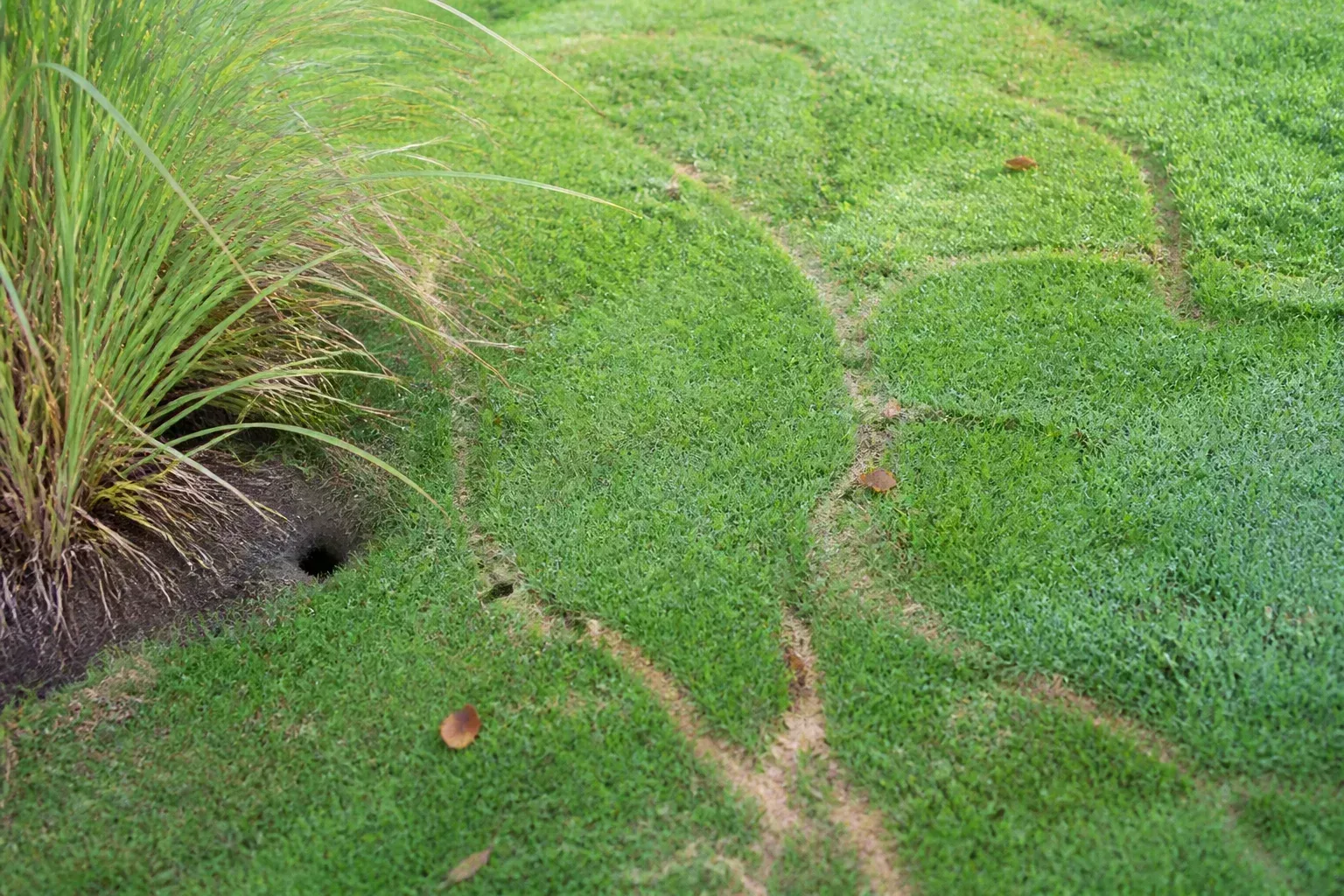
The Alabama Cooperative Extension System’s comparison of moles and voles notes that a mole has a pointed snout, concealed eyes and ears, and broad digging feet, while a vole looks mouse-like and leaves chewing damage. The Penn State Extension guide to moles adds that voles often use mole runways as cover, which explains why a plant being eaten does not prove that the mole itself ate it.
If you see tooth marks at the base of a tree, clipped grass paths, chewed bulbs, or plants that wilt after their roots are eaten, pause before buying a mole trap. You may need vole exclusion or rodent control instead. If the mound is large and there is no raised surface runway, consider a pocket gopher where that species occurs locally; contact your county extension office when the signs do not fit neatly.
Test Which Tunnels Are Active
The activity test is the step most often skipped, and it is the reason many traps appear to “not work.” A mole creates more tunnel than it uses regularly, so a trap on an abandoned feeding branch is just a metal object in the grass.
Walk the yard and choose several fresh-looking ridges. Press down a short section of each with your shoe or the back of a rake, or carefully open a small section of the tunnel roof. Mark each spot with a small flag or stick, then leave the rest of the runway undisturbed. Recheck after 24 to 48 hours; a repaired ridge or closed opening indicates active use.
Find the Main Runway Before You Set a Trap
A main runway is more likely to be worth trapping than a short, wandering feeding tunnel. Look for a straighter run that connects two mounds, follows a fence, path, driveway, or hedge, or forms the edge of the lawn. Rutgers notes that deep travel runways may sit several inches below the surface and can connect a wider network, while surface feeding paths may be used only briefly.
Choose one or more active, relatively straight sections rather than trying to trap every line in the yard. If several separate sections repair themselves, use more than one trap or work through them in sequence. The goal is to intercept the animal’s normal movement, not to make the whole lawn look busy with devices.
Choose a Control Method That Fits the Site
Use this decision rule:
- One or two fresh ridges in a low-use area: flatten and monitor first.
- Repeated damage in an open lawn: trap an active main runway.
- A small raised bed or seed bed that must stay protected: install an underground barrier, especially when reinvasion from a wooded edge is likely.
- A large area with confusing signs or repeated failure: ask an extension office or wildlife-control professional to identify the animal and set traps.
- A home with digging dogs, children, or free-ranging wildlife: avoid improvised toxicants and exposed traps; choose exclusion or professional help when you cannot control access.
This approach also respects the difference between removing an existing mole and preventing a new one. A repellent may push an animal into another part of the yard, while a trap can remove the animal causing current damage, and a barrier can protect a defined bed even when the surrounding habitat remains attractive.
Trap Active Mole Tunnels
For a yard where moles are actively disfiguring turf, trapping is the strongest practical option in the extension literature. The common purpose-made designs are harpoon or plunger traps, scissor-jaw traps, and choker-loop traps. Each can work when correctly matched to a live runway; the model matters less than the placement, the condition of the tunnel, and the operator’s ability to use the device safely.
Set and Monitor the Trap Carefully
Follow the instructions supplied with the specific trap, since trigger mechanisms and safety catches differ. The general sequence is to select a recently repaired, straight section; prepare only the small amount of soil needed for the trap; keep the trigger in the correct relationship to the tunnel; and cover or conceal the runway so the mole encounters a blockage it will try to reopen.
Wear sturdy shoes and keep your hands clear of the spring path. A loaded trap is a mechanical hazard even when it is not aimed at a person, and children or dogs can disturb it while investigating a mound. Rutgers recommends placing a bucket or similar physical cover over a set trap when that can be done without interfering with its operation; treat the trap as inaccessible equipment, not as a lawn ornament.
Check the trap daily. If it has fired, follow local rules for handling and disposal, and use gloves or a tool rather than bare hands. If it has not caught a mole after two to four days, do not leave it in place indefinitely: the runway may be inactive, the trap may have been detected, or the trigger may not be contacting the passage correctly.
Spring and fall often bring more visible surface activity because the animals are foraging nearer the topsoil, but activity varies with weather, soil moisture, and region. Trap when the tunnel is demonstrably active rather than waiting for a particular calendar date.
Troubleshoot a Trap That Does Not Catch
First, retest the runway. A tunnel can look fresh and still be abandoned, especially after heavy rain or a change in soil moisture. Flatten a nearby section and see whether it is repaired before moving the trap.
Next, inspect the set without repeatedly tearing up the whole network. Common problems include a trap sitting off-center, a trigger pan too high or too low, loose soil preventing the mechanism from working, debris blocking the jaws or spikes, or footprints and repeated handling that make the passage look unnatural. In hard or clay soil, the trap’s moving parts may also need a clear path; use only the preparation described by the manufacturer or an extension guide.
If the animal keeps repairing the runway beside the trap, move the device to that repaired section or to another main runway. If several well-tested sets fail, stop buying more gimmicks and get an identification check. The failure may be evidence that the animal is a vole, gopher, or shrew rather than proof that a new product is needed.
Protect Small Beds With an Underground Barrier
Exclusion is more realistic for a raised bed, nursery row, seed bed, or small vegetable plot than for an entire lawn. A barrier must extend below the digging depth, rise above the soil line, and prevent an animal from simply turning around the end. It works best when installed before the bed is filled and when the protected area is small enough to inspect.
Penn State describes an L-shaped barrier made from hardware cloth or sheet metal for small areas, with an underground section and a bottom flange facing outward. Rutgers gives a deeper barrier design for higher-pressure sites: roughly 2 feet below grade with a few inches above ground and an outward-bent bottom edge. Treat those measurements as planning guidance, then adapt them to your soil, bed construction, local species, and materials; a shallow strip buried only a few inches is not a mole barrier.
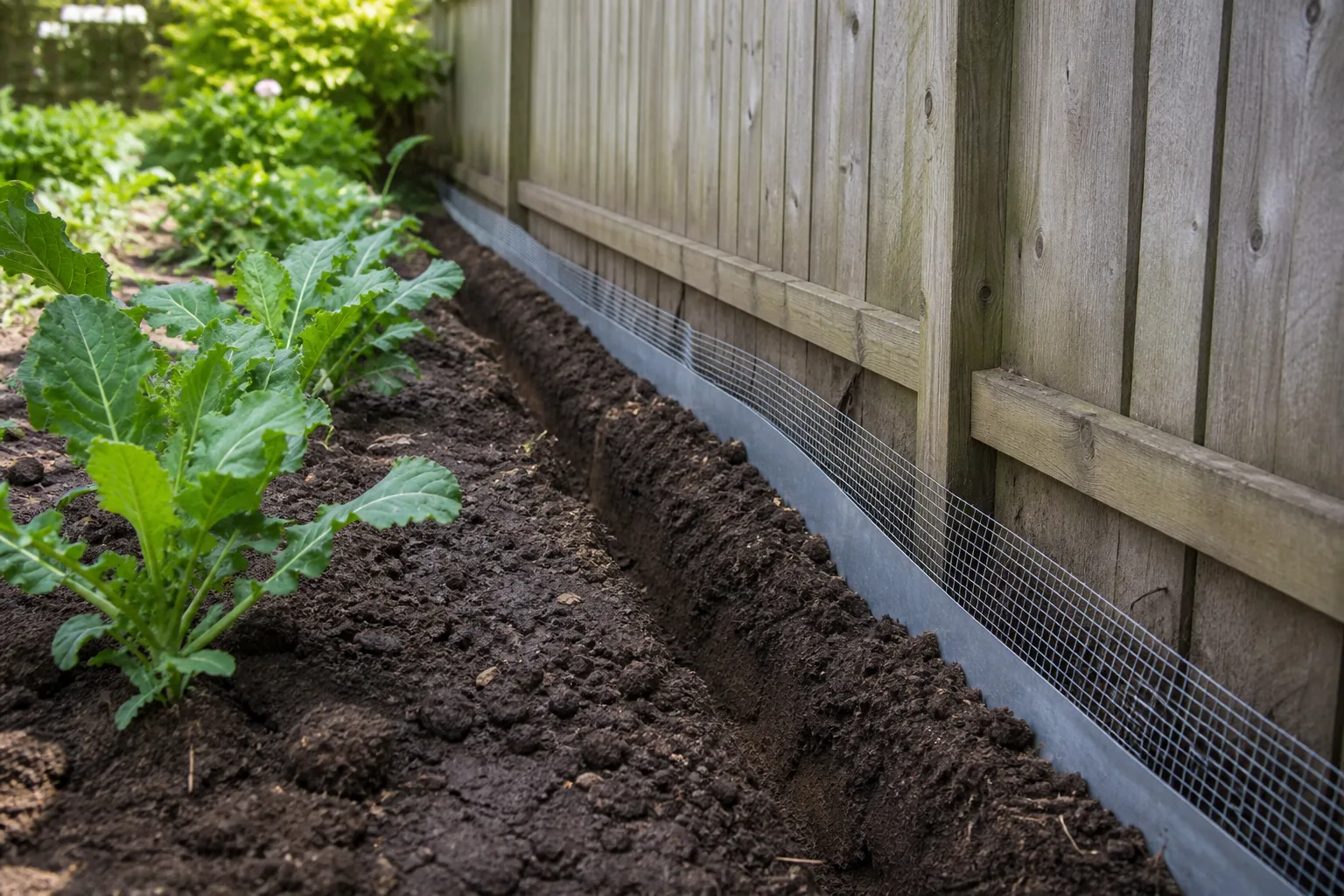
Do not wrap individual plants in a tiny underground cage and assume the problem is solved. Roots need room, drainage must remain open, and an incomplete barrier can funnel tunneling directly to the unprotected side of the bed. For a large lawn, a barrier usually costs more labor than the damage justifies, which is why targeted trapping is the usual first choice.
Change Moisture and Food Conditions Carefully
Moles prefer loose, moist soil with abundant prey. That does not mean you should let a lawn become hard and dry or remove every earthworm. Instead, correct conditions that are already excessive: repair irrigation leaks, avoid watering on a rigid schedule when the soil is still wet, and improve drainage where water stays on the surface.
Watering less can make a site less attractive, but it will not remove a mole from a neighboring field, and severe drought can harm turf more than the mole does. Aim for appropriate irrigation for your grass and climate, not deliberate desiccation.
Why Grub Control Is Not a Stand-Alone Mole Fix
Moles eat grubs, but they also eat earthworms and many other soil invertebrates. Killing grubs may be sensible when a confirmed grub infestation is damaging the lawn, yet it is a poor mole-control strategy when grubs are only suspected. Both Penn State and Rutgers warn that reducing one prey item may cause more digging as the mole searches for food, while earthworms remain available.
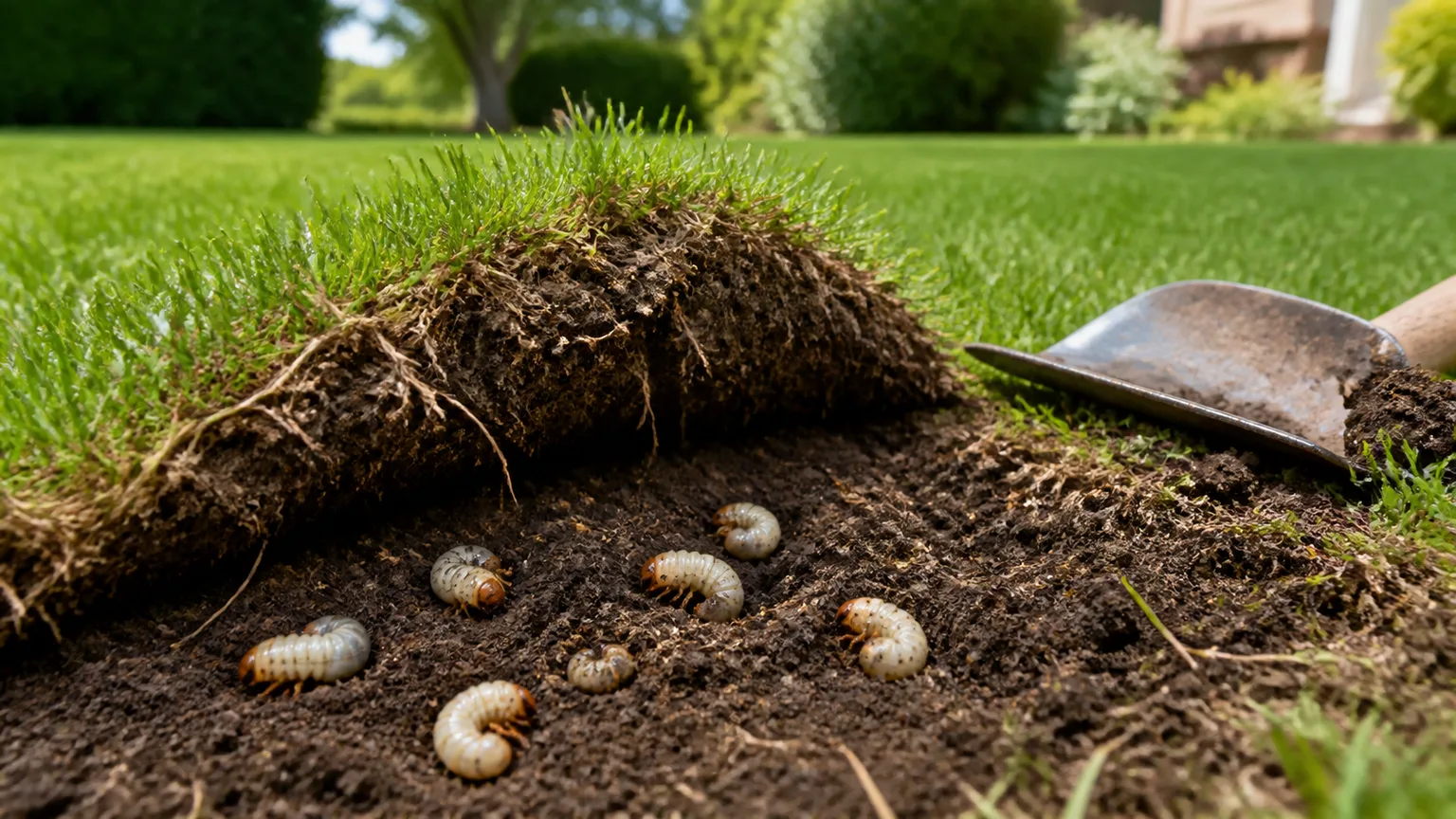
Inspect a small turf section or use a locally appropriate threshold before applying an insecticide. If grubs are confirmed, choose a product and timing through your state extension guidance and the current label, and consider effects on birds, pollinators, earthworms, and runoff. Grub management may improve the lawn and reduce one attraction, but it should not replace trapping when the mole itself is the active source of damage.
Treat Repellents as Optional, Not Guaranteed
Castor-oil repellents are widely sold and may reduce activity in some situations, particularly when applied over a defined area and renewed according to the label after rain or irrigation. The evidence is not consistent enough to present castor oil as a dependable way to remove a mole, and a homemade mixture is not automatically safer than a labeled product.
The practical distinction is also reflected in Better Homes & Gardens’ mole-control guidance: test for an active tunnel first, and treat a repellent as a limited, label-directed option rather than the main answer to established damage.
Planting crown imperial, marigolds, alliums, caper spurge, or castor bean is also not a reliable perimeter defense. NC State says research does not support the “mole plant” claim, while castor bean and some spurges can be poisonous to people and animals or become weedy. Do not add a toxic plant to a play yard or pet area in hopes of solving a tunnel problem.
Sonic or vibrating stakes, wind chimes, pinwheels, and similar devices are harmless-looking, but extension references do not show reliable control. If you try a labeled repellent, set a time limit and an outcome: treat a small defined zone, watch for new repairs for a week or two, and switch to trapping or exclusion if activity continues.
Avoid Dangerous Folk Remedies
Do not put chewing gum, glass, razor blades, bleach, gasoline, diesel, lye, mothballs, pet waste, or other household materials into a tunnel. They can injure children, pets, wildlife, soil organisms, and groundwater, and many do not affect a mole that simply walls off or abandons the treated section.
Flooding a tunnel is not a dependable solution because a mole can move through a connected network, and directing vehicle exhaust into the ground creates an exposure and fire hazard. Vinegar, coffee grounds, fish scraps, hair, and soap are also poor substitutes for an active control plan; they may smell strong to people without producing a measurable, lasting change in the underground habitat.
The Rutgers mole-management fact sheet is unusually direct about this class of remedy: the main risk is often to the environment and the people applying it, not to the mole. A method that cannot be labeled for the site and target should not be improvised in a food garden, lawn, or drainage area.
Use Mole Bait Only as a Last-Resort, Label-Directed Option
Poison bait is not the routine first choice for moles because moles mainly eat live soil prey rather than grain or peanuts. Some commercial products use worm- or grub-shaped bait, but acceptance varies, placement must be in an active tunnel, and the risk to pets and nontarget wildlife is real.
Zinc phosphide baits can release highly toxic phosphine gas when stomach acid reacts with the active ingredient. The National Pesticide Information Center’s mole-bait safety guidance says to keep pets away during application, cover treated openings so animals cannot dig up the bait, store leftovers securely, and contact a veterinarian or animal emergency resource after exposure. Its zinc phosphide fact sheet also warns that birds, fish, and other wildlife can be poisoned if they eat the bait.
Bromethalin products have a different toxicology but the same practical concern: a bait that is dangerous to the target can also endanger a curious dog, cat, or scavenger. Purdue Extension explains that product labels are legal documents, and mole-bait labels commonly require underground placement in active tunnels and exclusion of pets from treated areas; if you cannot reliably meet those conditions, choose trapping or professional help instead.
Never broadcast a mole toxicant across a lawn, place it in an unmarked hole, use a product labeled for another pest, or follow a recipe copied from a forum. Read the entire current label, confirm that the product is registered for your location and target, follow the personal-protection and disposal directions, and check local wildlife-control rules before purchase. If a child or pet may have swallowed bait, contact emergency poison or veterinary services immediately rather than waiting for symptoms.
Repair the Lawn After Mole Activity Stops
Repair is easier when you stop new tunneling first. Rake soil from volcano-like mounds back into low spots, press raised ridges down gently, and remove stones or clods that would interfere with a mower. Avoid packing every inch of the lawn hard; the goal is to reconnect the turf with soil, not to create a compacted layer that blocks roots and water.
Where roots were lifted or grass died, loosen the top layer, add a thin layer of compatible soil if needed, and reseed with a grass type suited to the site and season. Keep the seedbed evenly moist until germination, then return to deeper, less frequent irrigation appropriate for the grass. If the same strip rises again, stop reseeding and retest it for active tunneling; new seed will not solve an animal-control problem.
Check for secondary damage while you work. A mole mound can hide a broken sprinkler line, and a weakened root zone can expose a young plant to drying. If a bed plant is actually chewed or girdled, investigate voles or mice rather than assuming the mole caused every symptom.
Prevent New Damage and Know When to Call a Professional
After a successful trap or a period with no repaired test sections, collapse and fill visible abandoned tunnels. Keep grass at the height recommended for the species, repair leaking irrigation, and keep a narrow, inspectable edge along beds and fences. These steps do not make a yard mole-proof, but they reduce the conditions that let a new tunnel network go unnoticed.
For a property beside woodland, pasture, or an unmanaged field, reinvasion may be normal. In that setting, protect the one bed or lawn section that matters most, monitor after heavy rain and in spring or fall, and avoid treating the whole landscape simply because a few mounds appear near the boundary.
Call a professional wildlife-control operator or your local extension service when you cannot distinguish mole damage from gopher or vole damage, when a trap would be accessible to children or pets, when local rules are unclear, when the tunnel network crosses several properties, or when repeated, careful trapping has failed. A professional can be more useful for identification and safe placement than for selling a long list of repellents.
Conclusion
To get rid of moles in your yard, start with proof rather than panic: identify the animal, flatten several suspect tunnels, and watch for repairs. Once you locate a straight, active runway, a properly set and safely monitored mole trap is usually the most direct option; use an underground barrier for a small bed, change excessive moisture or confirmed grub conditions only when those are genuine problems, and treat repellents as uncertain support rather than a guarantee.
Skip household chemicals, flooding, sonic gadgets, and poisonous plants. Keep bait as a tightly controlled, label-directed last resort, especially where dogs, cats, children, birds, or fish may be exposed. Then repair the turf, watch for fresh repairs, and accept that a yard next to good wildlife habitat may need monitoring rather than a promise of permanent exclusion.