How to Grow and Care for Monkshood
Learn how to grow monkshood in cool, moist soil, choose the right light, divide clumps, solve bloom problems, and handle this toxic perennial safely.
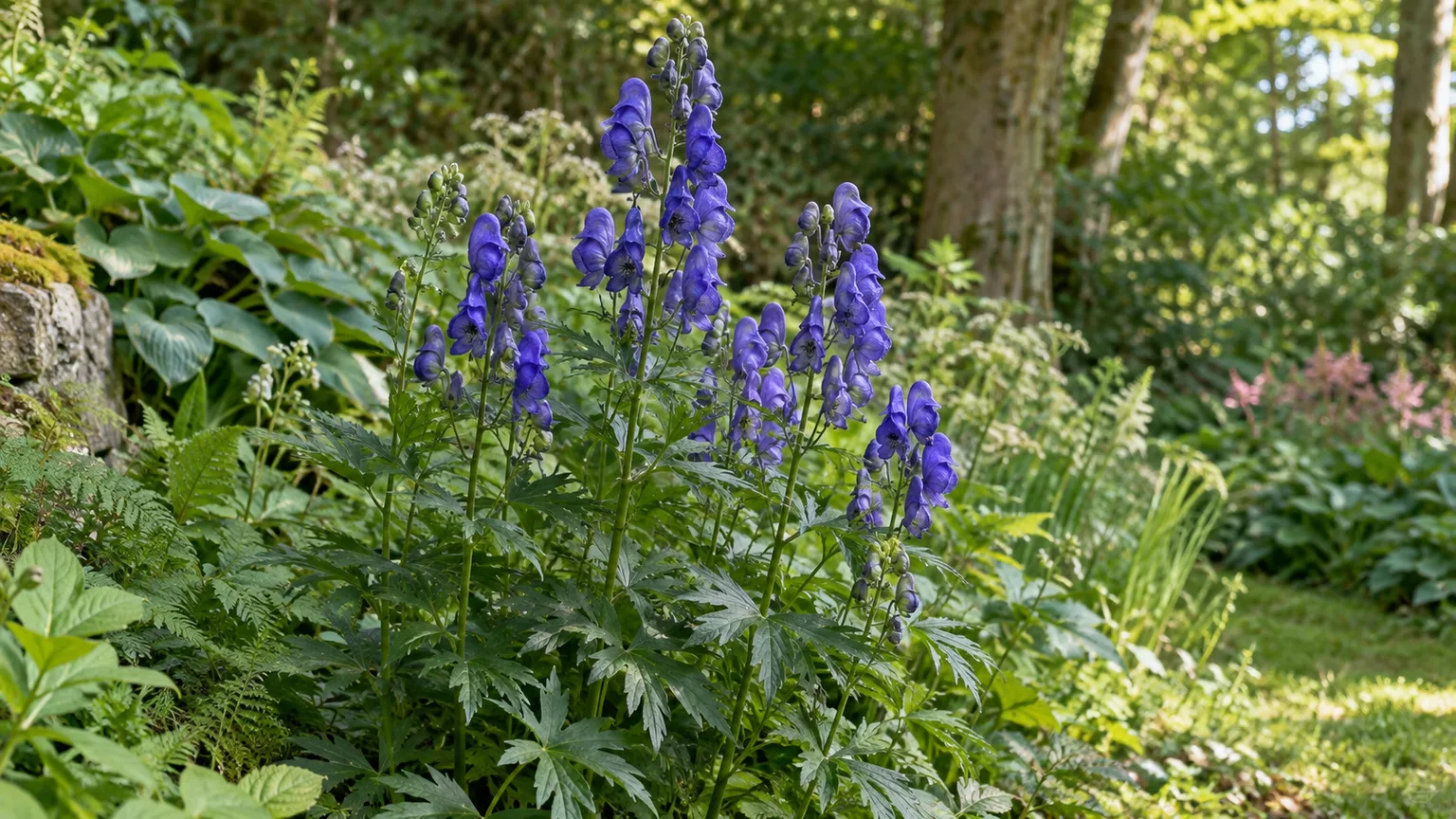
Monkshood (Aconitum napellus) is a dramatic late-summer perennial with deeply divided leaves and hood-shaped blue-violet flowers. It earns a place in a cool, moist border because it supplies strong vertical color when many early perennials are fading, but it is not a carefree plant for every household. Every part is toxic, and the roots deserve particular respect.
The growing rule is simple even when the details are not: give monkshood bright light without baking heat, soil that stays evenly moist but drains quickly, and enough space for tall stems. The safety rule is just as important: choose a location that children and pets cannot reach, wear gloves for routine work, and treat an accidental ingestion as an emergency rather than a wait-and-see problem.
The guidance below is for the commonly grown species and related garden forms. Cultivars differ in height, bloom timing, and sturdiness, so use the plant tag for final spacing and hardiness information. For botanical background and Extension-level growing notes, compare the North Carolina State Extension profile of Aconitum with the University of Saskatchewan’s monkshood reference.
First decide whether monkshood belongs in your garden
Monkshood is a good match for a gardener who can provide consistent moisture and who has a controlled planting area. It suits a back-of-border position, a woodland-edge bed, or a stream-side setting where the soil is naturally rich and damp without becoming a stagnant puddle. It is especially rewarding in regions with cool summers, where the stems can remain upright and the flowers last well into late summer or fall.
It is a poor match for a hot, dry bed, a neglected container, or a garden where a toddler, dog, cat, or digging animal can reach the foliage or roots. A plant can be beautiful and still be the wrong plant for your household. If you cannot reliably control access or remember to wear gloves, choose a non-toxic perennial with a similar upright habit instead.
Use this quick fit test before buying one:
| Monkshood is likely to work when… | Choose another plant or rethink the site when… |
|---|---|
| Summers are cool or the plant can receive afternoon shade. | The bed reflects heat, dries rapidly, or sits against hot paving. |
| Soil stays evenly moist after watering and still drains within a reasonable time. | Water stands around the crown or the soil is hard, airless clay. |
| You can keep children and pets away from the planting area. | Animals dig, chew, or roam through the bed unsupervised. |
| A tall, vertical late-season flower fits the back of a border. | You need a compact, low-maintenance front-edge plant. |
| You can handle it with gloves and clean up deliberately. | You often garden bare-handed or use the area for edible crops. |
Plant profile: what you are growing
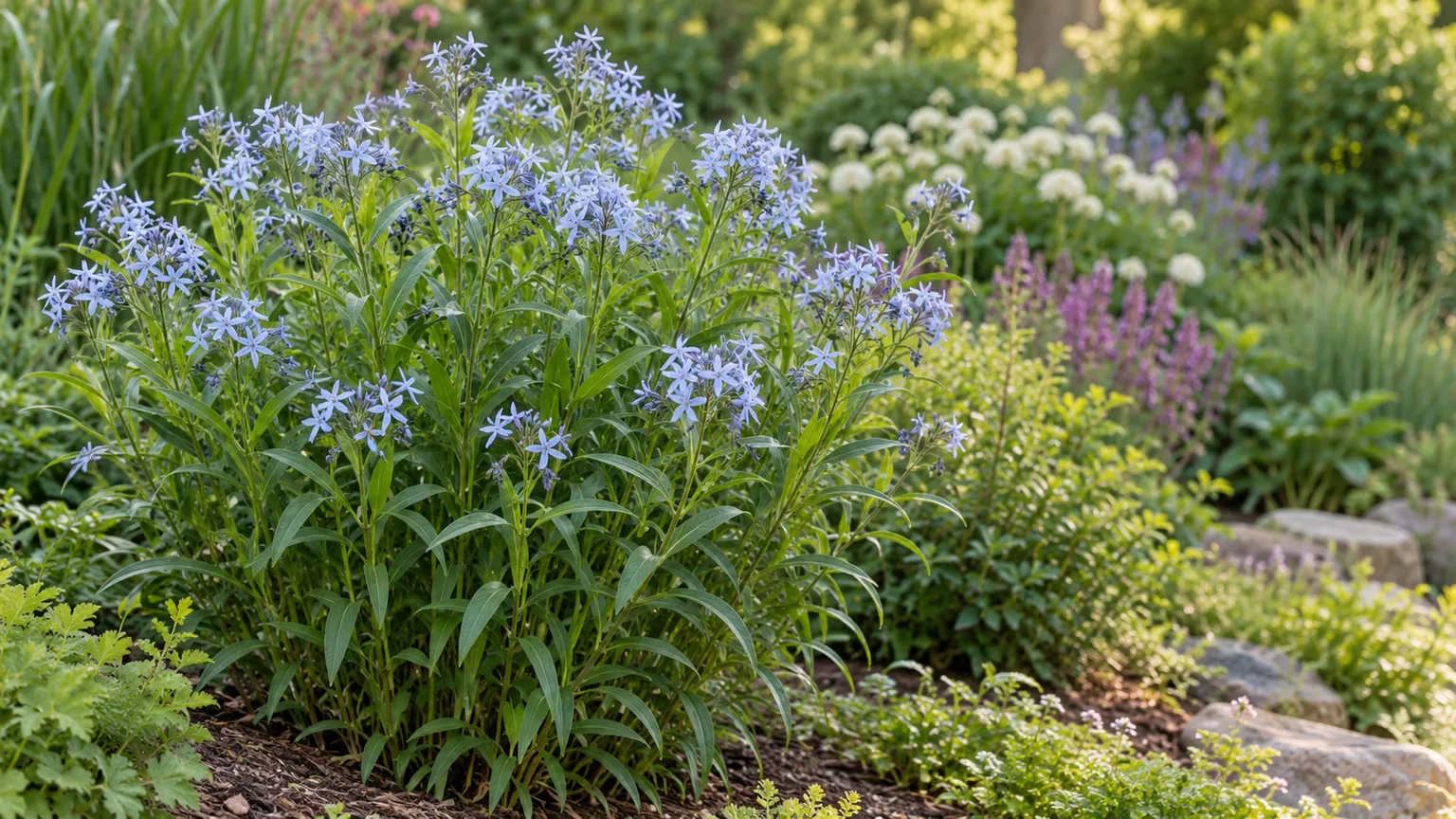
Aconitum napellus is a herbaceous perennial in the buttercup family, Ranunculaceae. The clump produces palmately divided leaves and upright racemes of flowers whose upper sepals form the characteristic hood or helmet. Mature plants commonly reach about 3 to 4 feet, though related species and loose, vigorous selections can be taller; leave enough room for the stems to rise without crowding paths.
The genus contains many species, and “monkshood,” “aconite,” “helmet flower,” and “wolfsbane” may refer to different Aconitum plants in nursery listings. The University of Saskatchewan reference describes monkshood as a long-lived perennial that can persist for 10 to 20 years or longer when the clump remains healthy. That longevity is useful, but it also means you should make the first siting decision carefully; a mature clump is not something to move casually every year.
Flowers are usually blue, purple, or blue-violet, with white, pink, and yellow forms available. Bloom starts in mid to late summer, and late forms can carry the display into fall.
Choose the site: cool, bright, and reliably moist
Site selection matters more than fertilizer. Monkshood tolerates a range of soils when moisture is dependable, but it struggles when roots alternate between drought and saturation or when summer heat is much greater than the plant can dissipate. The Fine Gardening plant guide for Aconitum summarizes the useful middle ground: cool, moist soil and part shade are ideal, but the plant can adapt to full sun when conditions are gentler.
Light by climate
In a cool-summer region, give monkshood morning sun or full sun with enough soil moisture to prevent stress. More light usually supports better flowering and stronger stems, provided the bed does not turn hot and dry. A site with bright woodland light, dappled shade, or several hours of sun followed by afternoon protection is a safer default when you are unsure.
In a hot-summer region, prioritize protection from the strongest afternoon sun. The plant still needs enough light to flower, so deep shade under dense evergreen cover is not an upgrade; it often produces weak, stretched growth and fewer flowers. A useful test is to watch the bed on a summer afternoon: if the soil surface is hot and the leaves wilt even though the root zone is moist, the site is receiving too much heat rather than simply needing more fertilizer.
Soil and drainage
The ideal soil is rich in organic matter, moisture-retentive, and porous enough for air to reach the roots. Mix mature compost into a poor bed before planting, but do not use organic matter to disguise a drainage problem. A thick layer of compost placed in a hole surrounded by dense clay can create a bowl that holds water around the crown.
Test the site before you buy the plant. Dig a hole roughly 12 inches deep, fill it with water, let it drain, then fill it again; if water remains for a long time after the second filling, improve the bed broadly with organic matter and structural amendments or choose a different location. The goal is not a dry planting hole. The goal is a bed that can hold moisture between visits while shedding excess water after heavy rain.
Keep the crown clear of constantly wet mulch and avoid planting directly beside a downspout. A stream-edge look is appropriate only when the soil is moist and oxygenated, not when the roots sit in stagnant water. That distinction is the difference between a thirsty plant that recovers after watering and a plant that declines from crown or root damage.
Planting monkshood without stressing the crown
Plant nursery-grown monkshood in spring or early fall while temperatures are moderate. Water the pot first, slide the root ball out without pulling the stems, and loosen only roots that are circling tightly around the outside. Set the plant at the same depth it was growing in its container; burying the crown deeply is not a way to make a tall perennial more stable.
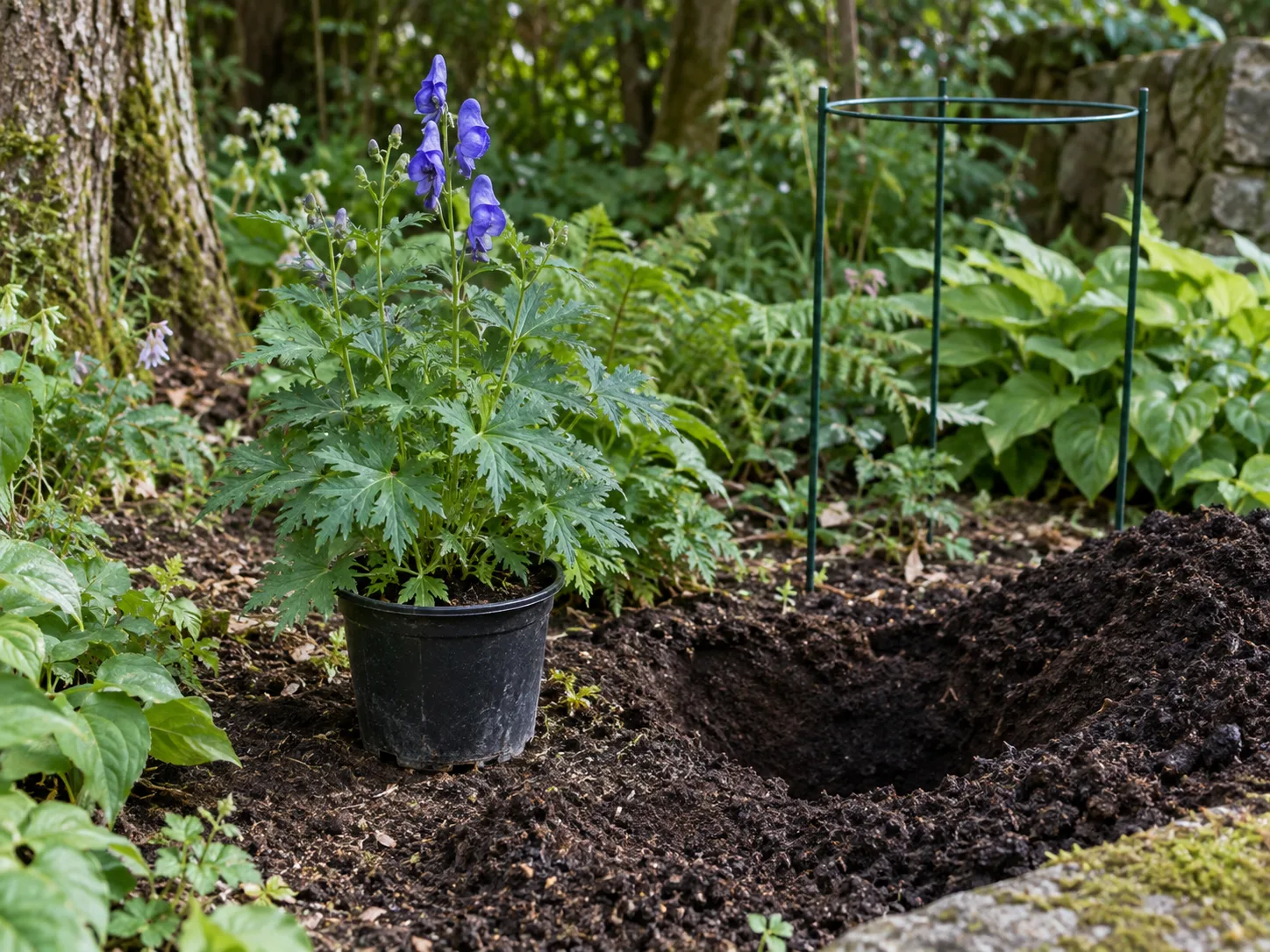
Dig a broad hole, backfill with the improved native soil, and water slowly so the soil settles around the roots. Leave a few inches of open soil around the crown, then add a light mulch layer over the surrounding bed. Keep the mulch from touching the stems because a constantly damp collar invites disease and makes it harder to inspect the base.
Allow roughly 18 inches between average clumps and more room for a vigorous selection. The practical planting reference from Grown By You uses autumn planting in partial shade and an 18-inch spacing, but the plant tag should win when it gives a different mature width. Crowding is not just a design issue: tight foliage dries slowly after dew or rain and makes mildew more likely.
Bare-root or tuberous divisions require extra care. Place them shallowly according to the nursery’s directions, with the upper part of the tuberous root covered rather than buried deep. Water once after planting, mark the location from a safe distance, and resist digging again to check progress; monkshood can remain inconspicuous while establishing.
Do not place monkshood in or immediately beside an edible root-crop bed. The North Carolina State Extension guidance specifically warns that its fleshy roots could be mistaken for an edible tuber. Even when you know exactly where it is, separating ornamental toxic plants from food production reduces the chance of a rushed or mistaken harvest.
Watering: moisture with air around the roots
Water monkshood when the top inch or two of soil begins to dry, then soak the root zone thoroughly. The exact interval depends on soil, rain, temperature, mulch, and plant size, so a fixed weekly schedule is less reliable than checking the soil. In a cool, rainy summer the plant may need little supplemental water; during hot spells, a shaded plant can still dry faster than expected.
Water at the soil line rather than spraying the foliage late in the day. This keeps the leaves drier, lowers the chance of encouraging powdery mildew, and puts water where the roots need it. If you use a sprinkler system, run it early enough for leaves to dry and check the soil afterward; a wet-looking surface does not prove that the root zone is evenly moist.
Mulch can moderate the swings that monkshood dislikes. Use about 2 to 3 inches of shredded leaves, composted bark, or another stable organic mulch over the root zone, leaving a bare ring around the crown. Pull mulch back temporarily if the base stays wet after rain or if the stems start to soften.
Container growing is possible but harder to manage because pots heat and dry quickly. If you use one, choose a stable pot with drainage holes and an airy, moisture-holding mix, then place it where children and pets cannot reach it.
Feeding, mulching, and staking
Start with good soil rather than trying to force a weak plant with fertilizer. A thin spring top-dressing of mature compost is usually a sensible baseline. If a soil test shows a real deficiency, correct it according to the test and the fertilizer label; avoid repeated high-nitrogen feeding, which can produce lush foliage without solving a light, moisture, heat, or age problem.
Staking is easiest before the stems lean. Place a discreet ring, grid, or a few supports around the clump in late spring, then guide the stems through it as they grow. A late tie pulled tight around a flowering stem can damage the plant and makes the garden look more managed than it needs to be.
Tall monkshood looks most natural toward the back of a border or in front of a shrub that can visually support it. A zone-three gardener’s firsthand account of fall-flowering Aconitum notes that a sturdier fall form may stand without staking, while tall summer forms are more likely to flop. Treat staking as cultivar- and site-dependent, not as a universal sign that the plant is unhealthy.
Pruning for tidy plants and possible rebloom
After the first flush of flowers fades, cut spent flowering stems back to a healthy leaf junction or to the base of the flowering stalk. This keeps the plant tidy and limits unwanted self-sowing. In a long enough season, cutting back after bloom can also encourage another flush, but rebloom is an opportunity, not a promise; heat, plant age, and cultivar determine whether it happens.
Wear gloves for deadheading and use clean, sharp pruners. Place cut stems directly into a container rather than carrying them against your clothing or leaving them where a pet could drag them away. Do not taste, dry, or use monkshood in home remedies or kitchen arrangements; ornamental beauty does not make its chemistry safe.
Once frost has killed the top growth, cut the remaining stems to ground level if you prefer a tidy winter bed. In very cold areas, leave a light mulch over the root zone to reduce freeze-thaw stress, then pull excess mulch away from the crown as growth resumes. If the old stems show a disease problem, bag the debris according to local yard-waste rules instead of scattering it through the bed.
Propagating by division
Division is the most dependable way to multiply an established monkshood clump and the only practical way to keep a named selection true to type. The University of Saskatchewan guidance recommends dividing established clumps in spring or fall and not doing it more often than roughly every four or five years. Dividing simply because the plant is large can create an unnecessary recovery year.
Choose a cool, overcast day if possible. Put on sturdy gloves before touching the foliage, crown, or roots, and prepare the new planting site first so the exposed clump spends as little time out of the ground as possible. If the household cannot be kept away from the work area, postpone the job until you can work safely.
- Cut the old stems back if you are dividing after flowering, leaving enough material to identify the clump until you are ready to dig.
- Dig a wide circle around the plant and lift the clump with a fork or shovel under the root mass. Do not yank on brittle stems.
- Brush away enough soil to see the crown and separate natural sections with a clean knife or by carefully teasing them apart. Each division needs a healthy growing point and attached root tissue.
- Replant at the original depth in moist, well-drained soil. Firm gently, water thoroughly, and add a light mulch that does not touch the crown.
- Wash tools and gloves before they return to other garden work, and keep every discarded root fragment out of reach of people and animals.
Expect divided plants to pause. A monkshood division may look underwhelming the following season because the roots have been disturbed, and that lag does not automatically mean it is dead. Keep the soil evenly moist, avoid compensating with heavy fertilizer, and wait for new growth before deciding whether the division failed.
Growing monkshood from seed
Seed is an option for patient gardeners, but it is not the quickest route to flowers. Monkshood seed can be slow and uneven to germinate, and seedlings may take two or more growing seasons to reach flowering size. Seed collected from a named cultivar may also produce plants that differ in flower color, height, or habit.
Many Aconitum seeds need a cool, moist period before they will germinate. You can sow fresh seed outdoors in late fall so winter supplies that condition, or follow the seed supplier’s directions for cold-moist stratification before spring sowing in a container. Do not let the seed-starting mix dry out once you begin the process, but do not keep the tray waterlogged either.
Direct sowing avoids disturbing a young root system, but it also makes the location easy to forget. Use a secure, weatherproof marker placed where children cannot access the bed, and keep seed trays away from pets. The first season may produce only a small tuft or no visible plant at all; mark the area rather than repeatedly excavating it to look for roots.
The Fine Gardening Aconitum guide lists spring sowing in containers as a propagation route, while the university reference emphasizes that seed can be difficult. These are not truly contradictory: spring sowing works when the seed has received the required dormancy treatment, while untreated seed often fails because it was asked to germinate immediately.
Seasonal care calendar
Late winter to early spring: Check whether winter mulch has pressed against the crown and pull it back. As shoots emerge, inspect the soil for standing water, refresh a thin compost top-dressing, and install a support ring before stems become tall.
Spring: Water new plants when the surface begins to dry, weed carefully around the shallow crown, and watch for rapid growth that needs support. This is a good division window in regions where fall soil stays cold or wet, but avoid dividing during a hot, drying spell.
Summer: Moisture and heat management take priority. Water deeply when needed, give hot-climate plants afternoon protection, and inspect the lower stems after storms. If the foliage is dense, improve airflow by thinning nearby plants rather than repeatedly wetting the leaves.
Late summer to fall: Enjoy the flowers without cutting them for a household where loose stems could be handled or chewed. Deadhead with gloves if you want to limit seed or tidy the clump, and use the season’s end to decide whether the plant needs more support or a better moisture buffer.
After frost and winter: Cut dead growth to the ground once the plant is dormant, remove diseased debris cautiously, and apply a light insulating mulch in colder areas. Never use a winter cleanup as an excuse to work bare-handed; the plant’s dormant roots are still the part that deserves the most care.
Monkshood not blooming: a troubleshooting sequence
Start with plant age. A seed-grown monkshood may be healthy but too young to flower, and a recently divided clump may spend a season rebuilding roots. If the plant is leafy and green but has never bloomed, do not assume fertilizer is missing; check its age and propagation history first.
Next check moisture. Dig a few inches away from the crown and feel the soil rather than judging from the leaves alone. Dry soil during stem extension or bud formation can reduce flowering, while constantly saturated soil can damage roots and create a plant that looks thirsty because it can no longer take up water.
Then assess light and heat. Deep shade often gives you foliage with few flowers, but hot afternoon exposure can also suppress performance by stressing the plant. Move the plant only when dormant and only if you can lift a broad root mass; during the current season, use shade and mulch adjustments rather than trying to relocate a flowering clump.
Finally, check feeding and support. High-nitrogen fertilizer can favor leaves, and stems that flop may hide flowers in the surrounding border. Correct the underlying condition, add early support next year, and judge success over a full growing season rather than adding more fertilizer every few weeks.
Disease and collapse: what the symptoms suggest
Monkshood is not usually a pest magnet, but poor drainage, stagnant air, and stressed roots can still lead to disease. North Carolina State Extension lists crown rot, powdery mildew, and verticillium wilt among the plant’s problems. A symptom can suggest a first action, but it cannot always identify a pathogen from a photograph alone; if several plants decline, use a local Extension diagnostic service before applying a treatment.
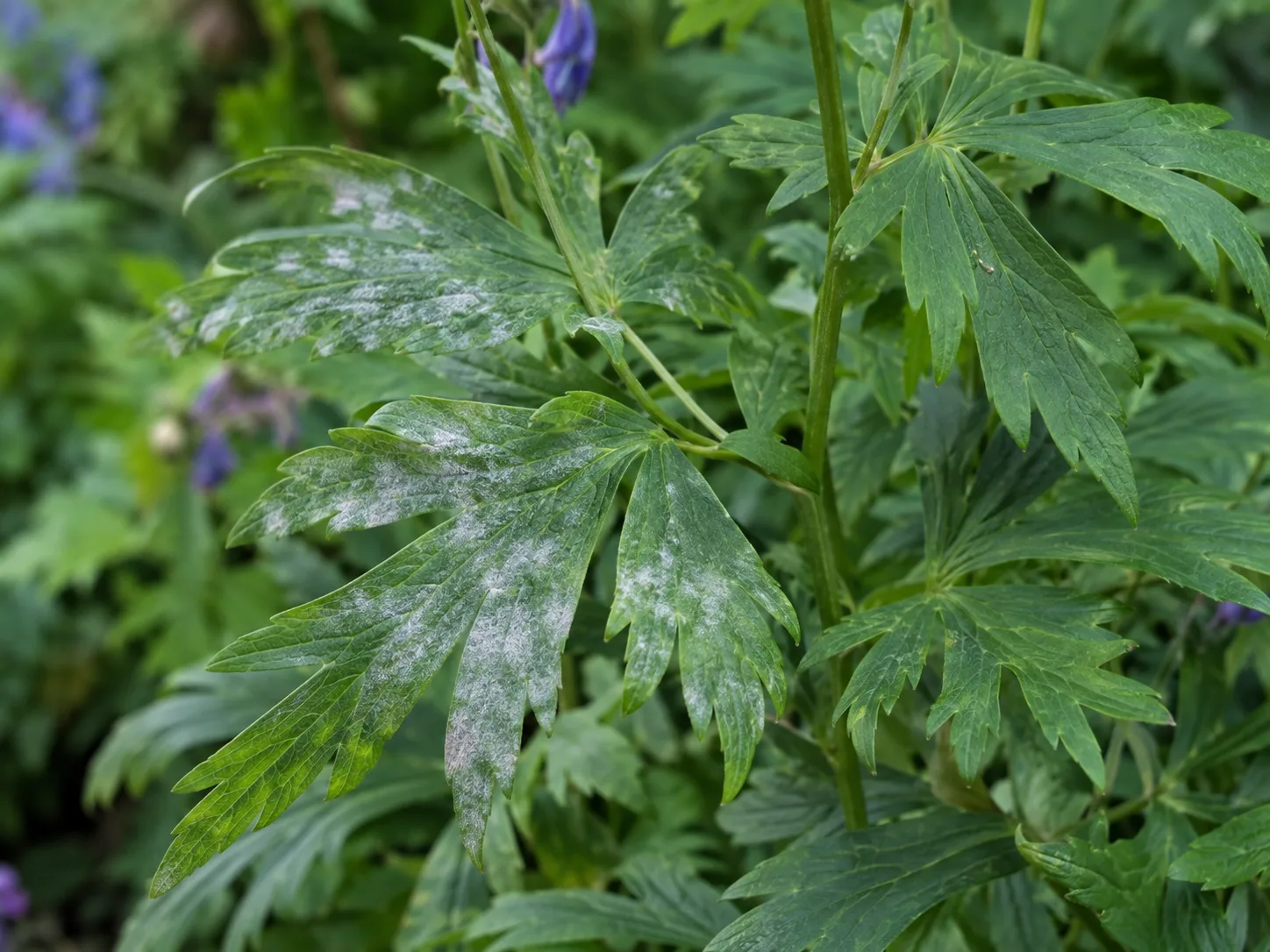
Mild powdery mildew can appear as irregular white patches on monkshood leaves; confirm the pattern before treating.
| What you see | What it may indicate | First response |
|---|---|---|
| White, dusty patches on leaves, especially in crowded growth | Powdery mildew | Improve airflow, water the soil rather than the foliage, remove heavily affected debris, and avoid crowding. |
| Sudden wilt with a wet, soft, or darkened crown | Crown or root rot | Stop adding water, pull mulch away, check drainage, and remove a badly rotted plant rather than spreading the problem through the bed. |
| One or more stems yellowing and collapsing while the bed is not dry | Possible verticillium wilt or root injury | Isolate the decision, photograph the pattern, and seek a local diagnosis; remove severely affected plants if advised. |
| Leaves wilt during a hot afternoon but recover at night | Heat or water stress | Check root-zone moisture, add afternoon shade or mulch, and water deeply when the soil is actually dry. |
| Tall stems bend or lie across neighbors while foliage looks healthy | Height, shade, wind, or insufficient support | Add a ring or discreet ties early in the next growth cycle; do not pull a mature flowering stem upright by force. |
Do not respond to every wilt with more water. That is the most damaging reflex in a plant that wants moisture but also needs oxygen around its roots. If the soil is wet, the first action is diagnosis and drainage, not another deep soak.
Cultivars and companion placement
The species form of Aconitum napellus is a classic choice for blue-violet flowers and a tall upright habit. White-flowered forms such as ‘Albidus’ or ‘Albus’ are useful when you want the hooded shape without a dark color block, while pink selections can soften a cool-toned border. Confirm the exact spelling and mature height on the nursery label because Aconitum names are frequently sold as species, hybrids, or selections.
Aconitum carmichaelii, including the ‘Arendsii’ selection, is valued for late-summer to fall color and is often sturdier than some summer-flowering forms. The University of Saskatchewan’s cultivar notes also describe compact forms, blue-and-white hybrids, and taller selections that may need support. Use those differences to choose the plant for your season rather than buying solely for flower color.
Pair monkshood with plants that appreciate the same cool, evenly moist conditions: ferns, hostas, astilbes, late phlox, and other shade-border perennials can create a layered planting. Put lower companions in front and leave an inspection gap around the monkshood crown. Avoid placing it where children must brush past it on a path, beside a play area, or among edible roots and herbs.
Toxicity: the safety rules that govern every task
Monkshood is not “a little poisonous.” North Carolina State Extension classifies Aconitum as a high-severity poisonous plant, and Poison Control’s Aconitum napellus article explains that all parts contain toxins, with the roots especially concerning. Aconitine can affect nerves and the heart after ingestion; beautiful flowers do not make the plant safe to taste, brew, dry for tea, or use as a home remedy.
Build a simple safety system before the plant goes into the ground:
- Keep monkshood out of reach of children and pets, including animals that dig.
- Wear gloves whenever you plant, weed around, divide, deadhead, cut back, or dispose of it. Long sleeves are sensible for dense growth or root work.
- Do not place cut stems, pulled plants, or root fragments in a spot where a pet can retrieve them.
- Wash hands and clean tools after the task; do not touch food, your face, or contact lenses while wearing contaminated gloves.
- Tell anyone who helps in the garden what the plant is and where it grows.
- Keep it separate from edible beds so a root cannot be mistaken for a food crop.
For disposal, prioritize preventing access. Bag removed material or follow local yard-waste rules, and keep it out of kitchen, herb, and edible-garden compost workflows. Do not rely on claims that composting automatically makes toxic material harmless.
If a person may have swallowed any part of monkshood, do not induce vomiting or wait for symptoms. Poison Control notes that early signs can include tingling or numbness, nausea, vomiting, abdominal symptoms, and dangerous changes in heart rhythm; use the webPOISONCONTROL tool or call 1-800-222-1222 in the United States for immediate expert guidance. If the person is collapsed, having trouble breathing, seizing, or otherwise in immediate danger, call emergency services.
For a pet exposure, contact a veterinarian or the ASPCA Animal Poison Control Center at (888) 426-4435. Do not rely on a pet appearing normal after chewing a leaf; remove access, keep a sample or photograph for identification if it can be done safely, and follow the poison-control professional’s instructions.
Conclusion
Grow monkshood where summers are reasonably cool or where afternoon shade protects it, and give it soil that is rich, evenly moist, and genuinely well drained. Water by checking the root zone, feed lightly with soil quality in mind, support tall stems before they lean, and use division when an established clump needs renewal.
The plant’s toxicity is part of its care plan, not a footnote. If you can control access, wear gloves, keep it away from edible crops, and respond quickly to any ingestion, monkshood can be a long-lived, striking late-season perennial; if you cannot meet those conditions, choosing a safer plant is the better gardening decision.