Mistletoe Cactus Care: Light, Water, and Soil
Learn how to grow and care for mistletoe cactus (Rhipsalis baccifera) with practical light, watering, soil, humidity, propagation, and troubleshooting advice.
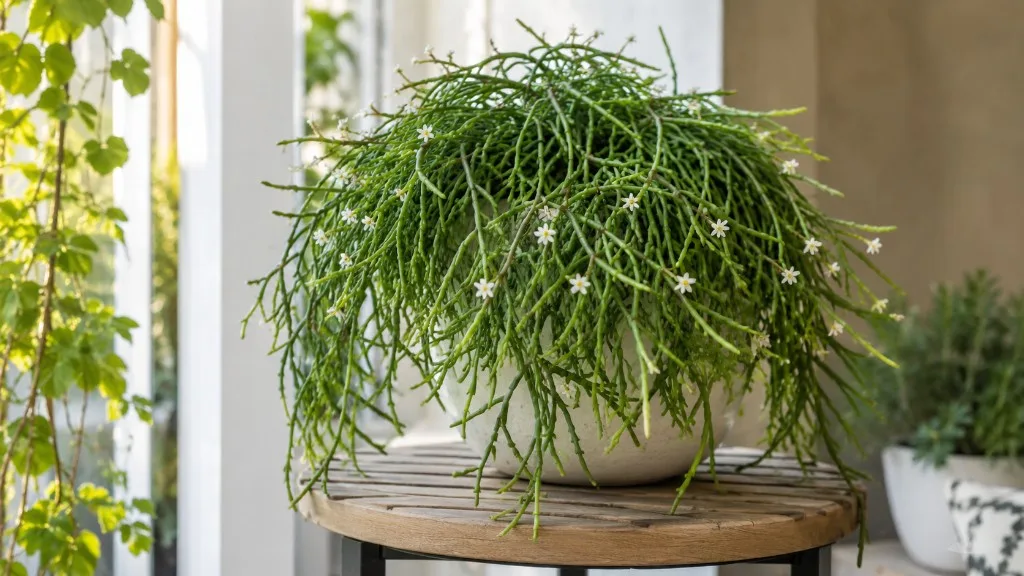
Mistletoe cactus (Rhipsalis baccifera) is a true cactus, but desert-cactus care is the wrong model for it. This spineless, trailing plant grows as an epiphyte in tropical and subtropical forests, where its roots sit in small pockets of bark and organic debris rather than in hot, exposed ground. Give it filtered light, an airy mix that holds a little moisture, and a watering rhythm that changes with the season.
The plant is also sold as spaghetti cactus, and some references use the synonym Rhipsalis cassutha. ITIS lists Rhipsalis baccifera as the accepted species name, while the RHS describes its thin, trailing stems, small white or greenish-white flowers, and translucent white or pale-pink berries. (ITIS; Royal Horticultural Society)
For most indoor growers, the simplest successful setup is a hanging basket or stable pot with drainage, bright indirect light, a chunky potting mix, and water whenever the upper layer of mix has dried but the root ball has not been left dusty for weeks. The details below help you adjust that starting point instead of following a fixed calendar.
Start With the Right Mistletoe Cactus
Before changing your care routine, confirm that the plant is actually the species you think it is. Mistletoe cactus has smooth, cylindrical, green to pale blue-green stems that branch and trail; young growth may show sparse woolly areoles, but mature stems are spineless and look more like fine green cords than the flat pads of a holiday cactus. (NC State Extension; Royal Horticultural Society)
That distinction matters because several forest cacti share similar care, while a desert cactus or a flat-segmented Schlumbergera may need a different light and watering balance. A mislabeled plant is not doomed, but a narrow stem with a slightly puckered surface is useful feedback: it is built to store water, yet it is adapted to recurring rain and humidity rather than long, harsh drought.
The genus can produce a long, cascading plant when it has room. NC State lists an indoor mature size of roughly 4 to 6 feet tall and 1 to 2 feet wide, while RHS gives a taller potential range for the species outdoors or under favorable protected conditions. Treat those numbers as potential, not a promise: light, pot size, pruning, age, and whether the plant is a single cutting or a full nursery basket all change the final shape. (NC State Extension; Royal Horticultural Society)
What Makes Rhipsalis Different From a Desert Cactus
An epiphyte is a plant that grows on another plant for support without drawing food from it. In a tree canopy, Rhipsalis receives filtered light, brief wetting from rain, fast drainage, and organic material that dries at the surface while remaining slightly buffered around the roots. That explains the care paradox: it wants more regular moisture than a desert cactus, but it still fails in a dense, constantly wet pot.
Think of the plant as asking for air after water. A thorough drink is helpful when the mix is ready, but the mix must then release excess water and admit oxygen. Bright indirect light powers growth and helps the pot dry at a reasonable pace; low light slows that drying and raises the risk of rot if you keep watering as though the plant were in summer growth.
Find the Light That Prevents Scorch and Stretching
Place mistletoe cactus near a bright window where sunlight is filtered by a sheer curtain, nearby foliage, or a little distance from the glass. An east-facing window is often an easy starting point; a bright south- or west-facing window can work farther back or behind a curtain. NC State classifies the plant for partial shade and specifically notes bright indirect light, while RHS lists full sun to partial shade for the species, a range that makes acclimation and local intensity important. (NC State Extension; Royal Horticultural Society)
Do not interpret “cactus” as permission to place it in hot afternoon sun. Sudden exposure through glass can bleach or scorch the stems, especially when a plant has spent weeks in a dim shop. If you move it closer to a window, do so over several days and check the side facing the light before increasing exposure again.
Light also controls watering indirectly. A plant in bright, gentle light can use water and make new stems; the same plant in a dark corner may stay wet longer, grow slowly, and develop pale, weak new growth. If you cannot provide a bright enough location in winter, reduce watering rather than compensating for low light with a wetter pot.
Use Stem Color and Growth as Light Feedback
Your mistletoe cactus will tell you when the location is wrong, but the clues overlap with water and temperature stress. Use more than one sign before moving it:
| What you see | More likely interpretation | First adjustment |
|---|---|---|
| Pale, thin, widely spaced new growth | Not enough light | Move a little closer to a bright filtered window |
| Reddish or bronze patches on the lit side | Too much intense sun or cold stress | Filter the light and check for a cold window or draft |
| Firm green stems with steady branching | Light is probably usable | Keep the location stable and adjust water by mix dryness |
| Brown, crisp tips only | Dry air, missed watering, salts, or sun stress | Check soil, vents, feeding, and the light before changing everything |
The goal is not the darkest possible room. A plant that survives in low light may remain alive while producing little new growth and few flowers. Give it the brightest indirect light you can provide without hot spots on the stems.
Build an Airy, Moisture-Holding Root Environment
Mistletoe cactus needs a potting medium that drains quickly but does not turn hydrophobic after one sunny day. A practical starting mix is two parts quality indoor potting mix, one part fine orchid bark, and one part perlite or pumice. The potting mix supplies moisture-holding organic material; bark creates larger air spaces; perlite or pumice keeps the blend from collapsing into a dense plug.
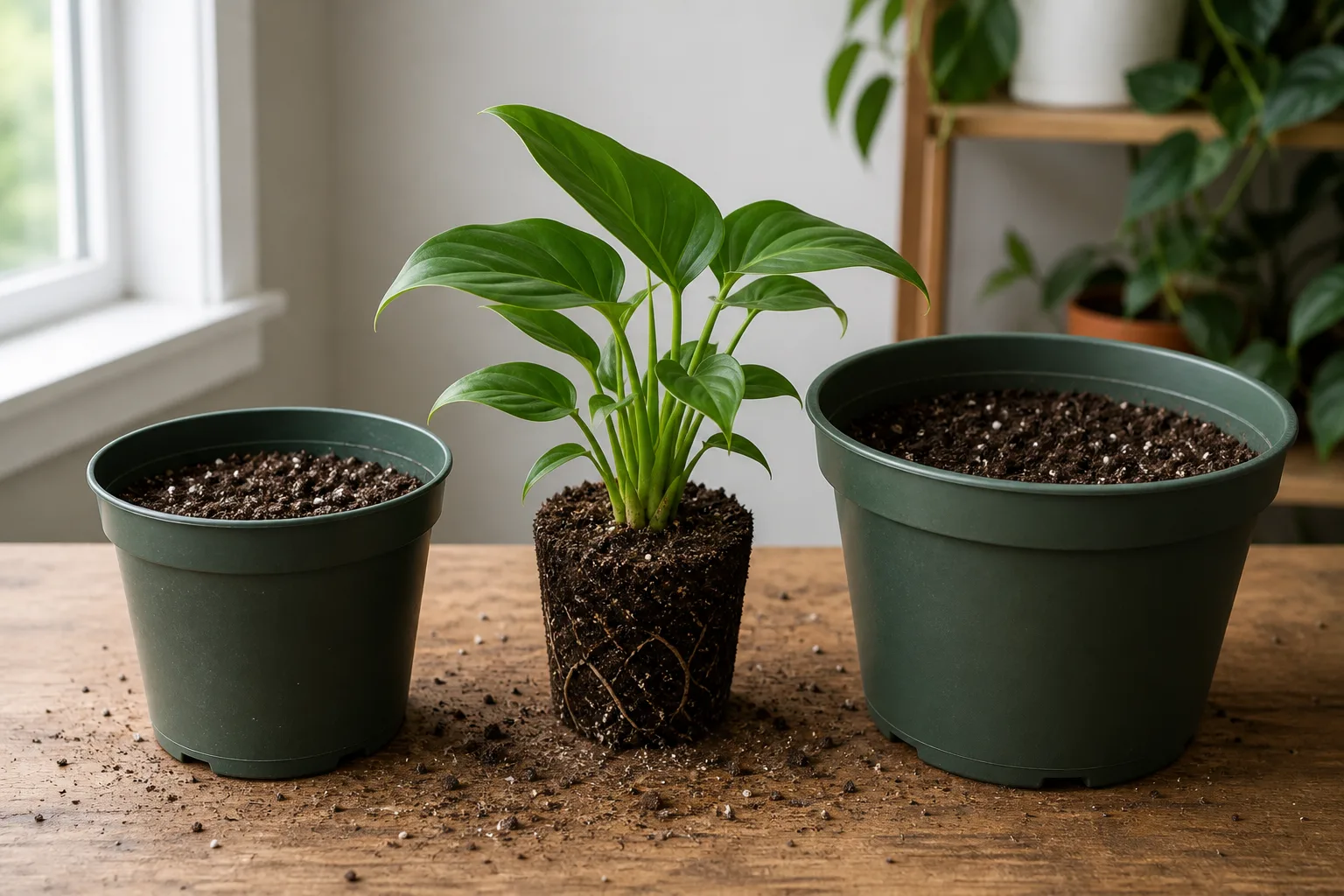
NC State describes the preferred medium as slightly acidic, moist, well-drained, and gritty. You do not need to chase a precise pH number for a healthy houseplant, but you should avoid heavy garden soil, pure compost, or a mix that stays cold and slick for many days after watering. (NC State Extension)
Pre-moisten dry ingredients before potting so the first watering does not run down a dry channel around the root ball. Then test the mix in your hand: it should clump lightly when squeezed and break apart easily when tapped. If it forms a dense mud ball, add more aeration; if it cannot hold any moisture at all, add a little more potting mix rather than watering constantly.
Choose the Pot for Drainage, Not Just Appearance
Use a pot with an open drainage hole and a saucer or cachepot that can be emptied. A hanging basket works well because the stems have somewhere to fall, but it should not be so large that the top-heavy plant becomes unstable. Terracotta dries faster and can help a wet mix recover; plastic retains moisture longer and may be better in a very bright, dry home if you check the pot before watering.
Do not rely on a layer of gravel at the bottom to fix a water-retentive mix. The useful drainage comes from the hole, the structure of the medium, and the space around the roots. Keep the plant at the same depth it was growing, and never bury long trailing stems in wet soil just to anchor them.
Water by Dryness, Not a Calendar
Water when the top inch or two of mix feels dry and the pot is noticeably lighter, then soak the root ball thoroughly until water comes from the drainage hole. Let it finish draining before returning it to a saucer or decorative container. This wets the entire root zone and prevents the shallow, repeated sips that leave the center of the pot dry while the surface looks damp.
The right interval may be about a week in a bright, warm growing room, but it can be longer in a cool, dim room or a moisture-retentive plastic pot. The interval is a result of light, temperature, airflow, pot material, mix, and plant size; it is not a characteristic of the species. Two Leaf Garden similarly recommends checking the upper layer rather than treating the schedule as fixed. (Two Leaf Garden)
If the stems become slightly puckered but remain firm, the plant may be thirsty. Water fully and watch for the stems to regain tension over the next day or two. If the mix is already wet and the stems are wrinkled, do not add more water: inspect the roots, because damaged roots cannot move water efficiently even when the pot is saturated.
Adjust Watering for Winter, Heat, and Indoor Air
Reduce watering in autumn and winter when growth and evaporation slow, but do not force a long desert-style drought. Check the mix, then water when it has dried partway rather than waiting for every stem to shrivel. A plant in a heated room beside a dry vent may still use water in winter, while one in a cool, low-light room may need very little.
In hot weather, a brighter outdoor location or an air-conditioned room can change the drying rate quickly. Check more often during a heat wave, but resist the urge to water a plant whose pot is still heavy and wet. If water runs straight through a severely dried mix, soak the pot slowly in stages or bottom-water briefly, then let it drain; do not leave it standing in a reservoir afterward.
Water quality is not the first suspect when a few tips brown. Start with light, missed watering, dry air, and root health. If the problem continues despite stable care and you see mineral crust on the mix or pot, flush the medium with plain water and consider rainwater or filtered water if it is practical for your home.
Keep Warmth, Humidity, and Airflow in Balance
Average indoor temperatures suit mistletoe cactus. NC State gives a preferred range of 60 to 80 degrees Fahrenheit, and the plant should be protected from frost, freezing windows, and abrupt temperature changes. Keep it away from heating vents, exterior doors, and strong air-conditioning discharge; those spots can alternate between hot-dry and cold-dry conditions in a single day. (NC State Extension)
Moderate humidity helps the thin stems stay plump and reduces the dry-air conditions that favor spider mites. A relative humidity around 50% or a little higher is a useful target, especially in winter, but a number alone is not a cure. Two Leaf Garden recommends 50% or more for Rhipsalis, while NC State describes it as humidity-tolerant and high-humidity loving. (Two Leaf Garden; NC State Extension)
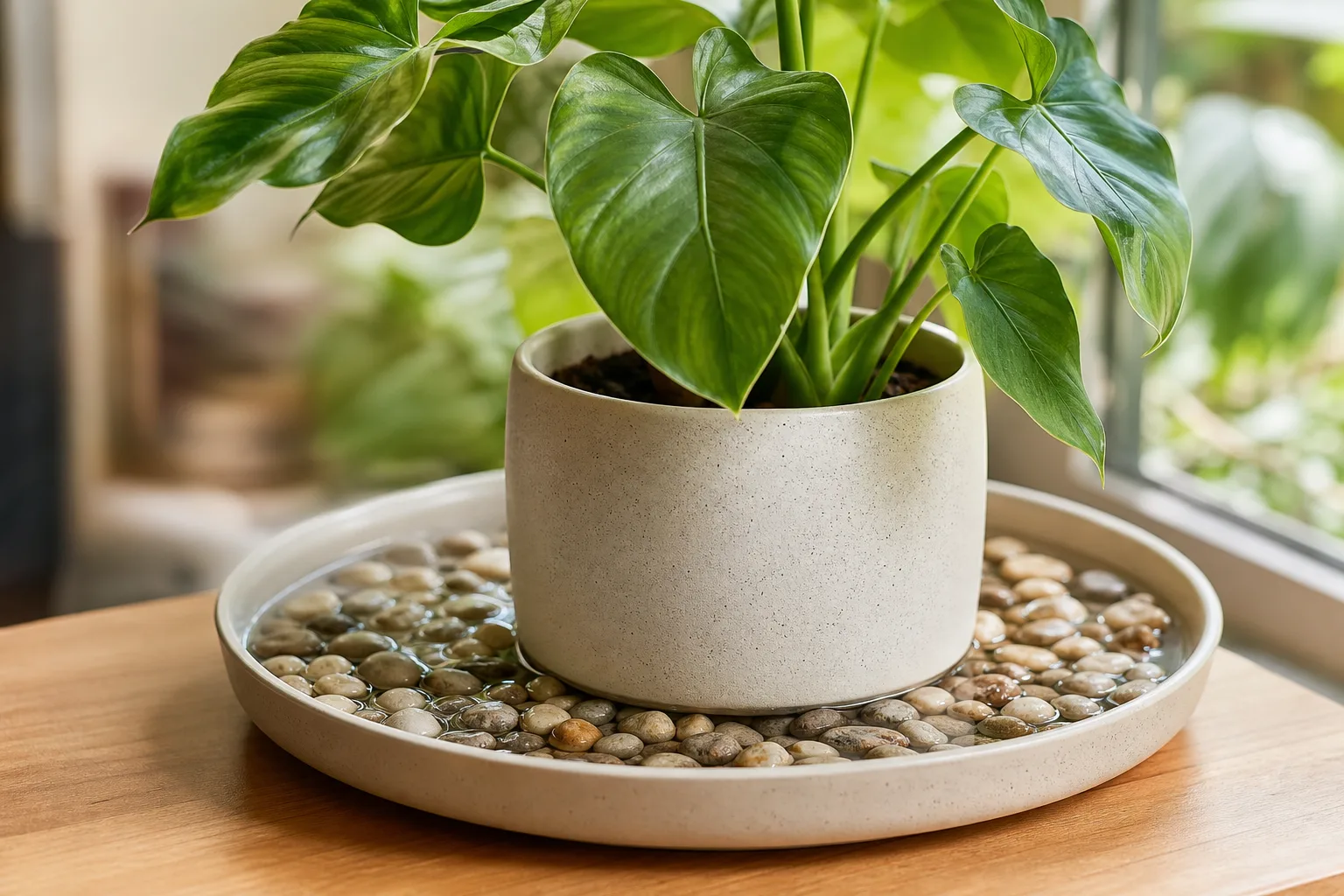
Use a small humidifier when several plants share a dry room, or group compatible plants with enough space for air to move. A pebble tray can modestly change the air immediately around a pot if it is wide and shallow, the water sits below the stones, and the pot base stays above the waterline. It cannot compensate for a sealed, stagnant corner or a pot with no drainage.
Avoid misting as a substitute for watering. Wet stems that stay damp in cool, still air can invite fungal problems, and a quick spray does not reliably raise whole-room humidity. If you use a humidifier, clean and refill it according to its instructions and leave clearance around the foliage so the plant is not constantly wet.
Feed Lightly During Active Growth
Mistletoe cactus is a light feeder, so more fertilizer is not a shortcut to longer trails. During spring and summer, apply a balanced liquid houseplant fertilizer at half the label strength about once a month, after the plant has been watered or when the mix is already slightly moist. Stop feeding when growth slows, light is poor, or the plant is recovering from rot or a major move.
Overfeeding can leave salts in a small pot and damage fine roots, showing up as crusty mix, stalled growth, or tip dieback. If that pattern follows a feeding increase, run several volumes of plain water through the pot, let it drain completely, and resume with less fertilizer once new growth appears. Never use fertilizer to revive a plant whose stems are soft or whose roots are rotting.
Prune for Shape and Propagate From Cuttings
Pruning is optional, not a routine requirement. Trim when trails have outgrown their space, when you want a fuller basket, or when a stem is dead or damaged. Use clean, sharp scissors and cut just above a joint; save healthy pieces for propagation rather than discarding them.
Spring and early summer are the easiest times because warmth, light, and active growth help a cutting establish. Make each cutting several inches long with multiple healthy segments, remove flowers or berries from pieces you intend to root, and keep the parent plant in its normal light after pruning. A few strategic cuts around the outside of a crowded plant encourage branching without stripping the center bare.
A Reliable Soil-Propagation Sequence
Stem cuttings are usually more practical than seeds for a home grower. They preserve the growth habit of the parent plant and allow you to plant several pieces back into the same basket for a fuller result.
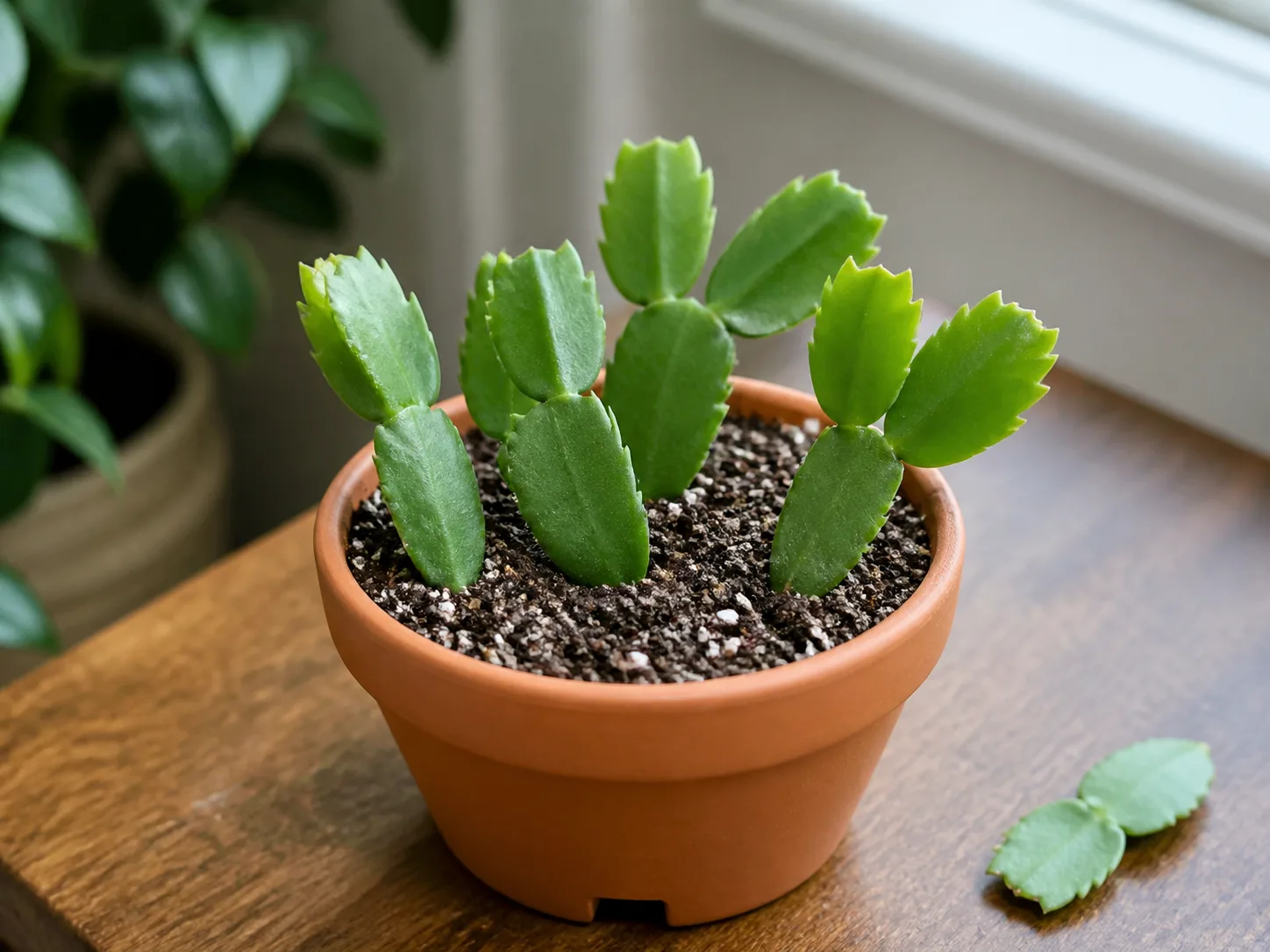
- Choose firm, green, pest-free stems. Avoid pieces that are wrinkled from drought, soft from rot, or covered in insects.
- Cut below a joint with sterilized scissors. A cutting around 3 to 6 inches long gives you enough stem to anchor without burying most of the plant.
- Set the pieces in a dry, shaded spot for roughly a day so the cut surface can dry. A long, hot wait is unnecessary and can dehydrate the cutting.
- Fill a small pot with the same airy mix used for the parent plant, or use a propagation mix with good drainage. Moisten it lightly rather than saturating it.
- Insert the cut end about an inch into the mix, keeping at least one or two joints above the surface. Press the mix around it so it stands upright without packing the pot tight.
- Put the pot in bright indirect light with warm, stable air. Keep the medium barely moist; repeated heavy watering is the fastest way to rot an unrooted cutting.
- After a few weeks, test for resistance with a gentle tug rather than digging every few days. New growth is a stronger sign of establishment than a calendar date, and the timing varies with warmth and light.
Two Leaf Garden also describes water rooting as an option, but soil rooting avoids the later transition from water-grown roots to a potting medium. If you do root a cutting in water, keep only the base submerged, change stagnant water, and pot it once roots are visible rather than leaving it indefinitely in a jar. (Two Leaf Garden)
Repot Only When the Root Zone Calls for It
Repot when roots are circling densely, emerging from the drainage hole, the plant repeatedly topples, or the mix has broken down and stays wet. A pot that is only slightly crowded is not an emergency; Rhipsalis can grow well when snug, and a large empty volume of wet mix is more dangerous than a close root ball.
Choose a new container only one or two inches wider than the old one. Slide the plant out gently, inspect the roots, and remove only dead or mushy material. Set it at the same depth in fresh mix, water enough to settle the medium, and keep it in bright indirect light while it resumes growth.
If you are repotting because of root rot, do not simply move the saturated root ball into a larger pot. Cut away black, collapsing roots and soft stems with clean tools, keep the surviving healthy sections, and use fresh airy medium in a clean container. When the root system is badly reduced, propagation from firm stem pieces may be the more reliable way to preserve the plant.
Encourage Flowers and Mistletoe-Like Berries
Mature mistletoe cactus can produce tiny white to greenish-white flowers along its stems, often from winter into spring and sometimes at other times in favorable conditions. The flowers are easy to miss because they are small and sit among the trailing branches. Round translucent white or pale-pink berries may follow, creating the mistletoe-like feature behind the common name. (NC State Extension; Royal Horticultural Society)
The best way to encourage flowering is to keep the plant healthy for months rather than trying to force it with a sudden change. Give it enough bright indirect light for sturdy growth, avoid heavy nitrogen feeding, and allow a slightly cooler, somewhat drier winter rhythm without letting the stems remain severely dehydrated. A mature plant may still skip a season after repotting, moving, or a major change in light.
Fruit is a bonus, not a health test. A plant can be vigorous without berries, and small berries that appear after flowering are not automatically pests or eggs. Do not scrape them off unless you have confirmed an insect; inspect the surface and the nearby stems first.
Diagnose Stems, Tips, and Pests in the Right Order
When a mistletoe cactus looks wrong, start with four observations: Is the soil wet or dry? Are the stems firm or soft? Is the damage on the window-facing side or throughout the plant? Can you see insects, webbing, or cottony residue? This sequence prevents the common mistake of treating every wrinkled stem as thirst or every yellow stem as a fertilizer problem.
The plant’s roots are the tie-breaker when the visible clues conflict. A dry pot with firm puckered stems points toward underwatering; a wet pot with soft, dark stems points toward root or stem rot; a wet pot with wrinkled stems may mean the roots are no longer functioning well enough to take up water.
What Wrinkled, Soft, or Black Stems Mean
Wrinkled but firm stems: Water thoroughly if the mix has dried partway, then give the plant stable light and wait. If the stems do not regain tension, check the roots and look for a pot that stays wet for too long.
Soft, translucent, or blackening stems: Treat this as possible rot, especially when the mix is wet or smells sour. Stop watering, unpot the plant, trim back to firm tissue, and repot only healthy roots and stems in fresh, airy medium. Affected sections may not recover, but firm cuttings can often be used to restart the plant.
Sudden stem drop: Check for a cold draft, recent location change, overwatering, or rough handling. Remove any detached piece that is firm and healthy from the wet pot, let the cut end dry, and propagate it rather than pushing it back into saturated soil.
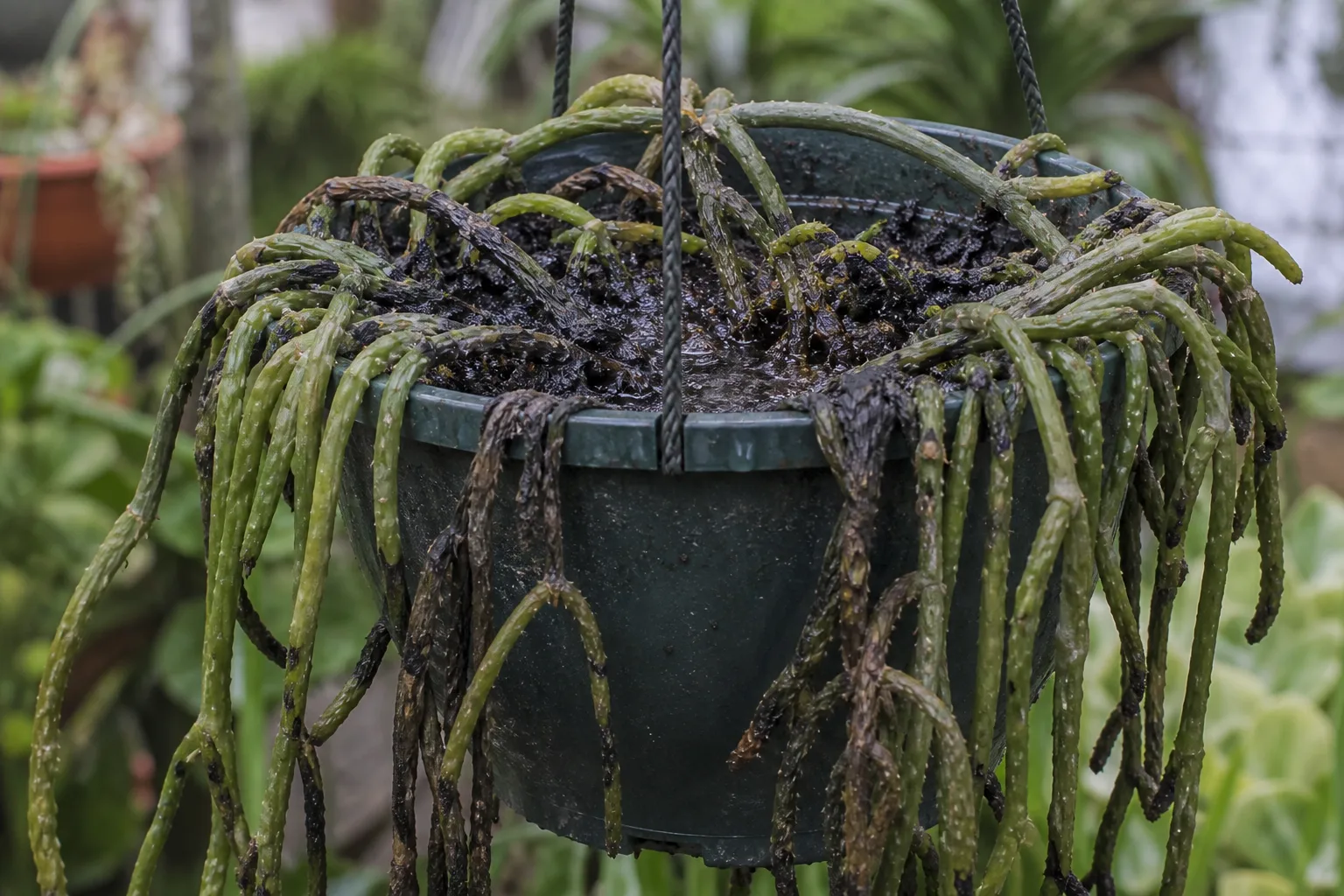
NC State identifies overwatering as a cause of mushy stems and root rot, while its plant profile also links low humidity or underwatering with brown tips. Those categories overlap in a stressed plant, which is why the condition of the mix and roots matters more than a single symptom label. (NC State Extension)
What Brown Tips, Red Color, or Slow Growth Mean
Crispy brown tips: Check for dry mix, hot direct sun, a heating or cooling vent, and salt buildup from fertilizer. Improve the cause first, then trim the damaged ends with clean scissors; dead tissue will not turn green again.
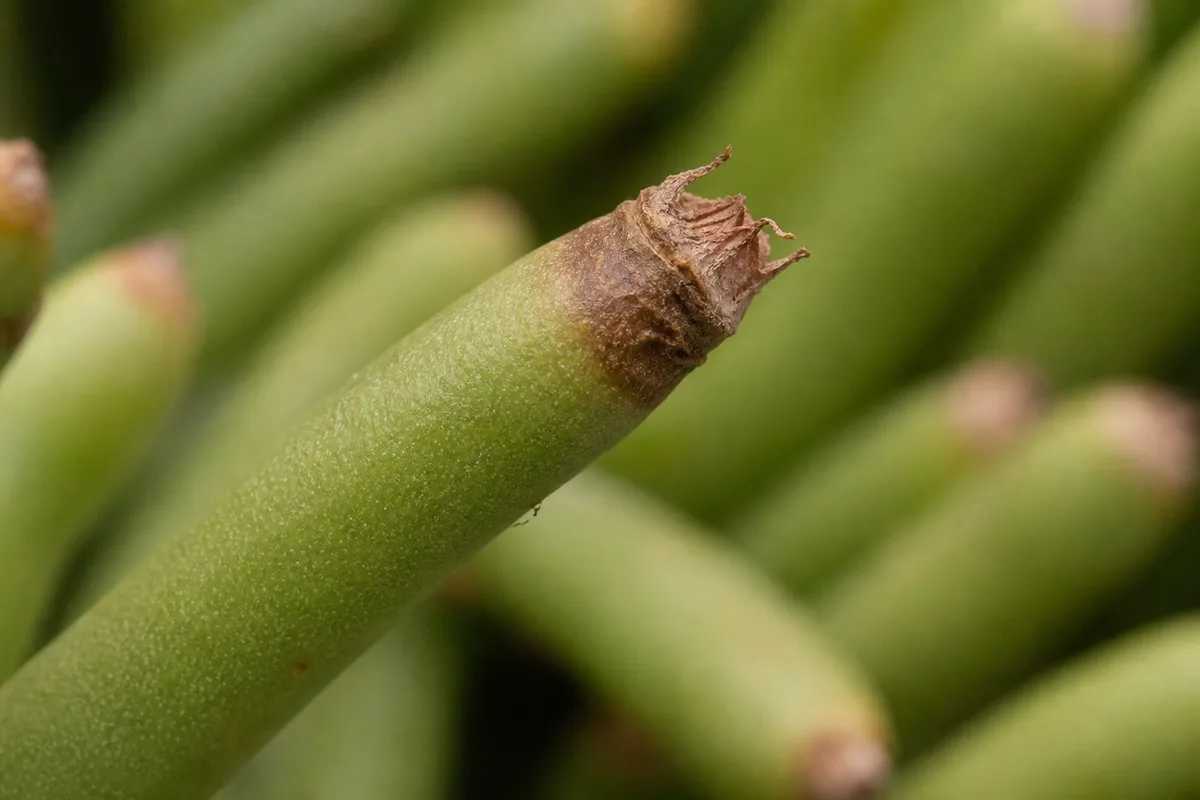
Reddish or purplish stems: A mild tint can occur with bright light or cool conditions, but a sudden dark red or bronze cast on the lit side suggests too much sun or temperature stress. Move the plant into filtered light and away from cold glass before changing the watering routine.
Yellowing or pale growth: Low light, wet roots, sudden heat, and natural aging can all contribute. If the mix remains wet, investigate drainage before feeding; if the mix is fine but new growth is pale and stretched, increase indirect light gradually.
Cottony clusters: These are likely mealybugs, which suck sap and may hide at joints or near the pot surface. Isolate the plant, rinse reachable pests away, and dab visible individuals with alcohol kept on the insect rather than soaking the stem. Colorado State University Extension warns that alcohol can injure plants, so test a small area first; contact sprays work only where they touch the pest. (Colorado State University Extension)
Fine webbing and stippled or bronzed stems: Spider mites favor hot, dry conditions. Wash the plant with a gentle but thorough stream of water, increase surrounding humidity, and repeat inspections and treatments as needed. If you use insecticidal soap or another pesticide, choose a product labeled for houseplants and the pest, test for plant injury, and follow the label exactly; homemade dish-soap mixes can burn delicate tissue. (Colorado State University Extension)
Quarantine new plants for at least a few weeks before placing them beside an established collection. This small habit matters because pests commonly arrive on recently purchased or gifted plants, not because the mistletoe cactus is inherently difficult. (Colorado State University Extension)
Move It Outdoors Safely
Mistletoe cactus can spend warm weather outdoors in bright shade or partial shade, where moving air and natural humidity often improve growth. NC State lists it for USDA Zones 9b through 11b, but zone labels do not override a local cold snap, a hot west-facing wall, or intense midday sun. In cooler regions, treat outdoor time as a summer placement rather than a year-round arrangement. (NC State Extension)
Acclimate it over a week: start in deep shade, then move toward the brighter protected position you want. Keep the pot off constantly wet ground, shelter it from heavy rain, and inspect every joint before bringing it back inside. Bring the plant in well before nights approach 50 degrees Fahrenheit, and make the transition gradually so a shade-grown plant does not scorch behind a sunny window.
Conclusion
The most important mistletoe cactus care decision is to stop treating it like a desert cactus. Give Rhipsalis baccifera bright filtered light, an airy mix with some moisture-holding capacity, and a thorough drink only after the upper mix has dried partway. Then let the pot drain, keep the plant warm, and provide humidity without trapping wet air around the stems.
Use the plant as your feedback system. Firm puckering in a dry pot calls for water; soft darkness in a wet pot calls for a root inspection; brown tips call for a check of humidity, sun, vents, and salts; and thin pale growth calls for more usable light. With those observations, pruning, propagation, repotting, flowering, and outdoor placement become adjustments to a healthy rhythm rather than a series of guesses.