10 Low-Maintenance Perennial Grasses That Will Flourish in Your Garden
Compare 10 low-maintenance perennial grasses by sun, moisture, spread, size, and garden use, then learn how to plant, prune, and care for them.
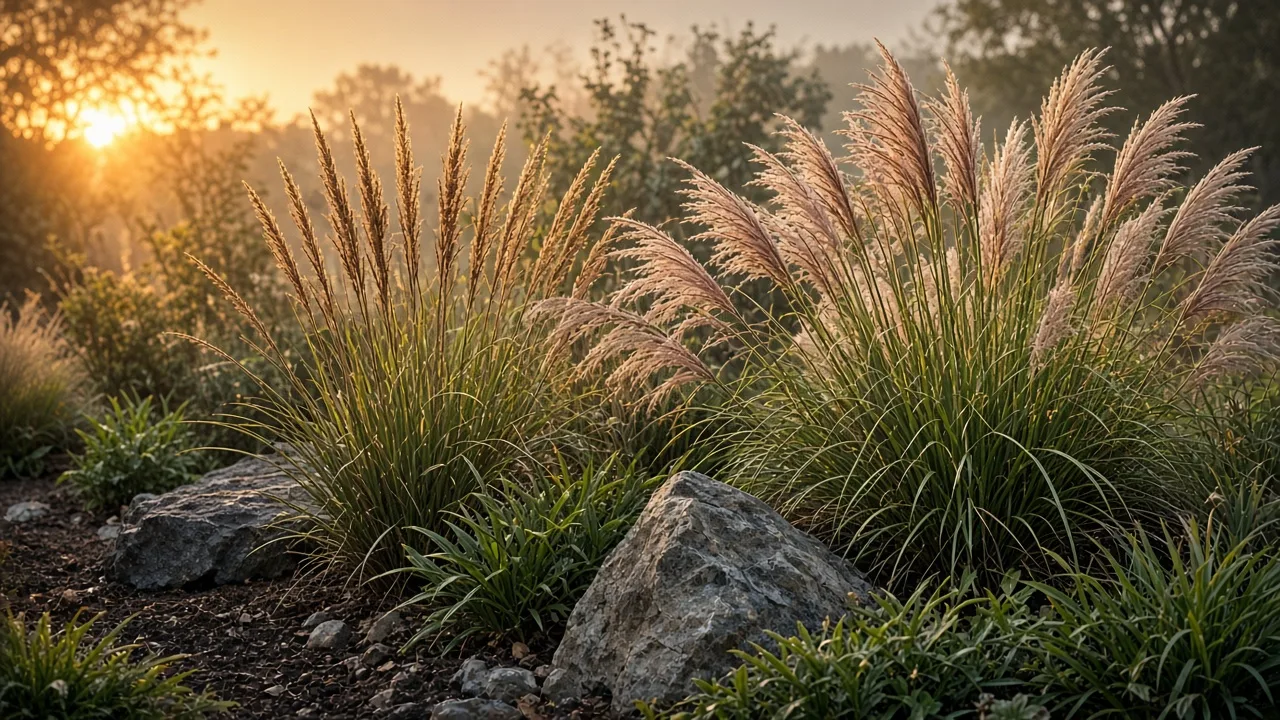
The best low-maintenance perennial grasses are not the ones you can ignore. They are the ones whose mature size, growth season, moisture needs, and spreading habit already match the place where you intend to grow them. Put a dry-site clumper in a sunny border and it can become a reliable framework plant. Put a moisture-loving sedge in baking gravel, or a vigorous rhizomatous turf grass in a narrow bed, and the same “easy” label quickly turns into extra work.
This list mixes ornamental grasses, grass-like sedges, and perennial lawn grasses because gardeners use the word grass for all three. The distinction matters: sedges belong to a different plant family and often tolerate damper or shadier conditions, while most true ornamental grasses prefer sun and well-drained soil. The Royal Horticultural Society’s overview of grasses makes that split especially useful when you are choosing plants for a difficult site.
What “low maintenance” really means for perennial grasses
A low-maintenance grass should reduce the jobs you actually dislike: weekly mowing, frequent irrigation, repeated staking, annual division, or constant deadheading. It should also hold its shape without collapsing into a walkway, stay within its allotted space, and recover predictably after winter. That is a more useful test than simply asking whether the plant tolerates drought.
The first year is an exception. Even a drought-tolerant grass needs regular attention while its roots move from a nursery pot into surrounding soil. Once established, many ornamental grasses can be watered less often, but “established” means a well-rooted plant that has made it through at least one active growing season—not a new transplant that looks green after two weeks.
Clumping, spreading, and self-seeding habits
Clump-forming grasses expand from a crown and generally stay close to the width on the label. Little bluestem and Karl Foerster feather reed grass are useful examples. They can become crowded and need division eventually, but their maintenance is usually predictable. This is often the safest starting point for a small border.
Spreading grasses travel through rhizomes or stolons. That is excellent for a lawn, erosion control, or a planting that must knit together, but it is not automatically desirable beside a path or mixed perennial bed. A spreading plant may be low-maintenance after it fills an area and high-maintenance when you spend every spring pulling it back from neighboring plants. Greenhouse Canada’s practical overview of ornamental grasses also separates clumping forms, which stay easier to place in beds, from spreading forms.
Self-seeding grasses can move by seed even when the crown stays in place. Leave attractive plumes for winter and birds if you like, but remove seed heads before they mature when a tidy, contained planting matters. Local climate, cultivar, and nearby open soil all influence how much a grass volunteers.
Warm-season grasses, cool-season grasses, and sedges
Warm-season grasses do most of their growing after the soil warms. They often look unimpressive early in spring, then surge through summer and flower later. Switchgrass, little bluestem, and maiden grass fit this pattern. Their dormant tan foliage can provide winter structure, so they usually benefit from a late-winter or early-spring cutback.
Cool-season grasses begin earlier, grow strongly in spring and fall, and often slow during the hottest part of summer. Karl Foerster feather reed grass and perennial ryegrass are familiar examples. They can need a lighter cleanup than tall warm-season plants, and some should not be sheared to the ground without checking the cultivar’s instructions.
Sedges such as Carex look like grasses but are grass-like plants in the Cyperaceae family. Many are evergreen or semi-evergreen and are more useful in part shade or consistently moist soil than a sun-loving prairie grass. That is why “full sun” is not a universal requirement for everything sold as an ornamental grass.
Match a grass to the garden job before you buy
Start with the site rather than the plant tag. Measure the hours of direct sun, note where water collects after rain, and estimate the mature width you can spare. A grass that is technically hardy in your region can still fail if its crown sits wet all winter, its leaves are shaded by a wall, or its roots are competing with a thirsty hedge.
Edges, shade, and containers
For a walkway edge, choose a low clumper or sedge with foliage that will not flop across the path. Carex ‘Everillo’ gives a bright, cascading edge and can be grown in a container. Blue sedge is more blue-gray and can spread into a low groundcover, so it is better where a soft drift is welcome than where every plant must remain in a fixed circle.
Part shade is a different problem from dry shade. A tree-rooted site may be dim and bone-dry, while a north-facing border may be dim and evenly moist. Sedges are often the more forgiving group, but verify the selected cultivar instead of assuming every Carex has the same tolerance. In containers, drainage and winter exposure matter as much as light; a pot’s root ball gets colder and dries out faster than the surrounding ground.
Sunny borders, meadows, and wildlife value
Sunny, open sites suit most ornamental grasses. Little bluestem and switchgrass bring fine texture, fall color, persistent seed heads, and habitat value. NC State Extension describes little bluestem as a native warm-season grass that tolerates infertile or clay soil and becomes highly drought resistant once established; its profile also notes wildlife cover and butterfly-host value. Read the NC State plant profile for little bluestem before choosing a cultivar.
For a low-water border, prioritize a grass that naturally fits dry, well-drained soil instead of trying to force a moisture-loving one to cope. Improve the planting design with a few repeated clumps and open mulch spaces rather than packing every inch with plants. Good spacing is a maintenance tool: airflow, access, and room for mature foliage prevent years of unnecessary cutting and rescue watering.
Screens, structure, and lawns
Tall grasses can create a soft screen, but check mature height and width before planting them under windows or near a driveway. Switchgrass and maiden grass can anchor the back of a border; Karl Foerster gives a more vertical, narrow silhouette. Do not use a tall grass where its dry winter foliage would press against a building or sit inside a wildfire-defensible zone. NC State specifically flags switchgrass as highly flammable, so site it with the same care you would give any dry, dense planting.
Lawns are a separate maintenance category. A perennial lawn grass still needs mowing, edging, irrigation decisions, and repair. Perennial ryegrass germinates quickly but clumps rather than filling bare spots on its own. Kentucky bluegrass spreads by rhizomes and repairs more naturally but can demand more water during establishment and drought. Zoysia forms a dense warm-season mat and handles heat and traffic well once established, but it is slow to establish and is often installed as sod or plugs rather than a quick seed patch.
10 low-maintenance perennial grasses worth considering
The ten choices below are not ranked from best to worst. Each solves a different problem. Read the “not the best choice when” sentence as carefully as the description; that is where a low-maintenance decision is won or lost.
1–2. Carex ‘Everillo’ and blue sedge
1. Carex ‘Everillo’ (Carex oshimensis ‘Everillo’). This golden Japanese sedge is a compact, arching edging plant for borders, path fronts, and containers. It is a good choice when you want color and texture without an annual cutback or repeated division. Give it sun to part shade and soil that drains reliably; in hot climates, some afternoon protection can keep the gold foliage from scorching.
It is not a true grass, and that is useful information rather than a technicality. Evergreen or semi-evergreen sedges usually need selective grooming, not the hard shearing given to dormant warm-season grasses. Remove damaged blades at the base and avoid hacking into the crown simply because the calendar says it is time to cut grasses.
2. Blue sedge (Carex flacca ‘Blue Zinger’). Blue sedge brings cool, blue-gray foliage to a sunny border or open groundcover planting. It tolerates a wider moisture range than many drought-border plants once established and can soften a slope or repeat along a path. Its spreading habit is the feature if you want a connected drift and the problem if you want a strict clump.
Give it room to travel, edge the bed if necessary, and divide or thin it before it overruns slower neighbors. Choose it for texture and groundcover behavior, not for a formal row of isolated specimens.
3–4. Switchgrass and little bluestem
3. Switchgrass (Panicum virgatum). Switchgrass is a tough, North American warm-season grass for a sunny back border, rain garden edge, pond margin, screen, or wildlife planting. The species forms a dense clump, can spread slowly by rhizomes, and carries airy flower panicles above foliage that often turns yellow, orange, or red before fading tan. Cultivars vary dramatically: upright forms make a tidier screen, while looser forms are better for a meadow effect.
NC State Extension’s switchgrass plant profile recommends full sun and notes that switchgrass can handle drought, erosion, occasional flooding, and a range of soils once established. It also advises a late-winter to early-spring cutback. That combination makes switchgrass versatile, but do not mistake “tolerates wet soil” for “likes a permanently waterlogged crown.” Set it where water moves through rather than where it sits.
4. Little bluestem ‘The Blues’ (Schizachyrium scoparium ‘The Blues’). Choose little bluestem for a dry, sunny border, native plant garden, meadow, or low-water landscape. Fine blue-green leaves form an upright clump, then shift toward copper and hold their color into winter. It stays more visually controlled than a rhizomatous lawn grass and contributes cover and seed for wildlife.
This is one of the easiest choices here for lean soil, but drainage still matters. Planting it in rich, wet soil can produce floppy growth and reduce the drought-tolerant behavior you wanted. Cut it back in late winter or early spring, keeping mulch away from the crown so new shoots do not emerge from a constantly damp collar.
5–6. Maiden grass and Mexican feather grass
5. Maiden grass (Miscanthus sinensis). Maiden grass is a strong architectural plant when you want height, movement, and late-season plumes. It forms a substantial clump rather than a lawn-like mat, and many cultivars hold upright stems through winter. Use it at the back of a border or as a repeated screen, with enough space for its mature width and enough sun to keep the stems from leaning.
The species is not a carefree default everywhere. Some forms can self-seed, and regional invasive-plant concerns vary; check your state or local extension list before planting. If you choose it, deadhead before seed matures when containment matters, and cut the dry stems in late winter before new growth hides the crown. It is low maintenance only when you have room for its scale and have selected a locally appropriate cultivar.
6. Mexican feather grass (Nassella tenuissima, also sold as Stipa tenuissima). This fine-textured, airy grass suits a sunny, sharply drained border or gravel garden where movement is more important than a heavy screen. It is drought tolerant after establishment and needs little feeding. Its narrow leaves and light seed heads can weave between larger structural plants without visually overwhelming them.
Its low-water reputation can hide two maintenance costs: self-seeding and short-lived performance in some wet or cold conditions. The Invasive Plant Atlas profile for Nassella tenuissima records an invasive listing source for California, so check local regulations and recommendations before purchase. Remove seed heads or choose a different plant if you cannot accept volunteers.
7–10. Karl Foerster grass, perennial ryegrass, Kentucky bluegrass, and zoysia
7. Karl Foerster feather reed grass (Calamagrostis × acutiflora ‘Karl Foerster’). Choose this cool-season clumper for a narrow, upright accent or a repeated row beside a fence. It starts growing earlier than warm-season grasses, produces stiff flower stems, and generally stays more columnar than a fountain-shaped maiden grass. Full sun gives the strongest stems, while part shade may be acceptable if the soil is not excessively wet.
8. Perennial ryegrass (Lolium perenne). This is a lawn choice, not a substitute for an ornamental border plant. It germinates quickly and gives a fine-textured, pale-to-medium green turf, making it useful in seed blends or for fast repair. Because it is clump-forming, a pure stand can develop thin or bare areas that need reseeding. It is most useful where a cool-season lawn is appropriate and you accept routine mowing.
9. Kentucky bluegrass (Poa pratensis). Kentucky bluegrass is a dense, spreading cool-season turf that repairs through rhizomes and handles regular foot traffic. It can be a good fit for a traditional lawn in a compatible climate, but it is not a low-water choice during establishment or extended drought. It needs more mowing and irrigation management than a dry-border ornamental grass, so do not compare the two as if they perform the same job.
10. Zoysia (Zoysia spp.). Zoysia is the warm-season lawn option for gardeners who want a dense, durable mat that tolerates heat, drought, and traffic after it is established. It spreads by rhizomes and stolons, which helps it close gaps but also means it can cross bed edges. Slow spring green-up and slow establishment are the tradeoffs; sod or plugs may give a more predictable start than seed.
How to plant perennial grasses so they stay easy
Planting correctly removes years of avoidable maintenance. A grass that is too deep develops a buried crown; one that is too wet develops weak roots; one that is too close to its neighbors becomes a pruning and division project before it reaches its advertised size.
Prepare the site and set the crown correctly
Clear perennial weeds before planting. Dig a hole about twice as wide as the root ball and no deeper than the existing soil line. Loosen circling roots on a container plant, place the crown at the same level it occupied in the pot, and backfill with the excavated soil unless a soil test gives you a specific reason to amend it. Avoid creating a rich, soft pocket in heavy clay; roots may circle inside that pocket instead of moving into the surrounding soil.
Space plants by their mature width, not by the size of the nursery container. If a cultivar is listed as 3 feet wide, allow enough room for air and access around a 3-foot clump. For a screen, closer spacing may be intentional, but understand that you are trading faster closure for more competition and more division later.
Water slowly until the entire root ball and surrounding soil are moist. Add a 2-inch layer of mulch to reduce weeds and evaporation, but leave a clear ring around the crown. Mulch piled against a grass crown traps moisture, encourages rot, and makes new shoots harder to inspect.
Water through establishment without creating weak growth
For the first several weeks, check soil moisture at root-ball depth instead of watering by the calendar. Water when the root zone is beginning to dry, then water deeply enough to moisten below the original container depth. As roots move outward, extend the interval between waterings while increasing the wetted area. The goal is a broad, deep root system, not a permanently soggy surface.
After establishment, match water to the species. Little bluestem and Mexican feather grass can handle dry spells in a well-drained site; blue sedge, switchgrass, and Karl Foerster look better with more consistent moisture. During a heat wave, newly divided clumps and container-grown grasses still need attention even if mature plants nearby are thriving.
The simple maintenance routine that prevents most problems
Inspect grasses during a monthly garden walk rather than waiting for a dramatic failure. Look for a dead center, leaning stems, bare soil at the crown, seed heads forming where you do not want seedlings, and water sitting after rain. Early correction is easier than rescuing a crowded or rotting clump.
Pruning, dividing, feeding, and controlling spread
Prune according to growth type, not because every garden cleanup happens in November. Evergreen sedges usually need only brown-leaf removal. Warm-season grasses generally keep their winter structure and are cut back in late winter or early spring. Cool-season grasses may need a lighter cleanup; do not shear an unfamiliar cultivar to the ground until you have checked its instructions.
The Epic Gardening pruning guide explains the practical reason for waiting: standing foliage protects crowns, gives wildlife cover and seed, and keeps you from removing structure that still looks good. If dry foliage creates a fire hazard near a home or in a dry, windy climate, safety takes priority over winter interest. Wear long sleeves and sturdy gloves because grass blades can cut skin.
Divide only when the plant is crowded, has a declining center, or is outgrowing its allotted space. Lift and split actively growing clumps with a sharp spade, replant divisions immediately, and water them like new transplants. Do not divide a grass simply to make more plants if the original clump is healthy and well sized. Blue sedge and zoysia spread by design; thinning and edging are often more appropriate than repeatedly splitting the crown.
Fertilize lightly and only when the plant needs it. A soil test is more useful than a blanket high-nitrogen feed. Too much nitrogen can produce lush, floppy foliage that needs staking and watering, and it can reduce the crisp form that made a grass attractive in the first place. For lawns, follow a program suited to the grass type and local season rather than applying ornamental-border advice.
Seasonal care calendar and common mistakes
Spring: Cut back dormant warm-season grasses just before new shoots emerge. Groom sedges, remove winter-damaged material, check for a dead center, and divide only plants that genuinely need it. Spring is also the easiest time to correct spacing, replace a failed cultivar, and plant warm-season grasses after the soil begins to warm.
Summer: Keep first-year plants watered as needed and watch for flopping caused by shade, excess nitrogen, or waterlogged soil. Weed while plants are small, but do not cultivate deeply through a grass crown. Avoid hard pruning during heat and drought; if a plant looks stressed, identify whether the cause is dry soil, wet soil, root competition, or insufficient light before cutting it.
Fall and winter: Plant cool-season grasses early enough for roots to settle before hard freezes. Let healthy seed heads stand when they provide food and structure, but remove them where self-seeding or fire risk is a concern. Protect container-grown perennials from extreme temperature swings, and keep dry foliage away from buildings, vents, and combustible mulch.
The most common mistakes are predictable: choosing a spreading grass for a tiny bed, spacing by the pot instead of mature width, treating a new transplant as drought tolerant, cutting every species in fall, fertilizing to compensate for poor light, and assuming “perennial” means evergreen in every climate. Fix those decisions and most grasses become remarkably undemanding.
Conclusion
If you want the shortest path to a low-maintenance planting, choose a clumping grass that fits your site, leave room for its mature width, water it carefully during establishment, and prune it according to its season of growth. Little bluestem, switchgrass, Karl Foerster feather reed grass, and a suitable sedge cover very different garden jobs; the right one depends on sun, soil moisture, scale, and whether you want a contained clump or a spreading mat.
Treat maiden grass and Mexican feather grass as choices that require a local invasive-plant and self-seeding check. Treat ryegrass, Kentucky bluegrass, and zoysia as lawns with mowing and irrigation obligations, not as maintenance-free ornamentals. The grass that flourishes is the one whose natural behavior already does most of the work.



