Deicing Salt Near Your Lawn: Prevent Winter Damage
Deicing salt can brown grass and damage soil. Learn how to limit runoff, choose safer traction, diagnose salt injury, and repair your lawn in spring.
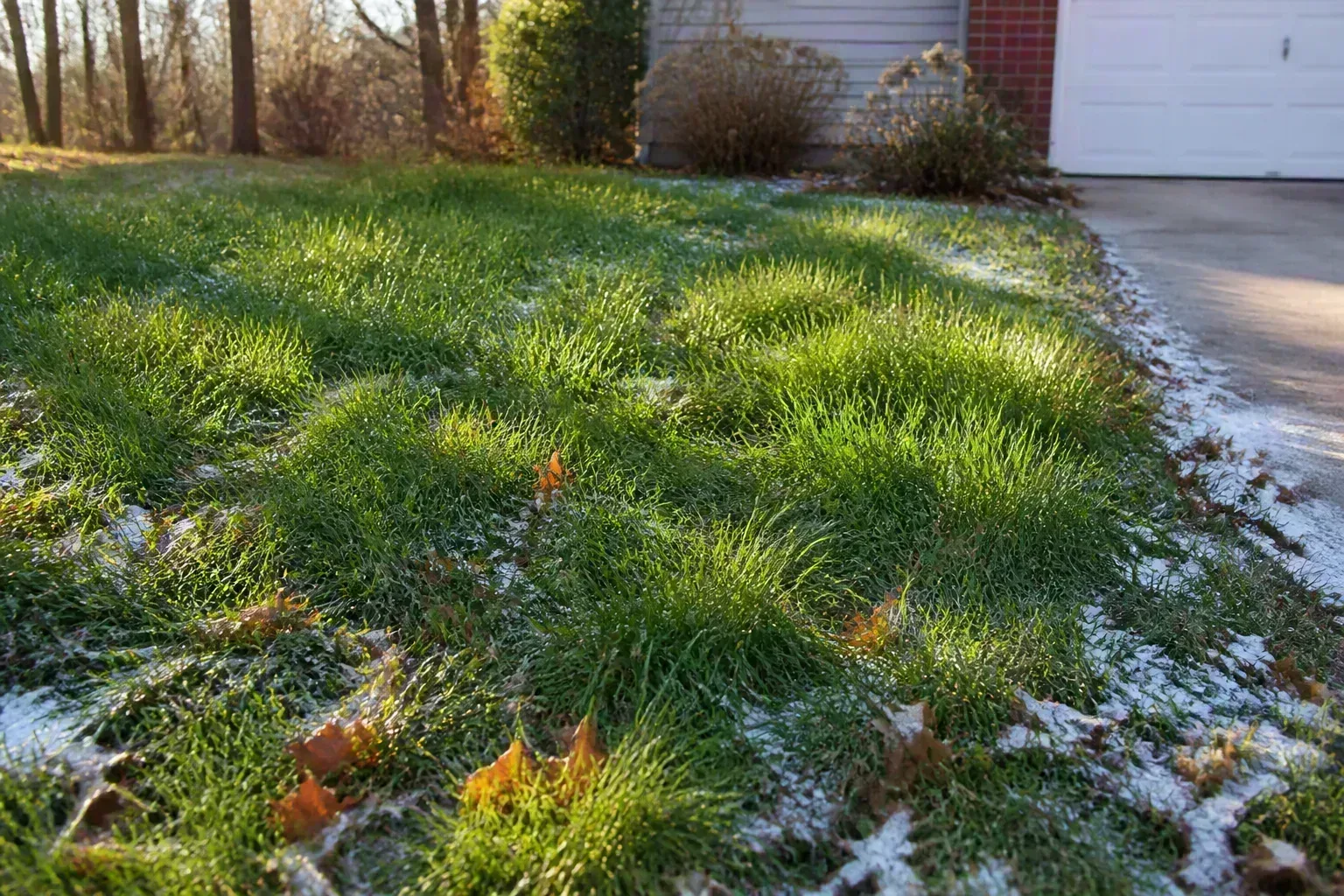
Deicing salt is useful on an icy walk, but the lawn beside that walk is part of the drainage system. When salty slush is shoveled onto the grass, meltwater runs across the root zone, or a spreader throws more product than the pavement needs, the result can be a brown strip that appears weeks later. Deicing salt can injure grass and soil, but the damage is not inevitable: the amount applied, where the snow goes, and whether the soil drains matter more than the mere presence of a winter deicer.
The practical goal is not to make every walkway salt-free at the expense of safety. It is to remove snow first, use the least product that makes the surface safe, keep salty snowmelt out of planting areas, and repair the affected soil only after you know water can move through it.
There is also a wider reason to be careful. Dissolved deicer does not disappear when the pavement dries; it can move with runoff into soil, stormwater systems, and nearby water. A peer-reviewed study of deicer-affected stormwater systems describes sodium chloride washing from impervious surfaces into soil and water pathways (peer-reviewed deicer study). A smaller application at the source is usually easier on the lawn, the drainage system, and your spring cleanup than trying to reverse a large salt load later.
The short answer: salt can injure grass, but use determines the risk
Most rock salt is sodium chloride. In soil, dissolved salts make it harder for roots to extract water, creating a drought-like condition even when the ground looks damp. Sodium can also disrupt soil structure and nutrient availability, while chloride absorbed by plants can contribute to leaf or needle injury. Rutgers Cooperative Extension describes this as water stress, poorer soil quality, mineral imbalance, and potential tissue toxicity (Rutgers Cooperative Extension).
That does not mean a few properly placed grains will kill the lawn. Risk rises with repeated applications, salt-laden snow piled on the turf, runoff that flows toward the same edge, compacted or clay-heavy soil, and late-winter use that leaves little time for precipitation to move salts below the active root zone. Wisconsin Extension notes that landscape damage commonly occurs within roughly 30 feet of treated roads, driveways, and parking areas, although the distance varies with site conditions and salt movement (Wisconsin Extension).
Grass type matters too. Utah State University Extension lists Kentucky bluegrass among lower-tolerance turf choices in its salinity table, with tall fescue, buffalograss, and bermudagrass showing more tolerance in its regional guidance (Utah State University Extension). Those categories are not a license to salt freely: a salt-tolerant grass can still fail when the dose is high or drainage is poor.
How deicing salt reaches the lawn
Salt rarely stays where you intended it to stay. It dissolves into brine as snow melts, travels with surface water, sticks to plow piles, and can be thrown as spray when vehicles pass over treated pavement. A spreader can also send granules beyond the walking path, especially when the application is made in a hurry or during wind.
Soil-borne salt versus salt spray
Soil-borne injury is the main concern for grass beside a driveway or sidewalk. It comes from salty meltwater or from snow that is shoveled onto the lawn. Sodium and chloride accumulate in the soil, and the root zone becomes difficult for grass to use even if it has enough moisture on the surface. The visible damage often follows the edge where water or snow repeatedly lands.
Salt spray is a different pathway. Fast traffic and wind can carry salty droplets onto evergreen foliage, buds, and nearby stems. Penn State Extension says spray can travel much farther than the immediate pavement edge in exposed conditions, while soil-borne salt tends to build more slowly through runoff and infiltration (Penn State Extension). A lawn may show a narrow soil-salt band while a nearby yew, spruce, or arborvitae shows browning on the road-facing side from spray.
The distinction changes the fix. Flushing the lawn may help soil-borne salt if water drains through the root zone, but it does nothing to stop the next spray event. A burlap screen or snow fence may reduce spray and drifting snow, but it cannot correct a compacted soil layer that holds salty water in place.
Why late-winter applications are often worse
Salt applied early in winter has more time to be diluted and moved by later precipitation before plants resume active growth. Late-winter and early-spring applications arrive closer to root activity and bud swell, so there is less time for leaching before symptoms appear. Rutgers and the Ramsey County Master Gardener program both flag late-winter use as a higher-risk timing window (Rutgers Cooperative Extension).
That timing also explains a common surprise: the lawn can look fine under snow and then turn brown when the snow retreats. The injury may not be an immediate burn. It can be a delayed combination of root water stress, nutrient disruption, and winter wear that becomes visible when grass tries to grow.
What salt damage looks like—and what it can mimic
Salt injury is easiest to suspect when the pattern matches the way salt moves. Look for a stripe or series of patches along the driveway, sidewalk, road, or snow-pile location rather than a random circle in the middle of the lawn. The damaged edge may be worse on the downhill side, where meltwater concentrates.
Pattern clues at the driveway and sidewalk edge
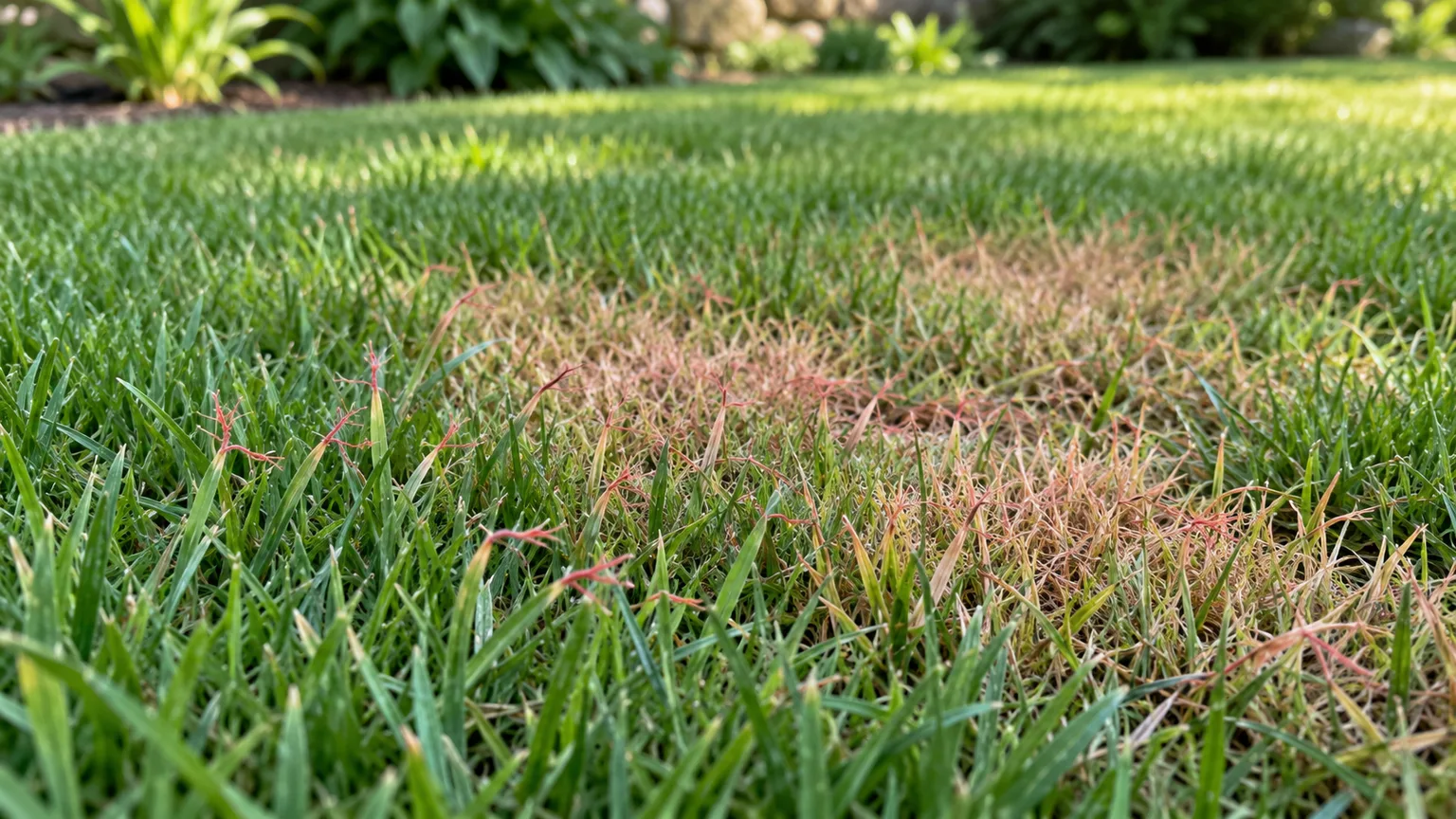
Common clues include brown or straw-colored grass in a narrow band, delayed spring green-up, thin turf where salty snow was piled, and a crisp boundary between affected and unaffected areas. A pale crust on soil or pavement is not proof by itself, but it supports the diagnosis when it appears with a repeated runoff pattern. Salt injury can also show as stunted growth, wilting despite moist soil, and grass that greens up unevenly after the rest of the lawn starts growing.
Inspect the route that water takes, not only the color of the blades. Ask where the snow was pushed, whether the driveway slopes toward the lawn, whether a downspout adds flow to the same strip, and whether a plow deposits a ridge at the edge. If the same strip is damaged each spring, the site pattern is evidence worth acting on.
When brown grass is not a salt problem
Brown turf beside pavement can also result from snow mold, winter desiccation, compacted traffic, pet urine, grubs, poor irrigation, or a hidden drainage problem. A salt diagnosis becomes weaker when the damage is circular, appears far from any treated surface, or affects both sides of the lawn equally despite one-sided runoff.
Do not respond to uncertainty by adding fertilizer. Excess fertilizer creates more soluble salts and can compound an already saline root zone. If a larger area is affected, symptoms persist after a reasonable period of clean-water leaching, or you are deciding whether to remove soil, submit a sample to a lab, or replace a valuable planting, contact your county Extension service for a soil-sampling and turf diagnosis plan.
Gardening Know How makes the same practical point in its salt-injury guidance: salt damage is difficult to reverse once it is established, so prevention and careful rinsing are more reliable than a dramatic rescue treatment (Gardening Know How salt-injury guidance). That is a useful guardrail against treating a brown strip as a cosmetic problem that can be fixed with one product.
Choose a deicing approach that protects the edge
The lowest-risk deicer is the one you do not need because the snow was removed mechanically. Deicers melt or loosen ice; they do not replace shoveling, and more granules do not make a surface proportionally safer.
Shovel first and measure the product
Clear as much loose snow as practical before applying a deicer. Then follow the product label and scatter only enough to break the bond or address the remaining slick areas. Wisconsin Extension gives a useful scale check: a 12-ounce coffee mug of salt can treat about a 20-foot driveway or ten sidewalk squares, depending on the product and conditions (Wisconsin Extension). Treat that as an example of measured application, not a universal rate; the label and actual surface conditions control.
Leave visible space between granules instead of creating a continuous white blanket. Sweep up unused material after the ice has released, keep it out of planting beds, and store the container dry so moisture does not turn it into a clump that gets dumped all at once during the next storm.
Deicers, sand, and traction: what changes
Sand, fine gravel, and similar abrasives provide traction but do not melt ice. They can be useful when the priority is footing rather than rapid melting, but they must be collected or managed after the event so they do not fill drains or become grit in the lawn. A small amount of traction material mixed with a measured amount of deicer can reduce salt use where the pavement and local conditions allow it.
Products marketed as alternatives are not automatically plant-safe. Calcium chloride, magnesium chloride, potassium chloride, urea, and calcium magnesium acetate have different melting performance, costs, temperature ranges, and vegetation risks. Wisconsin Extension recommends considering calcium chloride, magnesium chloride, or calcium magnesium acetate instead of sodium chloride, while Rutgers notes that chloride-free products such as urea can be safer for vegetation but still need responsible use (Wisconsin Extension; Rutgers Cooperative Extension). Read the active ingredient and label rather than relying on a front-of-bag word such as “green.”
Use this simple decision rule before opening the bag:
| Surface condition | First choice near a lawn | Why |
|---|---|---|
| Loose snow or a thin, non-slippery layer | Shovel, brush, or plow | Mechanical removal adds no soluble salts. |
| Thin glaze on a walkway | A measured, label-directed deicer | Treat the slippery spots instead of blanketing the whole walk. |
| Packed ice where footing is the main concern | Abrasive traction material, collected afterward | Sand or fine gravel improves grip without melting, but it can migrate into turf. |
| Repeated ice beside a sensitive bed | Improve drainage and snow handling first | A “safer” chemical cannot solve a runoff path that keeps delivering salt. |
Do not mix products casually. Combining a melting agent with fertilizer, household detergent, or an unlisted additive can change how the material moves and may create a second source of soluble salts. If a product label gives a temperature range, application rate, or restriction for vegetation, follow it even when a neighbor uses a different routine.
Keep salt out of your lawn this winter
Prevention works best when it changes the route salt takes. A lawn beside a walk is not just a border; it is the place where shoveled snow, plow spray, and meltwater often end up.
Control snow piles and meltwater
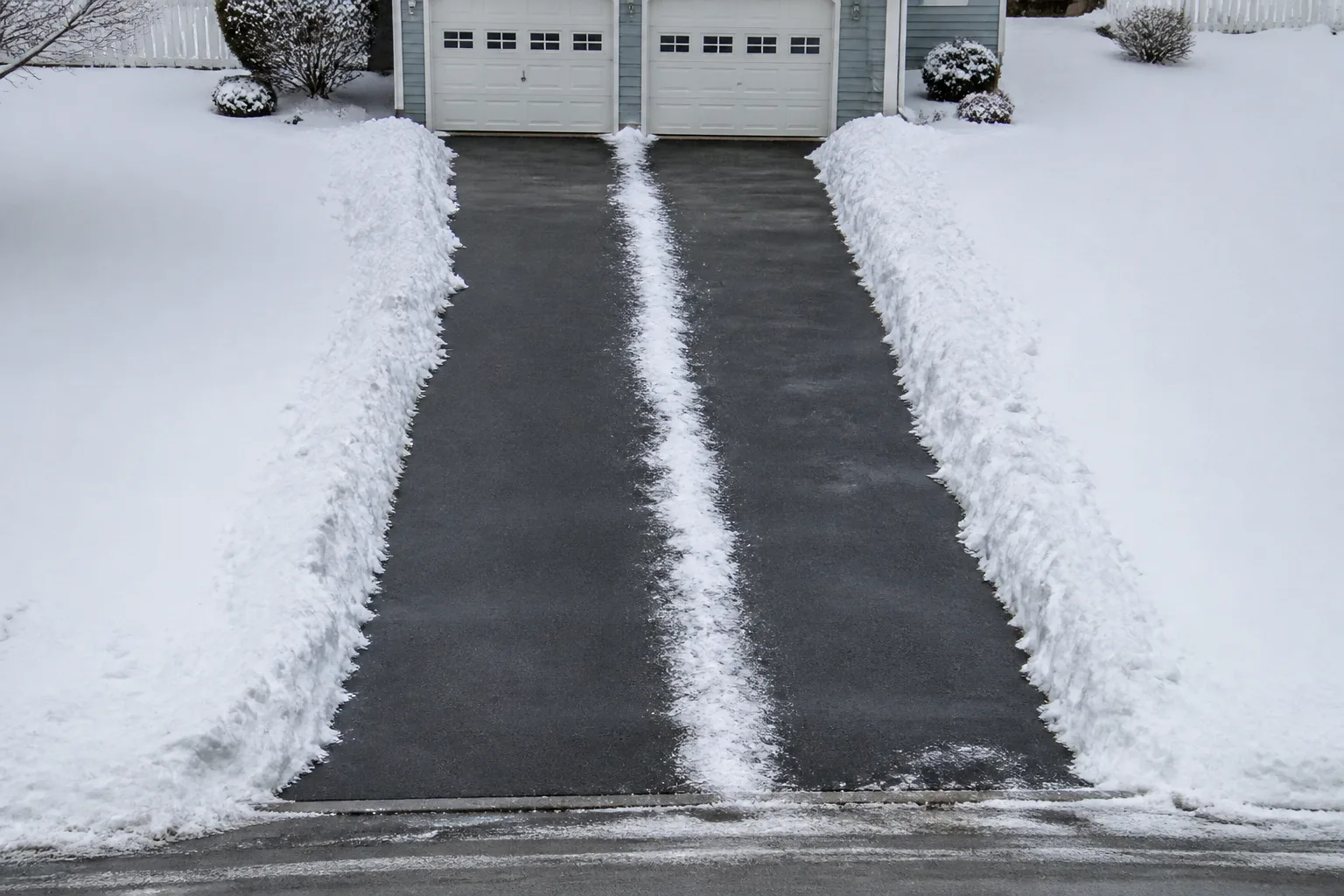
Pile shoveled snow on a surface where it can drain without crossing the lawn or garden bed. Do not push a season’s worth of salty snow into the same low spot, against a hedge, or under the drip line of a salt-sensitive tree. If there is no good location, create a simple plan before the first storm: use a designated snow zone, keep it away from the lawn edge, and leave a clear route for meltwater to move toward a suitable drain or permeable area.
Watch for downspouts and driveway slopes that join the problem. A downspout discharging onto a salt-affected strip can keep moving salts through the root zone long after the pavement is clear. Redirect clean roof water separately when possible, but do not send it toward a neighbor’s property or create an erosion problem.
Use barriers and salt-aware planting
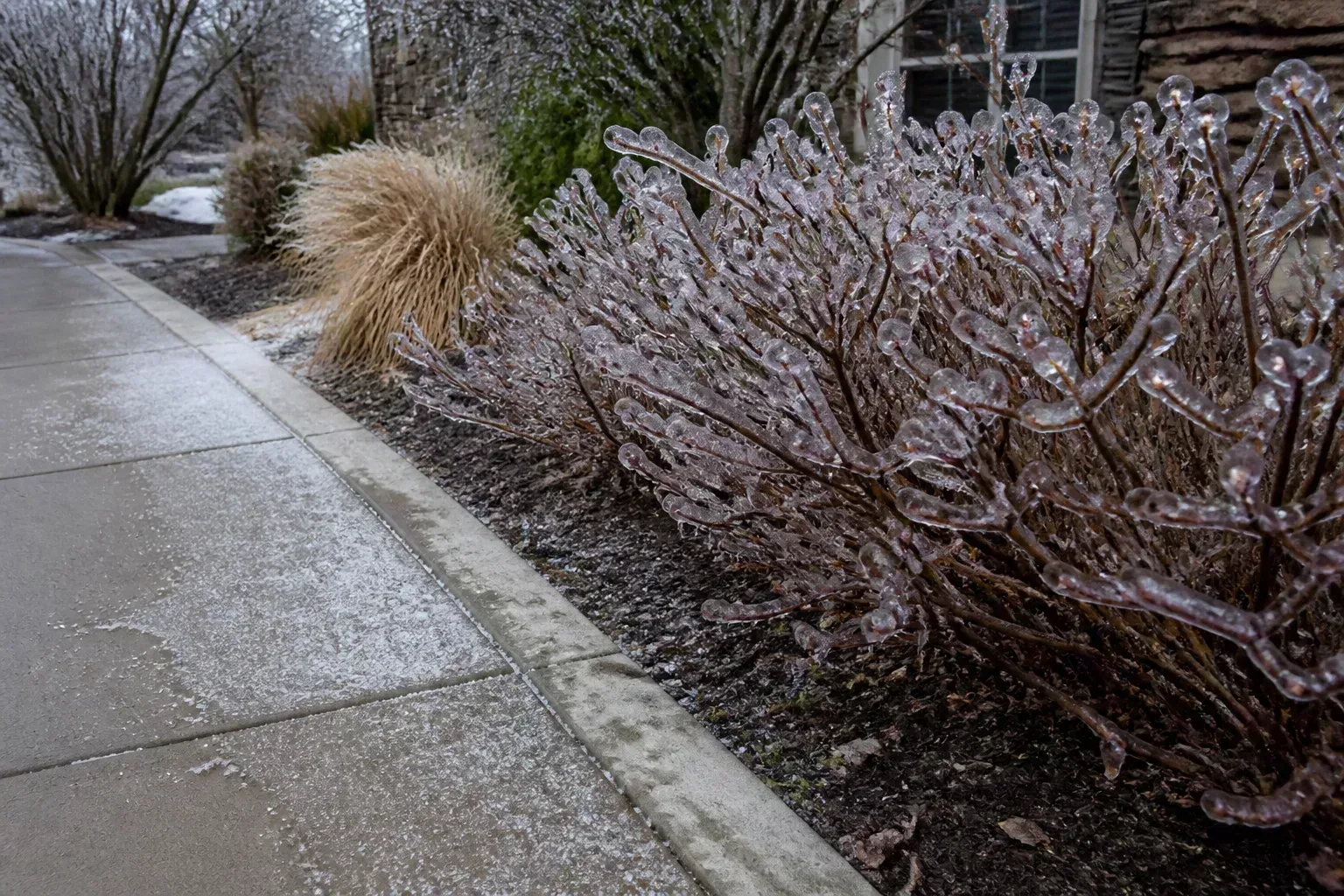
For a narrow edge that repeatedly catches plow spray or drift, a temporary burlap screen, snow fence, or other permeable barrier can reduce exposure. Install it so it does not block sightlines, trap a dangerous snow load, or create a new place for snow to be piled against plants. Remove or adjust it when the risk period ends so airflow and access return.
If a strip is chronically salty, redesigning the edge may be more durable than trying to make sensitive turf perform there. Keep salt-sensitive shrubs and evergreens farther from the pavement, use a non-turf buffer where practical, and choose replacement plants from local salt-tolerance guidance. Salt tolerance is site-specific: a plant that handles salty soil may still be vulnerable to direct spray, drought, or poor drainage.
Repair a salt-damaged lawn in spring
Spring recovery starts with diagnosis, not a bag of seed. The sequence is remove the source, assess drainage, leach with clean water if the site can drain, then decide whether the grass can recover or needs reseeding.
Flush salts only when drainage is adequate
Clean water can move soluble salts below the root zone, but only if the water enters the soil and exits somewhere below it. Utah State University Extension explains that drainage is essential and gives a general rule of thumb: about 6 inches of water can reduce salinity by 50 percent, 12 inches by 80 percent, and 24 inches by 90 percent, applied over several days rather than dumped in one flood (Utah State University Extension). Those are planning estimates, not a promise for every soil or lawn.
There is no amendment that physically carries a soluble salt out of soil without water movement. Gardening Know How’s soil-salinity guidance likewise puts good drainage and clean water ahead of chemical additives, especially in clay soils where salty pockets can persist (Gardening Know How soil-salinity guidance). If water has nowhere to go, the right first repair may be a grade correction or drainage solution, not more irrigation.
First check whether water infiltrates. If puddles remain, the soil is sealed or compacted, or the strip lies over a restrictive layer, repeated irrigation may simply move salty water sideways or keep roots saturated. Improve the drainage route before attempting a large leaching program. On a small lawn edge, this may mean relieving compaction when the soil is workable and correcting grade; larger or persistently wet sites may need a professional drainage assessment.
Use a clean water source. Softened water or irrigation water with high salt content can add to the problem. Run sprinklers in cycles with pauses so water infiltrates instead of running off, and avoid washing salt directly into a storm drain, garden bed, or neighboring property.
Where gypsum helps—and where it does not
Gypsum is calcium sulfate. Calcium can displace sodium from soil exchange sites, but the displaced salts still need water and drainage to leave the root zone. Gypsum is therefore a conditional soil amendment, not a salt neutralizer that makes poor drainage irrelevant.
University guidance varies in its example rates, which is one reason not to apply a large amount by guesswork. Rutgers cites 50 pounds per 1,000 square feet for certain tree drip-line situations, while Penn State gives 40 pounds per 1,000 square feet for affected soil; Wisconsin Extension cautions that poor drainage near roads and pavement limits gypsum’s effectiveness (Rutgers Cooperative Extension; Penn State Extension; Wisconsin Extension). Use a local recommendation and product label for your site rather than combining rates.
Do not use gypsum to correct a problem that has not been identified. It does not replace grading, aeration, clean-water leaching, or removal of the salty snow source. If a soil test does not show a sodium-related issue, adding gypsum may be unnecessary and can distract from the real cause of poor turf.
Reseed after the soil is ready
Wait to reseed until the affected soil is workable, the salty source is controlled, and drainage is good enough for roots to establish. Raking out dead blades can expose the surface, but aggressive removal is not helpful if the soil is still saline or compacted. If living crowns and runners remain, the lawn may fill in after leaching and normal seasonal growth; do not reseed solely because old blades are brown.
When reseeding is justified, choose a grass blend suited to your climate, light, traffic, and salt exposure. Fine fescues are often more tolerant than Kentucky bluegrass, but local Extension guidance and the actual seed label matter. Spread seed into prepared soil, keep the seedbed evenly moist without creating runoff, and delay heavy fertilizer until the new grass is established and a soil test supports the need.
Expect recovery to be uneven. A light exposure on well-drained soil may improve with spring rain and a normal growth cycle, while a heavily salted, compacted edge can stay bare through the season or fail again the following winter. Mark the damaged boundary before it disappears so you can compare the same area after leaching, and do not call the repair finished until the next snow season confirms that the runoff route has changed.
Protect trees, shrubs, and garden beds beside the lawn
The lawn is often the first visible casualty, but salt can travel into beds and affect woody plants for more than one season. Road-facing evergreen foliage may brown after spray, while deciduous trees and shrubs may show delayed bud failure, twig dieback, or poor spring leaf-out. Rutgers notes that conifers can accumulate salt because they do not shed their needles annually, and that plant tolerance varies by species and exposure (Rutgers Cooperative Extension).
Rinse salt from exposed foliage with clean water when conditions allow and the plant’s structure can dry afterward. Do not turn a rinse into a new root-zone flood if the site drains toward another sensitive bed. For new plantings, prioritize location and drainage first; a “salt-tolerant” label cannot overcome a snow pile deposited on the crown every winter.
If the planting edge is repeatedly affected, use a buffer, redirect runoff, and choose species recommended for your region. Savvy Gardening’s practical discussion of salt-tolerant plants is useful for generating ideas, but its plant examples should be checked against local Extension lists and the specific exposure because soil salt and salt spray are not the same stress (Savvy Gardening).
Conclusion: make the pavement safe without salting the yard
Deicing salt is bad for a lawn when enough of it reaches the root zone or foliage to create chemical drought, soil disruption, or direct tissue injury. The best protection is operational: shovel first, measure the product, use traction where it is enough, keep salty snow and meltwater away from the grass, and screen plants where spray is predictable.
If brown strips appear in spring, look at the site pattern before fertilizing or reseeding. Test and improve drainage, leach with clean water only when the soil can carry that water away, treat gypsum as conditional, and reseed after the salt source is controlled. That approach keeps winter surfaces safer while giving the lawn a fair chance to recover.