Lawn Rolling: When to Do It and When to Skip
Learn when lawn rolling helps after frost heaving, seeding, or sod, how to choose a safe weight, and when topdressing, grading, or aeration is the better fix.
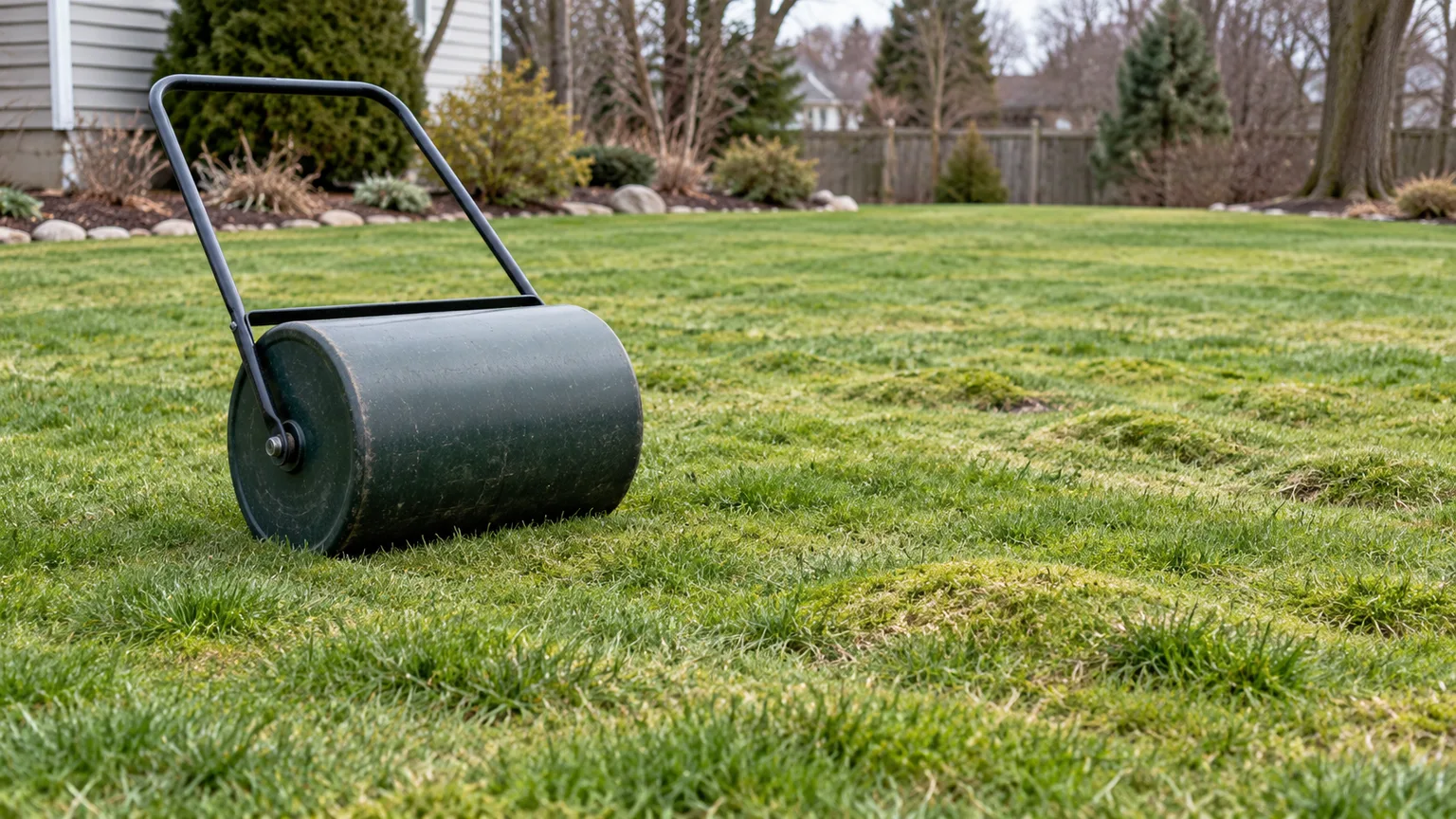
Most established home lawns do not need an annual trip from a lawn roller. Rolling can help in a few narrow situations—especially when frost has lifted a small area, or when you are pressing newly sown seed or fresh sod against the soil—but it will not repair most uneven lawns. On wet or easily compacted ground, a heavy pass can make the problem worse.
Before renting a roller, find out what made the lawn uneven. If the bumps are small and the soil is thawed, workable, and not saturated, a light pass may help. If the surface reflects a deep dip, poor grade, animal activity, traffic rut, or compacted soil, rolling presses the symptom without fixing its cause. The sections below help you make that distinction and choose a better repair when a roller is the wrong tool.
What a lawn roller actually changes
A lawn roller is a smooth, heavy drum that travels over the grass. Its weight presses the turf and the shallow soil surface underneath it. A water-filled model lets you adjust the load; solid steel and tow-behind models are harder to lighten. The equipment looks simple, but the result depends on the soil beneath the grass as much as on the drum.
That pressure can settle slightly lifted turf or improve contact between seed and soil. It does not add soil to a hollow, remove a mound, correct a slope, loosen a compacted root zone, or stop animals from digging. A roller can make an existing lawn appear flatter for a while, but smoothing the surface and repairing the ground are different jobs. If an area sinks again after rain or use, the lawn needs diagnosis rather than another pass.
The distinction also matters when shopping for a tool. A smooth drum roller compresses the surface. A rolling lawn aerator has spikes or tines that puncture the turf, and it is a different implement with a different purpose; Homes & Gardens’ example of a rolling spike aerator illustrates why the tools should not be confused. Penn State Extension’s lawn establishment guidance describes lightweight rollers for firming seedbeds and smoothing newly laid sod, while core aeration is a separate operation used during renovation. A roller should not be treated as a substitute for an aerator.
When lawn rolling is worth considering
Rolling is most defensible when you can identify a temporary, shallow irregularity and can correct it without forcing the soil down. A lawn that has a few slightly raised patches after winter thaw is a more plausible candidate than one with large hollows, old ruts, or a lumpy grade. It can also be useful during lawn establishment, when the aim is contact rather than long-term leveling.
| Situation | Is rolling a reasonable choice? | What to do |
|---|---|---|
| Small area lifted by freeze-thaw movement | Sometimes, if soil is thawed and only lightly moist | Test a light pass; stop if the drum sinks or leaves tracks |
| Freshly distributed grass seed | Often, with a lightweight roller | Press seed against soil; follow the seed label and avoid burying it |
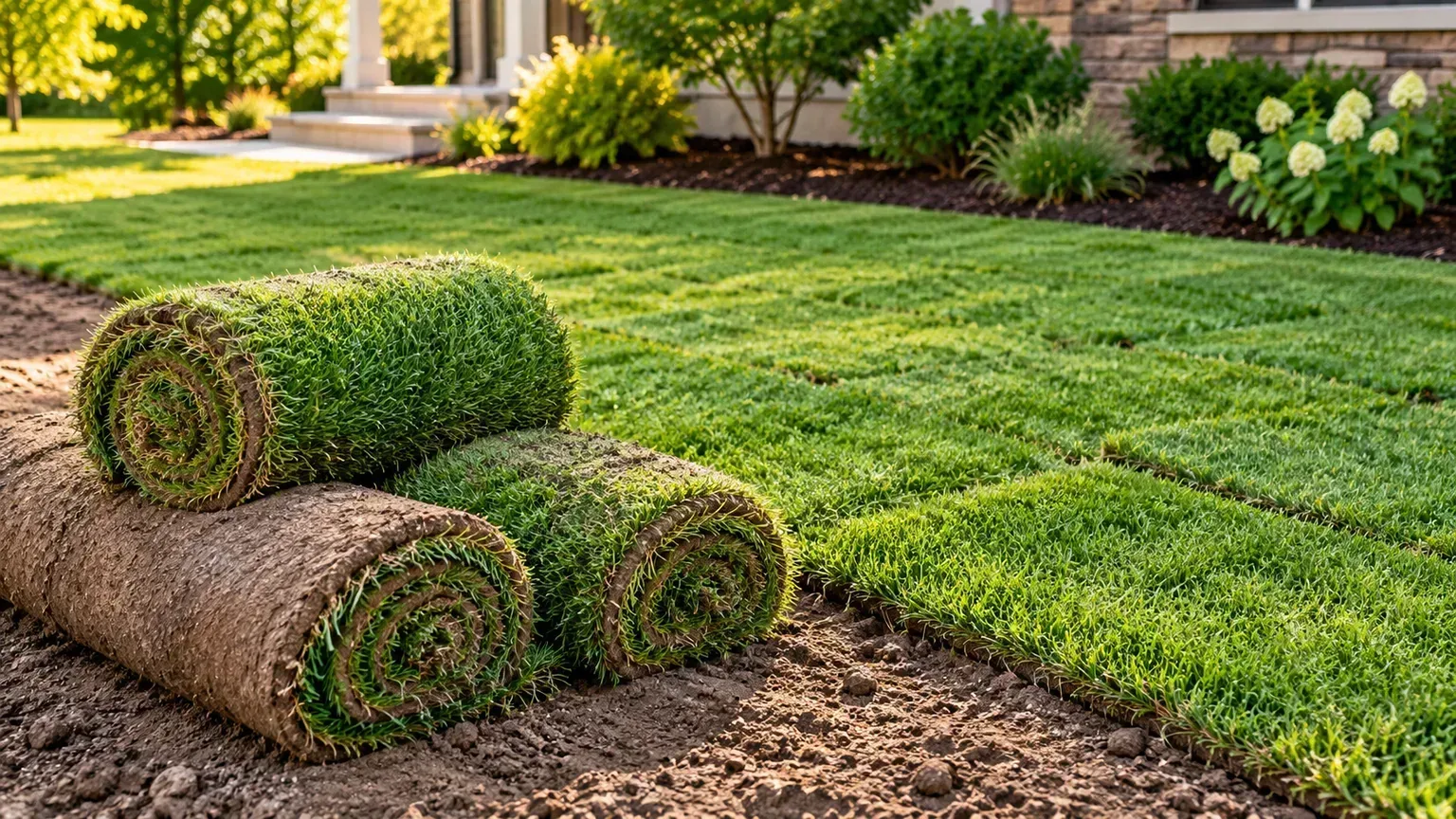
| Newly laid sod | Often, as a light finishing step | Smooth the surface before watering; do not compress a wet bed |
| Persistent low spot, mound, or slope | No | Topdress or regrade the soil to match the surrounding lawn |
| Grub, mole, traffic, or drainage damage | No | Identify and correct the cause before repairing turf |
The best cases are frost lift, seed, and new sod
Freeze-thaw cycles can lift small sections of turf so they sit slightly proud of the surrounding surface. If the roots and grass are otherwise healthy, and the soil has thawed enough to be workable without being wet, one light pass may settle that shallow lift. It is a limited correction: a roller will not solve a deeper hump or an underlying grade problem, and it should not be used while the lawn is frozen or soft enough to rut.
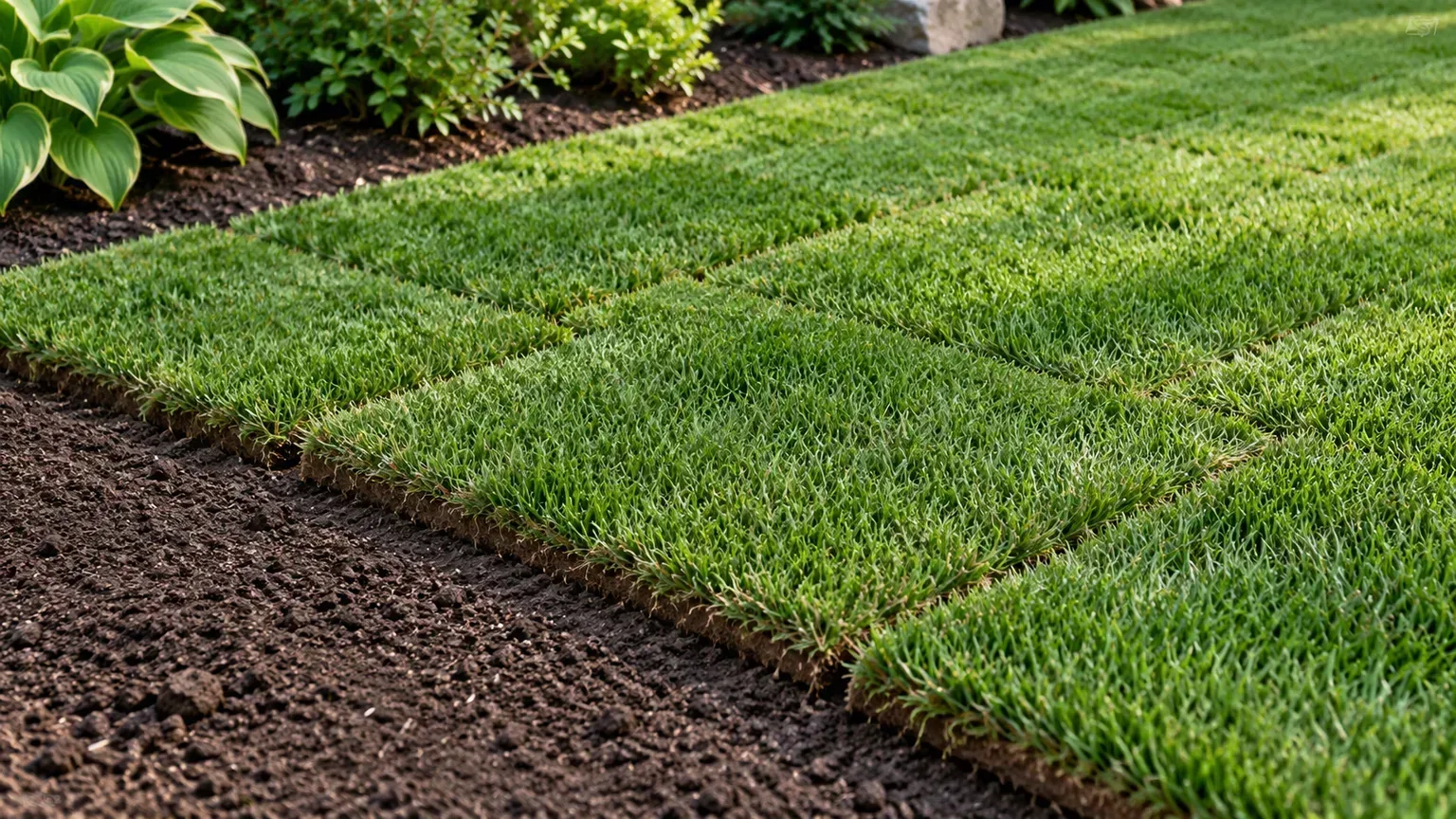
New seed and sod are different cases because the goal is firm contact. Seed needs to touch soil to take up moisture and germinate, while sod needs close contact with the prepared bed so the roots can establish. Penn State Extension advises a lightweight roller after seeding and a light roller after laying sod, with the seedbed surface dry enough not to collect seed and soil. That is a finishing step in establishment, not a recommendation to roll a mature lawn every spring.
When a roller will not solve the problem
Rolling works only on a symptom that is shallow and compressible. A roller cannot restore a missing volume of soil, hold back water, prevent tunneling, or loosen a compacted layer. If a lawn has a consistent slope or a depression that collects water, rolling may briefly change the surface profile while leaving the drainage and grade unchanged. In some cases, the drum can deepen the low area because the soil around it compresses unevenly.
It is also a poor response to recurring bumps caused by insects or animals. University of Minnesota Extension’s turf diagnosis guide notes that turf damaged by white grubs can pull away from its roots and roll back like a carpet; the roots are largely missing. That is a diagnostic clue, not a surface-leveling opportunity. Pressing damaged turf back down cannot replace the roots or deal with the pest. Inspect the damaged edge and address the cause before patching or reseeding.
Diagnose what made the surface uneven
Walk the area when the grass is dry enough to see the contour. Look for a pattern: narrow ruts often point to wheels or repeated foot traffic; scattered ridges or soft spots may reflect animal activity or settling; a low area that stays wet suggests drainage or grading; and turf that lifts easily may have root damage. A board or straight rake laid across a short section can show whether you have a small bump or a broad change in grade. Mark the area so you can check whether it changes after rain or normal use.
Before rolling, press a shoe into the soil at the edge of the affected patch. If it leaves a deep print, the ground is likely too soft for a heavy drum. If the area is hard, dry, and does not yield at all, a roller may simply ride over it or push down turf without correcting the shape. Either result is a reason to stop and reassess. If you suspect grubs, loosen a small square at the boundary between healthy and damaged grass and inspect the roots and soil; do not assume every brown or uneven patch has the same cause.
Check the soil before rolling
Soil condition is the main safety check because the same roller can have different effects in different yards. The tool’s weight, the soil’s moisture, its texture, the amount of organic matter, and the recent weather all change how much the ground compresses. A roller that glides over a firm sandy loam can leave deep tracks in wet clay. There is no universal safe fill level for a water drum, and a claim such as “fill it one-quarter full” cannot account for different roller sizes and soil conditions.
University of Minnesota Extension explains that wet soils are especially vulnerable to compaction: pressure reduces pore space and restricts water movement through the soil. That guidance is about soil structure broadly, but the mechanism matters under turf too. Compaction can make it harder for water and air to move through the root zone, so a lawn that already drains poorly should not receive extra weight just to make the surface look smooth.
Moisture and texture set the limit
Aim for soil that is slightly moist and firm enough to support the roller. Do not roll when water is standing, the surface smears underfoot, or your steps leave pronounced impressions. If rain has just saturated the lawn, wait for drainage and drying; an afternoon with sunshine does not guarantee that the soil below the grass has recovered. A small test strip is more informative than the calendar.
Clay soil deserves extra caution because its fine particles pack tightly under pressure, particularly when wet. A water-filled drum adds substantial weight, and repeated passes can compound the damage. Sandy soils may drain faster but are not immune to compaction, especially where vehicles or frequent foot traffic have already compressed the surface. If the lawn is consistently hard, puddles after ordinary rain, or grows poorly in high-traffic strips, investigate compaction and drainage rather than adding a roller.
Grass type and recovery timing matter
Grass species and local climate change when turf is resilient enough to recover. Cool-season lawns in northern regions and warm-season lawns in hotter regions do not share the same growth calendar, and mixed lawns may have different recovery rates across sun and shade. Use the period when the grass is actively growing and the soil has thawed, not a universal date or temperature. Avoid rolling dormant turf, turf stressed by drought or heat, and grass that has not rooted after establishment.
The aim is not to choose a grass type that can tolerate heavy rolling. Even robust turf cannot protect soil from excessive pressure. If the lawn repeatedly needs rolling to stay level, the cause is probably persistent—traffic, water movement, settling, or an uneven base—and should be repaired instead of addressed with a heavier tool. Think of grass recovery as one condition for a light pass, not permission to use more force.
Choose a safe time to roll
For a small frost-heaved patch, wait until the soil has fully thawed and the grass is beginning to recover. Then wait until the ground is firm enough to carry your weight without deep footprints. Early spring can fit that sequence in some regions, but not if meltwater has left the lawn saturated. A fixed temperature threshold is less useful than the actual state of the soil and turf.
For seed or sod, roll as part of installation rather than on a later maintenance calendar. Penn State’s establishment guidance treats firming as a step in preparing the seedbed and recommends smoothing sod with a lightweight roller before watering. Once the lawn is established, do not repeat that setup step simply because spring has arrived. Gardening Know How likewise describes rolling as occasional and situation-dependent, not a required annual treatment.
Avoid rolling before a heavy rain, on frozen ground, during active drought stress, or when grass is dormant and brittle. Skip it when a lawn has just been saturated by irrigation or rain. If you cannot tell whether the soil is too wet, wait. Postponing a cosmetic job costs little; compacting a lawn can create a more persistent drainage and root-growth problem.
How to roll a lawn without overdoing it
If diagnosis and conditions both support rolling, keep the job small and controlled. The goal is to settle a minor lift or make contact with seed or sod, not to iron every variation out of a living landscape. A typical residential lawn does not need a repeated grid of heavy passes. Start with a test, inspect the result, and stop as soon as the intended contact or small surface adjustment has been achieved.
Start with the lightest practical roller
Choose a smooth-drum roller that is empty or has only a small amount of water in it. Check the manufacturer’s instructions for how to fill and operate it. Do not add sand, stones, or other weight unless the roller is designed for that material. Start with the lightest setting that lets the drum travel evenly; if it is too light to make a difference, that may mean the lawn needs a different repair, not a heavier roller.
Clear branches and debris, flag irrigation heads and shallow utility covers, and mow only if the grass is overgrown enough to hide the surface. Avoid turning sharply on the lawn because the drum can twist or shear turf. Plan straight lanes and turn on a path or firm surface where possible. If you are using a roller on a newly prepared seedbed, keep the drum clean and follow the seed or sod instructions for the specific grass mix.
Make one measured pass, then reassess
Walk at a normal, steady pace and let the drum’s weight do the work. Do not lean hard on the handle to force the roller down. Make a single pass over the target area, using only enough overlap to avoid leaving unrolled strips. Stop at the edge rather than dragging the drum across a turn. If the lawn is large, split it into manageable sections so that you can compare how the ground responds rather than losing track of repeated passes.
After the first pass, look for the result you actually wanted: a slightly raised patch has settled; seed has made contact; or sod seams sit evenly against the soil. Also check for warning signs—tracks, shiny smears, displaced grass, standing water, or a depression that became more obvious. If the surface did not improve, do not keep adding water and running the same lanes. Use a straight board to reassess and choose a repair method. The absence of a dramatic visual change is not a reason to increase pressure.
Rolling a new lawn: seed versus sod
New lawns can benefit from firm soil contact, but seed and sod need different treatment. In both cases, prepare the grade first; a roller is not a shortcut for smoothing clods, correcting a slope, or settling a poorly prepared base. A surface should be even and firm while retaining enough pore space for roots, water, and air. Pressing it until hard is not the goal.
Seed: press it into contact, not out of sight
After seeding, a lightweight roller can improve contact between seed and soil on a prepared, level surface. Penn State Extension recommends rolling the area after seed has been spread and notes that the roller and soil should be dry enough to avoid collecting seed. Follow the seed package for depth and surface coverage; small grass seed should not be buried deeply under a heavy wheel. For a small patch, gently raking seed into the top layer may provide enough contact without renting equipment.
Rolling is not a substitute for good seedbed preparation. Break up large clods, remove debris, and firm the surface before sowing so that seed does not wash into hollows. If the existing lawn has thick thatch, the seed may not reach soil even after a roller passes over it. Use the appropriate renovation steps—such as raking, slit seeding, or core aeration where needed—then keep the seedbed evenly moist according to the seed instructions. Avoid walking or repeatedly rolling over the area after germination begins.
Sod: smooth seams without compacting the bed
Fresh sod should sit on soil that is smooth and firm but not compacted. Penn State Extension’s guidance describes a light roller after installation and before the first thorough watering, followed by careful irrigation to wet the soil below the sod. That pass can help smooth the surface and bring the turf into contact with the prepared bed. It cannot compensate for hollows, air gaps, uneven soil, or a base that is too wet.
Work carefully around seams and edges, and do not keep rolling after the sod is evenly seated. Once watering begins, avoid traffic that could make depressions in the softened soil. Keep the sod watered and limit use until it roots into the bed. If the lawn has deep irregularities beneath the sod, lift and correct the underlying soil; pressing the finished turf harder will not produce a stable grade.
Better fixes for dips, ruts, and compacted ground
When the lawn’s contour comes from missing soil or a deeper defect, repair the soil instead of flattening the grass. The scale matters. A small dip that does not affect drainage can often be improved gradually while turf remains in place. A deeper hollow, a slope that directs water toward a building, or a rut that returns after rain needs more thorough grading. If a grade change may affect drainage near a foundation, buried lines, or neighboring property, consult a qualified landscape or drainage professional before moving soil.
Topdress shallow lows; repair deeper grade issues
For a shallow low spot, spread a thin layer of screened topsoil or an appropriate soil-compost mix over the area, leaving grass blades visible. Work it in lightly with the back of a rake. Gardening Know How recommends small lifts rather than burying the grass; the same principle helps prevent smothering and allows turf to grow through the dressing. If the low spot needs more than a thin layer, build it up in stages as the grass grows through, or lift the turf and add soil underneath it.
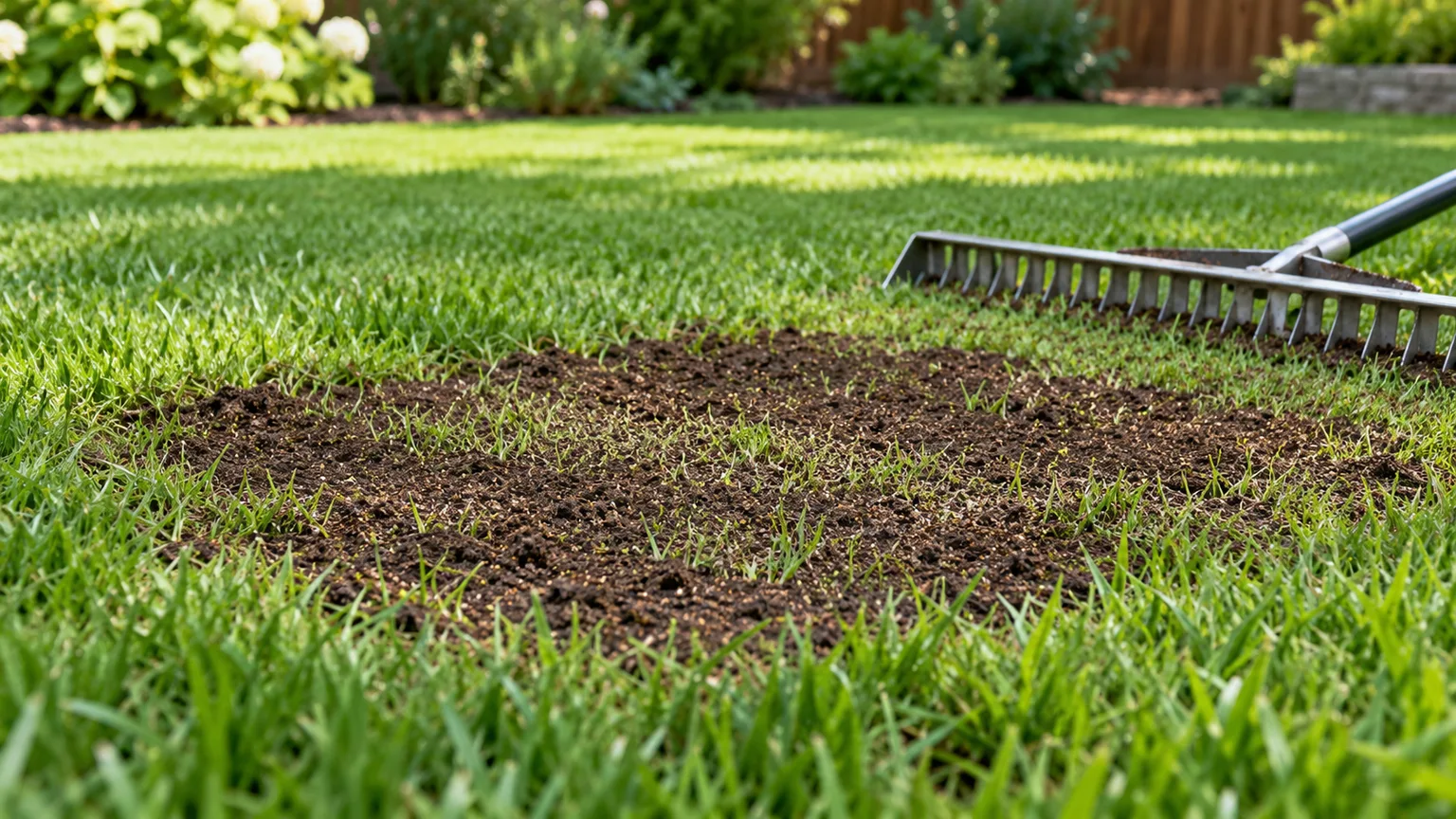
Do not use a roller to force topdressing soil into a hollow. The soil belongs in the low area, not compressed across the whole lawn. For a high spot, remove excess soil and reset the turf; for a settled area, lift the sod, add and firm suitable soil in layers, then replace the turf. A broad or recurring grade problem calls for correction across the affected area so water drains as intended, not a series of isolated passes that hide the slope.
Aerate compaction and solve pests or drainage first
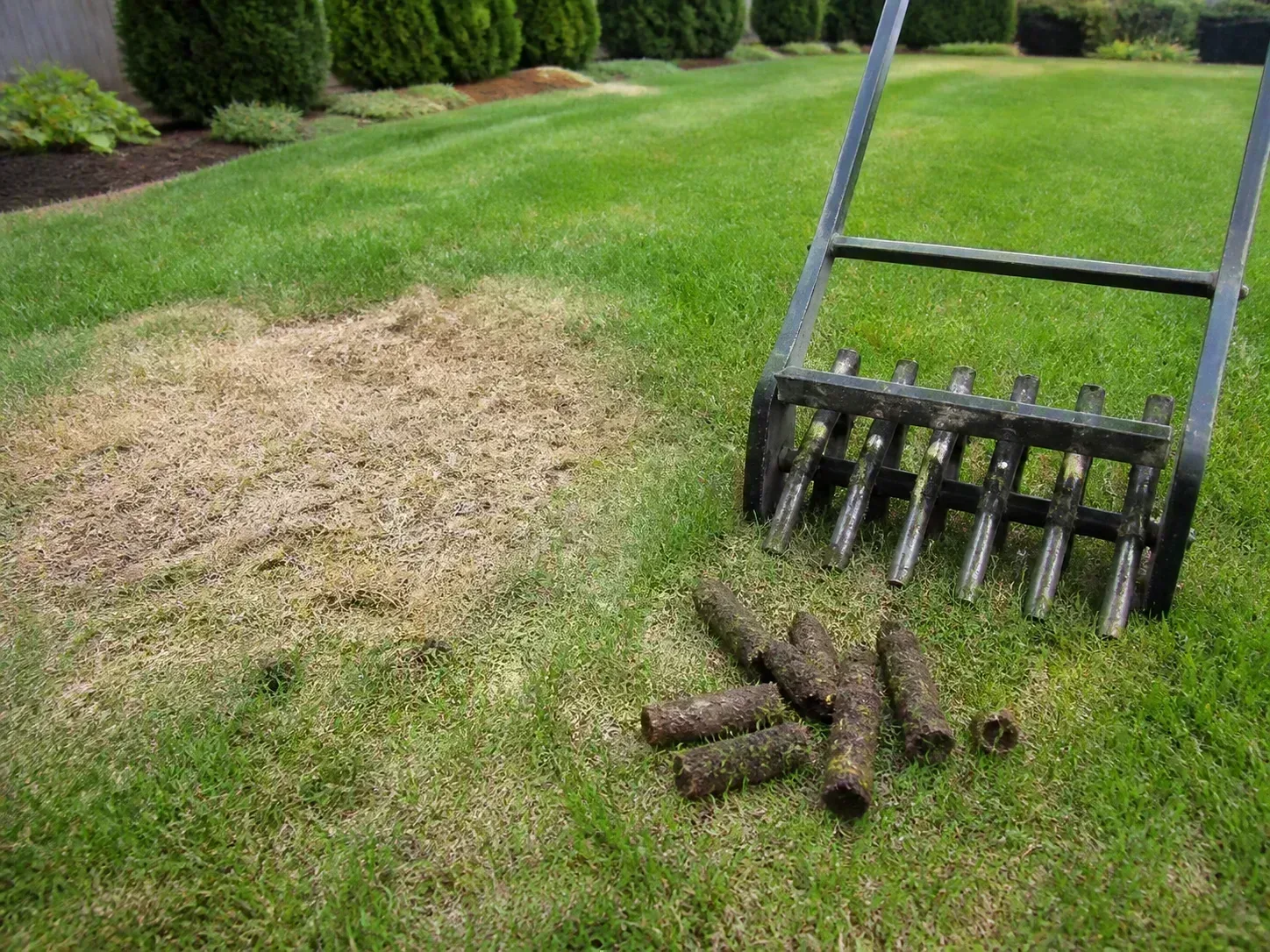
If the lawn is hard underfoot, drains slowly, or has weak growth in a high-traffic area, investigate compaction. Core aeration removes small plugs of soil and opens pathways through the compacted layer; a smooth roller adds pressure instead. The right timing depends on whether your turf is cool-season or warm-season and on whether it is actively growing. Where traffic caused the problem, reduce repeated use or define a path so the same soil does not compact again.
For mole activity, grubs, or other digging damage, identify the cause before treating or patching. Minnesota Extension’s grub guidance uses turf that lifts easily and has missing roots as a clue to inspect; it recommends examining a sample at the boundary between damaged and healthy turf. A lawn that stays wet needs a drainage or grade assessment, while traffic ruts may need soil replacement and reseeding. After correcting the cause, restore the surface with suitable soil and seed or sod, then keep traffic off it while it establishes.
Conclusion
Roll your lawn only when the job is small and specific: settle shallow frost lift, press newly spread seed into contact, or seat fresh sod on a properly prepared bed. Use the lightest roller that can do that job, wait until the soil is thawed and firm rather than saturated, and make one pass before checking the result. There is no routine yearly schedule that suits every lawn.
For low spots, ruts, mole or grub damage, poor drainage, and compacted soil, diagnose and fix the underlying cause. Topdressing can gradually improve a shallow dip; deeper grade changes need soil moved; compaction calls for an aeration and traffic plan. A roller is useful when it is a light finishing tool, but it is not a substitute for making the ground right.