Penny Mac Hydrangea Care: Planting, Pruning & Color
Plant and care for Penny Mac hydrangea with practical, clear advice on site, soil pH, watering, feeding, pruning, winter damage, and repeat flowering.
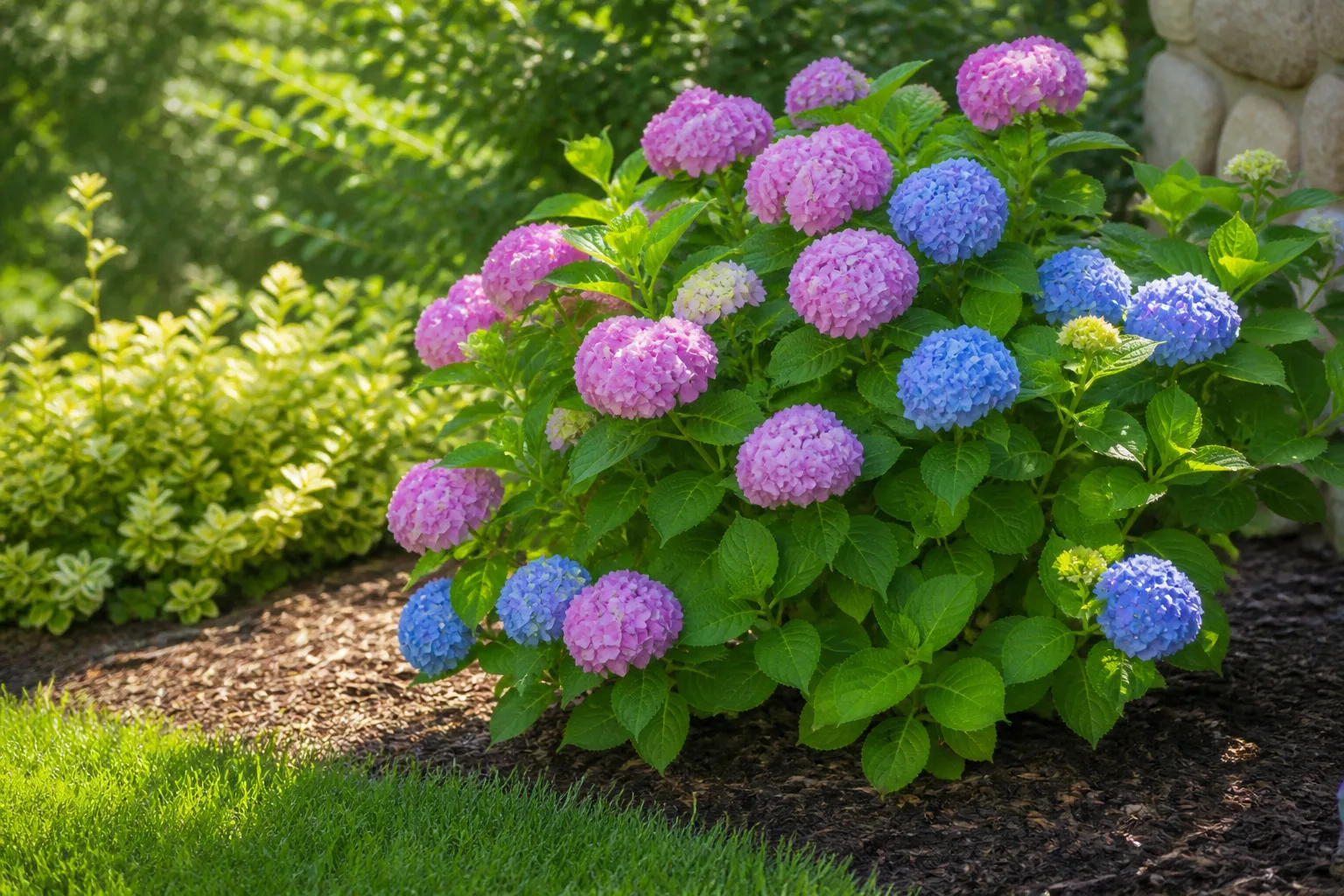
Penny Mac is a reblooming bigleaf hydrangea, Hydrangea macrophylla, grown for rounded clusters of pink, blue, or violet flowers and a long summer display. It is more forgiving of some winter bud loss than a once-blooming bigleaf type, but it is not immune to cold, late frost, drought, or pruning mistakes. Good results start with a site that gives it morning sun, afternoon shade, evenly moist soil, and enough room to grow without being cut back every year.
The plant is often sold as a low-maintenance shrub, but “reblooming” is not a promise that it will flower continuously in every garden. A shrub may produce an early flush from buds carried over winter, then add flowers on new growth if the season is long enough and the plant is healthy. Use the guidance below to protect both opportunities rather than trying to force blooms with heavy fertilizer or hard pruning.
Penny Mac Hydrangea at a Glance
| Trait | What to expect |
|---|---|
| Botanical name | Hydrangea macrophylla ‘Penny Mac’ |
| Type | Deciduous bigleaf shrub |
| Typical mature size | About 4 to 6 feet tall and 3 to 4 feet wide; allow for local variation |
| Light | Morning sun with afternoon shade or dappled light |
| Soil | Moist, fertile, and well drained |
| Flower colors | Usually pink, blue, or intermediate tones; color depends partly on aluminum availability |
| Bloom season | Commonly early summer into fall, with timing shaped by climate and plant condition |
| Main pruning caution | Avoid fall and winter cuts that may remove next year’s old-wood buds |
Use the mature-size range as a starting point, not a guarantee. Soil, climate, age, and growing conditions affect the shrub’s eventual width, so check the plant tag from your nursery and leave space for air to move through its branches.
Keep pets from chewing the shrub. The ASPCA lists hydrangea as toxic to dogs, cats, and horses, but its entry identifies H. arborescens rather than Penny Mac; the entry therefore does not establish a cultivar-specific dose or risk. If an animal eats any hydrangea, contact a veterinarian for case-specific advice. ASPCA’s hydrangea listing
What Makes Penny Mac Different
Penny Mac is a bigleaf hydrangea selected for repeat flowering. Like other reblooming H. macrophylla cultivars, it can carry flower buds through winter on older stems and may form additional buds on growth produced in the current season. The old-wood crop is usually the first display; the later flush is a useful bonus, especially when spring cold damages some overwintered buds.
That distinction matters because it changes the pruning risk, not the basic care. Reblooming does not make it safe to shear the shrub in autumn or cut all its stems down in early spring: you could remove the first set of buds and still get a weak second flush if the summer is short, hot, or dry. Penn State Extension explains that bigleaf hydrangeas traditionally bloom on old wood and that newer reblooming cultivars can flower on both old and new wood; Proven Winners similarly recommends treating rebloomers conservatively when pruning.
Penny Mac’s rounded flower clusters make it a natural focal shrub beside a porch, along a partly shaded border, or beneath a high-canopied tree. It also grows in a large container, although a pot dries and freezes faster than garden soil and requires more frequent monitoring. Treat it as an outdoor deciduous shrub rather than a houseplant; a winter rest and seasonal weather are part of its normal cycle.
Choose a Site With Morning Light and Afternoon Cover
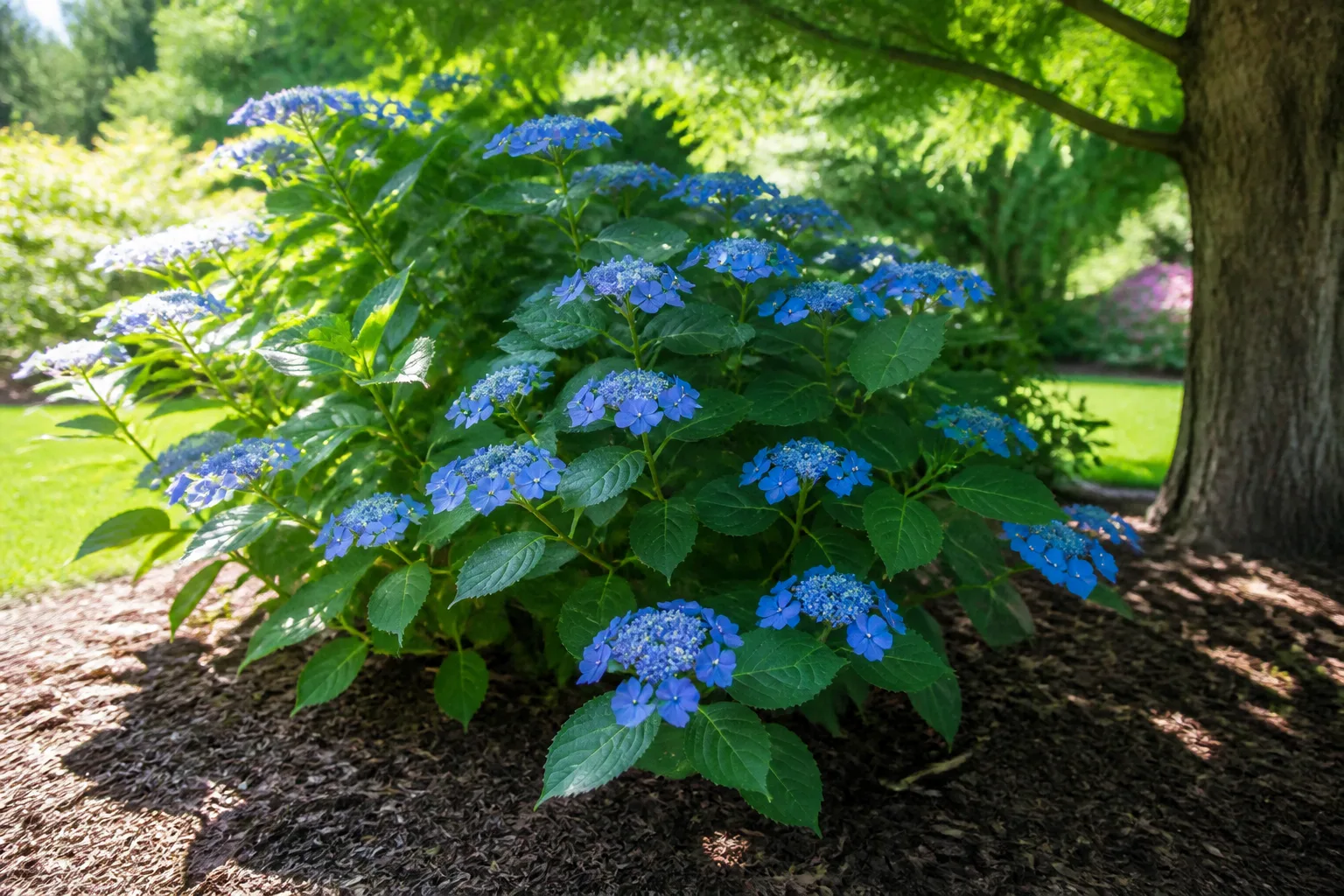
Give Penny Mac bright conditions without placing it where strong afternoon sun bakes the foliage and flowers. Morning sun followed by afternoon shade is a dependable arrangement in warm-summer regions; dappled light under an open tree canopy can also work if the shrub still receives enough light to flower. In cooler climates, it can tolerate more sun when roots stay moist, but a hot, exposed wall or paved corner increases heat and water stress.
Too much shade can be as disappointing as too much sun. A plant under dense evergreen branches may grow leaves and stems but set fewer flowers, while intense midday and afternoon sun may cause repeated wilting, scorched leaf edges, or faded blooms. Before moving an established shrub, watch the spot across a full day and note direct sun hours, reflected heat, and how quickly soil dries after rain.
Choose a sheltered location if winter winds or late spring frosts are common. A fence or building can reduce wind exposure, but do not crowd the shrub into a narrow gap where leaves remain wet and air cannot circulate. The University of Georgia Cooperative Extension recommends morning sun, afternoon shade, and moist, well-drained soil for bigleaf hydrangeas in its UGA Cooperative Extension growing guide.
Plant Penny Mac at the Right Depth
Plant in spring or early fall when the soil is workable and temperatures are moderate. In cold-winter areas, spring planting gives new roots more time to establish before the ground freezes; in mild regions, fall planting can work if the shrub has several weeks to settle in before the hottest or coldest weather. Avoid planting during a heat wave unless you can keep the root ball evenly moist.
Dig a hole about as deep as the root ball and roughly twice as wide. Loosen circling roots gently, set the top of the root ball level with the surrounding soil, and backfill with the soil you removed. Planting too deep can bury the crown and hold excess moisture around the stems; a hole that is too shallow lets the root ball dry quickly.
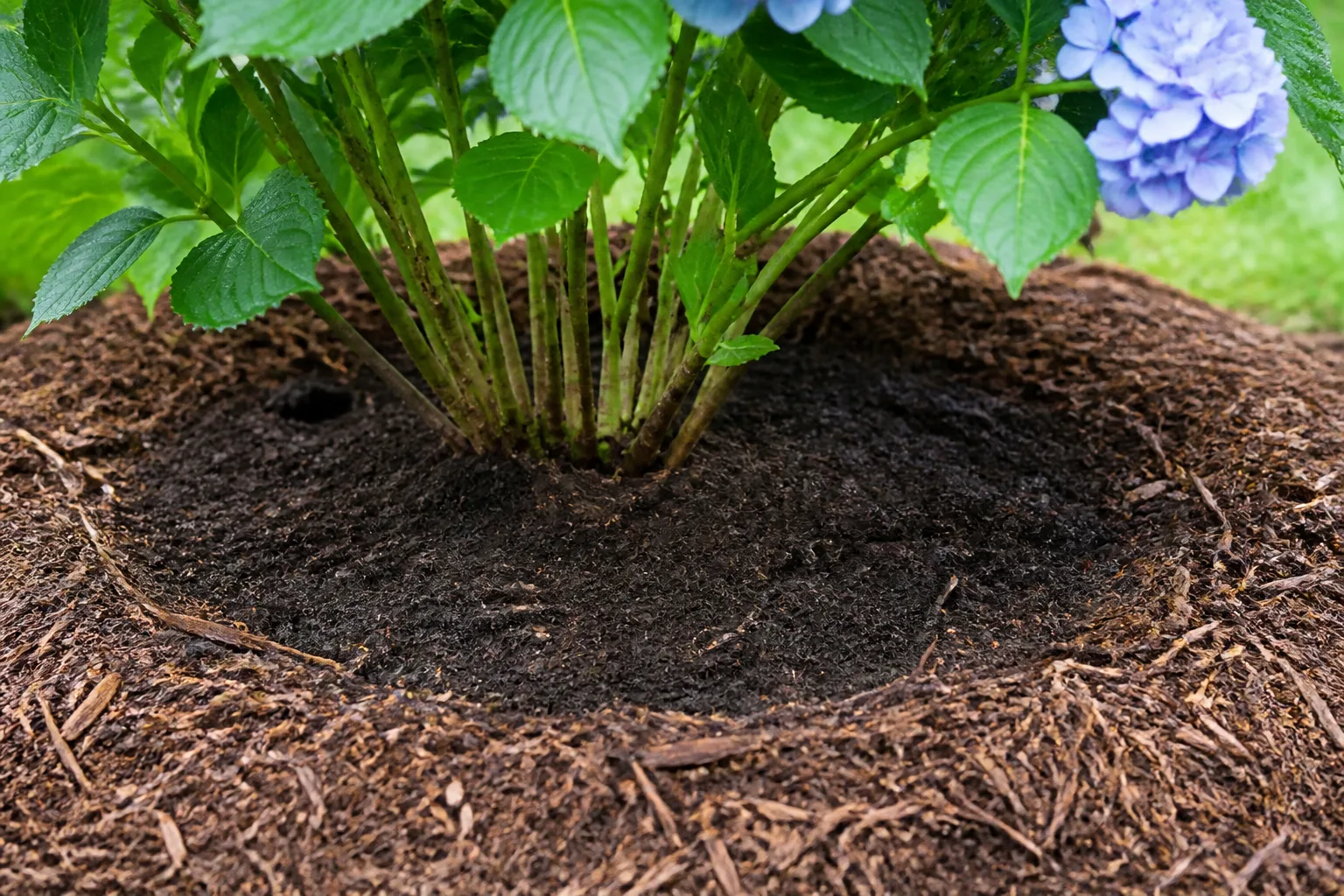
Water thoroughly after planting so soil settles around the roots, then spread a 2- to 3-inch layer of organic mulch over the root zone. Keep mulch a few inches away from the stems rather than piling it against the crown. If you are planting more than one shrub, use the expected mature width on the label to set spacing instead of placing young plants shoulder to shoulder.
For a container, choose a pot with drainage holes and enough volume to hold the root ball with room for a few years of growth. Use a quality outdoor potting mix rather than garden soil, which can compact in a pot. A larger container buffers swings in heat and moisture better than a small decorative pot, but it still needs drainage and more frequent checks than an in-ground plant.
Soil, Drainage, and Flower Color
Penny Mac needs soil that holds moisture without staying saturated. A loamy garden soil with compost can help balance water retention and drainage, but adding a small quantity of amendment to a planting hole will not fix a site with a high water table or compacted clay across the whole bed. If a hole fills with water after rain or remains soggy for days, choose a better site or build a broad raised bed rather than trying to create a gravel layer beneath the root ball.
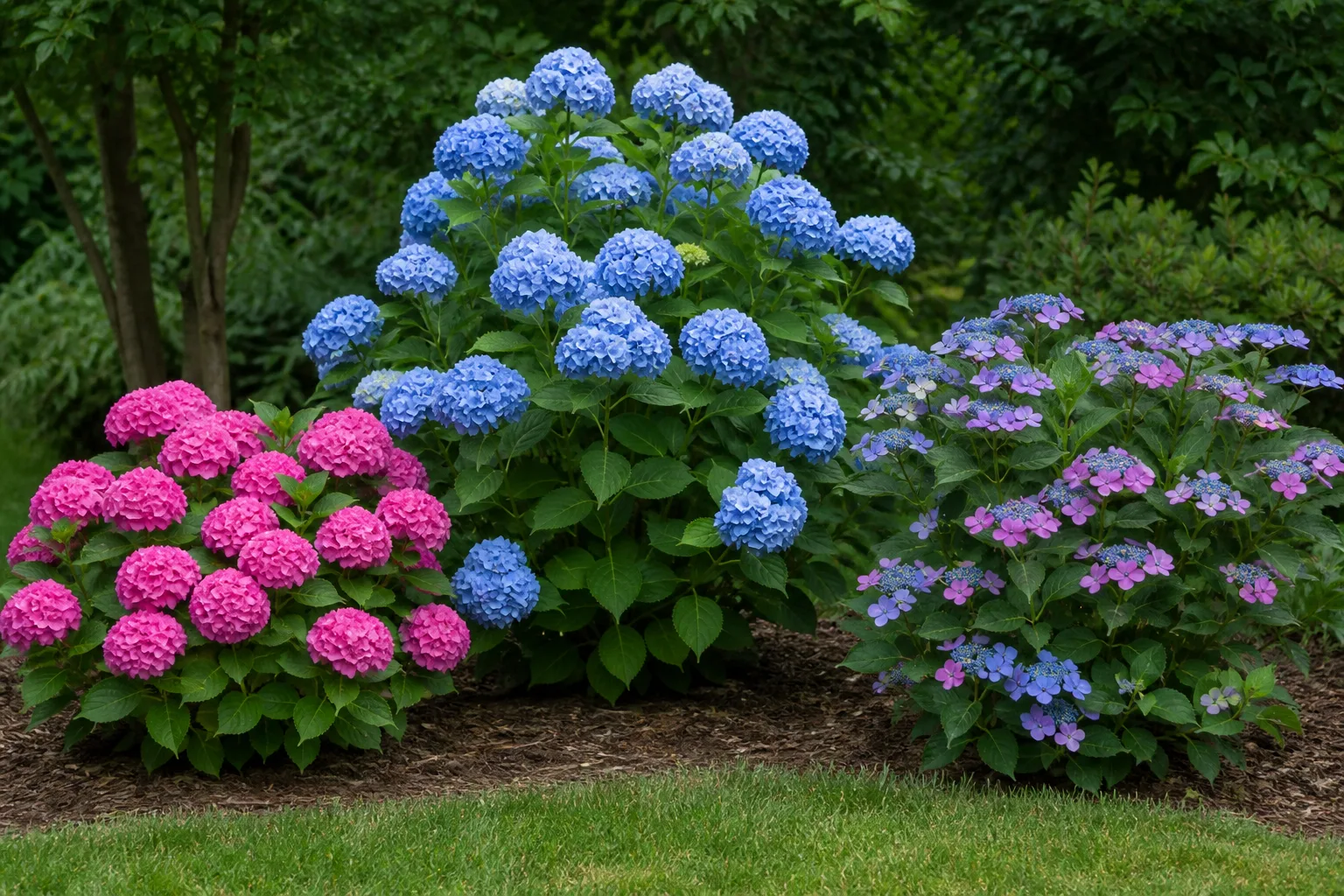
Flower color is related to the availability of aluminum to the plant, which is influenced by soil pH. In more acidic soils, aluminum is generally more available and flowers on responsive bigleaf hydrangeas tend toward blue; in neutral to alkaline soils, aluminum availability falls and flowers tend toward pink. UGA Cooperative Extension notes that soil pH affects color indirectly through aluminum availability, and that a visible change may take time.
Color is not a simple soil-pH dial. The cultivar must be capable of changing color, the soil must contain available aluminum, and the plant must be healthy enough to take it up; intermediate lavender or mauve tones are common. White-flowered forms generally do not turn blue or pink in the same way. For Penny Mac, judge color after the plant is established and do not mistake naturally variable flower aging for a problem.
How to Change Flower Color Safely
If you want to adjust color, start with a soil test rather than adding coffee grounds, pine needles, eggshells, or lime by guesswork. These materials do not reliably produce a predictable, timely pH shift in an established bed, and unnecessary amendments can create nutrient imbalances. A soil test from a local extension lab can tell you the current pH and whether a change is sensible for that soil.
Use only an amendment labeled for the intended adjustment, and follow its label or the soil-test recommendation for rate and timing. Avoid applying aluminum sulfate or lime directly to the foliage or roots at concentrated doses; overapplication can injure the plant and disrupt soil chemistry. If the shrub is new, stressed, or struggling with drainage, prioritize root health and accept its current flower color for a season.
Water Deeply and Read the Root Zone
Keep the root zone consistently moist while Penny Mac establishes, then water according to rainfall, soil texture, temperature, and the plant’s condition. During the first growing season, check the soil under the mulch every few days in hot or dry weather; water when the upper few inches are drying, then soak the root area rather than wetting only the surface. A simple finger check is more useful than a fixed calendar because sandy soil dries faster than clay.
A hydrangea may droop temporarily in afternoon heat even when the soil is moist. Check below the surface before adding water: if the root zone is dry, water slowly at the base; if it is wet or smells sour, pause watering and address drainage. Repeated saturation deprives roots of oxygen and encourages root decline, while shallow frequent sprinkling can leave the deeper roots dry.
Water early in the day when practical, especially during hot spells. Direct water to the soil instead of soaking foliage and flowers every evening; this helps keep leaves dry and reduces conditions that favor some leaf diseases. Refresh mulch when it thins, but keep the stem bases uncovered so moisture does not remain trapped against the crown.
A plant in a container may need water more often because wind and sun heat the potting mix from several sides. Lift the container slightly or feel the mix near the drainage holes to learn how quickly it dries, and never leave the pot standing in a full saucer. In winter, water container plants before a hard freeze if the mix is dry, but do not keep a dormant shrub wet.
Fertilize Lightly, If the Shrub Needs It
Do not use fertilizer as a bloom switch. A Penny Mac with healthy green growth in decent soil may need little or no additional feeding, while pale growth or poor vigor can have many causes besides a lack of nutrients, including saturated soil, root injury, or the wrong light. Adding nitrogen before checking those conditions can push leafy growth at the expense of flowers.
If a soil test or local extension guidance indicates a need, apply a balanced shrub fertilizer in spring at the rate on the product label. Keep fertilizer off the stems and foliage, spread it over the root zone, and water it in as directed. Avoid late-season feeding that encourages tender growth before winter, and do not combine a hydrangea color product with other amendments unless their ingredients and rates are compatible.
The exact schedule depends on soil and region. University of Georgia Extension offers a regional schedule for bigleaf hydrangeas, but its rates are not a universal prescription for every garden; local soil-test results and product labels should guide the amount. If the plant grows vigorously but fails to flower, stop adding fertilizer and investigate pruning, light, and winter damage instead. UGA Cooperative Extension offers a regional schedule, not a one-size-fits-all rate.
Prune to Preserve Flowers
Prune Penny Mac only when there is a clear reason: dead wood, damaged stems, crossing growth, or a few branches that spoil the shrub’s shape. It does not need routine hard pruning to flower. Bigleaf hydrangeas begin forming next season’s flower buds late in the growing season, so autumn and winter pruning can remove buds before you can see them.
For a reblooming cultivar, spring is the safest time to assess the plant. Wait until new leaves begin to emerge, then scratch-test doubtful stems or look for buds and live tissue lower on the branch. Remove wood that is clearly dead, cutting down to healthy growth or to the base when the entire cane is dead; if a stem is alive but only its tip was killed, shorten it just above a pair of healthy buds.
After the early flush, you may deadhead a spent flower by cutting just above a healthy pair of leaves, but leave the main framework intact. If you want to avoid any chance of removing new buds, snip only the dry flower head or leave it in place for winter interest. Proven Winners and Epic Gardening both emphasize identifying whether a hydrangea blooms on old or new wood before pruning; for this cultivar, the conservative approach protects the largest possible first flush.
A Low-Risk Pruning Routine
Use clean, sharp bypass pruners and follow this order:
- In late winter or early spring, remove only broken, diseased, or obviously dead stems.
- Once growth starts, check whether questionable stems are alive before cutting them to the ground.
- Keep healthy old stems unless a branch is crowded, rubbing, or growing into a path.
- Deadhead selectively after flowering, cutting above a healthy leaf pair rather than shearing the shrub.
- If a severe rejuvenation cut is unavoidable, accept that the next season’s bloom may be reduced and avoid repeating the cut annually.
Do not shorten the shrub every year to fit a space it has outgrown. Repeated shearing encourages dense outer growth, removes buds, and does not permanently keep a shrub smaller. If the mature size is wrong for the location, move it while dormant or replace it with a naturally compact cultivar.
Protect the Plant Through Winter and Spring Frosts
Penny Mac’s roots may survive a winter that damages its flower buds. That distinction explains why a shrub can leaf out normally yet produce few flowers: the wood and buds that carry the early bloom are more vulnerable than the root system. Bigleaf hydrangeas can lose buds to cold snaps, wind exposure, or a late spring freeze after growth starts, so a hardiness-zone label should not be read as a guarantee of blooms. University of New Hampshire Extension notes that winter damage can limit bigleaf hydrangea flowering even when a reblooming cultivar is grown.
After the ground cools, maintain a modest layer of mulch over the root zone and keep it away from the stems. In a site with severe winter exposure, a loose enclosure around the shrub filled with dry leaves can buffer wind and cold; remove or open it as temperatures warm so the plant does not overheat or remain damp. Avoid tightly wrapping the branches in plastic, which can trap moisture and heat.
If a late frost is forecast after buds or leaves emerge, cover the shrub loosely with breathable fabric before temperatures fall and remove the cover the next morning. Do not handle frozen or brittle stems until they thaw. In spring, wait for new growth to reveal which canes are alive before deciding that winter killed the plant or pruning the whole shrub.
Container-grown Penny Mac needs extra protection because its roots are exposed to colder air than roots in the ground. Move the pot to a sheltered, unheated location such as a cold garage after dormancy, or insulate the container outdoors where winters are moderate. Do not bring it into a heated room for the season; the plant needs dormancy and should return outside when severe weather passes.
Propagate by Softwood Cuttings or Layering
Softwood cuttings taken in early summer are a practical way to make another Penny Mac. Choose a healthy, nonflowering shoot that is still flexible but not limp, and use clean pruners so you do not transfer disease. Because a new cutting is genetically identical to its parent, it will generally preserve the cultivar’s flower traits, although its performance still depends on local growing conditions. UGA Cooperative Extension describes softwood cuttings and layering as propagation methods for bigleaf hydrangea.
Layering is slower but often easier when a branch can reach the soil. Bend a low, flexible stem down, lightly wound the underside at a node, pin that section beneath the soil while leaving the tip exposed, and keep the area evenly moist. Check for roots the following season; sever the rooted section from the parent only after it holds together when gently lifted, then transplant it during mild weather.
Avoid dividing a mature hydrangea just to multiply it unless you can clearly separate rooted sections without tearing the main crown apart. Moving or splitting a large established shrub is stressful, and the new sections can take time to recover. Cuttings and layering preserve more of the shrub’s structure and are usually better options for a home gardener.
Root a Softwood Cutting
Take a 4- to 6-inch tip from current-season growth, remove the lower leaves, and leave one or two pairs near the top. Insert the cut end into a clean pot filled with a moist, free-draining propagation mix; rooting hormone is optional and should be used only according to its label. Keep the cutting in bright indirect light, covered loosely to hold humidity, and ventilate it if condensation stays heavy.
The mix should stay damp but never waterlogged. Check after several weeks by giving the cutting a very gentle tug; resistance suggests roots are forming, but do not pull repeatedly and damage them. Once rooted, gradually expose it to outdoor air and light, pot it on if needed, and let it strengthen before planting it in the garden.
Spot Pests and Diseases Before Treating
Aphids sometimes cluster on tender shoots and leaf undersides, where they leave sticky honeydew. If the colony is small, rinse it off with a firm stream of water and recheck the next few days; avoid spraying blooms that pollinators are visiting. If the problem persists, identify the pest and use a product labeled for that plant and pest, following its directions and any local restrictions.
Leaf spot and powdery mildew are more likely when foliage stays crowded or wet for long periods. Remove fallen infected leaves, water at the soil line, and thin only a few congested stems if better airflow is needed; do not strip the shrub bare, which can stress it and remove flower buds. A gray, fuzzy bloom or collapsing flower tissue may indicate Botrytis blight, especially after prolonged damp weather.
Match the Symptom to the Likely Cause
Brown edges do not automatically mean disease. Heat, dry soil, reflected sun, wind, or fertilizer salts can all cause leaf damage, so check the soil moisture and recent weather before reaching for a fungicide. Yellow leaves can result from poor drainage, compacted roots, or nutrient availability, while fine stippling and webbing may point to spider mites in hot, dry conditions.
Treat only after you can name the likely cause. Remove badly affected material with clean tools, discard it rather than composting diseased leaves, and improve the growing conditions that allowed the problem to spread. Pesticides and fungicides do not correct poor drainage, and applying them without an identified target adds cost and may harm beneficial insects.
Why Penny Mac Hydrangea May Not Bloom
A missed bloom year is usually a clue about the plant’s recent growing conditions, not proof that it needs more fertilizer. The most common causes are winter or late-frost damage to buds, pruning at the wrong time, too little light, or stress from very dry or saturated soil. A reblooming type may make some flowers on new growth after old buds are lost, but the backup flush depends on plant vigor and how much of the growing season remains.
A newly planted shrub may spend its first season establishing roots and produce fewer flowers than expected. Heavy shade, repeated summer drought, root disturbance, and excess nitrogen can also delay flowering. If the shrub is healthy but has bloomed lightly for several years, check how much direct light reaches it and whether nearby trees or shrubs have grown enough to shade it since planting.
Check the Causes in a Useful Order
Start with pruning history. If stems were cut down in fall, winter, or early spring, the missing first flush may have been removed; give the plant a full season of undisturbed growth before changing several things at once. If you left the stems alone, examine the tips and upper buds after winter—brown, dry buds with green growth lower down suggest winter injury rather than a fertilizer problem.
Next, review the site and root zone. A shrub that receives only a short period of dim shade may not get enough light to flower well, while a plant with afternoon scorch may be stressed even if flowers form. Check beneath the mulch after rain and between waterings to see whether the roots alternate between soggy and bone dry.
Finally, look at your feeding and expectations. A lush plant with long, soft shoots and few flowers may be getting too much nitrogen or too much shade. If flowers appear late or only in a smaller second flush, the climate may shorten the rebloom window; focus on protecting healthy old stems rather than forcing a bloom schedule the season cannot support.
Conclusion
Penny Mac is easiest to grow when you give it the conditions its bigleaf hydrangea roots need and protect the stems that carry next season’s buds. Choose morning sun and afternoon shade, plant in evenly moist but draining soil, water according to the root zone, and fertilize only when soil or growth gives you a reason. Its reblooming habit can soften the effects of some bud loss, but it is not a substitute for thoughtful pruning or winter protection.
For flower color, test soil before amending and remember that pH works through aluminum availability rather than acting like a direct dye. When the shrub is not blooming, check winter damage and pruning first, then light, water, and fertilizer. If you can leave healthy branches alone and avoid stressing the roots, Penny Mac can reward the garden with a long season of substantial flowers.