Golden Barberry Care: Why Its Leaves Lose Their Gold
Learn how to grow golden barberry ‘Aurea’: choose light without scorching leaves, plant in draining soil, prune safely, and check local invasive-plant rules.
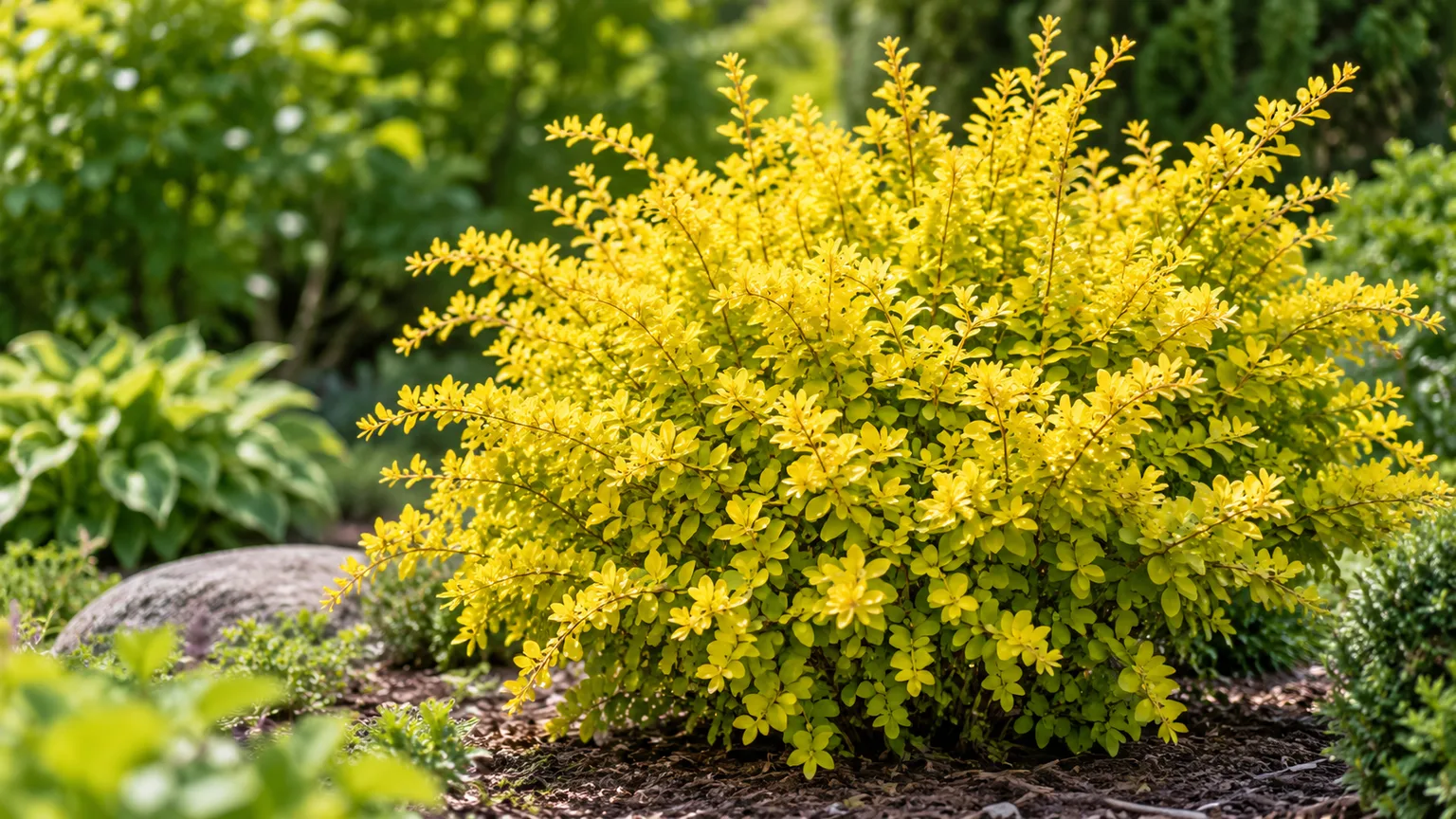
Golden barberry (Berberis thunbergii ‘Aurea’) is a compact, deciduous shrub grown for bright yellow foliage, an arching outline, and sharp spines—not showy flowers. The useful care question is not simply whether it tolerates sun or drought; it is whether you can give it enough light for good color without leaf scorch, keep its roots out of stagnant soil, and manage its thorns and possible spread.
Before you buy one, check local invasive-plant rules. ‘Aurea’ is a Japanese barberry cultivar that tends to produce fewer seeds than many other forms, but it is not reliably sterile. If your region restricts Japanese barberry, or your garden borders woodland or other natural habitat, a native shrub with a similar size and color may be the better choice.
What golden barberry is—and what the name means
The accepted botanical name for golden barberry is Berberis thunbergii ‘Aurea’. The species is Japanese barberry; ‘Aurea’ is the cultivar name for a yellow-leaved selection. This distinction matters because “gold barberry” can also be used loosely for other cultivars, including dwarf selections such as ‘Aurea Nana’, and each may have a different mature size or regulatory status. Read the full name on the nursery tag rather than relying on a broad common name.
‘Aurea’ is a woody, deciduous shrub in the barberry family, Berberidaceae. It has small simple leaves arranged along densely branching stems, with a spine at many nodes. In spring, new leaves are usually the clearest yellow; they can shift toward yellow-green as they mature or when the plant grows in shade. The NC State Extension profile identifies ‘Aurea’ as a golden-leaved cultivar and notes both its lower viable-seed production and its ability to spread.
Check local risk before you buy
Treat a barberry purchase as a local plant-choice decision, not just a design choice. Japanese barberry is invasive in parts of North America, but laws are not uniform: some places regulate only named varieties, some prohibit the species broadly, and lists can change. North Carolina Extension classifies ‘Aurea’ as invasive in North Carolina and recommends considering native or less aggressive plants. Minnesota Extension notes that only certain cultivars are restricted there, while Connecticut’s current statutory supplement schedules a prohibition on Japanese barberry beginning October 1, 2028. Those examples do not tell you what is legal in your county; check your state agriculture or invasive-species agency and any municipal rules before ordering.
Lower seed production does not make ‘Aurea’ a safe substitute wherever Japanese barberry is restricted. In cultivar trials, seed output varied widely and changed as plants matured; the 2012 study found that even cultivars producing roughly 100 seeds per year could contribute seedlings to woodland sites. Earlier comparisons recorded seed from ‘Aurea’ too. Think of “low seed” as a relative measurement from a particular test, not a guarantee that a plant cannot reproduce. Peer-reviewed cultivar research and NC State Extension both support that distinction.
Japanese barberry spreads through seed and can also layer when low branches contact soil and root. Birds can carry berries away from the planting; a branch that rests on moist ground may form a rooted point close to the shrub. In natural areas, dense stands can shade native understory plants, and regional extension sources associate barberry thickets with higher tick populations. That does not mean an individual plant causes disease, but it is another reason to avoid placing a fertile cultivar beside woods, stream corridors, parks, or conservation land. University of Minnesota Extension describes the seed and branch-layering routes.
If the plant is allowed where you live and you already have one, monitor around and beneath the canopy after fruiting. Pull small seedlings while the soil is moist, and remove low branches that are touching soil before they root. Do not count on trimming or collecting visible berries as a complete containment plan: fruit may be missed, and seeds can move beyond the bed. Where local rules say not to plant it, choose a regionally native alternative with the same mature height and light fit instead of searching for a loophole in cultivar naming.
Size, foliage, flowers, and berries
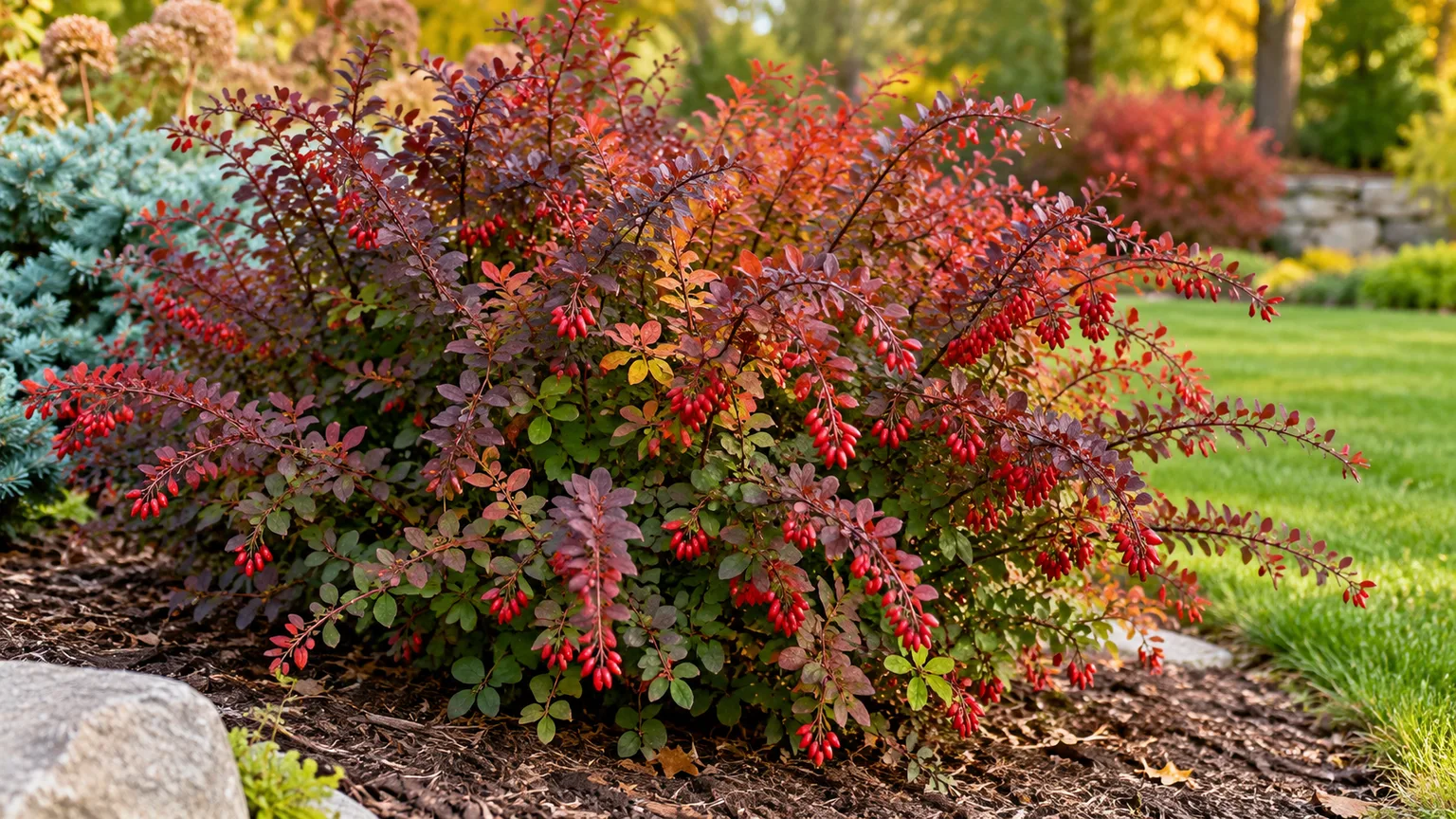
A typical ‘Aurea’ grows about 3 to 4 feet tall and 3 to 5 feet wide, forming a dense, rounded mound with arching branches. Missouri Botanical Garden gives those dimensions and describes pale-yellow spring flowers followed by bright-red fall berries. Many North American references place it in USDA Zones 4 to 7, though ratings vary slightly; winter hardiness does not prevent foliage scorch during hot summers. Measurements are an adult range, not a promise: growing conditions, pruning, nursery identity, and the cultivar sold under the tag affect the finished plant. For a more compact yellow barberry, confirm whether the label says ‘Aurea Nana’ or another selection rather than assuming all gold forms remain 3 feet tall. (Missouri Botanical Garden)
| Season | What you may see | What it means for care |
|---|---|---|
| Spring | Bright yellow new leaves and small, pale-yellow flowers | Protect emerging growth from damaging late frost if your site is exposed; avoid unnecessary pruning if you want flowers. |
| Summer | Yellow to yellow-green foliage; dense new shoots | Sun strengthens the gold, but check for scorch during extreme heat and drought. |
| Fall | Orange or reddish foliage and small red berries | Collect or remove fruit only where permitted and practical; inspect for seedlings later. |
| Winter | Bare stems and visible spines | Structure remains, but the shrub no longer provides its summer screen. |
The flowers are modest, partly hidden by the leaves, and not the main reason to choose the plant. Red fruit is more visible after the foliage changes, but it is ornamental, not a reason to plant the shrub for food. The Missouri Botanical Garden profile describes its compact habit, yellow leaves, spring bloom, red fruit, and thorns.
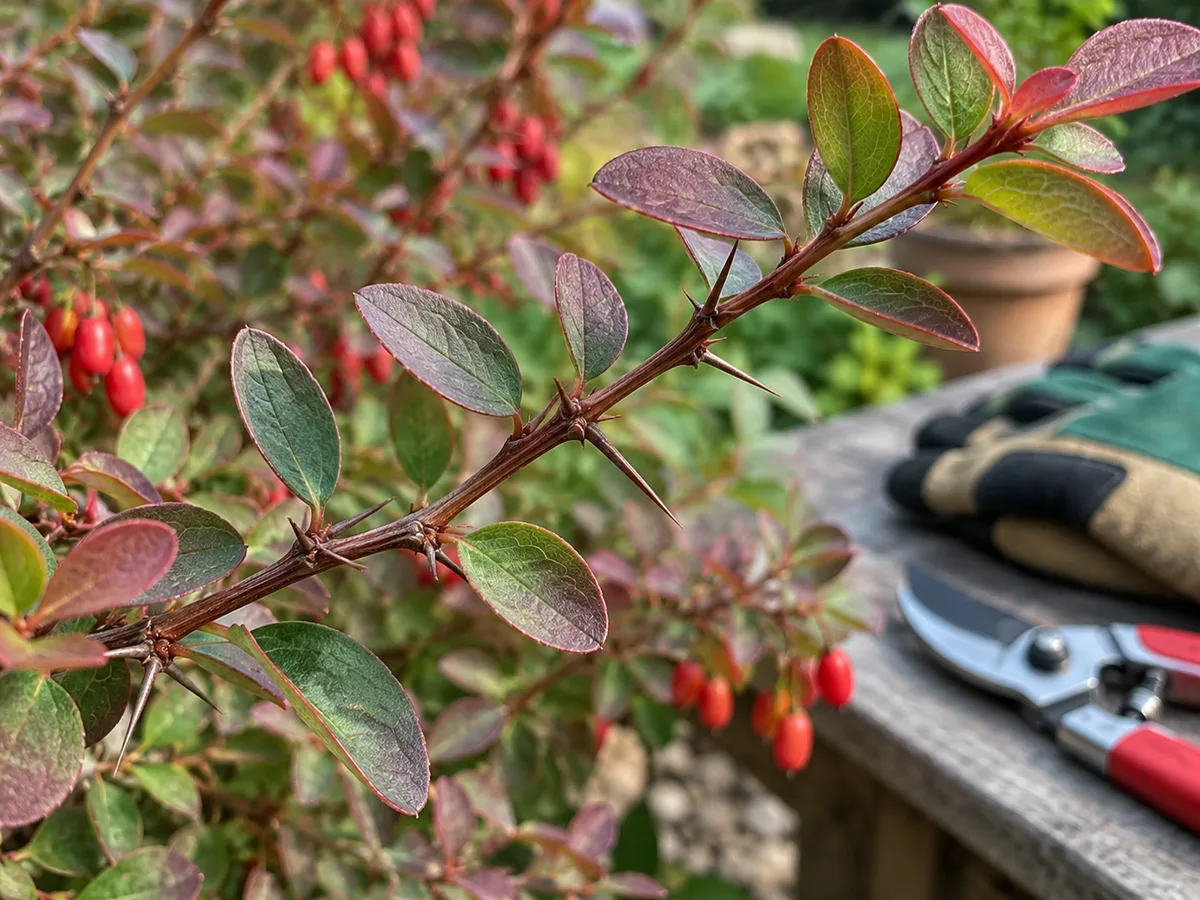
The spines are the immediate safety concern around paths and play areas. NC State Extension lists the plant as a low-severity poisoning risk if ingested, with possible minor symptoms such as vomiting or diarrhea; treat the berries as ornamental and do not eat them. Keep young children and pets from chewing the plant, and contact a veterinarian or poison-control professional if ingestion occurs rather than trying to judge the risk from a photo or a guessed amount. (NC State Extension)
Choose light that keeps leaves gold without burning them
For the strongest yellow color, give golden barberry several hours of direct light. Full sun often produces the clearest gold and a more compact outline; in deep shade, leaves tend to look yellow-green and branches may stretch toward brighter openings. Iowa State Extension also notes that golden Japanese barberry is bright gold in full sun and more yellow-green in shade.
“Full sun” is not an instruction to expose every plant to relentless afternoon heat. RHS guidance warns that golden-leaved barberries can scorch in too much direct sun. In a mild climate, an open sunny site may be ideal; in a hot, dry summer climate, morning sun with light afternoon shade can preserve foliage better. The trade-off is slightly softer color. RHS guidance for barberries describes this scorch risk, while its cultivar profile lists full sun and partial shade as suitable positions.
Read the plant before moving it. A mostly greenish-yellow canopy in a shaded bed may be a light effect rather than a nutrient deficiency. Pale patches or crisp brown margins concentrated on the sunny side after a heat wave point more toward scorch or drought stress. Make one site adjustment, then judge new leaves; old scorched tissue will not return to its former color.
Use well-drained soil; avoid wet roots
Golden barberry tolerates a range of ordinary garden soils, including clay, if water can drain through the root zone. A consistently soggy planting hole is the condition to avoid. Roots that remain waterlogged can decline even while the surrounding ground looks healthy, so a low spot that collects rain or receives irrigation runoff is a poor location. Missouri Botanical Garden and the RHS plant profile both specify well-drained conditions.
You do not need to create a special acidic bed or routinely amend the soil with fertilizer. Use the native soil as the backfill and improve drainage by choosing a better site or correcting a broader drainage problem, not by putting a pocket of gravel in the bottom of the planting hole. A soil test is useful if nearby plants also struggle or the ground has a known pH or nutrient problem; it is usually unnecessary for an otherwise healthy barberry in average soil.
A 2- to 3-inch mulch layer can reduce weeds and moderate moisture swings. Keep mulch a few inches back from the stems so the crown is not buried and stays airy. Because fallen barberry leaves and thorns can hide in mulch, wear gloves when weeding or replenishing it.
Plant nursery shrubs at the right depth and distance
Plant a container-grown shrub in spring or early fall when the soil is workable and the root ball can establish before severe heat or frozen ground. First confirm the species and cultivar, then check local restrictions. If the tag lists only “gold barberry,” ask the nursery for the botanical and cultivar name in writing; leaf color alone cannot establish whether it is ‘Aurea’, a dwarf form, or another barberry.
Before digging, set the pot beside the intended spot and imagine the shrub at its mature width. Keep it clear of paths, steps, gates, play areas, and maintenance routes where people might brush against sharp branches. For an isolated specimen, leave room for roughly 3 to 5 feet of spread plus access to inspect the base. Hedge spacing depends on the mature size and how quickly you want plants to meet, but tight spacing creates a thorny wall that is harder to prune and monitor for seedlings.
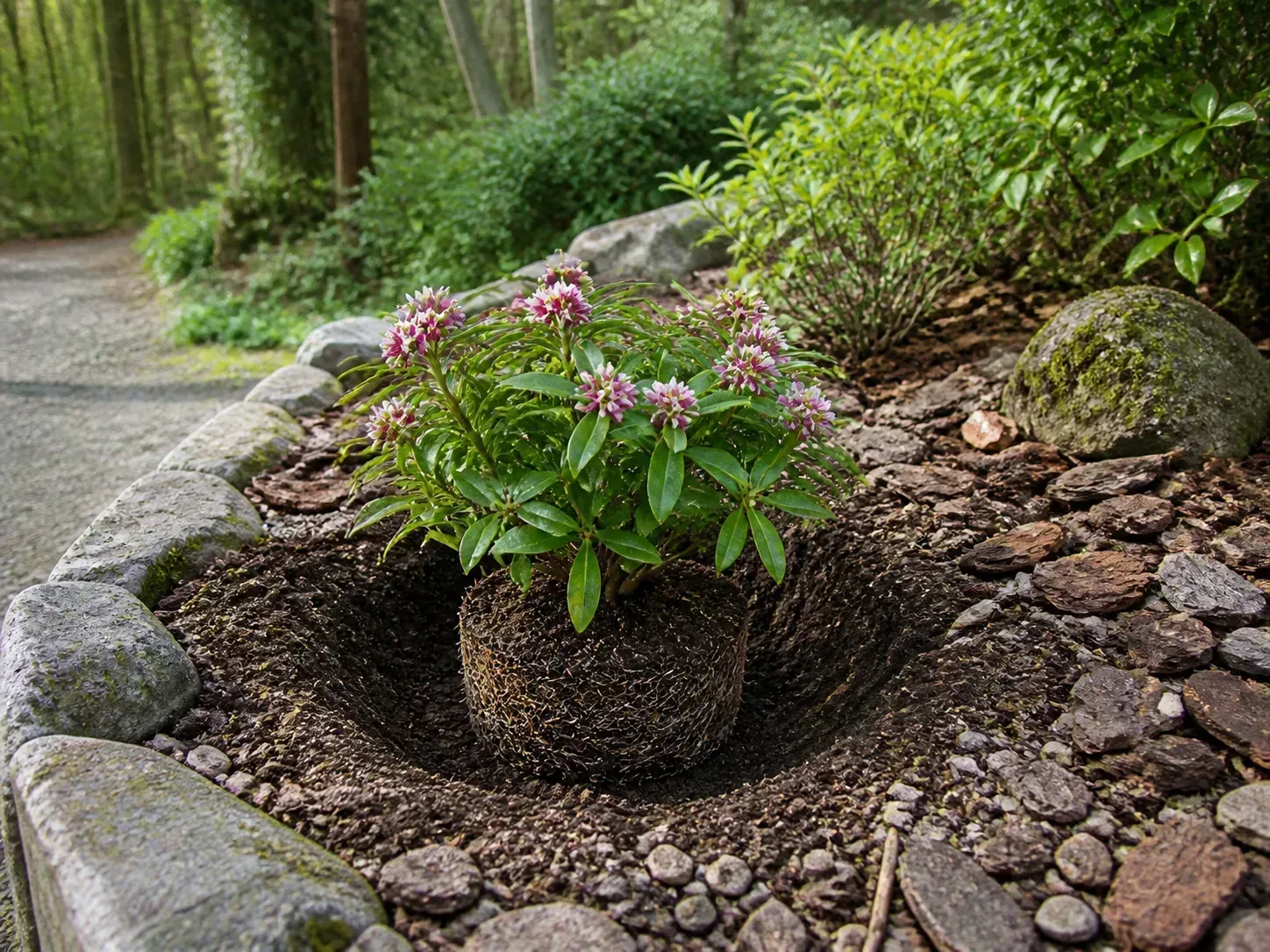
Dig a hole about twice as wide as the root ball and no deeper than its height. Loosen circling roots gently, set the root flare at the surrounding soil level, and backfill with the excavated soil. Water slowly to settle the soil around roots, then spread mulch without piling it against the stems. Do not bury the crown to make the shrub look shorter; too-deep planting can keep the base wet and weaken establishment.
Water through establishment, then by soil conditions
Water a newly planted golden barberry thoroughly after planting, then check the root ball and surrounding soil before watering again. During the first growing season, water during dry spells when the root zone begins to dry; do not rely on a rigid weekly schedule because rain, soil texture, temperature, and pot size change how quickly it dries. A newly planted shrub may need occasional support into a second season if it was planted late, has a small root system, or is growing in hot, dry conditions.
When you water, wet the full root ball rather than sprinkling only the surface around the stems. Apply slowly enough that water soaks in instead of running off, then let the soil drain. After the shrub is established, it is reasonably drought tolerant and usually needs irrigation only during a prolonged dry spell. The RHS growing guide recommends watering newly planted barberries while roots establish and soaking thoroughly rather than watering a little and often.
If leaves wilt in dry soil, give the root zone a deep drink and check again after it drains. If leaves yellow while soil remains wet, stop adding water and investigate drainage. Those symptoms can overlap; a leaf color by itself cannot tell you whether the plant is thirsty or waterlogged.
Fertilize only when the soil gives you a reason
Established golden barberry in ordinary, reasonably fertile soil does not need a routine feeding schedule. Extra nitrogen may push soft, leafy growth without solving a light, drainage, or root problem, and a fertilizer spike in a planting hole can injure new roots. Start by checking water, light, and soil condition before reaching for a bag of fertilizer.
If growth is consistently weak across the garden, use a soil test to identify a nutrient need and follow the test recommendation. Apply only the named nutrient at the recommended rate and timing. A plant that is shaded, drought stressed, or sitting in wet soil will not become healthier just because it receives more fertilizer.
Prune with a plan and protect yourself from thorns
Golden barberry needs little routine pruning if you gave it enough space. Remove dead, broken, crossing, or inward-growing stems with sharp bypass pruners, cutting just above a healthy outward-facing branch or at the base of an unwanted stem. Work slowly and keep your free hand behind the cut; the spines can catch gloves and clothing. Wear sturdy thorn-resistant gloves, long sleeves, and eye protection, and keep children and pets away from the work area. For the broader species-level invasive spread and care context, see our Japanese barberry guide.
For light shaping, prune while the plant is dormant in late winter or selectively after flowering if preserving spring flowers matters. Timing depends on the goal: dormant pruning makes the branching framework visible, while pruning after bloom preserves the flowers already produced. Shearing a formal hedge in summer can make a smooth outline but sacrifices later flowers and berries and may leave a dense outer shell that shades the interior. The RHS pruning guide recommends selective stem removal for deciduous barberries and notes that hard pruning sacrifices the following season’s flowers and fruit.
Shape lightly or renew gradually
If the shrub has become too large or woody, avoid clipping only the outside every year. Thin a few of the oldest stems to ground level, then reassess the shape after new growth appears. This opens light into the plant and retains some structure while younger shoots fill gaps. Do not remove more than you can safely handle at once, especially if the shrub is near a path or fence.
A hard renewal cut is a recovery option for an established plant, not an annual haircut. RHS guidance says barberries can be cut back to roughly 1 foot above ground in late winter, but severe pruning sacrifices the next season’s flowers and fruit and exposes the shrub’s bare structure. If a plant is already too thorny to maintain safely, too close to a walkway, or prohibited locally, removal and replacement can be more sensible than repeated heavy pruning. Use a tarp to catch branches and dispose of them according to local yard-waste rules; do not put thorny stems where someone will handle them later.
Propagate by cuttings if you need the same cultivar
Use a cutting if your goal is to reproduce the foliage and habit of a known ‘Aurea’. Seedlings do not reliably preserve the parent cultivar’s traits because pollination and seed genetics can vary. More importantly, collecting and sowing seed from Japanese barberry creates more seed-bearing plants; do not do it in a place where the species is restricted or where spread is a concern.
Take softwood or semi-ripe cuttings in summer from healthy, current-season growth. Cut a 4- to 6-inch piece, remove leaves from the lower portion, and place the stem in a clean, free-draining propagation mix. Keep it humid and evenly moist but not waterlogged, in bright shade rather than harsh sun. Rooting can be slow and uneven, so keep more than one cutting if you need a backup. The RHS profile for ‘Aurea’ recommends softwood or semi-hardwood cuttings in summer; check local rules before moving or sharing plant material.
Growing golden barberry in a container
A container can work if the pot is wide and heavy enough to support a 3- to 5-foot shrub and has unobstructed drainage holes. Use a stable outdoor container and a quality shrub potting mix; do not leave the pot sitting in a saucer of water. A small nursery pot can dry quickly and tip under the shrub’s arching branches, while an oversized container holds excess wet mix around a small root system.
Potted barberry needs closer moisture checks than an in-ground shrub because its root ball is exposed to sun, wind, and drying air on all sides. Water when the mix begins to dry below the surface, then let excess drain. Feed sparingly only if container growth and the mix indicate a need, following the fertilizer label. Repot when roots fill the container or watering becomes difficult to manage, moving up one pot size and wearing thorn protection while handling the shrub.
A thorny pot is a poor choice for a narrow deck, patio walkway, or children’s play area. Containers also make roots more vulnerable to winter freezes than garden soil does. If the plant is allowed locally and you choose to keep it in a pot, place it where people will not brush the stems and protect the container from prolonged severe cold without bringing a dormant deciduous shrub into a warm living room.
Diagnose leaf scorch, dieback, and common pests
Golden foliage is a cultivar trait, so do not treat every yellow leaf as a deficiency. Compare the whole plant and the timing of symptoms. A uniform yellow-green cast in shade differs from crispy patches on the sun-facing side after a heat wave; isolated dead twigs differ from a shrub collapsing from the base. Note recent changes in irrigation, drainage, exposure, or pruning before treating the plant.
Aphids may cluster on soft new growth, while scale insects appear as small bumps on stems or leaves. A few pests are rarely an emergency on a vigorous shrub; inspect the undersides of leaves and new shoots, then identify the pest before using a control. Barberries may also develop leaf spots or powdery mildew, especially when air movement is poor or foliage stays damp. Remove badly affected fallen leaves, thin a crowded interior if needed, and avoid overhead watering late in the day. The RHS barberry guide lists aphids, berberis sawfly, powdery mildews, and honey fungus among possible problems.
Root rot is a risk in poorly drained soil. If the plant wilts even though the ground is wet, check whether water pools around the crown and whether decline is limited to one branch or affects the whole shrub. Do not apply fungicide based on yellow foliage alone; several stresses can look similar, and a local extension diagnostic service can help identify recurring disease.
Brown edges versus whole-plant decline
| What you see | First check | Sensible first response |
|---|---|---|
| Crisp pale or brown patches on the hottest side | Recent heat, afternoon exposure, and root-ball moisture | Reduce heat exposure or water stress; protect new leaves rather than expecting damaged tissue to recover. |
| Yellow-green leaves throughout a shaded canopy | Hours of direct light and branch stretching | Improve light if possible; accept softer color if afternoon shade is needed to prevent scorch. |
| Yellowing across several stems in wet ground | Drainage and irrigation runoff | Pause watering and correct the drainage issue before feeding. |
| One dead branch among healthy stems | Breakage, rubbing, or a local stem injury | Prune the confirmed dead portion back to healthy wood with clean tools. |
| Sticky new tips or attached bumps | Leaf undersides and young stems | Identify aphids or scale; use a targeted response only if damage is increasing. |
Protect the roots and container in winter
An established in-ground golden barberry generally needs no elaborate winter wrapping in a climate suited to the cultivar. After the ground cools, maintain a modest mulch layer over the root zone without piling it against the stems. If rabbits browse shrubs in your area, use a ventilated physical guard that does not rub against or trap moisture around the branches.
Container roots experience colder swings than roots insulated by garden soil. Move the pot to a sheltered, unheated location such as a protected porch or cold frame during severe weather, and keep drainage holes clear so winter rain does not leave roots submerged. The shrub is deciduous; bare stems in winter are normal, not a sign that it needs to be brought indoors or fertilized.
Decide whether ‘Aurea’ is the right shrub
Golden barberry fits a landscape only when its advantages and costs both work for the site. It offers a compact gold accent, tolerates dry spells once established, and can form a dense, prickly boundary. The same traits make it awkward beside sidewalks, steps, seating, play spaces, or any route that requires frequent pruning. Its mature width also makes it a poor “small” shrub for a narrow foundation strip unless you are prepared to manage the canopy.
The larger question is ecological fit. If the plant is restricted where you live, if a bed touches natural habitat, or if you do not want to inspect for seedlings and rooted branches, choose a regional native or another noninvasive shrub with the right height and foliage color. Ask a local extension office or native-plant nursery for a substitute suited to your light, soil, and desired screen; names and legal lists vary enough that a one-size-fits-all replacement recommendation can be misleading.
Where ‘Aurea’ is permitted and already growing, care is uncomplicated: protect the root zone from standing water, water through establishment, prune only when needed, and watch for berries, seedlings, and branches touching soil. A low-maintenance shrub still deserves a placement that does not create a long-term problem for the garden or its surroundings.
Conclusion
Golden barberry is Berberis thunbergii ‘Aurea’, a compact Japanese barberry cultivar with bright spring foliage, small yellow flowers, red berries, and sharp stems. Give it well-drained soil, establishment water, and enough light for color; in very hot locations, trade some gold intensity for afternoon shade if that prevents scorch. Skip routine fertilizer, and prune selectively with gloves and eye protection.
Check current local restrictions before planting. ‘Aurea’ may produce fewer seeds than many Japanese barberries, but it is not sterile, and seed production can vary with age and conditions. If it is restricted or your garden borders natural habitat, choose a locally suitable alternative; if you already have a permitted plant, monitor the ground around it and remove seedlings before they establish.