How to Grow and Care for Adam’s Needle Yucca
Learn how to grow Adam’s needle (Yucca filamentosa) with the right sun, drainage, spacing, and first-year watering, plus safe pruning and easy propagation.
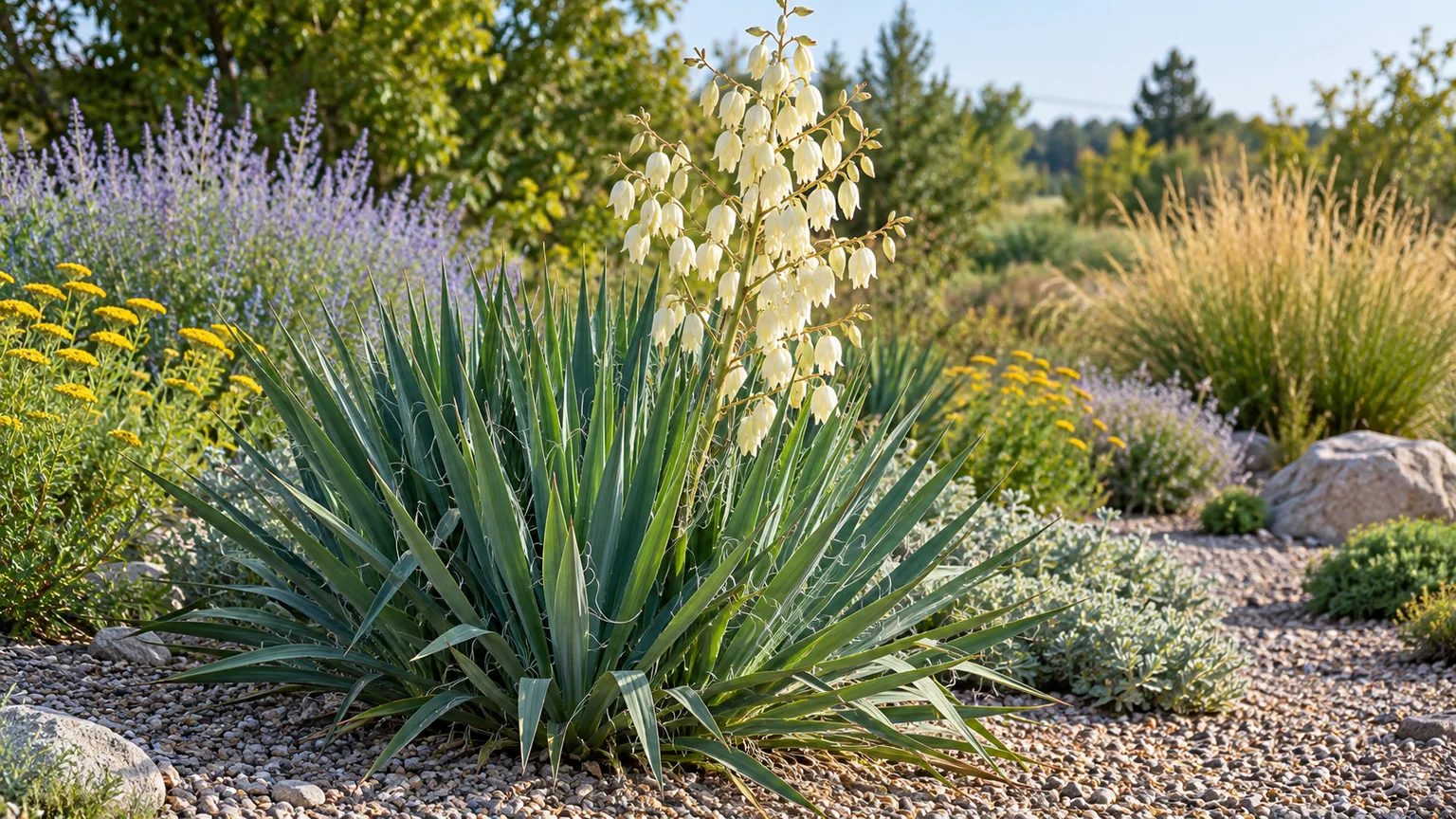
Adam’s needle is easiest to grow when you treat it as a sun-loving landscape perennial that needs excellent drainage, not as a thirsty tropical yucca. Give Yucca filamentosa a bright, open spot where rainwater does not collect, set the crown at the same height it grew in its pot, and water through its first stretch of root establishment. Once the clump is established, it usually needs little supplemental irrigation, fertilizer, or pruning.
The main challenge is placement. Its evergreen leaves end in stiff, pointed tips, the clump gradually widens from underground offsets, and a flowering stalk can rise several feet above the foliage. Those traits make it useful as a low-water accent or barrier, but a poor choice beside a narrow path, a frequently used doorway, or a bed that remains soggy after rain.
Adam’s needle at a glance: site, size, and safety
| Feature | What to plan for |
|---|---|
| Botanical name | Yucca filamentosa; also called curlyleaf or spoonleaf yucca |
| Garden form | Stemless evergreen rosette that spreads slowly by basal offsets |
| Light | Full sun is best; part shade is tolerated, but deep shade can limit bloom |
| Soil | Most textures can work if water drains away rather than pooling at the crown |
| Size | Foliage clump often about 2–3 feet tall and wide; flower stalks commonly reach 5–8 feet |
| Water | Establish with attentive checks; mature in-ground clumps are drought tolerant |
| Safety | Sharp leaf tips can injure; ASPCA lists yucca as toxic to cats, dogs, and horses |
The dimensions are useful planning estimates, not guarantees: cultivars and growing conditions vary. NC State Extension describes the plant as a clumping southeastern U.S. native, while the Missouri Botanical Garden describes a foliage clump around 2 to 3 feet with a much taller flowering stalk. Oregon State University lists the plant as hardy to USDA Zone 4, but that does not mean every site in a cold zone is suitable; winter drainage and local exposure still matter.
Confirm you have Yucca filamentosa before planting
Adam’s needle forms a low, stemless rosette of narrow, sword-shaped leaves. The leaf edges often carry fine, curling threads—the filaments that give the species its name—and the plant sends up a tall cluster of drooping, creamy-white, bell-shaped flowers in late spring or early summer. NC State Extension’s plant profile describes those leaf-margin filaments, the clumping habit, and the specialized moths that pollinate the flowers.
Do not confuse this plant with the tall, woody yucca canes sold as indoor houseplants. Those plants have trunks topped with leaf tufts and different temperature and container-care needs; Adam’s needle is a ground-level clump that spreads by offsets. A nursery label that only says “yucca” is not enough if you are choosing between an indoor cane and a hardy outdoor species. Check the botanical name before buying.
Choose a sunny site with safe clearance
Give Adam’s needle full sun for the strongest, most compact growth and best chance of flowering. It can tolerate partial shade, especially in hot climates, but a heavily shaded spot may produce a looser clump and fewer flower stalks. If the site gets afternoon shade, prioritize bright morning and midday light and observe whether nearby trees will eventually shade the plant more deeply.
Think about the mature outline before you dig. The foliage can occupy a roughly 2- to 3-foot circle, offsets expand the clump over time, and a flower stalk may reach 5 to 8 feet. Leave several feet of open space around a single plant; use the exact cultivar tag for spacing if it provides a mature width. In a group, space centers about 3 feet apart as a starting point, then widen the gap if the cultivar is large or you want to walk between plants.
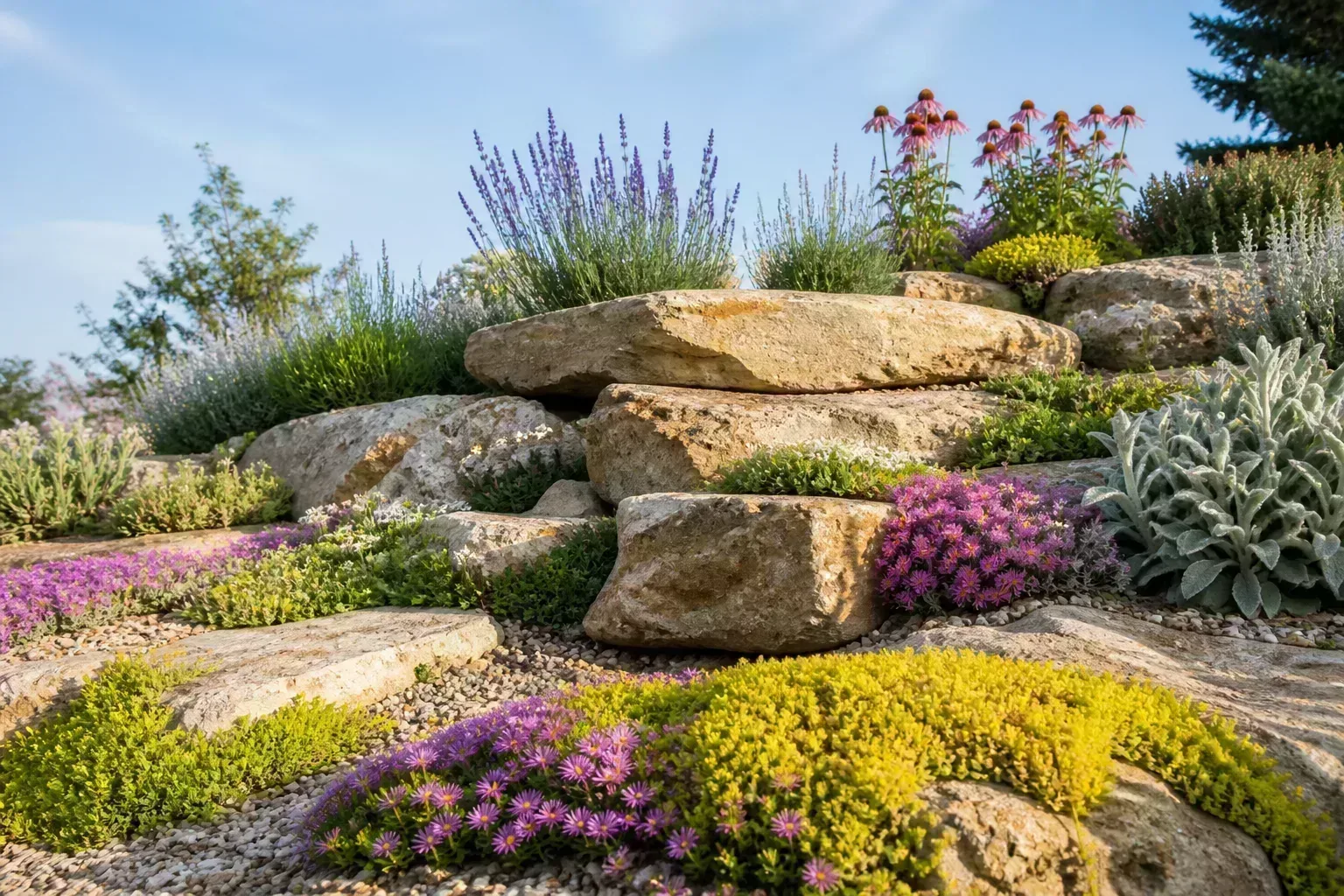
Avoid siting the rosette where people brush past it. The pointed leaves are a real injury risk at child and pet height, so a sunny rock garden, dry border, slope, or back edge of a bed often works better than a path corner. The stiff foliage can also serve as a visual barrier, but do not use it as a barrier where maintenance workers must reach through the plant.
The placement decision also matters if pets roam the garden. The ASPCA lists Yucca species as toxic to cats, dogs, and horses; dogs and cats may vomit after eating it, while horses can develop more serious effects. Put the clump where animals cannot chew it, and contact a veterinarian or ASPCA Animal Poison Control if ingestion is suspected.
Make drainage the first soil decision
Adam’s needle is adaptable about soil texture; it is not adaptable to a root zone that stays saturated. NC State lists clay, loam, sand, and shallow rocky soils among suitable textures when drainage is good, and the Oregon State University Landscape Plants profile notes that the plant is drought resistant. In practice, drainage matters more than whether the soil is labeled “sandy.”
Before planting in a heavy bed, watch it after a soaking rain. If water collects around the crown or the area stays shiny and soupy, choose another spot or raise the planting area so surplus water can move away. A gentle slope, raised mound, or broad raised bed can improve the root environment; a small pocket of gravel at the bottom of a planting hole cannot fix a site where the surrounding soil holds water.
Do not amend only the planting hole with a small amount of sand. Fine sand mixed into clay may compact rather than open the soil, while an abrupt pocket of amended soil can behave like a basin. If the site is heavy, a broad raised bed or low mound is often the simpler fix; otherwise, use a broad soil amendment suited to the existing bed rather than creating a tiny pocket. Keep mulch thin and pulled back from the crown so moisture does not collect where the leaves emerge.
Plant the crown at its nursery depth
Spring and early fall are convenient planting windows because the plant can establish roots without the stress of peak summer heat or frozen ground. In mild climates, container plants can be set out at other times if the soil is workable and you can monitor the root ball. Avoid planting right before a heat wave or into cold, waterlogged soil.
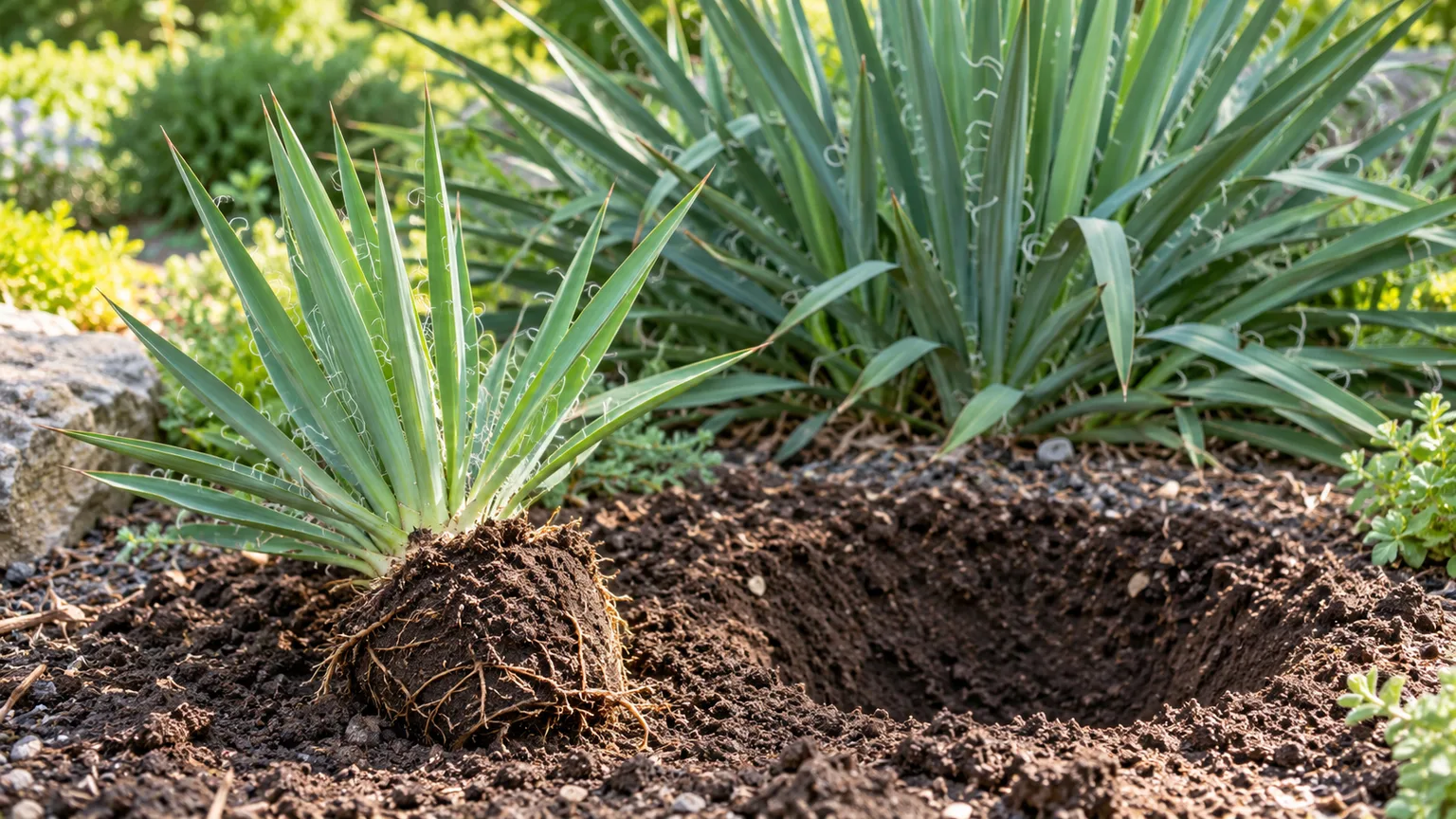
Dig a hole roughly twice as wide as the root ball and no deeper than the root ball itself. Loosen circling roots gently, set the plant so the crown—the point where leaves emerge—sits at the same level it did in the nursery pot, and backfill with the soil you removed unless there is a clear reason to improve a larger area. Do not bury the crown. Deep planting is an avoidable way to keep the leaf bases and crown wet.
Water once after planting to settle soil around the roots, then check moisture near the original root ball rather than assuming the entire surrounding bed dries at the same rate. If the plant has shifted or sunk, lift and reset it before it roots in. A thin gravel or mineral mulch can reduce splash and weeds, but keep it a little away from the crown and do not build a damp mulch collar against the leaves.
Water less as roots establish
Watering changes with the plant’s age and location. A newly planted clump has a smaller effective root system than an established one, so do not treat drought tolerance as a reason to let a fresh transplant dry out completely. For the first several weeks, check the soil around the root ball; when it has dried below the surface and there has been little useful rain, water slowly at the base and let the excess drain.
As new roots move into the surrounding soil, lengthen the interval between checks. During the first growing season, use rainfall, heat, soil texture, and visible new growth to decide whether to water; sandy beds dry sooner than clay-rich beds, and a hot exposed slope dries sooner than a sheltered border. Deep, occasional watering is more useful than frequent shallow sprinkling, which wets the surface without reaching the developing roots.
Once an in-ground clump is established, normal rainfall is often enough. Give extra water during a prolonged hot, dry spell if leaves lose firmness or growth stalls, but inspect the soil first: a yellow lower leaf alone is not proof of drought. The Gardenia species profile describes the plant as tolerant of dry to medium moisture in well-drained soil, which is a better target than keeping the bed constantly wet or withholding all water.
Container-grown Adam’s needle dries faster and has less access to soil moisture. Use a pot with open drainage holes and water thoroughly when the mix has dried several inches down; empty any saucer or cachepot. The goal is a full drink followed by a free drain, not a fixed weekly schedule. Winter containers usually need less water because growth and evaporation slow, though the mix should not be left bone dry for months.
Flowering depends on maturity and pollination
An established Adam’s needle sends up a central stalk carrying many nodding, pale flowers. The bloom display can be dramatic because the flowering stem rises well above the foliage, but the plant does not promise flowers every year from the day you buy it. Young plants, recently divided offsets, and clumps recovering from transplanting may need time to build size before they flower.
Give the plant the conditions that support flowering: bright light, sound drainage, and time. Full shade, chronic wet soil, or repeated disturbance can all hold back a clump. Extra phosphorus or bone meal is not a dependable shortcut; adding nutrients that the soil does not need can encourage unbalanced growth without solving a light or root problem.
Yucca flowers are pollinated by specialized yucca moths in a mutualistic relationship. The moth deposits pollen and lays eggs in the flower; larvae consume some developing seeds while others remain viable, as NC State Extension explains. If your goal is a flower display, the moth is not a prerequisite for the plant to produce its stalk. Pollination matters for fruit and seed formation after flowers open, so hand-pollinating a plant that has not flowered will not make it bloom.
Choose cultivars for foliage, not just names
Straight-species Adam’s needle has green leaves with the characteristic curly edge threads. Variegated cultivars add color while keeping the same basic need for bright light and freely draining soil. NC State Extension lists ‘Bright Edge,’ ‘Color Guard,’ ‘Garland Gold,’ and ‘Golden Sword’; Gardenia describes ‘Color Guard’ as having a yellow center stripe and ‘Gold Edge’ as having yellow leaf margins.
Choose by the look you want and the mature dimensions on the nursery tag, not by a cultivar name alone. ‘Color Guard’ and other variegated selections make a bright focal point in a gravel or mixed perennial bed; straight green foliage can look calmer in a naturalized planting. Colored leaves can show winter pink or rose tones in some cultivars, but that response varies with cultivar and growing conditions.
The Royal Horticultural Society’s profile of ‘Color Guard’ is useful when comparing a specific variegated selection. Treat a cultivar profile as a starting point, then use the plant label and your local conditions to confirm spacing and cold performance.
Cultivar names are not always used consistently in retail listings. Compare the botanical name, leaf pattern, and mature size in the label or supplier description, and ask whether the plant is Y. filamentosa rather than a different yucca species. That small check matters more than a promise that one selection needs less water or will flower faster.
Skip routine fertilizer
Adam’s needle is adapted to lean, well-drained ground and normally does not need a regular feeding schedule. Start by checking sun, drainage, planting depth, and root competition if growth seems weak. A plant struggling in wet soil will not be repaired by fertilizer, and excess nutrients can push soft growth or add soluble salts to the root zone.
If a soil test identifies a deficiency, follow its recommendation rather than applying a bloom booster by habit. Spread any approved amendment over the root area instead of piling it against the crown, and water according to the product directions. Do not fertilize a newly divided offset or a plant with suspected rot until it is rooted and growing normally.
Prune spent stalks without injuring the rosette
Routine pruning is limited. Once a flower stalk has finished and you do not want to collect seed, cut it near the base with clean, sharp loppers or a pruning saw. If you want seed, leave the stalk until the capsules mature and dry; then collect them before they open or shed.
Remove old lower leaves only after they have browned and loosened. Cut close to the base without slicing into the crown or pulling hard on leaves that are still attached. Do not shear the rosette into a ball or cut the healthy green leaf tips off to make the plant fit a walkway; if the plant is too large or unsafe for its position, moving or removing it is the better solution.
Wear thick gloves, long sleeves, and eye protection when working around the foliage. Keep a clear path for the cutting tool so a sudden slip does not drive a blade into your hand, face, or another person. The plant’s leaves are stiff and sharply pointed, so bundle pruned material securely before carrying it through the garden.
Propagate by dividing rooted offsets
The simplest way to make another Adam’s needle is to separate a rooted basal offset, sometimes called a pup or sucker. The mother plant gradually forms a small colony from offsets; choose one that has its own roots and several healthy leaves, rather than pulling away a tiny leaf cluster that is still entirely dependent on the parent. The Missouri Botanical Garden and Gardenia both identify basal offsets or rooted suckers as a practical propagation route.
Work when the soil is workable and the plant is not under heat or drought stress. Wear gloves and long sleeves, then use a sharp spade to expose the connection between the offset and the main clump. Cut through the connecting rhizome cleanly, preserving as many roots as you can, and lift the offset without levering against the crown of the parent.
Replant promptly in a site with the same drainage requirements as the original. Set the crown at soil level, backfill firmly enough to keep it upright, and water to settle the soil; then monitor it while roots reestablish. Keep the soil lightly and evenly moist near the offset only while it is establishing, never saturated. If it wilts briefly after division, provide temporary afternoon shade and check the root zone before adding more water.
Grow Adam’s needle from seed when you want more plants
Seed is a slower way to grow the species, but it is useful when you want several plants or are curious about the full life cycle. Seed forms in capsules after pollination; let the capsules mature and dry before collecting them, then separate the dark seed from the pod. Because yucca moth larvae consume some seed, not every capsule or seed will be viable.
Sow seed in a clean, free-draining starting mix, cover it lightly, and keep it warm and just moist while it germinates. Use bright light once seedlings emerge and avoid keeping a tray waterlogged. Germination and growth take patience, and seed-grown plants will not necessarily retain the exact leaf pattern of a named cultivar; use a division if you want a reliable clone of a variegated selection.
Grow in a pot only if drainage is reliable
A container makes Adam’s needle easier to move and can solve a garden with persistently wet ground, but it does not turn the plant into a carefree indoor yucca. Choose a wide, heavy pot with multiple unobstructed drainage holes. The stiff foliage and flower stalk make the plant top-heavy, while a lightweight or narrow pot can tip in wind or when brushed.
Use a gritty, open mix intended for succulents or add a coarse mineral amendment to a quality potting mix. Do not add a drainage layer of gravel at the bottom; water still has to pass through the entire root zone, and a pot without a hole remains a poor choice. Set the crown at the same depth as before and select a container only modestly wider than the root ball.
Place the pot outdoors in sun and protect it from prolonged standing rain in a climate with wet winters. Check the mix below the surface before watering, and do not let water remain in a saucer. Because roots in a pot experience more temperature swings than roots in the ground, container plants need extra winter protection in cold regions; if you cannot provide it, an in-ground site suited to the local climate is more reliable.
Protect the crown through winter
Established Adam’s needle is cold hardy across a broad range; Oregon State University lists it as hardy to USDA Zone 4, and NC State includes zones 4 through 10 in its regional plant data. Those references describe a plant’s potential range, not a guarantee for a waterlogged, wind-exposed, recently planted, or potted specimen. Local winter moisture and drainage can matter as much as the zone number.
In a cold, wet winter, focus on keeping the crown from sitting under a dense wet mulch. A thin layer of gravel or a light mulch over the surrounding soil is enough; leave the center of the rosette open. Do not keep irrigating through dormancy unless the plant is in a container under cover and the mix has become extremely dry.
Container roots are less insulated than roots in a garden bed. Move the pot to a sheltered position before hard freezes, insulate the container if it must remain outside, and keep it out of a spot where winter rain saturates the mix. Avoid moving an outdoor yucca straight into a warm, dim room for the season; if it must be protected indoors, use the brightest cool location available and reduce water.
Solve yellow leaves, rot, and a missing bloom
Start troubleshooting at the soil line rather than reacting to one leaf. A few old leaves at the bottom of the rosette can yellow as the clump renews itself; that is different from widespread yellowing combined with a soft crown, a sour smell, or soil that stays wet. The second pattern points to a drainage problem and possible root or crown damage.
If the crown is soft or the base smells foul, stop watering and inspect the root zone. Remove wet mulch, improve drainage, and lift the plant only if the soil stays saturated or rot is advancing; cut away soft, decayed tissue with a clean tool and replant only firm sections in a better-drained location. Do not pour fungicide or fertilizer onto a plant before checking whether the site is simply holding water.
Brown or damaged leaf tips can follow winter injury, drought, or physical contact with sharp leaves. Trim only the damaged tissue if its appearance bothers you, following the leaf’s shape without cutting into the green blade; if many leaves are declining at once, first review drainage and recent weather. Leaf spotting or blight is more likely where air and water movement are poor, so remove badly affected debris and correct the wet site rather than leaving the crown crowded under mulch.
Pest problems are usually minor, but aphids may gather on tender growth or flower stalks. Gardenia notes aphids as an occasional issue; inspect the plant closely, rinse or remove a small colony, and confirm the pest before treating a larger outbreak. Avoid spraying open flowers, which are part of a pollinator relationship, and follow a product label if a pesticide is truly needed.
For a clump that will not flower, check whether it receives substantial sun and has had time to establish. Shade, recent division, transplant shock, or a young plant can delay bloom; more fertilizer will not overcome those factors. A plant that looks healthy but does not bloom in one season may simply need another growing cycle, while a persistently wet crown should be corrected before you wait for flowers.
Conclusion
For reliable Adam’s needle care, solve the site before the watering schedule: choose a sunny location with room for a sharp, widening rosette, and make sure rain drains away from the crown. Plant at nursery depth, water a new division or transplant while it establishes, and then let rainfall carry most of the work once the clump is rooted. If it becomes too wide, divide a rooted offset; if it fails to flower, check light, age, and drainage before reaching for fertilizer.