How to Grow and Care for Alocasia Pink Dragon Indoors
Learn to grow Alocasia Pink Dragon indoors with practical light, watering, soil, humidity, dormancy, repotting, propagation, pest, and pet-safety advice.
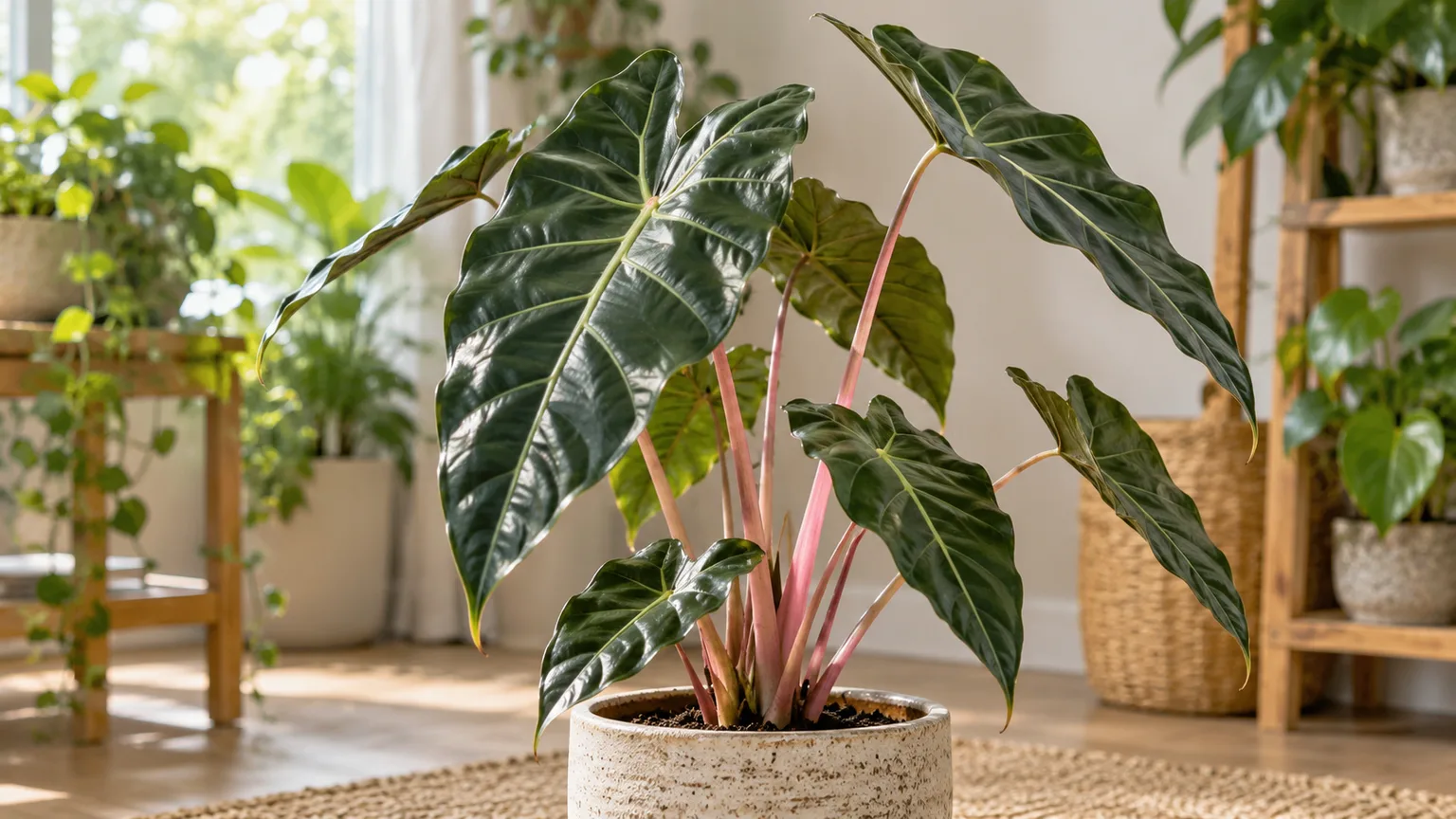
Alocasia Pink Dragon is grown for the contrast between glossy, dark green leaves and pink to reddish petioles. It is commonly sold under names such as Pink Dragon or Morocco and is often identified as Alocasia lowii ‘Morocco’; nursery labels are not always consistent, so use the plant’s actual leaves and growth habit as well as its tag. The Royal Horticultural Society lists Alocasia lowii as a correctly named species and describes the genus as tuberous or rhizomatous tropical perennials with large, conspicuously veined leaves. (RHS plant profile)
In a home, success comes from balancing two needs that can seem contradictory: the roots need regular moisture, but they also need air. Give the plant strong filtered light, warmth, a free-draining but moisture-holding mix, and a pot that is not much larger than its root system. Then let the plant’s growth and the mix’s drying rate—not a weekly alarm—tell you when to water or feed.
Give it bright, filtered light
Place Pink Dragon where it receives bright indirect light for much of the day. An east-facing window is a reliable starting point; near a south- or west-facing window, soften intense sun with a sheer curtain or move the pot out of the direct beam. A brief period of gentle morning sun may be tolerated after gradual acclimation, but hot midday and afternoon rays can scorch the broad leaves. The RHS recommends bright indirect light for Alocasias, and Epic Gardening likewise warns that strong direct sun can damage their foliage. (RHS Alocasia growing guide; Epic Gardening’s potted Alocasia tips)
Use the leaf and stem growth to judge whether the location is working. A plant leaning strongly toward a window, stretching its petioles, or producing much smaller leaves may need more light; move it closer in small steps rather than shifting it straight into unfiltered sun. Pale, papery patches on the window-facing side suggest sun scorch, while uniformly slow growth can also come from cool conditions, root crowding, or a seasonal slowdown. Rotate the pot a quarter turn every week or two if it grows lopsided, but avoid repeatedly moving it between very different light levels.
Keep warmth and humidity without trapping wet air
Pink Dragon grows best in a warm, fairly stable room. Normal comfortable indoor temperatures are generally suitable during active growth; protect it from cold windowsills, exterior doors, air-conditioning streams, and heating vents that create abrupt temperature or moisture changes. The RHS advises keeping Alocasias above about 60°F (16°C) during the growing season and above 50°F (10°C) in winter, with cooler and drier conditions as growth slows. That lower winter figure is a survival floor, not an ideal target for a vigorous houseplant. (RHS Alocasia growing guide)
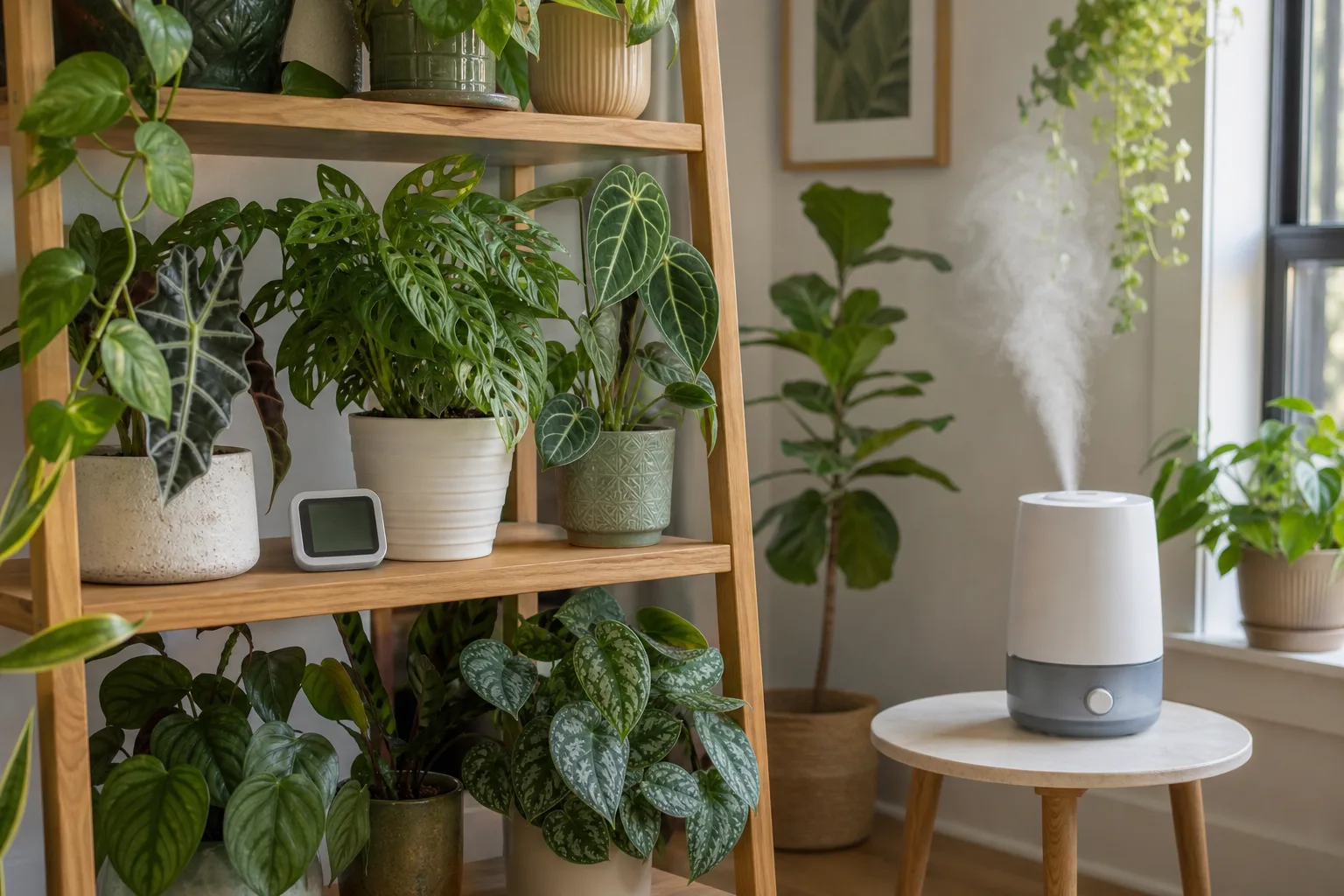
Humidity helps the leaves stay attractive, but you do not need to turn the whole room into a greenhouse. A small hygrometer near the plant gives a better picture than misting by habit. Many growers aim for roughly 50% to 65% relative humidity for tropical Alocasias, then adjust if leaf edges repeatedly crisp despite good watering and roots. Epic Gardening describes 60% to 80% as favorable for potted Alocasias, while household rooms can vary widely; the useful lesson is to improve a persistently dry microclimate, not to chase one exact number. (Epic Gardening; Gardening Know How’s Alocasia guide)
The simplest upgrade is a room humidifier placed near, but not blowing directly onto, the leaves. Grouping plants can make a small area feel less dry, and a bright bathroom may work if it has enough light and does not become cold after use. Pebble trays have limited effect on the humidity of an entire room; if you use one, keep the pot above the waterline and empty standing water from the outer saucer. Misting is short-lived and may leave spots or keep foliage wet without solving dry room air.
Higher humidity is not the same as stagnant, damp air. Leave space around the leaves, keep the plant away from persistently wet walls or cold glass, and do not seal an adult plant in a closed cabinet unless you can manage ventilation. A humidifier that runs constantly beside cold leaves can create condensation; that is a sign to reduce output or improve airflow, not to add more water to the soil.
Use a loose mix and a properly sized pot
Pink Dragon needs a substrate that holds some water between checks but does not compact into a dense, airless block. A useful starting recipe is two parts quality indoor potting mix or coir-based mix, one part perlite or pumice, and one part fine orchid bark. The potting base holds moisture; the coarse ingredients create spaces that let excess water drain and oxygen reach the roots. Epic Gardening describes a similar mix of organic material, bark, and perlite or pumice for container Alocasias, while Gardening Know How also stresses moisture with good drainage. (Epic Gardening; Gardening Know How)
You can adjust that mix to your home. If the top dries very quickly and the plant wilts between waterings, use a little more moisture-retentive potting base or coir; if the center stays wet for days, increase the coarse fraction and check for blocked drainage. Avoid heavy garden soil, which often compacts in a pot, and avoid a very chunky mix that sheds water before the root ball has had time to absorb it. The right blend is the one that becomes evenly moist when watered and then gradually dries rather than remaining soggy or turning bone-dry in a day.
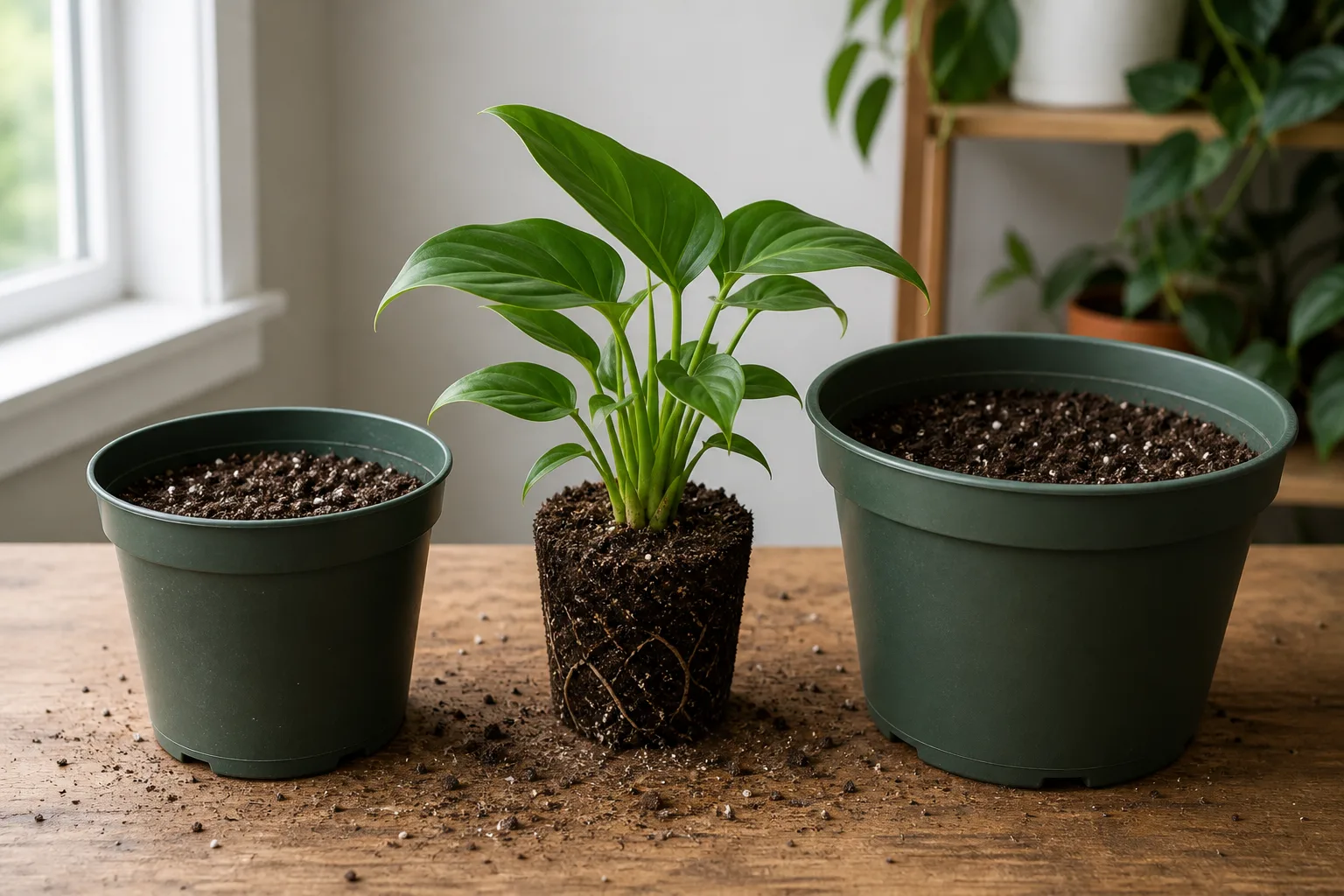
Choose a container with open drainage holes. Pink Dragon does not need a large decorative pot to thrive, and excess empty soil can stay wet longer than the roots can use it. When repotting, move up only about 1 to 2 inches in diameter beyond the root ball; the RHS similarly cautions against overpotting. A nursery pot set inside a cachepot is fine, provided you empty the outer vessel after watering. (RHS Alocasia growing guide)
Terracotta dries faster than plastic or glazed ceramic, so choose based on your room and watering habits; any pot still needs a clear drainage hole.
Water when the upper mix dries, not on a schedule
Alocasia roots use moisture while the plant is actively making leaves, but they decline when the mix stays saturated. Watering “once a week” can be too frequent in winter and too infrequent in a warm, bright summer room. Instead, learn how your specific pot behaves: the same plant may need very different intervals in a small nursery pot, a large ceramic container, or a cool low-light room. The RHS recommends watering after the top 2 inches of compost dry during the growing season and cutting back when the plant becomes dormant. (RHS Alocasia growing guide)
Read the pot before you water
Check the top 1 to 2 inches of mix with a finger or wooden skewer. If the surface is dry but the deeper mix still feels cool and damp, wait and recheck; if the upper layer is dry and the pot feels much lighter than after watering, water thoroughly. Pour slowly over the soil until excess drains through the holes, then empty the saucer after about 10 to 15 minutes. That approach wets the root ball evenly and avoids leaving the lower roots submerged.
Use more than one cue when a plant looks wilted. Dry mix, a lightweight pot, and flexible leaves point toward thirst; wet mix, a heavy pot, yellowing lower leaves, or a soft stem base raise concern about overwatering or root trouble. Drooping alone does not tell you which one it is. Do not keep adding water to a plant that is already sitting in wet soil just because its leaves are limp.
If water races down the pot’s sides without wetting the center, the mix may be hydrophobic or root-bound. Rewet it with two slow passes a few minutes apart, let it drain, and inspect the roots or replace degraded mix if the problem repeats.
Adjust watering as growth slows
Spring and summer growth usually increases water use, especially when the plant receives strong light and warm air. In fall and winter, shorter days and cooler rooms often slow growth, so the mix takes longer to dry. Keep checking the upper layer, but allow a longer interval when it remains moist; do not keep the same summer routine just because the calendar says the plant is thirsty. The guidance from both RHS and Epic Gardening emphasizes adjusting watering as growth and evaporation change. (RHS Alocasia growing guide; Epic Gardening)
Water quality is usually a secondary issue. If mineral crust builds on the soil or pot rim, rinse the mix thoroughly with plain water and consider clean rainwater or filtered water for new growth; avoid improvised acidifiers, which can damage roots.
Feed during active growth
Pink Dragon uses nutrients to build leaves and petioles, so a diluted balanced liquid houseplant fertilizer can support growth while new leaves are forming. Start when active growth resumes in spring or when you see a new leaf extending, and follow the product label at a conservative rate. If the label calls for monthly feeding, begin at half strength and watch the leaf tips and soil surface before increasing; a steady, mild supply is easier on container roots than repeated heavy doses. Epic Gardening recommends feeding potted Alocasias through spring and summer and tapering as growth slows. (Epic Gardening)
Pause feeding when the plant is dormant, stressed, newly repotted, or sitting in cold wet mix. Fertilizer does not force a dormant plant to grow and can leave salts around roots that are taking up little water. If pale growth appears, first check light, roots, pH and watering consistency; adding more fertilizer without a diagnosis can worsen root stress. A pale leaf is not proof of one specific deficiency.
If fertilizer salts accumulate as a white crust, flush the pot with plain water and let it drain fully. Avoid feeding a dry root ball or a newly repotted plant before active growth resumes.
Clean leaves and check for pests
Large leaves collect dust, which dulls their color and makes pests harder to spot. Wipe both sides gently with a damp cloth, or rinse a sturdy plant with lukewarm water while shielding the potting mix from a prolonged soak. (Epic Gardening)
Inspect the undersides, petiole joints, and newest leaves when you water. Spider mites can leave tiny pale stipples and fine webbing, while scale or mealybugs may appear as fixed bumps or cottony clusters. Fungus gnats usually point to persistently damp potting mix more than to a leaf-feeding infestation. Isolate a suspect plant from nearby houseplants, rinse accessible pests away, and repeat inspections every few days so you can catch newly hatched pests before they spread.
For an active infestation, identify the pest before choosing a treatment. Use only a product labeled for indoor ornamental plants and that specific pest, follow its label exactly, and test a small leaf area first because some Alocasia foliage is sensitive. Do not apply oil or soap under strong light or heat, and do not assume a single spray has eliminated eggs. Keep children and pets away during treatment as the product label directs.
Read leaf changes before changing care
Pink Dragon may replace an older leaf as it grows; one aging lower leaf turning yellow while a new leaf emerges can be ordinary turnover. A whole plant yellowing, several leaves collapsing together, or repeated loss of new leaves deserves a closer look. Change one likely cause at a time and give the plant enough time to respond; moving it, repotting, increasing humidity, and changing the watering routine all at once makes it difficult to learn what actually helped.
Yellow leaves and seasonal leaf loss
Start by checking the mix and the season. If soil stays wet and the pot is heavy, inspect drainage and roots before watering again; if the mix is dry well below the surface and the pot is light, water thoroughly. If the plant is in a cool, dim winter location and older leaves are fading gradually, it may be slowing or entering dormancy. Alocasias can lose foliage in a cooler, drier winter rest, and RHS notes that fresh leaves return when growth resumes in spring. (RHS Alocasia growing guide)
Dormancy is a reasonable explanation only when the conditions fit. Keep the plant above cold-damage temperatures, maintain bright indirect light, stop fertilizer, and water sparingly enough to prevent the corm and roots from drying to dust or sitting in a cold swamp. Do not throw away a leafless plant if the underground corm is still firm. Wait for warmer, brighter conditions and signs of renewed growth before repotting or dividing it.
If yellowing begins on multiple leaves while the mix remains wet, inspect the roots. Healthy roots are firm; rotten roots are soft, dark, and may smell sour. Trim only the mushy portions with clean snips, move the plant into fresh airy mix in a suitably sized draining pot, and let the surface begin to dry before watering again. A rapid collapse in a warm room should not be written off as seasonal dormancy.
Brown edges, droop, and root rot
Brown leaf edges can follow dry air, irregular watering, accumulated fertilizer salts, or sun scorch, so match the pattern to the conditions. Crisp edges on several leaves in a dry heated room suggest checking humidity and vent exposure; a dry, shrinking root ball suggests thirst; pale bleached patches on the window side suggest too much direct sun. Brown tips that continue after humidity improves are a reason to review watering, drainage, fertilizer and water residue rather than repeatedly misting.
Drooping is a symptom, not a watering instruction. If the soil is dry and the petioles are flexible, water and watch for recovery over the next several hours; if the mix is wet, feel the stem base and inspect roots instead of topping it up. Keep a brief note of watering dates and pot weight for two or three weeks if the pattern is hard to read. That record is more useful than watering every time one leaf changes.
Root rot is more likely when several clues occur together: persistently wet substrate, sour smell, soft roots or stem base, and yellowing or wilt that continues despite moisture. Correct the drainage problem first, remove badly damaged roots, and repot into a clean pot with fresh mix. Avoid fertilizing or using a pesticide as a rescue treatment when the real issue is oxygen-starved roots. If only a few roots are affected and the central corm is firm, the plant may recover, but recovery is not guaranteed.
Repot when the root system needs room
Repotting is useful when roots circle densely around the root ball, emerge from drainage holes, the mix has collapsed and stays wet, or water passes straight through because the container is packed with roots. A plant that is growing slowly in winter is not automatically root-bound. The RHS recommends checking for crowded roots and repotting in spring when needed; choosing a container only slightly larger reduces the risk that unused soil stays damp for too long. (RHS Alocasia growing guide)
Water the plant the day before if the root ball is very dry, then ease it from the pot and inspect the roots without tearing apart healthy tissue unnecessarily. Keep the corm or crown at the same depth it was growing; burying the base too deeply can keep it wet. Fill around the root ball with fresh airy mix, settle it lightly, water once to seat the mix, and let the container drain. Return it to warm bright indirect light and postpone fertilizer until it is actively growing again.
If roots are healthy but the plant is oversized, refresh the top layer or divide a rooted offset rather than jumping to a much larger pot. Avoid repotting during dormancy or immediately after cold damage unless root rot requires intervention.
Propagate with offsets or corms
You can make new Pink Dragons by separating a rooted offset or by starting a corm, but this is not a fast way to turn one plant into many. The Royal Horticultural Society describes separating offsets in spring and dividing Alocasia’s fleshy underground growth in late spring or early summer; for a home grower, a rooted offset is usually the lower-risk choice because it already has leaves and roots. (RHS Alocasia growing guide)
Do not try to root a single detached leaf or petiole as you would a pothos cutting. The new plant needs a growing point, which comes from a corm or a section of the plant with a viable bud. Propagate only a vigorous, established parent with multiple leaves and no active pest or root-rot problem; a weak plant has little reserve to recover from disturbance.
Start a corm in a humid, airy setup
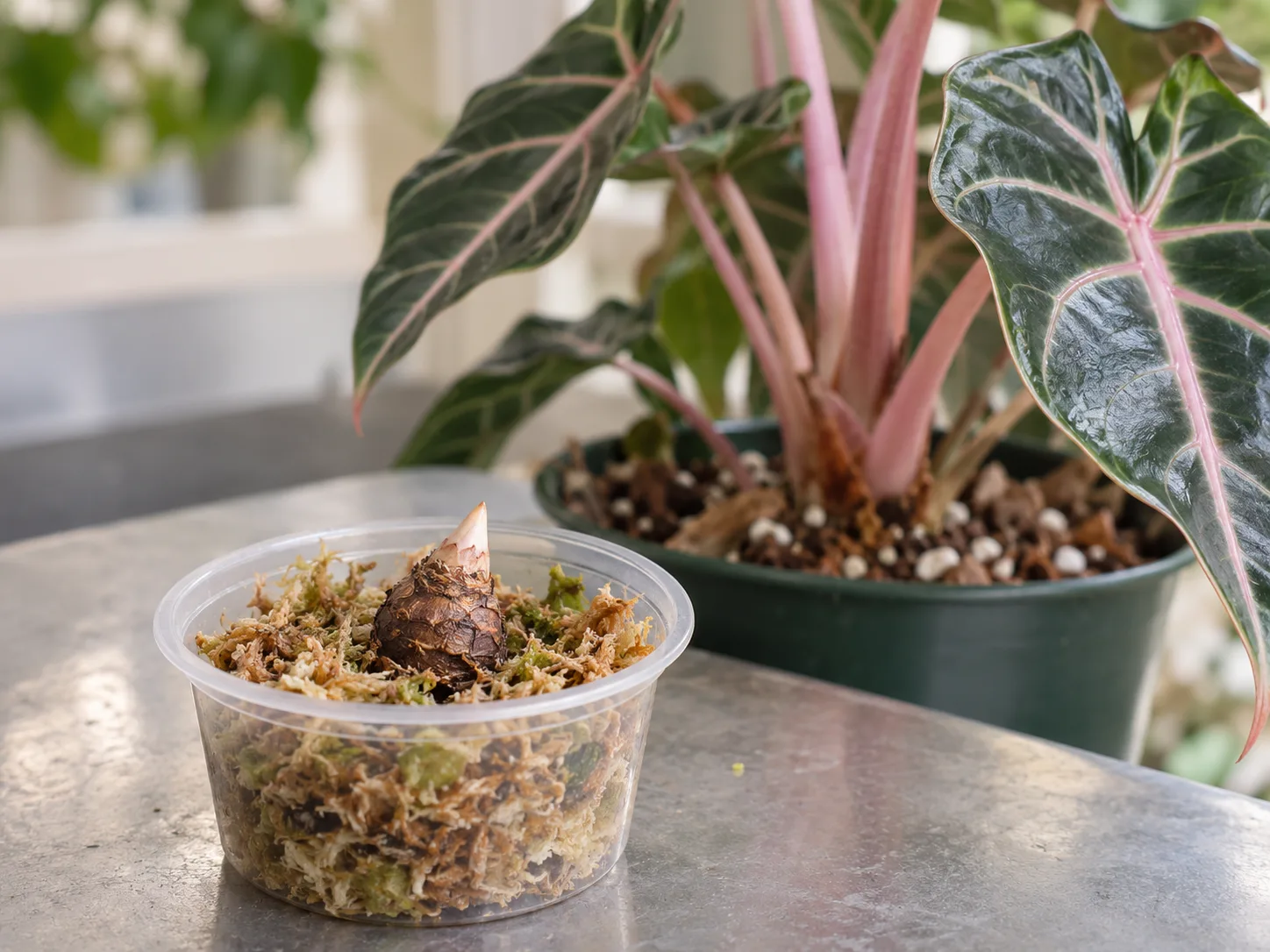
Corms are small, firm storage organs that may be found among the roots when a mature Alocasia is repotted. Not every corm will sprout, and a soft, hollow, or damaged one is a poor candidate. Work gently, keep some corms with the parent rather than stripping every one, and use gloves or wash your hands after handling plant tissue. Specialist Alocasia growers describe rooting corms in a moist, warm, high-humidity setup, but the process varies by corm maturity and growing conditions. (Grow Alocasia corm guidance)
Use a small clear container with a loose humidity cover and barely damp sphagnum or another clean airy medium. Set the corm with its pointed tip up and partly visible; the medium should feel like a wrung-out sponge, not release water when squeezed. Keep it warm in bright indirect light and open the container briefly every few days, since soaked moss and standing water can rot the corm.
Check for firmness, mold, roots, and a swelling bud once or twice a week. If condensation runs down the sides or the moss smells stale, increase ventilation and replace the soggy medium; if the corm is shriveling, add a little moisture. Sprouting can take weeks or longer, so do not unearth it daily. Once roots are established and a leaf is opening, move it into a small draining pot with airy Alocasia mix, keep conditions warm, and gradually remove the humidity cover over several days.
Separate a rooted offset
Offsets grow from the base of a mature plant and are ready to separate when they have their own roots and at least a small shoot. The RHS propagation guidance recommends separating offsets with as much root as practical and potting them individually. Do this during active growth so the young plant can resume growing quickly. (RHS Alocasia growing guide)
Slide the plant from its pot and loosen just enough mix to see where the pup joins the parent. If the offset has its own roots, ease it away by hand; if a connecting section must be cut, use a clean sharp blade and avoid slicing through the parent’s main corm. Pot the offset in a container sized to its root mass, water once, and place it in warm indirect light with moderate humidity. Keep the mix lightly moist while new roots establish, but do not leave the small pot standing in water.
It is normal for a newly divided offset to pause before growing. Hold off on fertilizer until it shows new growth, and resist repeated unpotting to check its progress. If the pup has no roots or a weak growth point, leaving it attached for another growing cycle gives it a better chance than forcing a premature division.
Place it outdoors only in stable warmth and keep it away from pets
Pink Dragon can spend warm weather outdoors in a sheltered, bright-shade location, but introduce it gradually. Start it in deep shade for several days, then move it toward filtered light; sudden outdoor sun can scorch leaves that formed behind glass. Protect it from strong wind and heavy rain that can tear leaves or keep the pot saturated. Bring it back inside before cold nights or a forecast cold snap rather than waiting for leaves to show damage.
Alocasia is toxic to cats, dogs, and horses according to the ASPCA, which lists insoluble calcium oxalates as the toxic principle. Chewing can cause painful irritation and swelling of the mouth, lips, and tongue, along with drooling, vomiting in some animals, or difficulty swallowing. Keep the plant where pets cannot chew fallen leaves, and contact a veterinarian or animal poison-control service promptly after suspected ingestion rather than waiting for symptoms to worsen. (ASPCA Alocasia toxicity listing)
The RHS also advises gloves when handling Alocasias because their sap can irritate skin. Wear gloves while dividing, removing damaged leaves, or handling corms, then wash tools and hands. A shelf out of reach is not sufficient for a persistent chewer; choose a genuinely inaccessible location or a different plant. (RHS Alocasia growing guide)
Conclusion
Treat Alocasia Pink Dragon as a warm tropical plant that wants bright filtered light, an airy root zone, and moisture that is steady but never stagnant. Check the upper mix and pot weight before watering, then extend the interval as light and growth decline. Good drainage and a correctly sized pot prevent more routine trouble than extra fertilizer or a rigid schedule.
When leaves change, compare the symptom with soil, room temperature, light, and current growth before changing care. A gradual winter slowdown may be normal; wet mix, soft roots, or a collapsing stem needs prompt inspection. Repot only when roots or degraded mix call for it, propagate a vigorous plant by offset or corm, and keep it beyond pets’ reach.