9 Aesthetic Plants for a More Stylish Home
Find nine aesthetic plants for bright corners, small rooms, trailing shelves, and low-light spots, with notes on care demands, mature size, and pet safety.
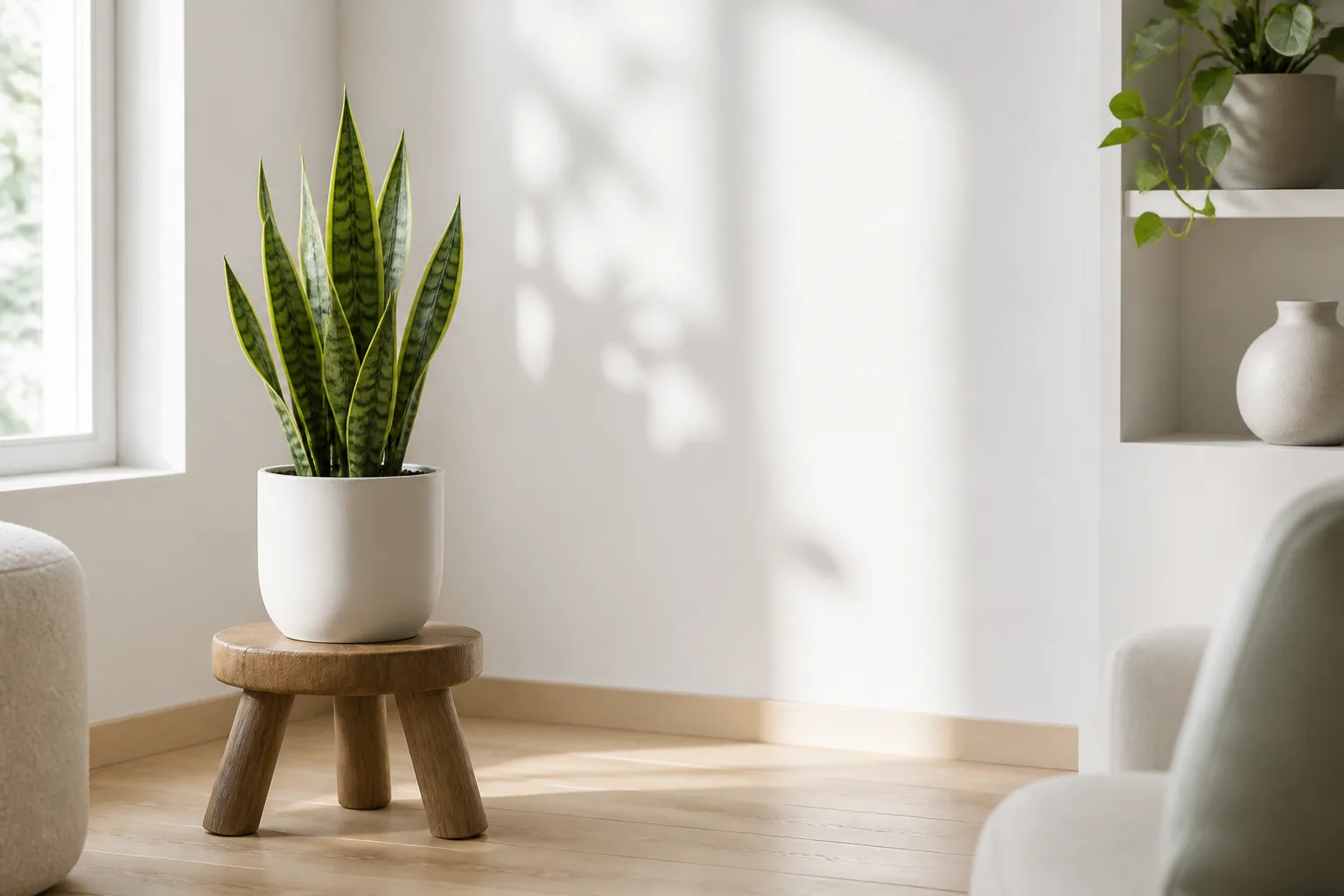
A plant can change the feel of a room before it produces a new leaf. The upright blades of a snake plant add a clean vertical line; a trailing pothos softens a shelf; a mature Monstera turns an empty corner into a focal point. The best aesthetic plants are not simply popular or photogenic. They have a silhouette, size, and texture that suit the room—and conditions that let them keep looking good.
That last part matters. A bright-window olive tree may be a beautiful choice in a sunroom and a frustrating one in a dim apartment. A large fiddle-leaf fig can finish a spacious living room but crowd a narrow walkway. Start with the light and usable floor space you actually have, then choose the look that fits.
Choose for your room, not just the photo
Before buying, watch the light where the plant will sit. Check at the plant’s leaf height in the morning, around midday, and later in the afternoon. Note whether direct sun reaches that spot, how long it lasts, and whether nearby buildings, trees, curtains, or tinted glass soften it. A phone light-meter app can help compare two locations, but it is not a substitute for observing the room across the day and seasons.
Then measure the footprint, not only the empty floor patch. A plant’s leaves need room to spread without brushing a sofa, blocking a door, or leaning into a path. Account for the pot, a saucer or outer planter, and the mature canopy; a young plant that looks compact at the shop can become a large piece of furniture.
Finally, decide what visual job the plant should do. A tall palm can soften a hard corner, a broad-leaved plant can anchor a low console, and a vine can draw the eye along a shelf. Better Homes & Gardens recommends combining different sizes and leaf shapes, while Homes & Gardens’ design advice starts with a focal plant and builds around it. Keep the styling useful: the best arrangement is one you can water, rotate, and dust without moving half the room. (Better Homes & Gardens; Homes & Gardens)
| Plant | Visual role | Best room fit | Main tradeoff |
|---|---|---|---|
| Bird of paradise | Broad, upright tropical leaves | Bright room with open floor space | Needs strong light and room to spread |
| Monstera deliciosa | Large, cut leaves; sculptural mass | Bright living room corner | Can become broad and heavy |
| Olive tree | Airy, silver-green canopy | Very bright sunroom or conservatory | Needs much more sun than a typical interior |
| Fiddle-leaf fig | Tall trunk and large leaves | Bright, spacious corner | Sensitive to poor placement and wet soil |
| Pothos | Cascading or climbing vines | Shelf, bookcase, or plant stand | Keep trailing leaves away from pets |
| Snake plant | Narrow, upright blades | Compact corner or narrow console | Slow growth; does not want frequent watering |
| Euphorbia | Graphic stems and unusual branching | Bright sill or dry, sunny display | Species vary; sap needs careful handling |
| Kentia palm | Fine arching fronds | Room that needs soft vertical height | Slow-growing and not a sun-baked window plant |
| Anthurium clarinervium | Dark, velvety leaves with pale veins | Bright shelf or table away from traffic | Wants warmth and more attentive moisture checks |
Nine aesthetic plants, matched to real spaces
Think of these as nine different design tools, not nine interchangeable green accents. Each one has a distinct outline and a different threshold for light, space, and attention.
Bird of paradise: a dramatic floor plant for bright rooms
Strelitzia reginae, the orange-flowered bird of paradise, brings the sort of height and broad foliage that can hold its own beside a sofa or low cabinet. Its paddle-shaped leaves create a strong, tropical silhouette, so the plant often works better as the one clear statement in a corner than as one more item in a crowded plant cluster. A simple, weighty planter gives the broad leaves a stable visual base.
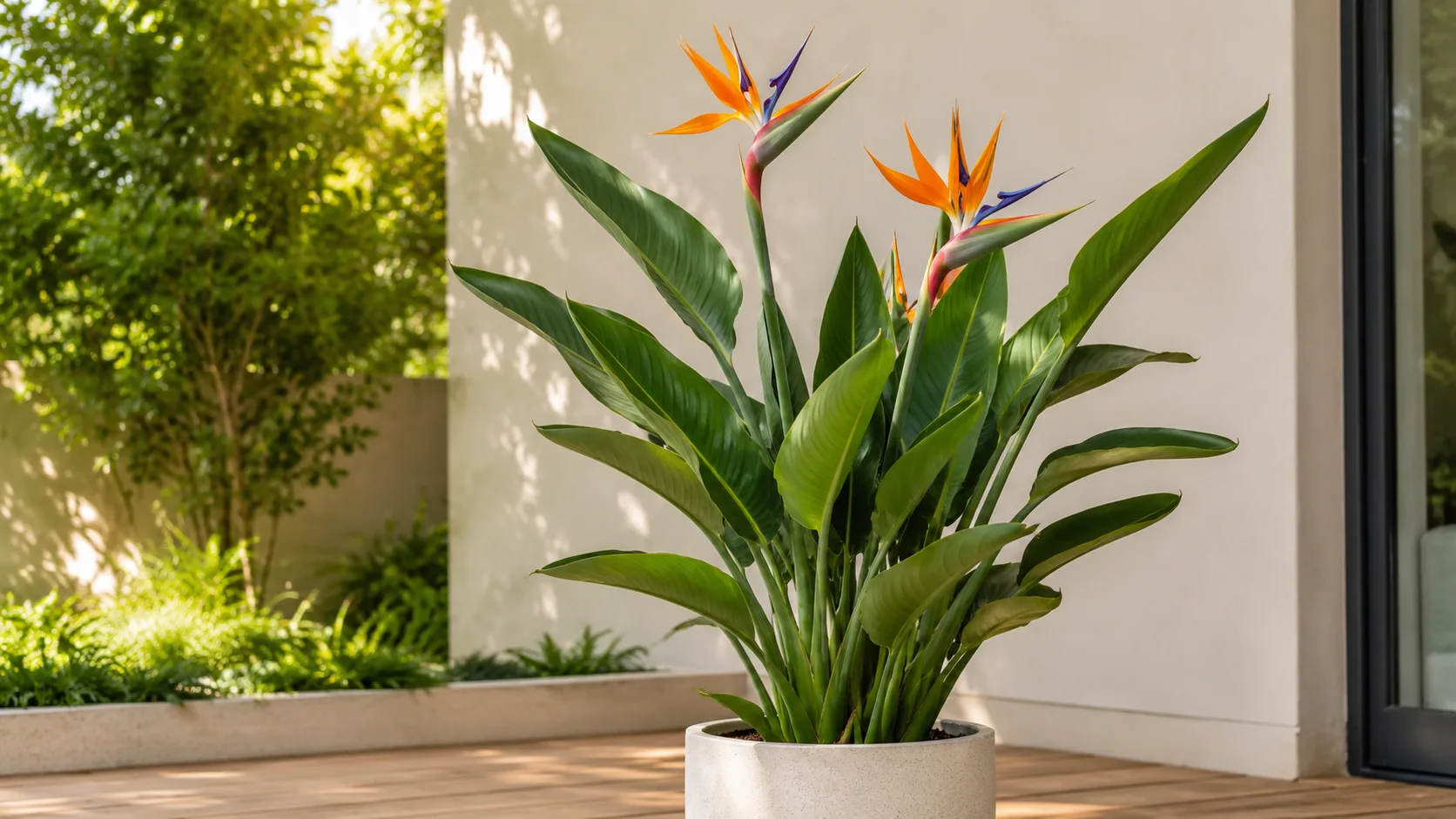
Give it a well-lit, sunny position and fertile, well-drained potting mix. NC State Extension describes it as a bright-spot plant and notes that it can be moved outdoors in warm weather; indoors, the foliage can still make the room look finished even if the plant never flowers. Allow generous clearance around the leaves, and avoid buying one for a dark corner simply because the leaves look lush in a product photo. (NC State Extension: Bird of Paradise Flower)
Monstera deliciosa: sculptural leaves with a wide footprint
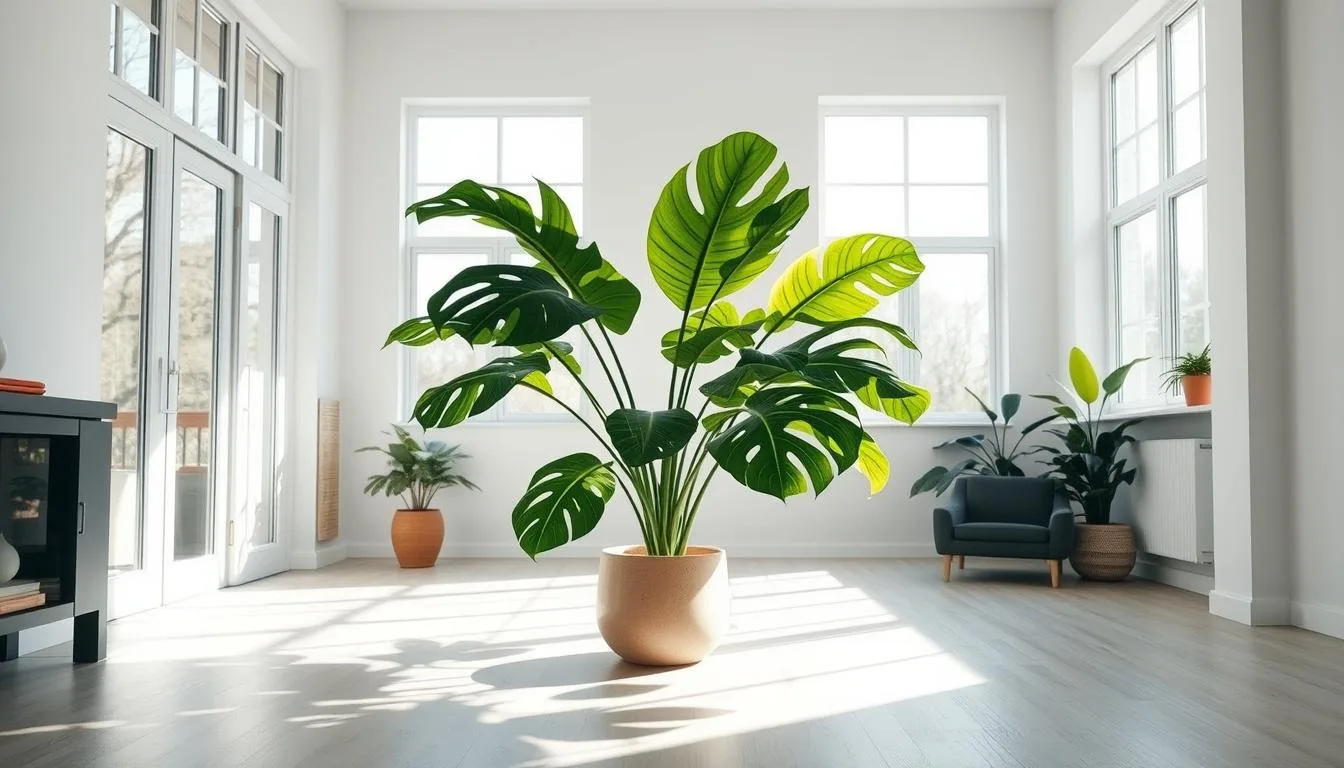
A Monstera is an easy choice when you want foliage that reads as architectural. Its large leaves develop natural holes and splits as they mature, creating a graphic shape that works well against a plain wall or beside a low, simple sofa. The look is lush but not delicate: one well-placed plant can be more effective than several small pots competing for attention.
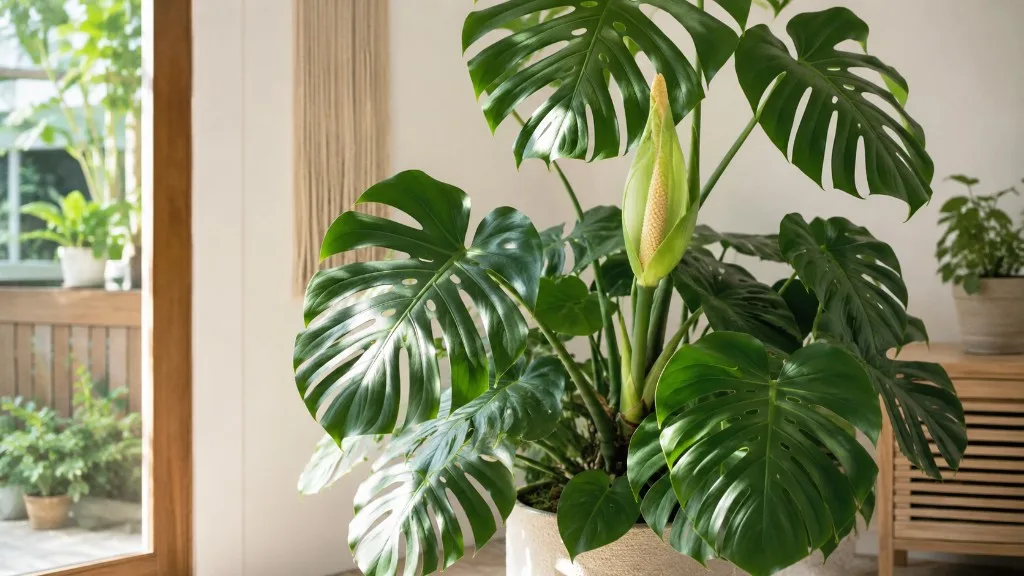
Plan for width as well as height. NC State Extension notes that Monstera deliciosa is a climbing vine that can reach roughly 6 to 8 feet in many home settings, prefers moderate brightness without direct sun, and needs sturdy support as it grows. A moss pole or simple trellis can keep it upright, but it will still need space for its leaves. It suits a bright living-room corner more than a narrow walkway or a dark shelf. (NC State Extension: Monstera deliciosa)
Olive tree: silver foliage for the sunniest rooms
An olive tree has a lighter, more restrained outline than a tropical statement plant. Narrow silver-green leaves and a visible woody trunk pair naturally with pale walls, warm wood, linen, and ceramic pots. If you want a plant that looks airy rather than jungle-like, the olive offers a different kind of texture.
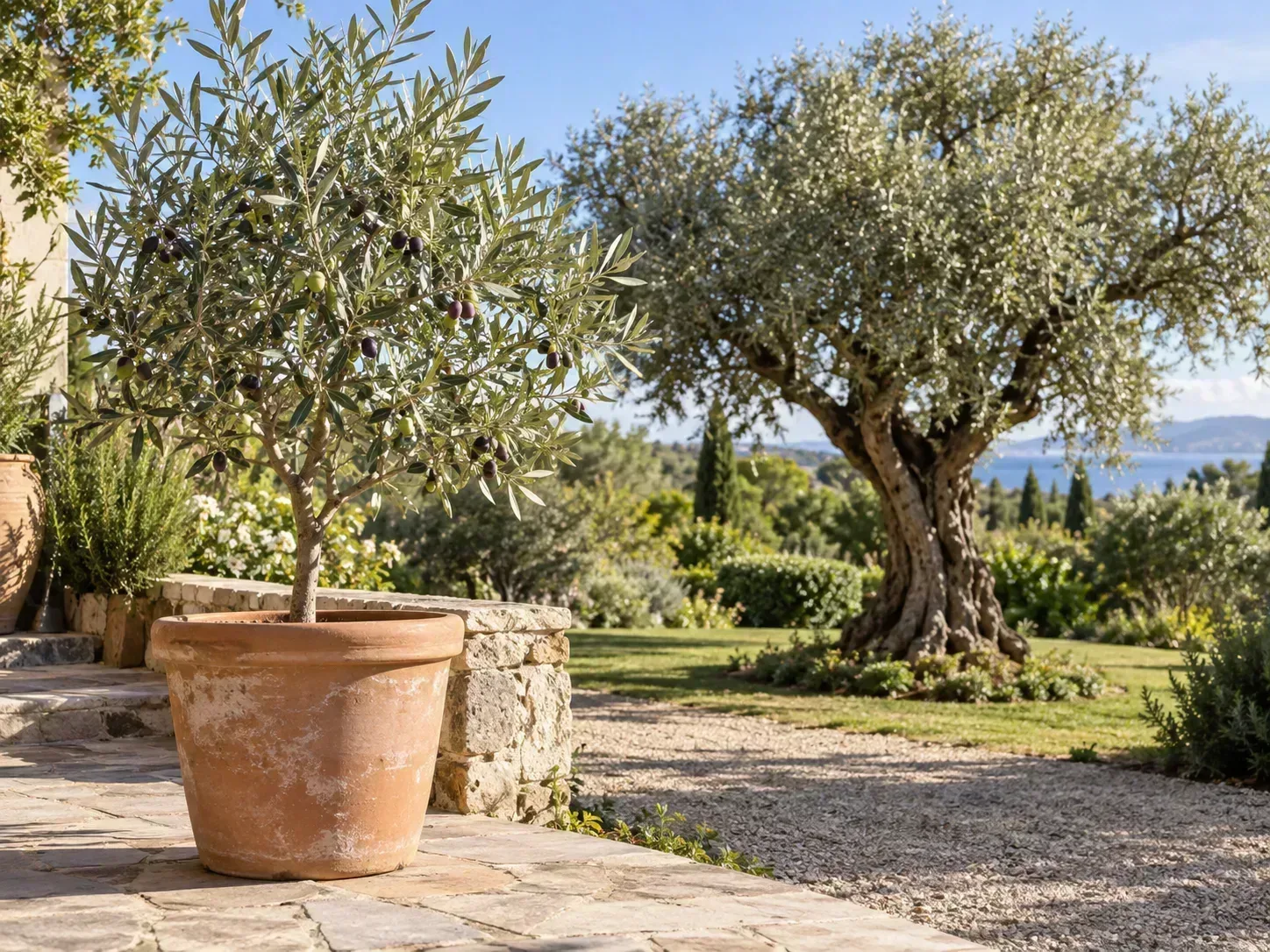
Treat an indoor olive as a high-light project. NC State Extension lists full sun—six or more hours of direct light daily—for Olea europaea, so a bright sunroom or conservatory is a more realistic home than an ordinary room several feet from a window. It can grow in a container and may fruit under suitable conditions, but do not buy it expecting a reliable indoor harvest: the tree needs a period of cool temperatures to flower, and growing two varieties can improve fruit set. The foliage itself is the dependable decorative feature. (NC State Extension: Olive)
Fiddle-leaf fig: a vertical focal point with strict light needs
The fiddle-leaf fig earns its place through scale: a woody stem, upright growth, and oversized, fiddle-shaped leaves create a strong vertical accent. It works best where there is visual breathing room around it—beside a window, in a spare living-room corner, or near a console with a clear top. A small room can still use one, but the plant should not obstruct circulation or block the light that it needs.
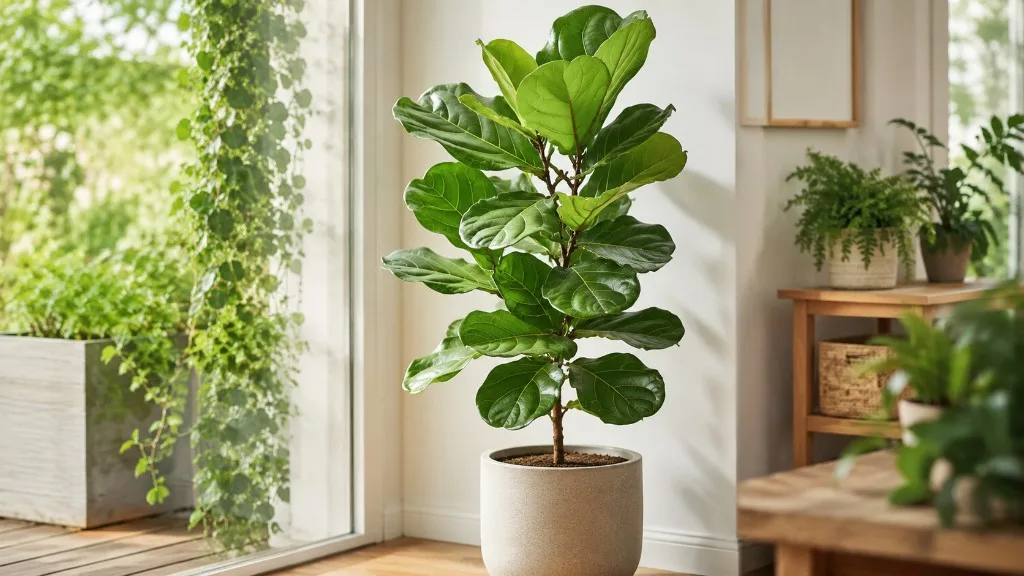
NC State Extension describes the fiddle-leaf fig as a tropical tree that may grow 2 to 10 feet tall as a houseplant. It prefers bright indirect light or partial shade, can scorch in harsh afternoon sun, and is sensitive to overwatering. Choose its permanent location before decorating around it; repeatedly shifting a large plant to chase a better composition can make care harder. The sap may irritate skin, and NC State lists the plant as toxic if ingested by people, cats, and dogs. (NC State Extension: Fiddle-leaf Fig)
Pothos: a trailing accent for shelves and stands
Pothos is the most flexible plant on this list for using vertical space. Set it on a bookcase, a high shelf, or a plant stand and its vines soften the hard line of the furniture. A compact pot can also sit on a desk or side table, where the leaves bring color without claiming the floor area a tree needs.
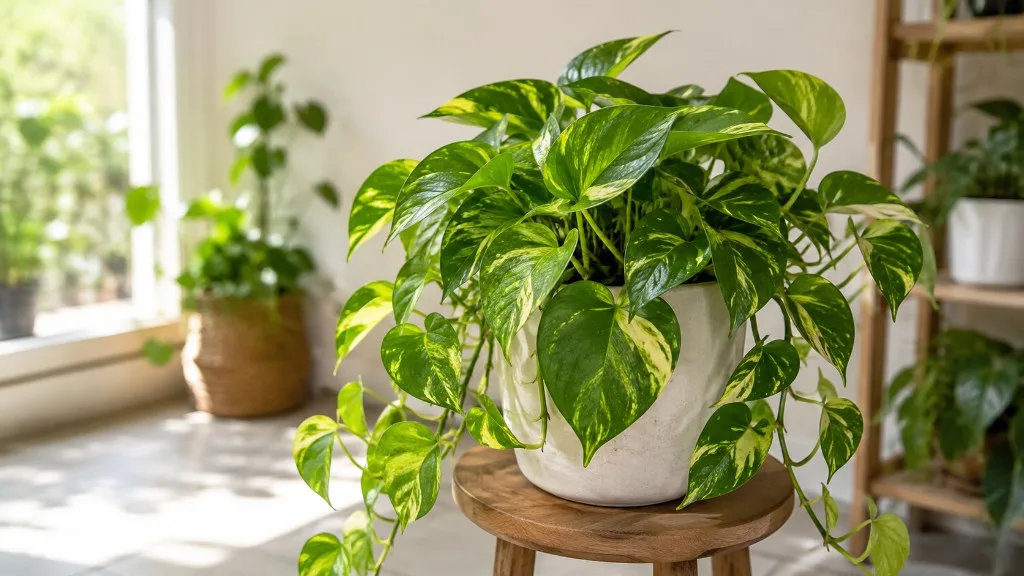
Bright, indirect light helps keep variegated leaves patterned, while NC State Extension notes that pothos can survive in lower light for a long time. “Survive” does not mean that every dark corner is a good choice: growth slows, stems can stretch toward a window, and some varieties lose contrast. Let the potting mix dry somewhat between waterings, and trim long stems when they become sparse. Because the vines hang within reach, choose a high placement only if pets and children cannot reach them; ASPCA lists pothos among plants toxic to cats. (NC State Extension: Pothos; ASPCA: Toxic and Non-Toxic Plants for Cats)
Snake plant: upright structure for compact corners
A snake plant gives a room a strong vertical line without the wide canopy of a palm or fig. It fits a narrow corner, an entry table with enough light, or a bedroom where you want a crisp, architectural accent instead of trailing foliage. Variegated leaves add a banded pattern; cylindrical or bird’s-nest types offer a different shape if you want the same upright effect in a smaller footprint.
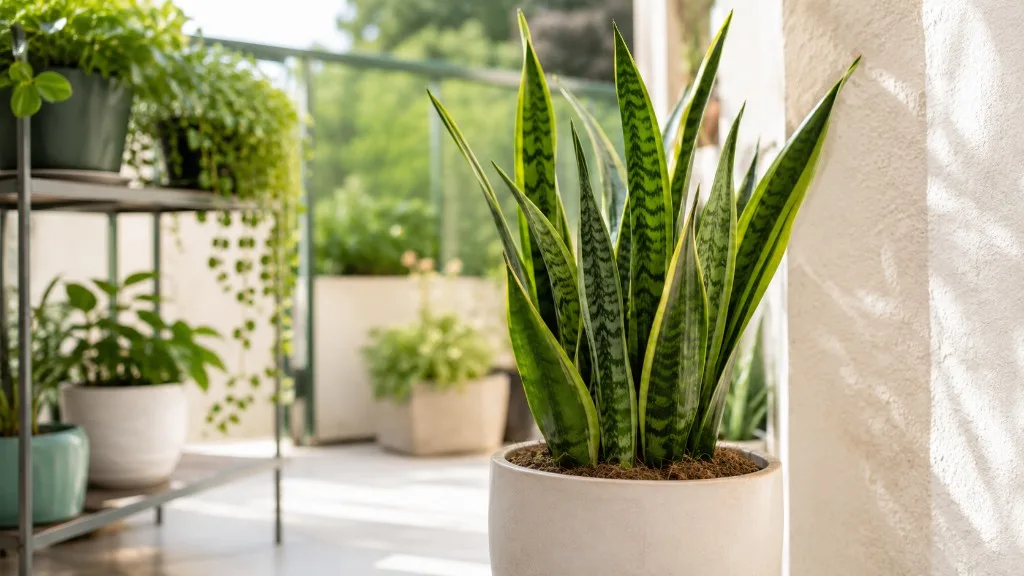
The plant’s reputation for toughness has one important limit: low-light tolerance is not darkness tolerance. NC State Extension says snake plants can tolerate very low light, but also stresses well-drained soil and careful watering; water less often when growth slows and let the mix dry between waterings. If its leaves soften or the base becomes mushy, look at the pot and watering routine before adding fertilizer. ASPCA lists snake plant as toxic to cats, so a pet’s ability to reach it matters more than the plant’s tidy appearance. (NC State Extension: Snake Plant; ASPCA: Toxic and Non-Toxic Plants for Cats)
Euphorbia: cactus-like form, with important handling cautions
Euphorbia is a genus, not one specific cactus. Some species grow as dense, branching columns; others have thinner stems or compact sculptural shapes. That range is part of the appeal, but it also makes the nursery label important: identify the actual species before buying, because height, spines, and care needs vary. The library photograph shows Euphorbia lomelii, a compact, narrow-stemmed example; a larger candelabra form such as E. ingens creates a very different silhouette.
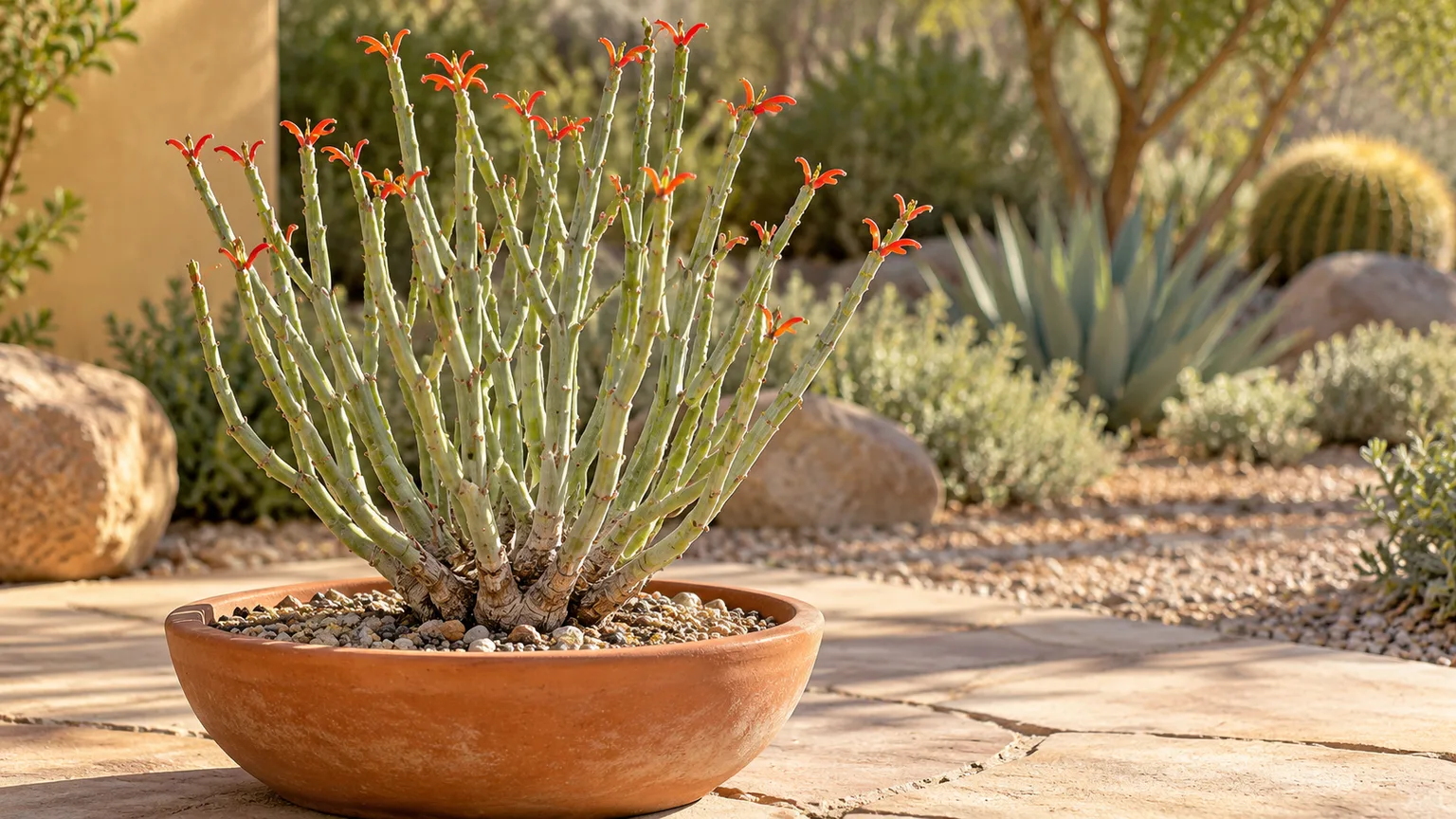
The NC State Extension genus profile explains that many Euphorbias resemble cacti, but are not true cacti; most prefer bright conditions, warm air, and sharply draining soil that dries between waterings. More importantly, cut stems release milky latex that can irritate skin and eyes. Keep sap away from children and pets, and use eye protection and gloves when pruning or repotting. This is a distinctive choice for a very bright, dry spot—not a carefree substitute for a cactus. (NC State Extension: Euphorbia)
Kentia palm: soft height for a calmer interior
Where a bird of paradise or fiddle-leaf fig can look bold, a Kentia palm feels softer. Its narrow arching leaflets make vertical height without the same mass of broad leaves, which can balance a room with hard furniture edges or soften a reading chair near a window. Choose a plant already close to the height you want: Kentia grows slowly, so buying a tiny specimen and expecting it to fill a tall empty corner soon is a poor shortcut.
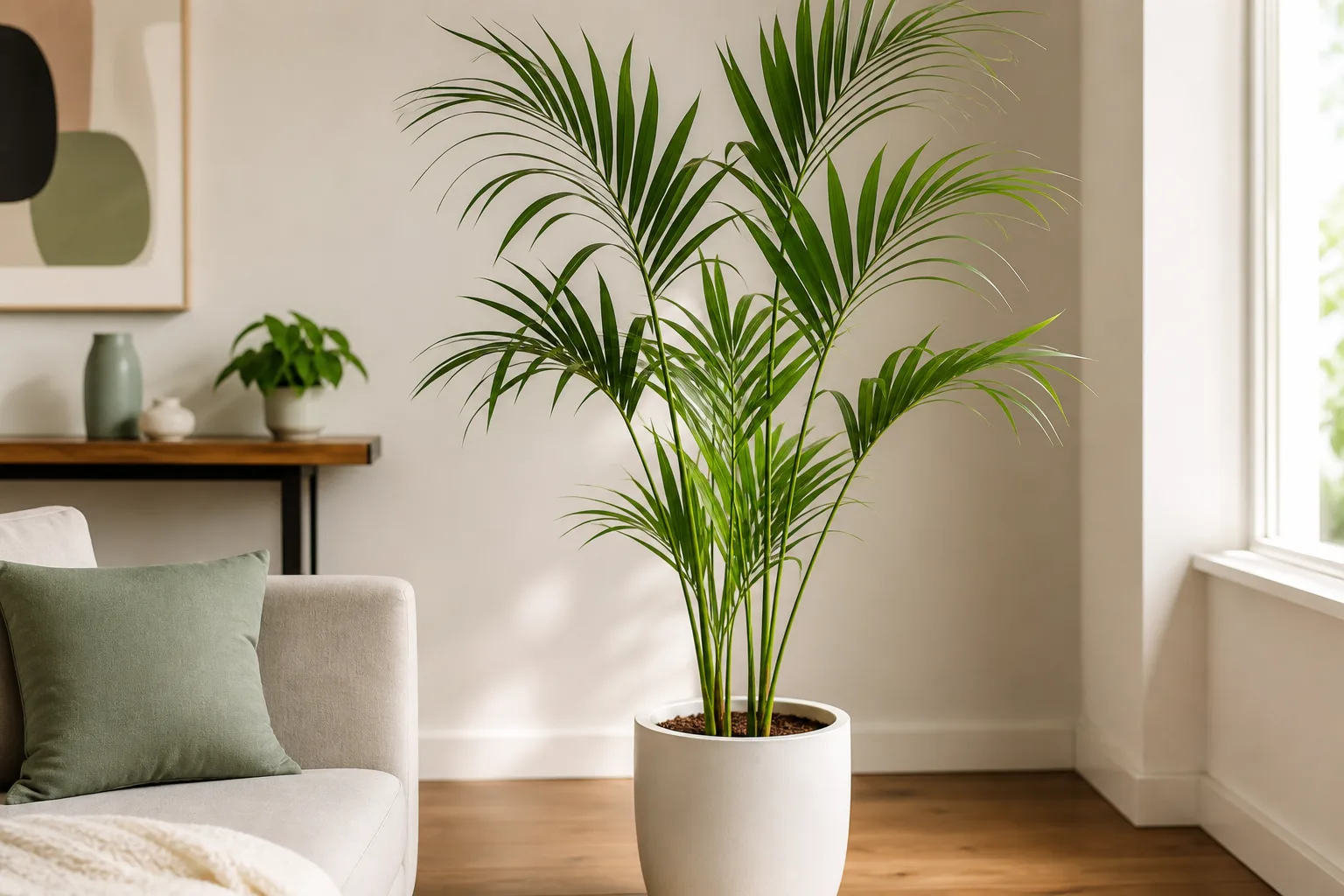
NC State Extension describes the Kentia as a slow-growing palm that tolerates lower light than many tropical plants, though it still needs moderate light for good growth. Keep it out of harsh direct sun and use a well-drained mix that does not stay waterlogged. Its growth habit suits a floor pot, but leave room for the fronds to arch rather than wedging them between walls and furniture. ASPCA includes Kentia palm on its non-toxic list for cats; that label is a useful distinction, but it does not mean a pet should eat houseplants. (NC State Extension: Kentia Palm; ASPCA: Non-Toxic Plants for Cats)
Anthurium clarinervium: velvety leaves for close-up interest
If the room needs a smaller plant with detail rather than height, Anthurium clarinervium makes a strong tabletop or shelf accent. Its thick, dark, heart-shaped leaves are traced with pale veins, so it looks finished even when the plant is still compact. Put it where you can see the leaf surface at eye level—on a sturdy stand, console, or shelf with enough depth for the pot.
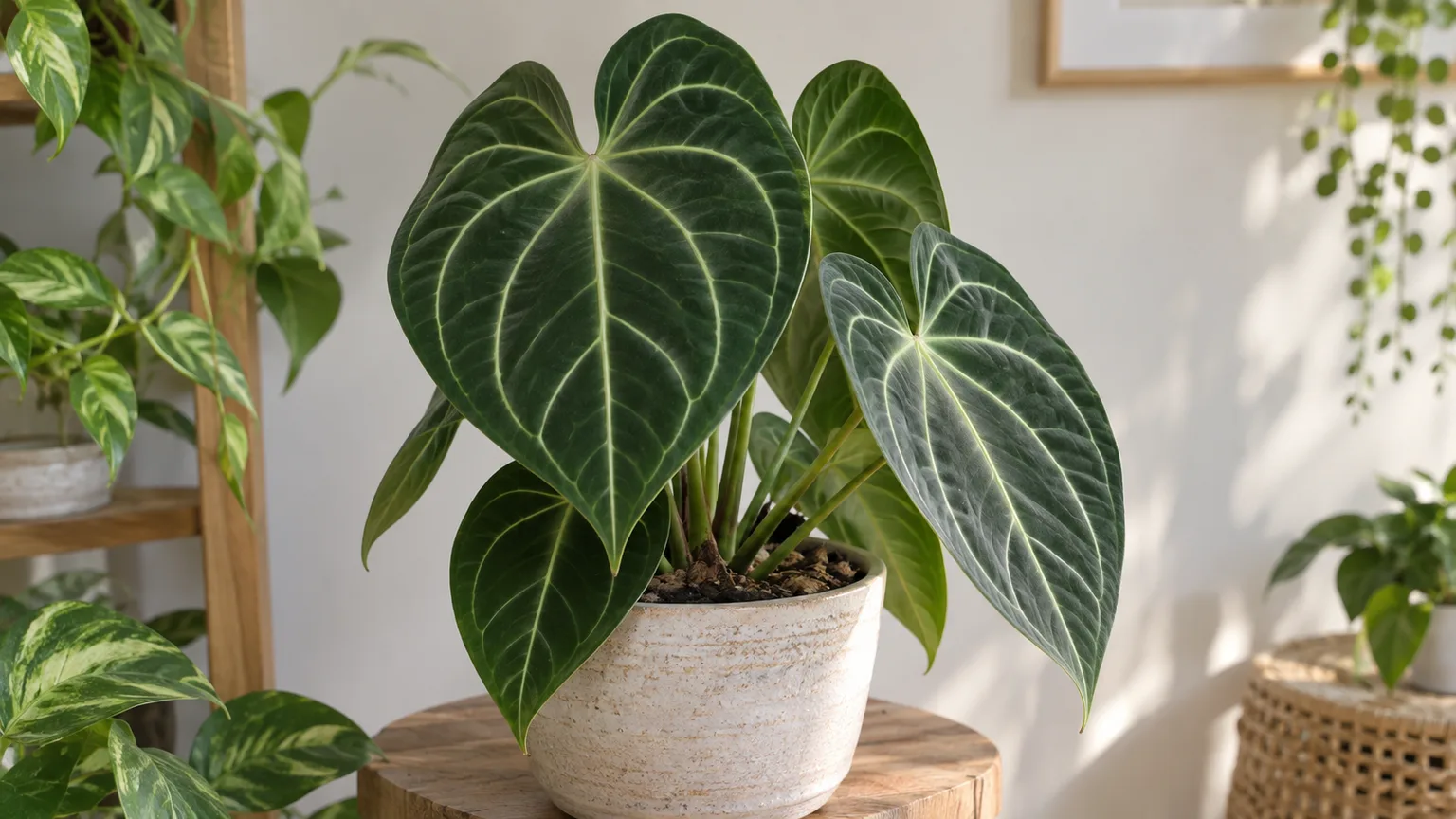
This is the most precise and less forgiving plant on the list. NC State Extension’s Anthurium genus profile recommends bright, indirect light, warm conditions, and a moist but well-drained medium; direct sun can scorch leaves, while too little light slows growth. Keep the plant away from heater blasts and cold drafts, and check the mix instead of watering on a fixed calendar. Because the genus contains many species with different habits, make sure the label says Anthurium clarinervium when that is the leaf shape you want. Anthuriums are toxic if ingested, so place them beyond the reach of pets and children. (NC State Extension: Anthurium)
Arrange plants with height, contrast, and breathing room
A good plant arrangement has a focal point, supporting shapes, and a little empty space. Start with one larger plant—perhaps a Kentia, Monstera, or bird of paradise—then add a smaller plant with a different leaf shape rather than another near-duplicate. A trailing pothos can connect levels; an Anthurium can supply a close-up detail; a snake plant can repeat the room’s vertical lines.
Vary height in deliberate steps. Put the tallest plant toward the back or beside furniture, lift a smaller plant on a stable stand, and use a trailing plant only where its vines will not snag, obscure a screen, or land in a pet’s reach. Designers quoted by Homes & Gardens suggest starting with a large focal plant and layering height, foliage shape, and vertical space; they also recommend grouping plants with similar care needs. This last point prevents an attractive display from becoming a care puzzle. (Homes & Gardens)
Give each plant enough light and access for routine care. Group plants only when their light and water needs overlap; a full-sun olive should not be hidden behind a Monstera just to create a symmetrical cluster. Leave a hand’s width between foliage where possible so you can clean leaves and check for pests. Use a cohesive pot palette—two or three materials or colors are usually enough—and vary pot size to keep the display from looking like a row of identical containers.
Treat the outer planter as a cover, not as a reason to ignore drainage. Keep the plant in a nursery pot with drainage holes, lift it out to water when practical, and empty any standing water from the cachepot or saucer. Choose a stand sturdy enough for the wet pot’s weight. A styling accessory that wobbles, traps water, or makes watering awkward will cost more time than the arrangement is worth.
Choose by light and care routine
If your room is dim, begin with the snake plant, Kentia palm, or pothos—but place them near the brightest available window, not deep in a windowless space. Their tolerance gives you flexibility, not a way to replace daylight. If a plant reaches toward the glass, produces long gaps between leaves, or loses variegation, move it closer to light gradually rather than expecting a decorative lamp to compensate.
For a bright but filtered window, consider Monstera, fiddle-leaf fig, Anthurium, or bird of paradise. Protect sensitive leaves from punishing afternoon rays behind glass, especially during hot months. If the light is direct for several hours, the olive tree or a sun-loving Euphorbia may be the better fit. An east-facing window is often a gentler starting point than a hot, unshaded west-facing window, but the building, latitude, season, and glazing can change the result.
Match your watering habits to the plant, too. If you tend to water frequently, choose a plant and potting mix that can dry appropriately between waterings; do not put a dry-loving Euphorbia in a dense, constantly damp mix because it looks good beside an Anthurium. If you travel or forget watering, a tough snake plant or pothos may be more forgiving than an olive or Anthurium. Better Homes & Gardens and NC State Extension both emphasize that plant groups need to fit the conditions available, not just the desired look. Start with one plant and learn its drying rhythm before adding several with different needs. (Better Homes & Gardens; NC State Extension: Pothos)
Plan for pets and children before styling
Check the botanical name, not just the common name or a photo. The ASPCA’s cat list includes Monstera deliciosa, pothos, snake plant, and Strelitzia reginae among plants toxic to cats, while Kentia palm appears on the non-toxic list. NC State also identifies fiddle-leaf fig, Anthurium, and bird of paradise as toxic if ingested; its plant profiles describe the severity and possible symptoms. These lists help you compare known risks, but they are not a reason to let an animal chew on a plant. (ASPCA: Toxic and Non-Toxic Plants for Cats; NC State Extension: Fiddle-leaf Fig; NC State Extension: Anthurium)
A high shelf is not automatically safe: cats climb, trailing leaves dangle, and a heavy floor plant can tip if a dog bumps it. Choose a room that can be closed off or a stable placement an animal cannot reach, and check the exact plant in a reliable pet-toxicity database before purchase. Euphorbia deserves extra care because its latex can irritate skin and eyes even without ingestion. If a pet or child chews a plant, identify it and contact a veterinarian, poison-control service, or medical professional for case-specific advice.
Avoid the styling mistakes that hurt the plant
The most common mistake is choosing the darkest corner because it looks empty. Many photos are taken near bright windows, but the plant may be sold later as if the same look will survive anywhere. If the room has little natural light, choose a tolerant plant, use a grow light that covers the actual foliage, or fill the corner with a non-living design object instead of repeatedly replacing a struggling plant.
Another mistake is buying by the plant’s current size. A Monstera can spread, a bird of paradise needs room for its leaves, and a fiddle-leaf fig can become a substantial floor specimen. Measure from the wall to the furniture edge and leave space to reach the pot. If you need the plant to stay compact, select a smaller-growing type, prune appropriately, or move it to a spot where its mature form is welcome; do not rely on a decorative cachepot to contain growth.
Avoid treating misting as a fix for every brown edge, or water as a routine rather than a response to the potting mix. Wipe dust from broad leaves with a damp soft cloth so they can show their color and texture. If leaves turn yellow or stems soften, check soil moisture, drainage, light, and temperature before changing several things at once. A plant that looks dull may need better light or a clean leaf, not more fertilizer.
Finally, resist buying a whole group before you know what thrives in your home. Try one plant in the intended spot, watch how it responds through a few weeks of changing light, and only then build the arrangement around it. A smaller display of healthy plants will always feel more polished than a crowded shelf of stressed leaves.
Conclusion
The most aesthetic plant for your home is the one whose shape you love and whose light, size, and care needs match the room. Choose a bird of paradise or Monstera for a bright, open corner; use pothos to soften a shelf; try a snake plant or Kentia when floor space is tight; reserve olives and Euphorbias for the very bright conditions they need. Anthurium clarinervium and fiddle-leaf fig reward a little more attention with distinctive foliage and scale.
Measure first, identify the plant by its botanical name, and keep pet access in mind. One well-placed plant with room to grow will do more for a space than a trendy collection that cannot thrive there.



