13 Popular Gardenia Varieties and Their Differences
Compare 13 gardenia varieties by size, flower form, bloom season, and cold tolerance, then match a cultivar to your garden, patio, or container before you buy.
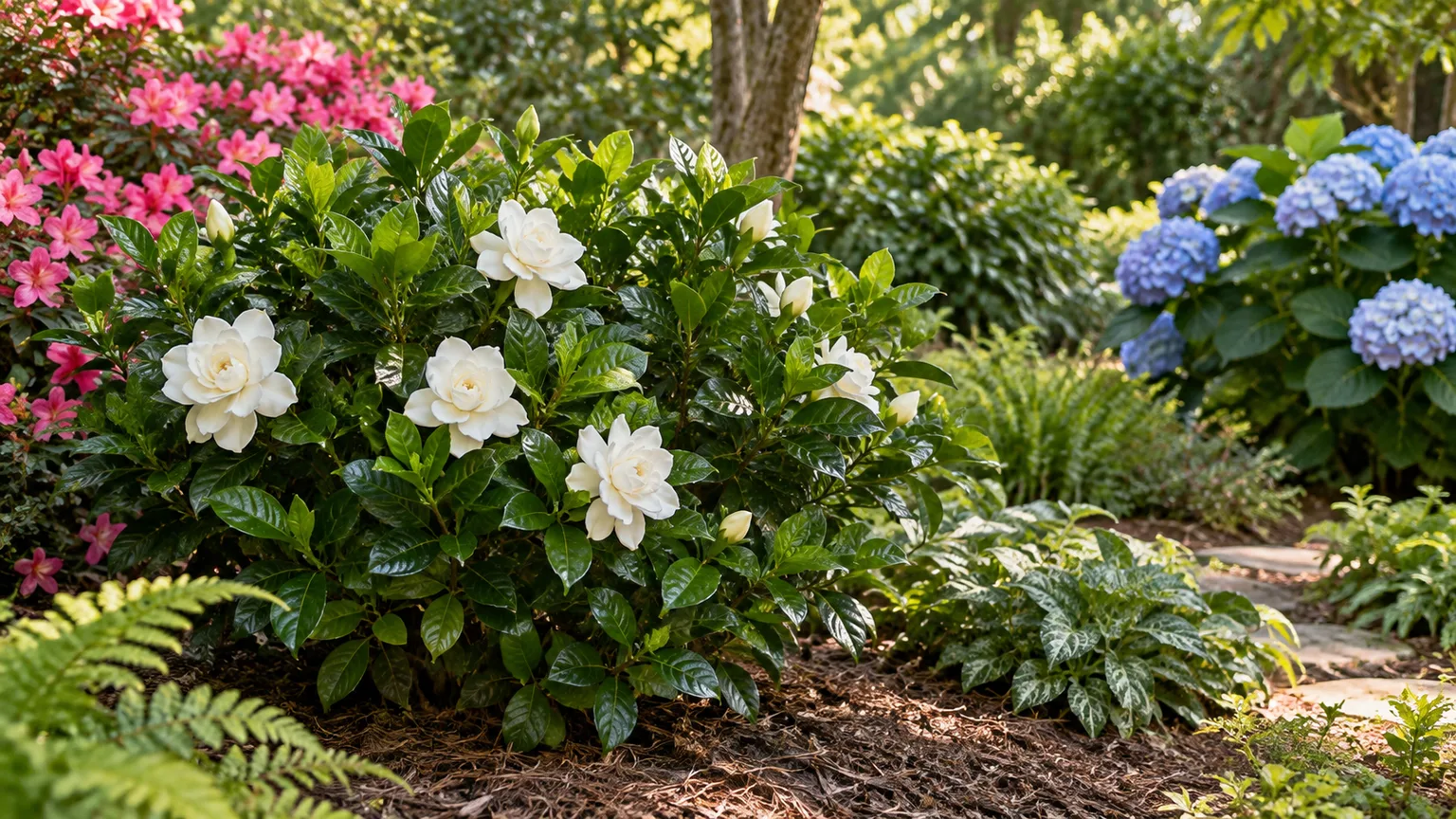
Gardenias are easy to want and easy to misplace. A compact cultivar that suits a patio pot may disappear in a large border, while a vigorous shrub selected for a hedge can outgrow the narrow bed beside a walkway. Start with the space and winter conditions you can offer, then choose flower form and bloom season.
Most gardenias sold for landscapes are cultivars of Gardenia jasminoides, also called Cape jasmine. The familiar glossy foliage and white fragrance are shared across many selections, but mature size, branching habit, flower shape, and flowering pattern vary. One entry below, Tahitian gardenia, is a different species altogether.
What sets one gardenia variety apart?
Four traits make the biggest difference when you compare gardenia cultivars: mature footprint, flower form, flowering schedule, and cold tolerance. Mature height alone is not enough; a low, spreading plant can take more ground space than a taller upright shrub, and a plant’s size in a nursery pot tells you little about the bed it will occupy in five years.
Flower form also affects the look of a shrub. Single flowers show the petals and central stamens clearly, while double cultivars have layered petals that look fuller and often larger. Neither form is inherently better; singles give a cleaner, star-like appearance, while doubles create a lush display and may be preferred for cut flowers.
Bloom descriptions need careful reading. “Spring through fall” can mean scattered flowers over a long period rather than a shrub covered in bloom for months. Rebloom may also depend on warmth, light, plant establishment, and whether pruning removes developing buds. UF/IFAS lists clear differences among cultivars such as spring-flowering ‘Miami Supreme’ and ‘Mystery,’ later-blooming ‘Aimee’ and ‘Mary Ann,’ and compact ‘Veitchii’ with multiple flowering cycles. UF/IFAS, “Gardenias at a Glance”
13 gardenia varieties at a glance
The figures below are useful for shortlisting, not guarantees. Published mature sizes and hardiness descriptions can vary by region, nursery, and growing conditions, so confirm the plant tag and ask a local nursery or extension office about performance in your area.
| Variety | Typical habit or size | Flower and bloom notes | Best starting point |
|---|---|---|---|
| ‘Aimee’ | Large shrub, often 5–8 ft tall | Very large double flowers; late spring to early summer | A focal shrub with room to mature |
| ‘August Beauty’ | Medium, rounded; about 4–6 ft | Double flowers; often flowers over a long warm season | Long display in a warm garden |
| ‘Buttons’ | Dwarf, roughly 2–3 ft | Semi-double, button-centered flowers | Containers and compact beds |
| ‘Crown Jewel’ | Low mound, about 2–3 ft tall and wider | Double flowers; can flower on old and new wood | A compact gardenia for a cooler site |
| ‘Fortuniana’ | Large, about 6–8 ft | Large double flowers, often compared with camellias | Large border or specimen planting |
| ‘Frostproof’ | Upright, around 5 ft | Double flowers; early summer, sometimes later flushes | Areas with occasional late-spring chill |
| ‘Jubilation’ | Compact, about 3–4 ft | Double flowers with repeat bloom potential | A smaller shrub with a long season |
| ‘Kleim’s Hardy’ | Mounded, about 2–3 ft | Single, star-shaped flowers; late spring or early summer | Small beds and containers in cooler regions |
| ‘Pinwheel’ | Medium to large, often upright | Distinctive pinwheel-like flowers; usually early-season | A shrub where flower shape can be seen up close |
| ‘Mystery’ | Upright, about 5 ft | Large double flowers; spring to early summer | A vertical accent with oversized blooms |
| ‘Radicans’ | Very low and spreading, commonly 6–18 in. tall | Small double flowers; late spring to early summer | Groundcover or the edge of a container |
| ‘Veitchii’ | Compact to medium, about 4 ft | Smaller double flowers; repeated flowering is common | A container or fragrant entry planting |
| Tahitian gardenia | Tropical shrub, about 4–6 ft | Star- or pinwheel-shaped flowers; warm-season flowering | Frost-free gardens or protected containers |
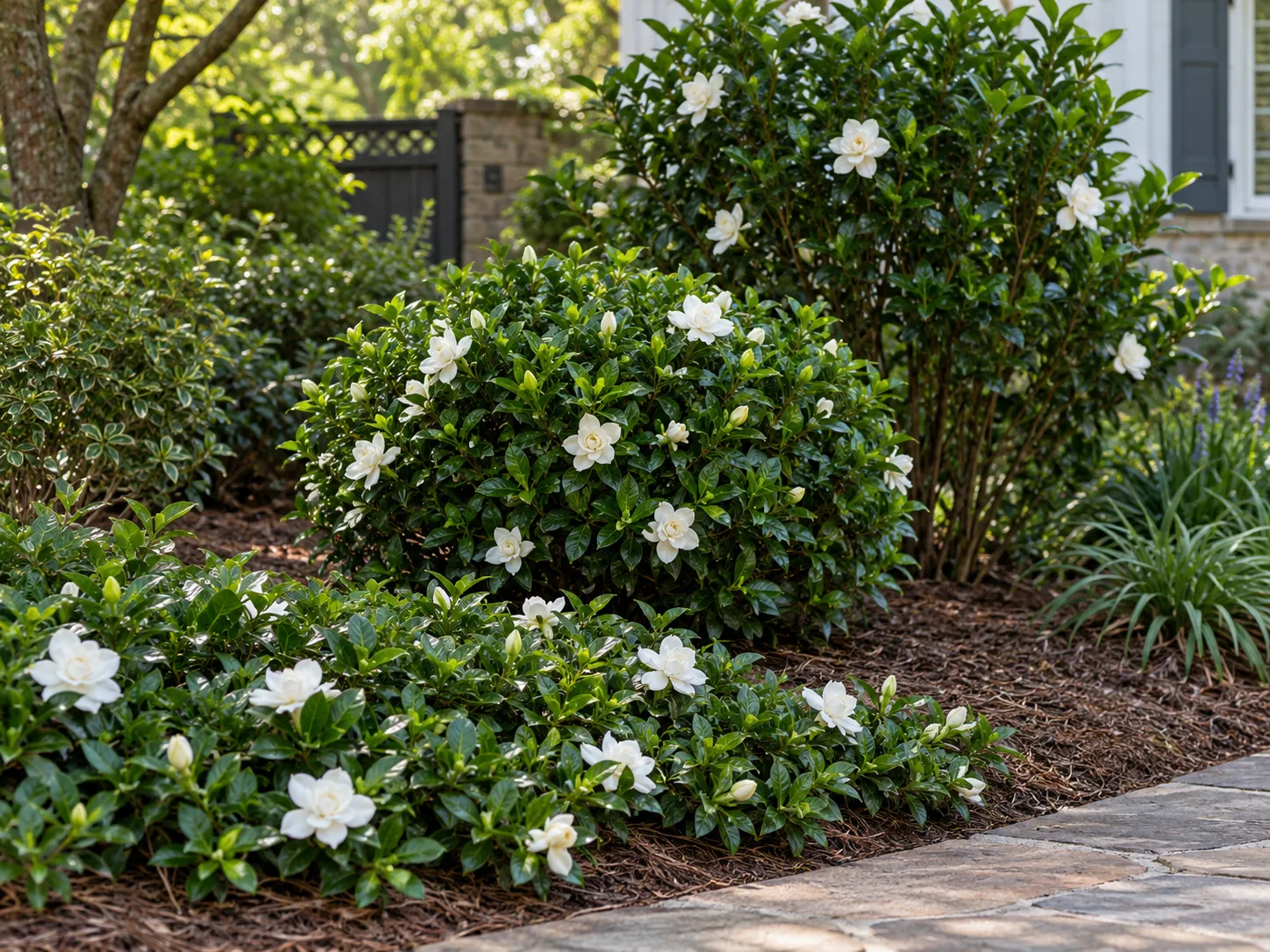
The table compresses a complex topic, so treat its measurements as planning ranges rather than fixed specifications. If a cultivar’s zone rating is central to your choice, compare regional extension guidance and ask which named cultivar and rootstock the nursery is actually selling.
Compact gardenias for containers and small beds
Compact does not always mean miniature. Some gardenias stay short but spread broadly, and a container restricts roots while making winter exposure more severe. For a pot, consider the mature width, drainage, and whether you can move or protect it before you decide based only on the word “dwarf.”
Buttons: a small shrub with double flowers
‘Buttons’ is a rounded dwarf cultivar valued for semi-double white flowers with a button-like center. It commonly stays around two to three feet in both directions, making it easier to place near a patio or at the front of a border than large selections such as ‘Fortuniana.’ The small flower is not a weak point if you want many blooms across a compact shrub rather than a few oversized flowers.
Its dense shape can work in a container, but the pot still needs enough volume for a woody shrub and free drainage. Choose it for a manageable footprint and a distinctive flower center, not because it will need no care. Gardenia.net describes ‘Buttons’ as a compact, fragrant cultivar that blooms in late spring or early summer, with occasional flowers later in summer. Gardenia.net, dwarf varieties
Crown Jewel: compact and more cold-tolerant
‘Crown Jewel’ combines a low, spreading habit with full double flowers, typically around three inches across. It is often selected for containers or smaller gardens because it can remain about two to three feet tall while spreading wider. Give it horizontal room; its width can exceed its height.
It is one of the better-known cold-tolerant gardenias, and sources describe it as hardier than many common cultivars. Some horticulture references place it as far north as Zone 6, but that rating should not be read as a guarantee that every plant will keep its foliage or flower buds through a Zone 6 winter. NC State Extension calls it more cold hardy than most cultivars without promising a universal minimum temperature. NC State Extension Plant Toolbox Gardenia.net, dwarf varieties
Kleim’s Hardy and Radicans: two different low forms
‘Kleim’s Hardy’ is a rounded mound with single, star-shaped flowers and a compact footprint, generally around two to three feet tall and wide. NC State Extension lists it as hardy to about 10°F; that is a cultivar-specific reference point, not a promise of undamaged leaves, stems, or flower buds in every garden. It is a sensible candidate for a small sunny-to-partly-shaded bed where you can provide acidic, well-drained soil and wind shelter.
‘Radicans’ is shorter and more horizontal. It commonly stays under two feet tall while spreading two to three feet or more, so it can edge a walkway, spill across a low retaining wall, or fill a shallow container without blocking the view behind it. NC State Extension describes it as a dwarf groundcover reaching about six to eighteen inches in height and spreading two to three feet. Choose ‘Radicans’ when ground coverage matters; choose ‘Kleim’s Hardy’ when you want a distinct rounded shrub and a single-flowered look. NC State Extension Plant Toolbox
Varieties chosen for long or repeat bloom
Some cultivar descriptions emphasize repeat bloom, but no gardenia should be expected to flower continuously in every location. A new plant needs time to establish, and cold, drought, deep shade, poor drainage, or pruning at the wrong time can interrupt the display. If bloom duration is your main criterion, confirm both the cultivar name and how it performs in your region.
August Beauty, Jubilation, and Veitchii
‘August Beauty’ is a rounded medium-sized shrub with double flowers and a reputation for flowering over an extended warm season. Despite its name, it is not limited to August. It can be a good choice where you want a fuller shrub that flowers beyond one brief spring flush, provided the site gives it room and enough light.
‘Jubilation’ is more compact, typically three to four feet high, with double white flowers and repeat-bloom potential into summer and fall. It can fit a small foundation bed better than the larger types, though it still needs the same acidic soil and consistent moisture as other gardenias. Its selling point is the combination of manageable scale and a longer flowering window.
‘Veitchii’ has a compact-to-medium habit and is noted for repeated flowering cycles. UF/IFAS characterizes it as a compact plant with smaller flowers produced two or three times a year, while NC State Extension lists a long bloom period and a height around four to six feet. This makes it a useful candidate near an entry or patio, where you can enjoy fragrance without requiring a hedge-sized plant. UF/IFAS, “Gardenias at a Glance” NC State Extension Plant Toolbox
Large flowers and distinctive shrub shapes
A showy flower can be an excellent reason to choose a cultivar, but match the plant’s eventual size to the spot. Large-flowered gardenias are not automatically the most fragrant or the most reliable bloomers, and cutting or pruning flowers can change the display. Think about the view from a window, path, or seating area as well as the catalog photo.
Aimee, Fortuniana, and Mystery
‘Aimee’, sometimes sold as ‘Aimee Yoshida’ or under the trade name ‘First Love’, is known for very large double flowers, often described as four to five inches wide. It is a large shrub that can reach five to eight feet tall, so it suits a focal position or generous border rather than a tight foundation strip. UF/IFAS lists ‘Aimee’ among later-blooming cultivars, which can make it useful if you are trying to extend the gardenia season beyond earlier spring selections.
‘Fortuniana’ is another large plant, often reaching six to eight feet in both height and width. Its double flowers are commonly compared in appearance with camellias. Allow space for its full footprint and avoid treating it as a compact container plant unless you are prepared to prune and repot carefully over time.
‘Mystery’ grows upright and is often chosen for large double flowers, reported around four to five inches wide. It can work as a vertical accent in a warm-climate shrub border, but its height and flower size make site selection more important than squeezing it into a narrow bed. UF/IFAS includes ‘Mystery’ among cultivars known for larger blooms and spring flowering. UF/IFAS, “Gardenias at a Glance” NC State Extension Plant Toolbox
Pinwheel: a floral shape worth noticing
‘Pinwheel’ stands out for the way its narrow petals form a rotating, pinwheel-like flower. Its size is less compact than the dwarf types; published descriptions place it in the medium-to-large shrub range. Plant it where a visitor can see the flower shape from close range, such as beside a path or seating area, rather than relying on the plant to serve as a low edging shrub.
Hardiness claims for individual cultivars can differ among sellers and references, and ‘Pinwheel’ is not listed in every extension plant profile. Before buying for a marginal winter climate, ask the grower for the cultivar’s tested regional range and whether the plant is grafted. If the answer is only a broad zone label, treat that as a lead to verify rather than a guarantee.
Frostproof: resilience to a spring chill
‘Frostproof’ is chosen for better tolerance of late spring frost than many common gardenias. Its name is easy to overread: it does not make the plant immune to a hard winter freeze, nor does it guarantee that every flower bud survives a sudden cold snap. It is commonly described for Zone 7 and warmer climates, but a protected site and good drainage still matter.
The cultivar has an upright, moderately sized form and double white flowers that usually begin in early summer, with sporadic bloom possible later. If your main concern is a late frost after warm days have started new growth, ‘Frostproof’ may reduce that risk compared with a tenderer cultivar. If your winters regularly fall well below the cultivar’s local range, look instead for a genuinely cold-adapted shrub or grow a gardenia in a movable pot that you can protect. Gardener’s Path, “15 of the Best Gardenia Varieties” NC State Extension Plant Toolbox
Tahitian gardenia belongs to a tropical species
Tahitian gardenia, Gardenia taitensis, is not a cultivar of G. jasminoides. It is a tropical species associated with Tahiti and the Pacific, with star-shaped or pinwheel-like flowers and a warmer-climate growing range. It can reach roughly four to six feet in favorable conditions and may flower over a long warm season.
Treat it as a tropical plant, not as a tougher alternative to Cape jasmine. It is appropriate for frost-free landscapes or a container that can be moved into protection when temperatures fall. If a nursery label simply says “Tahitian gardenia,” check the botanical name: common names can be applied loosely, and the species identity changes what winter conditions it can handle.
Make the variety work by matching the site
A cultivar’s strengths show only when its basic needs are met. UF/IFAS recommends well-drained, organically enriched soil and a pH around 5.0 to 6.5; soils that are too alkaline can restrict nutrient availability and cause new foliage to yellow. North Carolina Extension likewise advises acidic, rich, well-drained soil and protection from cold wind. If the planting area is built over alkaline fill near concrete, or stays wet after rain, a different shrub may be a better investment than an expensive gardenia. UF/IFAS, Gardenias NC State Extension Plant Toolbox
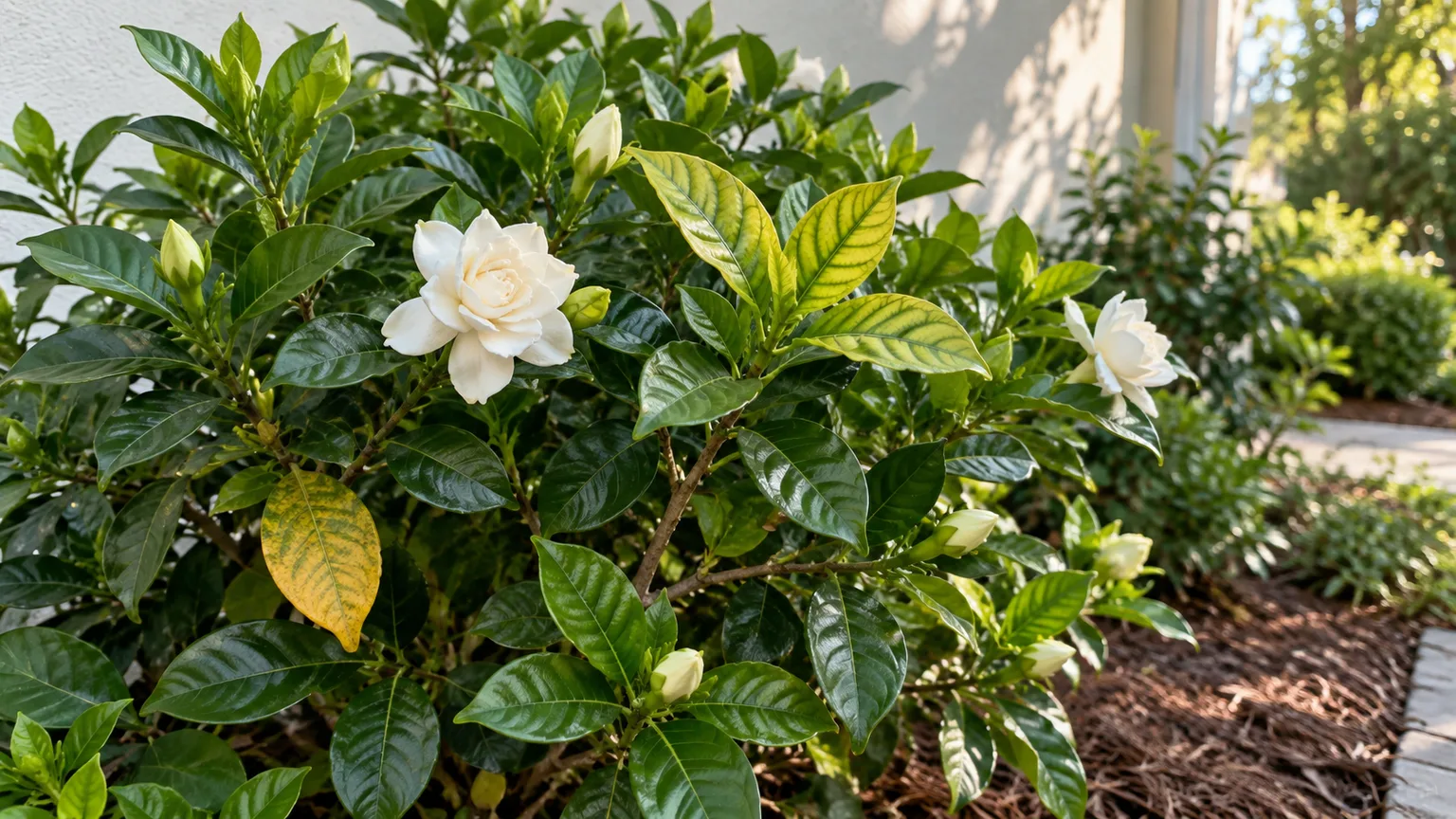
New leaves that yellow can be a clue to unsuitable soil pH or root stress; changing cultivars will not correct the site problem.
Use hardiness zones as screening, not promise
A zone rating is a first filter, not a guarantee that a gardenia will look untouched after winter. Wind exposure, drainage, snow cover, freeze duration, plant age, and the difference between an established in-ground plant and an exposed container can all change the result. A shrub may survive a winter but lose leaves or flower buds, which is different from maintaining an attractive evergreen shape and a full spring bloom.
Compare ratings from credible horticultural sources and prioritize local evidence. NC State Extension describes ‘Kleim’s Hardy’ as hardy to about 10°F and says ‘Crown Jewel’ and ‘Jubilation’ are hardier than many cultivars; editorial sources sometimes list wider zone ranges for the same selections. Those statements are not interchangeable. Ask a local nursery which cultivars have survived several winters in your county, and whether they mean survival, foliage retention, or reliable flowering.
Check soil, sun, and root space before planting
Gardenias generally flower best in bright conditions with some protection from harsh afternoon sun in hot climates. UF/IFAS says full sun, partial shade, or shifting shade can all work, while NC State Extension notes that bright indirect light or partial shade is suitable. The practical test is whether the site receives good light without punishing heat, has room for airflow, and does not force the shrub to compete with a large tree’s roots.
For a container, select a pot with drainage holes and use a mix intended for acid-loving plants; a garden soil blend that holds water can keep roots too wet. Check moisture during the establishment period, but do not let the root ball remain saturated. Containers also expose roots to colder air than garden soil does, so move or insulate a potted gardenia in climates near its hardiness limit.
Pruning advice varies by extension source and cultivar. UF/IFAS recommends pruning after flowering and warns that hard pruning late in the year can reduce next season’s bloom; NC State Extension describes spring pruning and notes that flowers appear on new growth. Because bloom timing and wood-age behavior can differ, remove dead or damaged branches when needed, shape lightly after the main flush, and avoid severe pruning before you know when your plant sets buds. Ask your local extension service for advice if the plant is a valuable specimen or has an unusual bloom cycle. UF/IFAS, Gardenias NC State Extension Plant Toolbox
A nursery label can also hide important differences. Confirm the full cultivar name, mature height and spread, whether the plant is own-root or grafted, and which species is used for the rootstock. UF/IFAS notes that grafting onto Gardenia thunbergia can improve vigor and nematode resistance in parts of Florida, but those plants are not cold hardy below about 28°F; that trade-off matters if you live outside the warm regions where the rootstock is useful. UF/IFAS, “Gardenias at a Glance”
Conclusion
Choose a gardenia by working backward from your site. For a low groundcover, compare ‘Radicans’; for a compact mound, consider ‘Buttons’ or ‘Kleim’s Hardy’; for a wider, cold-tolerant dwarf, investigate ‘Crown Jewel’; for larger blooms, look at ‘Aimee’, ‘Fortuniana’, or ‘Mystery’; and for a tropical accent, choose Tahitian gardenia only where frost will not be a regular threat.
Before you buy, match the plant’s mature spread to the space, verify the exact cultivar and rootstock, and make sure your soil drains well and stays acidic enough. Those checks are more useful than choosing by flower size or a zone number alone.



