Basket Flower Care: How to Grow Centaurea americana
Learn how to grow basket flower from seed, choose a sunny site, water young plants, manage self-sowing, and keep tall stems blooming without guesswork.
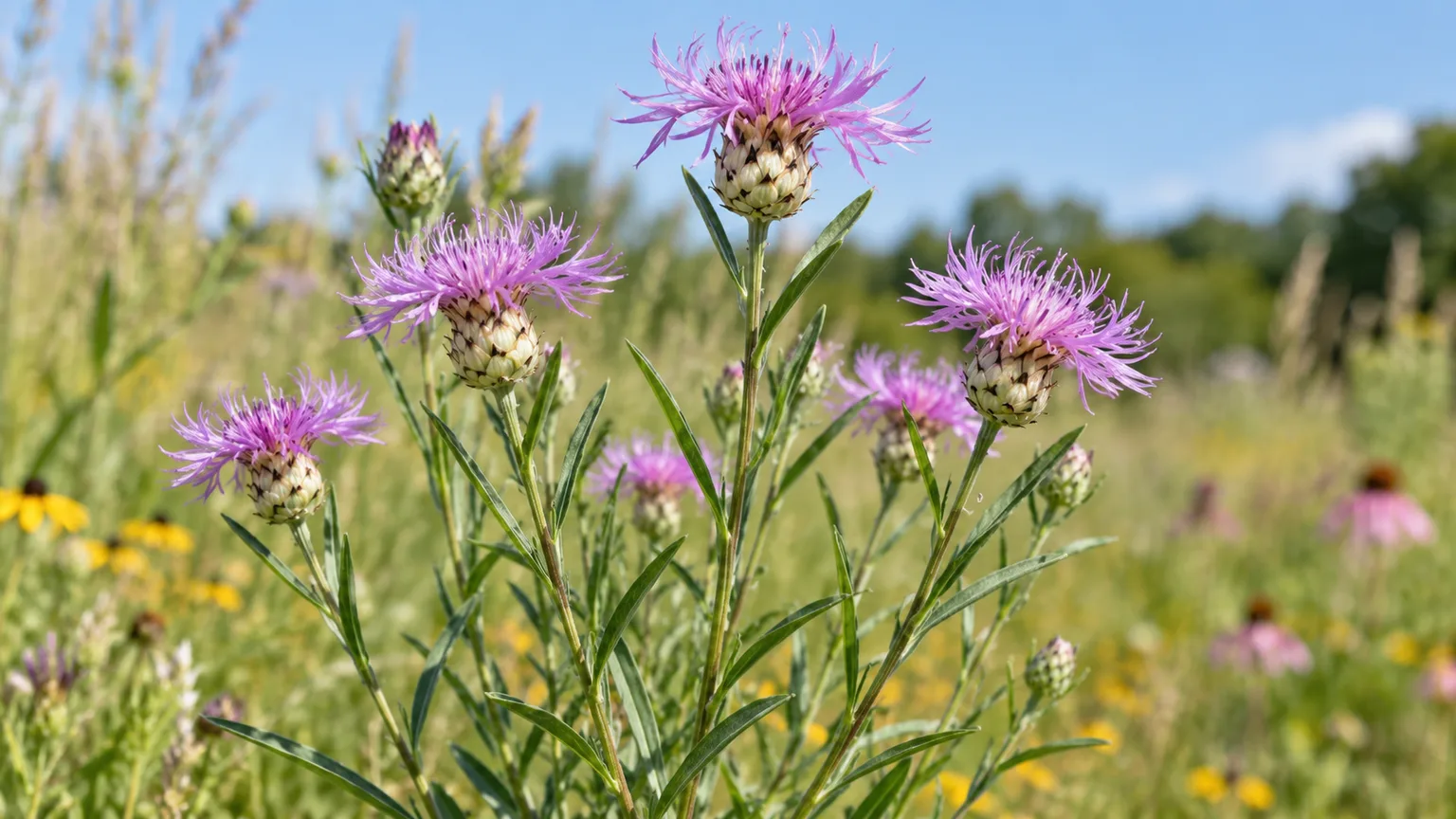
Basket flower, or American basketflower (Centaurea americana), is a tall annual wildflower grown for large, fringed pink-lavender blooms and the straw-colored bracts that weave around each flower head. The simplest way to grow it is to sow seed outdoors in a sunny, well-drained spot, keep the soil evenly moist until seedlings establish, then water only when dry weather lasts long enough to stress the plants. Let a few flowers set seed if you want volunteers next year; remove the rest before seed falls.
This plant rewards a little planning more than constant care. It can reach several feet tall, flowers best with strong light and open air around its stems, and often reseeds itself. Those traits make it excellent in a meadow-style bed or the back of a border, but less suited to a tiny container or a formal planting where every seedling must stay in place.
Basket Flower at a Glance
| Growing detail | What to expect |
|---|---|
| Botanical name | Centaurea americana |
| Life cycle | Annual; may return by self-seeding |
| Mature size | Commonly about 2–4 feet, with taller plants possible |
| Light | Full sun is best; light shade is tolerated |
| Soil | Well-drained, from ordinary loam to sandy or rocky ground |
| Bloom season | Spring into summer, shifting with local climate and sowing date |
| Best use | Meadow, pollinator planting, back of a sunny border, and cut flowers |
The size and bloom calendar are estimates, not guarantees. A long, warm season can produce taller plants, while compact or dry conditions may keep them shorter; regional references also report different flowering windows. Oklahoma State University Extension documents the species as an annual native from the south-central United States and gives a May-to-July flowering period for Oklahoma, while the University of Texas at Austin’s Texas wildflower database records blooms from April through August. Use local weather and the seed packet as your schedule, not a fixed national month.
What Basket Flower Looks Like—and What It Is Not
Basket flower is in the aster family. Its flower head is made of many small florets, with showy pink to lavender rays around a paler center. Beneath the flower, overlapping, straw-colored bracts create a woven pattern; after petals fade, the remaining brown head can still look like a little basket. The narrow leaves are arranged alternately along the stem and do not have the sharp spines that define many true thistles.
The common name “American starthistle” can cause confusion because several unrelated or non-native thistles are invasive in parts of North America. Oklahoma State’s identification profile specifically warns readers not to mistake basket flower for a thistle; its lookalike quality comes from the flower shape, not a close relationship. If you are weeding a field or roadside, check leaf edges and flower-head bracts before pulling a plant simply because it has a purple bloom. Oklahoma State University Extension’s basketflower profile includes useful identifying photos, and its thistle identification guide also notes that American basketflower is not closely related to true thistles.
Choose a Sunny, Well-Drained Site
Choose a site that receives at least six hours of direct sun. Basket flower can tolerate some afternoon or dappled shade, but too little light tends to make a naturally tall plant stretch toward the sun and lean. Full sun also dries the foliage more quickly after rain or dew, which helps in humid areas where crowded plants can develop leaf disease.
Drainage matters more than a perfect soil recipe. The species grows in grasslands and prairie settings, including shallow or rocky soils, and can handle ordinary garden soil if water does not sit around its roots. Missouri State University’s plant identification notes describe basket flower in prairies and rangeland with full sun to part shade and fertile, drier soil; Gardenia’s horticultural profile recommends full sun and well-drained soil from dry to medium moisture.
Avoid the low spot that stays wet after storms and the heavily amended bed that receives frequent nitrogen feeding. A modest layer of compost can improve very poor soil, but do not turn the seedbed into a rich, water-retentive pocket. This is a prairie annual, not a plant that needs a constantly moist, highly fertilized border.
When to Plant Basket Flower Seeds
For a straightforward spring crop, sow outdoors around the last frost date, once the bed is workable and the soil is beginning to warm. If late frost remains likely, wait or cover a small sowing during a brief cold snap; the goal is to give seedlings a long growing season without exposing fragile emergence to repeated freeze-thaw swings. In a mild-winter region, follow the packet’s regional recommendation because fall or winter sowing schedules vary by seed strain and local rainfall.
Seed can be started indoors about six to eight weeks before the local last frost, but an indoor start is optional. Direct sowing avoids transplant stress and is usually easier when you have a suitable sunny patch. Basket flower seeds do not need soaking or a cold-stratification treatment before sowing, according to The Seed Collection’s species-specific grow guide.
Do not delay seed until the hottest part of summer unless you are intentionally making a later succession sowing and can keep the seedbed moist. The seeds need contact with damp soil to germinate, while newly emerged seedlings are much less drought tolerant than established plants. In warm climates, an earlier sowing that uses cool-season moisture can be easier to establish than a summer sowing.
Direct-Sow for the Simplest Start
First clear the planting strip of weeds, then loosen only the top few inches of soil. Break up large clods and rake the surface level; deep digging is unnecessary unless compaction prevents drainage. For a natural meadow effect, scatter small pinches of seed over a prepared patch. For a more deliberate border, place seeds where you want individual plants to grow.
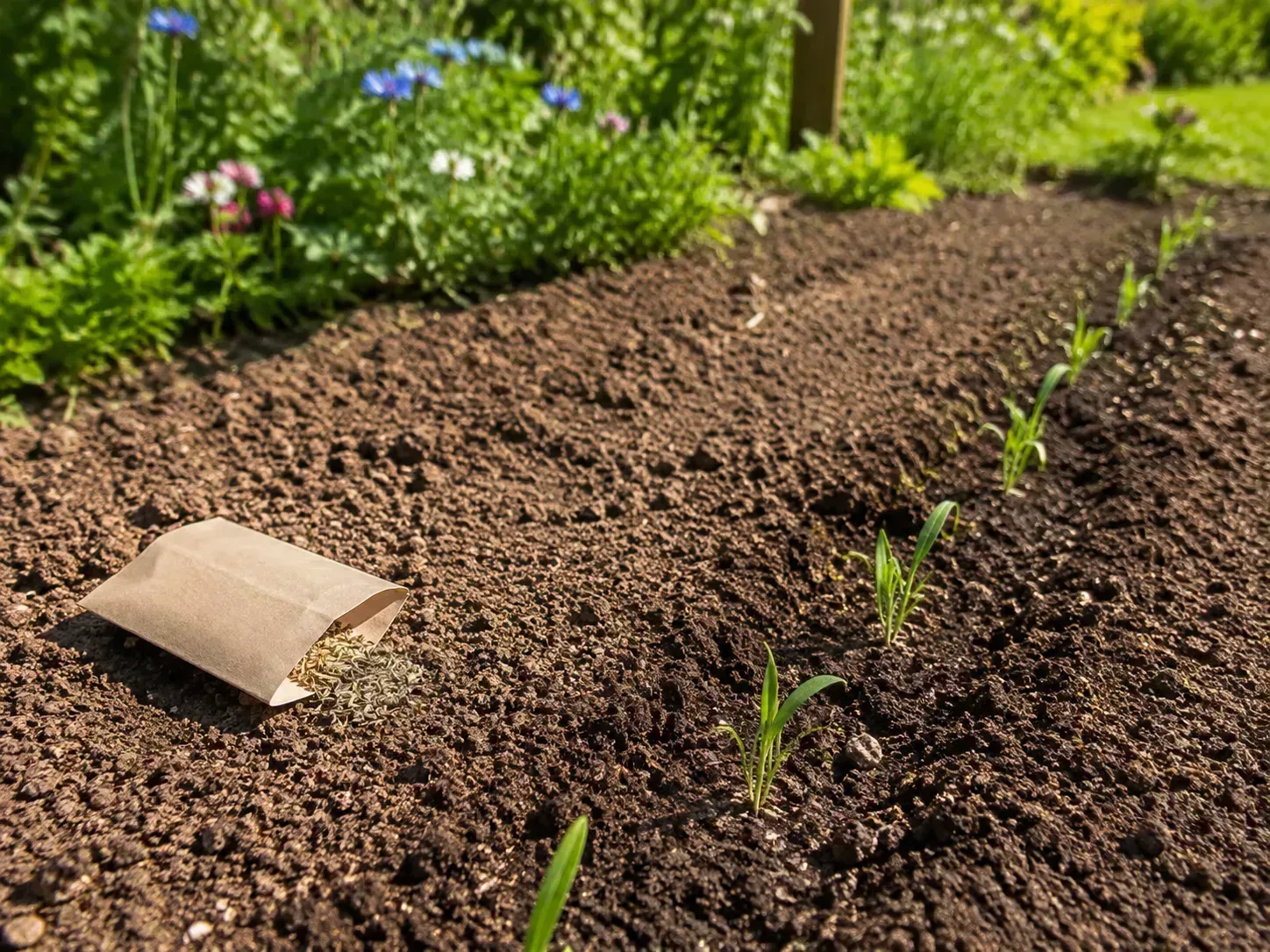
Cover seeds lightly, about one-eighth to one-quarter inch deep. Do not bury them under a thick layer of soil or mulch, which can delay or prevent emergence. A species-specific guide from The Seed Collection suggests roughly one-eighth inch and a soil temperature near 59–68°F for germination; it reports a two- to three-week window under those conditions. Treat those figures as a useful range rather than a deadline, since soil temperature and seed freshness vary.
Water with a fine spray so the seeds stay in place. Keep the upper layer consistently damp, not waterlogged, until seedlings appear; a light straw cover can reduce surface drying, but remove or thin it if it blocks light or traps moisture. Mark the sowing row so you do not mistake young plants for weeds. If germination is patchy, wait through the expected window and check whether the surface crusted or dried before re-sowing.
Start Seed Indoors When You Need a Head Start
Indoor sowing makes sense when the outdoor season is short, birds scratch up seed, or you want to place a few plants precisely in a border. Use individual cells or small pots with drainage holes and a clean seed-starting mix. Sow one or two seeds per cell, cover lightly, and keep the mix evenly moist in a bright, warm location. If both seeds sprout, snip the weaker one at soil level rather than tugging near its neighbor.
Basket flower does not need a long indoor nursery period. Transplant when seedlings are sturdy enough to handle and before roots become crowded or tangled; keep the root ball intact and water the new planting thoroughly. Harden the seedlings outside for about a week, beginning in bright shade and gradually exposing them to more sun and wind. This adjustment reduces transplant shock, especially when indoor seedlings have been grown in still, protected air.
The choice is practical rather than botanical: direct sowing is cheaper and simpler; indoor starts offer placement control but add equipment and transplanting. If you have only a few seeds, a small cell tray can stretch them into a designed clump. If you want a broad naturalized patch, direct sowing is normally the more efficient method.
Thin Seedlings and Plan for Their Mature Size
Seedlings may emerge close together after broadcasting. Thin them when they have a few true leaves, leaving roughly eight to twelve inches between plants for an ordinary bed. The Seed Collection recommends about eight inches, while Baker Creek’s basketflower growing guide gives a six- to nine-inch range. In humid climates, richer soil, or a site with limited airflow, leave closer to twelve inches or more so foliage dries quickly.
Use the wider end of the range if you want strong cut-flower stems or need to walk between plants. Tighter spacing can create a fuller display, but it also means more competition and more tangled stems. Basket flower has relatively little branching low on the plant and branches higher up; dense lower growth can look sparse even if the flowers are crowded near the top.
Decide where height belongs before thinning. Put plants behind shorter annuals or perennials, but avoid shading neighbors that need direct sun. A loose group of three or five plants is easier to support and deadhead than a solid, tightly packed block.
Water Young Plants, Then Let Soil Dry Between Waterings
Germinating seed and young seedlings need a steady supply of moisture in the surface soil. Water gently when the top layer begins to dry, checking daily in warm, windy weather and less often after rain. The objective is damp soil around the seed, not a saturated bed; standing water can rot seed or stunt roots before the plant has a chance to develop.
After plants have several sets of leaves and are growing steadily, water more deeply but less frequently. Check moisture below the surface with a finger or a small trowel; if the root zone is still cool and damp, wait. Once established, basket flower tolerates dry spells better than it tolerates persistently wet soil, so a calendar-based watering schedule is less useful than checking the bed.
During a prolonged hot, rainless stretch, soak the root zone early in the day rather than giving small daily sprinkles. Container plants need closer monitoring because pots heat up and dry faster than garden soil. If plants wilt only in afternoon heat but recover by morning, check the soil before watering; if they remain limp at dawn and the root zone is dry, water thoroughly.
Fertilizer: Why Less Is Usually Better
In reasonably fertile soil, basket flower usually needs no routine fertilizer. Its natural habitats include open grassland and prairie, and overfeeding can push tall, soft foliage at the expense of sturdy stems and flowers. If the planting spot is severely depleted, incorporate a small amount of finished compost before sowing rather than feeding repeatedly after growth begins.
Do not try to fix weak flowering with a high-nitrogen lawn fertilizer. If plants are leafy but bloom poorly, first review sun exposure, sowing date, and waterlogging. Those conditions are more likely explanations than a lack of fertilizer. In a container, nutrients leach out more quickly, but begin with a quality potting mix and add a conservative, balanced feed only if growth becomes pale or stops despite good light and appropriate watering.
Support, Pinch, and Deadhead at the Right Time
Most plants in a sunny, open bed can stand without support, but exceptionally tall stems may bend after heavy rain or in exposed wind. A discreet stake, short pea fence, or horizontal support net installed while plants are young is less disruptive than trying to tie up a tangled clump after it falls. If the site is frequently windy, sowing in a slightly tighter group or placing basket flower among sturdy neighboring plants can also reduce flopping.
Pinching is optional. Removing the growing tip while a plant is still small can encourage branching and a bushier shape, but it may delay the first flowers and reduce the height valued in a cut-flower row. Try it on only a few seedlings the first season, then compare them with unpinched plants. Avoid pinching late in the season, when there may not be enough time for new branches to form flower buds.
Deadhead spent blooms if you want to extend the display and prevent seed from dropping everywhere. Cut the fading flower stem back to a leaf or side shoot, and keep some healthy heads if you want to collect seed or encourage volunteers. For bouquets, cut stems when flowers have just opened, remove leaves that would sit under water, and place the stems in a clean bucket promptly; Select Seeds’ basket flower growing notes recommend harvesting at the start of bloom.
Grow Basket Flower in a Container
Basket flower can grow in a pot, but it is not a hanging-basket plant despite its common name. The “basket” describes the bracts under the flower head, not a trailing growth habit. Choose a heavy container with drainage holes and enough soil volume to buffer moisture and anchor a tall plant. The Seed Collection recommends at least 20 liters, about five U.S. gallons, for a mature plant; a larger, deeper pot is easier to keep stable.
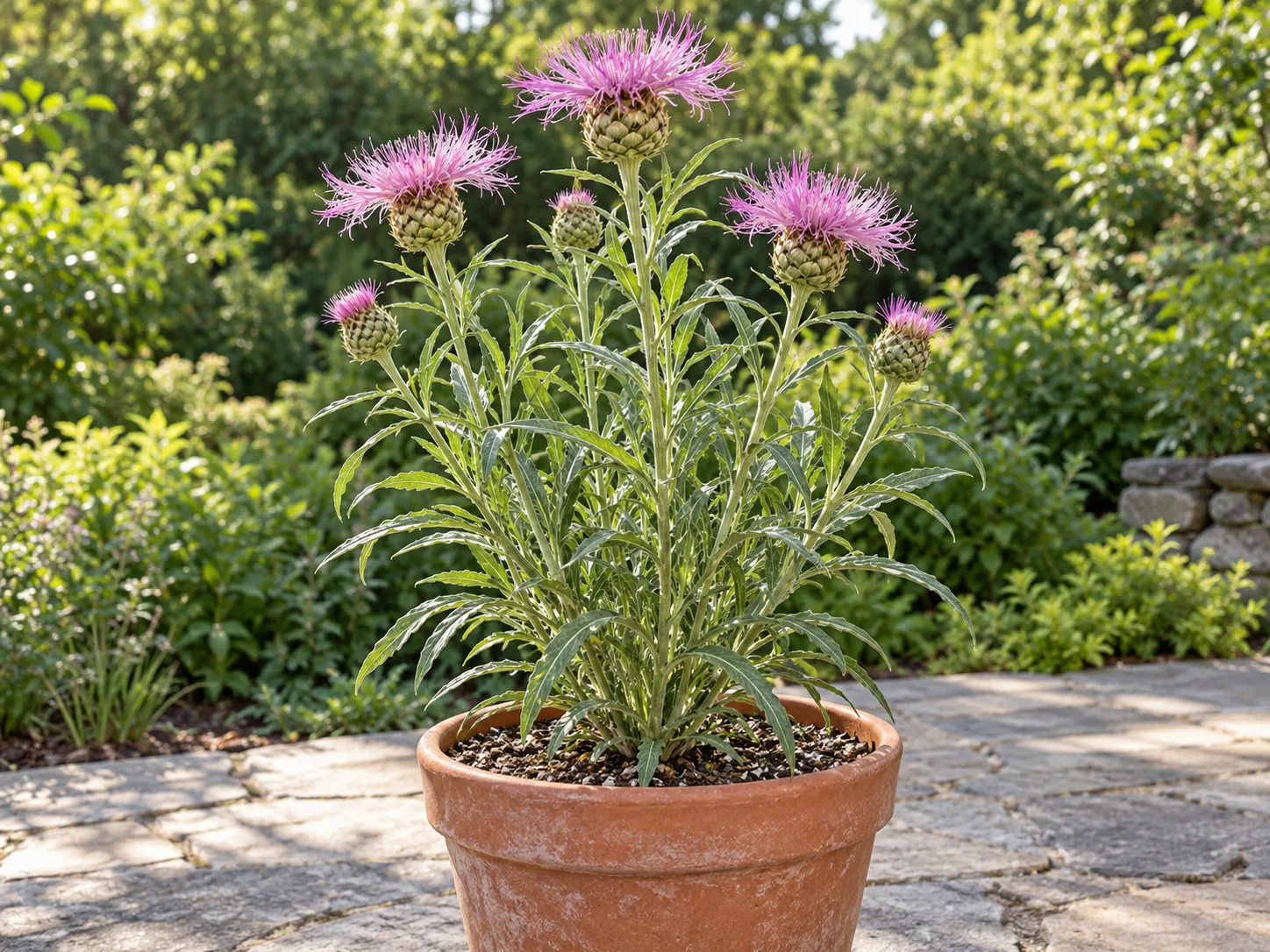
Use ordinary, free-draining potting mix rather than garden soil. Sow directly into the container or transplant a young seedling, then place the pot in full sun. A single plant can be a striking vertical accent, but in a small container it will dry quickly and may need a stake. Check moisture whenever the top inch feels dry, and water until excess drains from the bottom.
The trade-off is that the container limits self-sowing and lets you move the plant, but it also constrains roots and makes watering less forgiving. If you want a relaxed, multi-stemmed clump with minimal upkeep, a bed is the better fit. If you want one plant near a patio or need to contain seed, a large pot can work well.
Troubleshoot Few Blooms, Leaning Stems, and Mildew
Few or no flowers: Confirm the plant receives at least six hours of sun. Late sowing, shade, or excessive nitrogen can delay flowering; if the plant is still healthy and green, give it time rather than adding fertilizer immediately. Flowering dates differ by region: University of Texas at Austin’s record lists April through August in Texas, while Oklahoma State gives May through July for Oklahoma. Local temperature and sowing date explain more than a single national bloom calendar.
Tall stems that lean: Check for shade, overly rich soil, dense competition, and exposed wind. Add a support before the next rain, and thin crowded seedlings the following year. Avoid heavy feeding or late staking that can snap stems.
White powdery patches or poor airflow: Space plants more widely, remove badly affected foliage, and water the soil rather than wetting leaves late in the day. Basket flower is generally considered low-maintenance, but a dense stand in humid weather can still develop mildew; Gardenia’s profile specifically recommends good air circulation. Inspect for clusters of aphids on tender tips, and start with a firm water spray or removal of the most affected shoot. Use any pesticide only if necessary and exactly as its label allows.
No seedlings: Check seed depth and surface moisture first. If seeds were buried too deeply, washed away, or allowed to dry repeatedly, the problem may be the seedbed rather than viability. Re-sow a small test patch at the correct shallow depth before buying more seed.
Manage Self-Seeding Without Losing Next Year’s Plants
Basket flower is an annual, so an individual plant will not return from the same roots after winter. It may appear again because mature seed drops and germinates the next season. That is useful in a meadow planting and inconvenient in a narrow border; decide which outcome you want before every flower head turns dry and brown.
For a controlled display, deadhead most flowers as they fade and leave two or three vigorous heads in the part of the bed where volunteers are welcome. Mark those heads with a loose tie if you might otherwise cut them with the others. If you do not want seedlings, remove all developing heads before they release seed and clean up loose seed at the end of the season.
Self-sowing does not automatically mean a plant is invasive. Oklahoma State lists American basketflower as native in Oklahoma, and Missouri State notes that it is not usually weedy, while also pointing out its similarity to some problematic non-native thistles. Regional ecology still matters: use locally appropriate seed and do not introduce plants into a protected natural area without checking local guidance. If volunteers appear in the wrong place, pull them while small and before they set seed.
Save Seed from Mature Basket-Shaped Heads
Choose healthy plants that flower true to the color and form you want. Leave several heads on the stem until the petals have faded and the bracts have dried to straw or brown. The seed is ready when the head is dry and mature seed separates with a light rub; do not collect green heads, which may not finish ripening well after cutting.
Cut the dry heads into a paper bag on a dry day and let them finish drying indoors for about a week. Break the heads apart over a tray, separate the seed from loose chaff, then store it in a labeled paper envelope or airtight container in a cool, dry place. Write the plant name, flower color, and collection year on the label. Baker Creek’s seed-saving instructions also recommend allowing heads to mature, separating the seed from chaff, and drying it further before storage.
Keep seed lots separate if you grow named cultivars or several colors. Insect pollination can mix pollen among nearby plants, so seedlings from saved seed may not exactly match a selected cultivar. If uniform color matters, buy fresh seed from a reliable supplier or isolate the plants during flowering.
Cultivars: Pink, Lavender, and White Forms
The species form usually has pink to lavender rays around a creamy center. The named selection ‘Aloha Blanca’ is sold for ivory-white flowers, while most packets offer the familiar pink-lavender form; Chiltern Seeds’ listing describes the white cultivar as a tall-growing annual. Check the packet for mature height and spacing, since selected strains may not match the full range reported for the species.
Cultivar names are useful when color consistency matters, but they do not change the core growing requirements: sun, drainage, shallow sowing, and room for tall stems. Do not assume that a white form is a separate species or that every seed saved from a named variety will remain true to type. When buying seed, confirm the botanical name Centaurea americana so it is not confused with cornflower (Centaurea cyanus) or other plants sold under similar common names.
Conclusion
For reliable basket flower care, sow Centaurea americana shallowly in a sunny bed with good drainage, keep the seedbed evenly moist until seedlings establish, and thin plants enough for air and sturdy stems. Skip routine fertilizer, water established plants during meaningful dry spells, and choose a large pot only if you can monitor its faster-drying soil. The final decision is how much seed you want to return: deadhead for control, or leave a few mature heads where next year’s volunteers will be welcome.



