Gollum Jade Care: Light, Water, Soil, and Propagation
Grow Gollum jade with bright light, dry-down watering, gritty soil, and safe propagation. Diagnose shriveling, rot, pests, and cold damage in every season.
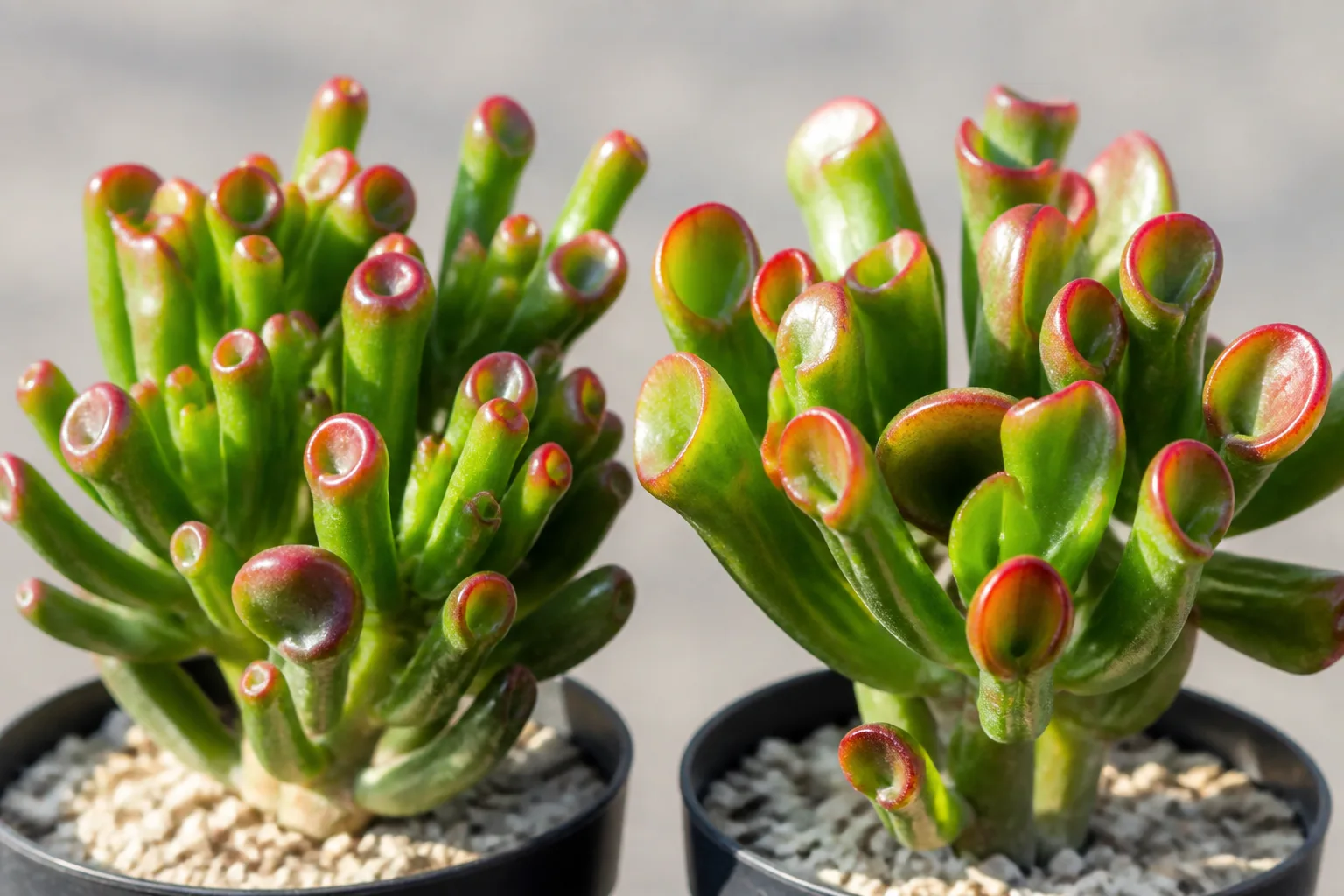
Gollum jade is a sculptural cultivar of Crassula ovata, the familiar jade plant. Its tubular leaves end in rounded, trumpet-like openings, often edged in red when light is strong. Those odd leaves are more than a novelty: they make the plant easy to recognize, but they can also hide pests and make small changes in firmness harder to interpret.
The reliable routine is simple: give it bright light, use a pot that drains, and water only after the root zone has dried. The tricky part is judging those conditions in your particular room. A small plant in a warm terracotta pot can dry much faster than a mature specimen in a large glazed container, so inspect the plant and mix instead of following a weekly schedule.
Identify Gollum Jade Before Choosing Its Care
Gollum jade is sold as Crassula ovata ‘Gollum’ and sometimes under names such as E.T.’s Fingers, finger jade, or trumpet jade. Its leaves are mostly tubular, with open or flared ends that look like tiny cups. The related ‘Hobbit’ cultivar often has shorter, curled, or spoon-like leaves, but nursery labels are not always consistent and young plants may not show their mature form clearly. Penn State Extension groups tubular “E.T.’s Fingers” jade with C. ovata cultivars; use the leaf form as a clue, not a guarantee of the exact trade name.
Like other jade plants, Gollum jade stores water in fleshy leaves and stems and slowly develops a woody, branching trunk. It is a long-lived container succulent rather than a fast-growing desk plant: good care produces steady, compact growth, not a burst of new leaves every week. A few red margins or tips can be normal in bright conditions. The goal is firm, evenly growing foliage, not maximum redness at any cost.
The cultivar retains the basic needs of C. ovata, so species-level guidance from Clemson Extension and Wisconsin Horticulture is useful for the care fundamentals. For the cultivar’s distinctive foliage and its response to bright light, Gardeners’ Path’s Gollum profile provides a practical comparison with flat-leaved jade.
Build the Right Light Setup
Choose the brightest spot you can provide without moving a shade-grown plant abruptly into harsh sun. A bright south- or west-facing window can work well in many Northern Hemisphere homes, while an east window gives gentler morning rays. Aim for several hours of direct light once the plant has acclimated; bright indirect light can keep it alive, but stems may stretch and the plant may lose its compact shape.
Light changes with latitude, season, glass, nearby trees, and how close the pot sits to the window. If new stems lean toward the glass or the spaces between leaf pairs lengthen, increase usable light gradually or supplement with a grow light. If the plant has had a summer outdoors, reassess it when bringing it inside: the light level can drop sharply even if the indoor window seems bright to you.
A healthy plant may develop reddish rims or tips in stronger light. That color alone is not a reason to move it away from the window. Pale, tan, dry patches on the side facing the sun, by contrast, suggest scorch—especially after a sudden move from a shop or dim room. Wisconsin Horticulture notes that jade can develop red coloration with adequate light and should be acclimated gradually to brighter outdoor conditions.
Acclimate Gollum Jade to Stronger Sun
When increasing sun, start with bright shade or an hour of gentle morning exposure, then add time every few days over one to two weeks. Watch the exposed leaves for bleaching or crispy patches before adding stronger midday light. A sheer curtain, a slightly greater distance from the window, or a spot with morning rather than afternoon sun can soften the transition.
Use the same gradual process when moving a plant outside in spring. Indoor-grown leaves have not developed under outdoor intensity, and a sudden jump can burn them even when the eventual outdoor location is suitable. Reverse the move in fall before cold nights arrive, and check the soil more often during both transitions because light, temperature, and drying speed all change together.
Choose a Draining Pot and Gritty Mix
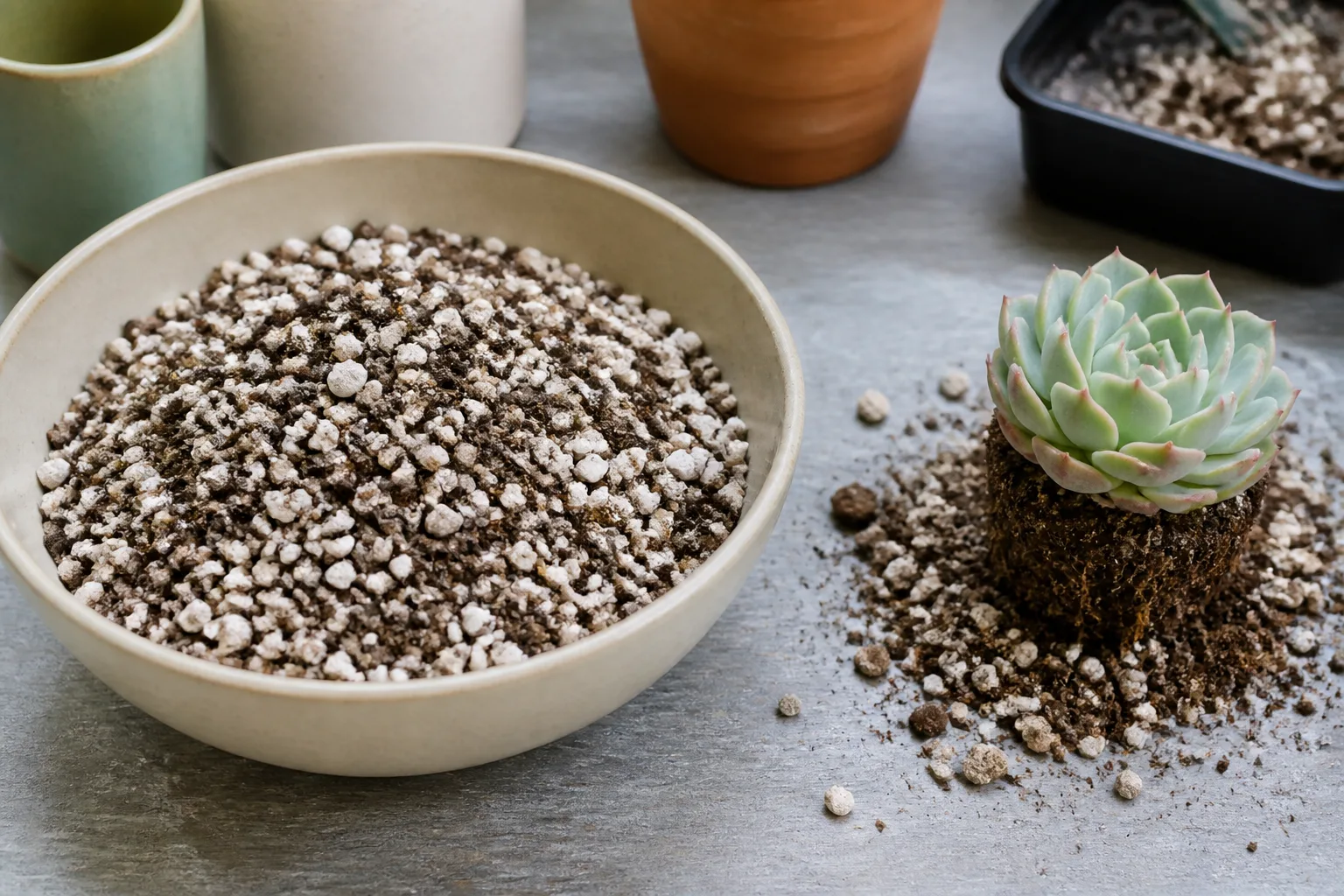
Use a pot with an open drainage hole and a mix that lets excess water escape while holding enough moisture for the roots to absorb it. A commercial cactus-and-succulent blend may work as-is, but some mixes contain a lot of fine peat and stay wet too long indoors. If water drains slowly or the mix remains damp for many days, blend in coarse perlite, pumice, or another stable mineral component until the texture stays open after watering.
A practical starting mix is roughly two parts succulent potting mix to one part pumice or perlite. Treat that as a starting point, not a universal recipe: a very dry home or tiny pot may need a little more organic mix, while a cool room and large container call for faster drainage. NC State Extension’s jade tree profile recommends well-drained potting soil, and Penn State Extension notes that a cactus or succulent mix and a draining container help prevent root rot.
Match pot size to the root ball rather than to the height of the foliage. A pot several sizes too large holds extra damp soil that the roots cannot use quickly; one size up is enough when repotting. Terracotta dries faster and adds weight, which can steady a top-heavy plant, while glazed ceramic and plastic hold moisture longer. Skip a gravel layer at the bottom: it does not replace a drainage hole or make dense mix drain properly.
Water by Root-Zone Dry-Down
Wait until the potting mix has dried through most of the root zone before watering. A dry surface is not enough; push a wooden skewer several inches into the mix or feel near the drainage hole, and lift the pot to learn how light it feels when dry. When the mix is dry, water slowly until excess runs through the drainage hole, then empty the saucer or cachepot so the roots do not sit in runoff.
This soak-and-drain routine is safer than frequent small sips. Small amounts can wet only the top layer, leave the lower root ball dry, and keep the plant in a confusing cycle of surface moisture and drought below. Succulents and Sunshine’s Gollum care notes likewise advise waiting for dry soil and warn that this cultivar is sensitive to overwatering.
There is no dependable “every two weeks” rule. A small plant in warm sunlight may need water sooner than a large plant in a cool room; terracotta, pot depth, airflow, and season all change the interval. Treat the first few waterings as calibration: water thoroughly, note how long the center of the mix stays damp, and check again rather than watering on the same weekday.
During darker or cooler months, the plant usually uses water more slowly, so extend the interval. If the mix has become so dry that it repels water and runoff escapes immediately, briefly stand the pot in a shallow basin until the root ball re-wets, then remove it and let it drain fully. Do not leave it soaking as a routine. Shriveling alone is not proof of thirst; check the mix and roots first, because rot can also prevent a plant from taking up water.
Keep Temperatures Steady and Humidity Ordinary
Normal household humidity is generally fine. Gollum jade does not need misting, a humidifier, or a pebble tray; wet foliage and constantly damp soil solve the wrong problem for a succulent. Give it gentle air movement and keep it away from cold window glass, heating vents, and doors that repeatedly expose it to drafts.
A comfortable indoor range is easier to maintain than a precise target. Jade tolerates normal room temperatures and cooler nights, but it is not frost hardy. When growing it outdoors for summer, bring the pot inside before temperatures approach 50°F (10°C), and certainly before frost; cold, wet mix is especially risky. Clemson Extension recommends protecting jade from winter drafts, and NC State describes it as a houseplant in climates where winter cold makes outdoor growing unsuitable.
Feed Sparingly During Active Growth
Fertilizer is optional if the plant is growing in fresh, reasonable potting mix. If new leaves and stems are actively forming, feed with a balanced liquid houseplant fertilizer at half strength every six to eight weeks during that growth period. Water first if the mix is dry, and follow the product label rather than increasing the dose to force faster growth.
Growth may slow during the dimmest part of winter or during very hot conditions, so do not feed simply because the calendar says it is spring or summer. Stop while the plant is resting, recovering from root problems, or settling into a new pot. Excess fertilizer can create weak growth and salt buildup; if you see a white crust on the mix or leaf edges, flush the pot thoroughly and pause feeding until the plant resumes healthy growth.
Prune for Shape and Reuse the Cuttings
Gollum jade does not need routine pruning to stay alive. Prune to remove a broken branch, balance a leaning canopy, or encourage branching on a healthy plant that has become sparse. Use clean, sharp snips and cut just above a leaf pair or branch junction; a new shoot may form near the cut, but the exact response depends on the plant and its growing conditions.
Make one or two considered cuts, then give the plant time to respond rather than removing a large share of the canopy at once. The stems are fleshy and can bruise if crushed, so support the branch while cutting. Let the cut surface dry before returning the plant to its normal routine, and save healthy pieces to propagate. If the plant is already weak, has soft stems, or has recently lost roots, correct the cause before shaping it.
Root a Stem Cutting for the Most Reliable Start
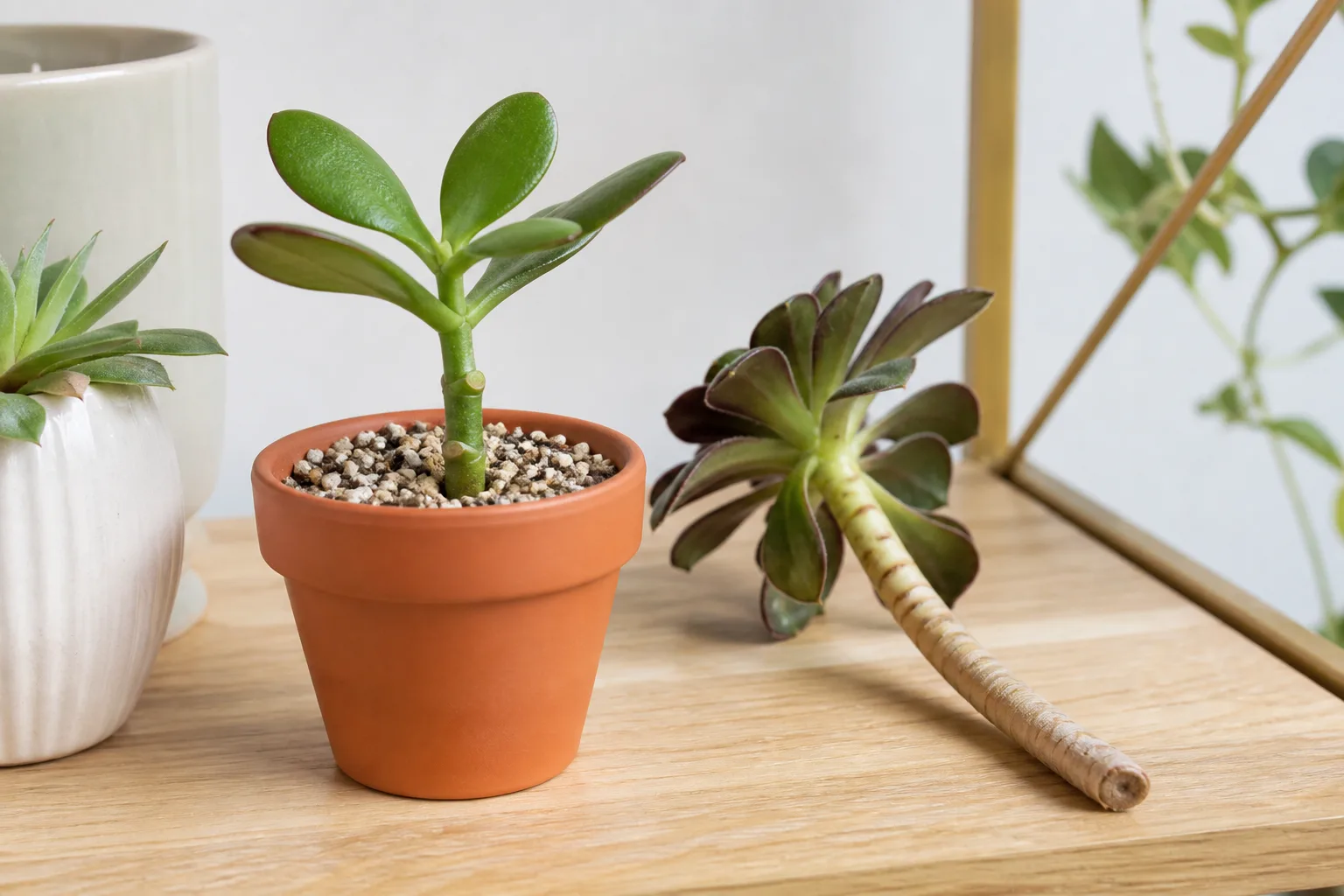
A stem cutting is usually the clearest way to make another Gollum jade: it gives the new plant a head start on height and preserves the cultivar’s characteristic branch-and-leaf form. Choose a healthy, firm stem several inches long, ideally with more than one leaf pair. Cut just below a node with clean shears, and remove only the leaves that would be buried.
Set the cutting in a dry, shaded spot with good airflow for several days, until the cut end feels dry and sealed. This callus helps limit rot when the stem touches moist mix. Wisconsin Horticulture and Gardeners’ Path both recommend allowing jade cuttings to dry before planting.
Fill a small pot with a fast-draining succulent mix and insert the callused end only deep enough to stand upright. Keep it in bright indirect light, not harsh midday sun. Let the medium dry before adding water; a cutting without roots uses little moisture, and constantly damp mix can rot the base before roots develop. After several weeks, a very gentle tug that meets resistance suggests rooting. Once new growth appears and the cutting resists a light wiggle, transition to the mature plant’s soak-and-dry routine.
You can also root a stem in water if you want to watch root development, but it is not necessary and water-grown roots must adjust to soil later. Keep the cut end in clean water and all leaves above the surface; refresh the water when it clouds. Pot the cutting once roots are short and visible rather than waiting for a dense tangle, then keep the mix lightly moist only while the new roots settle. Soil propagation avoids that extra transition and is usually the lower-fuss option.
Try a Leaf Cutting When You Have Time to Wait
Leaf propagation takes less plant material but is slower and less predictable, especially if the leaf breaks away without its full base. Twist a healthy leaf gently from side to side until it separates cleanly where it joins the stem. A partial leaf or torn base may stay green for a while without producing a plantlet, so start several leaves if you can spare them.
Let the leaf base callus for a few days, then lay it on top of dry succulent mix in a shallow tray. Do not bury the whole leaf or keep it wet. Place the tray in warm bright indirect light, and wait for tiny roots or a plantlet to appear before increasing moisture. The original leaf may wrinkle as it supplies stored energy; that is expected if the new plantlet is still firm and healthy.
Gollum’s tubular shape makes it harder to lay some leaves flat than ordinary jade leaves. A small, stable tray and careful handling help, but do not wedge a leaf deep into wet soil just to keep it upright. Succulents and Sunshine notes that Gollum jade can be difficult to propagate from leaves even though it is possible. Choose a stem cutting if you want a more predictable result or need to make a plant of useful size sooner.
Repot Only When the Root Ball Needs It
Gollum jade grows slowly and tolerates a snug pot, so repotting every year is unnecessary. Check the drainage hole and root ball when water begins to run straight through without wetting the mix, the roots form a dense mat, or the plant becomes unstable in a light container. A few roots at the drainage hole by themselves are not an emergency if the plant is healthy and water still moves through evenly.
Repot when growth is active, using a container only one size larger with a drainage hole. Loosen compacted old mix and inspect the roots; remove only roots that are soft, black, or clearly damaged, and keep the healthy roots intact. Replant at the same depth rather than burying more of the stem. If you disturbed or trimmed roots, wait several days before watering so small breaks can dry. A very dry, intact root ball can be watered after planting, but always drain it fully.
A heavier pot can help a mature Gollum jade stay upright, while terracotta is useful if your room stays cool or your mix holds moisture. That trade-off is real: porous clay dries faster, so it may need more frequent checks in hot, bright conditions. The right container is one that stays stable and lets the mix dry at a reasonable pace for your home, not one chosen by a rigid rule about material.
Encourage Flowers Without Forcing Stress
Mature jade plants can produce small white or pink star-shaped flower clusters, but indoor Gollum jade may never bloom. Shorter days, bright light during growth, and cooler—but still safe—winter nights can contribute to flower formation. Wisconsin Horticulture describes flowering as a response to long nights and discusses a cool, drier winter rest as one way to encourage bloom.
Do not deliberately dehydrate the plant or expose it to near-freezing temperatures to force flowers. Keep it healthy through the growing season, provide bright light, reduce watering as growth slows, and allow natural seasonal changes if your home has them. Artificial light left on late into the night can interfere with short-day conditions, but you do not need to engineer darkness in a way that compromises normal care. Foliage is the main reason most people grow this cultivar; lack of flowers is not a care failure.
Diagnose Leaf Changes Before Changing Care
Gollum jade stores water in thick foliage, so leaves provide clues, but a single symptom can have several causes. Before watering, moving the plant, or unpotting it, compare the leaf texture with the soil moisture, stem firmness, recent light changes, and temperature. Changing several variables at once makes it harder to know what actually helped.
| What you see | Check first | Likely next step |
|---|---|---|
| Wrinkled or slightly deflated leaves; mix is dry | Root ball and drainage | Water thoroughly, drain, then wait for another full dry-down |
| Yellow, soft leaves; mix stays wet | Drainage hole, pot size, root and stem firmness | Stop watering; inspect roots if soft tissue or sour odor appears |
| A few lower leaves drop slowly | Age of leaves and new growth | Monitor; gradual loss of old leaves can be normal |
| Whole branches drop leaves or stems soften | Wet soil, cold draft, or abrupt change | Correct the cause before adding water or fertilizer |
Separate Shriveled, Mushy, and Dropping Leaves
Wrinkled leaves with a dry root ball usually mean the plant needs a thorough drink, especially if the stem is still firm. Water once until runoff, then wait for the mix to dry again. If the water races down the pot wall or exits before soaking the center, the mix may have become water-repellent; rewet the root ball briefly from below, then let all excess drain.
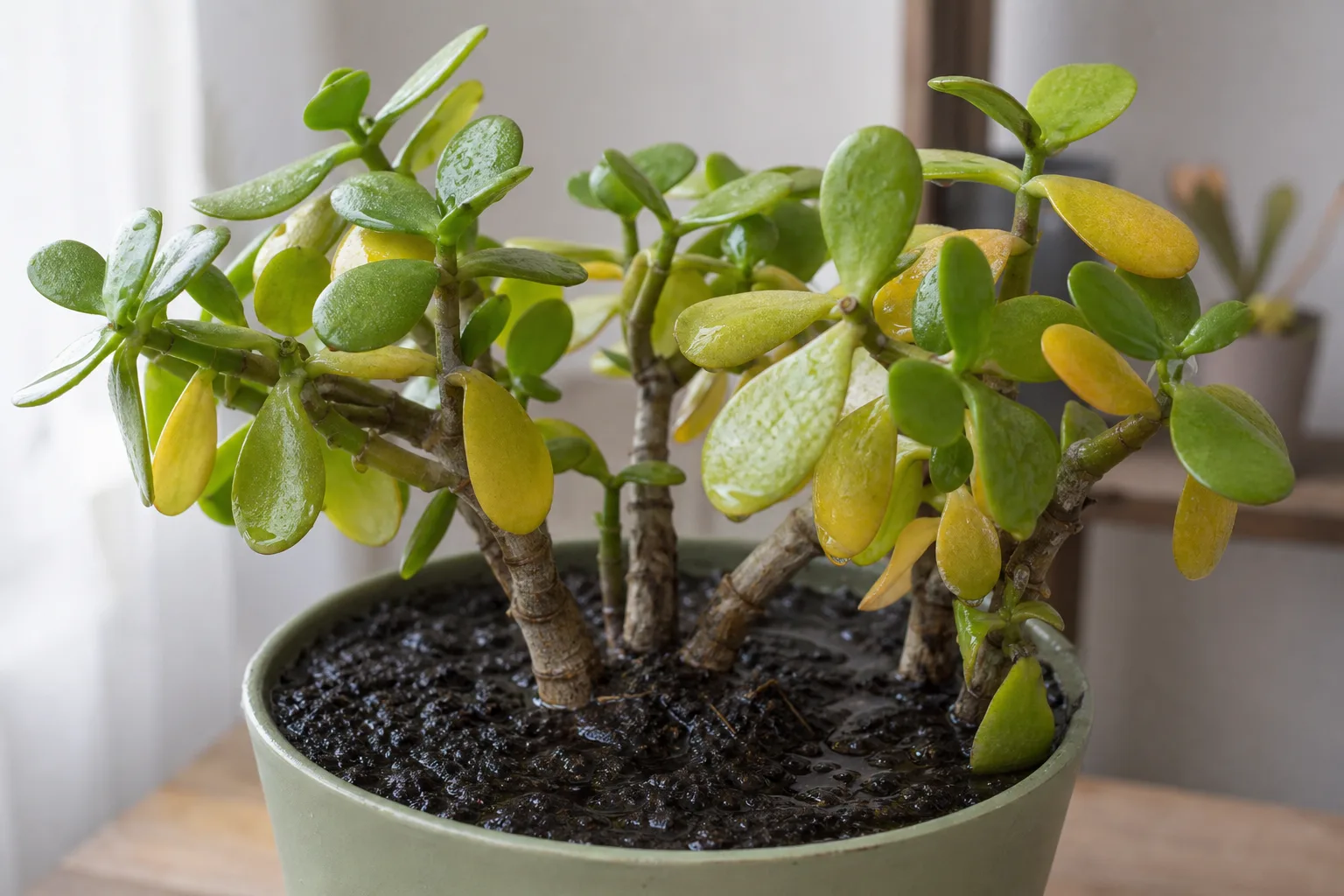
Soft, translucent, yellowing leaves paired with wet mix point in the opposite direction. Stop watering and make sure the pot has a drainage hole and is not sitting in a cachepot full of runoff. If the stem base is soft or smells sour, unpot the plant and check the roots. Trim only tissue that is clearly rotten, let the root ball dry, and repot into fresh porous mix. Clemson Extension identifies poor drainage and overwatering as common causes of jade root rot.
Leaf drop can follow both drought and prolonged wetness, and sudden cold or a sharp change in light can also trigger it. A few older leaves near the base that yellow and fall gradually are different from a branch shedding multiple leaves in a short time. Use the soil, stems, and pattern of loss together; do not respond to every dropped leaf with another watering.
Read Stretching, Red Tips, and Scorch Correctly
Long spaces between leaf pairs, thin stems, and growth leaning toward a window usually indicate too little usable light. Move the plant closer to a bright window or add a suitable grow light, increasing exposure gradually. Rotate the pot periodically so new growth does not all point in one direction, but remember that rotation cannot compensate for a genuinely dim location.
Red or pink margins are common when Gollum jade receives strong light and can be an attractive normal response. Crispy, bleached, tan patches on the most exposed surface are more consistent with sunburn, especially after a sudden move outdoors. Keep the red tips if the leaves remain firm; reduce the intensity only if new damage appears. A clear pattern of stretched growth or scorch is more useful than color alone.
Check for Mealybugs, Scale, and Spider Mites
Look between the tubular leaves, around their openings, and where leaves meet stems. Mealybugs resemble small cottony flecks, while scale can look like tan or brown bumps attached to stems. Spider mites are tiny; stippling, a dusty cast, or fine webbing may be easier to notice than the mites themselves. Gollum’s crowded leaf tips can hide an early infestation, so inspect with a bright light and turn the pot rather than glancing only at its front.
Separate an affected plant from nearby houseplants. Wipe visible insects with a cotton swab and remove badly infested fallen leaves; repeat inspections over the following weeks because one cleaning may miss eggs or insects tucked into crevices. Clemson Extension recommends careful removal for mealybugs and warns that jade can be sensitive to insecticidal soap. If you use a pesticide, choose one labeled for the plant and pest, test it on a small area, and follow the label exactly. Avoid coating succulent leaves with an untested oil or soap mixture.
Move Outdoor Plants Before Cold Weather
Gollum jade can spend warm months on a balcony or patio, but outdoor placement should be seasonal unless your climate stays reliably frost-free. In mild regions, give it a bright, sheltered location with excellent drainage; in colder regions, treat it as a container plant that returns indoors before chilly nights. Zone labels can help screen options, but a pot exposed to wind or cold rain may experience harsher conditions than a protected garden bed.
Acclimate it outdoors in stages: begin in bright shade, add morning sun over one to two weeks, and watch for leaf scorch. Keep the pot out of prolonged rain so the mix can dry between waterings. Before bringing it inside, inspect the leaf joints and underside of the pot for pests, remove debris, and let the plant drain. In winter, place it at the brightest window available and reduce watering as growth slows.
Keep Gollum Jade Away From Pets
The ASPCA lists jade plants as toxic to cats, dogs, and horses. Its plant record identifies vomiting, depression, and incoordination as possible clinical signs after ingestion. The species is commonly sold under different names, so do not assume a tubular-leaved cultivar is safer than a standard jade.
Keep the plant, fallen leaves, and pruning scraps out of reach, especially if a pet chews plants. If you suspect an animal has eaten any part of it, contact a veterinarian or animal poison-control service promptly and share the plant name and amount you think was eaten. Do not induce vomiting or try a home remedy unless a veterinary professional tells you to.
Conclusion
Give Gollum jade bright light, a draining pot, and a full dry-down between deep waterings. Let its leaves and growth show you whether the setup is working: firm tubular leaves and compact new stems are better guides than a calendar or a particular shade of red.
When the plant needs shaping, use healthy cuttings to make new ones, and leave slower leaf propagation for when you have patience and spare leaves. Protect it from frost, inspect the tight leaf clusters for pests, and keep it away from pets. With those few decisions handled consistently, this slow-growing jade can stay healthy for years.



