Red Thread Lawn Disease: How to Treat and Prevent It
Learn why red thread lawn disease appears, how to distinguish pink patch and other damage, and what to change in watering, mowing, and fertilizing for recovery.
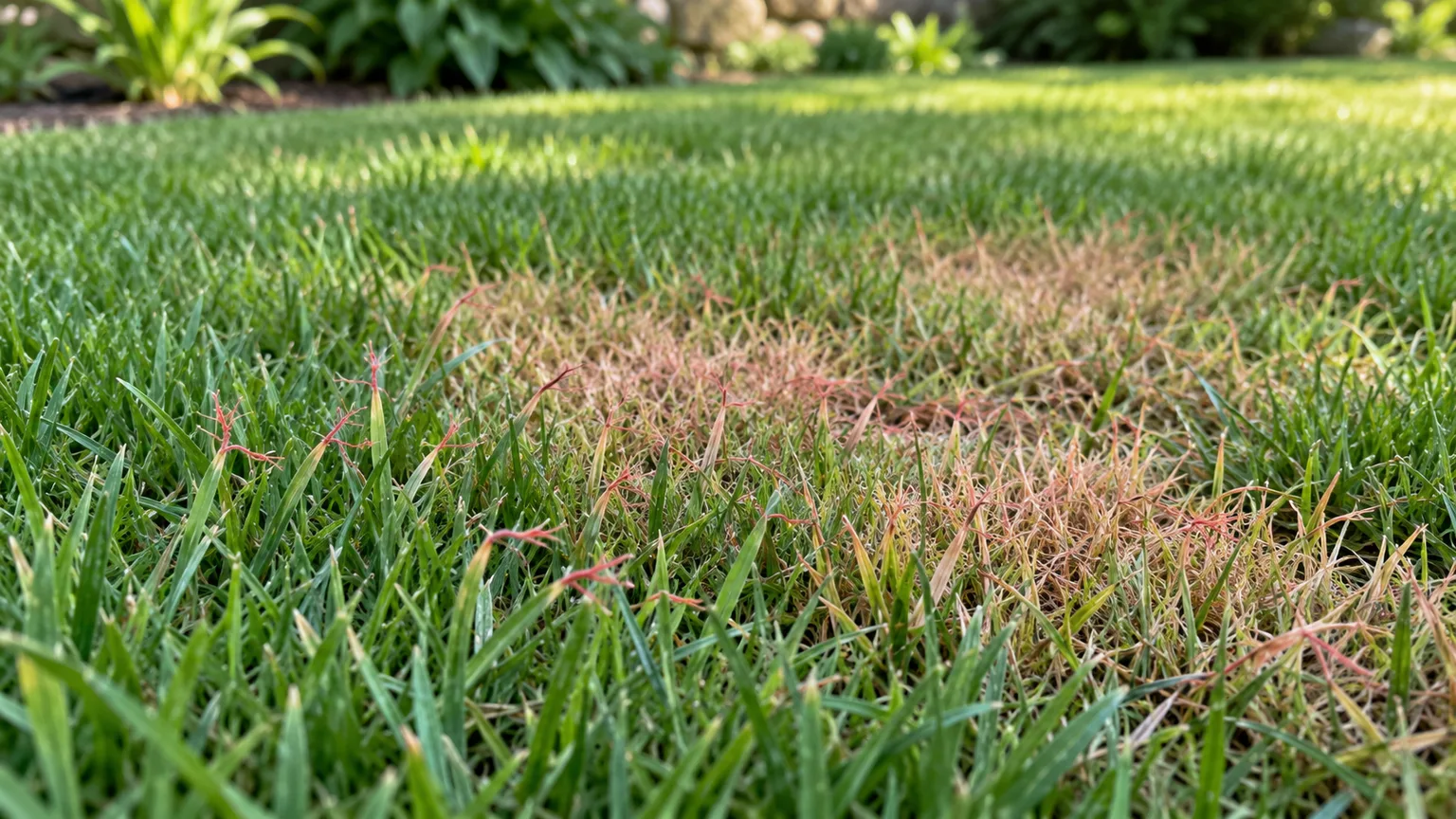
If you see ragged tan or pinkish patches in the lawn, look closely at the grass blades before buying a treatment. Red thread lawn disease is identified by fine coral-red tendrils that extend from leaf tips and may bind blades together; the fungus is encouraged by damp, mild weather and turf that is growing slowly, often because nitrogen is low. For most home lawns, the practical response is to confirm the symptom, correct the conditions that are holding grass back, and give new growth time to cover the damage.
Red thread can make a lawn look badly damaged without killing the whole plant. It affects leaves more than crowns or roots, so routine fungicide is usually a poor first move. The steps below help you distinguish the disease from lookalikes, decide whether feeding is justified, reduce unnecessary leaf wetness, and recognize when the lawn is recovering.
Confirm Red Thread Before You Treat the Lawn
Color alone is not enough to diagnose a lawn disease. A patch that looks pink from standing height may be red thread, another turf disease, drought injury, mower stress, or a combination of problems; inspect the blades while dew is still present, when the fungal growth is easiest to see.
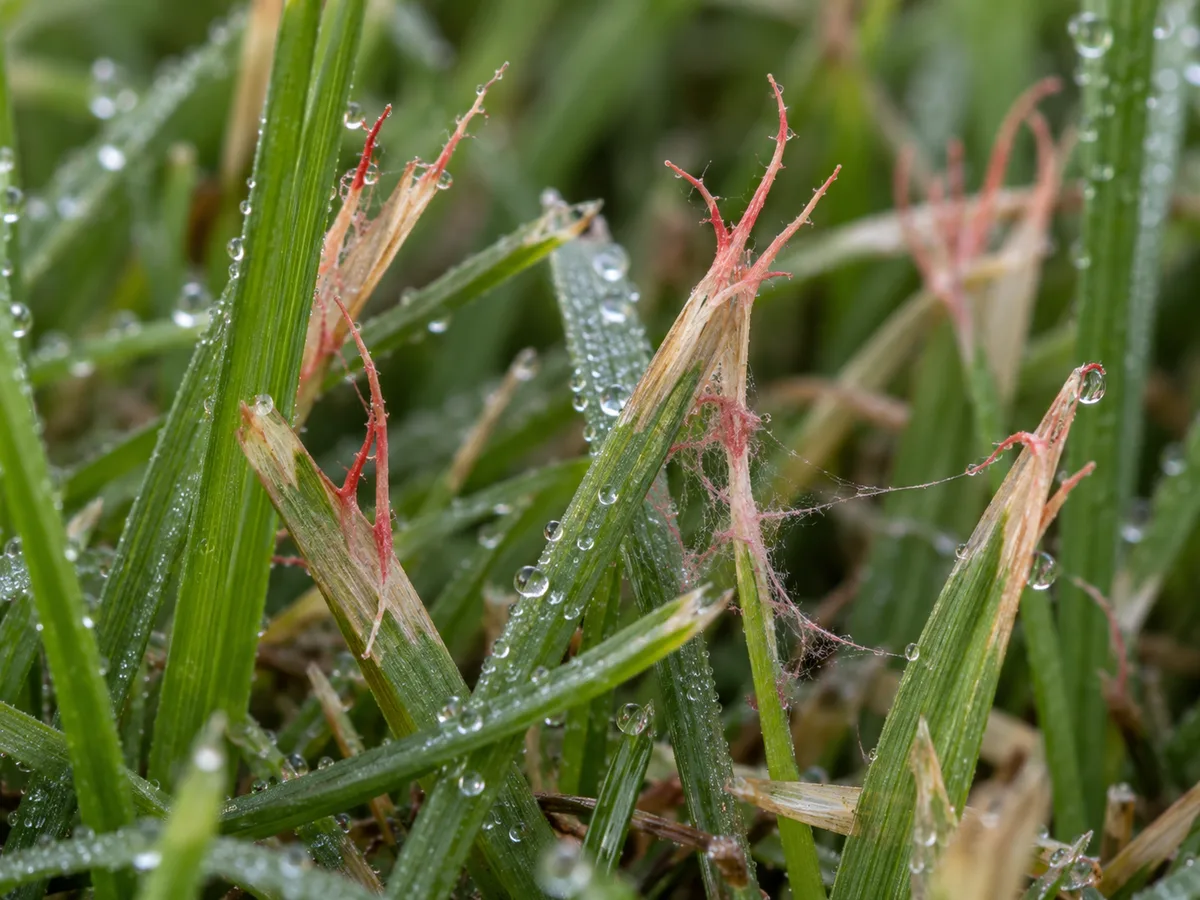
The red tendrils on affected blades are more useful for diagnosis than patch color alone.
Recognize the red threads on the blades
Red thread is caused by the fungus Laetisaria fuciformis. The most useful clue is a thin, reddish or coral structure that protrudes from the ends of grass blades, sometimes branching like tiny antlers; in damp weather, fine pink webbing may connect nearby leaves. As damage progresses, blades can become tan, pale gray, or bleached from the tip downward, creating irregular patches that blend into surrounding turf rather than forming a perfectly defined ring.
Walk the edge of the patch and part the grass at several points. If you see only brown blades with no red structures, do not assume the disease is red thread: old or dry fungal growth may be less visible, but several nonfungal problems also make tan areas. University of Wisconsin–Madison Extension describes the red tendrils on leaf blades as the distinguishing feature and notes that red thread is often confused with pink patch, which develops in similar conditions.
Separate red thread from pink patch and other damage
Pink patch is the closest lookalike. Both can create tan, pink, or reddish areas and web-like growth during damp weather; the thicker red tendrils projecting from blades are the clearer clue for red thread. For an ordinary home lawn, the first care steps overlap, so an exact species name matters less than checking that the patch is truly a leaf disease and correcting avoidable stress.
Dollar spot tends to create small straw-colored spots and lesions on individual blades rather than the coral tendrils of red thread. Rust leaves orange powder on shoes and mower parts, while drought often follows dry, exposed areas and may leave footprints that linger after walking; grub damage can loosen turf at the roots.
These comparisons are clues, not a lab diagnosis. If the lawn is thinning rapidly, the patch pattern does not fit, or the same area worsens after sensible care changes, collect a sample for your cooperative extension diagnostic service instead of applying several products by guesswork. A symptom-first approach that checks the patch, the season, and the individual blades is also useful for separating disease from nonfungal damage, as LawnPhix’s lawn-disease field guide explains.
Does Red Thread Kill Grass?
In a typical home-lawn outbreak, red thread is mostly a leaf-blade disease. It can bleach and weaken foliage, but the crown and root system usually remain capable of producing fresh leaves when conditions become favorable. That is why an affected patch can look straw-colored and still green up without being dug out or sprayed.
“Usually” is important. Repeated disease, poor nutrition, drought, heavy foot traffic, deep shade, or another root and crown problem can pile stress onto the turf.
University of Illinois Extension notes that red thread rarely kills turfgrass outright, but it can weaken plants and contribute to decline under later stresses. Treat the patch as a signal to inspect lawn care—not as proof that all the grass there is dead.
Avoid ripping out a patch while you are still diagnosing it. If the grass has flexible crowns and new green blades are emerging, wait through a period of active growth before deciding it needs renovation; aggressive raking or reseeding into a cool, wet, stressed lawn can add disturbance without solving the original cause.
Why Red Thread Appears in a Lawn
Disease develops when a susceptible host, the fungus, and favorable weather overlap. The fungus can persist in infected grass, thatch, or soil, so a homeowner cannot make the lawn sterile; management works by helping turf outgrow leaf damage and reducing the hours when the surface stays wet, as Wisconsin Extension’s red-thread guide describes.
Nitrogen and slow turf growth
Red thread is commonly associated with turf that is short on nitrogen or otherwise growing slowly. Nitrogen helps grass make new leaf tissue; when growth is sluggish, damaged blades remain visible longer and the lawn has less capacity to fill thin areas.
This does not mean every pink patch proves nitrogen deficiency, or that a large dose is the right fix. A lawn recently fertilized, a lawn with poor roots, and a lawn suffering from drought or compaction can all respond differently.
The useful question is what the lawn has received over the growing season. Note the grass type, the fertilizer analysis, how much product you applied, the area it covered, and when you applied it. If you cannot reconstruct that history, a soil test and your local extension’s turf recommendations are safer starting points than applying extra nitrogen because the blades look pale.
Mild weather, wet leaves, and susceptible grass
Red thread is most common during cool-to-mild, humid spells when leaves stay wet for long stretches. Wisconsin Extension places favorable weather roughly in the 59–77°F range and notes that slow growth and inadequate fertilization can make fine fescues especially vulnerable; other cool-season grasses can also be affected. University of California’s UC Statewide IPM Program likewise describes mild temperatures, extended leaf wetness, excess irrigation or rainfall, and low nitrogen as conditions that favor outbreaks.
This explains why the disease often appears in spring or fall but can occur outside those windows wherever moisture and temperature line up. A shaded lawn with heavy morning dew, compacted soil that drains slowly, and frequent light irrigation may stay wet longer than a sunny neighbor’s lawn. Susceptibility also varies among species and cultivars; fine fescue and perennial ryegrass are often vulnerable, but local seed mixes should be chosen for climate, shade, traffic, and disease resistance together—not for one disease alone.
What to Do First When You Spot It
Begin with a short inspection and a restrained plan. Confirm red tendrils on the blades, check the lawn’s fertilizer history, feel the soil for excess wetness or drought, and look for obvious shade, compaction, thatch, or mowing stress. Photograph the patch and mark its edge so you can compare growth after a week or two instead of relying on memory.
Then choose only the changes that fit what you found:
- Pause unnecessary irrigation if the root zone is already moist or rain is keeping the lawn wet.
- Check fertility records before adding nitrogen; follow a soil test and regional turf schedule where available.
- Keep mowing at the correct height for your grass, collect clippings from active patches if practical, and clean the mower deck before moving to healthy areas.
- Correct a clear site problem such as chronic shade or compacted soil, but wait for suitable growing conditions before aerating, dethatching, or overseeding.
- Reassess new growth after the weather shifts or the lawn resumes steady growth. Red threads may remain in old blades even as healthy leaves replace them.
This sequence prevents two common overreactions: spraying a fungicide that will not fix the underlying conditions and applying heavy fertilizer that can stress the turf or waste nutrients. The pattern and the lawn’s history should guide action; if no likely cause is clear, confirm the diagnosis before escalating.
Correct Fertility Without Overfeeding
If the lawn is due for nitrogen and the timing suits its grass type, a measured feeding can help it produce healthy new leaves. It does not sterilize the soil or instantly erase the tan blades. The goal is steady, seasonally appropriate turf growth, not the fastest possible flush of green.
Check the lawn’s history and local guidance
First check the last application date and the bag’s analysis. A lawn that received nitrogen recently may need no more even if red thread is present; extra feeding cannot correct shade, prolonged wetness, poor drainage, or a mistaken diagnosis. Soil testing is useful for pH and nutrients such as phosphorus and potassium, while nitrogen planning for turf often depends on grass species, region, season, and the local extension schedule.
Do not copy a rate from another state or apply the same fall program everywhere. Cool-season lawns and warm-season lawns have different growth calendars, and local restrictions may limit when or how much fertilizer can be applied.
Pennington’s red-thread guidance describes spring and late-season activity and highlights cultural control, but product-company schedules are not a substitute for local extension advice. In regions where late-season nitrogen is restricted or can encourage vulnerable growth, follow the local rule rather than treating a symptom on a calendar.
Calculate fertilizer from the label
If local guidance calls for a specific amount of actual nitrogen, use the fertilizer label to measure product accurately. The first number in an analysis such as 25-0-5 is the nitrogen percentage by weight; for a purely mathematical example, a recommendation of 0.5 pound of actual nitrogen per 1,000 square feet with a 25 percent nitrogen product would require 2 pounds of that product per 1,000 square feet (0.5 ÷ 0.25 = 2). That example is not a universal red-thread rate—use the rate and timing recommended for your turf and location.
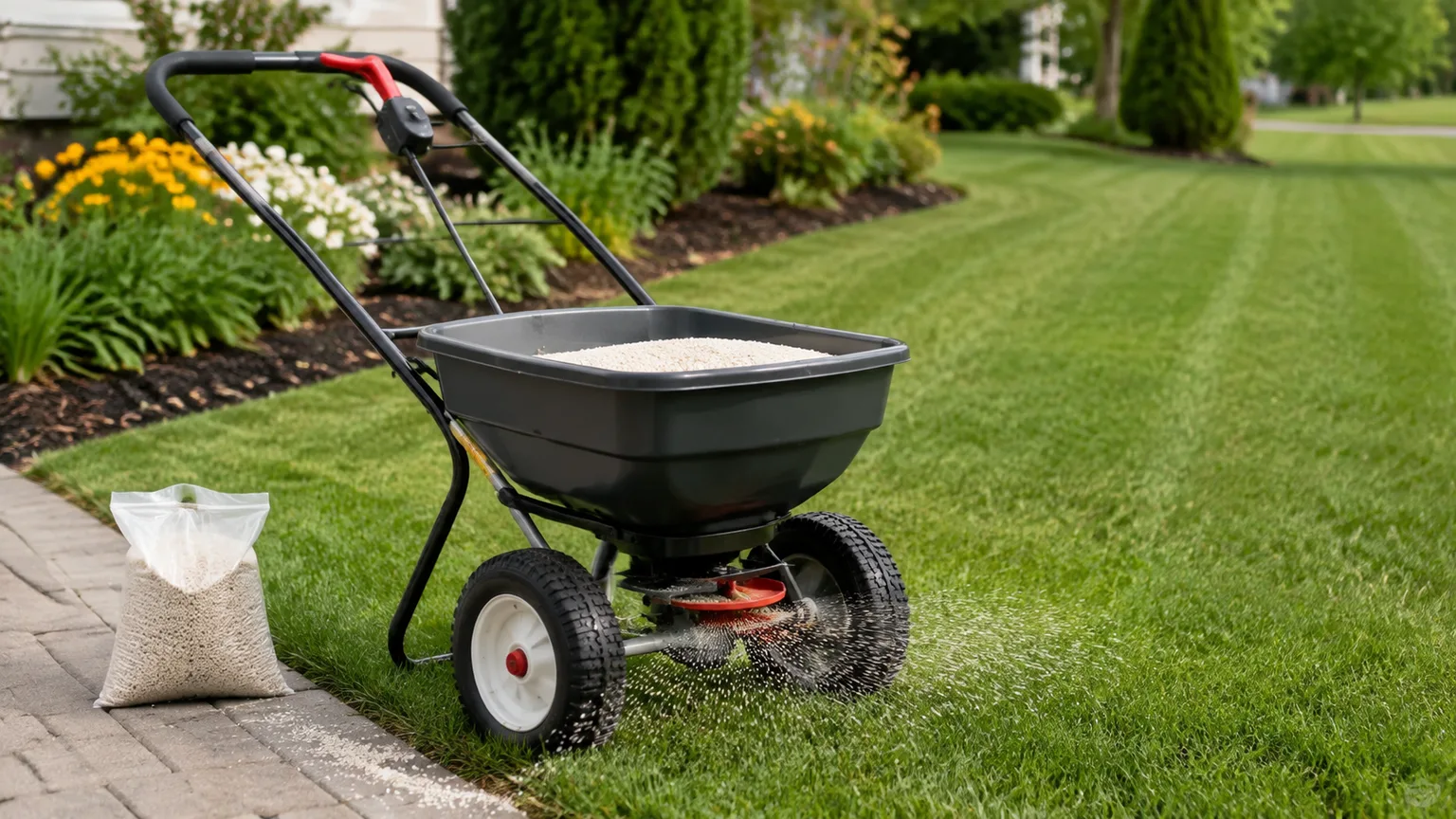
Measure the lawn area rather than estimating from the number of bags, calibrate or check the spreader, and avoid applying fertilizer to pavement or before heavy rain. Sweep granules back onto turf and water them in only as the label directs. A thin, even application at the correct time is more useful than overlapping passes or a “rescue” dose that doubles the recommended amount.
Reduce Leaf Wetness Without Drought-Stressing Grass
The aim is not to keep the lawn dry at all costs. Grass still needs water, but frequent shallow sprinkling can wet leaf blades repeatedly without replenishing the root zone. Water only when the soil and turf need it, account for rainfall, and avoid adding water in the evening if that would leave foliage wet through the night; local extension timing may differ with climate and irrigation setup.
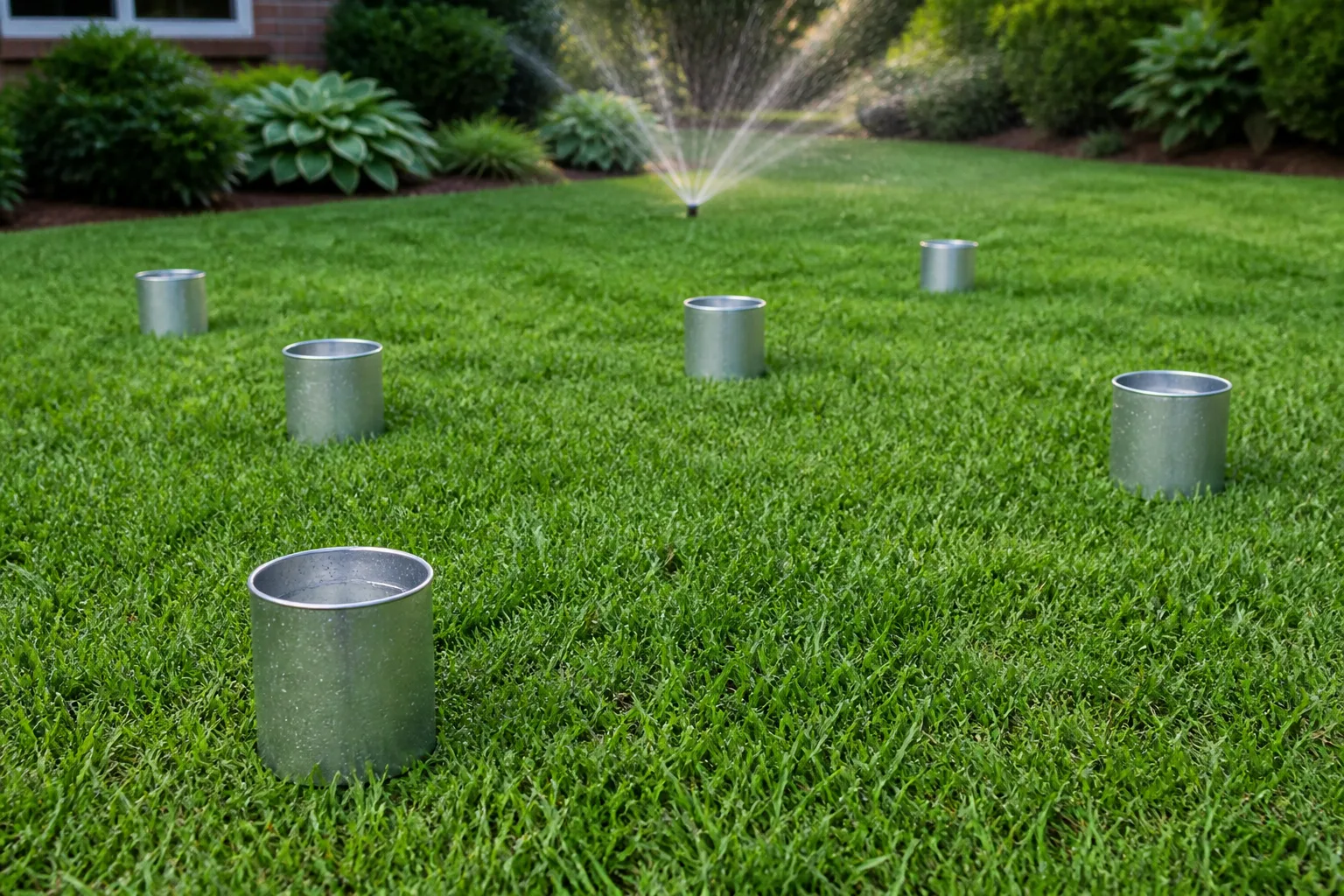
Irrigate to meet the lawn’s needs rather than keeping the leaf canopy wet on a fixed daily schedule.
When irrigation is needed, water deeply enough to wet the active root zone, then let the surface dry before watering again. The exact amount and interval vary with soil texture, temperature, rainfall, slope, and grass species, so a clock-based rule is less reliable than checking soil moisture and watching for early drought stress. Homes & Gardens notes that prolonged wet conditions are hard to control in very rainy climates; in those settings, focus on good fertility, mowing, and drainage rather than expecting watering changes alone to prevent every outbreak.
If dew is the main source of wetness, irrigation changes will not eliminate it. Improving air movement around a lawn may help it dry faster, but do not remove valuable trees or sharply prune healthy shrubs just to stop a mainly cosmetic disease. Address the factors you can control and accept that a humid site may see occasional symptoms.
Mow and Handle Clippings Carefully
Continue mowing when the lawn is dry enough to cut cleanly and the grass needs it. Keep the mower blade sharp and mow at the normal height for your turf; scalping removes too much leaf area and adds stress when the grass is already trying to replace damaged tissue. If the surface is wet, wait when practical so the mower does not smear clippings or tear leaves.
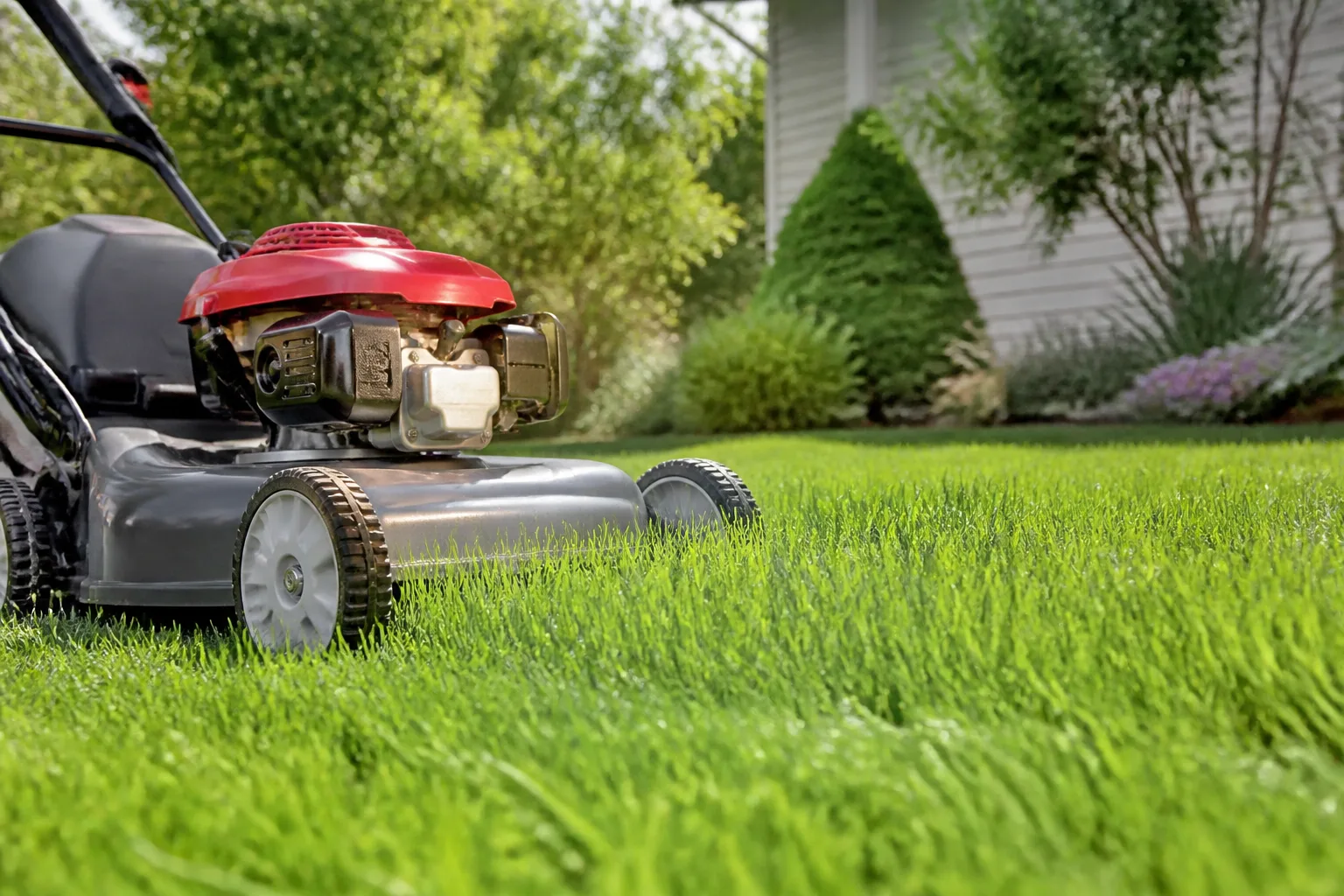
A clean cut at an appropriate height supports turf recovery better than scalping a diseased patch.
During an active outbreak, bag clippings from visibly affected areas if practical, especially when the mower will then cross healthy turf. Mowing can move infected blades and fungal structures around mechanically, so mow affected areas last and remove clumps left on the surface. Rinse or brush debris from the deck and underside before the next mowing session; cleaning is a reasonable precaution, not a promise that every trace of the fungus has been removed.
Once the disease is no longer active and the lawn is growing normally, routine clipping management can resume. Healthy fine clippings usually break down and return nutrients to the soil, but wet clumps or heavy windrows should not be left to mat over the grass. Follow local yard-waste rules if you bag diseased debris.
Improve the Site Only Where It Needs Work
Poor air movement, persistent shade, compacted soil, and a thick thatch layer can extend dampness or slow turf recovery. Look for a real site condition before doing corrective work: a screwdriver that cannot enter dry compacted soil, a layer of dead stems and roots between soil and green blades, or a patch that stays damp long after nearby turf dries. Do not dethatch, aerate, or prune on autopilot; each task can injure turf if done at the wrong time or when the lawn is already stressed.
If the lawn is shaded, consider whether a locally recommended shade-tolerant grass mix or a lower-turf alternative would fit the space better. Wisconsin Extension identifies Kentucky bluegrass and hard fescue among grasses less susceptible than fine fescue and perennial ryegrass in its region, but that comparison does not guarantee those species will thrive in every yard. Choose seed for local climate, shade level, soil, and use, and renovate only when the lawn can establish new roots.
If Red Thread Returns Every Year
A recurring patch usually means the conditions remain favorable or the turf is not recovering between wet spells. Compare the same patch with adjacent grass: does it receive more shade, collect runoff, stay dewy, or contain a different grass mix? Look at the dates of symptoms, rainfall, irrigation, fertilizer, and mowing; a simple log can reveal that the lawn is repeatedly entering a low-growth period before red thread appears.
Focus on the limiting factor, not on a list of every possible lawn task. If fertility is the weak point, use a seasonally appropriate program.
If water stands after rain, address drainage or compaction only when confirmed. If the area is deeply shaded and persistently thin, replacing it with a suitable groundcover may be more realistic than trying to force dense lawn grass to grow there.
Persistent recurrence does not mean you need to eradicate the fungus from the soil. LawnPhix’s disease guide also emphasizes reading symptoms alongside season and conditions; a repeated appearance in a damp spring is a useful prompt to review the site and the lawn’s growth, not a reason to escalate automatically to chemicals.
When to Seek Diagnosis or Consider Fungicide
Get a closer diagnosis if the patch spreads quickly, turf pulls up easily, crowns or roots look rotted, the affected area does not produce new growth in suitable weather, or the symptom lacks red tendrils. University diagnostic clinics can examine a sample and help distinguish fungal disease from insects, drought, chemical injury, or other root problems. Follow the clinic’s instructions for sampling; a handful of wet clippings may not show the structure needed for a useful diagnosis.
Fungicides are rarely justified for ordinary residential red thread because the disease is often cosmetic and cultural correction is usually the better investment. They may be considered in a high-value turf setting or an unusually severe, recurring case after diagnosis and professional advice.
Preventive timing, active ingredients, registration, and permitted uses vary by product and location, so do not apply a fungicide unless the current label lists the site and disease and you can follow every safety instruction. UC Statewide IPM says fungicides are rarely warranted except in severe cases; the local label and extension recommendation take precedence over a general article.
How the Lawn Recovers and When to Reseed
Recovery follows new grass growth, not the disappearance of every red thread from old leaves. When the weather becomes less favorable to the fungus and turf resumes active growth, mow off damaged tips gradually and watch for green leaves emerging through the patch. The lawn may take several weeks to look even again, and the pace depends on temperature, moisture, fertility, grass type, and how much other stress the site carries.
Reseed only if the area is genuinely bare or too thin to fill in, and time it for the best establishment window for your grass type. Correct the cause first—shade, drainage, soil condition, or an unsuitable mix—or new seedlings may face the same problem. If the existing grass is alive but bleached, waiting for a flush of fresh growth is often less disruptive than scraping the area and starting over.
Conclusion
Red thread looks alarming because red filaments and bleached grass appear together, but the signature threads on the blade tips help separate it from many brown-lawn problems. In most home lawns, the disease affects foliage more than roots or crowns, so the first response is careful identification and support for steady turf growth—not an emergency fungicide application.
Check the lawn’s fertilizer history, water only when the root zone needs it, mow cleanly at the right height, and address shade, compaction, or thatch only when you have evidence those conditions are contributing. Use local extension guidance for fertilizer timing and turf choices, and get a diagnostic opinion when the symptoms do not fit or the lawn continues to decline. That measured approach gives healthy grass a chance to grow through the damage while avoiding unnecessary chemical use and costly renovation.