Snow on Grass: When to Leave It and When to Clear It
Should you clear snow off grass? Get a practical guide to frost heave, ice tracks, plow piles, salt runoff, and spring recovery after winter storms.
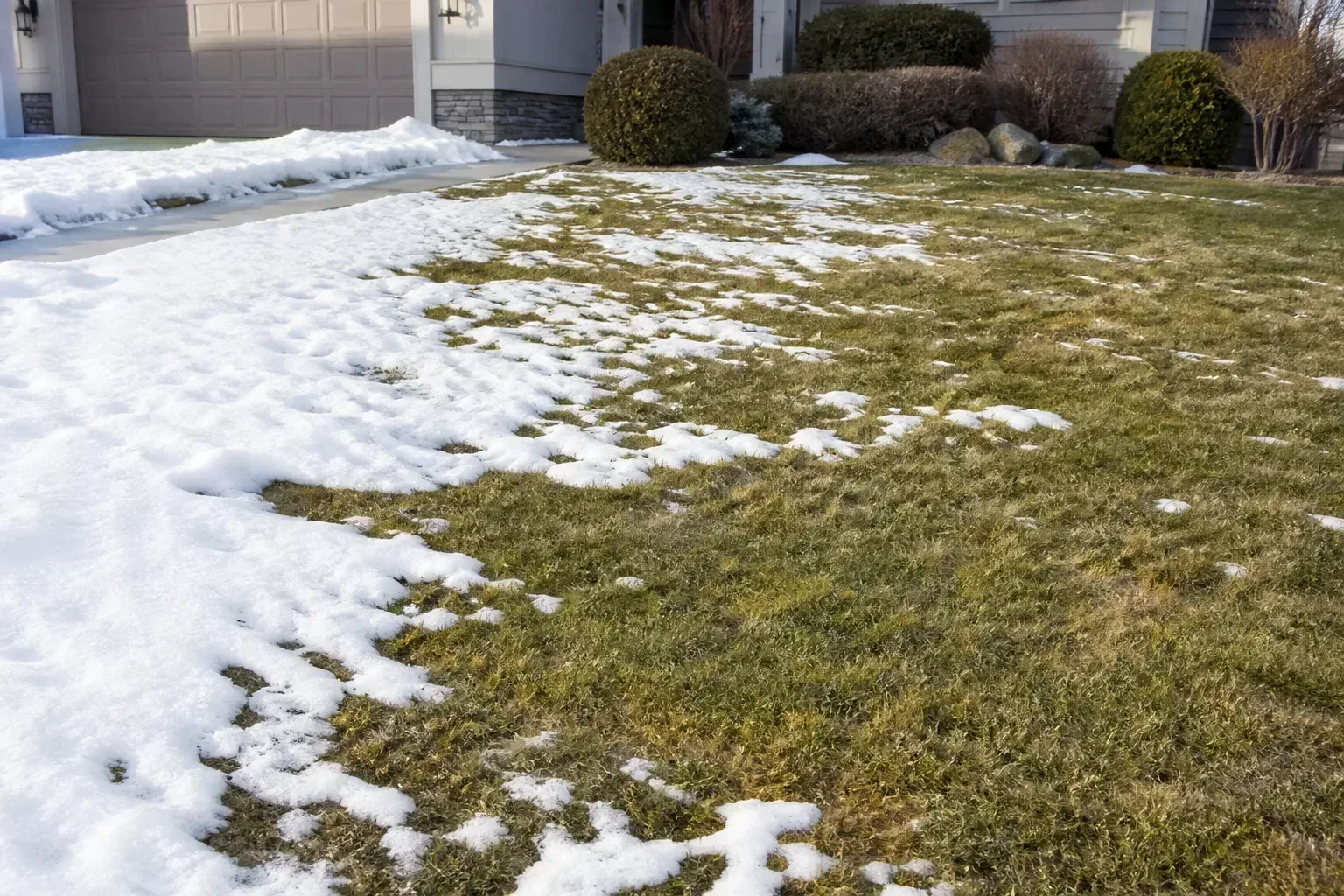
Every major storm ends the same way: the driveway is clear, the sidewalk is passable, and a wall of white sits on the lawn. You stare at it and wonder whether snow on grass is protecting your yard or setting up a muddy disaster in March. The honest answer is both. Natural, evenly distributed snow is usually fine—sometimes helpful. Human-made snow piles, repeated foot traffic, and salty meltwater are what turn a winter blanket into spring repair work.
This guide gives you a simple decision framework: what to leave alone, what to spread or relocate, and what to fix when melt arrives. For deeper dives on specific damage types, see our guides on what snow mold is and signs snow damaged your lawn.
The Short Answer: Leave an Even Blanket, Clear the Problem Piles
You do not need to clear natural snowfall off your lawn. A moderate, even layer across cool-season turf insulates crowns from bitter wind and reduces freeze-thaw swings in the soil. That is the snow your grass evolved with in northern climates.
You should intervene when snow is concentrated, compressed, or contaminated. Tall piles from plows and shovels, the same drifted corner hit every storm, paths packed by foot traffic, and melt loaded with de-icing salt are the problems—not a ordinary 4-to-8-inch blanket after a routine storm.
Three Snow Situations Homeowners Confuse
Think in three buckets. Type 1—natural cover: light to moderate snow that fell evenly and will melt within a few weeks. Leave it. Type 2—relocated snow: what you blew, shoveled, or plowed off pavement. Spread it thin, aim for sunny melt zones, and never stack it in the same spot twice. Type 3—stressed snow: deep banks lasting months, compressed tracks, or salty slush along edges. Treat these as damage in progress and plan spring recovery before grass green-up.
If you remember only one rule: depth plus duration plus placement decide the outcome. Six inches spread across the whole yard for two weeks is different from six feet piled on a 10-foot strip until April.
How Snow Can Actually Help Your Lawn
Winter lawn advice often sounds contradictory because snow plays two roles. As a uniform cover on dormant cool-season grass—Kentucky bluegrass, tall fescue, fine fescues, perennial ryegrass—it buffers temperature swings at the soil surface. As a wet, airless slab stacked on one patch for months, it invites fungi and suffocation. Context is everything.
Snow Insulates Dormant Turf Against Extreme Cold
Exposed turf in a hard northern winter faces desiccating wind and rapid temperature drops. A steady snowpack keeps soil and crown tissue from swinging as wildly as open ground. Penn State Extension notes that gray snow mold seldom occurs except under snow cover when soil is not frozen—which also tells you that snow and unfrozen soil together create a specific microclimate fungi exploit, not that all snow is automatically harmful.
The helpful version is moderate, temporary cover on healthy, mowed turf going into dormancy. That is the opposite of a plow berm that stays frozen-solid into late March.
A Moderate Layer Reduces Frost Heave
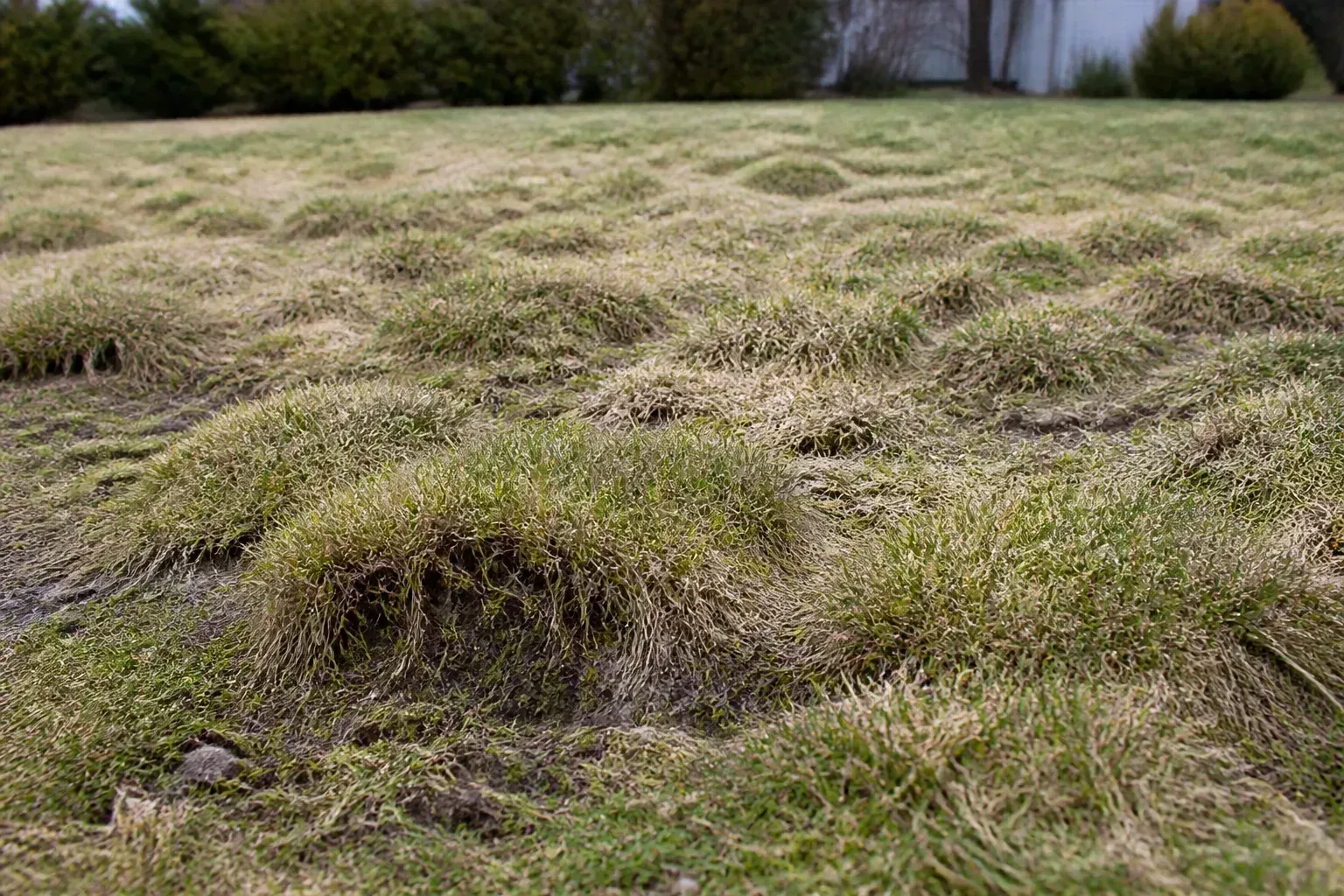
Frost heave happens when soil moisture freezes, expands, and pushes plant crowns upward during repeated freeze-thaw cycles. An even snow layer moderates soil temperature and cuts down on those swings at the surface. Uneven thawing—bare patches beside deep piles—is where you see lumpy turf in spring.
Heaving is more common on poorly drained or clay-heavy lawns and where snow melts unevenly. If your yard already heaves around bed edges, read how snow can damage grass over winter for frost-heave recovery steps; fixing drainage and pile placement beats chasing symptoms every April.
When Leaving Snow on Grass Becomes a Problem
Problems start when snow stops acting like a blanket and starts acting like a wet tarp glued to the turf for weeks. Generic advice often stops at “damp conditions and compaction” without saying how much snow, how long, and whether air still reaches the crowns.
Deep Piles Smother Blades and Compact Soil
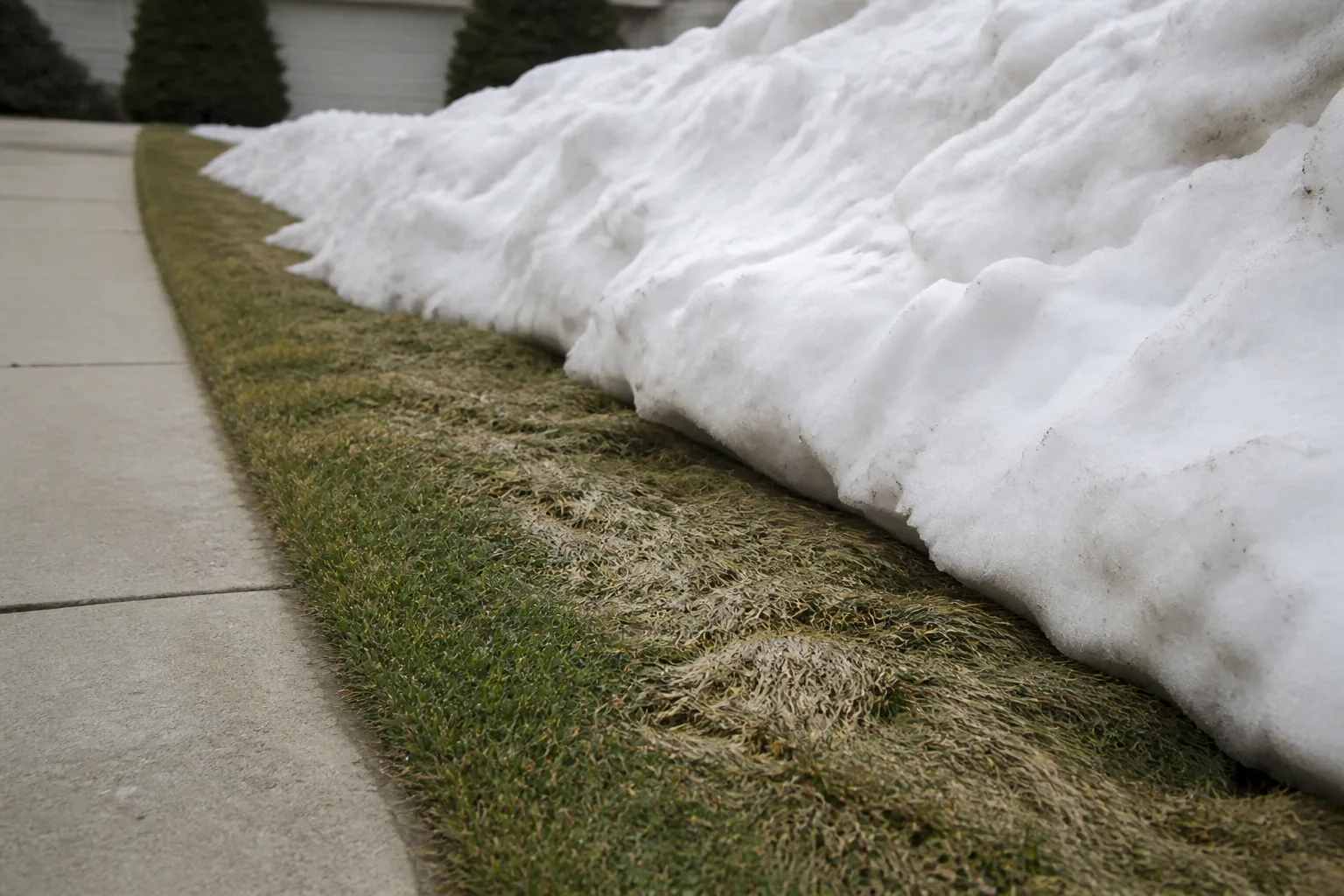
Snow is mostly air—until it is piled, walked on, and refrozen. A deep, concentrated pile exerts downward pressure, squeezes pore space in the top soil layer, and keeps blades in dark, wet contact with melt at the base. Compacted soil drains poorly and rebounds slowly in spring.
Penn State Extension reports that the deeper the snow cover and the longer it remains on turf, the greater the extent of snow mold and turfgrass injury. Those worst-case piles are exactly what plows create along driveways and what shovelers stack on the nearest lawn edge because it is convenient.
Snow Mold Thrives Under Heavy, Long-Lived Cover
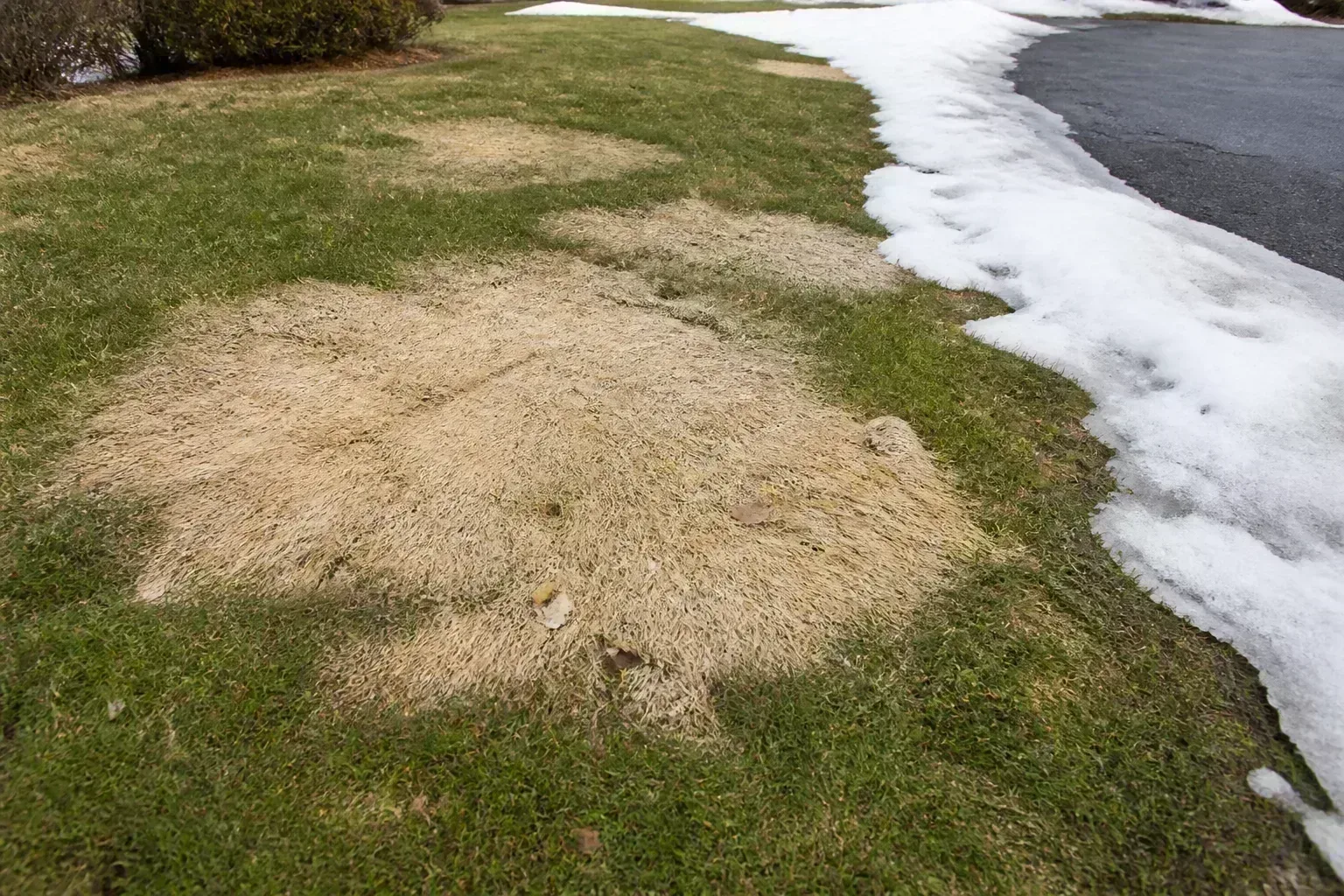
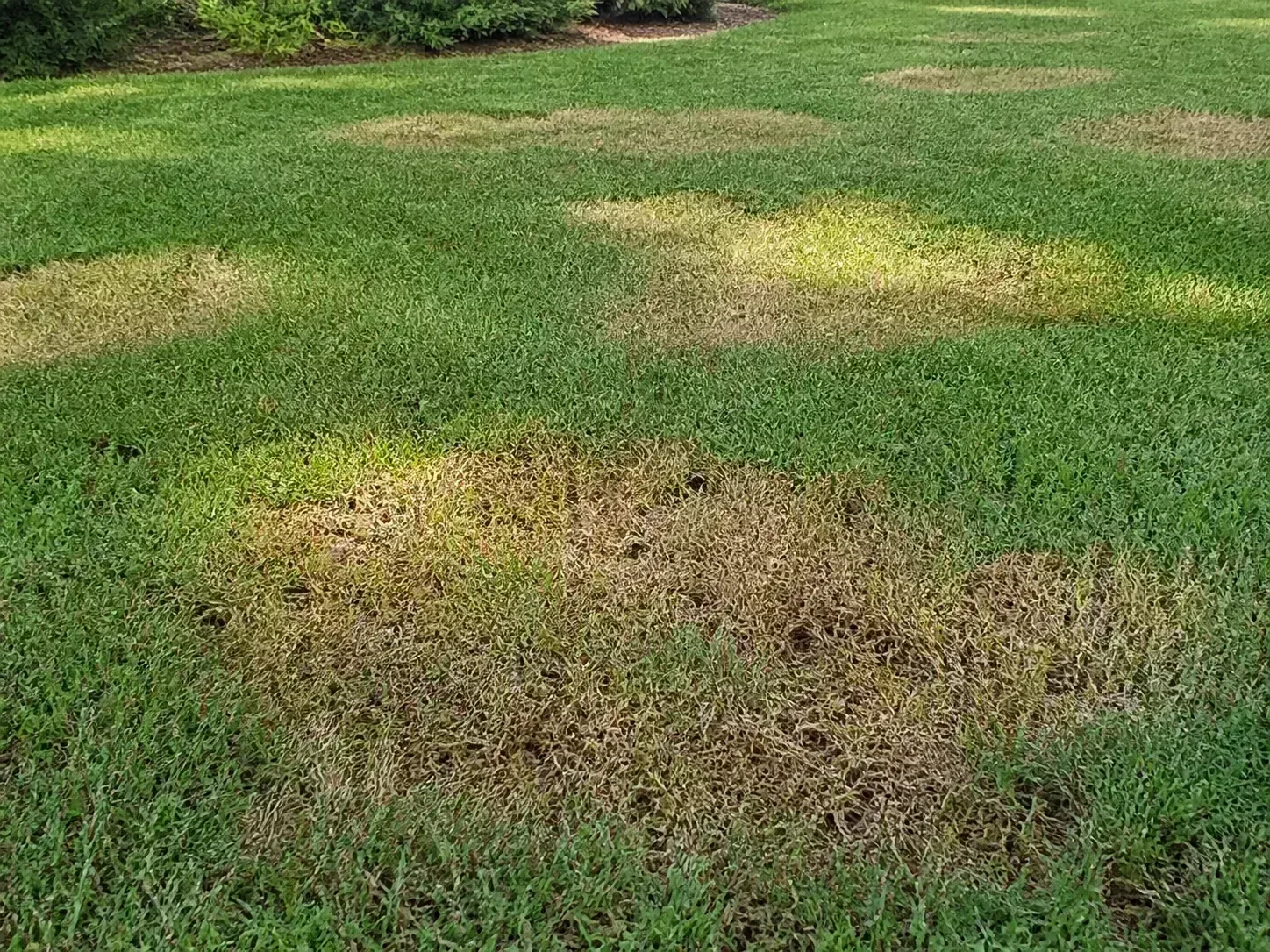
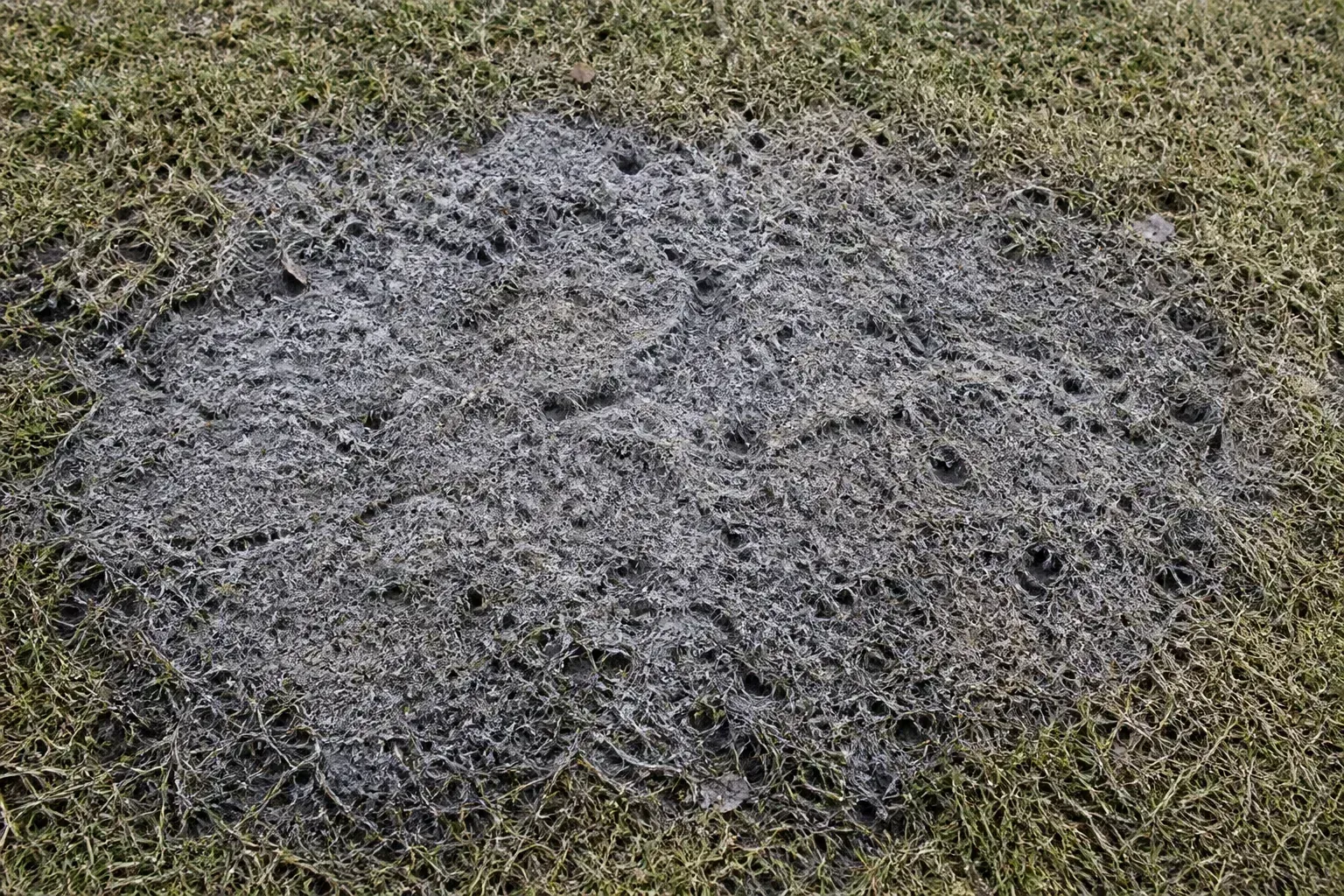
Snow mold is a group of cool-season turf diseases—mainly gray snow mold (Typhula species) and pink snow mold (Microdochium nivale)—that develop under prolonged snow or long cold, wet periods. University of Illinois Extension describes gray snow mold patches appearing as circular yellow to whitish-gray areas after melt, with matted grass and tiny amber to dark brown sclerotia when conditions favor disease.
Gray snow mold usually kills leaf blades but not crowns on mature turf, according to Penn State. Pink snow mold can injure crowns more deeply and spread in cool wet weather even after snow leaves. Piles along north-facing edges and shady strips melt last—exactly where fungi had the longest run. Our snow mold guide walks through identification, raking, and fall prevention in full detail.
Shovel, Blow, and Plow: Where Snow Should Go Instead
Most lawn damage is not mysterious. It is where you put the snow you removed from somewhere else. Changing that habit costs nothing and saves more turf than any spring product.
First choice: push or blow snow onto non-turf surfaces—street apron where allowed, a gravel or paved pad, a mulched bed away from woody plant crowns, or a back corner of the property that is not lawn. Utah State Extension recommends pushing snow away from driveways into sunnier yard areas to reduce snow mold—meaning sunny melt zones, not deeper shade piles.
Second choice: if turf is unavoidable, spread thin. Run a snowblower discharge across a wide arc instead of one static chute aimed at the same berm. Shovel in multiple small loads across a large area rather than one mountain.
Third choice: rotate pile locations storm to storm so no single strip stays buried all winter.
Spread Cleared Snow Evenly When You Have No Other Option
When every direction is lawn, your goal is shallow depth over maximum area. Aim for less than 6 inches of added depth on any one zone and move the discharge point every pass. Melt happens faster on south-facing slopes and near pavement that radiates heat.
If you must choose between the front yard you see daily and a side yard that greens up first anyway, sacrifice visibility for distribution. A thin skim over 30 feet beats a 4-foot wall on 8 feet of edge.
Tell Your Plow Operator Where Turf Ends
Contract plows default to the path of least resistance—usually your lawn apron. Mark beds with stakes before the first storm. Specify that snow should go forward along the drive or to a designated dump zone, not pushed sideways onto turf.
If your operator cannot avoid the lawn entirely, ask for splitting piles: half to the street side, half spread thin on a sacrificial strip you plan to overseed in spring anyway. Document that strip now so you are not surprised in March.
Why Ice Is Worse Than Snow for Your Lawn
Snow contains air pockets that allow some gas exchange at the soil surface. Solid ice seals the profile, holds water against crowns, and amplifies compaction when you walk on it. That is why “stay off the lawn in winter” is less about snowflakes and more about what foot traffic does to snow.
Foot Traffic Turns Snow Into an Ice Crust
Walking across snow-covered turf compresses the layer into a dense pad. Warm afternoon sun hits the track, surface melt refreezes overnight, and you get ice ruts where grass suffocates. The same thing happens when you shovel a “convenience path” across the lawn—the lowered trench collects water that freezes into a ribbon of damage.
Keep human and pet routes on walkways, driveways, and mulched paths. If you must cross turf, vary the line so no single track hardens all winter. For deck and hardscape snow rules that keep melt away from lawn edges, see do you need to shovel a deck.
Salt, Sand, and Melt Runoff From Hardscape
Salt damage is easy to overlook in snow-removal conversations, yet it is one of the fastest ways to brown out turf along driveways and sidewalks. Sodium-based de-icers and repeated melt cycles create salt-burned strips where grass fails to green up while the center of the yard looks fine.
Keep granular products off turf when possible. Use less toxic alternatives near lawn edges where local codes allow, and flush salty zones with deep water in early spring once soil thaws. Gypsum can help displace sodium on some soils, but the first step is stopping the source. Our winter damage guide covers salt signature patterns next to snow mold and suffocation.
Sand tracked onto lawn edges is less chemically harsh but can smother crowns if piled thickly with plow snow. Blow or sweep heavy sand deposits off turf in spring before mowing.
Cool-Season vs Warm-Season Grass in Snow Country
Everything above assumes cool-season lawn grasses common in USDA zones where regular snow cover is normal. Kentucky bluegrass and fine fescues are less prone to gray snow mold injury than perennial ryegrass, tall fescue, or bentgrass, according to Penn State—yet all can suffer under deep piles.
Warm-season lawns—bermuda, zoysia, centipede, St. Augustine—are dormant and brittle in cold snaps. Heavy snow is less common in their core regions, but when it happens, piled wet cover on dormant warm-season turf can still smother and invite cold injury on exposed edges. Do not plow warm-season lawns in winter; redirect snow to hardscape. Spring green-up tells you what survived—overseed or sod only after soil warms and you see dead crowns, not just brown dormancy.
If you are on the transition zone and unsure what you are growing, match repair seed to your existing species. Our grass seed guide helps you choose compatible mixes for patch repair.
What to Do at Snowmelt Without Panicking
March panic is expensive. Most tan matted patches are cosmetic leaf damage, not a dead lawn. Your first job is diagnosis, not renovation.
Wait until soil has thawed enough to work—typically when a screwdriver penetrates several inches and footprints do not sink into mud. Then walk the yard and classify damage: snow mold mats, salt stripes, heave bumps, and bare suffocation zones where piles sat. Each needs a slightly different response.
Rake, Fertilize, and Overseed Only Where Needed
For snow mold, light raking breaks matted crust so air and sun reach crowns. University of Illinois Extension advises raking matted grass, fertilizing, and reseeding or resodding only as necessary. Bag only the heaviest moldy mats if you have allergy concerns or repeat disease; composting infected material can spread spores.
Apply modest spring nitrogen on weak areas once grass is actively growing—not on frozen turf. Overseed bare patches with compatible seed; see when to overseed bare patches and how to plant grass seed on an existing lawn for timing and seed-to-soil contact.
Do not spray fungicide on visible mold in April for damage that already happened under January snow. Preventive fungicides are a fall tool for high-value or repeatedly injured turf, not a spring cosmetic fix. If more than 30 percent of a zone is bare soil by mid-spring, plan a full strip renovation on that section rather than spot seeding forever.
Fall Habits That Decide How Much Snow Hurts
Winter damage is mostly booked in October and November. Short final mowing, leaf removal, moderate fall fertility, and sane snow placement matter more than anything you do while snow is falling.
Mow cool-season turf until growth stops, targeting roughly 2 to 2.5 inches for the last cut—tall, succulent blades mat down under snow and feed fungi. Illinois Extension warns against nitrogen within about six weeks of killing frost or expected first snow. Utah State Extension recommends fall fertilizer six to eight weeks before first frost, noting that late heavy nitrogen can worsen snow mold.
Rake leaves before persistent cover; leaf litter holds moisture and harbors inoculum. Aerate thick thatch where water pools—compaction plus poor drainage makes pile damage worse. For the full pre-winter mowing playbook, see the right way to cut your lawn before winter.
Conclusion
Leaving snow on grass is not a bad idea when it is natural, moderate, and temporary. Your lawn does not need you to rake a routine snowfall off the whole yard. Clear thinking matters when you add snow to the lawn from driveways, when piles grow deep and sit for months, when foot traffic ices a path, or when salty melt runs onto edges.
Spread relocated snow thin, rotate pile locations, keep traffic off turf, and fix fall mowing and fertility so fungi and compaction meet less vulnerable grass. At melt, rake gently, fertilize modestly, and overseed only where crowns actually failed. Get those habits right and the snow that arrives on its own can stay right where it fell—working as winter insulation instead of spring regret.



