Do You Have to Shovel Your Deck When It Snows? Deck Pros Say Repairs Could Cost You
Learn when to shovel snow off a deck, how much weight wet snow adds, which tools protect boards, and why salt and metal shovels can cost you in spring repairs.
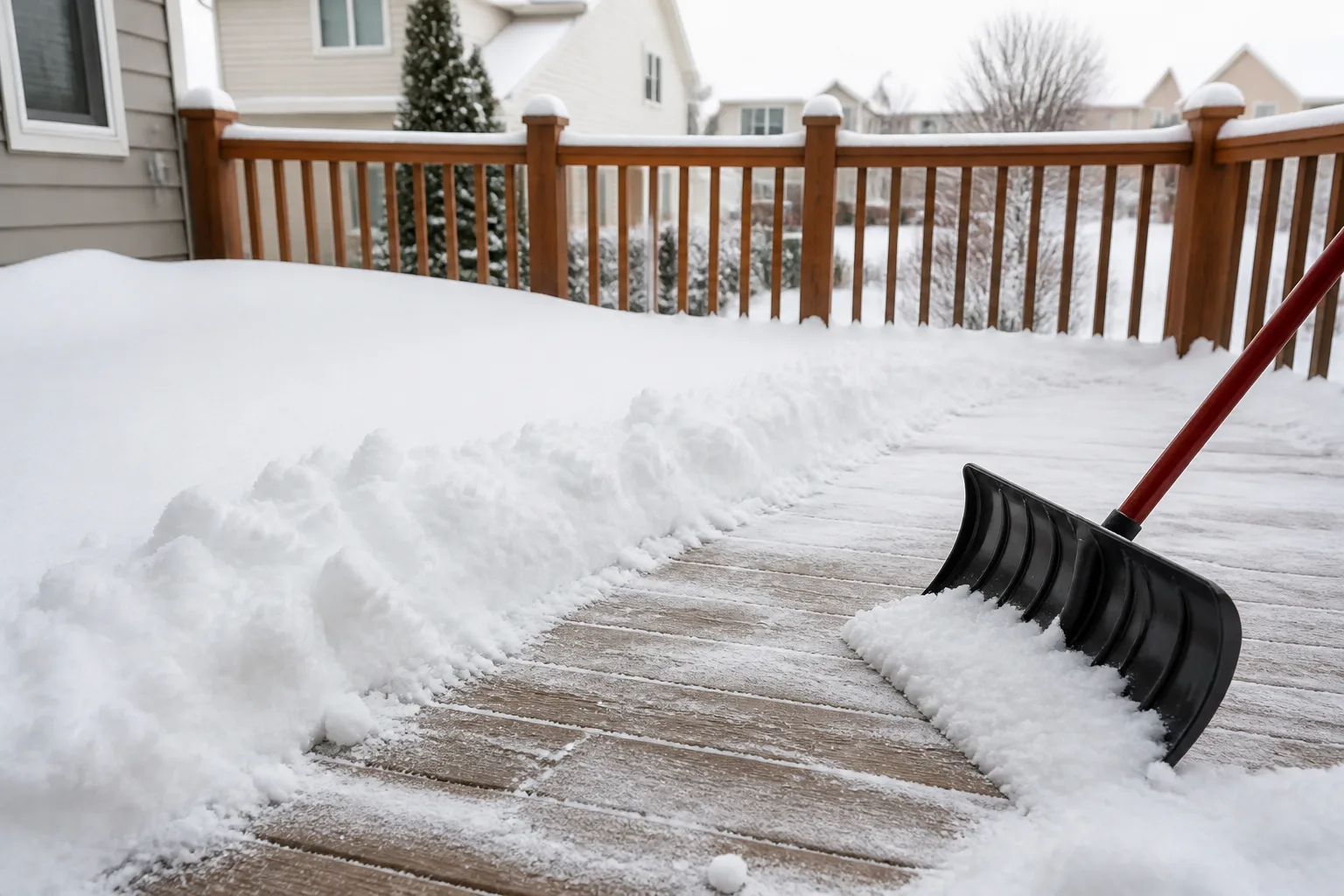
The Quick Answer: Light Snow Can Stay, Heavy Wet Snow Should Go
You do not have to shovel every flurry off your deck. A few inches of dry, fluffy snow on a code-built deck in good condition is usually within what the framing was designed to handle—and aggressively scraping that thin layer can scratch boards for no real gain. The job becomes important when snow turns heavy and wet, stacks above roughly 12 inches (or above your railing line in sustained storms), or sits on an older, DIY, or visibly sagging structure. At that point, weight, trapped moisture, and spring repair bills are real risks.
Think in three variables: snow moisture, snow depth, and deck quality. Dry powder under six inches on a modern permitted deck you are not walking on? Often fine to leave. Rain-soaked pack, ice crust, drift piles against the house, or a deck you already distrust? Clear it—with a plastic shovel or broom, strokes parallel to the boards, and no rock salt.
When You Can Safely Leave Snow on Your Deck
Winter decks are built to live outside. Pressure-treated lumber, cedar, and quality composite boards tolerate rain, sleet, and seasonal snow exposure for years when the structure and drainage are sound. Professionally installed decks slope slightly—typically 1/8 to 1/4 inch per foot—so meltwater runs away from the house rather than pooling against siding and door thresholds.
The Few-Inches Rule and Foot-Traffic Exceptions
Home inspector Reuben Saltzman of Structure Tech Home Inspections has long advised Minnesota homeowners that unless you need a cleared path for grilling, pets, or daily foot traffic, there is little benefit to removing a light, shallow snowpack from a well-constructed deck. That matches what deck builders in cold climates report: if you can still see your railing caps through the snow, total load often remains within everyday design assumptions—though moisture type still matters more than height alone.
Practical leave-it thresholds:
- Fluffy, dry snow under 6 inches on a deck you are not using.
- Sound framing with no visible sag, soft spots, or ledger gaps.
- No urgent path required across the deck to garage, grill, or hot tub.
If you only need a narrow walkway, clear just that lane instead of stripping the entire surface. Piling all removed snow in one corner concentrates weight on a few joists—the same overload you were trying to avoid.
When Shoveling Becomes Non-Negotiable
Shovel when snow density jumps. After a warm storm or rain-on-snow event, Minnesota inspector Saltzman measured backyard snow approaching 35–40 pounds per square foot (psf)—a load that can approach or exceed what many modern roofs are designed for, as Structure Tech documented after a heavy wet snow event, and deck live loads are typically rated similarly. Deck contractor guidance in snow-belt regions often treats 12–18 inches of wet snow, or any depth where railing height is buried, as the point to clear.
Shoveling is also smart when:
- You use the deck as a primary winter walkway.
- Drifts stack against the house, door, or low ledger flashing where melt can intrude.
- The deck is older, permit-unknown, or DIY with undersized joists or wide 24-inch-on-center spacing.
- You hear new creaking, see sagging, or notice rail movement after storms.
Snow removal is not just about collapse fear. Leaving a wet pack through freeze-thaw cycles traps moisture against fasteners and end-grain, accelerates rot on wood, and invites surface staining and fastener corrosion on composite systems—repair costs that show up in spring, not mid-storm.
How Much Weight Does Snow Actually Add?
Snow looks light until you do the math. Weight depends on moisture content and depth, not how pretty the yard looks from the kitchen window.
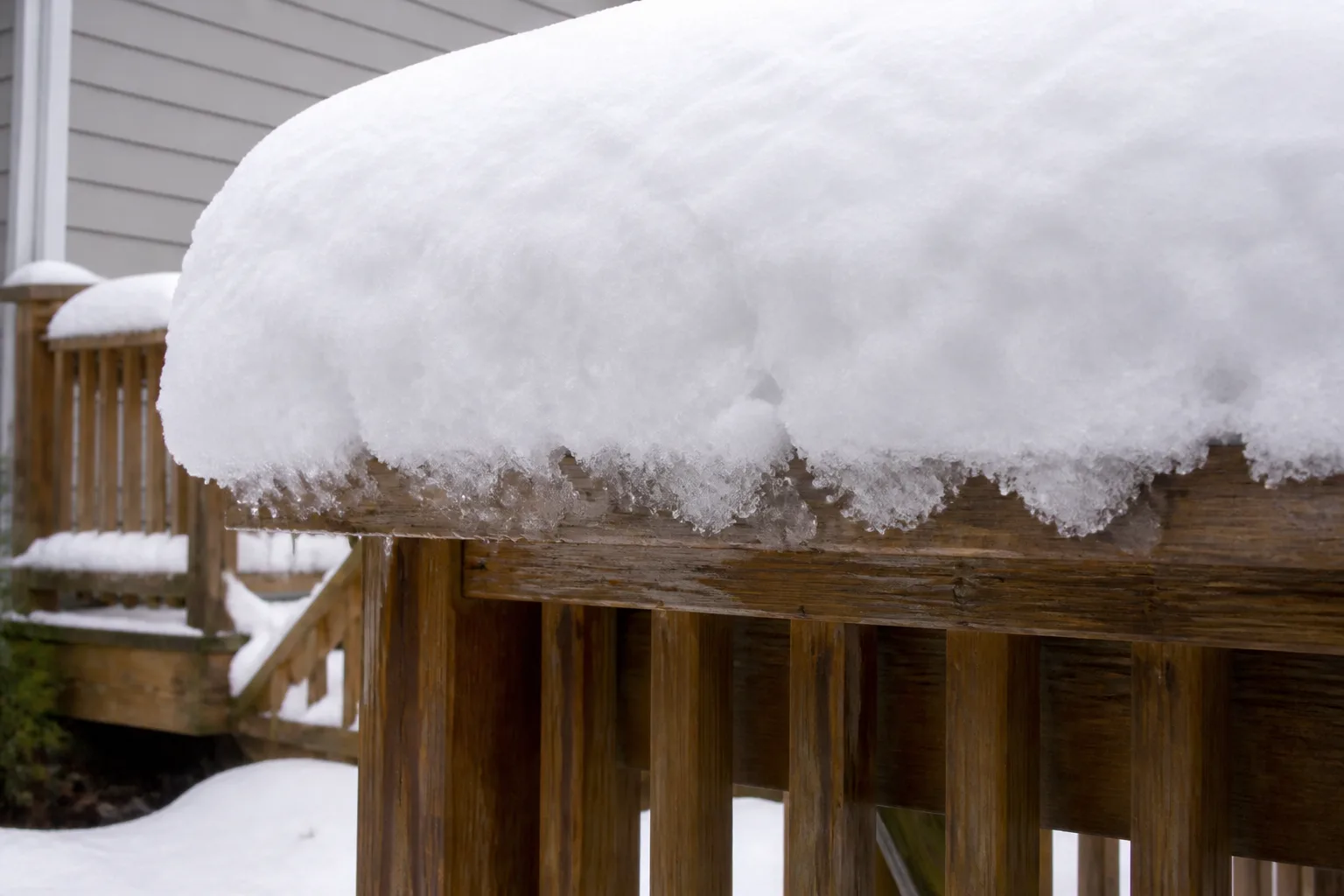
The Math Behind Saturated and Wet Snow Loads
The City of Coeur d’Alene Building Department notes that saturated snow weighs about 20 pounds per cubic foot. Another useful shortcut from that handout: one inch of snow spread over roughly one square foot weighs about 1.5 pounds. Layer that across a real deck:
- A 200-square-foot deck with 12 inches of saturated snow holds about 300 pounds on the surface layer alone—before compaction, ice crust, or drift doubling in corners.
- A 250-square-foot deck under heavy, wet accumulation can approach nearly a ton of total snow load when storms stack and saturate, as cold-climate snow-removal guidance often illustrates for homeowners comparing roof and deck loads.
Moisture categories deck owners should recognize:
- Light, fluffy snow: often 5–10 psf depending on depth.
- Wet, heavy snow: commonly 20–30+ psf before compaction.
- Rain-soaked or refrozen packs: can jump toward the 35–40 psf range Saltzman documented after mixed winter storms.
Rain on top of several inches of snow that refreezes at night adds weight without adding visible depth—a silent load increase.
What Code-Built Decks Are Designed to Carry
Modern residential decks built to current codes are generally engineered for a 40 psf live load—people, furniture, and environmental load on the walking surface—plus a 10–15 psf dead load for the deck itself. That 50–55 psf total design target is the assumption behind joist span tables in the International Residential Code framing chapters explained in residential deck code guides.
But that number is not a promise for every backyard platform. It assumes correct joist size, 16-inch-on-center spacing (or tighter), reasonable spans, solid ledger fastening, and footings below the frost line. A summer-perfect deck that was never permitted can still be underbuilt for winter: 2×8 joists at 24 inches on center over long spans behave very differently under sustained snow than 2×10 or 2×12 joists at 16 inches on center.
If you do not know how your deck was framed, treat wet snow above a foot as a shoveling trigger—not because every deck will fail, but because margin is unknown.
What Happens If You Never Shovel Heavy Snow
Ignoring a deep, wet pack is not the same as letting light powder sit. The damage modes split into structure, wood decay, and surface/fastener problems.
Structural Stress, Sagging, and Ledger Risk
Snow rarely collapses a deck in a single afternoon. Instead, it stress-tests weaknesses already present: oversized joist spans, undersized beams, corroded ledger bolts, or footings that heave in frost. After repeated winters, marginal decks show mid-span sag, new cracks in joists, separation at the house ledger, and loose railings—warning signs that overlap with post-storm inspection lists from deck builders in northern snow regions.
Frost heave at footings—common in clay soils and shallow footings in cold climates—can tilt or lift one end of a deck while snow load presses the center. Structure Tech’s frost-heave documentation on Minnesota decks shows how improper footing depth and expansive soils can heave framing several inches, compounding drainage problems when snow melts unevenly.
Trapped Moisture, Rot, and Mold on Wood Decks
Wood decks are not ruined by one winter, but snow that sits for weeks keeps the board surface wet and blocks airflow. DIY builds and aging platforms without proper slope are especially vulnerable. Mold, warping, and softening often start at screw holes, board ends, and low spots where melt pools—exactly where trapped snow slush lingers.
That is different from normal seasonal wetting. The risk is continuous contact under a pack, plus freeze-thaw cycling that opens micro-cracks for water entry.
Composite Decking, Surface Scratches, and Fastener Corrosion
Composite and PVC boards resist rot, but they are not invincible. Abrasive sand for traction, metal shovels, and aggressive ice chipping mar embossed grain and expose cellulose-rich cores on some products. Salt and chloride ice melts may be tolerated on some composite lines in manufacturer literature, but color-added products can stain permanently—composite cannot be re-stained like wood.
Even when boards look fine, chlorides accelerate screw and ledger corrosion if salty melt is not rinsed off during the next warm spell. Spring “mystery” fastener failure often starts as winter chemistry, not spring rot.
When Shoveling Does More Harm Than Good
Shoveling is a tool, not a moral obligation. On powder under three or four inches, a stiff broom or blower often removes snow with less board contact than a shovel blade. Structure Tech–style guidance for light accumulations: if you do not need the deck, skipping removal can be smarter than scraping.
Shoveling hurts when:
- You use a metal blade or metal edge on a plastic shovel.
- You push perpendicular across board gaps, catching edges and splintering wood or chipping composite caps.
- You chip ice with shovel tips or ice picks—same damage as sidewalk hacking, but on a finished walking surface.
- You strip every inch when only a path is needed, multiplying abrasion for no structural benefit.
The repair bill from a bad shoveling session—gouged boards, stripped stain, cracked PVC cap—can exceed the cost of leaving a few inches of dry snow until a warm melt.
The Right Tools: Plastic Shovels, Push Brooms, and Leaf Blowers
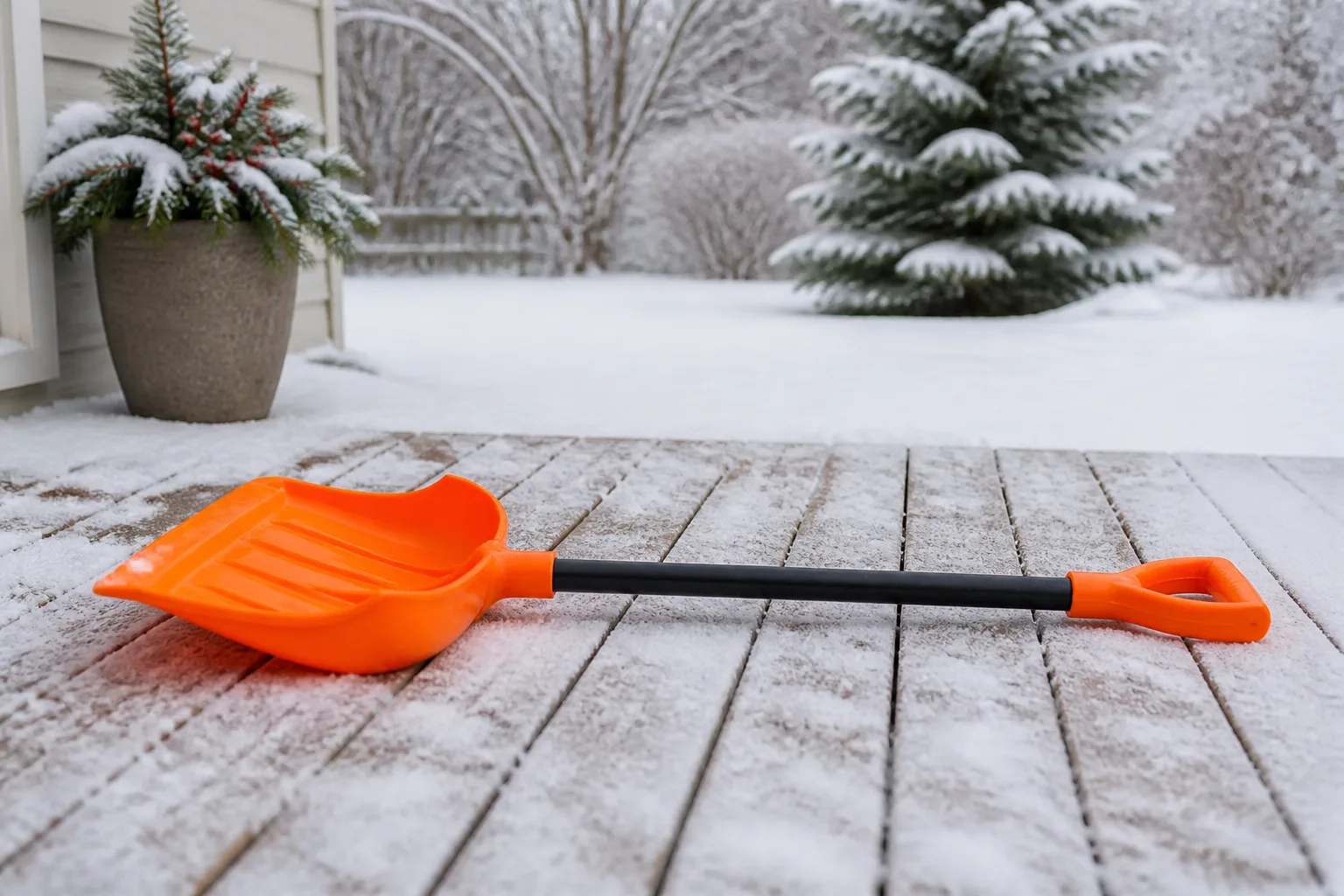
Match the tool to snow type:
- Plastic snow shovel with a rounded or rubber-tipped leading edge for packed layers. No metal wear strip on decking.
- Push broom or corn broom for under four inches of loose snow. Stiff bristles move volume without a rigid blade.
- Leaf blower for dry, unpacked snow—fast for open decks, useless on wet crust.
A roof rake is for roofs from the ground, not deck boards. Walking a snow-covered deck to hack at eaves risks falls and concentrates your weight on already loaded joists.
Advantage Lumber’s decking snow checklist emphasizes rubber-tipped or plastic-only edges and treating the deck like a finished floor—not a driveway.
How to Shovel Snow Off a Deck Without Damaging Boards
Technique matters more than muscle. Two rules cover most damage: direction of stroke and depth of aggression.
Shovel Parallel to the Boards, Never Across
Shovel with the board run, not sideways across the gaps. Parallel strokes let the blade ride the grain direction on wood and the embossed pattern on composite, reducing catches in board joints. Picture-frame borders and diagonal inlays make this harder—work in the longest continuous direction you can, section by section.
Deck builder guidance from cold-climate installers also recommends light, layered passes instead of one violent scrape to bare wood. Leave a thin skim if the bottom layer is ice-bound; deal with ice separately.
Push Broom Technique for Light Layers

For shallow snow, flip workflow:
- Use the broom upside down to push bulk snow toward the deck edge in parallel strokes.
- Flip upright to brush the remaining dusting off the surface.
- Clear stairs and landings the same way—rails and treads scratch easily with shovel corners.
This is the same mechanical idea as using a brush on snow-laden tree limbs in our guide on the safest way to remove snow from trees—push and lift, don’t hack.
Wood, Composite, and Cedar: Material-Specific Winter Rules
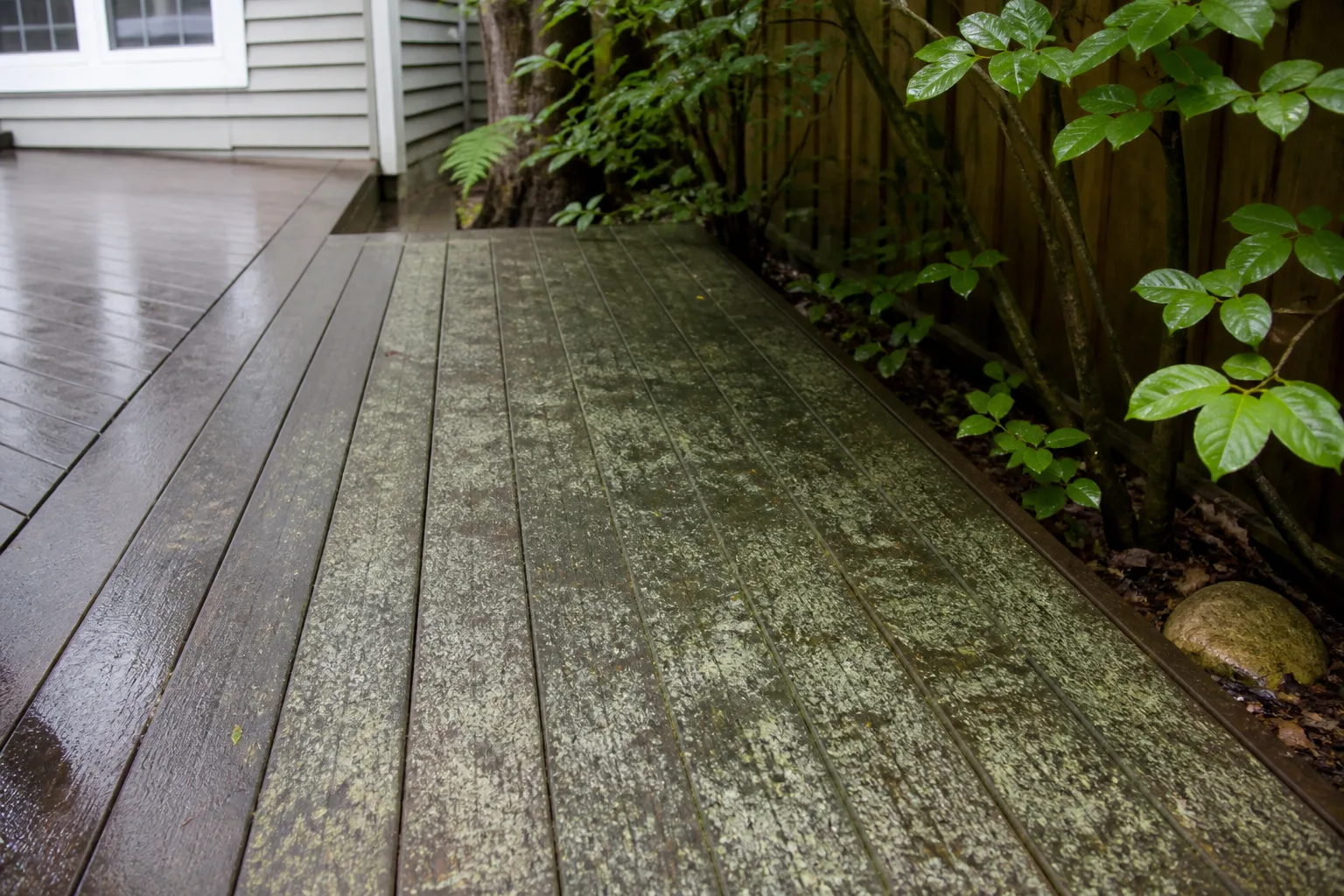
Pressure-treated pine tolerates moisture but still needs drainage; long snow cover plus road salt splatter from the driveway is a rot accelerator. Cedar is naturally decay-resistant yet still splits if you pry ice along grain lines with a metal edge.
Composite and PVC prioritize surface preservation:
- Shovel and broom only—no sand grit for traction.
- Rinse chloride residues when temperatures allow.
- Avoid colored ice melts that can stain cap stock.
Exotic hardwoods (ipe, mahogany) are dense and durable but expensive to resurface if gouged. Treat them like fine interior flooring when choosing tools.
None of these materials benefit from rock salt the way concrete sidewalks do.
Salt, Sand, and Ice Melt: What Never Belongs on Decking
Rock salt (sodium chloride) is among the worst deck treatments. Advantage Lumber and multiple cold-climate deck contractors warn that salt crystals draw moisture, promote freeze-thaw cycling in wood, and behave chemically like floor stripper on stains and sealers—forcing premature refinishing every spring. On composite, salt may be marketed as “okay” by some brands, but chlorides still attack metal hardware if left unwashed.
Sand and traction grit scratch wood and grind into composite caps—the traction you gain on ice costs permanent surface damage. Reserve sand for concrete walks, not finished decking.
Calcium chloride and blended melts are sometimes used on composites with manufacturer caveats, but dyed products risk permanent color transfer. “Pet safe” melts are not automatically deck safe; test on a scrap piece if you must use chemistry, and flush the deck after melt.
For wood decks, the consistent pro recommendation is: mechanical snow removal + covered traction paths, not salt.
Removing Ice Without Chipping or Chemical Burns
Ice on a deck is a safety problem when you walk there daily. It is also where homeowners destroy boards trying to save five minutes.
Do not shatter ice with shovel tips, ice picks, or sidewalk scrapers. Each impact mars wood and composite alike. Cold-climate deck builders repeat this rule because spring “touch-up” becomes full board replacement.
Lower-risk approaches:
- Sun and timing: Clear snow so afternoon sun hits dark composite or wood; use a plastic putty knife with the flat face on the board, not the corner, to lift softened ice sheets.
- Warm water rinse: Pour warm (not boiling) water on small ice patches, then squeegee or towel dry so it does not refreeze—practical for steps, not entire decks.
- Heat mats: Plug-in walkway mats melt roughly two inches of snow per hour on paths you use daily—expensive, but they avoid blades and salt on high-traffic lanes.
- Outdoor runner mats with non-skid backing for traction over ice you cannot melt immediately—choose mats that drain rather than pool water under rubber backing.
If ice is thick and the deck is unused, leave it alone and rope off the stairs until melt season. That is cheaper than resurfacing.
Red Flags on Older and DIY Decks
Not every deck received the same structural generosity as a 2020 permitted build. Watch for:
- 24-inch-on-center joists on older platforms.
- Long spans without mid-beam support on wide decks.
- Ledger boards attached with only nails, or missing flashing.
- Shallow footings or posts that tilt seasonally—frost heave territory.
- Mixed repairs where new short joists tie into old rot without engineering.
These decks can look fine in July. Winter snow is the annual exam. If you know—or suspect—your deck is non-code, shovel earlier and lighter when wet snow arrives, and schedule a structural inspection in spring regardless.
Warning Signs Your Deck Is Under Too Much Load
After heavy accumulation, inspect from the ground and from underneath if safe:
- Visible sag or dipping mid-span.
- New cracks in joists, beams, or posts.
- Popping, creaking, or sudden movement when someone walks near rails.
- Ledger gap opening between house and rim board.
- Rail posts that wobble though they were tight in fall.
These are structural signals, not cosmetic winter quirks. Reduce load by clearing snow evenly, avoid congregating people on a loaded deck, and call a qualified deck builder or inspector if movement is new. Do not wait for a warm weekend party to test a sagging platform.
Adjacent yard stresses matter too: piling shoveled snow from the deck onto lawn edges that already struggle with winter damage smothers turf and concentrates salt runoff—another reason to push snow to gravel or bare soil, not your best grass.
Fall Prep That Makes Winter Shoveling Easier
An hour in late fall prevents February frustration:
- Remove cushions, planters, and debris so snow clears evenly.
- Drive protruding nails and screws flush—shovel hits are miserable and damage blades.
- Replace rotted or cracked boards before they hide under snow.
- Verify railing and stair integrity before ice season.
- Seal or stain wood if the finish is thin—winter moisture penetrates faster on bare grain.
- Confirm downspouts and gutters do not dump roof melt onto the deck edge, adding water weight to snow packs.
Document photos of the ledger and footing lines in fall. After a heave winter, comparison photos make inspector conversations faster.
Conclusion
You do not have to shovel every snowfall off your deck. Light, dry snow on a sound, code-era deck you are not using can stay put—and reckless shoveling can scratch boards faster than winter weather does. The shift happens when snow becomes wet, deep, and compacted, when you need safe daily access, or when the deck itself is old, DIY, or already moving under load.
Use a plastic shovel or broom, work parallel to the boards, skip salt, sand, and ice chipping, and clear evenly rather than piling slush on one corner. Know your psf math enough to respect rain-soaked storms, and treat spring sag, creaks, and ledger gaps as repair triggers—not next-year problems. The decks that survive winter quietly are almost always the ones built right; snow just reveals which backyard platforms were not.