How to Remove Snow from Trees Safely
Heavy wet snow can snap branches. Learn when to brush snow off trees, which tools work, why ice is different, and when to call an arborist.
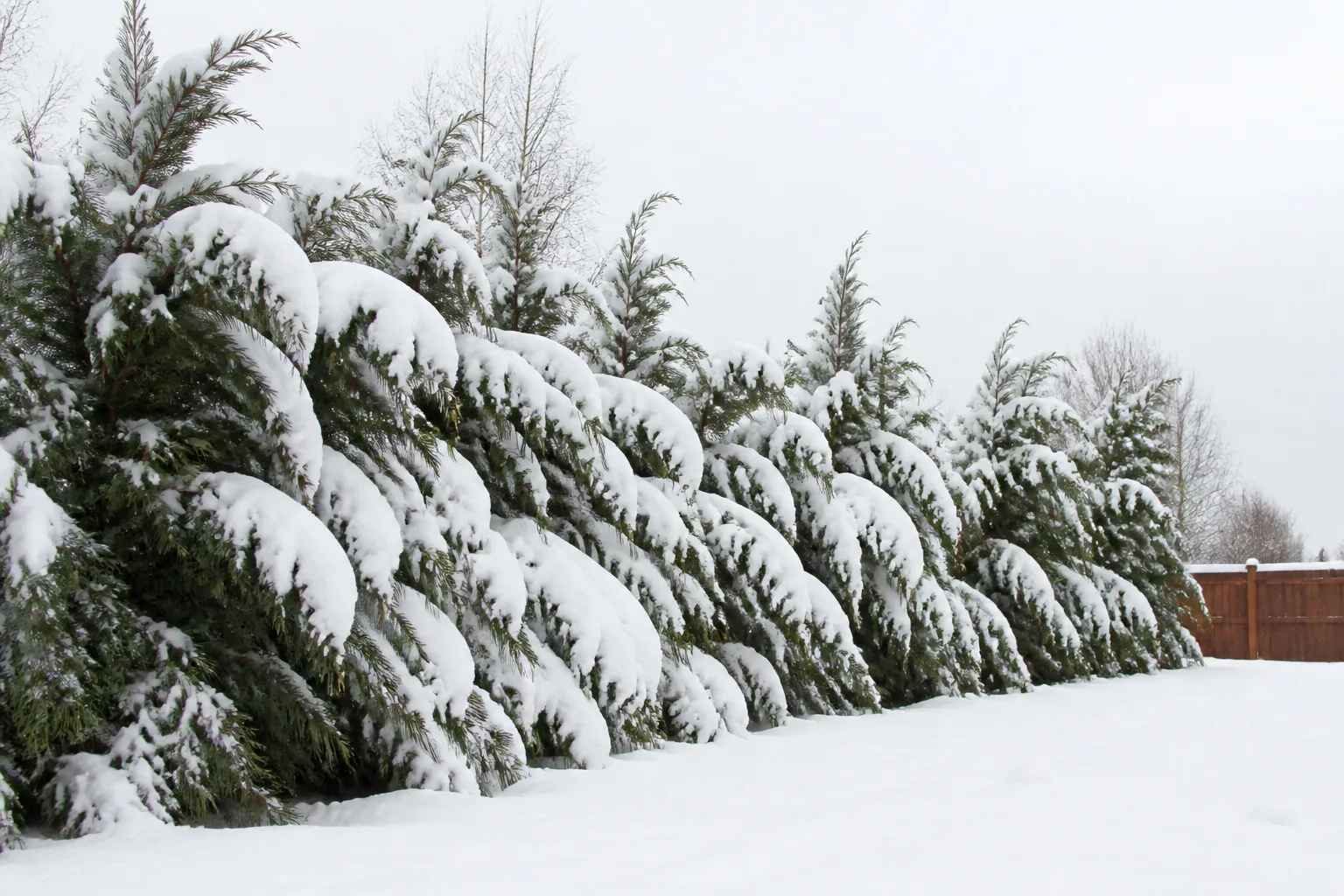
A backyard after fresh snowfall can look postcard-perfect—until you notice an evergreen bowed nearly to the ground or hear the sharp crack of a limb giving way. The instinct is to grab a shovel, shake the branch, or blast snow off with whatever tool is handy. Tree care professionals and university extension specialists agree on a quieter starting point: most snow loads do not need your intervention, and the wrong move at the wrong moment causes more damage than the storm itself.
The safest approach is not a single trick. It is a short decision sequence—decide whether action is necessary, choose a gentle technique if it is, and know the hard stops where DIY should end. Get that sequence right and you protect both the tree and yourself.
When Snow on Trees Is a Problem—and When to Leave It Alone
Light, fluffy snow on healthy mature trees is usually fine to leave in place. Deciduous trees shed much of their sail area after leaf drop, and many species tolerate a modest coating without trouble. Problems start when wet, heavy snow piles up on flexible branches, when evergreens hold snow like a shelf, or when a tree already has structural weaknesses—narrow V-crotches, codominant trunks, or recent storm injuries.
Intervene when you see branches bending sharply below their normal line, hear cracking sounds, or notice limbs hanging over roofs, driveways, walkways, or parked cars. If snow is merely sitting on top of sturdy wood and the branch still springs back when you gently test a lower twig, waiting often costs nothing. NC State Extension notes that for many large trees weighed down by snow and ice, there is little a homeowner can do safely beyond patience—a useful permission slip when the canopy is out of reach.
The default rule is patience, not panic. Powder snow on a healthy oak? Let it melt. Wet slop bending a row of arborvitae toward the garage? That is a different calculation. The mistake most people make is treating every white branch like an emergency. Experts reserve hands-on removal for active load risk, not aesthetics.
Why Heavy Snow Breaks Branches
Snow damage is physics, not bad luck. Branches fail when the downward force from accumulated weight exceeds what the wood and attachment can carry. Evergreens keep their foliage all winter, so they catch and hold more snow than bare deciduous trees. Multi-stem shrubs and trees with several leaders splitting from one base can splay outward under load, tearing bark where stems press apart.
Branch angle matters as much as species. Narrow attachments—think tight V-shaped crotches—concentrate stress at a weak point. That is why Bradford pear and other weak-structured trees show up on so many winter damage lists: the architecture was risky before the first flake fell.
Wet Snow Weighs Far More Than It Looks
Not all snowflakes weigh the same. Dry, cold powder might add only a few pounds per cubic foot. Wet, near-freezing snow—the kind that packs into snowballs instantly—can run 15 to 20 pounds per cubic foot or more. A few inches of that slush on a broad evergreen branch multiplies fast. Coastal and southern storms that start warm often deliver the heaviest loads because temperature hovers right at the freezing line.
If you can easily compress a handful into a dense ball, assume branches are carrying serious weight even when the depth looks modest.
Frozen Wood Snaps Faster Than You Expect
Cold makes wood less flexible. A branch that would bend in October can behave like a rigid stick in January. That is why shaking, jerking, or hitting snow-loaded wood is so destructive: you add sudden force to already stressed, stiff tissue. Damage may not show until spring, when cracked cambium fails to push new growth and whole sections die back.
Trees and Shrubs That Need the Most Attention
You do not need to treat every plant in the yard the same. Prioritize specimens that hold snow, split easily, or cannot yet support their own weight.
Evergreens and Upright Conifers
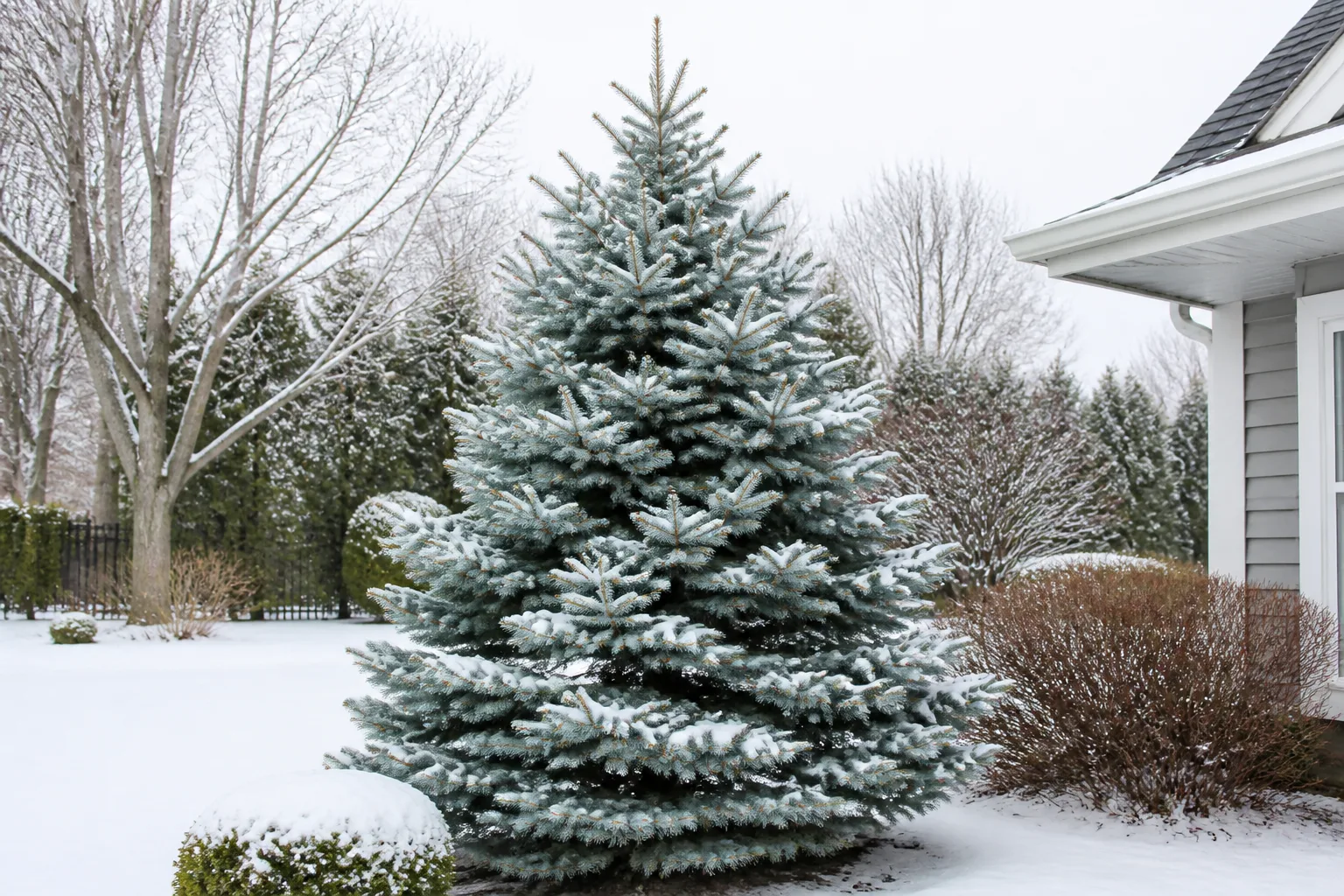
Needled and broadleaf evergreens—arborvitae, upright junipers, Leyland cypress, hemlock, rhododendron, boxwood, and many cold-hardy conifers—keep a full canopy in winter. Their leaves and needles catch snow that deciduous trees shed. Narrow, columnar forms like Sky Pencil holly are especially prone to splaying when leaders peel apart under load. NC State Extension recommends tying multiple leaders on narrow upright evergreens before storms, then removing bindings after snow melts.
Young, Leaning, and Weak-Wooded Trees
Trees less than two or three years in the ground have smaller root systems and thinner branches. A heavy wet load can bend the trunk permanently or snap the top. Leaning trees—whether from recent planting, root injury, or prior storms—carry weight unevenly and are prime candidates for gentle relief if you can reach them safely.
Fast-growing species with brittle wood—willow, certain poplars, silver maple, and weakly attached ornamental pears—deserve early attention when snow sticks and branches droop toward targets below. Mature shade trees with sound structure and no targets underneath are lower priority; patience usually wins.
Safety First: What Never to Do Near Snow-Loaded Trees
Personal safety comes before branch aesthetics. Snow and ice turn ordinary yard work into overhead hazard work.
Never stand directly under the branch you are clearing. Snow slabs can slide in one piece. Ice shards fall like glass. Stand to the side, uphill from the drop path when terrain slopes, and keep children and pets out of the fall zone.
Never use a ladder or climb the tree to reach high limbs. Wet boots, shifting weight, and brittle wood make falls and branch failure likely. If the job needs elevation, it needs a professional with proper rigging.
Never apply de-icing salt, ice melt, or hot water to branches or trunks. Sodium chloride and many commercial melts damage roots and evergreen foliage within splash range. NC State Extension warns that salt injury can extend 30 feet or more from treated pavement. Melting ice onto bark with hot water shocks tissue and refreezes into a harder shell.
Never use a snow blower’s blast on tree branches unless you are extremely experienced and the branch is small, flexible, and well within reach. Most homeowners lack the fine control to avoid ripping twigs off at high air speed.
Never Shake a Branch to Knock Snow Loose
Shaking feels efficient. It is also the fastest way to turn a bent branch into a broken one. Arborists and extension educators consistently advise gentle brushing or light tapping only. Sudden whipping motion fractures frozen fibers inside the branch, and cracks may stay hidden until warmer weather.
Power Lines, Ladders, and Overhead Hazards
If snow-laden limbs touch or run through utility wires, stop immediately and call the power company. Do not use poles, rakes, or brooms anywhere near energized lines—even a wooden tool can conduct through wet paths. Utility clearance is never a DIY job.
The same rule applies when broken hangers remain caught in lines after a limb falls. Treat every wire as live until the utility confirms otherwise.
Gear That Makes Gentle Snow Removal Possible
You do not need specialty arborist equipment for low, reachable work. Useful tools include:
- A soft-bristle broom or push broom with a long handle for sweeping snow upward and outward along branch surfaces
- A lightweight extension pole or telescoping handle with a foam or rubber tip for tapping flexible branches from below
- Insulated waterproof gloves and boots with solid traction—icy ground is part of the hazard
- Eye protection when working under any overhead load; a brimmed hat helps, but safety glasses are better
Skip metal rake teeth against bark. Skip heavy shovels that gouge cambium. Your goal is to reduce load without scraping or striking the branch itself.
Method 1: Brush or Sweep Snow Off Gently
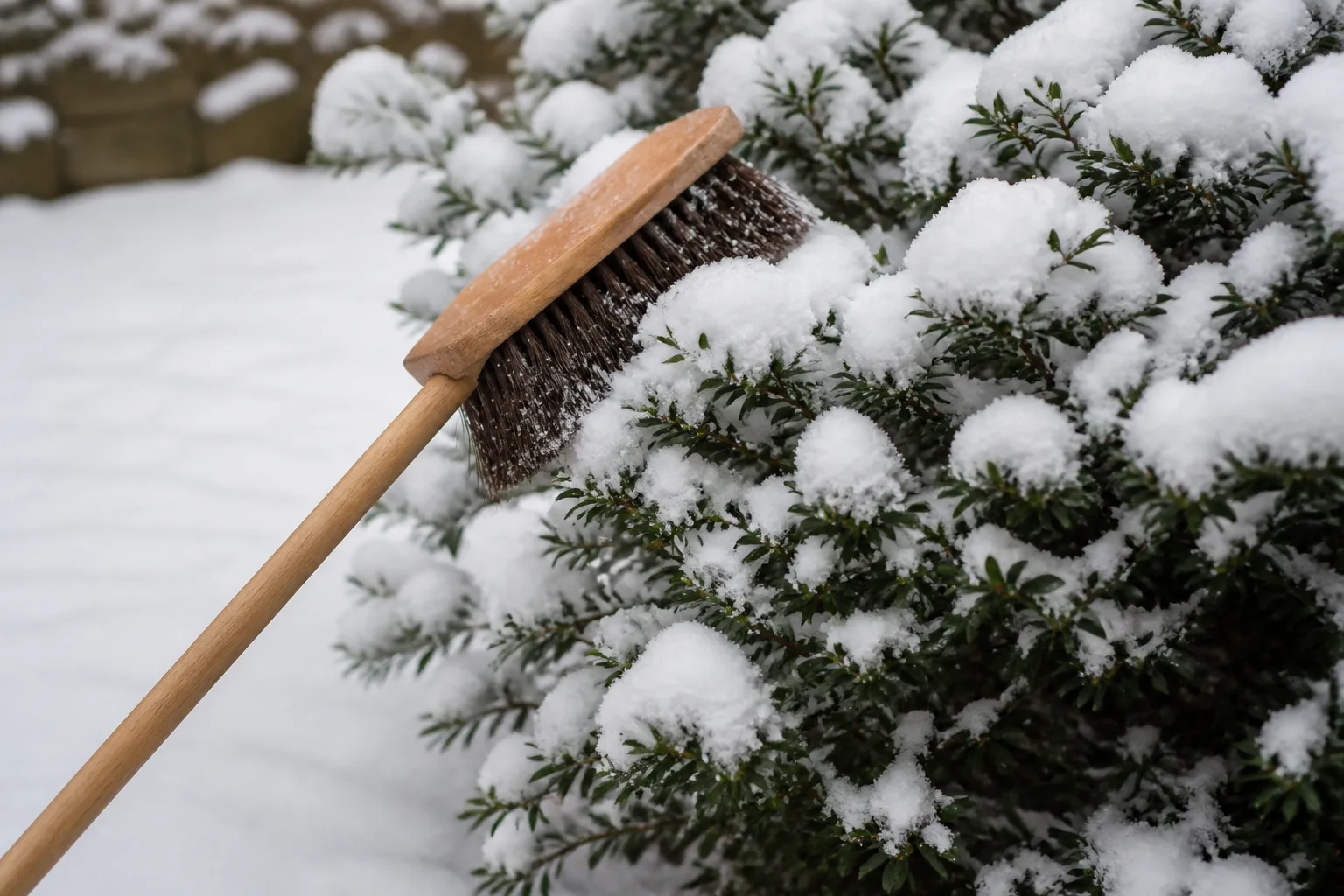
This is the technique extension services recommend most often for shrubs and low branches you can reach from the ground without a ladder.
Wait until active snowfall slows or stops so you are not fighting fresh accumulation on every pass. Stand to the side of the plant. Starting at the lowest branches, sweep snow off with an upward and outward motion—lifting weight off the limb rather than pressing down on wood already under stress. Work section by section toward the top.
Use slow strokes. If snow is crusted or bonded to twigs and will not release with light brushing, stop and let thaw do the work. Forcing bonded snow tears buds and bark. Peter Lowe, a certified arborist and garden program manager at The Dawes Arboretum, told Homes & Gardens that gentle brushing with a broom—or careful use of gloved hands on small twigs—beats aggressive handling every time.
After clearing, push piled snow away from the trunk base. Heavy, wet piles that melt and refreeze can suffocate roots and invite bark rot on buried stems.
Method 2: Tap Flexible Branches from Below with a Pole
For slightly higher, still-flexible branches, a long pole lets you work from a safer distance. Stand offset from the drop zone. Contact the underside of the branch with light, repeated taps—not swings—so snow slides off in stages. Let each load fall before moving higher.
Watch the pole as much as the branch. Wet snow can slide down the shaft and yank the tool toward you. Keep a loose grip and stay ready to step back. If the branch feels rigid, sounds hollow, or does not flex at all, treat it as frozen and leave it alone.
This method suits small ornamental trees and the outer canopy of larger ones where you are not reaching over your head. It is a poor fit for thick scaffold limbs on mature oaks or maples; those trees rarely need tapping, and the risk/reward ratio is wrong.
Bottom-Up vs Top-Down: Why Direction Changes the Outcome
You may see conflicting advice about whether to start at the top or bottom. The resolution is simple: technique depends on plant size and tool.
For shrubs and multi-stem plants you can reach entirely from the ground, NC State Extension is explicit—sweep from the bottom upward. Clearing the top first dumps extra load onto lower branches that may already be near their breaking point.
For tall shade trees whose upper canopy is out of reach, you cannot safely brush the top anyway. Extension guidance for large trees emphasizes waiting for melt rather than improvised top-down attempts from ladders or poles waved overhead. Some orchard and olive growers working on small, trained trees may support a branch with one hand while relieving snow from the center outward; that is specialized work on manageable wood, not a template for a 40-foot backyard maple.
When in doubt, default to bottom-up on anything you can touch without climbing, and default to patience on anything you cannot.
What to Do When Ice—not Snow—Is the Problem
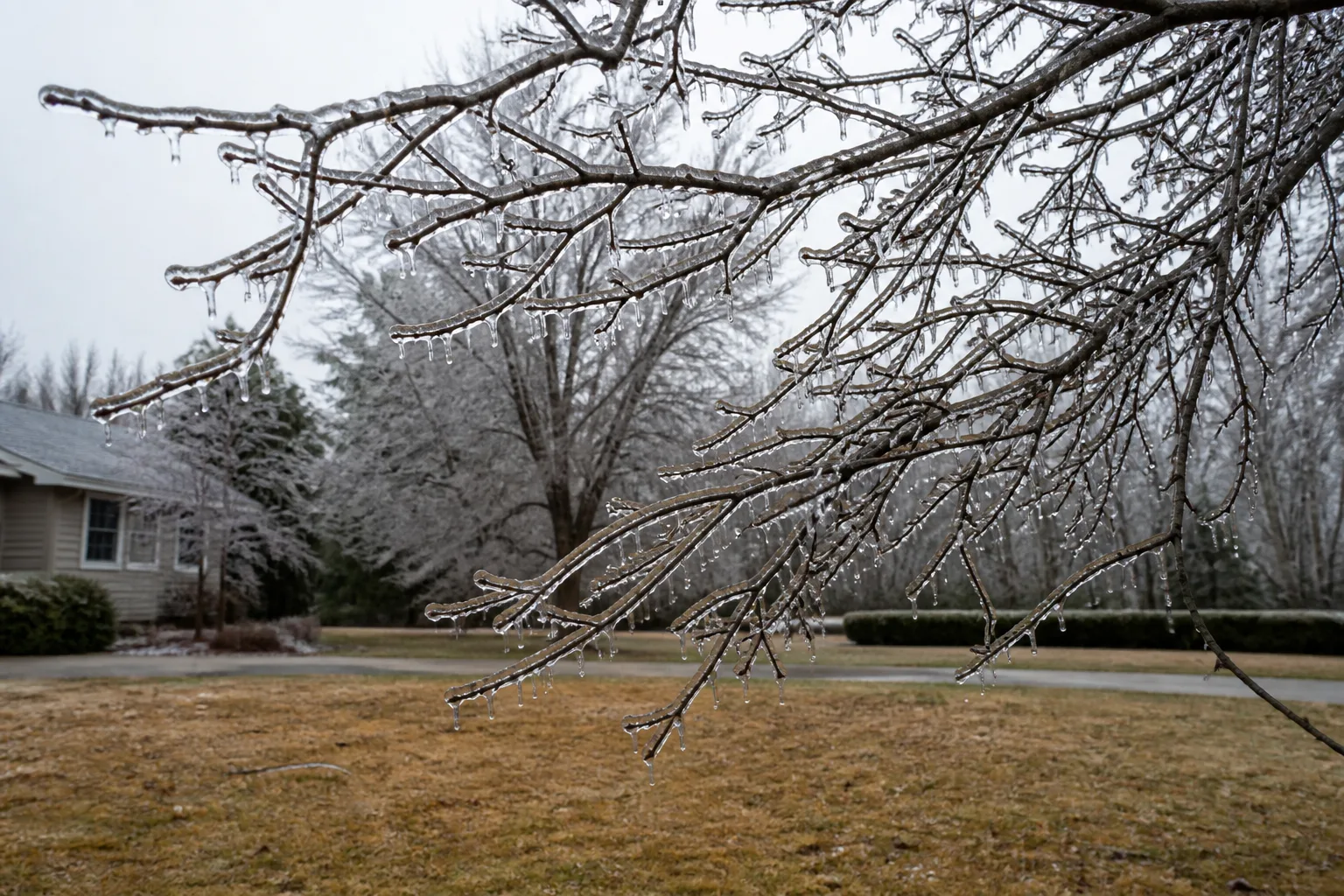
Ice demands a different playbook. Freezing rain and thaw-refreeze cycles coat twigs in a rigid shell that cannot be brushed off without snapping wood. Trying to chip, hammer, or bend ice-covered branches almost always causes more harm than the ice itself.
The expert consensus is blunt: let ice melt naturally when branches are not in immediate danger of hitting people or structures. Sun, wind, and above-freezing afternoons usually release load gradually. If ice has built up heavily over roofs, cars, or walkways and failure looks imminent, call an ISA Certified Arborist with insurance and rigging experience—not a handyman with a pole saw.
Do not confuse glazed branches with light powder. A sparkle coating on every twig is a wait-and-monitor situation unless something valuable sits directly below.
After the Storm: Bent Limbs, Broken Branches, and Recovery Odds
Once loads drop, walk the property calmly before grabbing pruners. Many branches that bent under snow spring back over days or weeks without pruning. NC State Extension notes that shrubs and trees bent but not broken often recover without special care if the cambium is intact.
Assess severity with a few practical checks:
- Small twig damage only: Clean up broken tips in late winter or early spring when wood is workable—not during a deep freeze
- Major scaffold breaks or split trunks: Document damage, keep people away from the fall zone, and schedule a professional assessment
- More than one-third of the crown gone, roots exposed on a large tree, or trunk failure: Removal may be safer than salvage; replace with better-structured species when you replant
Avoid removing live wood aggressively after storms. Trees need foliage to rebuild energy reserves. A conservative cleanup that removes clearly broken hangers beats a revenge haircut that strips half the canopy.
Prune storm-damaged wood when temperatures are above freezing and you can make clean cuts without shattering frozen fibers. For spring-blooming shrubs like forsythia or lilac, remember that hard pruning now trades flowers for structure—sometimes worthwhile after severe breakage, but worth knowing upfront. Major restoration pruning on large trees belongs with a certified arborist who can evaluate included bark, decay, and target zones under the tree. If the work requires a chainsaw while standing on a ladder, that is your stop sign.
Fall Prevention Beats Mid-Storm Heroics
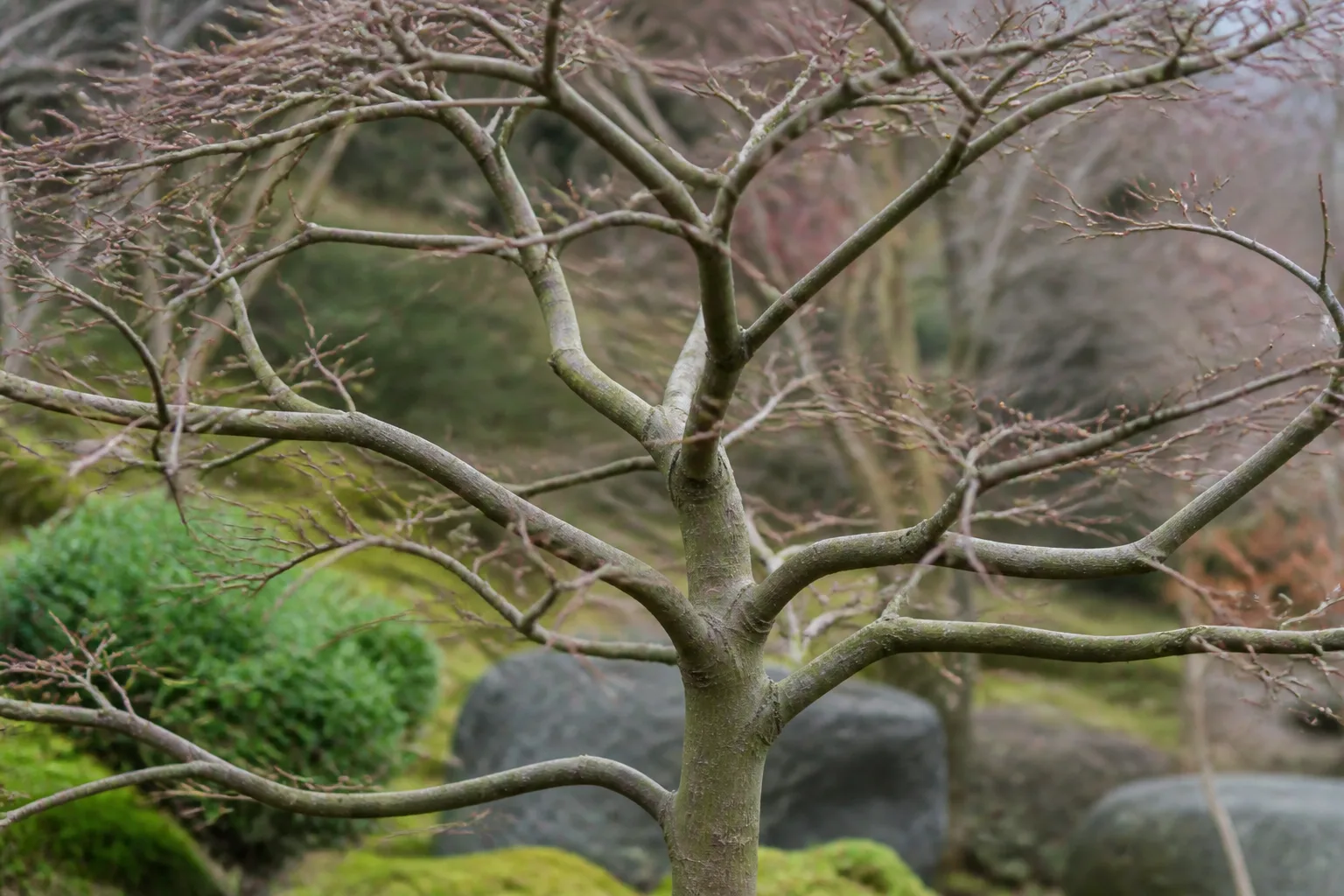
The cheapest snow rescue is the work you do in autumn. Strong structure prevents emergencies more reliably than any broom technique.
Before winter, remove dead, crossing, and weakly attached branches—especially on young trees where a few formative cuts build decades of strength. Take down holiday lights, bird feeders, and wind chimes that give ice extra places to accumulate. Tie narrow upright evergreens if splaying is a recurring issue, and remove ties promptly after the threat passes.
Improve drainage and avoid late-season nitrogen that pushes soft new growth into early frosts. If you salt walks, choose plant-safer products and keep slingers away from root zones. University of Minnesota Extension emphasizes mulch and hydration before ground freeze so roots enter winter less stressed—stressed trees fail sooner under any extra load.
Species choice matters too. Replacing weak-wooded storm magnets with better-branching alternatives—oaks, hickories, baldcypress in wet sites, or sturdier hollies instead of splay-prone columns—reduces how often you face this decision at all. If you are managing a Japanese maple or other ornamental with tight branch architecture, read up on dormant-season pruning limits so fall cuts improve structure without opening fresh wounds into hard freezes.
When to Call a Certified Arborist
DIY snow removal has a clear ceiling. Call a professional when:
- Ice load threatens structures and cannot wait for natural melt
- Branches contact power lines or have pulled hardware off the house
- The job requires a ladder, chainsaw, or climbing
- A large limb is partially attached and could swing unpredictably
- You need a hazard evaluation after major crown loss, root plate lifting, or trunk splits
- The tree is a high-value specimen where a wrong cut has expensive consequences
Look for ISA Certified Arborist credentials and proof of insurance. Emergency storm work is competitive; verify identity before allowing anyone with a truck and a chainsaw onto your property. A good arborist will tell you when waiting is the right prescription—not every bent branch needs a billable visit.
Conclusion
The safest way to remove snow from trees is often not to remove it at all—until wet, heavy load or a bending branch tells you otherwise. When action is warranted, gentle upward brushing on shrubs, light tapping from below on flexible low wood, and strict avoidance of shaking, salt, and ice-chipping protect both you and the plant. Start low, stand aside, and stop the moment wood feels frozen or the canopy touches wires.
Most winter damage is preventable with fall structural pruning and realistic expectations about what a homeowner can reach from the ground. For everything above that line—or anything glazed in ice over your roof—patience and a certified arborist beat heroics. Trees that survive winter with minor bends usually reward your restraint with spring growth; trees subjected to violent shaking often do not.