When to Prune Japanese Maple Trees in Winter
Winter pruning is usually the right season for Japanese maples, but late-winter sap flow changes the rules. Learn when to cut, what to skip, and how to prune without stress.
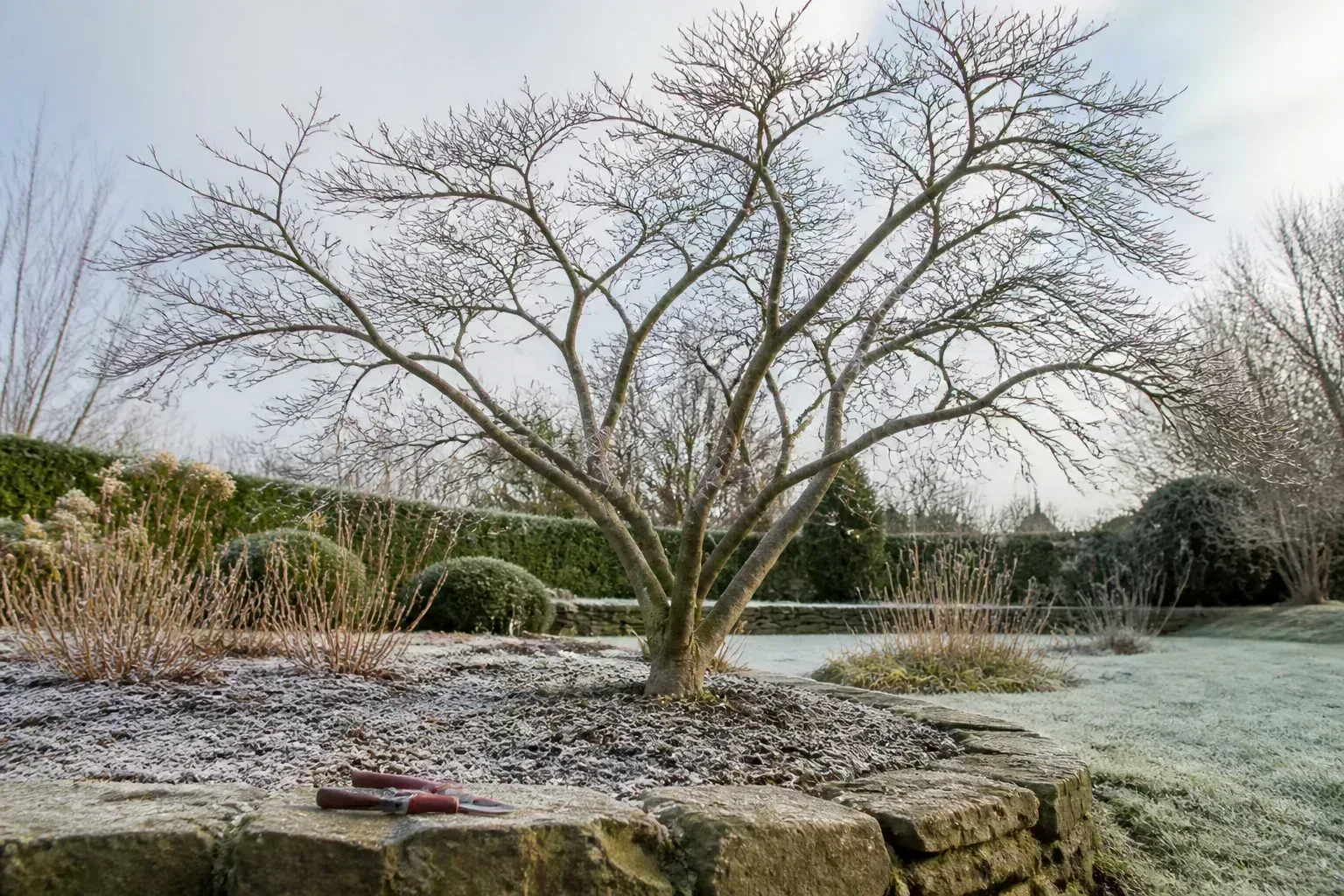
For most gardeners, pruning a Japanese maple in winter is not a bad idea—it is often the best season for structural work on Acer palmatum and its laceleaf selections. The tree is dormant, the branch framework is visible without leaves, and you can remove crossing wood, dead limbs, and size problems without triggering the messy sap flow that maples are famous for in late winter and spring.
The catch is that “winter” is not one uniform window. Prune too late—after sap begins moving—and cuts can weep for weeks. Prune during a hard freeze right before a warm spell, and tender tissue at the wound edge can be damaged. Prune too much in any season, and even a perfectly timed winter session can set the tree back for years. The goal of this guide is to tell you when winter pruning helps, when it hurts, and exactly how to make cuts that heal cleanly.
The Short Answer: Winter Is Usually the Right Season
No, winter pruning is not inherently bad for Japanese maples. Major shaping and thinning belong in the dormant season, not during active spring or summer growth. Missouri Botanical Garden recommends keeping pruning to a minimum but, when needed, doing it in late fall through mid-winter, noting that spring or summer cuts often cause significant bleeding. The RHS advises pruning Japanese maples from July through January for the same reason.
What is a bad idea is treating every winter day as equal. The safest approach for living wood is early to mid-winter (roughly November through January in many US climates) or, in mild regions, the stretch after the coldest weather passes but before buds swell. Avoid heavy pruning in fall once the tree is still photosynthesizing, and avoid structural cuts once sap is running in late winter—especially February and March in many areas.
Why Winter Pruning Works for Japanese Maples
Japanese maples are slow-growing, fine-branched ornamentals valued for layered form and delicate foliage. They do not respond well to the hard renovation cuts you might use on a overgrown hedge. Winter gives you the visibility and low metabolic activity those trees need for thoughtful, light-touch pruning.
Dormancy Keeps Living Cuts Low-Stress
During dormancy, the tree’s metabolism slows sharply. Energy stored in roots and wood is not being poured into new leaves, so removing a modest amount of live wood redirects fewer resources away from growth. That is why dormant-season pruning is the standard recommendation for structural work on maples and other bleed-prone trees.
Dormant pruning also reduces disease pressure compared with warm, wet seasons. Fungal spores and bacterial pathogens are less active in cold weather, and wounds made in late fall or winter have months to begin compartmentalizing before spring humidity arrives. This does not make the tree immune to infection, but it is one reason winter beats summer for anything beyond a small cleanup.
Bare Branches Show the Structure You Need to See
A Japanese maple’s beauty is in its scaffolding: tiers of lateral branches, open space between layers, and—on laceleaf types—a cascading dome. Those relationships are nearly impossible to judge when the canopy is full.
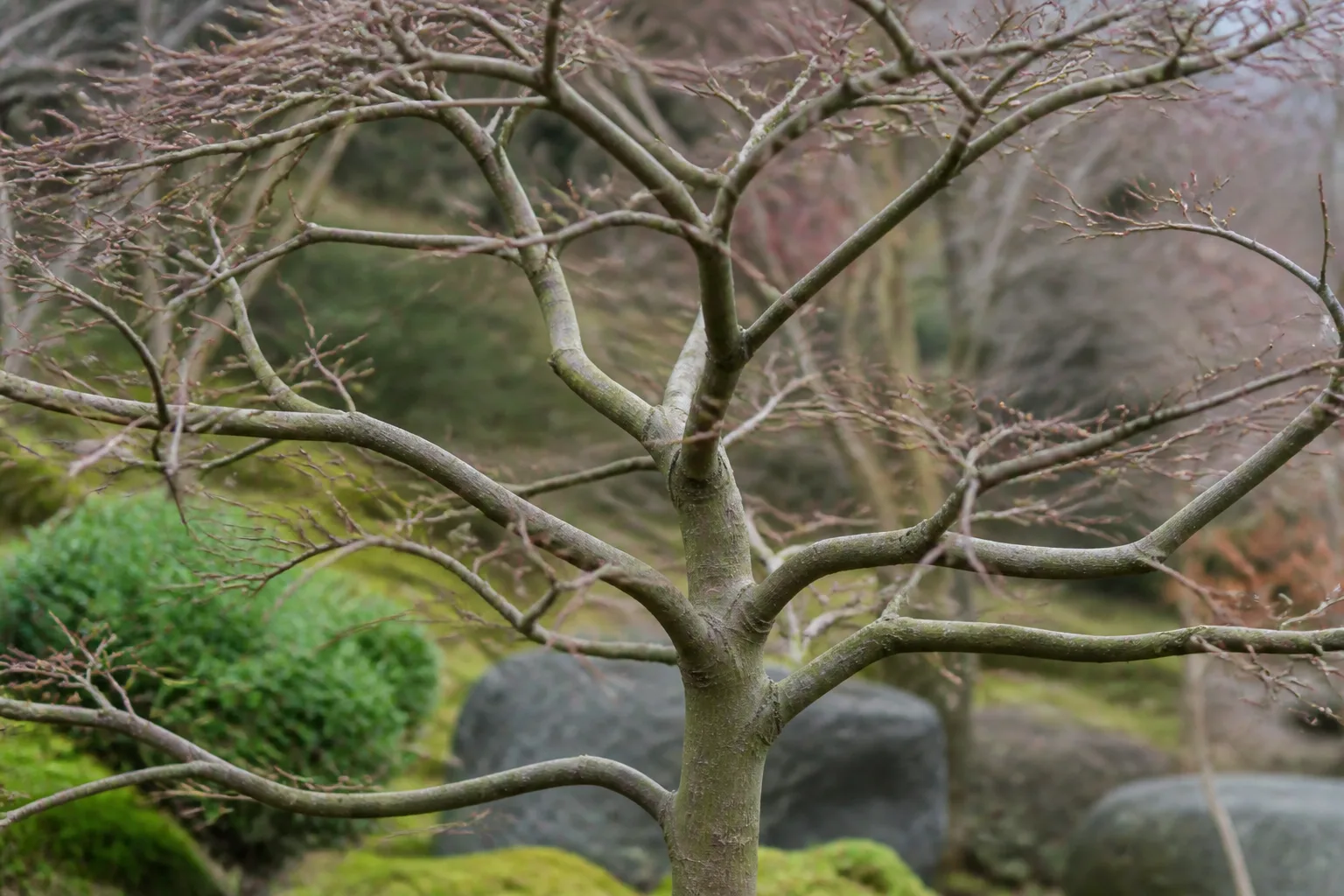
Winter exposes dead tips, rubbing branches, water sprouts shooting straight up through a weeping crown, and grafted suckers below the union. You can stand back, look through the skeleton, and decide whether a branch should stay before you commit. That visibility alone is a practical reason winter pruning is worth doing—and why many professionals schedule their maple work then.
The Late-Winter Timing Debate (and Sap Bleeding)
If winter pruning is good, why do some articles warn against it? Because maples bleed sap when cuts are made while sap is actively rising. Sugar maples are tapped in late winter for exactly that reason. Japanese maples are not syrup trees, but the same physiology applies: once temperatures warm and buds swell, pruning wounds can weep copiously.
Savvy Gardening—drawing on long hands-on experience—prunes living wood from late fall through mid-winter and deliberately stops before late winter sap rise. The RHS bleeding guide notes that while sap loss rarely kills a tree, it can weaken it and leave wounds open longer, which is why timing matters.
Why Some Gardeners Avoid Very Late Winter
Late-winter and early-spring pruning does not usually kill a Japanese maple outright, but it creates problems worth avoiding:
- Prolonged sap flow stains bark and can attract insects to slow-healing wounds.
- Energy diversion toward wound response instead of orderly spring leaf-out.
- Less clear structure once buds begin swelling but before leaves fully expand—an awkward in-between phase for big decisions.
In cold climates, another risk appears when you prune during a mid-winter thaw: a hard freeze immediately afterward can damage cambium at fresh cuts. That is uncommon but real on exposed sites.
A Climate-Based Pruning Calendar
Use your local weather, not a national calendar date:
| Window | Best for | Caution |
|---|---|---|
| Late fall (after leaf drop) | Light structural thinning, removing reverted shoots on variegated or laceleaf types | Avoid if hard freezes are still weeks away and the tree has not hardened off |
| Early to mid-winter | Main structural pruning, crossing-branch removal, modest size control | Skip days below ~20°F (-7°C) if possible; disinfect tools between trees |
| Late winter (before bud swell) | Final cleanup of dead wood; small corrections in mild zones | Watch for sap—if cuts drip, stop structural work |
| Spring after bud break | Pinch unwanted buds by hand; remove clearly dead wood only | No major live-wood cuts |
| Summer | Very light tip cleanup for appearance; remove broken limbs | Heat and sun stress make this a poor season for volume |
| Fall | Deadwood only; avoid major live cuts | New growth may not harden before frost |
In USDA zones 5–7, many gardeners aim for December through early February. In zone 8–9, January through early March may be the practical window—always finishing before buds open.
When Winter Pruning Is a Bad Idea
Winter is the right season for most maple pruning, but not every winter day or every winter job.
Deep Freeze, Thaw Swings, and Storm Damage
Postpone structural pruning when:
- Temperatures are forecast to plunge below ~15–20°F (-9 to -7°C) within a few days of major cuts, especially on young or container trees.
- A dramatic thaw is followed by a hard freeze, which can injure freshly cut tissue.
- Ice or wind just shattered branches—remove hazards immediately, but schedule aesthetic restructuring for a calmer dormant week.
Emergency safety cuts trump the calendar. If a limb threatens a walkway or roofline, remove it cleanly and worry about refinement later.
When the Job Requires Removing Too Much Wood
Winter timing does not make over-pruning safe. Removing more than about one-third of live branches in a single year can shock a Japanese maple, reduce photosynthetic capacity, and produce a flush of weak water sprouts the following summer. If your tree is badly overgrown, plan a two- or three-year renewal instead of one aggressive winter session.
Signs you are asking too much in one visit:
- Large holes in the canopy you can see from across the yard
- Removal of major scaffold limbs thicker than one-quarter the trunk diameter
- Shearing a laceleaf maple into a ball or box (this destroys the natural tiered habit)
RHS guidance emphasizes that the most graceful shape comes from allowing the tree to develop naturally with only badly placed or crossing shoots removed. Many healthy maples in the right spot need no annual pruning at all.
What You Can Prune Any Time of Year
Some cuts are exempt from the dormant-season rules:
- Dead, broken, or clearly diseased branches—remove them whenever you find them.
- Hazardous limbs over paths, driveways, or structures.
- Small reverted shoots on variegated cultivars can be pinched or snapped when young; larger reverted wood should wait for proper dormant timing.
To test whether a twig is dead in winter, bend the tip gently. Live wood flexes; dead wood snaps. Scratch a thin patch of bark with your thumbnail—green or moist cream underneath means the branch is still alive farther back toward the trunk.
How to Prune a Japanese Maple in Winter
Gather bypass pruners for pencil-sized wood, loppers for branches up to about 1½ inches, and a sharp pruning saw for anything larger. Disinfect blades with rubbing alcohol or a 10% bleach solution before you start and between trees if disease is suspected. Never use hedge shears or power trimmers on a Japanese maple—the torn, uniform stubs they create are a fast path to dieback on thin maple bark.
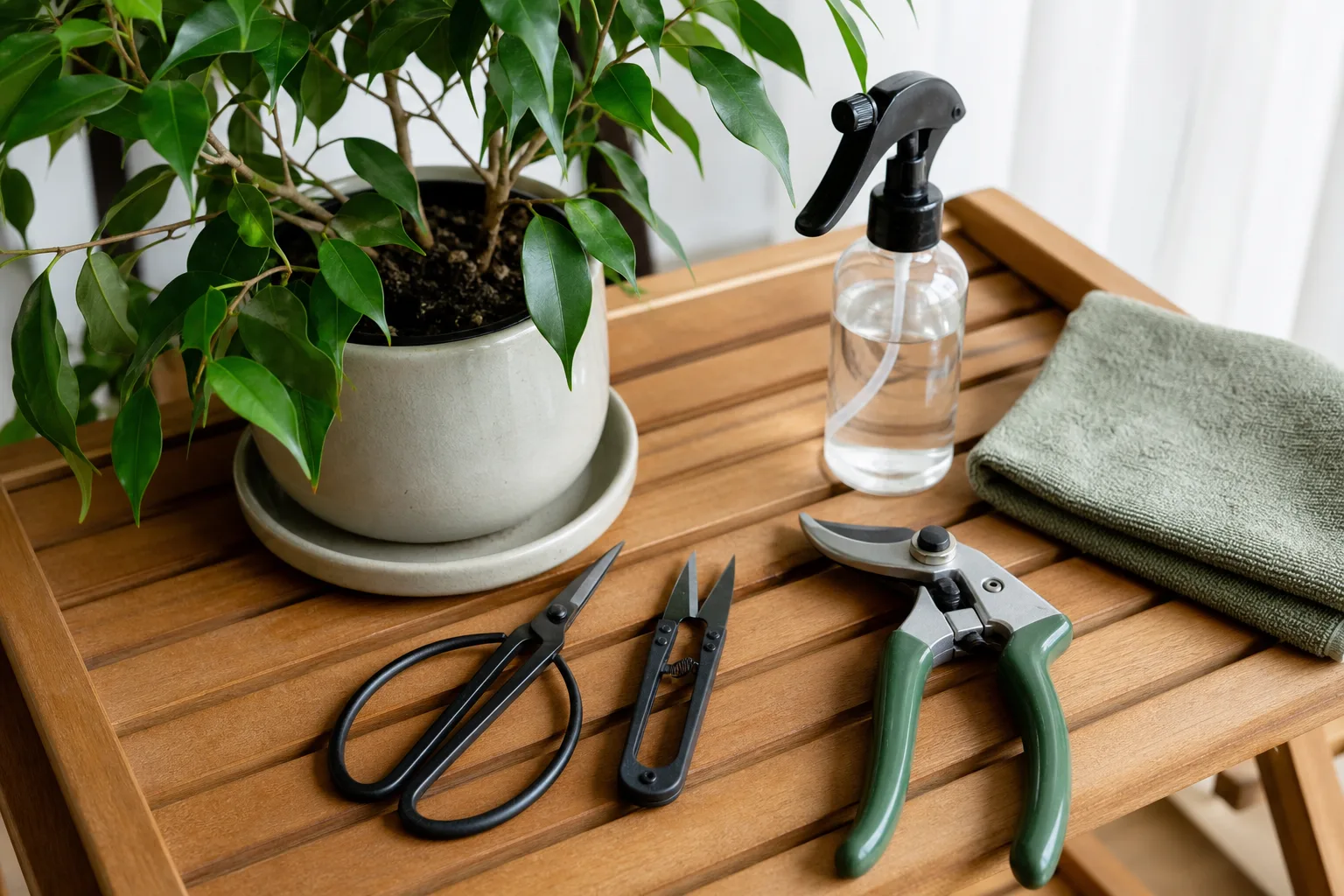
Work slowly. On an established tree, fifteen to thirty minutes of thoughtful cuts often beats two hours of enthusiastic thinning.
Step 1: Remove Dead, Damaged, and Diseased Wood
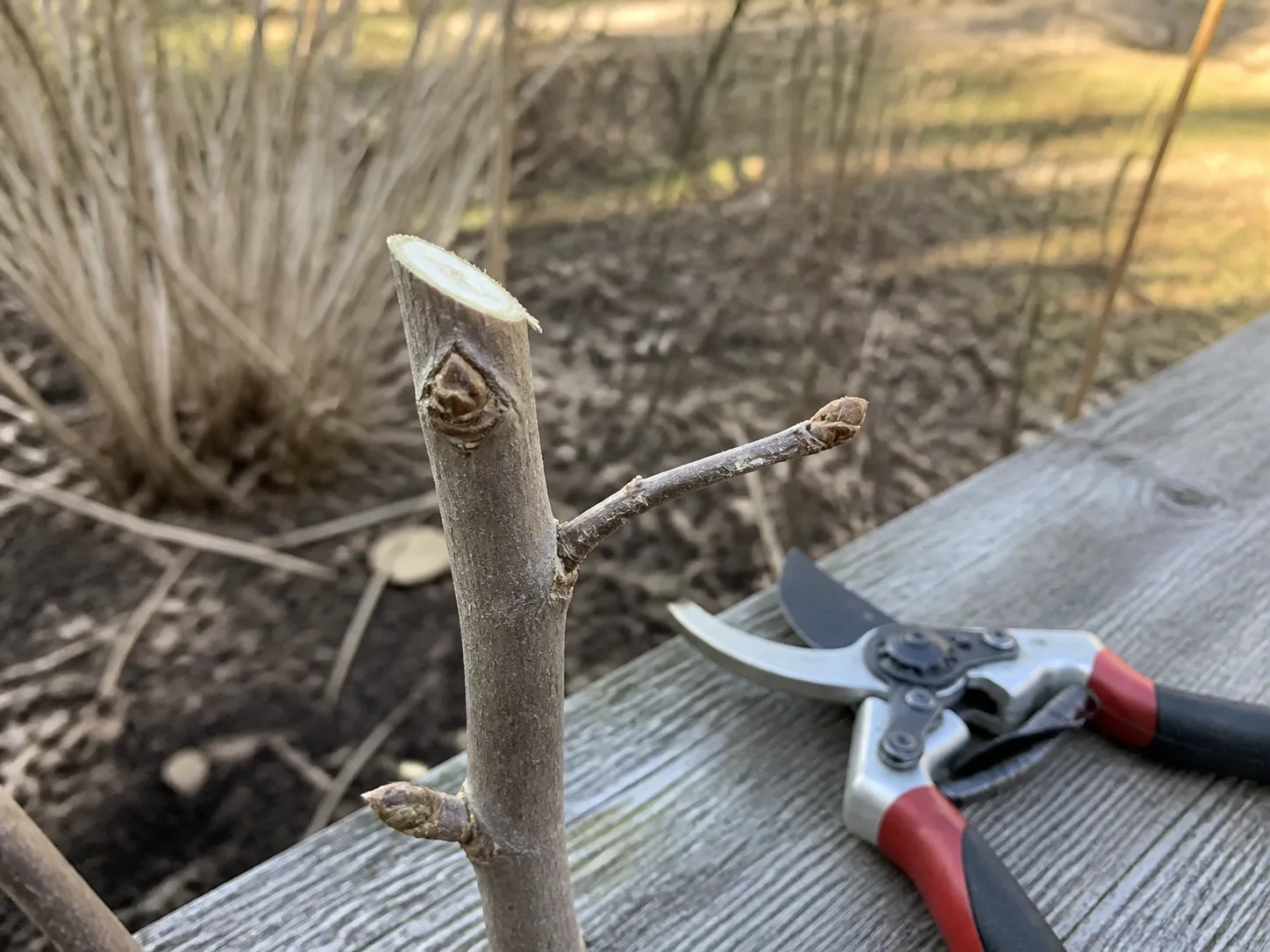
Start at the bottom and inside of the canopy, where deadwood often hides. Cut back to just outside the branch collar—the slightly swollen wrinkle where the branch meets the trunk or a larger limb. The collar contains the cells that seal the wound; preserve it.
Do not leave stubs (which rot) or make flush cuts against the trunk (which remove the collar and create a larger wound). Angle the cut slightly so water runs off, but the critical detail is collar placement, not dramatic sloping.
Step 2: Thin Crossing Branches and Open the Canopy
After deadwood, address branches that:
- Rub or cross through the center
- Grow straight up through a weeping crown
- Duplicate another branch in the same layer
- Block light from reaching interior buds
Remove the weaker or less well-placed of the pair, cutting at the base nearest the trunk when possible. Step back after every few cuts. The goal is layered transparency—you should glimpse sky through the canopy, not carve a hole.
On young upright trees, decide early whether you want a single leader or a multi-stemmed vase. Avoid leaving exactly two co-dominant trunks of similar size; they can split as the tree matures. Three or more stems, or one clear leader, is structurally safer.
Step 3: Respect Upright vs. Weeping Forms
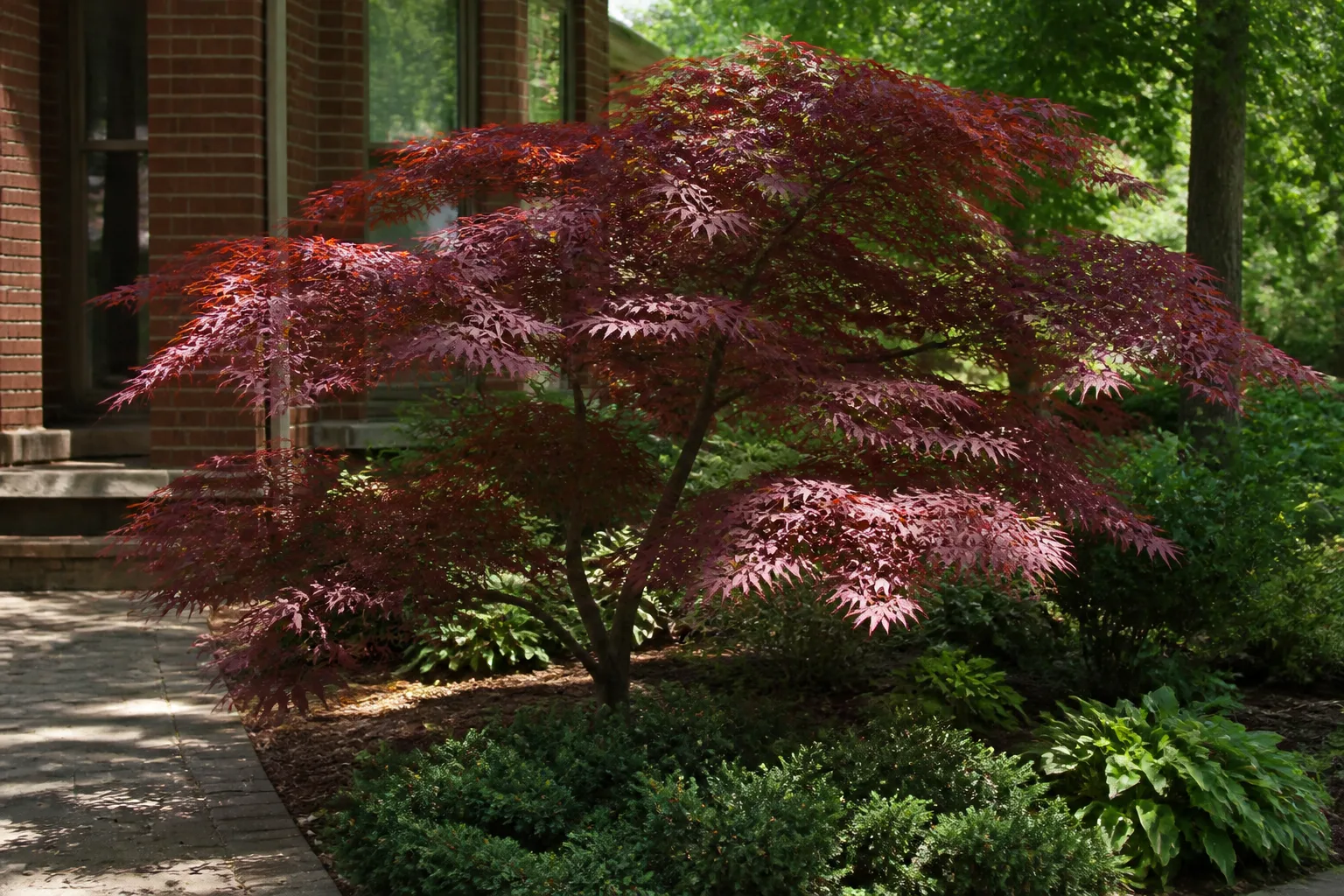
Upright types (many Acer palmatum selections) develop a vase or rounded crown. Thin inward-facing twigs and downward-growing clutter, but keep the overall height and width generous unless space truly demands reduction. When shortening, cut back to a lateral branch or bud facing the direction you want new growth—not to an arbitrary length in open air.
Weeping laceleaf types (Acer palmatum var. dissectum and cultivars like the Crimson Queen habit) should keep their cascading dome. Remove vertical water sprouts that shoot through the center, suckers below a graft union, and branches that drag on soil or pavement. Do not try to lift the skirt high unless you are willing to lose the characteristic weeping silhouette Missouri Botanical Garden describes for dissected forms.
NC State Extension notes that Japanese maples prefer moist, well-drained, slightly acidic soil in sheltered part-shade. Pruning cannot fix scorch from too much sun or drought stress—address placement and watering before you chase problems with shears.
Common Winter Pruning Mistakes
Pruning too late, after sap rise. If your blade comes away wet, stop major work and wait until next dormant season.
Removing more than one-third of live wood in one year. Spread renovation over multiple winters.
Shearing instead of selective thinning. Maples are not hedges. Individual collar cuts preserve natural form; shearing laceleaf maples produces a bristly shell of twiggy regrowth.
Cutting large scaffold limbs without a plan. Branches thicker than one-quarter the trunk diameter should stay unless dead or truly destructive. Large wounds on slow-growing maples heal slowly.
Ignoring graft suckers. Seedling rootstock shoots below the graft line steal vigor from the named cultivar above. Remove them flush at the base during dormancy.
Applying wound paint or sealant. Modern arboriculture favors clean collar cuts and good aftercare over tar-based sealers, which can trap moisture. Let the tree compartmentalize naturally.
Pruning a newly planted maple hard. Give new trees at least two to three years to establish roots before structural shaping beyond broken-tip cleanup.
Aftercare: Water, Mulch, and What to Skip
After winter pruning:
- Water deeply if the soil is dry and unfrozen, especially for maples planted within the last two years. Moisture reduces stress even in dormancy.
- Refresh mulch in spring with 2–3 inches of compost or shredded bark, keeping it a few inches away from the trunk.
- Skip heavy nitrogen fertilizer immediately after a major prune; you do not want to push soft, vulnerable shoots before the tree has rebalanced its canopy.
- Monitor wounds through spring for dieback past the cut, oozing cankers, or excessive water-sprout regrowth—signs you may have removed too much or cut too late.
If you lightly thinned in early winter, a small summer touch-up—removing a few wayward tips while leaves are present—can refine shape without repeating a heavy dormant session. Keep summer cuts minimal; heat and sun already stress fine-leaved cultivars.
Conclusion
Pruning your Japanese maple in winter is not a bad idea—for most homeowners, it is the smartest season for structural work. Dormancy lowers stress, bare branches reveal the tree’s architecture, and timing your cuts before sap rise avoids the bleeding that gives maple pruning a bad reputation.
Treat winter as a range, not a single date: favor late fall through mid-winter for living wood in cold climates, finish before buds swell, and never use winter timing as permission to remove a third of the tree at once. Remove dead and hazardous wood whenever it appears, thin with collar cuts instead of shears, and match your technique to upright or weeping form. Follow those rules and your maple should heal cleanly, keep its layered grace, and reward you with healthier growth the following spring.