Should You Fertilize Holiday Cacti in January?
Should you fertilize Thanksgiving, Christmas, or Easter cactus in January? Learn why feeding now can drop buds, when to restart, and what to do instead.
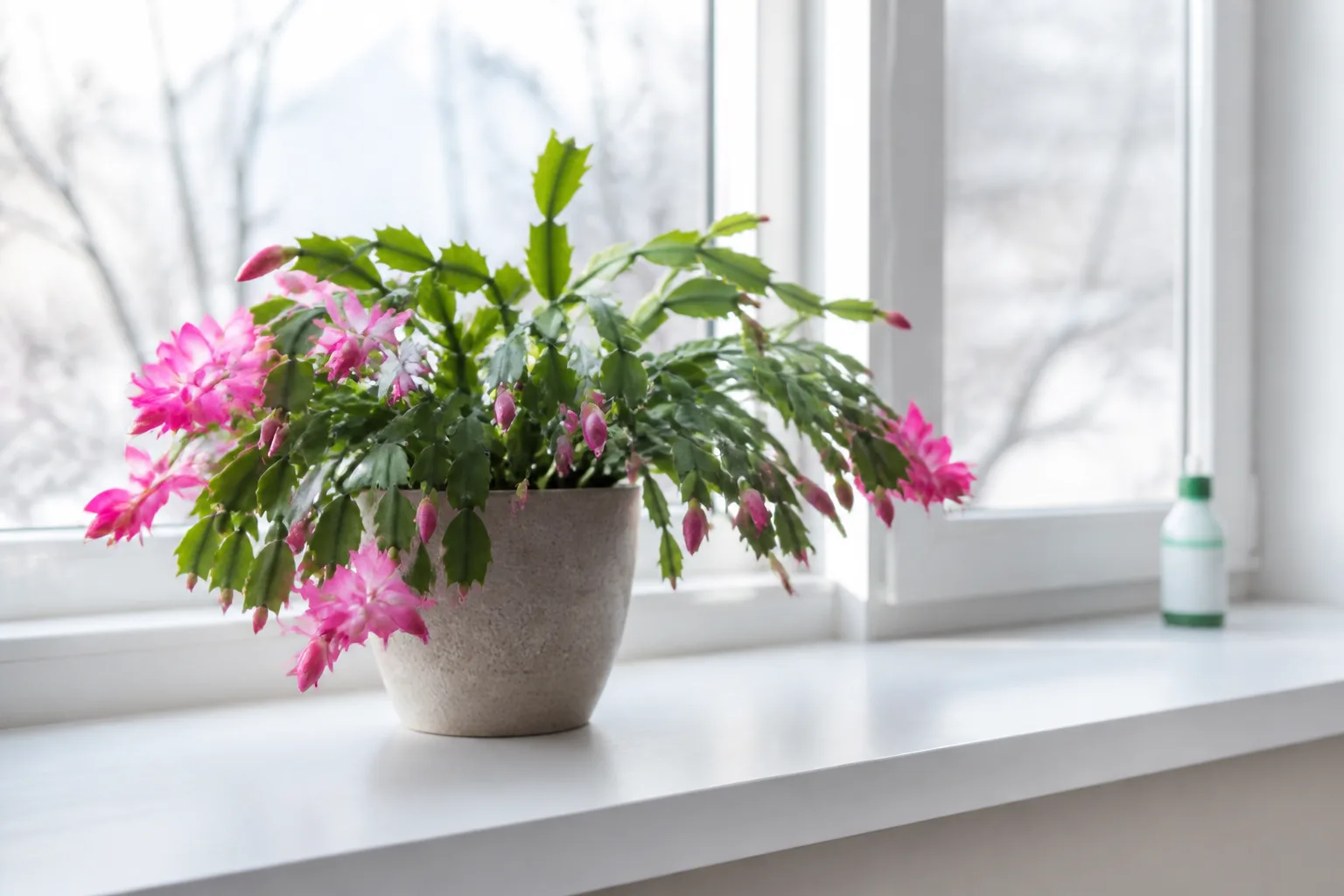
If your Thanksgiving cactus, Christmas cactus, or Easter cactus is sitting on the windowsill in January—maybe still showing a few flowers, maybe looking perfectly healthy—the urge to “help” with fertilizer is strong. Resist it. Do not fertilize any holiday cactus in January, even if blooms are lingering and even if the stems look glossy green. January is rest and reset time, not feeding time. The one thing that can quietly ruin next year’s show is pushing nutrients into a plant that is not in active growth.
The Short Answer: Do Not Fertilize Any Holiday Cactus in January
No—none of the three holiday cacti should receive fertilizer in January. Thanksgiving and Christmas types are finishing or just past their winter bloom cycle and entering a post-flowering rest. Easter cactus is in the middle of the short-day routine it needs for spring flowers, not a growth sprint. North Carolina State Extension advises fertilizing when new growth starts in spring, then reducing fertilizer in fall and early winter (NC State Extension). January falls squarely in that off period.
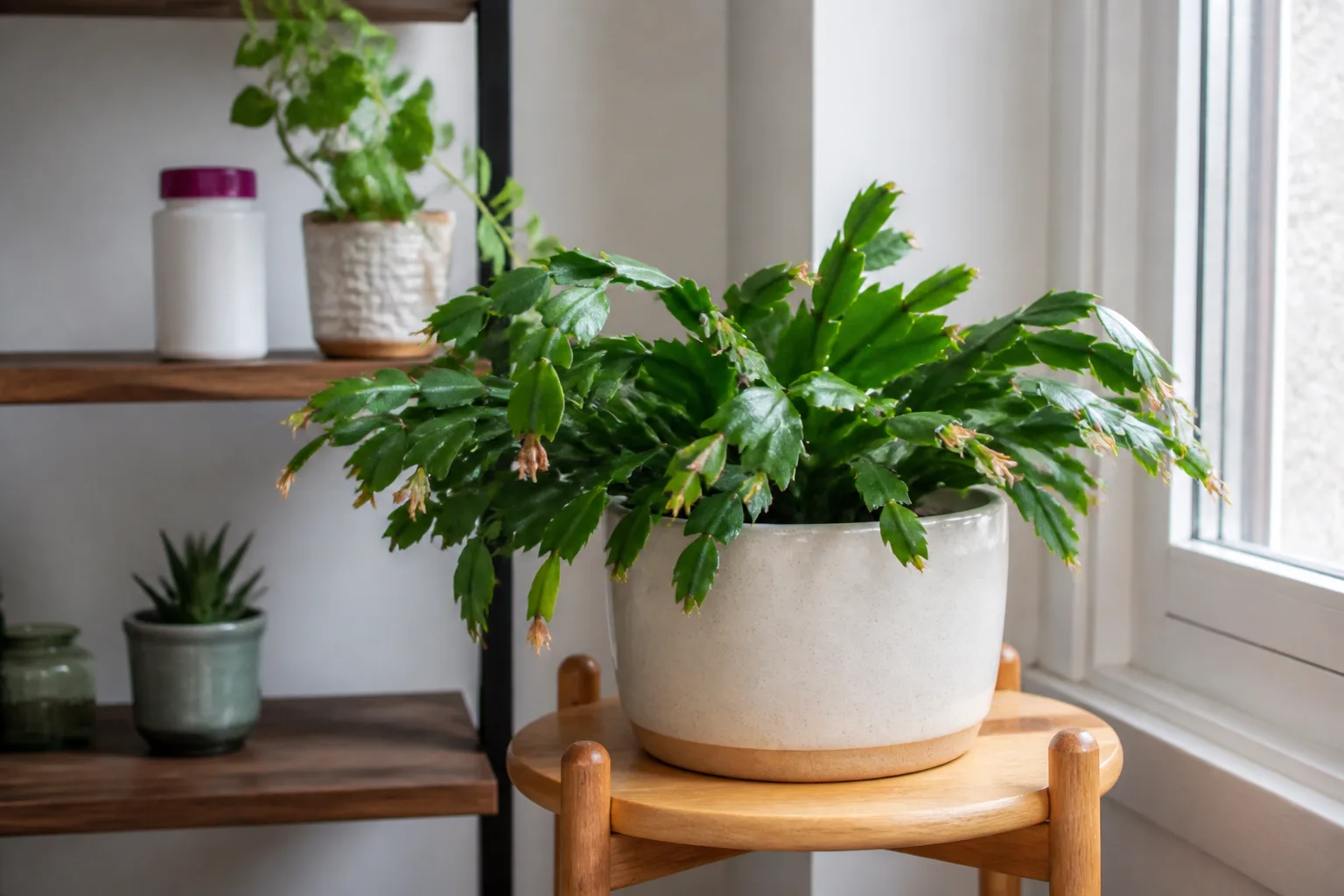
A plant still holding flowers does not change the rule. Bloom formation for Thanksgiving and Christmas cacti was set in motion weeks earlier by cooler nights and longer dark periods. Extra nitrogen or bloom booster in January cannot add flowers that were not already initiated, and it can stress the plant enough to drop buds or weaken segments. For a fuller seasonal feeding calendar on houseplants generally, see our guide on how often to fertilize indoor plants—holiday cacti follow the same winter pause with stricter timing around bloom.
Why Holiday Cacti Need a Winter Rest After Blooming
Holiday cacti are epiphytic forest cacti, not desert succulents. In their native Brazilian cloud forests they grow on trees in filtered light and regular humidity. Indoors, they still run on a seasonal clock: active growth when days lengthen and light is stronger, then a slower phase after flowering when the plant consolidates rather than pushes new tissue.
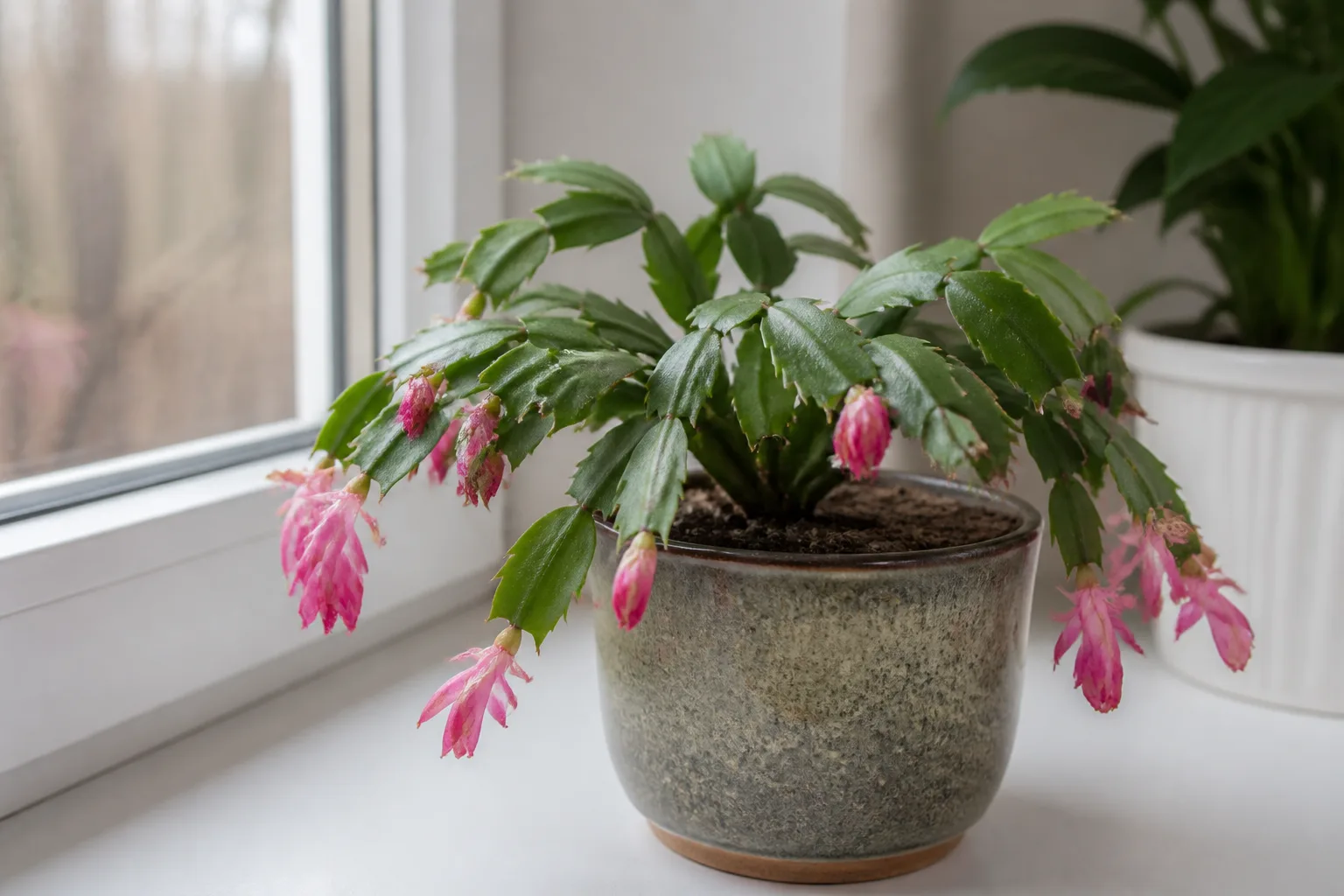
After the holiday bloom, Thanksgiving and Christmas cacti benefit from reduced inputs—less water, stable cool-to-moderate temperatures, and no fertilizer. The roots are not taking up nutrients at the rate they do in spring and summer. Fertilizer applied now sits in the potting mix, concentrates as water evaporates, and raises soluble salt levels around fine root hairs. That is how you get crusty soil surfaces, brown segment edges, and soft yellowing cladodes that look like thirst but are often chemical burn.
What January Means on the Holiday Cactus Calendar
Think of January as the valley between bloom cycles, not a gap you fill with feed. For Thanksgiving cactus (Schlumbergera truncata) and Christmas cactus (Schlumbergera × buckleyi), flowers typically appear from late November through December, sometimes with a smaller second flush as days lengthen in February (NC State Extension). By January the main show is winding down. The plant’s job is to rest, not grow.
For Easter cactus (Rhipsalidopsis gaertneri), January is the opposite kind of busy: it is often the month you start or continue short-day treatment so buds can form for a March–May bloom. University of Maine Cooperative Extension notes that Easter cactus may need 14 to 16 hours of uninterrupted darkness beginning around January 1 to bloom near Easter, while Thanksgiving cactus needs darkness starting in mid-September (University of Maine Extension). January is about photoperiod and temperature, not fertilizer.
Tell the Three Holiday Cacti Apart Before You Change Care
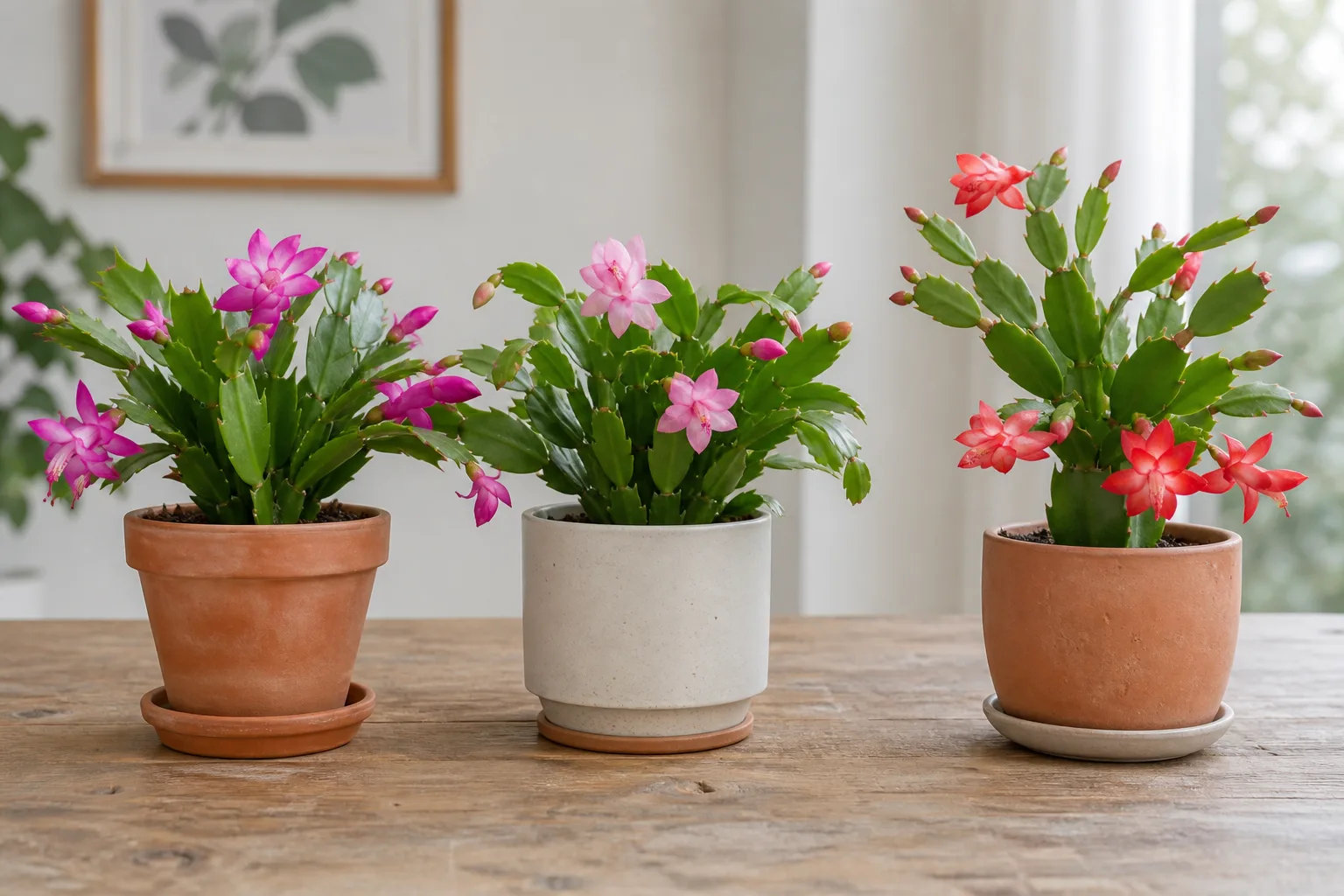
Misidentified plants get the wrong January routine. The three “holiday cacti” are different species with different bloom windows. Before you adjust water, darkness, or—later—fertilizer, confirm which one you have.
Thanksgiving Cactus (Schlumbergera truncata)
Thanksgiving cactus has flattened stem segments (phylloclades) with pointed, claw-like teeth along the margins. Flowers are often held more upright than on true Christmas cactus. It usually blooms around Thanksgiving in the northern hemisphere. In January it is typically post-bloom or down to the last flowers—rest mode, not feed mode. More on year-round care in our Christmas cactus overview (the genus care overlaps even when the species name differs).
Christmas Cactus (Schlumbergera × buckleyi)
Christmas cactus segments have smoother, more rounded margins without sharp points. Most sold as “Christmas cactus” are hybrids between S. truncata and S. russelliana. Bloom tends to run a few weeks after Thanksgiving cactus, often into December. Fertilizer timing matches Thanksgiving cactus: none in January; resume with spring growth. Iowa State University Extension groups these as holiday cacti that share similar indoor culture and bloom triggers (Iowa State University Extension).
Easter Cactus (Rhipsalidopsis gaertneri)
Easter cactus is a separate genus. Segments are more three-dimensional, often with a ridge along one side and small bristles at segment tips. Flowers are more star-shaped and appear late March through May. The Royal Horticultural Society recommends dilute low-nitrogen fertilizer monthly when the plant is in growth, and to keep just moist in winter—not a January feeding push (RHS). In January your focus is darkness and cool nights, detailed below.
Should You Fertilize Holiday Cacti in January?
The answer is the same for all three: no. The reasoning splits by species because January looks different on each calendar.
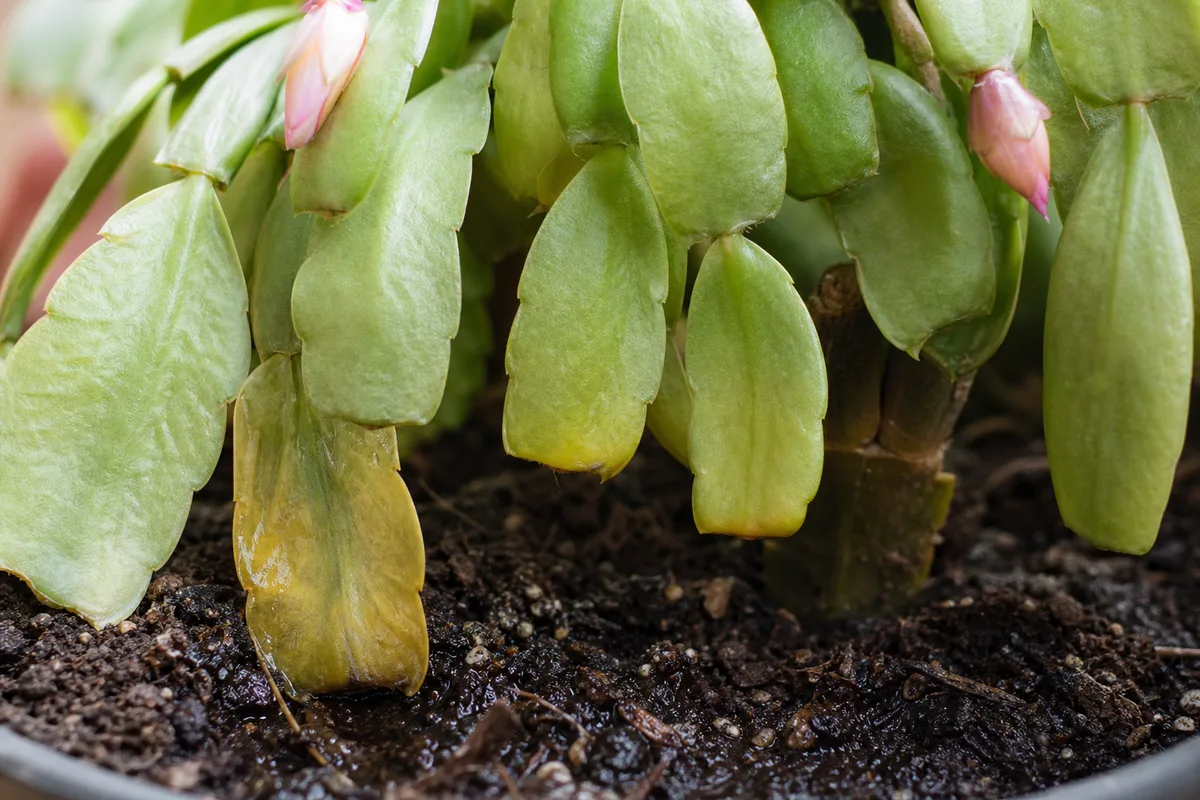
Thanksgiving and Christmas Cactus in January
Even if a few flowers remain, do not fertilize. Clemson Cooperative Extension advises stopping fertilization during late summer for greater flower bud production in fall (Clemson HGIC). By January that bud-initiation window is long past. Feeding now risks bud drop on any late buds, salt stress on resting roots, and soft, watery growth the plant cannot support under short winter days.
Gardening Know How and specialty growers echo the same practical rule: fertilize during active spring and summer growth, not during fall and winter bloom or rest (Gardening Know How). Bloom booster marketing is aimed at plants actively setting or opening flowers in favorable light—not a post-holiday cactus on a windowsill in January.
“But my plant looks hungry.” Glossy green segments and a few faded blooms are normal January appearance, not a call for feed. Pale, thin new growth in March or April is a spring problem. Yellowing with wet soil in January is more often overwatering during rest than nutrient lack.
Easter Cactus in January
Easter cactus still gets no fertilizer in January. This month is for initiating flower buds, not vegetative push. Maine Extension recommends 14 to 16 hours of uninterrupted darkness starting around January 1 for Easter bloom timing (University of Maine Extension). Pair that with bright light for the remaining hours, daytime temperatures around 70°F, and cooler nights near 50°F when possible—the same cool-night logic that triggers Thanksgiving and Christmas buds, but on a later calendar.
Cover the plant with a box or move it to a room with no evening light if your home stays lit after dusk. Once buds are set, uninterrupted darkness is less critical, but fertilizer still waits until active spring growth. Easter cactus is more sensitive to overwatering than the other two; keep soil slightly dry on top between drinks. Details on holiday cactus watering apply to rhythm even when volumes differ by species.
What Happens If You Fertilize in January Anyway
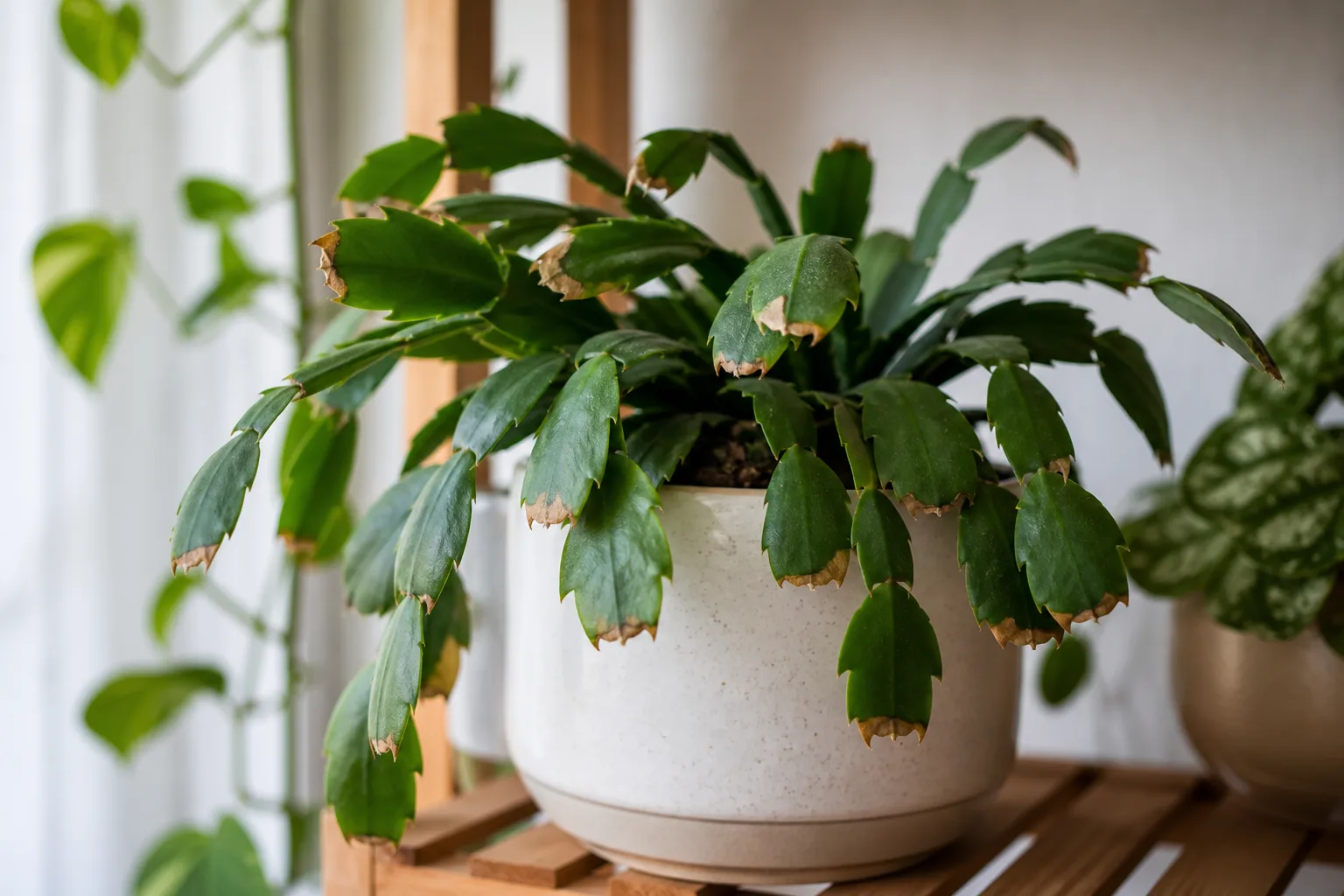
Mistakes are reversible if you catch them early. Here is what January feeding typically causes:
Flower and bud loss. Nutrients plus irregular winter light can abort small buds or shorten the last blooms. Growers report that feeding during bloom or winter rest can prevent buds from opening or cause them to fall (Citycacti).
Salt buildup and segment burn. White crust on soil, brown tips on phylloclades, and segments that feel soft while soil is moist point to fertilizer salts, not drought. Flush is an option only if you already fed—see below.
Weak, stretched growth. Nitrogen in low light produces pale, limp new segments that will not harden off well. That growth often drops in spring rather than becoming a strong branch.
If you already fed once in January: stop immediately. Scrape visible salt crust from the soil surface without damaging roots. Water thoroughly until a little drains from the bottom, discard saucer water, and do not feed again until clear spring growth. If segments are yellowing and soil smells sour, treat as possible root stress and inspect roots before resuming any care intensification.
January Care That Helps More Than Fertilizer
Swap the fertilizer bottle for a short rest-period routine. It does more for long-term health than any January feed.
Watering During the Rest Period
Thanksgiving and Christmas cactus: keep the plant slightly drier than in summer. Water when the top 1 to 2 inches of soil are dry—not on a fixed weekly schedule. Room temperature around 60–70°F with bright, indirect light suits post-bloom rest (University of Maine Extension). When you see new growth in early spring, gradually return to regular watering and—only then—fertilizer. Our Christmas cactus watering guide walks through the full seasonal shift.
Easter cactus: water moderately in January while running the dark period. Let the surface dry slightly between waterings; never leave the pot soggy. Easter types punish wet cold roots faster than Schlumbergera.
Light, Temperature, and Flower Cleanup
Place all three types in bright, indirect light away from heating vents and cold drafts. Thanksgiving and Christmas plants can stay in their display spot if light is filtered; avoid blasting them with new direct sun in January.
Remove spent flowers by letting them fall or gently pinching them off for a neater look—this does not require fertilizer. Do not prune heavily in January unless removing damaged segments; save structural pruning for after the rest period (Christmas cactus pruning).
For Easter cactus, maintain the 12–14+ hour dark block nightly. A closet, unused bathroom, or cardboard cover works if the plant is not disturbed. After buds form, move to a permanent bright spot and stop moving the pot—holiday cacti of all types drop buds when relocated after initiation.
When to Restart Fertilizer in Spring
Feeding resumes with new growth, not with a date on the calendar. Watch the segment tips.
Growth Signals That Mean It Is Safe to Feed Again
Restart fertilizer when you see fresh segment tips swelling and opening along stems—usually late winter into early spring as days lengthen. NC State’s guidance to fertilize when new growth starts in spring is the practical trigger (NC State Extension). If the plant is still only shedding old blooms with no new tips, wait.
For plants that bloomed heavily, waiting about a month after the last flower before the first spring feed is a safe conservative rule. Easter cactus follows the same post-bloom or post-bud-set growth signal, typically feeding after its spring flush begins, not during January darkness.
Fertilizer Type and Schedule After the Rest Period
During spring and summer active growth, use a balanced, water-soluble fertilizer such as 10-10-10 or 20-20-20 diluted to half strength, applied every two to four weeks (Bob Vila). Many growers feed monthly at half strength through the warm months—that is enough for a container epiphyte (Gardening Know How).
Autumn shift: some sources recommend switching in early fall to a lower-nitrogen, higher-phosphorus formula (for example 0-15-10) to support bud formation without pushing leafy growth (Bob Vila). Stop all fertilizer by late summer to early fall ahead of bud initiation (Clemson HGIC). Never carry that autumn program into January.
Holiday cacti appreciate magnesium more than many houseplants. Some growers apply Epsom salt (magnesium sulfate) monthly during the growing season, but not the same week as regular fertilizer and never during winter rest (Citycacti). For species-specific NPK detail, see our Christmas cactus fertilizer guide.
January recap: put the fertilizer away. Give Thanksgiving and Christmas cacti a dryish, bright rest after bloom. Give Easter cactus its January darkness and cool nights. Resume diluted balanced feed only when new spring growth proves the plant is awake again. That patience protects the blooms you want next year far more than any January bloom booster ever could.
Conclusion
January is the month to withhold fertilizer from every holiday cactus—Thanksgiving, Christmas, and Easter alike. The plant is either recovering from winter bloom or setting up spring flowers through darkness, not asking for nitrogen. Water lightly, keep light steady, clean up spent blooms, and run the Easter cactus night routine if needed. Start fertilizing again only when new segment growth appears in spring, using half-strength balanced feed through the active season and stopping long before next fall’s bud initiation. Skip January feeding and you protect roots, buds, and the rhythm that makes these plants bloom on cue year after year.