8 Cold-Hardy Evergreen Trees for Winter Color
Blue spruce, balsam fir, Scots pine, and five more cold-hardy evergreens compared by zone, mature size, and best yard use — plus winter planting mistakes to avoid.
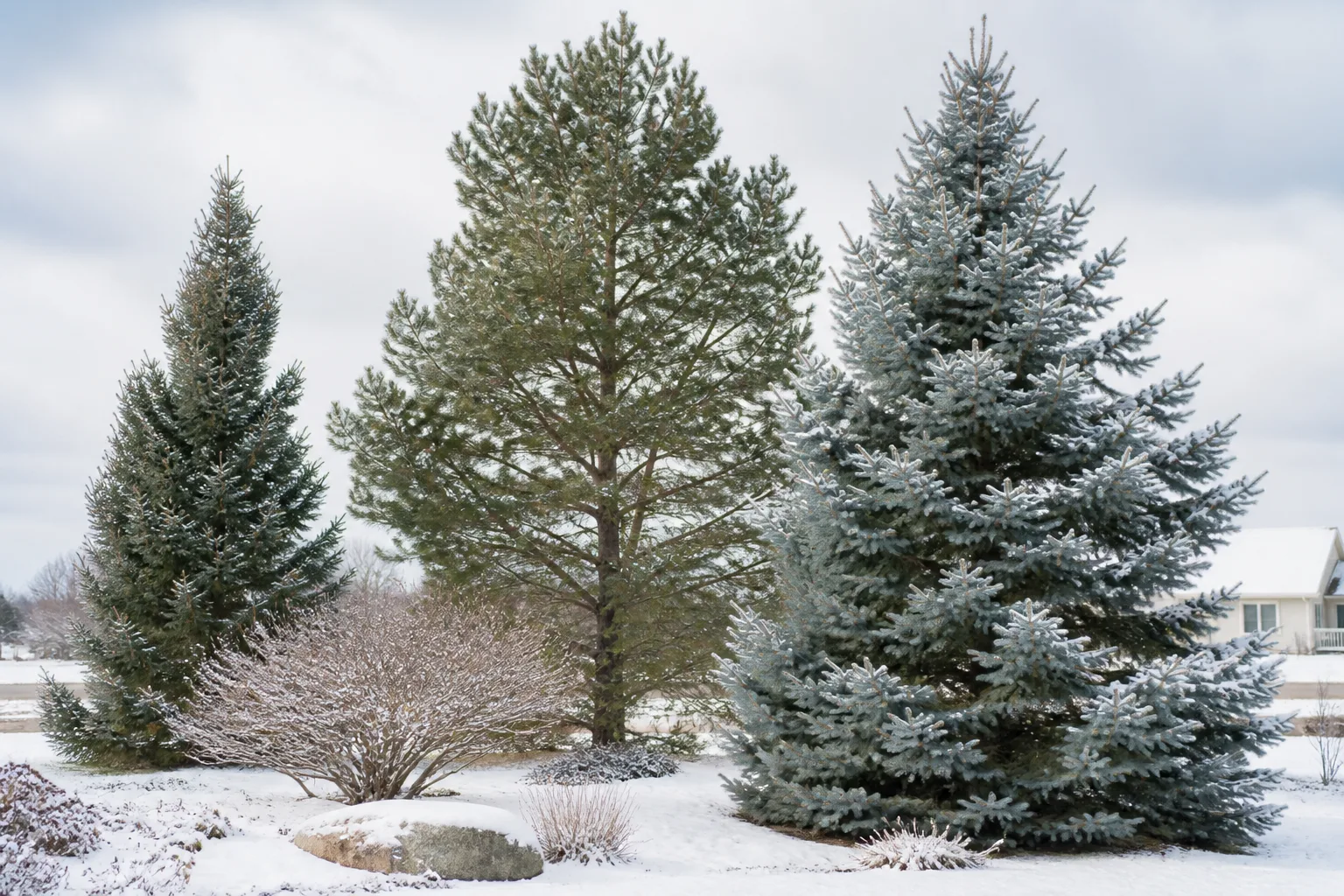
When deciduous trees drop their leaves and perennials disappear underground, a yard can look flat and gray for months. Evergreen trees solve that problem by holding needles through winter, catching snow on their branches, and giving birds cover when everything else is bare. The trick is not finding an evergreen — it is finding one that survives your actual winters, fits the space you have, and will not struggle when summer returns.
The eight species below are proven performers in cold climates. They range from towering windbreak pines to compact mugos that turn gold in January. For each one you will get hardiness zones, realistic mature size, best use in the landscape, and honest reasons to skip it.
Why Evergreen Trees Carry a Winter Landscape
Evergreens earn their keep in ways deciduous trees cannot match in January. They block winter wind, soften the view from windows, and give structure to beds that would otherwise read as empty mulch. In northern and mountain climates, that year-round skeleton is not a luxury — it is what makes a garden feel intentional when the thermometer stays below freezing for weeks.
Cold-hardy evergreens also support wildlife when food is scarce. Scots pine and eastern hemlock provide cover; mature conifers host insects that woodpeckers and chickadees hunt through bark crevices. If your goal is a yard that still looks alive in February, evergreens are the most reliable tool you have — provided you choose species matched to your site.
How Conifers Survive Freezing Temperatures
Conifers are built for cold in ways broad-leaf trees are not. Their needles have more surface area relative to volume than flat leaves, but they are coated with a waxy cuticle that limits water loss. Many species also produce antifreeze-like compounds inside cells as temperatures drop, which helps tissues survive repeated freeze–thaw cycles without bursting.
Because needles stay on the tree through winter, conifers can photosynthesize on mild sunny days when roots are still frozen in the ground. That is a trade-off: the tree loses moisture through open stomata while it cannot take up water from frozen soil. Winter burn — browned or bronzed needle tips — happens when sun and wind pull moisture faster than roots can replace it. Understanding that mechanism is the key to picking the right species and protecting new transplants through their first winter.
Needle shape also matters at the nursery bench. Spruce needles are stiff, sharp, and attached singly to woody pegs on the twig. Fir needles are flatter, friendlier to the touch, and leave a smooth scar on the branch when pulled off. Pine needles grow in bundles (fascicles) of two, three, or five. Knowing the difference keeps you from planting a 60-foot spruce where you wanted a compact fir.
How to Choose a Cold-Hardy Evergreen for Your Yard
Before you shop for color, run through four filters: hardiness zone, mature height and spread, sun exposure, and soil moisture. A tree hardy to zone 2 still fails if you plant it in heavy clay that stays wet all winter, or in a south-facing heat island where summer nights never cool down.
Small yard or foundation bed: Look at mugo pine cultivars (‘Carstens’, ‘Tannenbaum’), compact blue spruce selections like ‘Fat Albert’ or ‘Montgomery’, or dwarf hemlock forms — not species trees that reach 50 feet. Open property or wind-exposed site: Scots pine rows and tall blue spruce make sense. Shady north side or woodland edge: Eastern hemlock tolerates partial shade better than most spruces. Fragrance and Christmas-tree form: Balsam fir is hard to beat in cool northern climates.
If your USDA zone is borderline warm for a species (blue spruce and balsam fir both dislike prolonged heat and humidity), choose a different tree rather than hoping microclimate will save a marginal match. NC State Extension notes that blue spruce struggles in the Southeast; the same heat sensitivity applies to balsam fir south of its native range.
Colorado Blue Spruce (Picea pungens)
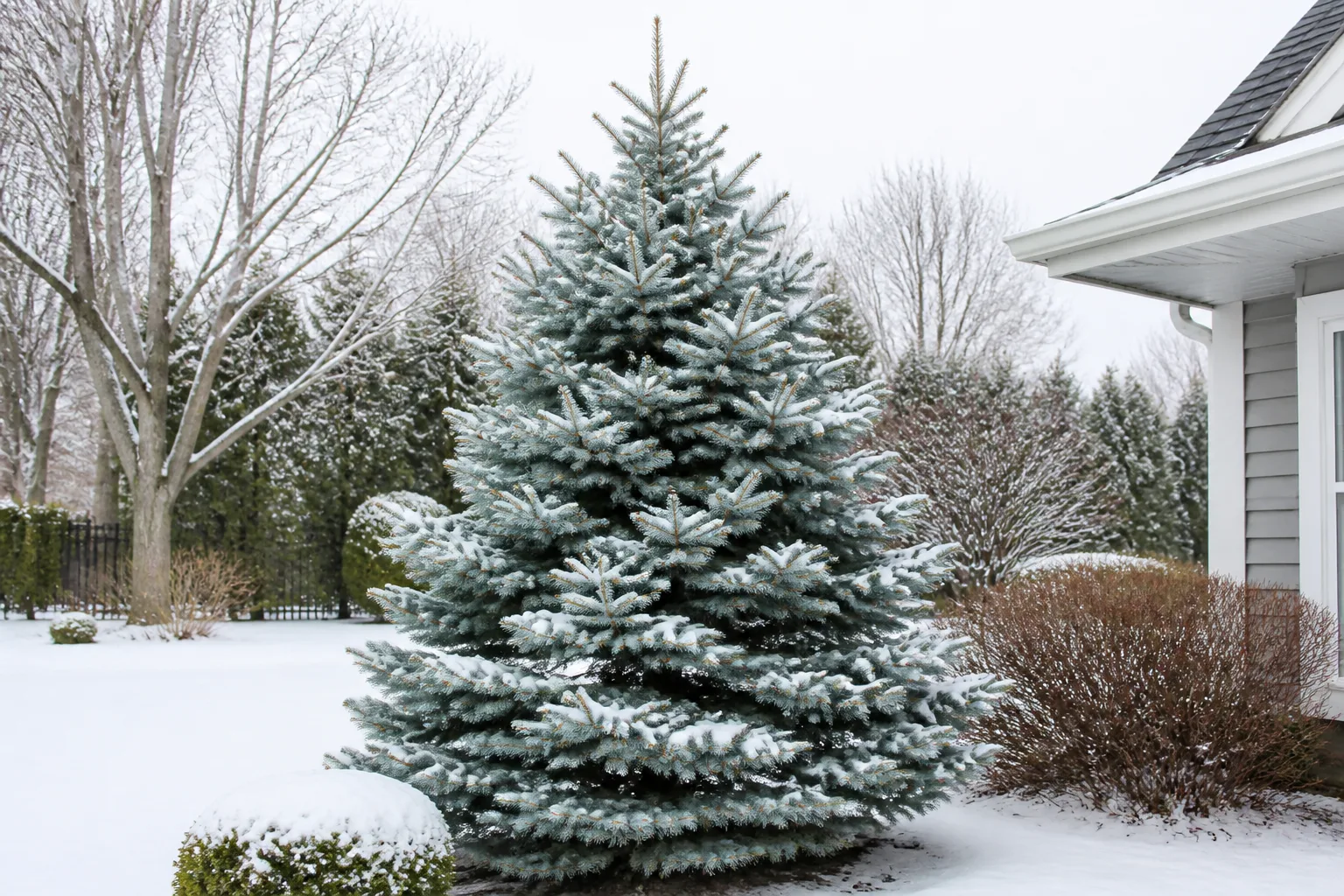
Colorado blue spruce is the classic cold-climate specimen: stiff silvery-blue needles, a narrow pyramidal habit, and hardiness commonly listed for USDA zones 2 through 7. Native to the central Rocky Mountains, it tolerates drought better than many spruces once established and handles subzero winters without drama.
The catch is size and climate. Left unpruned, blue spruce commonly reaches 30 to 60 feet tall with a 10- to 20-foot spread — far larger than the “cute blue Christmas tree” sold in a five-gallon pot. It also resents heat and humidity; in the Carolinas and Deep South, needle cast and spider mites show up far more often than in Colorado. For smaller spaces, look at cultivars such as ‘Fat Albert’, ‘Hoopsii’, or ‘Montgomery’ rather than a seed-grown tree that may green up and outgrow the bed in a decade.
Best for: Specimen focal point, privacy screen in cool climates, drought-tolerant gardens with full sun. Skip if: You are in zone 8+, have a 10-foot planting strip, or need a tree that stays soft to the touch around children — blue spruce needles are sharp.
Watch for Cytospora canker and Rhizosphaera needle cast on stressed trees, especially where summers stay humid. Spacing trees for airflow and avoiding overhead irrigation on foliage reduces both problems. If your nursery offers a grafted cultivar on disease-tested rootstock, take the tag seriously — cheap seed-grown trees vary wildly in color and mature habit.
Balsam Fir (Abies balsamea)
Balsam fir is a native northeastern evergreen built for cool, moist forests. It grows 40 to 70 feet tall in the wild but stays narrower than many spruces, with a symmetrical spire-like crown and fragrant, flat needles that smell like Christmas when crushed. The bark and cones produce sticky balsam resin that helps seal wounds — one reason this species is a premier cut Christmas tree.
Balsam fir wants full sun to light shade, acidic well-drained soil, and cool summers. NC State Extension is blunt: it is not suited to Southeast heat and humidity and struggles in dense clay. In the northern U.S. and Canada it is an excellent choice; south of zone 5 you are fighting the tree’s biology.
Best for: Naturalized woodland edges, fragrant specimen trees, cut-your-own Christmas tree plantings in cool climates. Skip if: Your site bakes in summer sun on heavy clay, or you are south of zone 5 without reliable afternoon shade and irrigation.
In the landscape, balsam fir pairs well with rhododendrons, mountain laurel, and other acid-loving understory plants that share its moisture preferences. Needles persist well indoors after cutting — one reason Northeast tree farms favor this species over faster-growing alternatives.
Scots Pine (Pinus sylvestris)
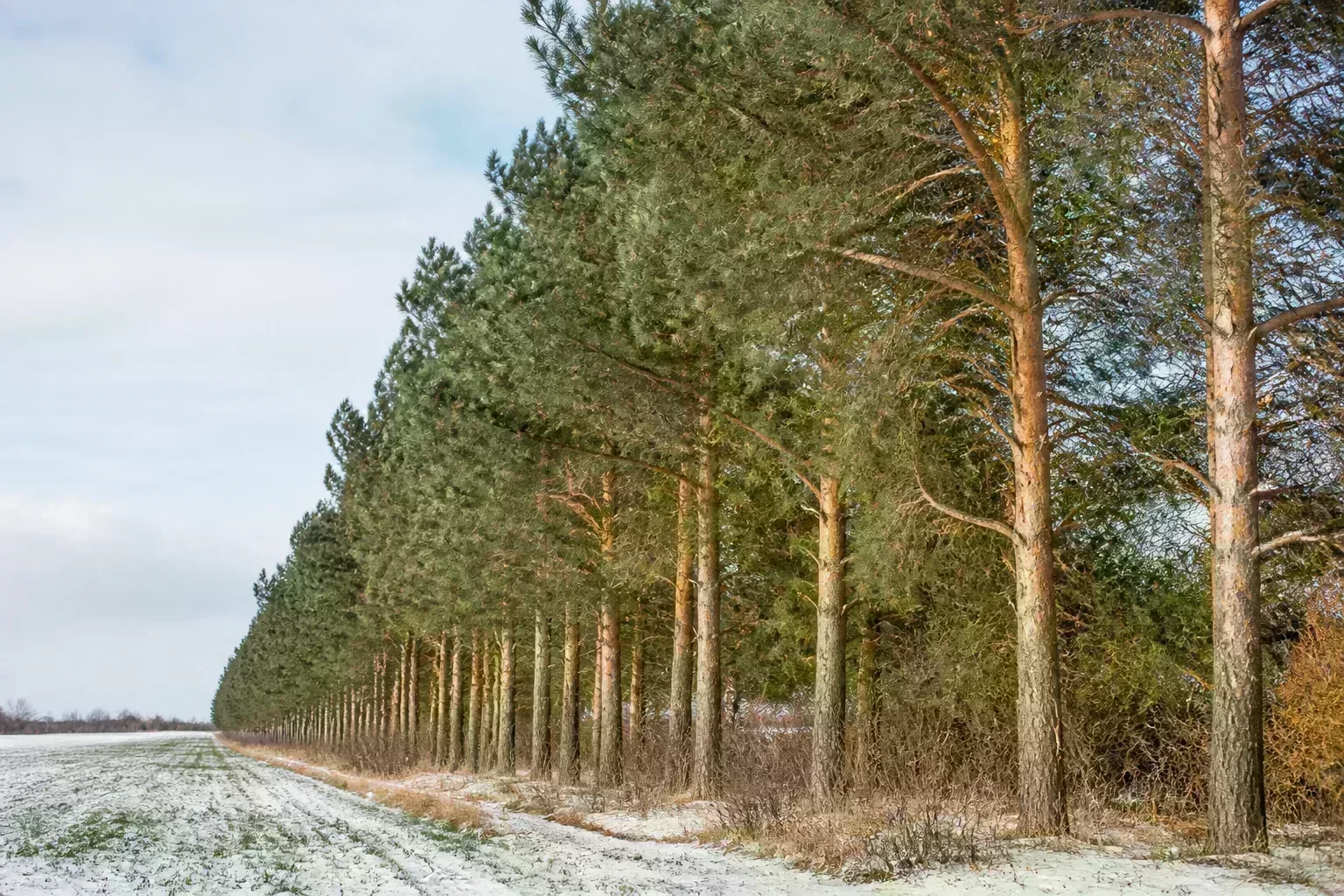
Scots pine — also called Scotch pine — is one of the most cold-tolerant landscape pines you can buy. Hardy through brutal continental winters (commonly zones 2 to 7), it has naturalized across the northern U.S. and is widely planted as a windbreak and Christmas tree. Mature trees reach 30 to 60 feet with an open, irregular crown that develops character with age.
The bark is a selling point: upper branches show flaking orange-cinnamon bark against blue-green needles in bundles of two. Scots pine tolerates poor soil, urban pollution, and drought better than most firs. It is not perfect — older specimens can look thin in humid regions, and Sphaeropsis tip blight appears on stressed trees — but for exposed northern sites it is a workhorse.
Best for: Windbreak rows, large rural properties, tough soils, full-sun exposure. Skip if: You need a tidy formal pyramid forever; mature Scots pine becomes picturesque but irregular.
When planting a windbreak, stagger rows and mix species heights so the barrier slows wind without creating turbulence on the leeward side. A single tight row of identical Scots pines looks neat at age ten and thin at age thirty unless you thin interior branches periodically.
White Fir ‘Wintergold’ (Abies concolor ‘Wintergold’)
White fir (Abies concolor) is a western native with soft bluish needles and excellent cold tolerance (typically zones 4 to 7). The cultivar ‘Wintergold’ adds seasonal drama: needles turn golden yellow in winter while staying evergreen, then green up again in spring. It grows slowly compared with blue spruce, which makes it easier to keep in scale — expect roughly 15 to 25 feet over many years rather than a sudden skyscraper.
White fir handles winter cold well but still wants well-drained soil and dislikes wet feet. It is more heat-tolerant than balsam fir, which makes it a useful fir option in the Midwest and mountain West. Give it full sun for the best gold color; shaded plants stay greener through winter.
Best for: Mid-size specimen, winter color accent, softer-textured alternative to blue spruce. Skip if: You need a fast privacy screen this decade — white fir earns its keep slowly.
Weeping White Spruce (Picea glauca ‘Pendula’)
Weeping white spruce is the vertical drama tree on this list. A narrow, strongly upright trunk carries cascading branches that hug the central leader, creating a columnar weeping form that fits tight spaces visually — though not always physically. Mature heights of 25 to 40 feet are common, with branches spreading 6 to 8 feet wide at the base.
Hardy to zones 2 through 6, it shares white spruce’s cold tolerance and waxy needles that resist desiccation. Summer heat is the limit: avoid planting in hot-summer lowlands south of zone 6, where weeping spruces often show needle burn. Stake young trees if you want a straight central leader; otherwise the plant develops a sculptural lean that some designers prefer.
Best for: Narrow specimen near entries, vertical accent in small front yards, modern landscapes. Skip if: You cannot commit to a tall tree long term, or your site has blazing reflected heat from pavement.
Install a sturdy stake for the first two years if you want a perfectly vertical leader; remove it once the trunk calipers past an inch and a half. Weeping forms look best with a single trunk — multiple leaders create a mounded shape that reads as shrubby rather than architectural.
Mugo Pine ‘Carstens’ (Pinus mugo ‘Carstens’)
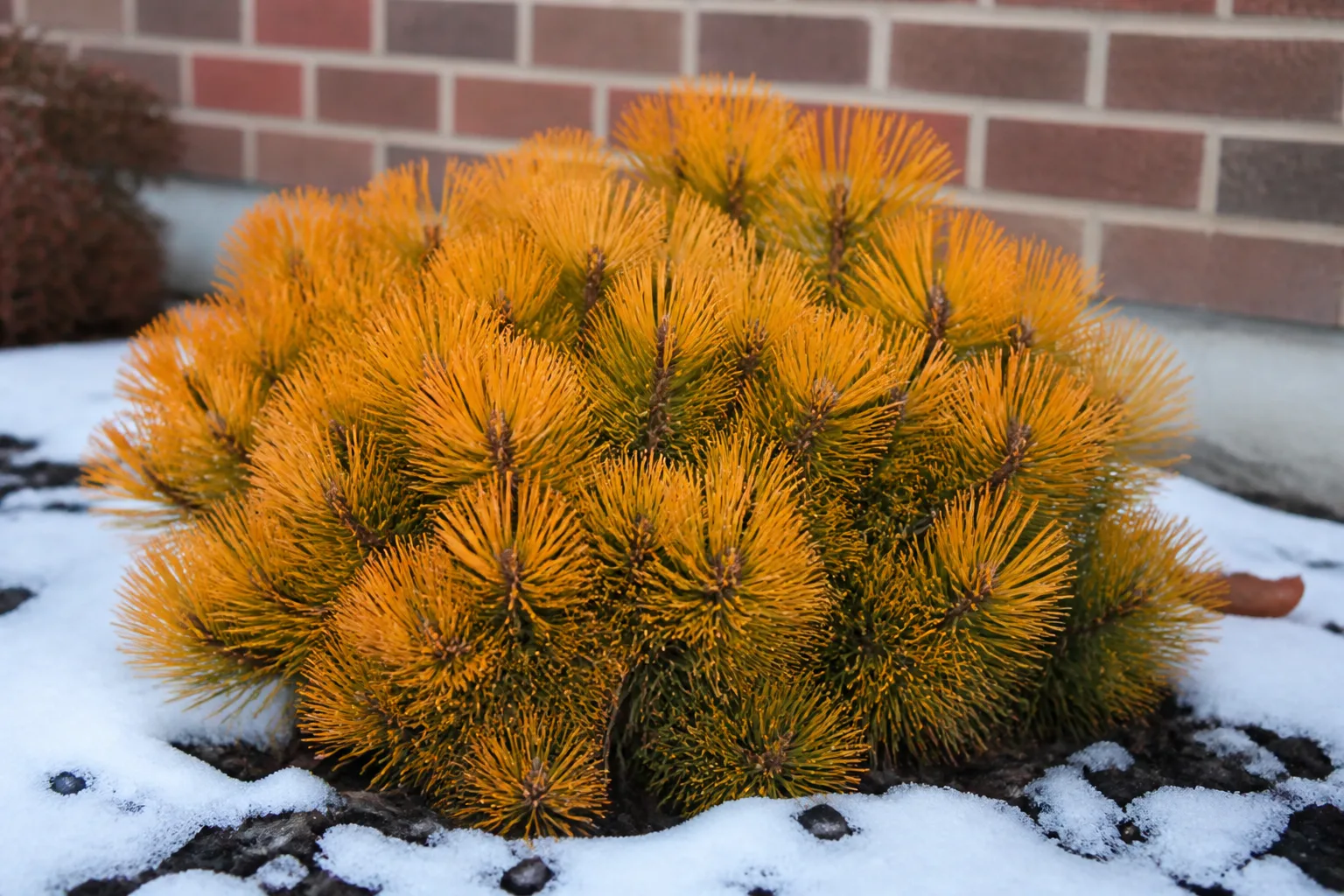
Mugo pine is a mountain pine from central Europe that naturally grows as a low, spreading shrub or multi-stem small tree. The cultivar ‘Carstens’ is prized because needles turn bright yellow-orange in cold months, then return to deep green in spring — one of the most reliable winter-color conifers for small spaces. Expect a rounded, cushion-shaped habit roughly 3 to 5 feet tall and wide over time with minimal pruning.
Mugo pine tolerates zones 2 through 7, poor soil, urban pollution, and deer pressure better than most ornamental evergreens. It wants full sun and good drainage; avoid planting in boggy clay. Annual late-winter thinning keeps the dense crown from collecting heavy wet snow that can splay branches.
Best for: Foundation beds, rock gardens, winter-color borders, containers in cold climates. Skip if: You need height above a second-story window — mugo pines are broad, not tall.
Eastern Hemlock (Tsuga canadensis)
Eastern hemlock — often called Canada hemlock — is a native shade-tolerant evergreen with soft, flat needles marked by two pale bands underneath. In forest conditions it can reach 40 to 70 feet, but it grows slowly enough that home landscapes enjoy it for decades before size becomes a problem. It thrives in cool, moist climates and handles partial shade better than any spruce on this list.
Hardiness is typically zones 3 to 7. The elephant in the room is hemlock woolly adelgid, an invasive insect that has devastated wild hemlock stands across the eastern U.S. NC State Extension lists HWA as a major pest. Before planting, check whether adelgid is established in your county; if it is, plan for monitoring and treatment or choose a resistant alternative. Dwarf cultivars such as ‘Jeddeloh’ and ‘Pendula’ stay shrub-sized for formal shade gardens.
Best for: Woodland gardens, shady north foundations, native plantings, hedges in cool moist sites. Skip if: Adelgid is active locally and you will not treat, or your site is dry and sunny on sandy soil.
If you plant hemlock, leave room for roots to stay cool — wide mulch rings beat tight lawn up to the trunk. Sheared hemlock hedges are classic in New England; informal specimens need less maintenance but still benefit from spring inspection for adelgid egg masses on needle undersides.
Mugo Pine ‘Tannenbaum’ (Pinus mugo ‘Tannenbaum’)
‘Tannenbaum’ is another mugo pine selection bred for a symmetrical Christmas-tree pyramid on a dwarf frame — usually 4 to 6 feet tall without heavy shearing. It keeps the species’ cold hardiness and deer resistance while giving you a formal silhouette that larger spruces cannot offer in a foundation bed.
Plant in full sun and well-drained soil; mugos rot in standing water. Unlike the species, ‘Tannenbaum’ may show needle burn if temperatures plunge below -20°F (-29°C) without snow cover insulating roots — rare in its recommended zones but worth noting on exposed ridge-top sites. Light spring shaping is enough to maintain the pyramid; avoid cutting into bare wood that will not resprout.
Best for: Holiday display trees, formal foundation plantings, small evergreen focal points. Skip if: You want a 12-foot privacy screen — this is a tabletop-to-person-scale tree, not a hedge.
Planting and First-Winter Care for Cold-Climate Evergreens
The best planting window in cold regions is early fall, roughly six to eight weeks before the ground freezes, so roots establish while soil is still warm. Spring planting works too, but you must irrigate through the first summer more aggressively. Dig a hole no deeper than the root ball and two to three times wider; do not bury the trunk flare.
Water deeply at planting and again before the ground freezes if fall is dry. A 3-inch mulch ring (not piled against the trunk) insulates roots and reduces frost heaving. For valuable new transplants, especially broad-leafed look-alikes and marginally hardy cultivars, an anti-desiccant spray in late fall can cut winter burn — but it is not a substitute for choosing the right species.
Do not fertilize heavily going into winter; soft late growth freezes easily. Wait until spring after new growth hardens off. If you are planting a windbreak row of Scots pine, space trees 8 to 12 feet apart in staggered rows for faster shelter; RHS windbreak guidance recommends permeable barriers that slow wind rather than a single solid wall of foliage.
For container-grown evergreens, check that roots are not circling the pot before you plant. Slice the outer inch of a tight root ball and spread roots outward in the planting hole — conifers that go into winter with circling roots often lean or fail in the first thaw cycle.
Winter Damage on Evergreens — and How to Prevent It
Brown or bronzed needles in March usually trace back to desiccation, not disease. Sun hits the canopy, stomata open, and frozen roots cannot supply water. Evergreens in sunny south or west exposures suffer first, especially after dry autumns. Burlap screens on the windy side — not airtight wraps — reduce damage on new transplants without cooking the tree.
Salt spray from roads browns roadside evergreens from the ground up. If you plant near pavement, choose salt-tolerant species (Scots pine handles abuse better than hemlock) or set trees back from the curb. Heavy wet snow breaks mugo pine and hemlock branches; brush snow off with an upward lift rather than a downward smash. Ice storms are harder — if major limbs crack, hire a certified arborist rather than leaving torn bark that invites disease.
When a “Cold-Hardy” Evergreen Is Still the Wrong Tree
Hardiness zone is a floor, not a complete answer. Blue spruce in a humid southern yard, balsam fir on clay in Kansas, eastern hemlock in full sun on a windy ridge, and weeping white spruce squeezed into a 4-foot-wide bed beside a driveway all fail for reasons zoning alone will not predict.
Oversized species are the most common homeowner mistake. A Colorado blue spruce seedling becomes a neighborhood giant; a weeping white spruce eventually towers over the roofline. Measure the mature spread on the tag and believe it. If the number exceeds half your planting area, switch to a dwarf cultivar or a different genus entirely.
Finally, respect regional pests. Planting eastern hemlock where woolly adelgid is unchecked is an expensive kindness to a tree that may need chemical treatment for life. In those areas, consider native white pine (Pinus strobus) or concolor fir in sunny sites instead — different look, fewer adelgid worries.
Conclusion
Cold winters do not have to mean a colorless yard. Colorado blue spruce, balsam fir, Scots pine, white fir ‘Wintergold’, weeping white spruce, mugo pines ‘Carstens’ and ‘Tannenbaum’, and eastern hemlock each solve a different design problem — from windbreak rows to golden winter accents and shade-tolerant native structure. Match the tree to your zone, realistic space, sun, and soil, then give new transplants water and mulch through their first frozen season. Get those basics right and you will have evergreen structure that looks intentional long after the last oak leaf has blown away.



